Inspiration
I wanted to build a platform that rethinks how developers and system operators interact with infrastructure and operational data. Most monitoring tools today are fragmented, reactive, and difficult to manage efficiently, especially for smaller teams and developers who need both visibility and control in one place. I was inspired by the idea of creating a unified operational intelligence platform that combines real-time monitoring, AI-assisted workflows, process management, and optimization into a single system. I also wanted to challenge myself by building a project that combines frontend engineering, backend orchestration, AI integration, and Python-powered analytics into one scalable architecture. The goal behind SentinelOS was not just to create a visually impressive dashboard, but to design a practical developer infrastructure tool that could realistically evolve into a production-grade platform.
What it does
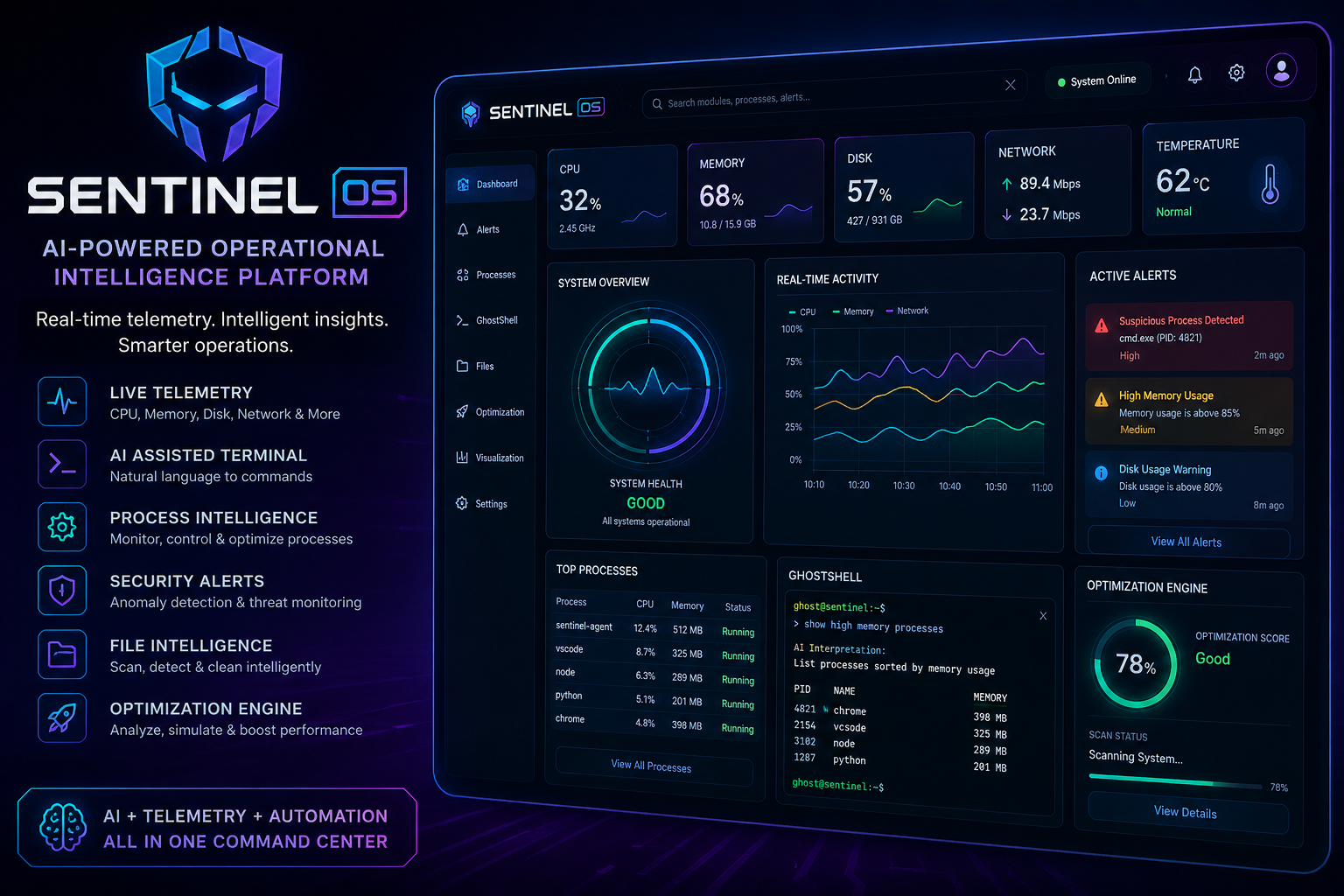
SentinelOS is an AI-powered infrastructure and operational intelligence platform designed to help developers and operators monitor, analyze, and optimize systems more efficiently.
The platform provides:
- Real-time system telemetry
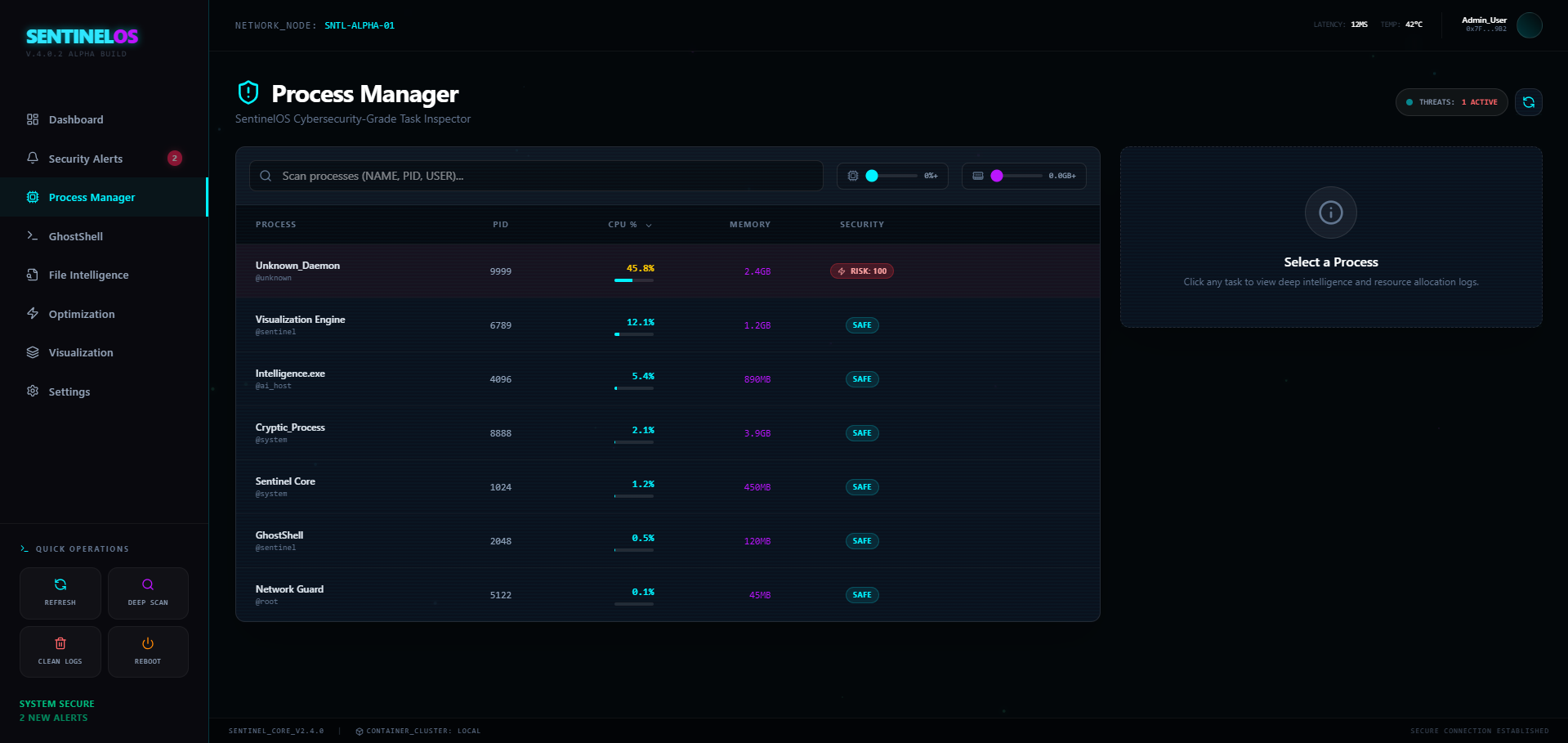
- Process lifecycle management
- AI-assisted command workflows
- Intelligent alerting systems
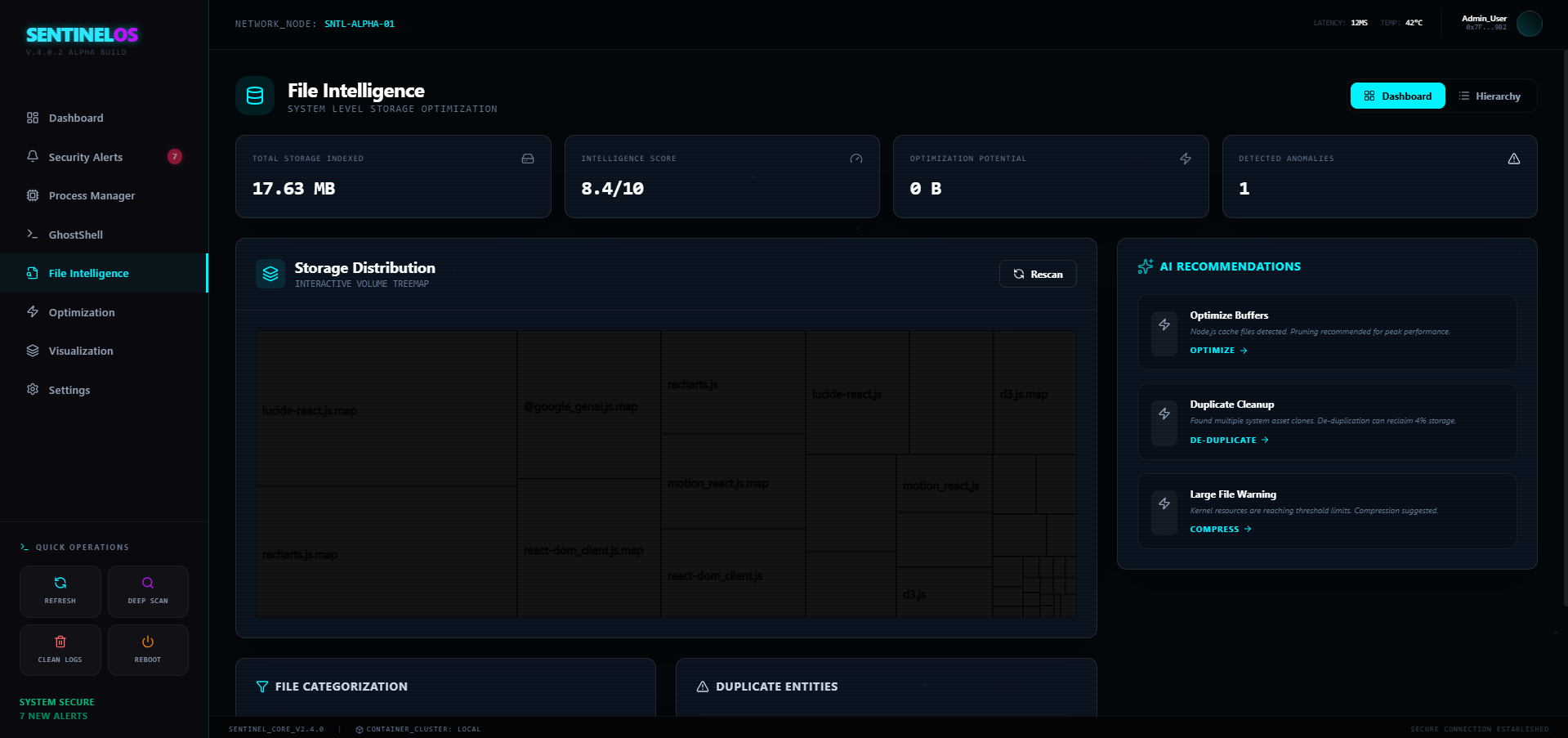
- File intelligence analysis
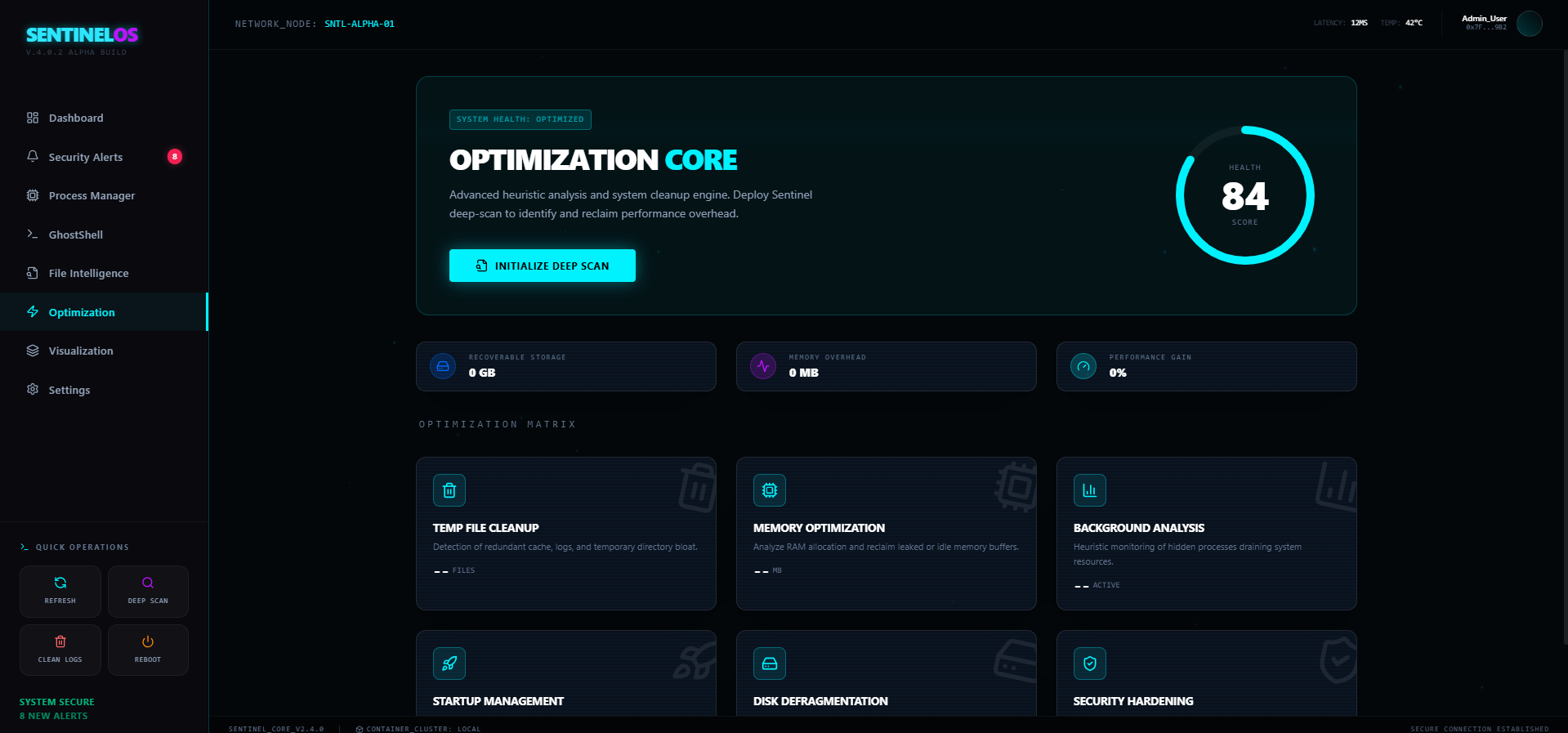
- Optimization simulations
- Operational monitoring tools
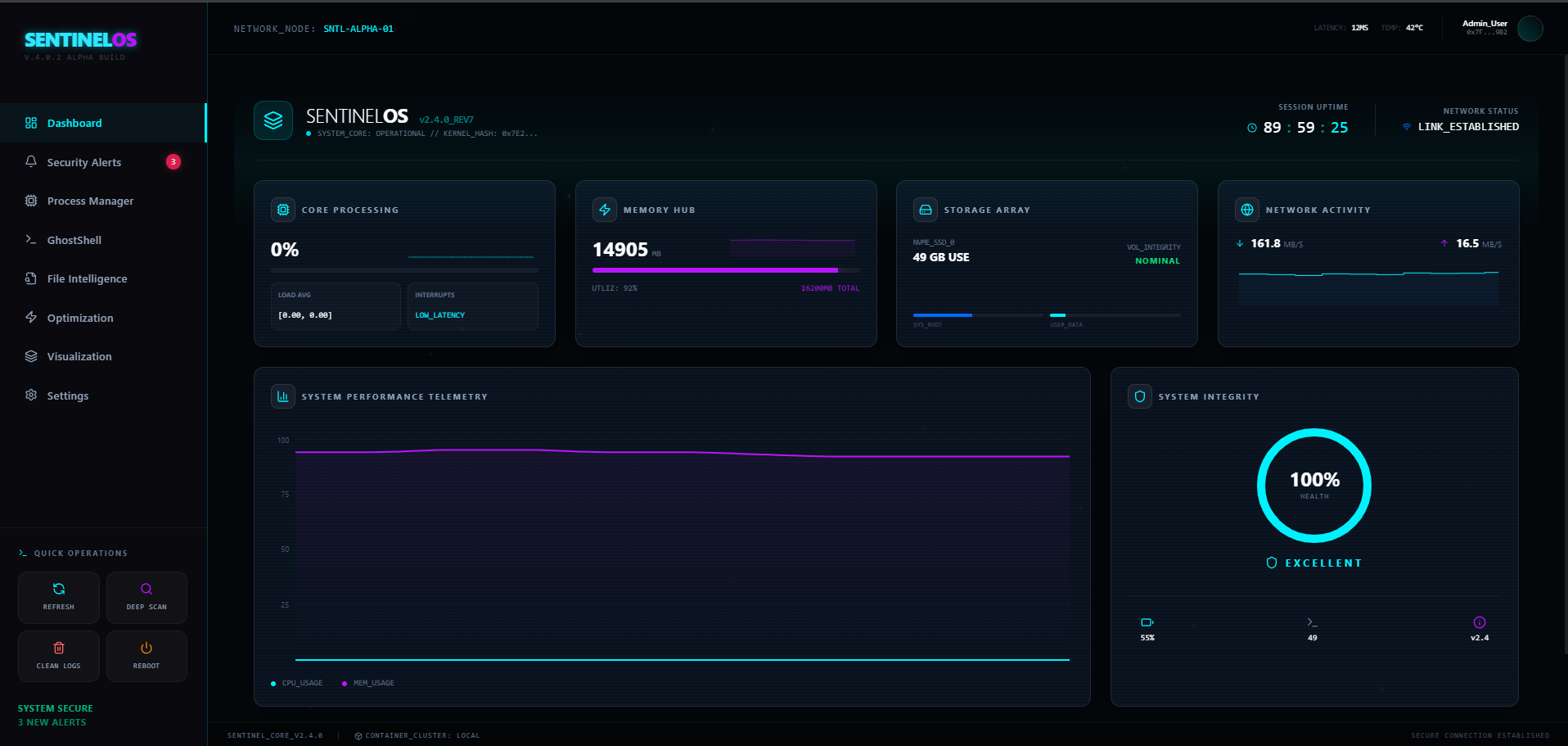
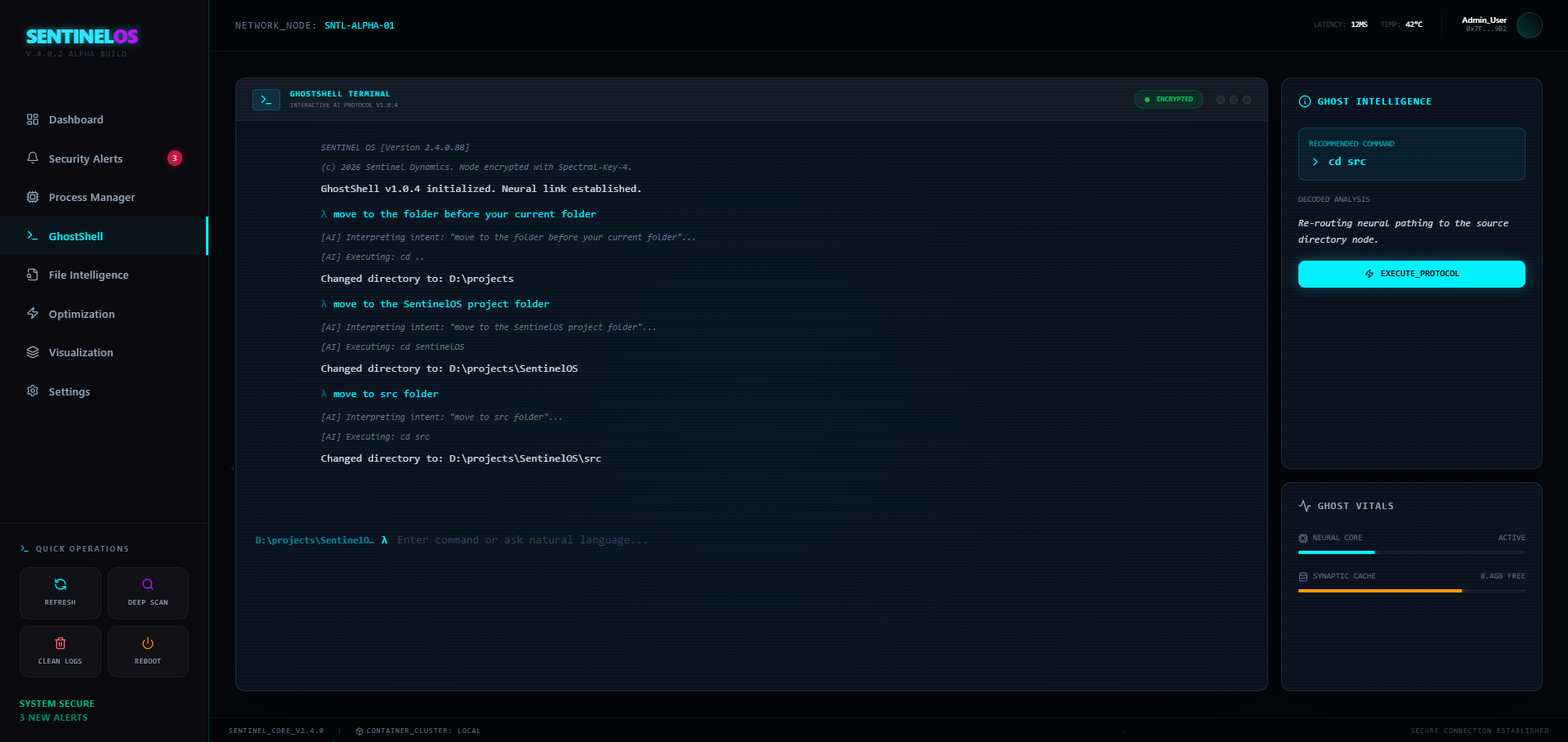
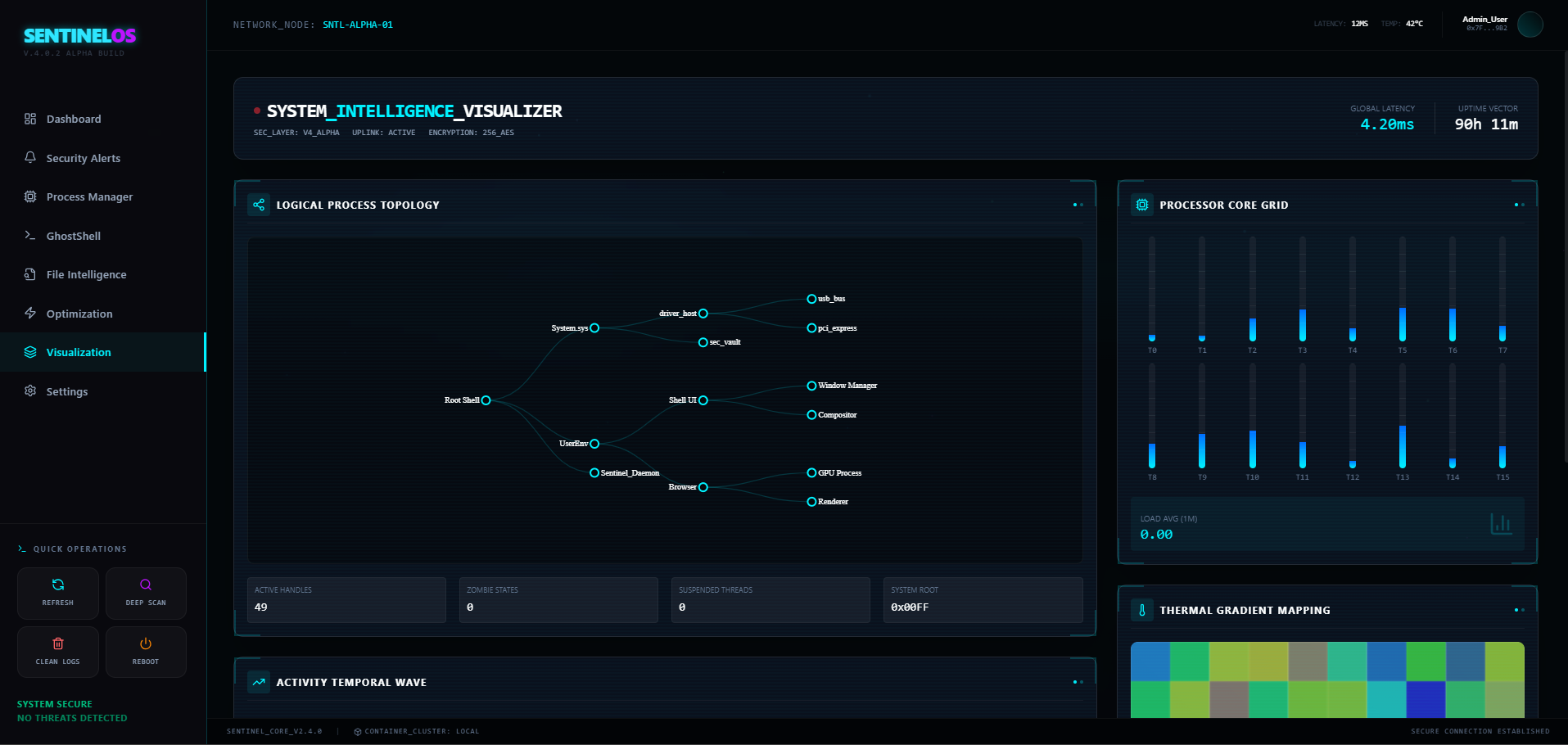
SentinelOS streams live CPU, memory, disk, thermal, network, and process data through a WebSocket-powered infrastructure and visualizes everything through a futuristic WebOS-style interface. The platform also includes GhostShell, an AI-assisted terminal workflow system that allows natural-language interaction and intelligent command interpretation.
Additional features include:
- Real-time operational alerts
- Optimization workflows powered by dedicated web workers
- File scanning and cleanup intelligence
- Process suspension, resuming, and termination tools
- AI-generated operational recommendations
- Resilient transport systems with polling fallback support
The project is designed as a scalable infrastructure platform with modular architecture that can evolve into a larger operational management system.
How I built it
I built SentinelOS as a full-stack infrastructure platform using a layered architecture approach.
For the frontend, I used React 19, TypeScript, Vite, Tailwind CSS, Framer Motion, Recharts, and D3 to create an interactive and responsive operational dashboard.
For the backend, I developed an Express.js orchestration server responsible for:
- API management
- process operations
- telemetry distribution
- WebSocket communication
- operational workflows
I integrated a Python analysis engine that continuously collects and analyzes live system metrics. The Node.js backend spawns the Python engine as a child process and consumes structured JSON telemetry data in near real time.
I implemented:
- WebSocket-based live telemetry streaming
- Snapshot deduplication for performance optimization
- requestAnimationFrame batching for smoother rendering
- AI-assisted GhostShell workflows using the Google GenAI SDK
- File intelligence scanning and heuristic analysis
- Optimization simulations using dedicated web workers
- Alert cooldown systems to avoid notification flooding
- Modular architecture for scalability and maintainability
I also designed the project with future scalability in mind by separating the monitoring, orchestration, transport, analytics, and presentation layers into modular services.
Challenges I ran into
One of the biggest challenges I faced was handling real-time telemetry updates efficiently without overwhelming the frontend rendering pipeline. High-frequency system updates can easily cause excessive React re-renders, so I implemented snapshot deduplication and animation-frame batching to maintain smooth UI performance.
Another major challenge was integrating Python analytics with the Node.js orchestration layer. I solved this by building structured JSON communication between the Python engine and the backend using child-process orchestration.
Designing a secure but usable shell experience was also difficult. Since SentinelOS allows operational command workflows, I needed to carefully restrict command execution while still maintaining flexibility and usability.
I also faced challenges balancing technical depth with usability. SentinelOS contains multiple operational systems and live data streams, so I spent significant time refining the UI and workflow structure to keep the experience intuitive and manageable.
Accomplishments that I am proud of
I am proud that I built an end-to-end operational intelligence platform completely on my own while combining frontend engineering, backend systems, AI workflows, real-time infrastructure, and Python-based analytics into one cohesive ecosystem.
Some accomplishments I am especially proud of include:
- Building a real-time WebSocket telemetry system
- Designing a scalable layered architecture
- Creating the AI-powered GhostShell workflow
- Implementing smooth real-time frontend optimization strategies
- Successfully integrating React, Node.js, Python, WebSockets, and AI services
- Creating a polished and futuristic user experience
- Building a project that goes beyond a simple hackathon prototype
I am also proud that SentinelOS combines strong technical execution with practical real-world infrastructure use cases.
What I learned
Through building SentinelOS, I learned a great deal about real-time infrastructure systems, backend orchestration, frontend optimization, and scalable architecture design
I improved my understanding of:
- WebSocket infrastructure
- Real-time state synchronization
- Cross-language integration between Node.js and Python
- AI-assisted operational tooling
- Performance optimization techniques
- Modular service architecture
- Systems monitoring workflows
- Process management systems
- Developer infrastructure tooling
I also learned how important product positioning and user experience are when building technically complex systems. Strong engineering matters, but presenting complex operational workflows in a clear and intuitive way is equally important.
What's next for SentinelOS
I plan to continue developing SentinelOS into a more advanced infrastructure intelligence and operational management platform.
My future roadmap includes: -Historical telemetry storage and analytics
- Persistent alert management systems
- AI-powered anomaly detection
- Multi-node infrastructure monitoring
- Role-based authentication and access control
- Containerized shell execution for stronger security
- Distributed telemetry aggregation
- Predictive operational insights
- Accessibility and localization improvements
- CI/CD pipelines and automated testing infrastructure
I also want to expand SentinelOS into a collaborative platform for developers, startups, and operations teams that need intelligent infrastructure visibility and operational automation.
Built With
- d3.js
- express.js
- framer-motion
- git
- github
- json
- node.js
- npm
- python
- recharts
- requestanimationframe
- restapis
- tailwindcss
- typescript
- vite
- websockets

Log in or sign up for Devpost to join the conversation.