Inspiration
Modern operating system utilities are powerful but often fragmented, outdated, and difficult to interpret for everyday users. Traditional task managers and monitoring tools expose raw data but rarely provide intelligent insights or an engaging experience. I wanted to reimagine what a next-generation operating system utility platform could look like by combining real-time telemetry, AI-assisted workflows, process intelligence, and futuristic visualization into a unified system dashboard. SentinelOS was inspired by the idea of creating an operating system control center that feels modern, interactive, and intelligent: something closer to a cinematic “future OS” experience while still providing practical monitoring and optimization tools.
What it does
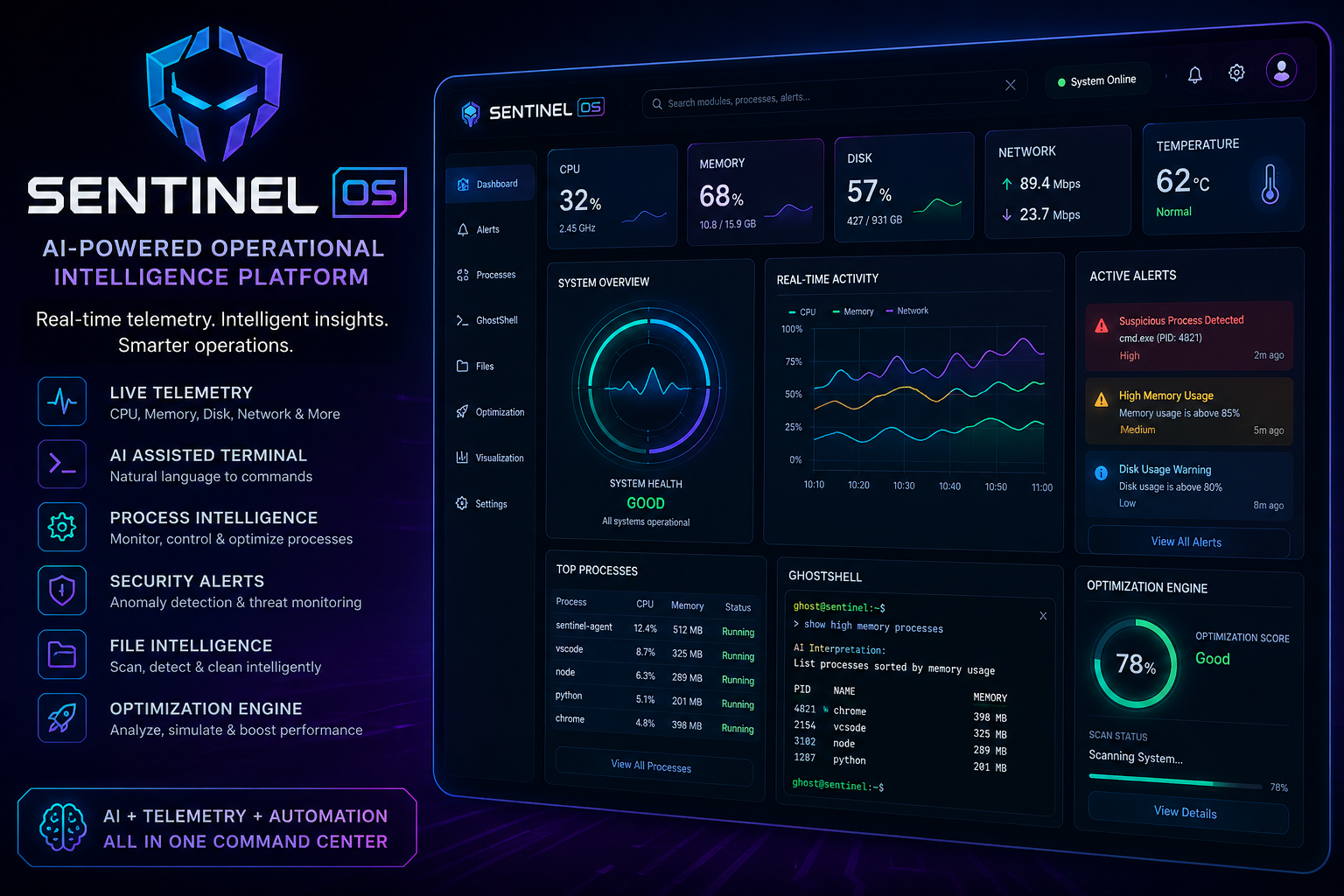
SentinelOS is a futuristic operating system utility suite designed to monitor, analyze, and optimize system activity in real time. Core features include:
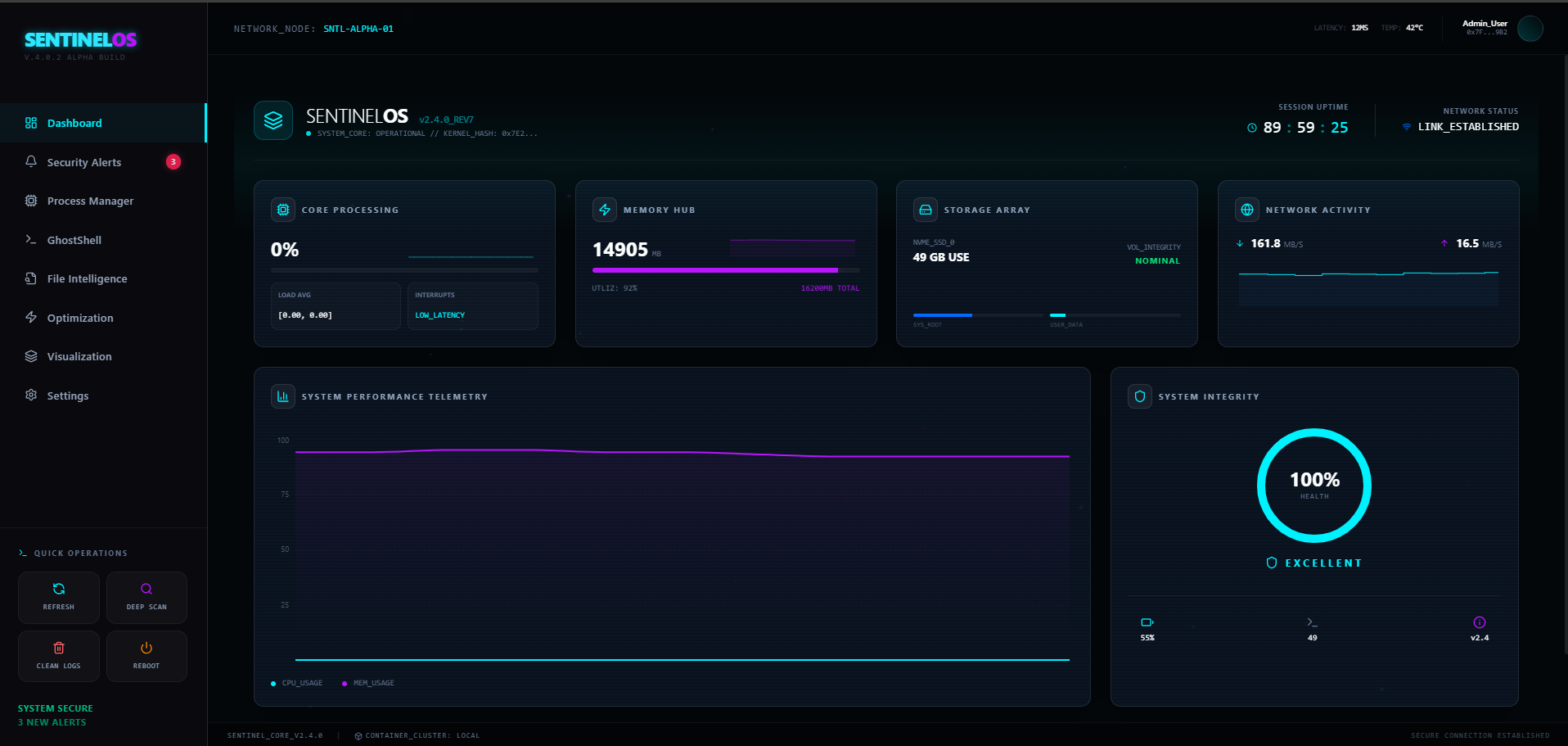
- Live system telemetry dashboard
- CPU, RAM, disk, network, and battery monitoring
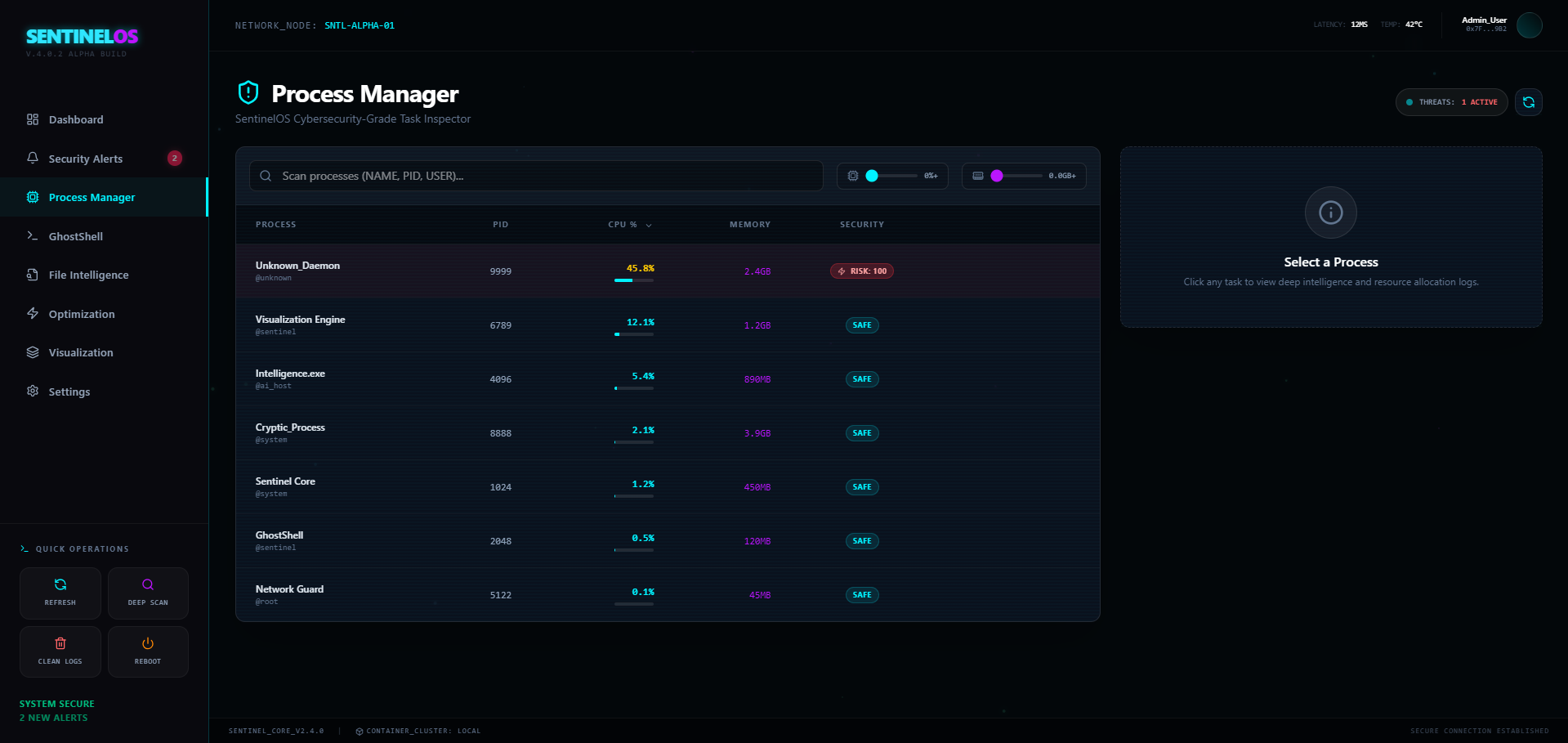
- Real-time process manager with suspend, resume, and terminate actions
- Suspicious process detection and risk analysis
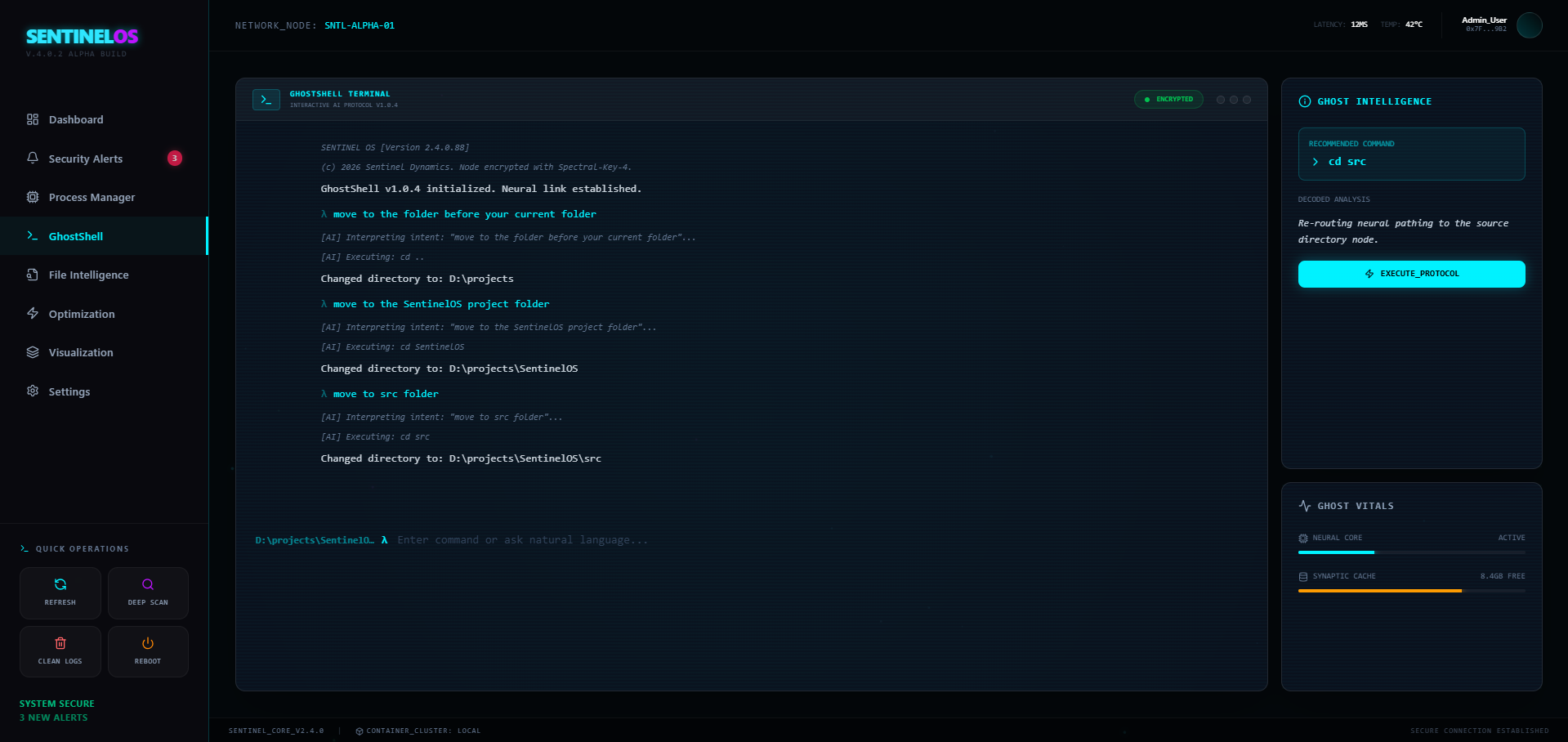
- AI-assisted GhostShell terminal with natural-language command workflows
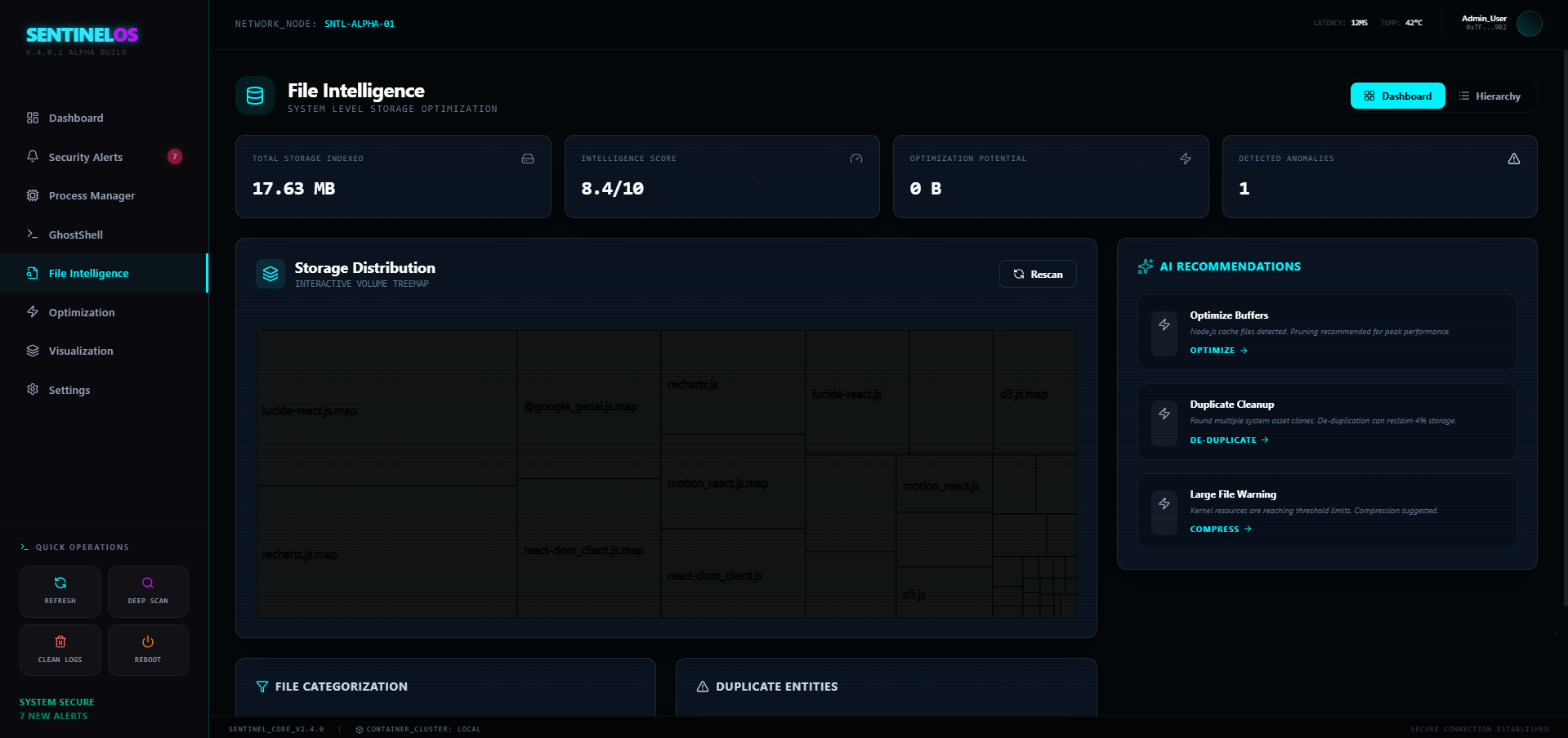
- File Intelligence system for storage analysis and cleanup simulation
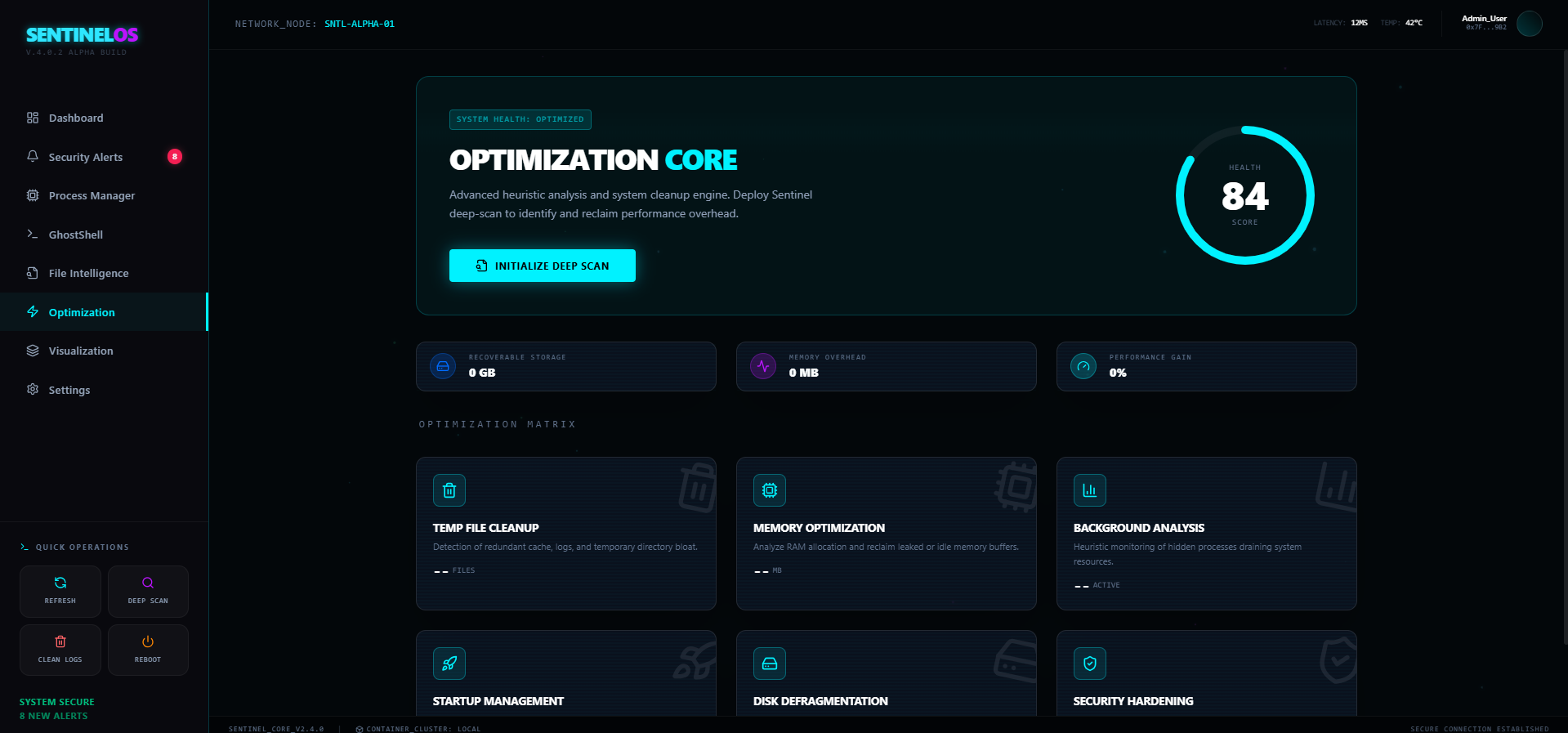
- Optimization engine with performance recommendations
- Real-time alert and notification system
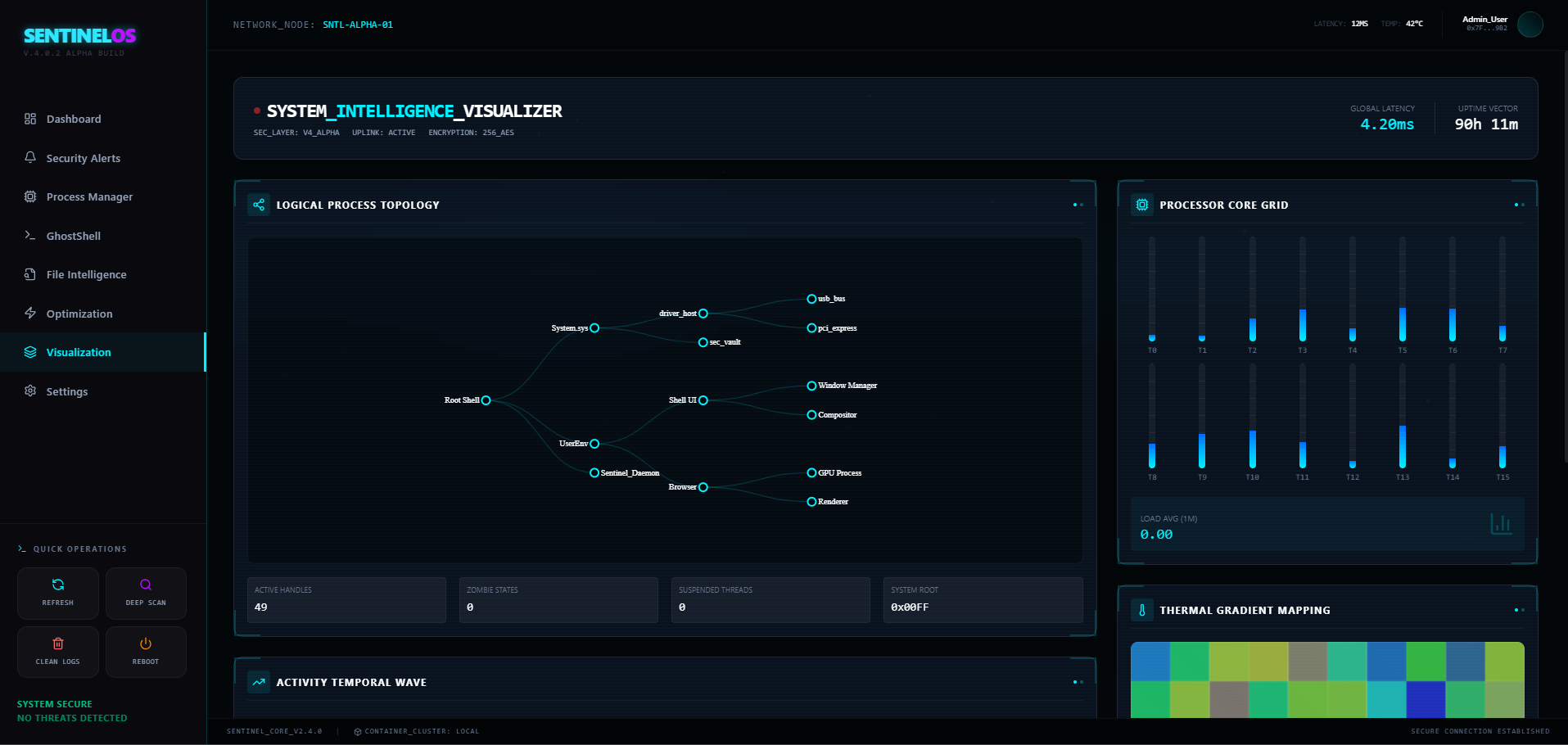
- Interactive system visualization and analytics dashboards SentinelOS combines these tools into a single modular platform with a modern glassmorphism-inspired interface and animated real-time updates.
How I built it
SentinelOS was built as a full-stack system utility platform using a modular architecture.
Frontend:
- React
- TypeScript
- Tailwind CSS
- Framer Motion
- Recharts
Backend:
- Node.js
- Express
- WebSocket server for live telemetry streaming
System Engine:
- Python monitoring engine
- Child-process communication between Node.js and Python
- Real-time metric collection and process analysis
I designed the frontend as a dashboard-driven SPA with reusable components, animated telemetry widgets, and route-based modules. The backend orchestrates:
- live system monitoring
- process operations
- optimization workflows
- shell execution
- intelligence scans The Python engine continuously analyzes system metrics and streams normalized snapshots back to the Node.js layer for real-time frontend updates.
Challenges I ran into
One of the biggest challenges was handling high-frequency telemetry updates without causing UI lag or excessive React re-renders. To solve this, I implemented:
- snapshot deduplication
- animation-frame batching
- WebSocket-first transport with polling fallback
- optimized rendering strategies Another challenge was securely supporting terminal-style workflows without exposing unrestricted shell execution. I addressed this using restricted command handling and controlled execution paths. Cross-language communication between the Node.js orchestration layer and the Python analysis engine also required careful synchronization and structured data transport. Balancing real-time visualization, responsiveness, and performance while maintaining a polished futuristic UI was one of the most technically demanding aspects of the project.
Accomplishments that I am proud of
I am especially proud of:
- Building a fully modular real-time system utility platform
- Creating a polished futuristic interface with live animated telemetry
- Integrating AI-assisted GhostShell workflows
- Designing an intelligent process monitoring and alert system
- Implementing cross-language runtime integration between Node.js and Python
- Building responsive visualization systems while maintaining smooth performance I am also proud of transforming traditional operating system utilities into a more interactive and intelligent experience that feels modern and engaging.
What I learned
Throughout this project I learned:
- how to manage real-time telemetry pipelines efficiently
- how to optimize frontend rendering under frequent updates
- how to structure scalable full-stack architectures
- how to coordinate communication between Node.js and Python runtimes
- how to design responsive data-driven interfaces
- how to balance technical functionality with user experience and presentation I also gained deeper insight into how operating systems expose runtime information and how modern tooling can improve system visibility and usability.
What's next for SentinelOS
Future plans for SentinelOS include:
- persistent telemetry history and analytics
- adaptive anomaly detection using machine learning
- advanced process behavior analysis
- customizable dashboards and plugins
- historical replay visualizations
- multi-device monitoring support
- secure sandboxed shell environments
- cross-platform desktop packaging
- accessibility and localization improvements I also want to evolve SentinelOS into a more production-oriented intelligent operations platform capable of supporting larger-scale monitoring and automation workflows.
Built With
- d3.js
- express.js
- framer-motion
- javascript
- node.js
- python
- react
- recharts
- tailwindcss
- typescript
- vite
- websockets


Log in or sign up for Devpost to join the conversation.