-
-
Compliance agent
-
Guardian Qwen copilot
-
-
Inspiration
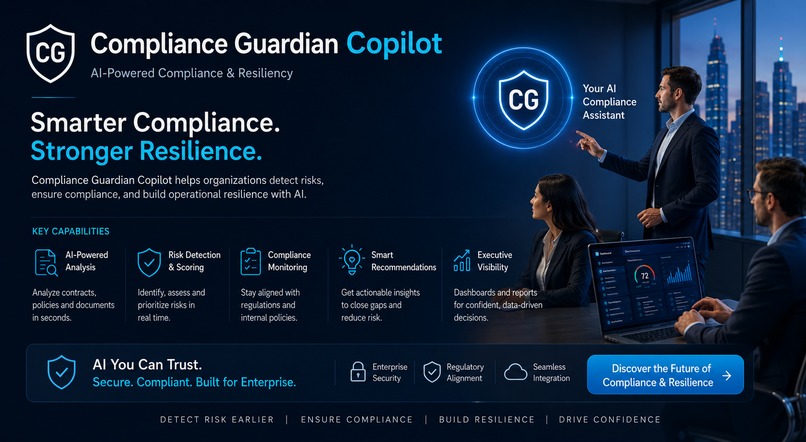
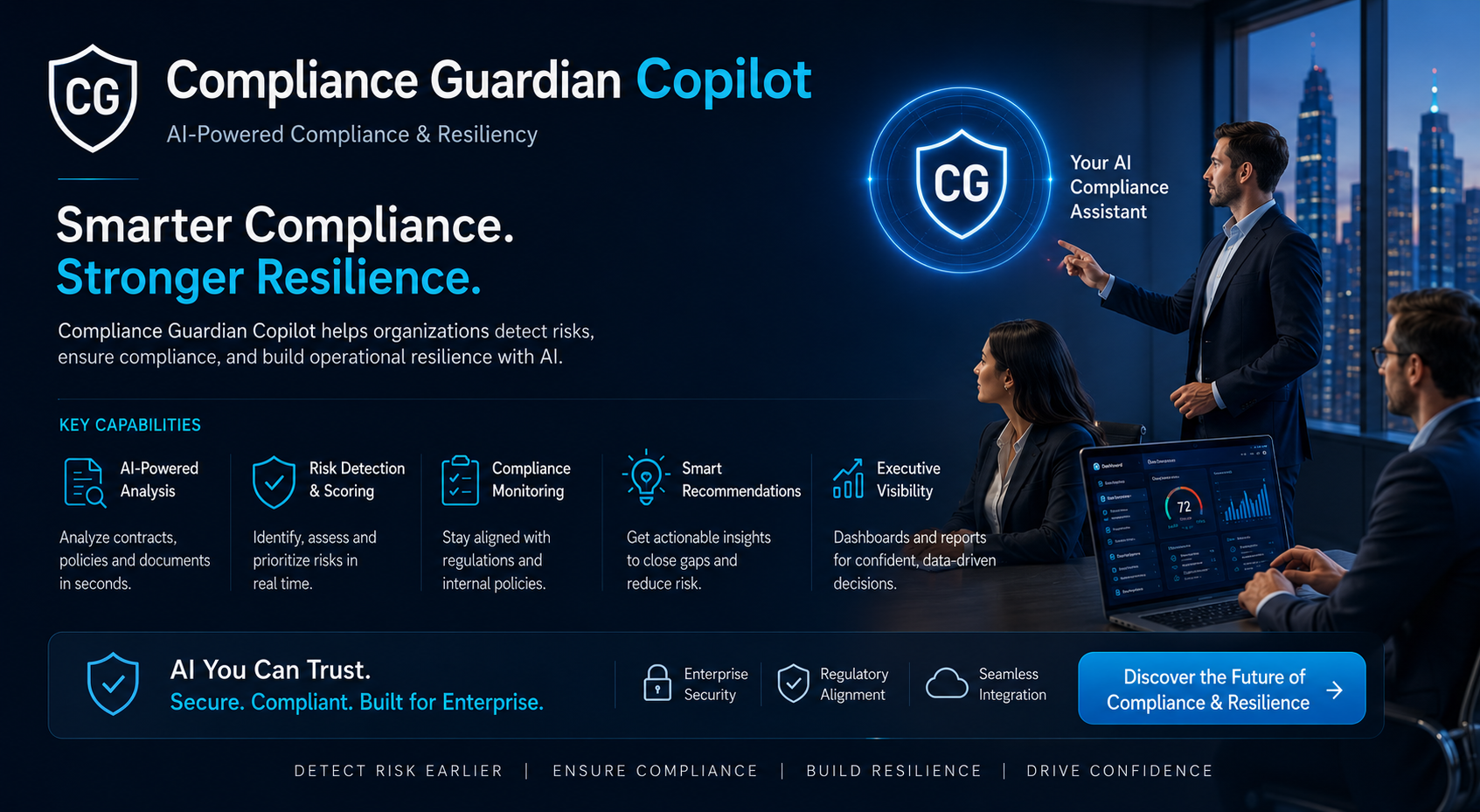
The Story Every organization has documents that quietly carry risk: contracts, policies, regulations, and internal controls. The hard part is not storing them, but understanding where they conflict, where they expose the business, and what needs to happen next. Compliance Guardian Copilot was built to make that problem visible, actionable, and faster to resolve.
The idea came from a simple reality: compliance work is often fragmented, manual, and delayed until something goes wrong. Reviews take time, findings get buried in spreadsheets, and remediation steps are often vague or inconsistent. This project turns that process into a structured workflow that can analyze documents, score risk, compare them against policy requirements, and produce executive-ready recommendations in one place.
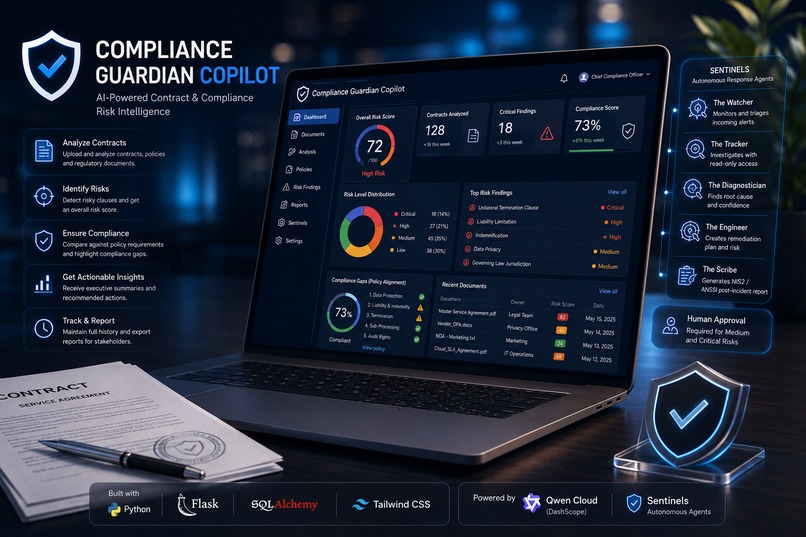
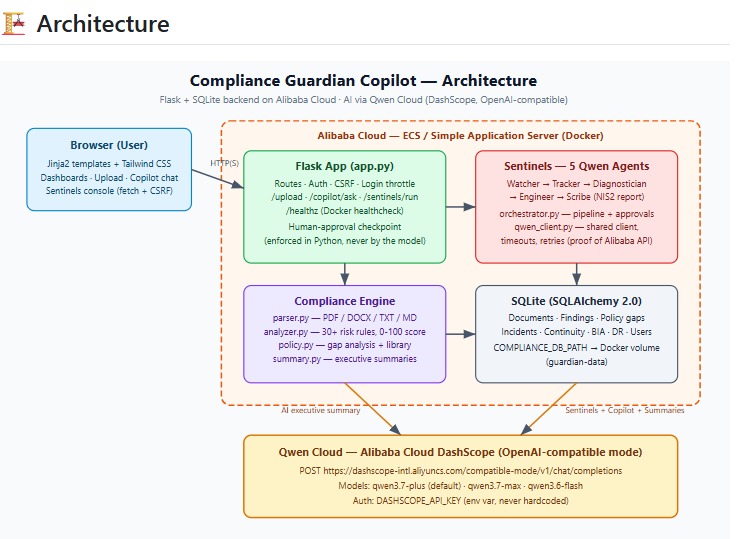
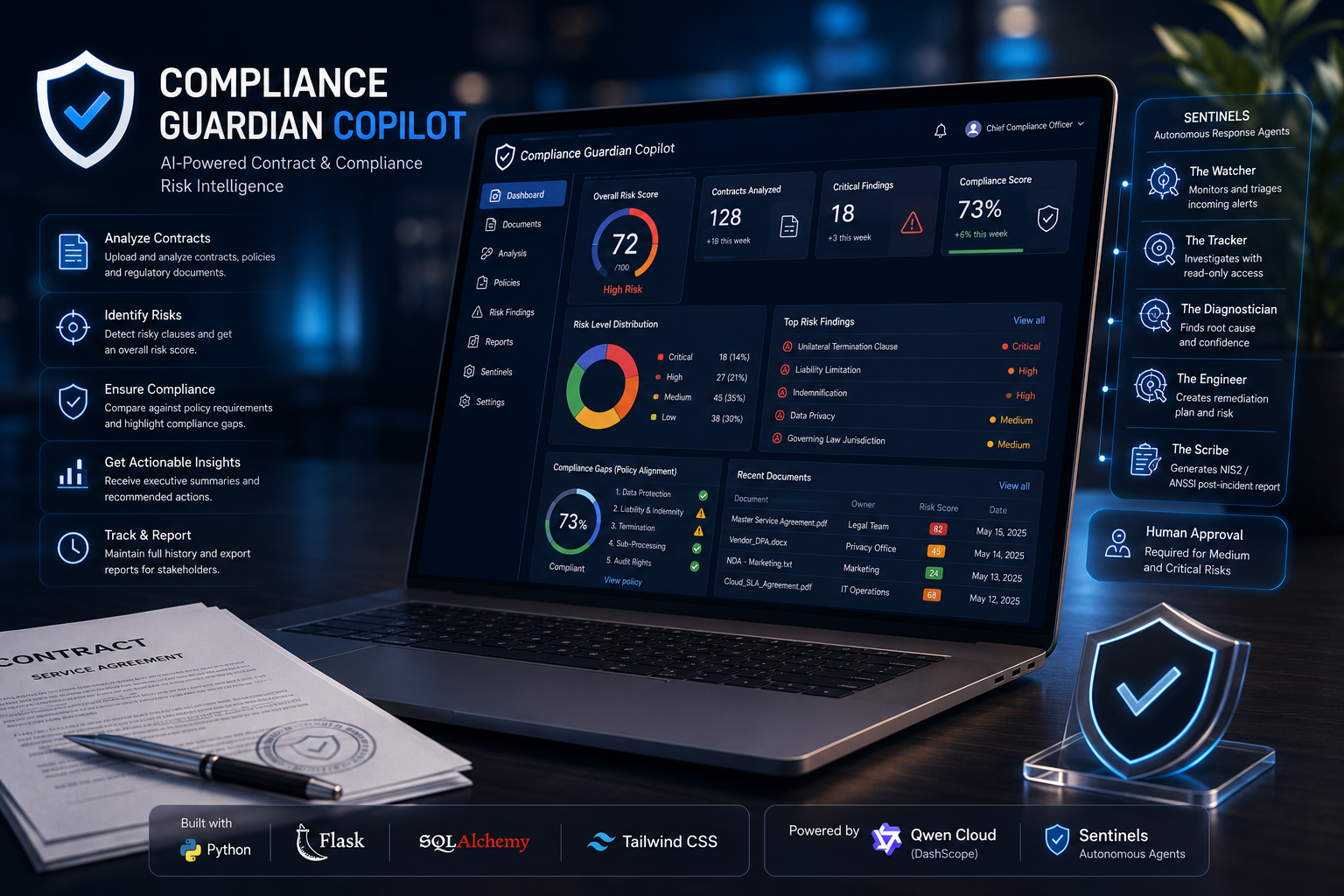
At its core, the application is an enterprise-ready Python web app built with Flask, SQLAlchemy, and Tailwind CSS, with no Node or npm dependency. Users can upload contracts, policies, and regulatory documents in PDF, DOCX, TXT, or Markdown format, then get a clear risk assessment with clause-level findings, compliance gaps, and suggested remediation actions. The system also keeps a full document history so teams can trace what was analyzed, when, and by whom.
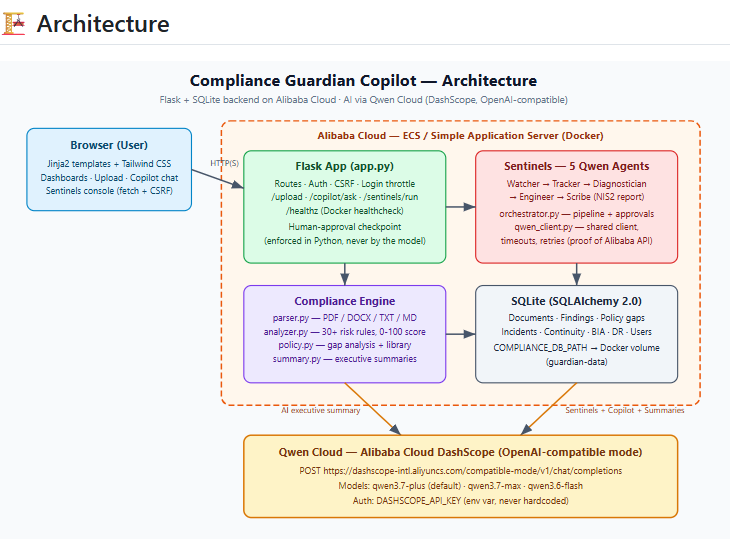
What makes the project more than a document analyzer is the Sentinels layer for autonomous incident-response intelligence. Five specialized agents work together: triage, investigation, diagnosis, remediation planning, and report writing. The governance rule is enforced in Python, not left to the model, so low-risk cases can proceed automatically while medium and critical cases stop for human approval. That design keeps the system useful without ever losing control.
Behind the scenes, the project uses Qwen Cloud through Alibaba Cloud DashScope in OpenAI-compatible mode for deeper analysis, while still falling back to rule-based templates when needed. That hybrid approach makes the system practical in real environments where reliability, cost control, and graceful degradation matter. It also means the application can support both fast summaries for business users and regulator-ready reporting for compliance and incident-response teams.
The most important lesson from building Compliance Guardian Copilot was that AI is most valuable when it is constrained by clear rules and human accountability. Instead of asking the model to decide everything, the system uses AI where it adds intelligence and deterministic logic where governance must be guaranteed. The result is a tool that helps teams move faster, reduce blind spots, and respond with confidence.
Shorter version Compliance Guardian Copilot was inspired by the reality that compliance work is still too manual, too slow, and too fragmented. It transforms contracts, policies, and regulatory documents into structured risk intelligence, with document parsing, clause-level risk scoring, policy-gap detection, and executive summaries. Built with Flask, SQLAlchemy, and Tailwind CSS, it uses Qwen Cloud for deep analysis and a Python-enforced governance layer to ensure human approval whenever risk becomes significant.
🛠️ Tech Stack
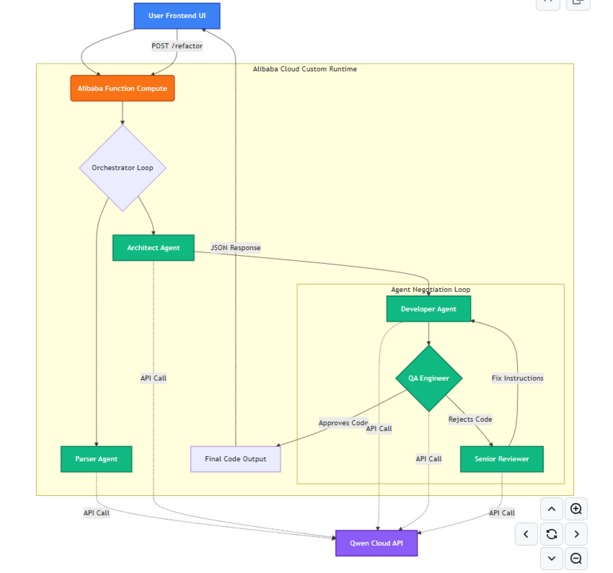
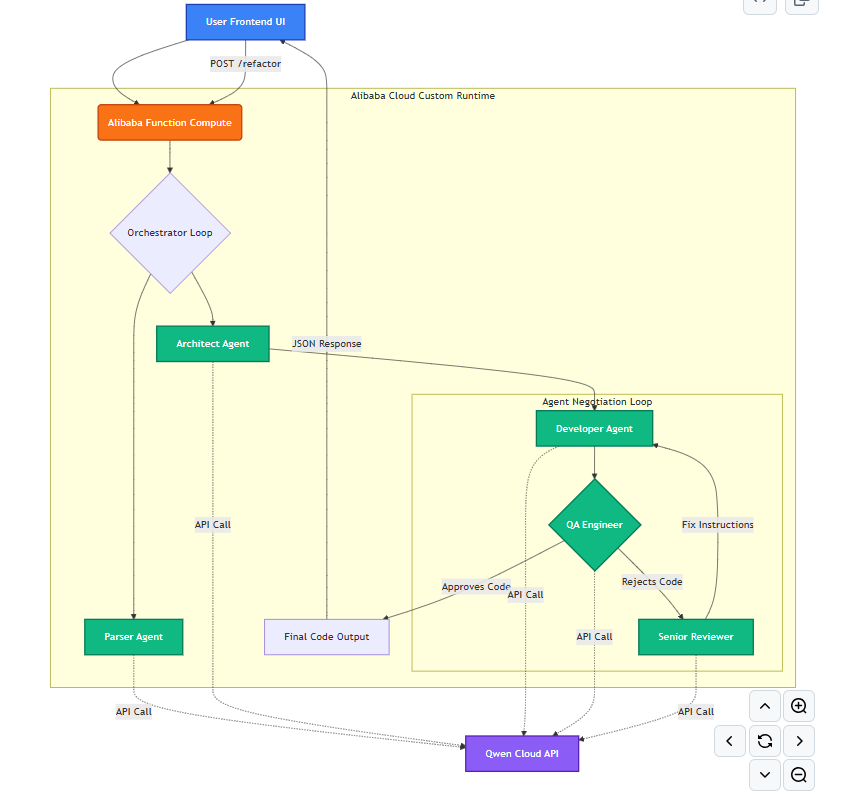
Language: TypeScript, Node.js 18+ Framework: Express.js AI: Qwen (qwen-plus) via DashScope Cloud: Alibaba Cloud Function Compute (custom runtime, serverless) Frontend: HTML5, CSS3, JavaScript (no frameworks) Styling: Dark theme with glassmorphism + French flag accent colors Architecture Docs: Mermaid.js diagrams
Built With
- analysis
- and
- autonomous
- built-with-flask-+-sqlalchemy-+-tailwind-css.-zero-dependencies-on-node/npm.-powered-by-qwen-cloud-(alibaba-cloud-dashscope
- deep
- for
- incident-response
- mode)
- openai-compatible
- sentinels
- the

Log in or sign up for Devpost to join the conversation.