-
-
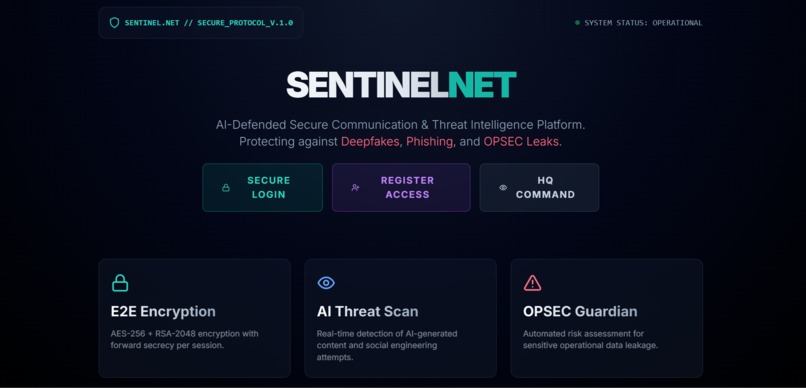
home
-
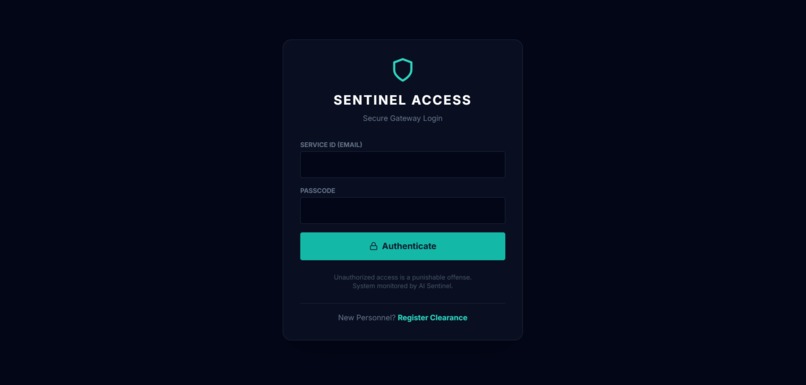
login
-
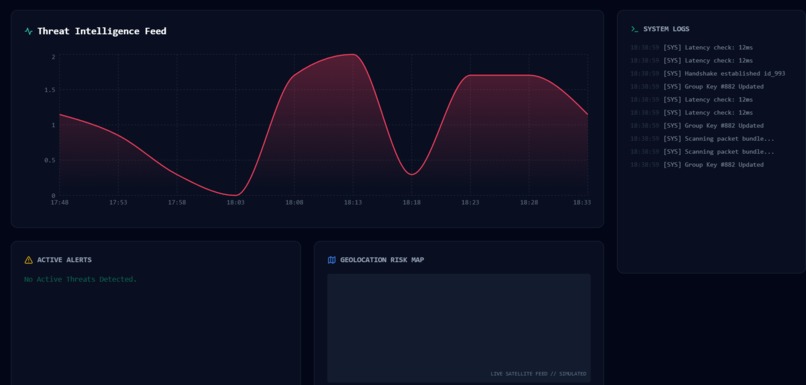
threat detection
-
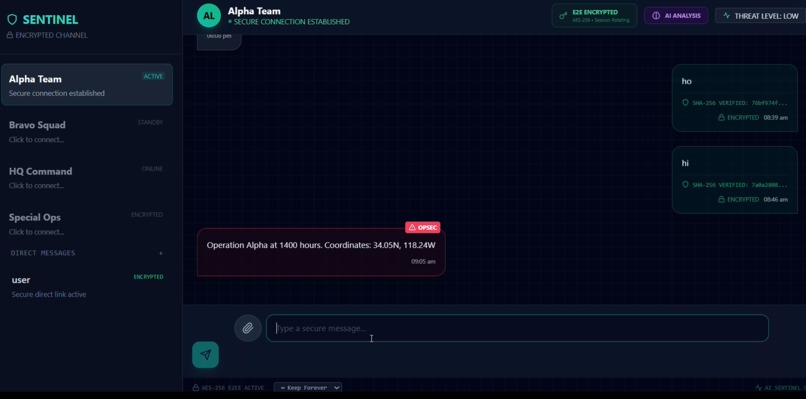
chat space end to end
-
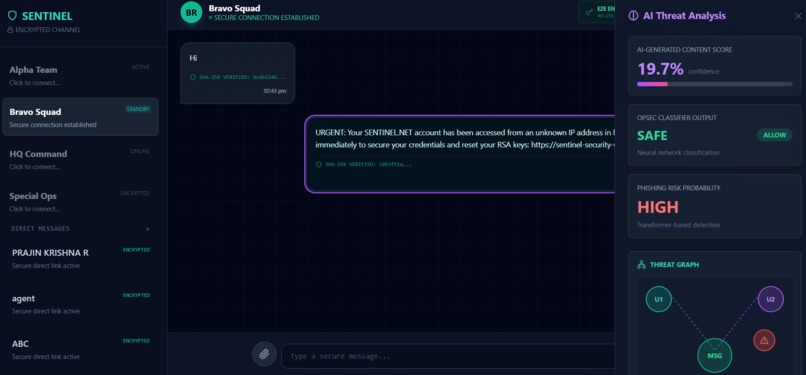
bert algorithm working
-
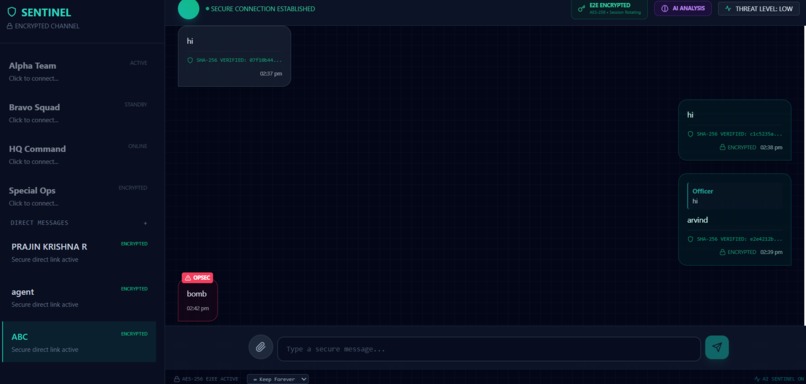
private Direct Messages
Inspiration
Defence personnel, veterans, and their families are increasingly targeted by AI-generated phishing, social engineering attacks, impersonation, and disinformation campaigns. While encrypted messaging apps protect data transmission, they do not protect users from intelligent threats inside conversations.
We asked a simple question:
What if AI could defend conversations before they become threats?
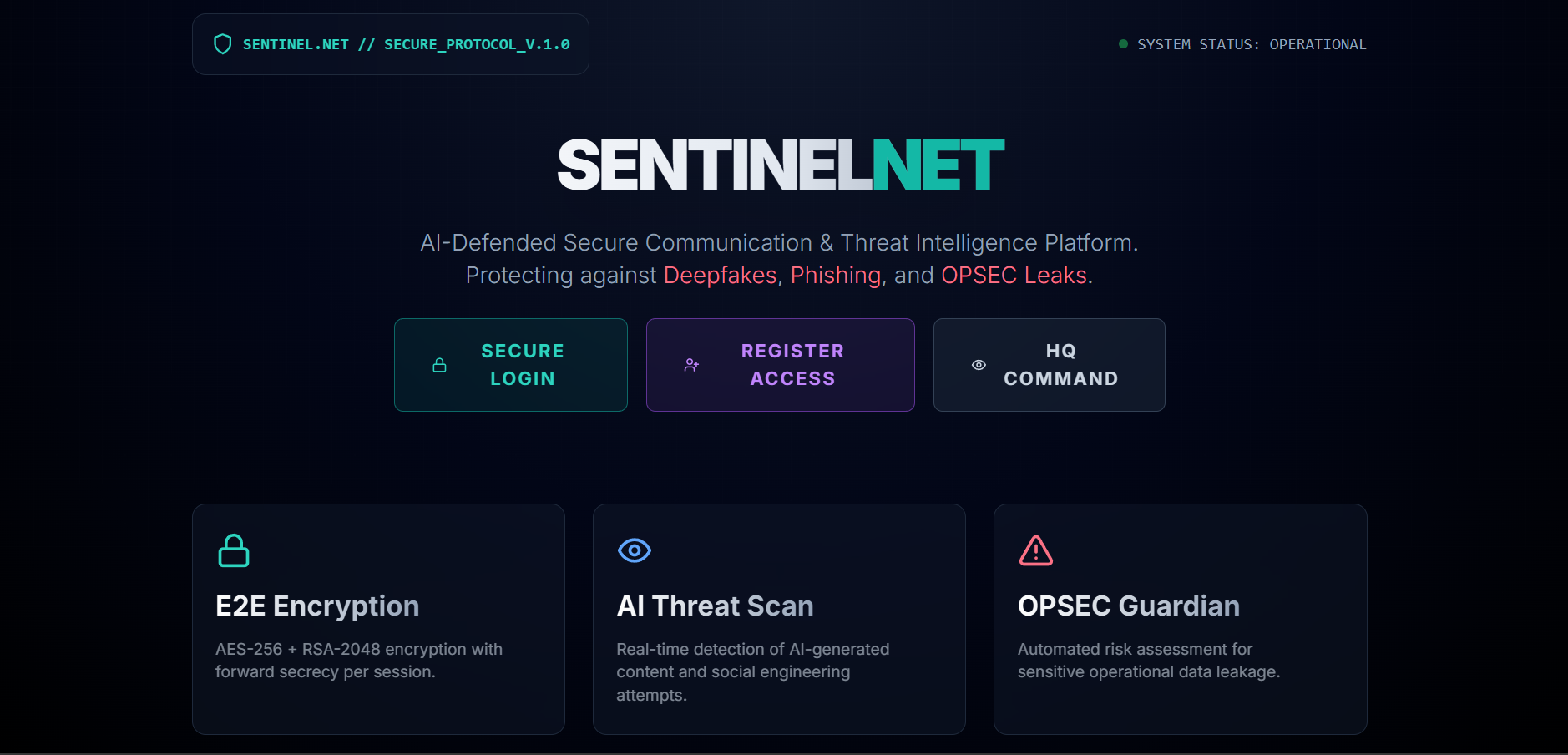
That idea led to SentinelNet — an AI-defended secure communication platform designed for defence-grade environments.
What it does
SentinelNet is a secure communication ecosystem that combines:
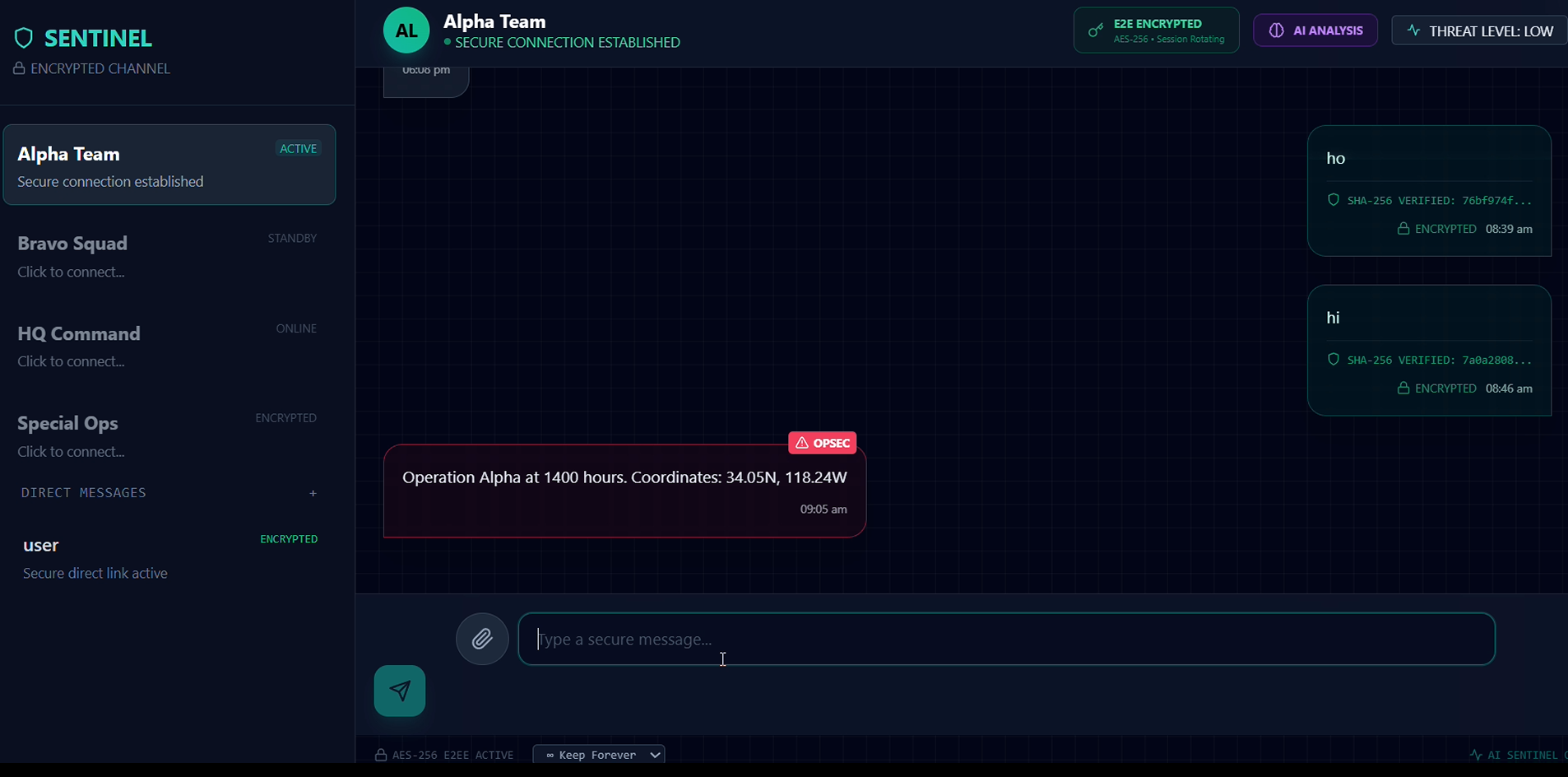
• End-to-End Encryption (AES-256)
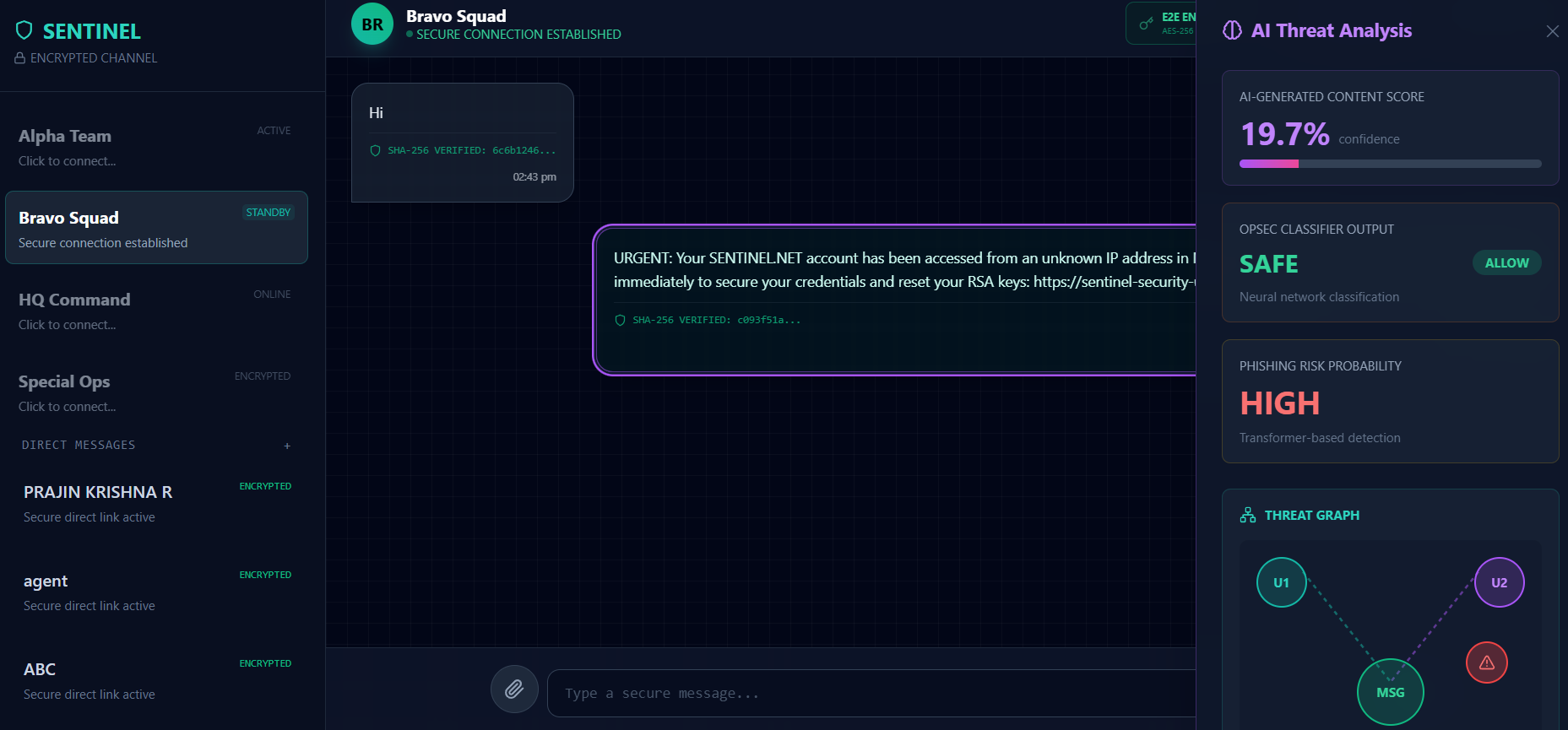
• AI-powered threat detection
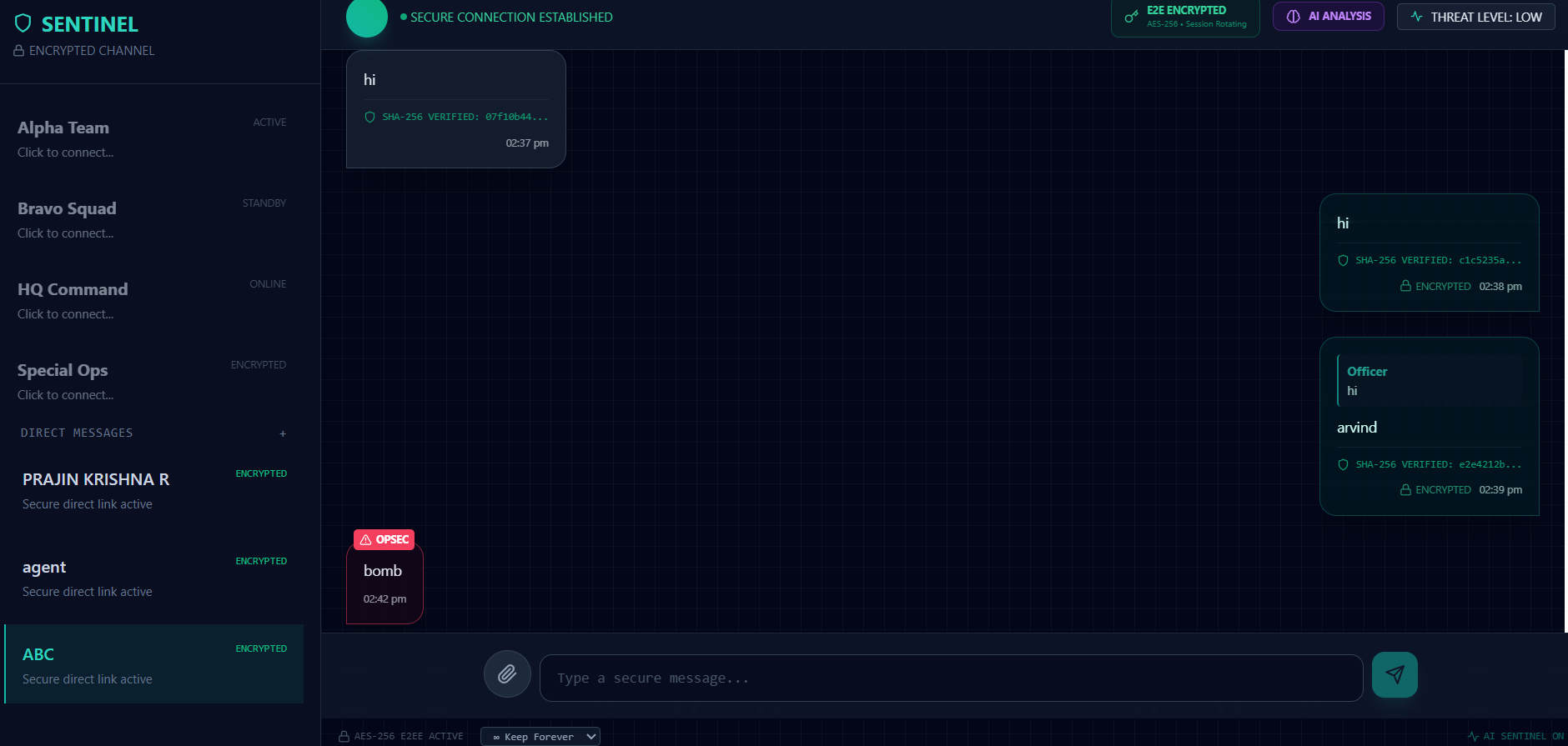
• OPSEC (Operational Security) leak detection
• AI-generated content identification
• Phishing & social engineering detection
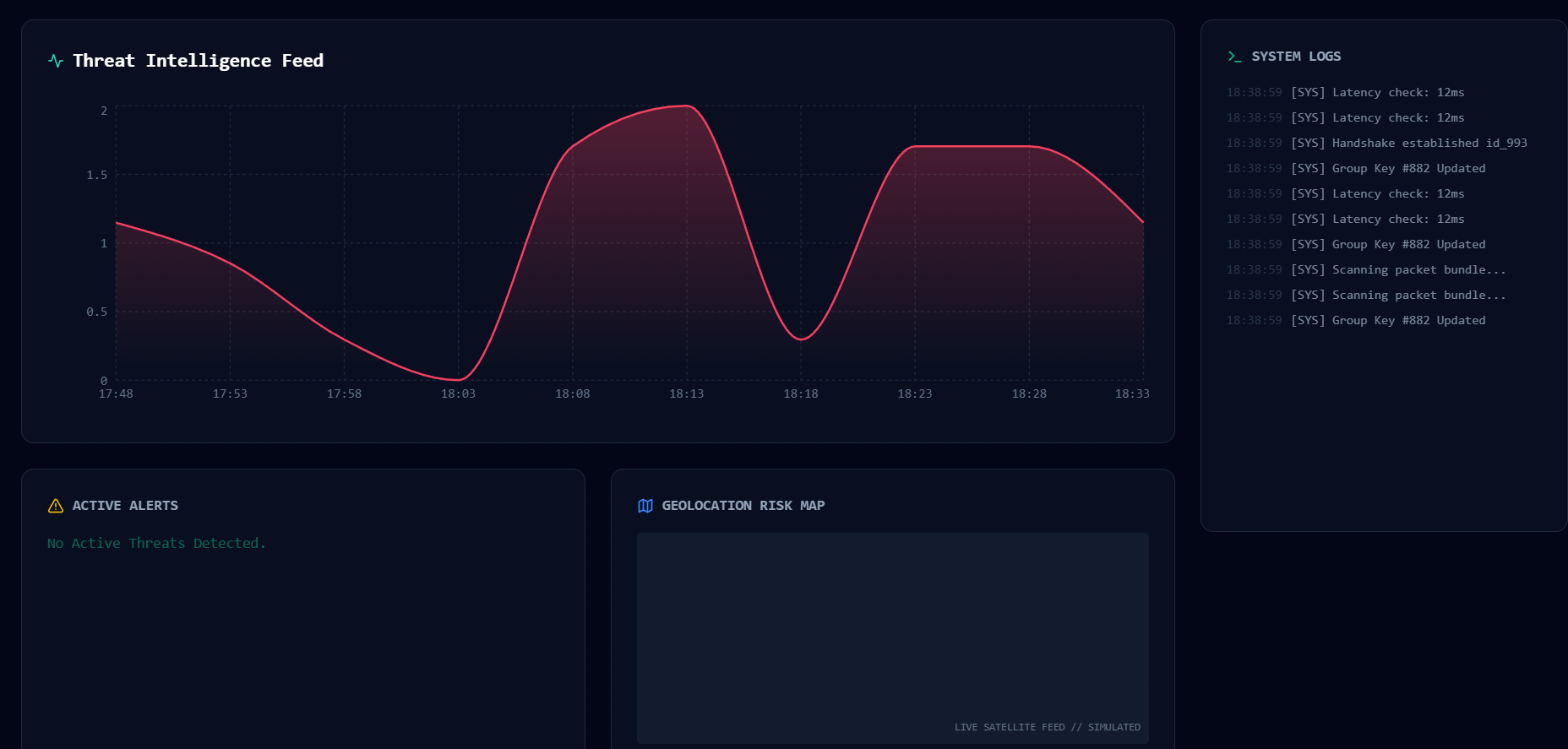
• HQ Command Monitoring Dashboard
Before a message is encrypted and sent, it is analyzed by multiple AI models to detect:
- Sensitive operational information
- Suspicious urgency language
- Impersonation patterns
- AI-generated manipulation
If risk is detected, users are warned in real time.
Admins can monitor anonymized risk insights through a defence-grade HQ dashboard.
SentinelNet doesn’t just encrypt messages — it actively protects users.
How we built it
Frontend:
- Next.js + React
- Tailwind CSS
- Recharts for analytics visualization
Backend:
- FastAPI (Python)
- WebSockets for real-time communication
- PostgreSQL (Supabase-ready)
Security:
- AES-256 encryption
- Public-private key exchange
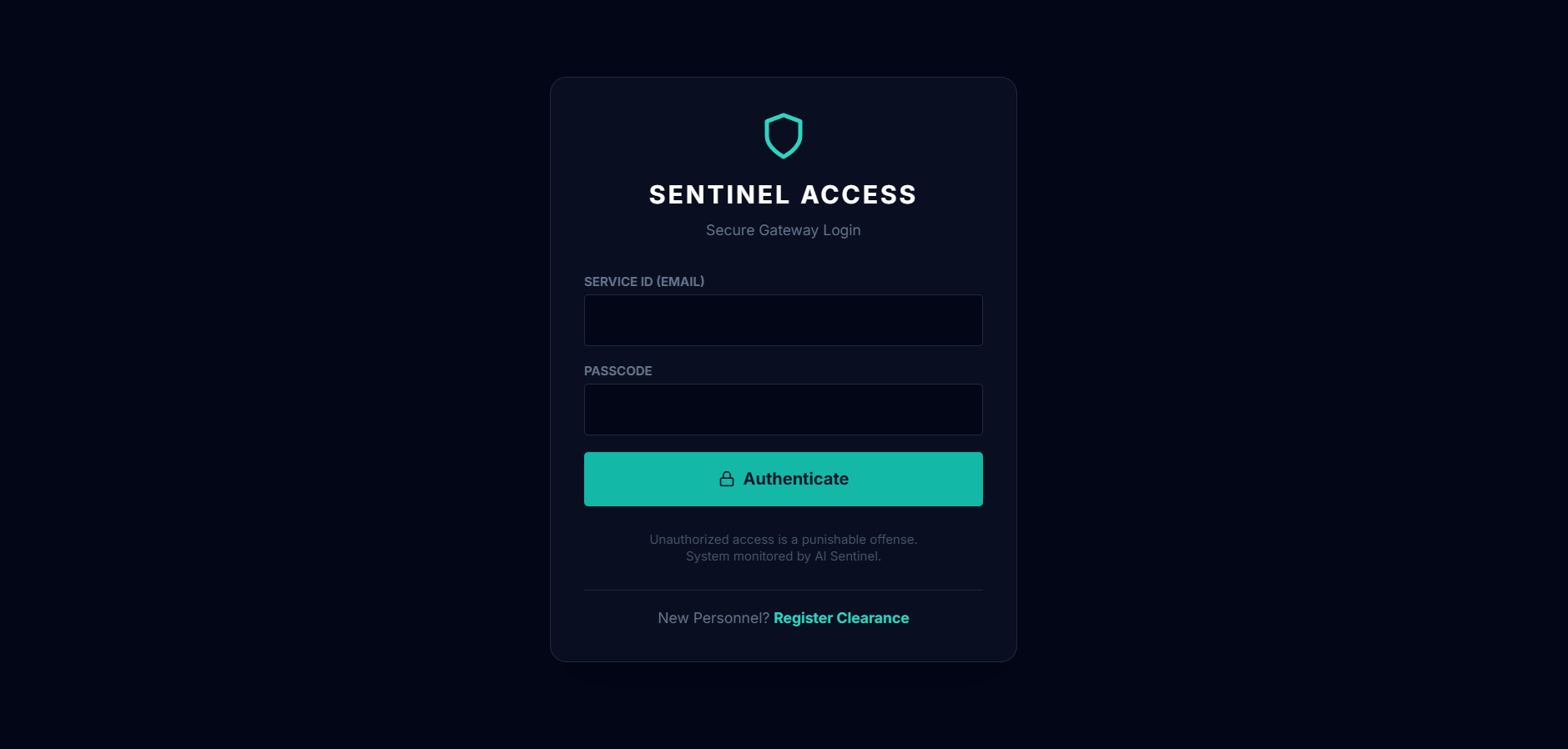
- JWT authentication
- Forward secrecy session keys
- SHA-256 message integrity hashing
AI Threat Intelligence Engine: We built a hybrid AI pipeline using HuggingFace Transformers and PyTorch.
Models include:
- AI-generated content detector (DistilBERT/RoBERTa fine-tuned)
- OPSEC risk classifier
- Phishing & social engineering detector
Each message passes through: Feature Extraction → Multi-model inference → Risk Aggregator → Explanation Layer → Encryption
Challenges we ran into
- Integrating AI scanning without compromising end-to-end encryption logic.
- Designing risk detection that is sensitive enough to detect threats but not overly aggressive.
- Handling secure key exchange and forward secrecy implementation.
- Managing database authentication and user role-based access.
- Designing a UI that feels defence-grade instead of casual messaging style.
Balancing security, usability, and AI performance was our biggest technical challenge.
Accomplishments that we're proud of
• Built a working AI-powered threat scanning pipeline
• Integrated encryption with pre-send AI analysis
• Developed a real-time HQ monitoring dashboard
• Designed a professional defence-style UI
• Successfully implemented role-based governance
• Created a modular architecture for future scalability
The biggest achievement: creating a system that shifts communication security from passive encryption to active AI defense.
What we learned
• Encryption alone is not enough in modern cyber warfare.
• AI can be used defensively to protect communication ecosystems.
• Security systems must balance privacy and intelligence.
• Designing for high-risk environments requires disciplined architecture.
• Real-time AI inference must be optimized carefully for latency.
We learned how to combine cybersecurity, AI, and system design into one unified ecosystem.
What's next for SentinelNet – AI-Defended Secure Communication Platform
Future roadmap includes:
• On-device AI inference for zero server visibility
• Blockchain-based audit logs
• Behavioral anomaly detection
• Federated learning for secure model updates
• Government-grade deployment infrastructure
• Mobile app deployment (Android & iOS)
• Secure file intelligence scanning
• Real-time threat clustering and visualization
Our vision is to transform encrypted messaging into an intelligent defensive communication network.
SentinelNet aims to become the future of secure, AI-protected communication systems.
Built With
- aes-256
- fastapi
- huggingface-transformers
- jwt
- next.js
- postgresql
- python
- pytorch
- react
- supabase
- tailwind-css
- websockets


Log in or sign up for Devpost to join the conversation.