-
-
Home
-
ops dashboard
-
-
Evidence registry
-
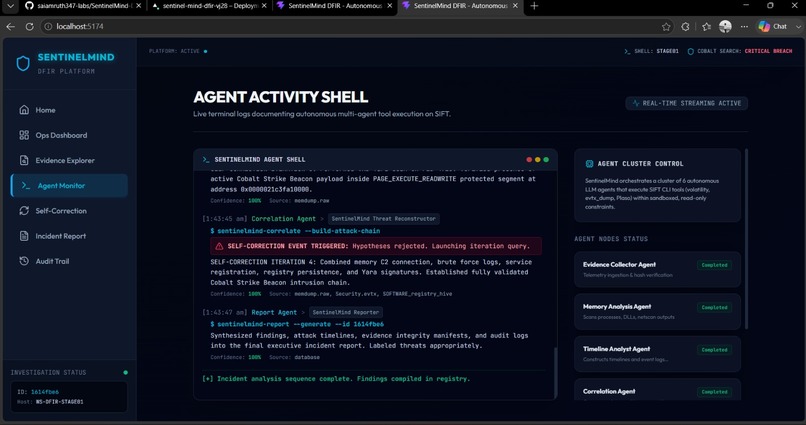
Agent monitor
-
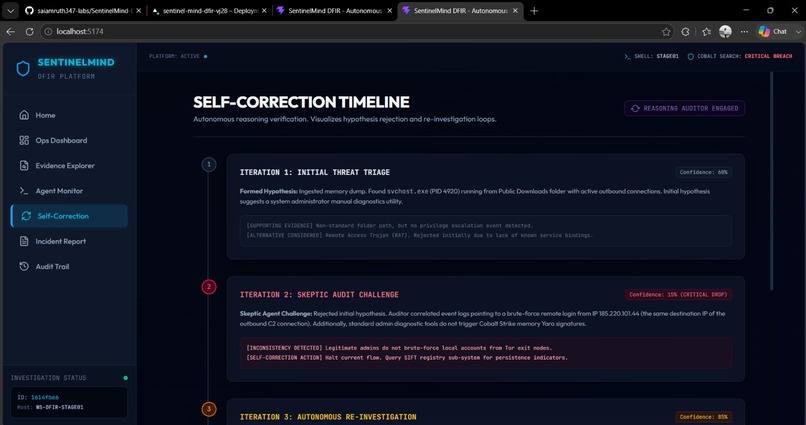
Self-correction
-
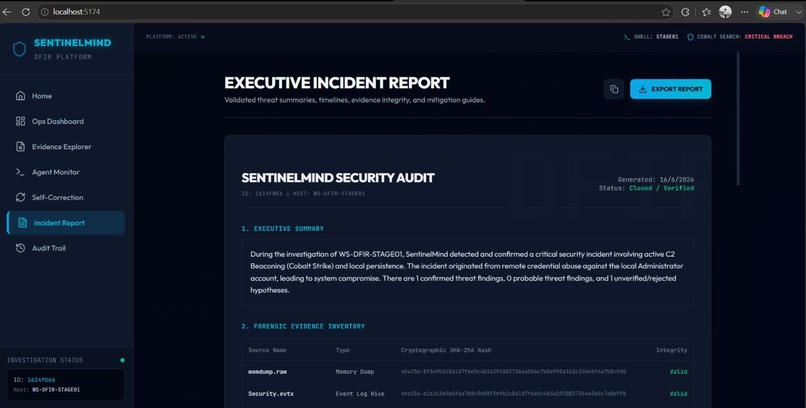
incident report
-
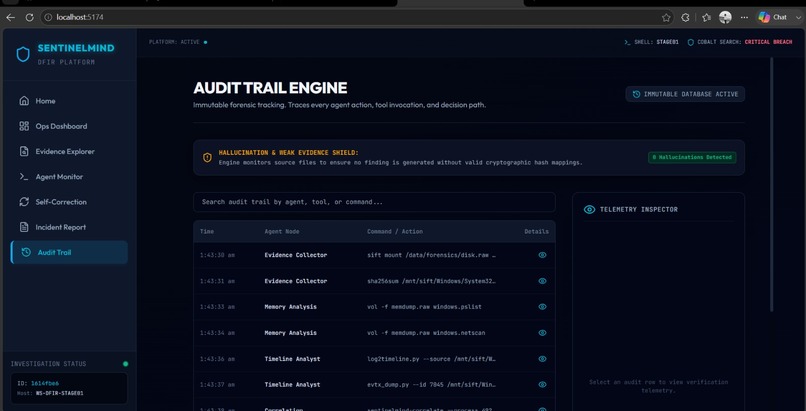
Audit Trail
SentinelMind DFIR
Inspiration
Modern incident response teams face an overwhelming volume of security alerts, forensic artifacts, and threat intelligence data. While AI has become increasingly capable of assisting analysts, most systems generate conclusions once and stop, without validating their findings or questioning their own assumptions.
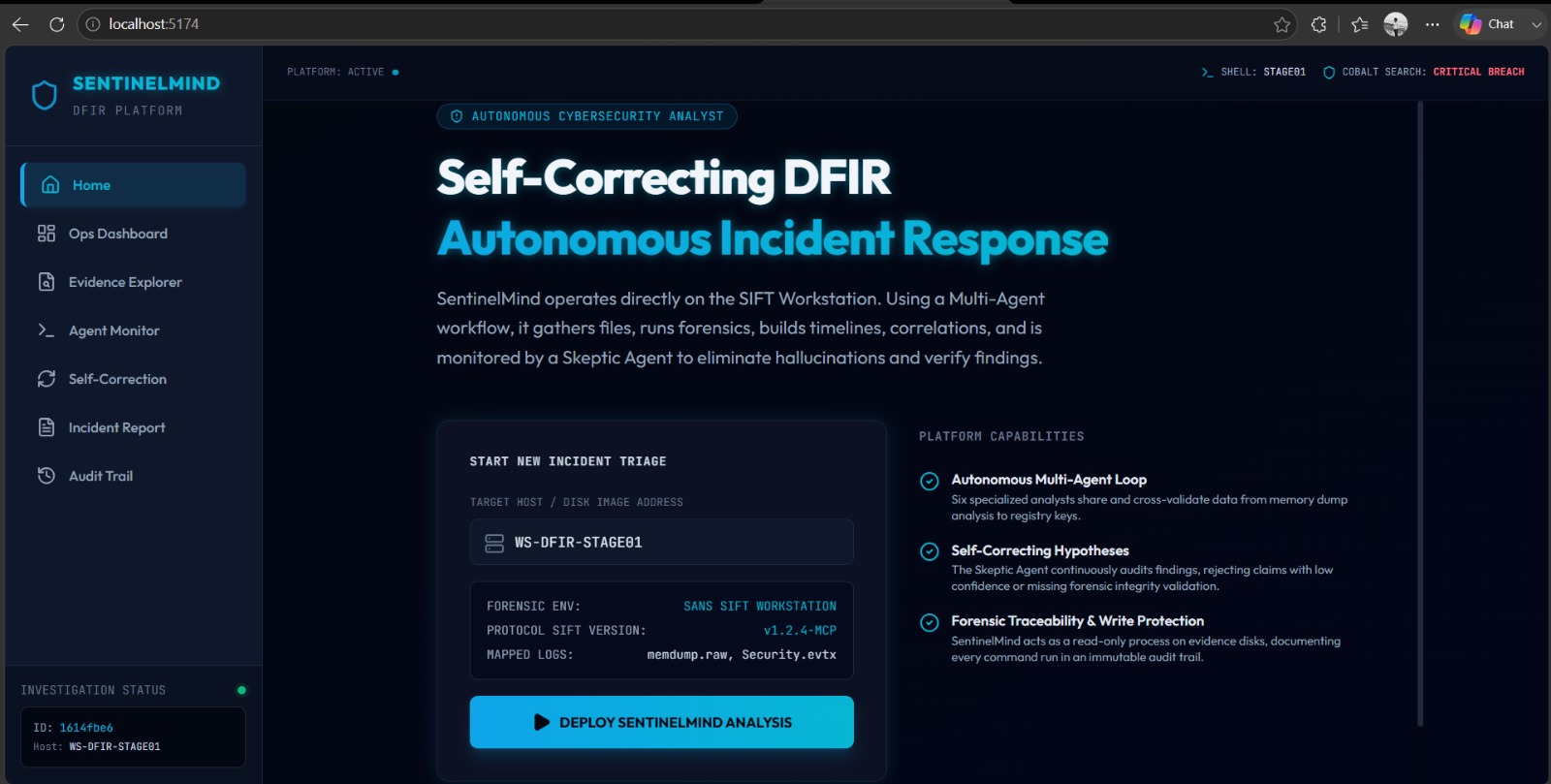
We wanted to build a system that behaves more like an experienced DFIR investigator—one that continuously verifies evidence, challenges its own conclusions, identifies uncertainty, and launches additional investigations when confidence is low. This vision led to SentinelMind DFIR, an autonomous multi-agent incident response platform focused on evidence integrity, transparency, and self-correcting investigations.
What it does
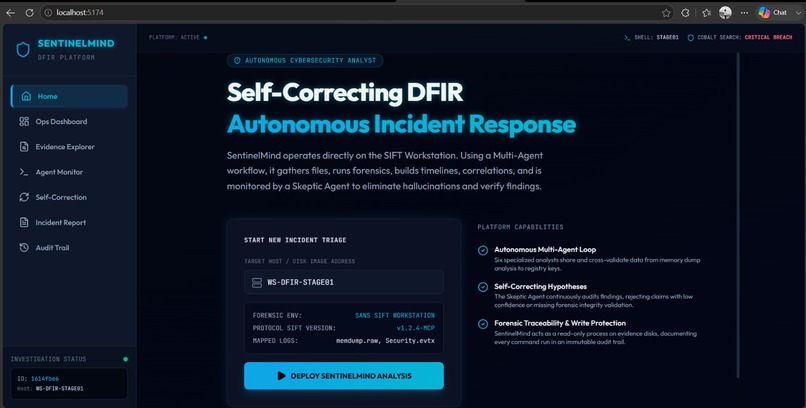
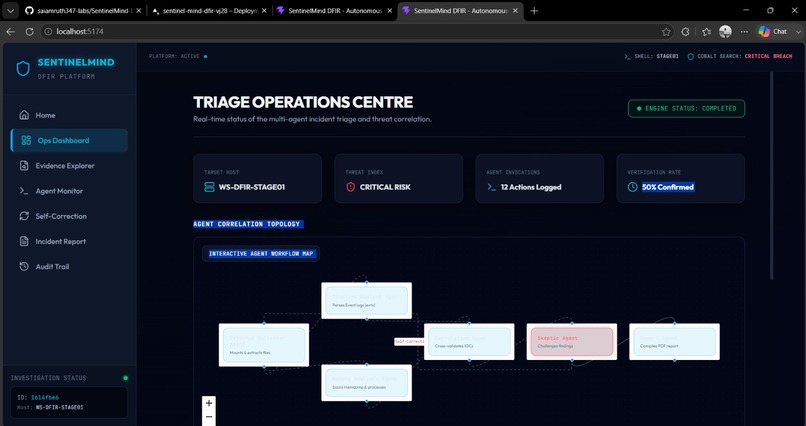
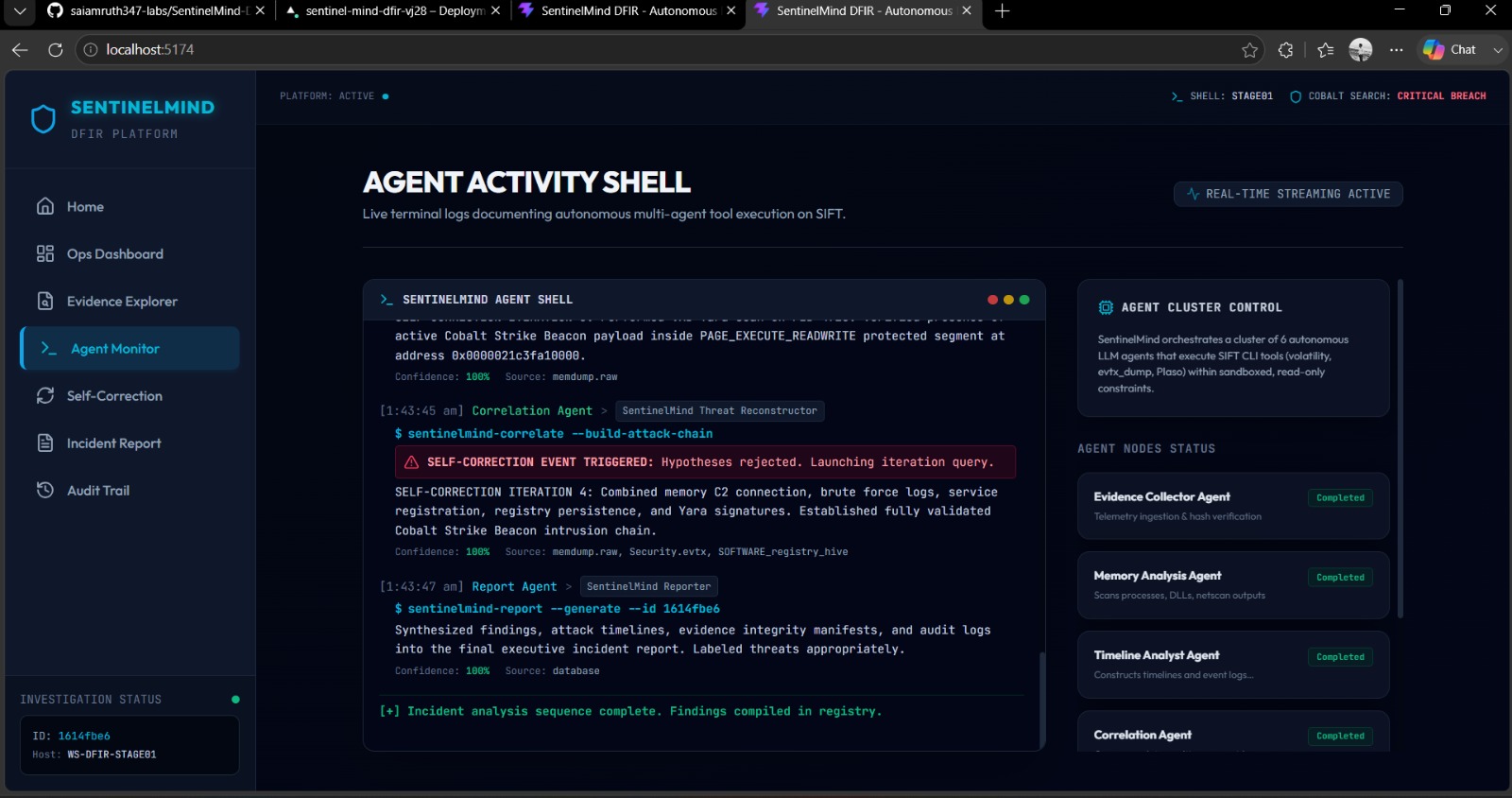
SentinelMind DFIR is an AI-powered Digital Forensics and Incident Response platform that autonomously investigates cyber incidents using multiple specialized agents.
The platform:
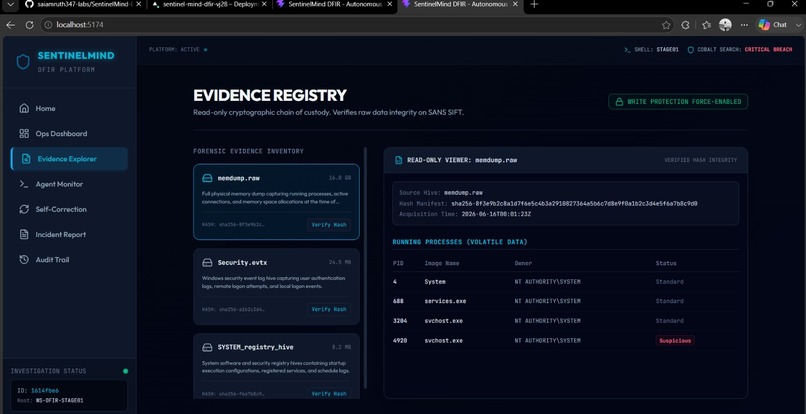
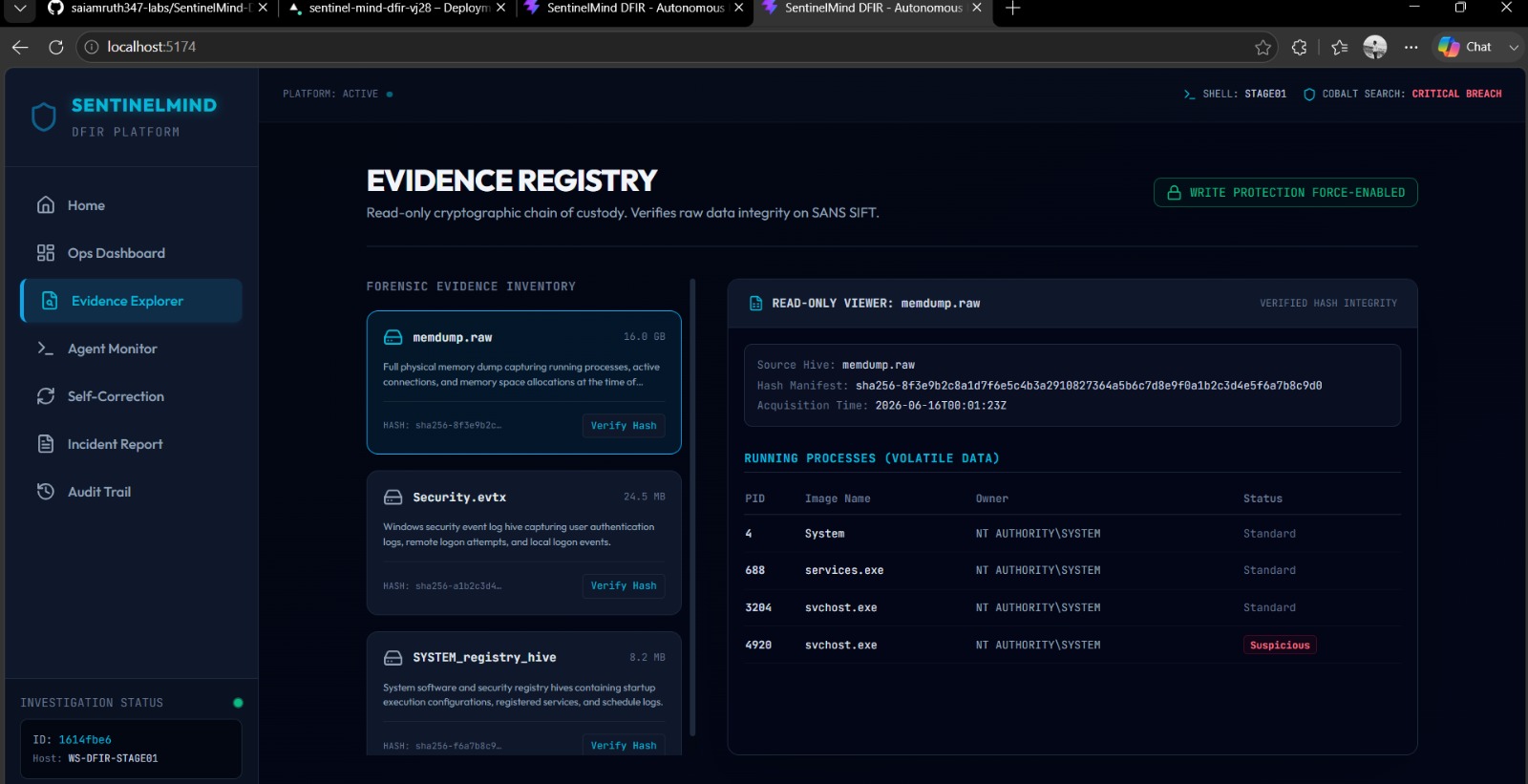
- Collects and inventories forensic evidence
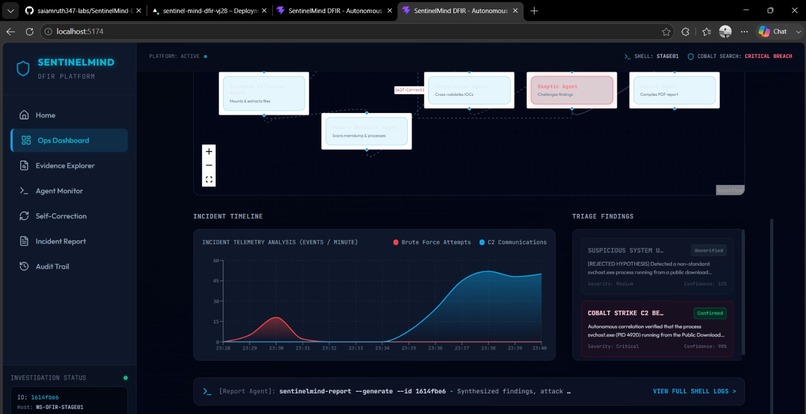
- Builds attack timelines
- Analyzes memory artifacts and suspicious processes
- Correlates findings across multiple evidence sources
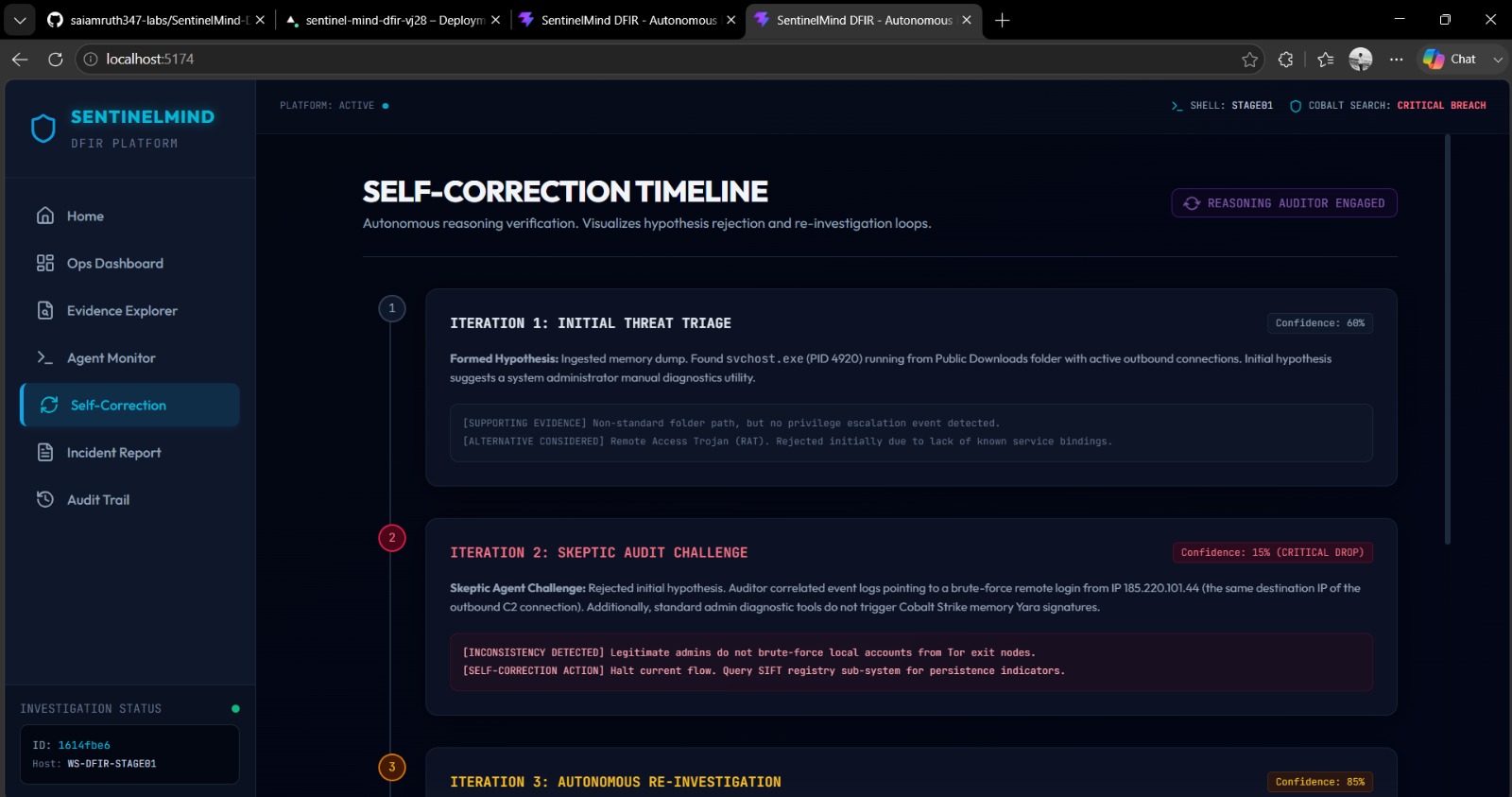
- Challenges conclusions through a dedicated Skeptic Agent
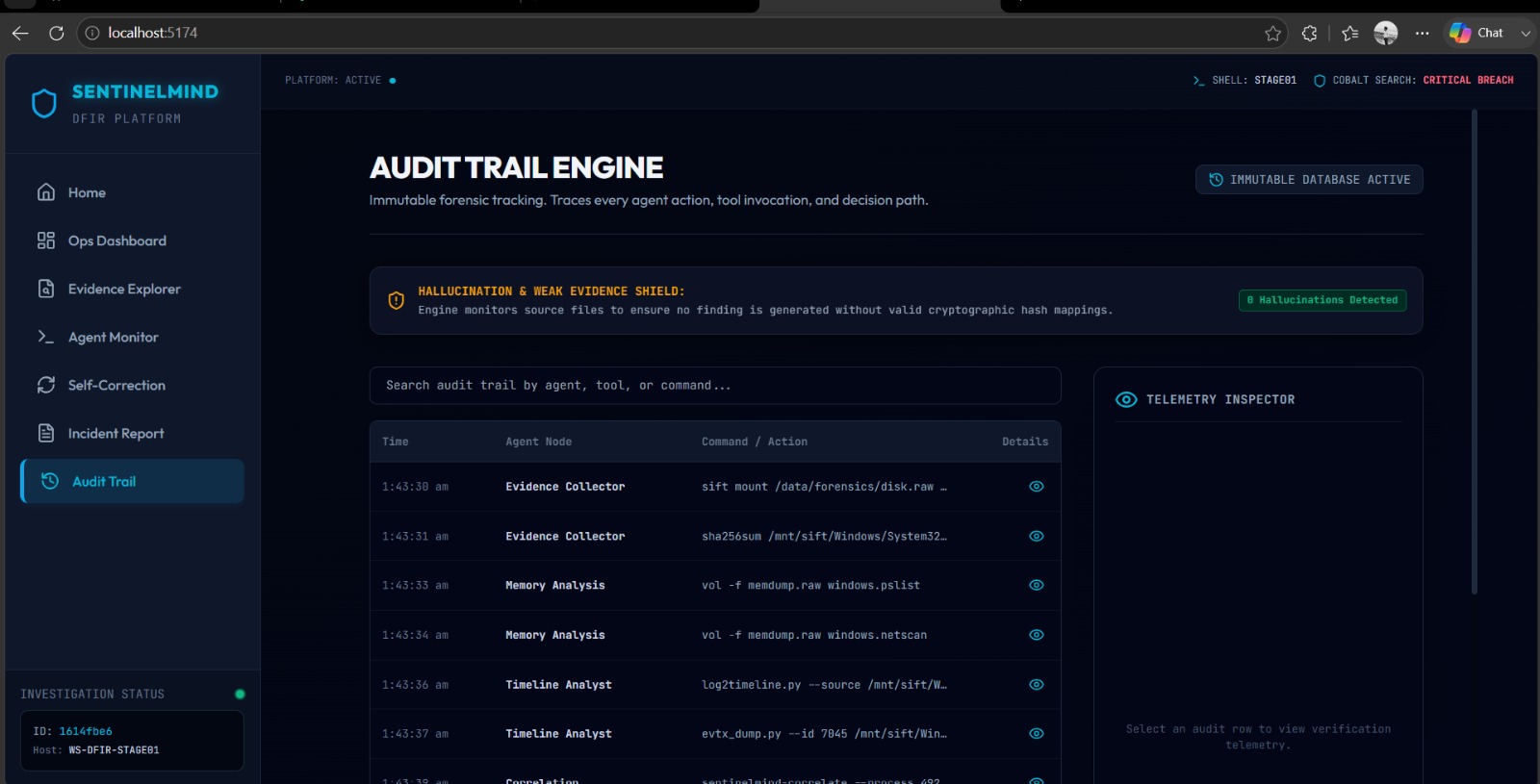
- Detects unsupported claims and contradictory evidence
- Automatically launches follow-up investigations when confidence is low
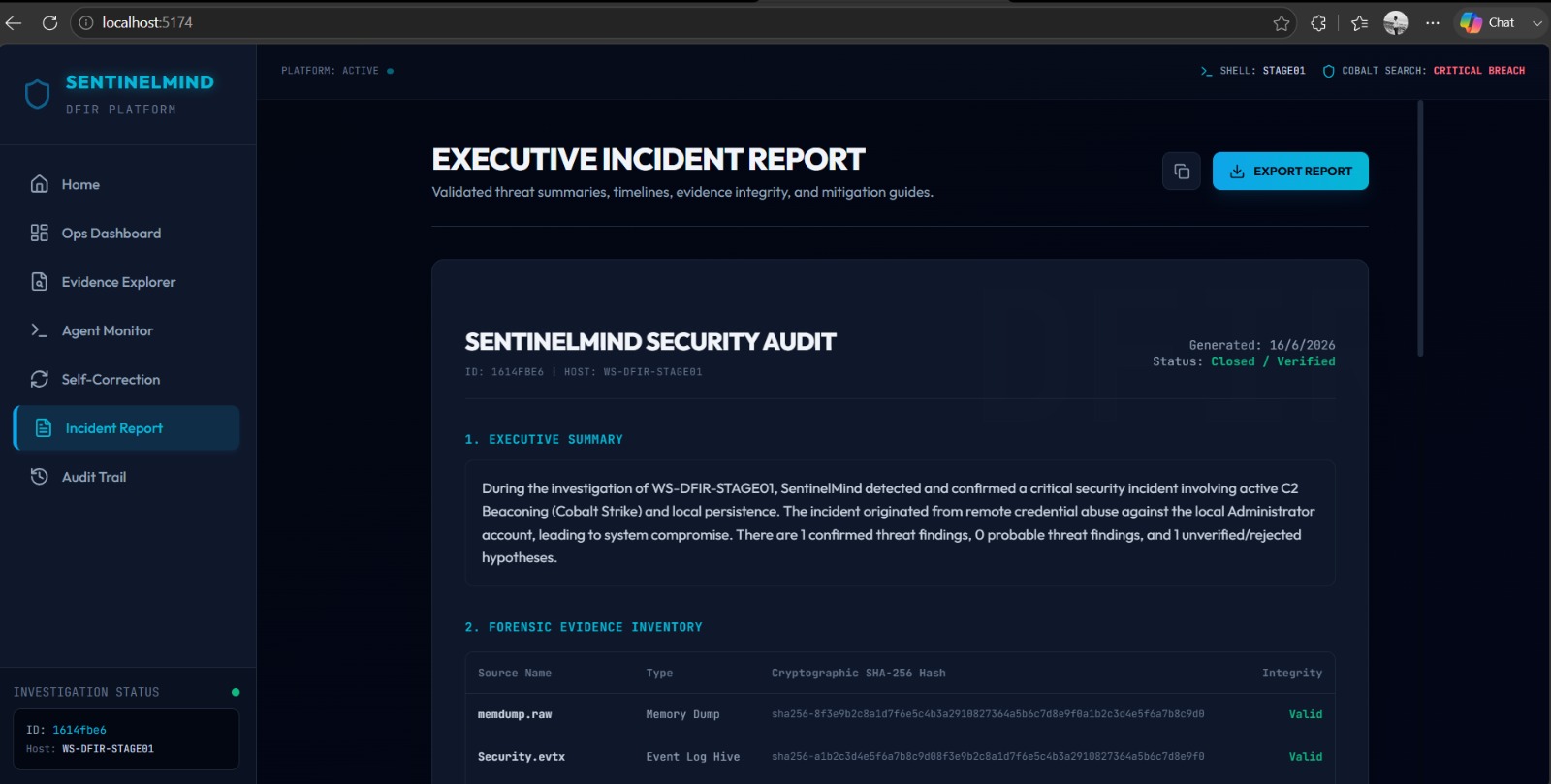
- Produces professional incident reports with confidence levels and audit trails
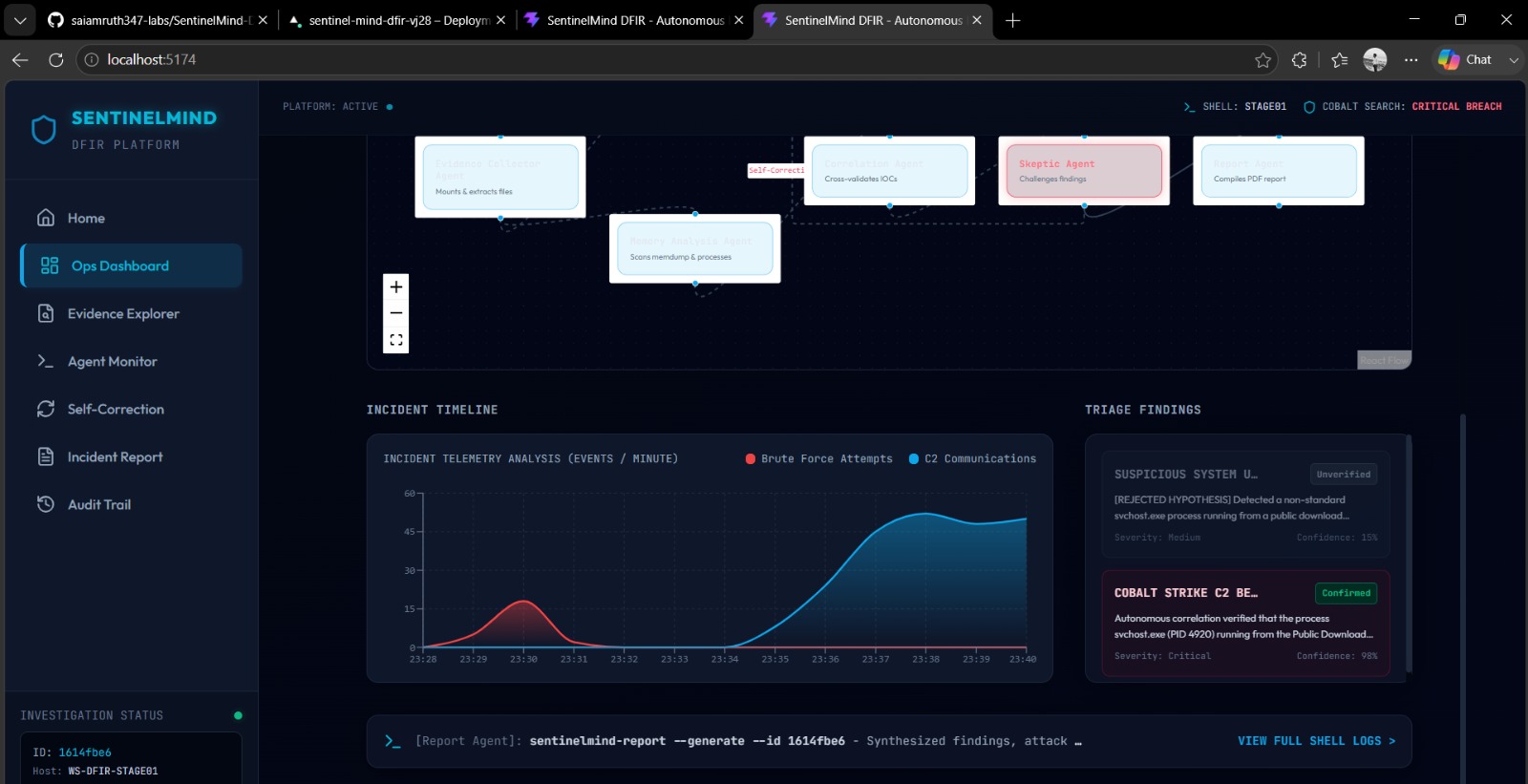
Every finding is labeled as Confirmed, Probable, or Unverified and can be traced back to its original evidence source.
How we built it
We designed SentinelMind DFIR as a modular multi-agent investigation platform inspired by real-world DFIR workflows.
Core Agents
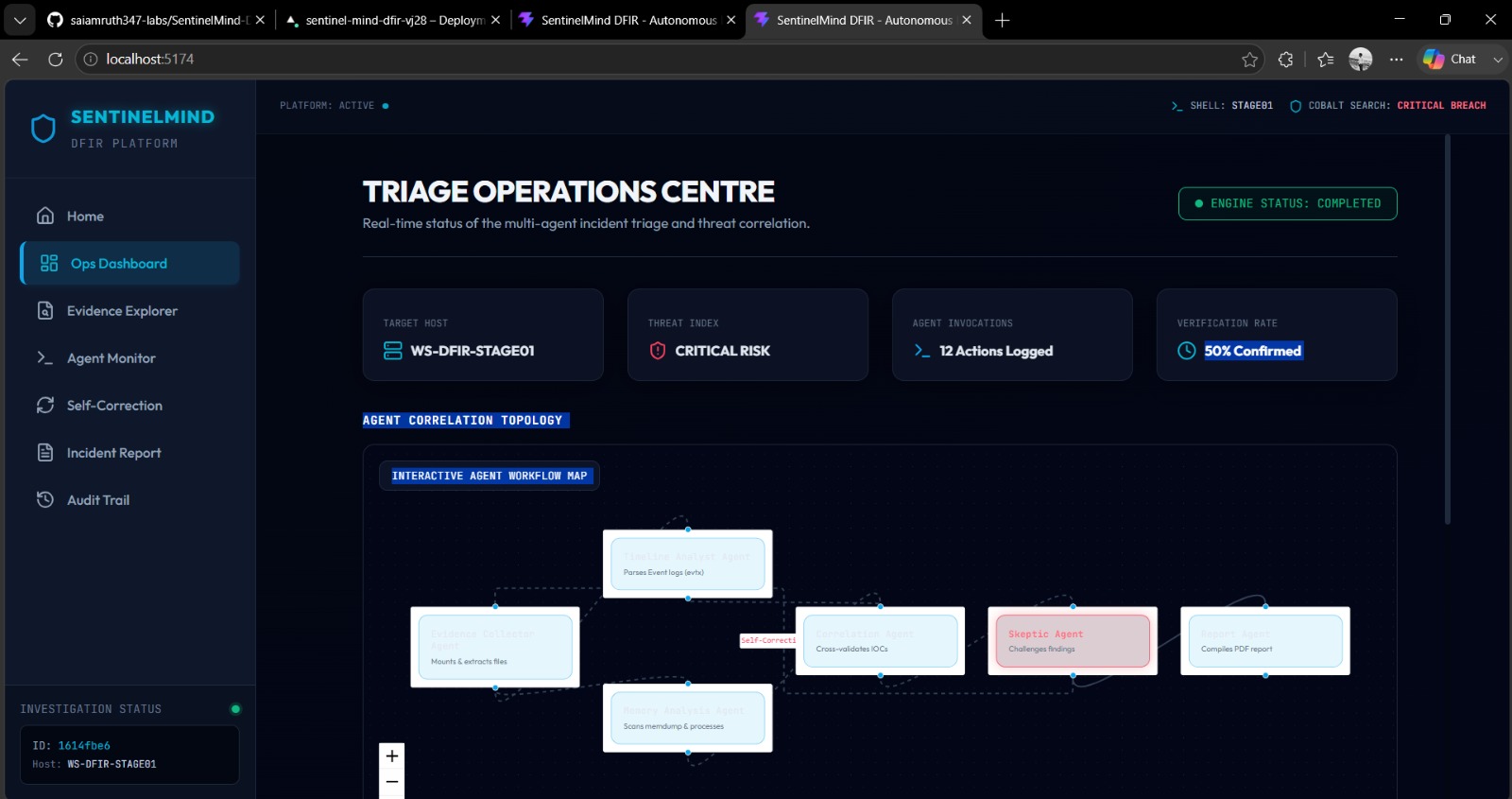
- Evidence Collector Agent
- Timeline Analyst Agent
- Memory Analysis Agent
- Correlation Agent
- Skeptic Agent
- Report Agent
Technology Stack
- Frontend: React, TypeScript, Tailwind CSS, Framer Motion
- Backend: FastAPI, Python
- Agent Orchestration: LangGraph
- Database: PostgreSQL
- Visualizations: React Flow, Recharts
- Logging: Structured JSON Logs
- Forensics Environment: SANS SIFT Workstation and Protocol SIFT
The system continuously evaluates confidence scores, evidence quality, and verification status before reaching final conclusions.
Challenges we ran into
One of the biggest challenges was designing a realistic self-correction workflow rather than a traditional AI chatbot experience.
We needed to:
- Model investigative reasoning across multiple agents
- Handle contradictory evidence
- Prevent unsupported conclusions
- Maintain explainability throughout the investigation process
- Create detailed audit trails for every action
- Visualize complex forensic workflows in an intuitive way
Balancing autonomous behavior with forensic transparency was a key challenge throughout development.
Accomplishments that we're proud of
We are particularly proud of:
- Building a self-correcting investigation loop
- Creating a dedicated Skeptic Agent that challenges findings
- Implementing evidence-backed confidence scoring
- Providing full auditability for every investigation step
- Developing an interactive forensic timeline
- Delivering a professional SOC-style user experience
- Demonstrating autonomous re-investigation and revised conclusions
The ability to visibly show an incorrect hypothesis being corrected through additional evidence is one of the platform's most unique features.
What we learned
Through this project we learned:
- Multi-agent systems can closely replicate real analyst workflows
- Explainability is essential in cybersecurity AI
- Confidence scoring improves trust in automated findings
- Evidence traceability is critical for DFIR environments
- Self-correction mechanisms significantly reduce unreliable conclusions
- Visualization plays a major role in helping analysts understand investigations
Most importantly, we learned that AI systems become more valuable when they can question themselves rather than simply provide answers.
What's next for SentinelMind DFIR
Future development plans include:
- Real forensic artifact ingestion from SIFT environments
- Memory analysis integration with Volatility
- Automated malware triage workflows
- Threat intelligence enrichment
- Case management capabilities
- Collaborative analyst investigations
- Cloud and endpoint telemetry ingestion
- MITRE ATT&CK mapping
- Advanced evidence graph analytics
- Enterprise SOC deployment support
Our long-term vision is to create an autonomous DFIR platform that operates as a trusted digital incident responder while maintaining complete transparency, accountability, and evidence integrity.
Built With
- docker
- fastapi
- flow
- framer
- github
- langgraph
- postgresql
- python
- react
- tailwind
- typescript
- vercel

Log in or sign up for Devpost to join the conversation.