-
-
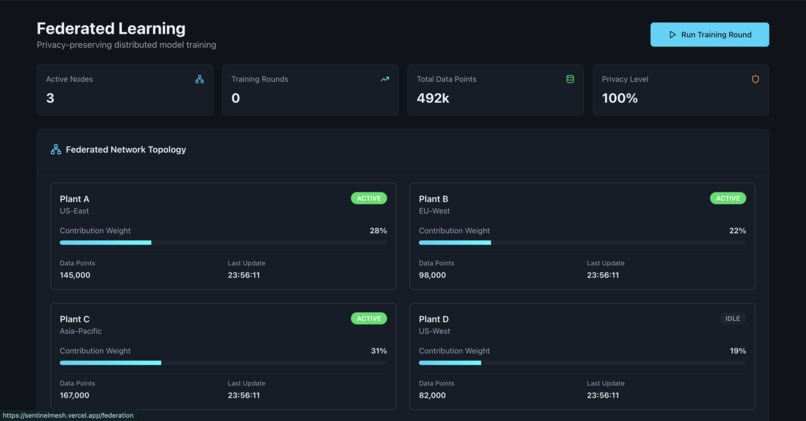
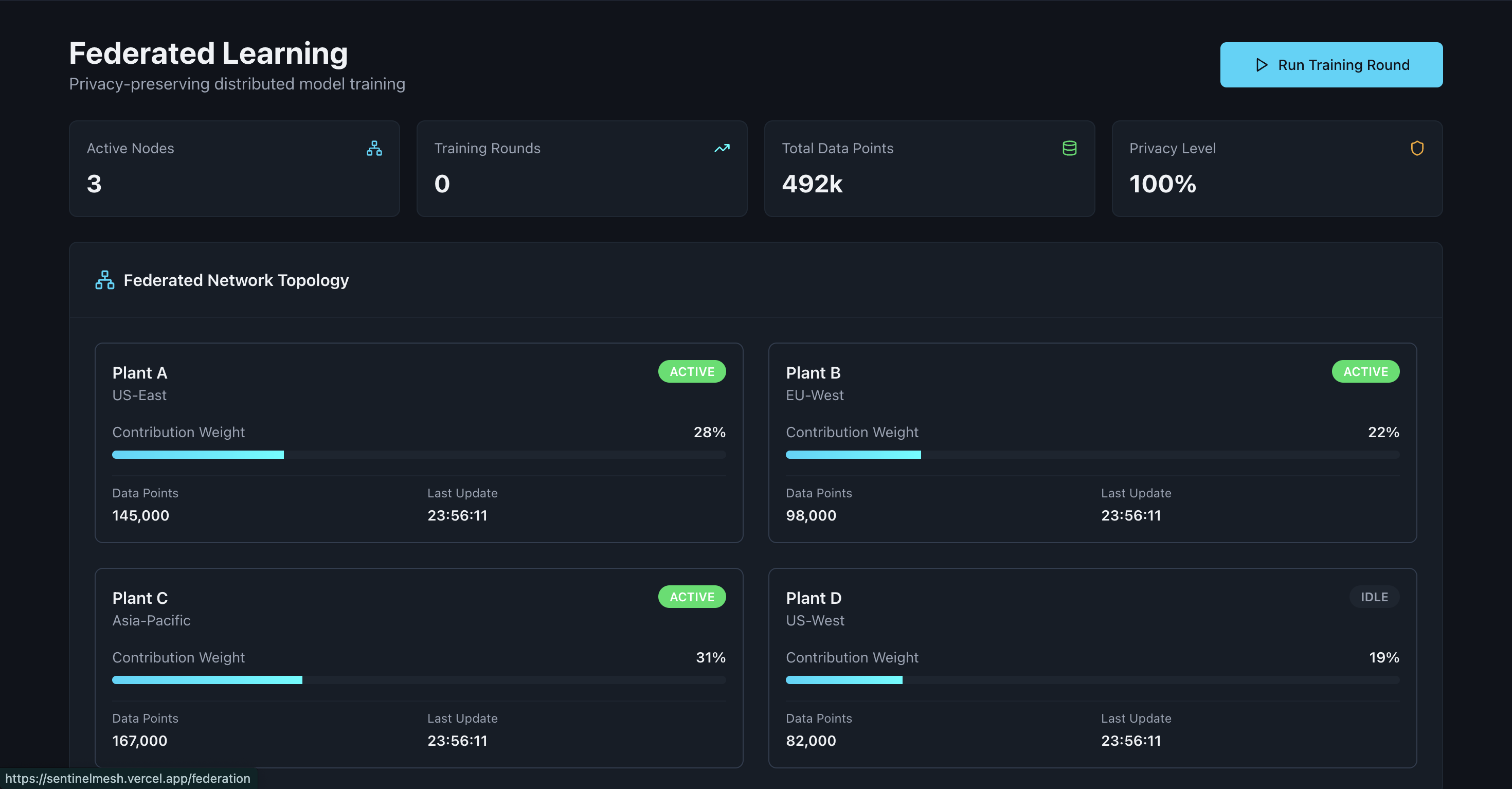
Federated Learning
-
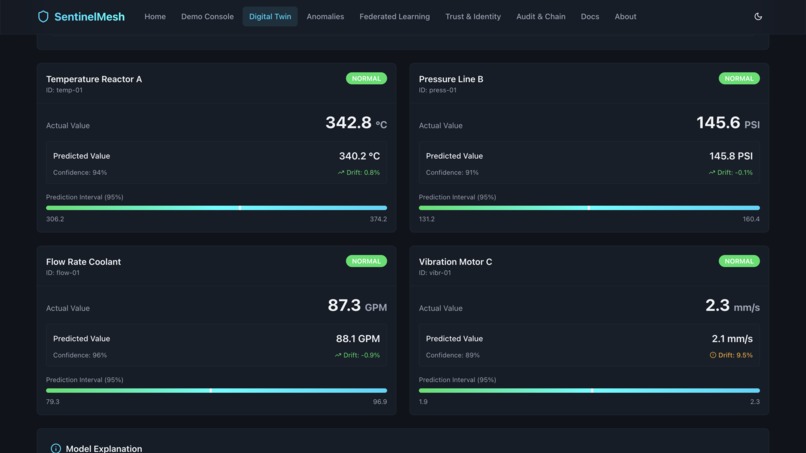
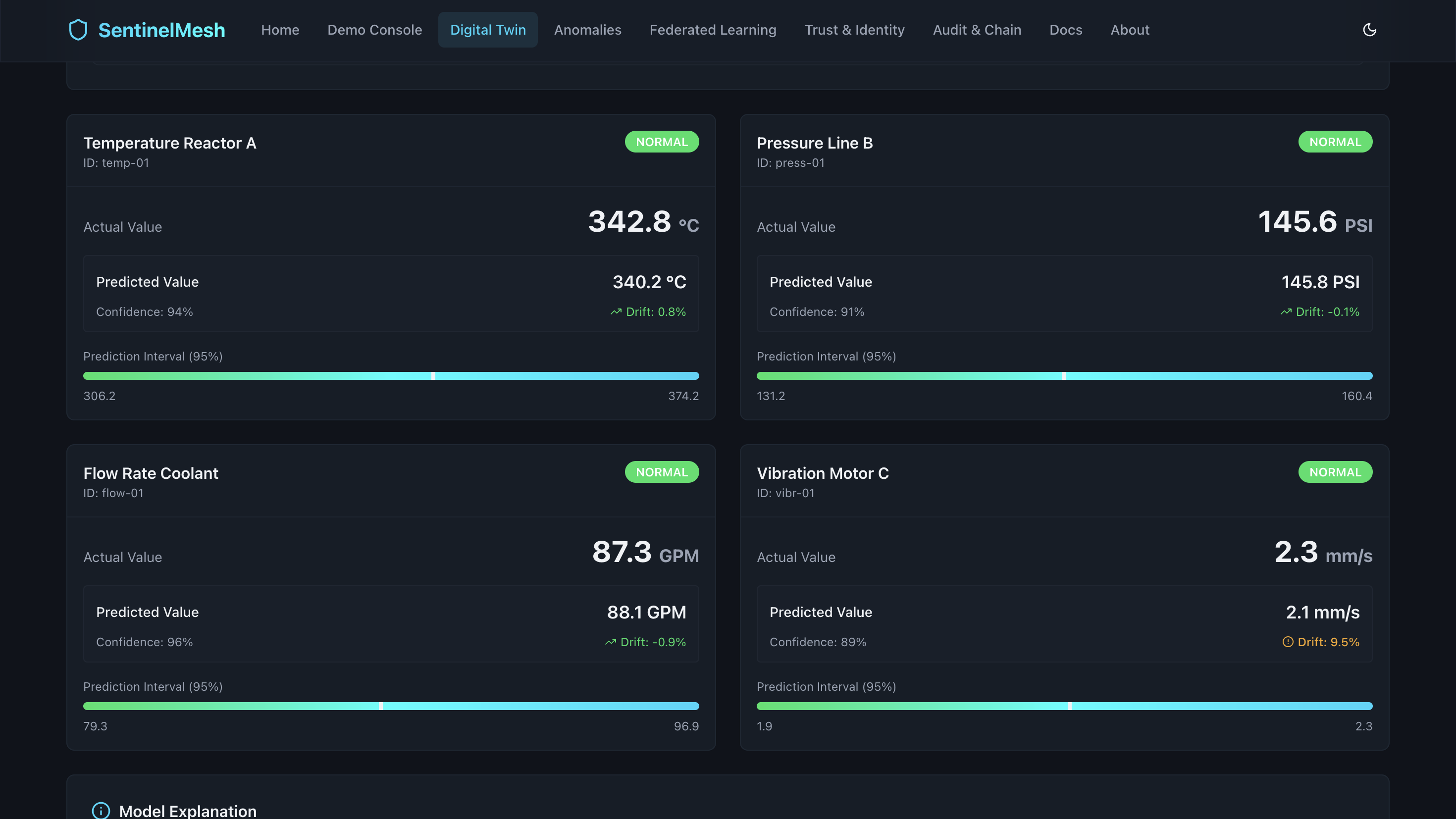
Digitial Twin
-
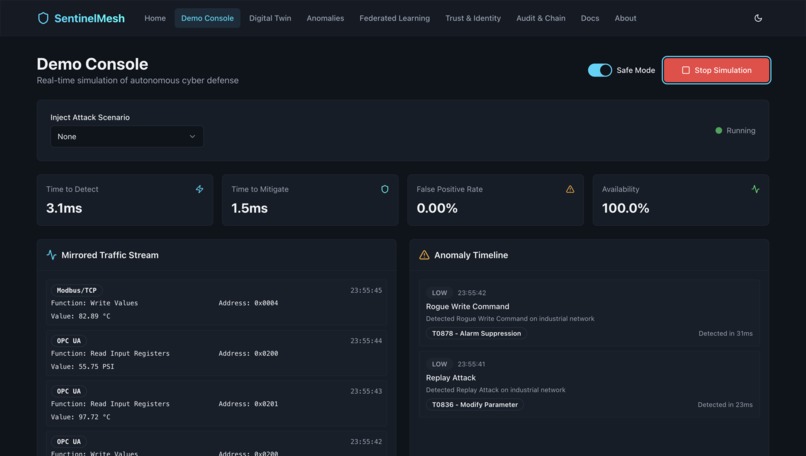
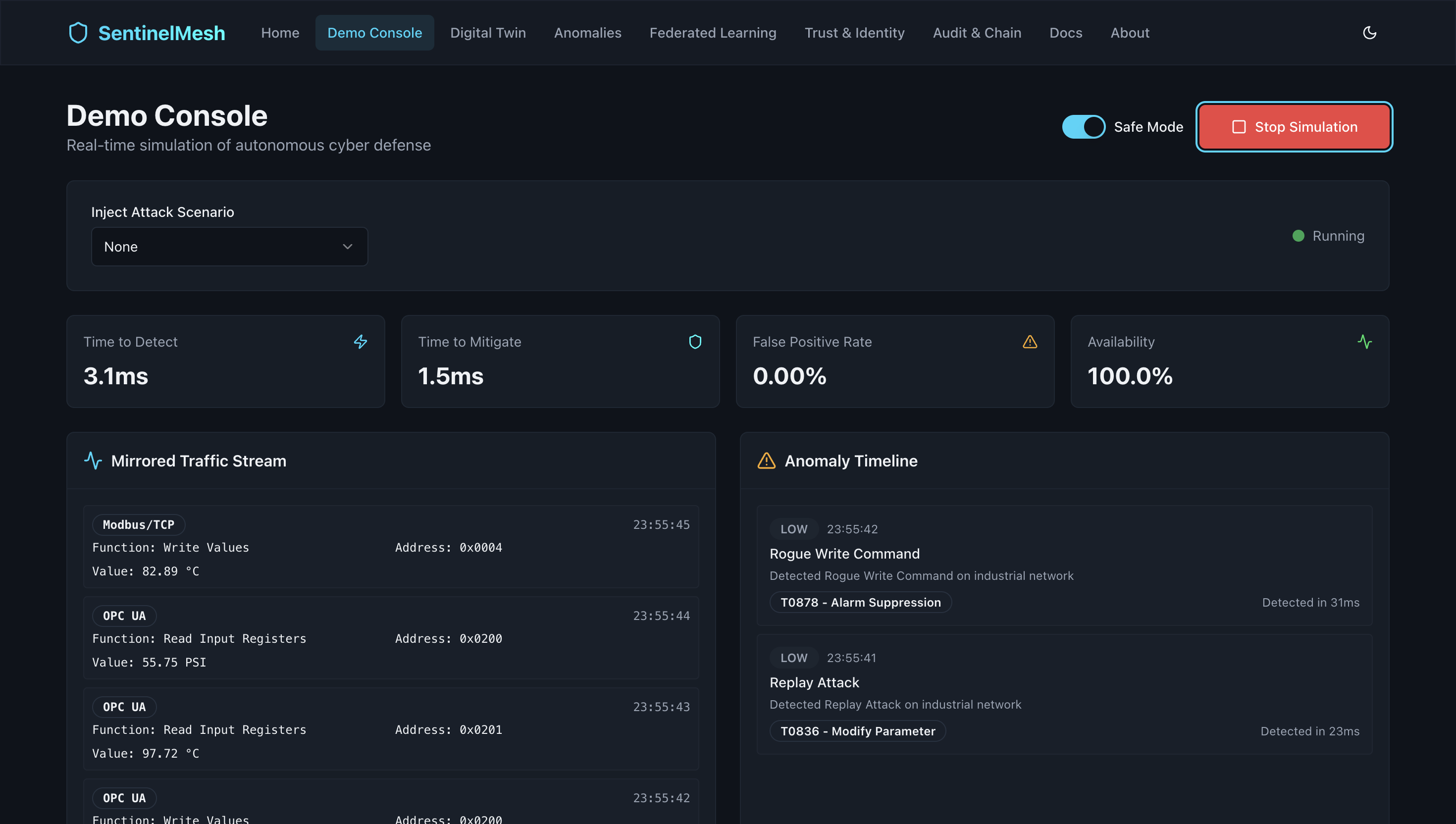
Demo Console
-
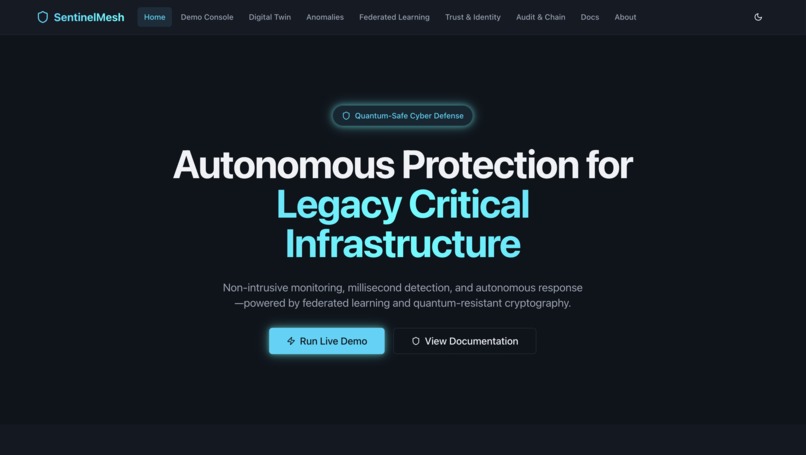
Landing Site
-
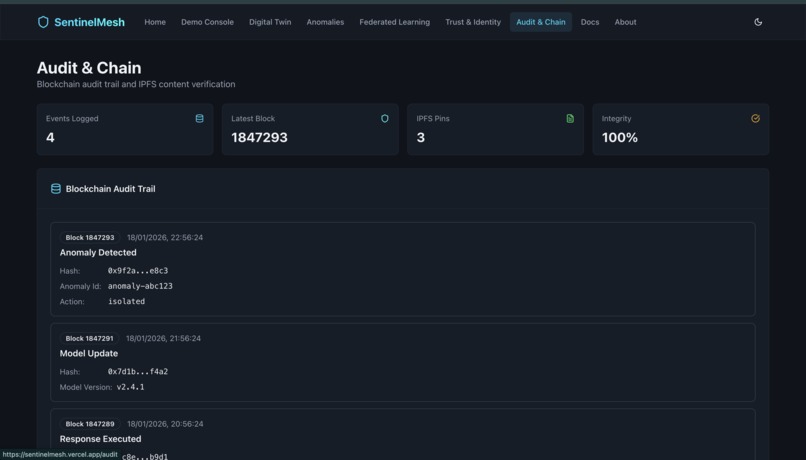
Blockchain Audit Trail
SentinelMesh
Inspiration
Critical infrastructure such as power grids, water systems, and manufacturing plants still relies on legacy OT/ICS networks that were never designed for modern cyber threats. These systems cannot be patched easily, tolerate zero downtime, and are increasingly targeted by sophisticated attackers. At the same time, the emergence of quantum computing threatens to break traditional cryptography.
SentinelMesh was inspired by a core question:
How do we protect legacy infrastructure without touching it, slowing it down, or breaking it — while also preparing for post-quantum threats?
What It Does
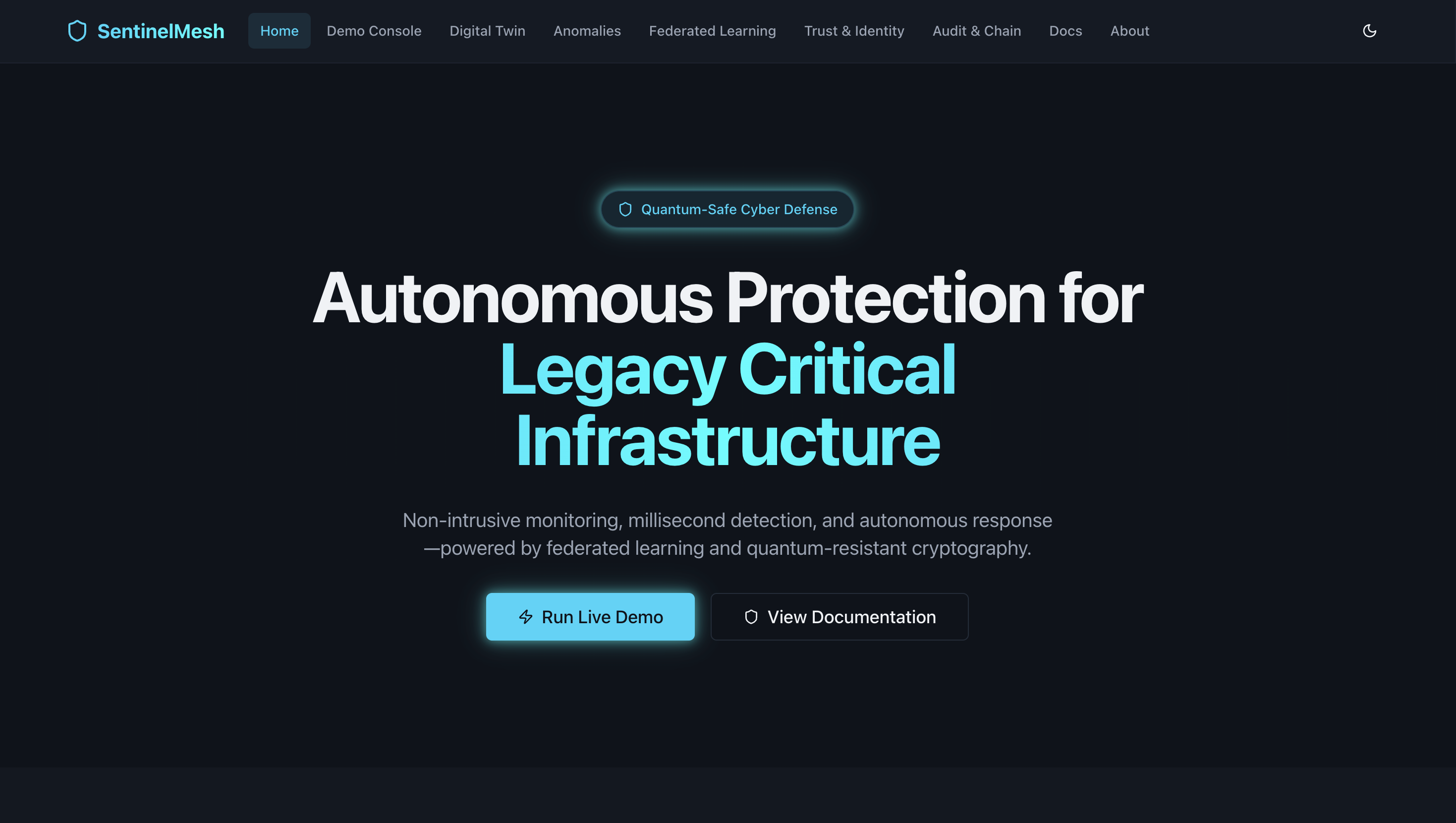
SentinelMesh is an autonomous, quantum-safe cyber defense fabric designed for legacy critical infrastructure. It passively monitors industrial network traffic, detects anomalies in real time using AI, and enables safe, autonomous responses without disrupting operations.
Key Capabilities
- Real-time AI-based anomaly detection
- Privacy-preserving federated learning across sites
- Digital twin–based predictive monitoring
- Post-quantum cryptography for future-proof security
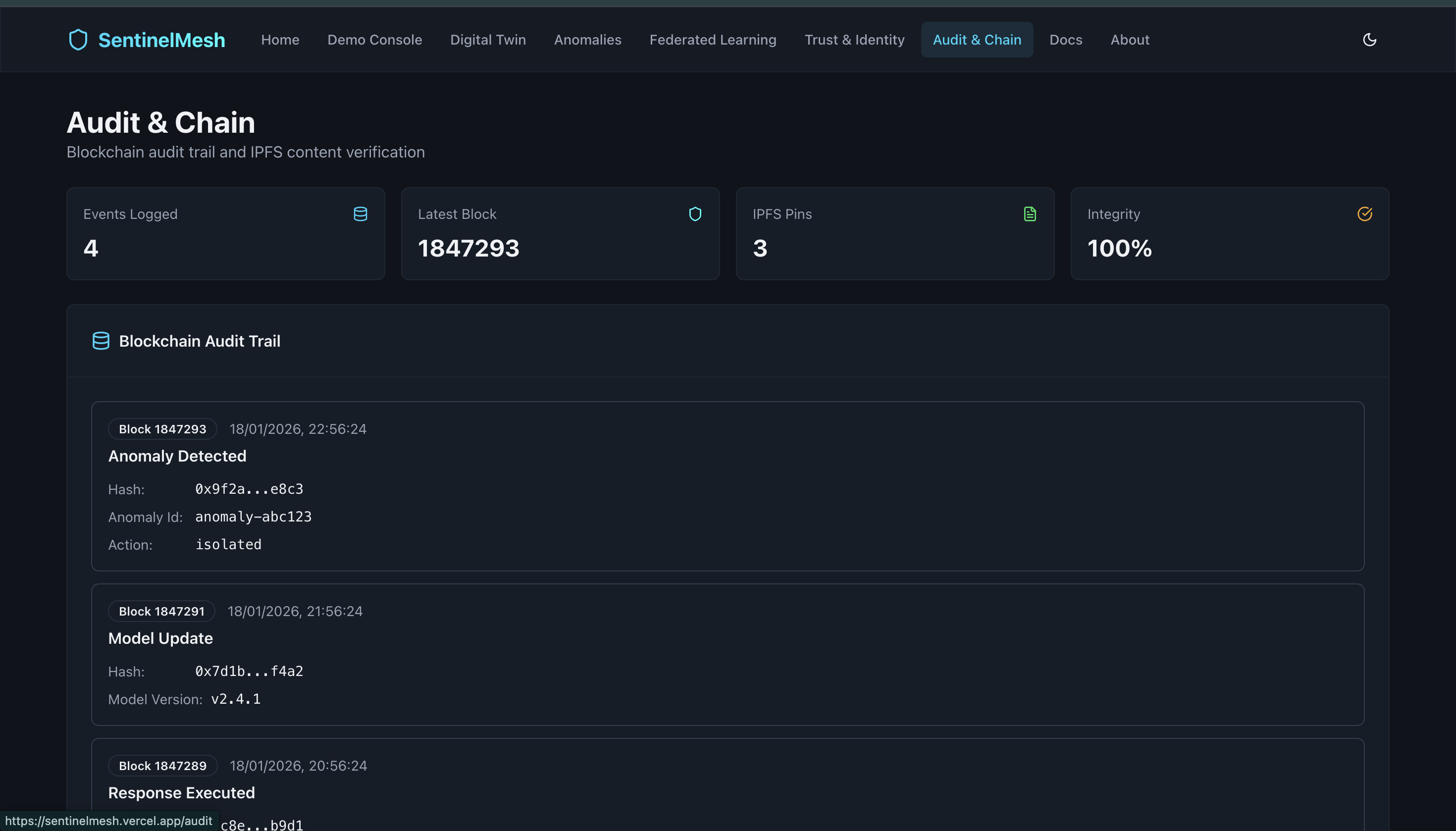
- Decentralized identity and blockchain-backed audit trails
How We Built It
SentinelMesh follows a modular, distributed architecture designed to balance realism, safety, and demonstrability.
Tech Stack & Implementation
| Component | Tools / Frameworks |
|---|---|
| Backend | FastAPI, PyTorch, Supabase |
| Frontend | Next.js, Tailwind CSS |
| Deployment | Vercel, TypeScript |
Key Features
| Feature | Description |
|---|---|
| Decentralized Trust & Audit Layer (Blockchain + IPFS) | Smart contracts for automated policy enforcement and immutable, verifiable audit logs |
| Federated Learning (Flower Framework) | Privacy-preserving collaborative anomaly detection across sites without sharing raw operational data |
| ML Pipeline (CatBoost / Time-Series Models) | Optimized anomaly detection for industrial OT traffic with categorical protocol support |
| Digital Twin–Based Anomaly Detection | Real-time deviation detection using predictive baselines and root-cause analysis |
Challenges We Ran Into
- Designing security for legacy OT/ICS systems that cannot be modified
- Balancing near real-time anomaly detection (<50ms) with safety and low false positives
- Representing complex distributed system concepts clearly in a prototype
- Integrating AI, post-quantum cryptography, and decentralized trust into a coherent design
- Translating production-grade security ideas into a demo-friendly experience
Accomplishments We’re Proud Of
- Designing a non-intrusive, quantum-safe security architecture for legacy systems
- Demonstrating federated learning for cross-site security without sharing raw operational data
- Building a clear, interactive prototype that visualizes complex industrial security workflows
- Addressing real-world OT security constraints instead of idealized environments
- Creating a scalable design applicable across energy, water, and transportation sectors
What We Learned
- Critical infrastructure security requires systems thinking, not isolated tools
- AI is most effective when combined with trust, cryptography, and governance
- Privacy-preserving collaboration is essential for cross-organization defense
- Preparing for quantum threats must begin before quantum computers arrive
- Clear visualization builds trust in autonomous security systems
What’s Next for SentinelMesh
Adaptive, AI-Driven Response Policies
Introduce reinforcement learning and adaptive control to autonomously optimize mitigation strategies over time, reducing reliance on human intervention while maintaining operational safety.
Hardware-Accelerated Post-Quantum Cryptography
Integrate FPGA/ASIC-accelerated PQC modules to support high-throughput, real-time encryption for industrial networks without performance impact.
End-to-End Digital Twin Ecosystem
Build multi-site, multi-domain digital twins to simulate full industrial operations, predict cascading failures, and visualize root causes for anomalous events.
Autonomous Threat Simulation & Red-Teaming
Implement adversarial GAN-based simulations to continuously test system resilience against emerging attack vectors, including replay attacks, protocol exploits, and quantum-enabled threats.
Built With
- blockchain
- catboost
- css
- fastapi
- federated-learning
- flower
- ipfs
- machine-learning
- next.js
- python
- pytorch
- supabase
- tailwind
- typescript
- vercel


Log in or sign up for Devpost to join the conversation.