Inspiration
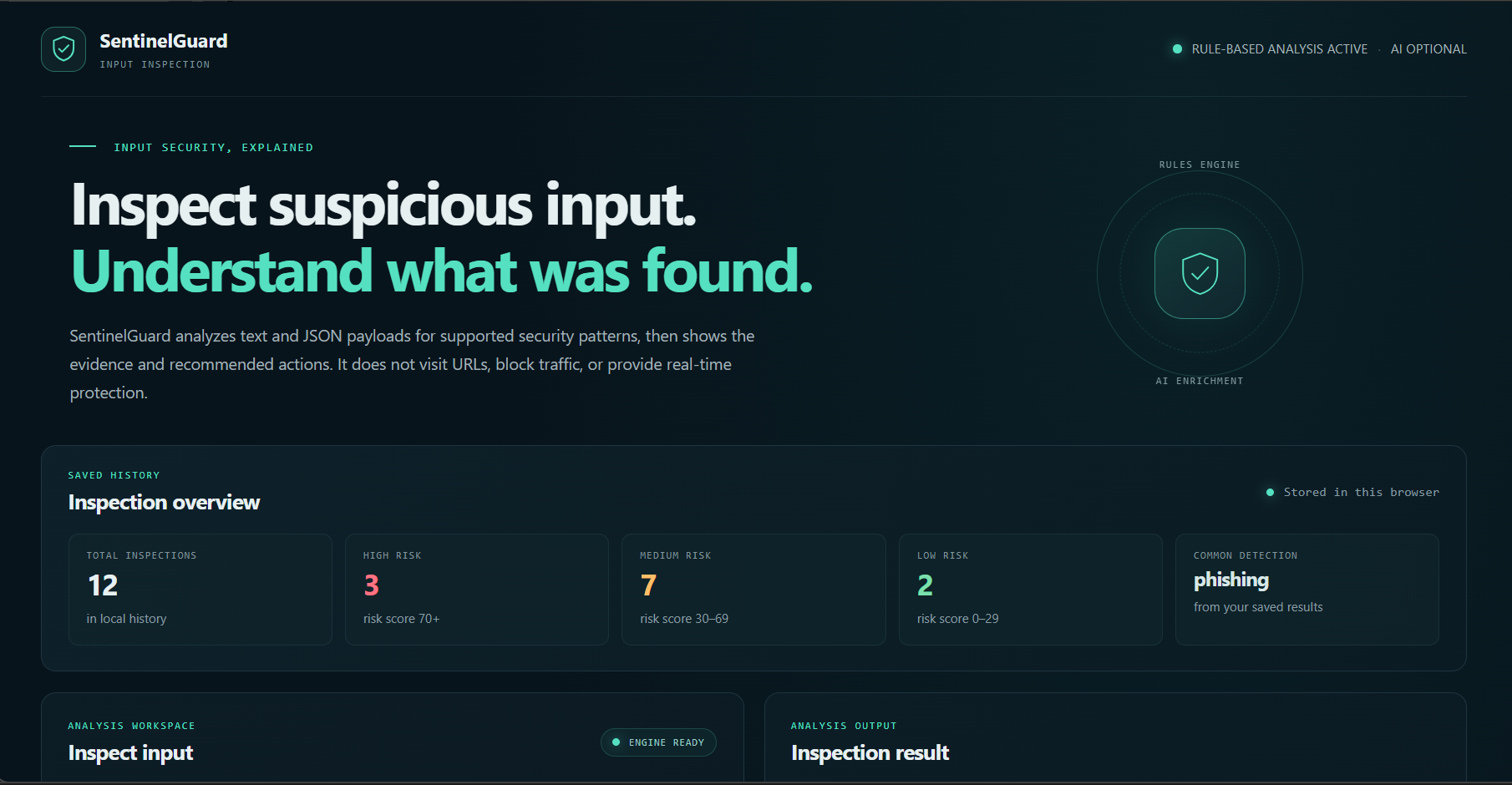
Suspicious messages and malicious inputs can be difficult to evaluate, especially for people without a cybersecurity background. We wanted to create a tool that does more than simply flag a threat. Users should understand what was detected, why it matters, and what defensive steps they can take.
What it does
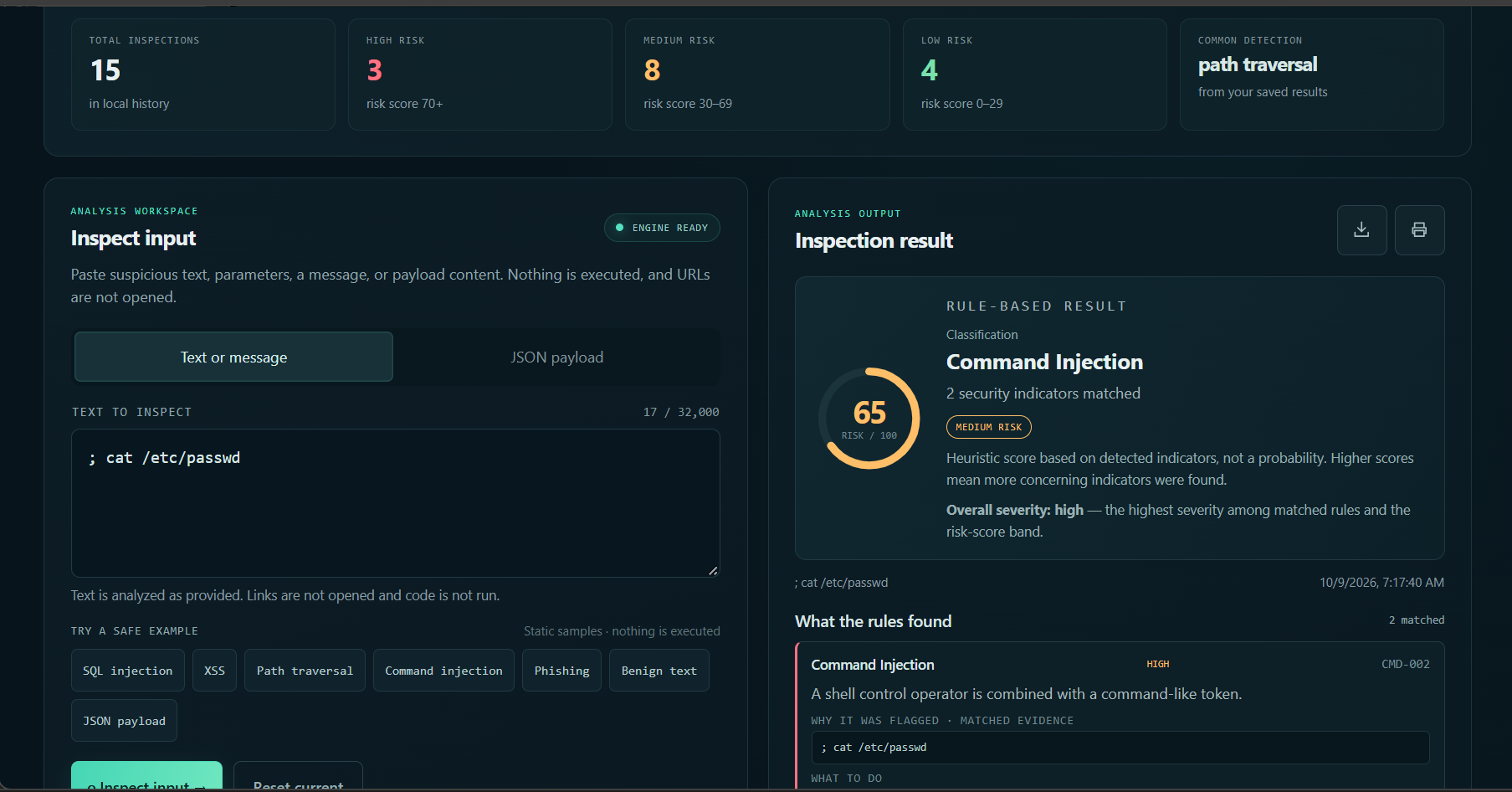
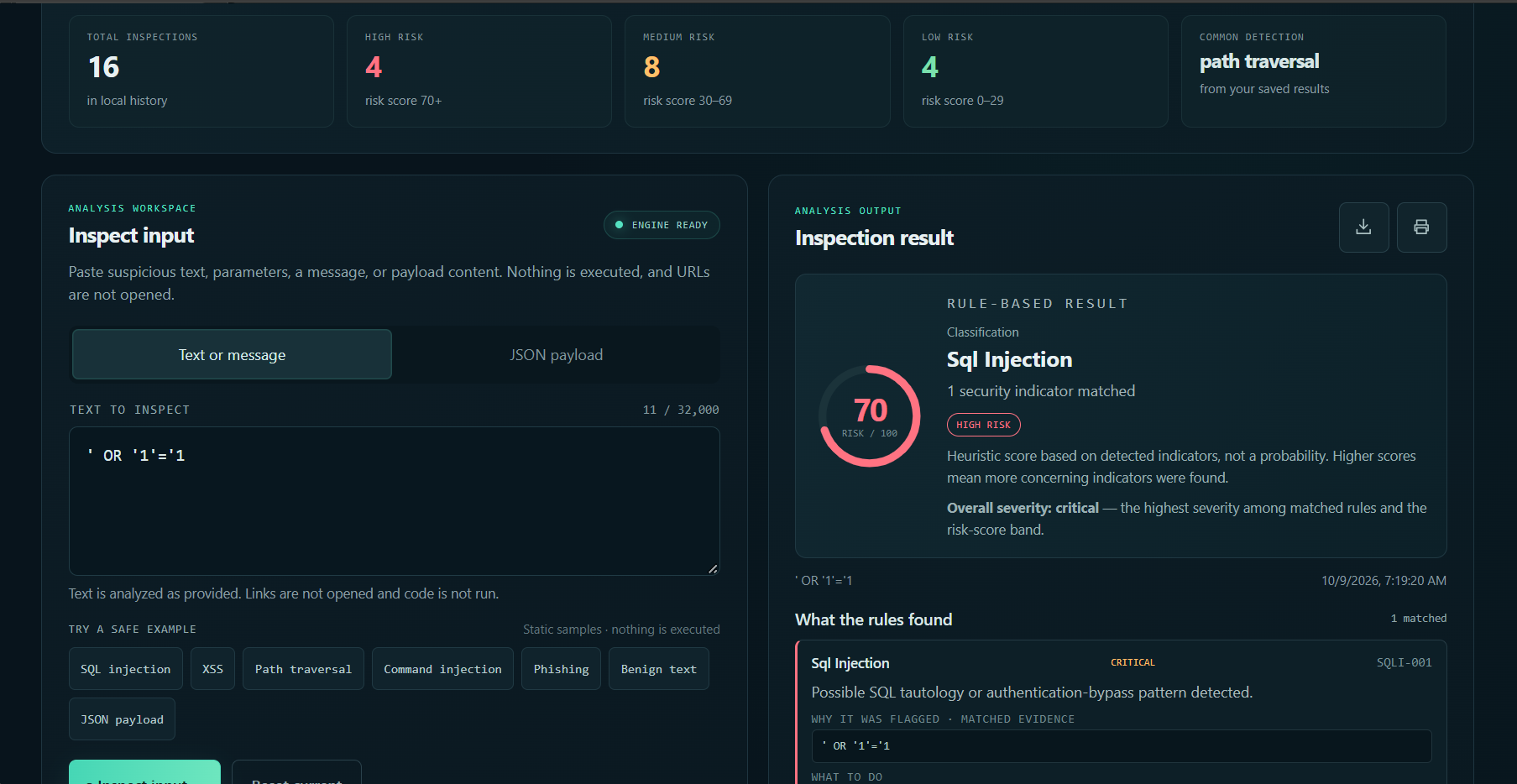
SentinelGuard AI analyzes suspicious text and structured JSON payloads for supported indicators of phishing, SQL injection, cross-site scripting (XSS), command injection, and path traversal.
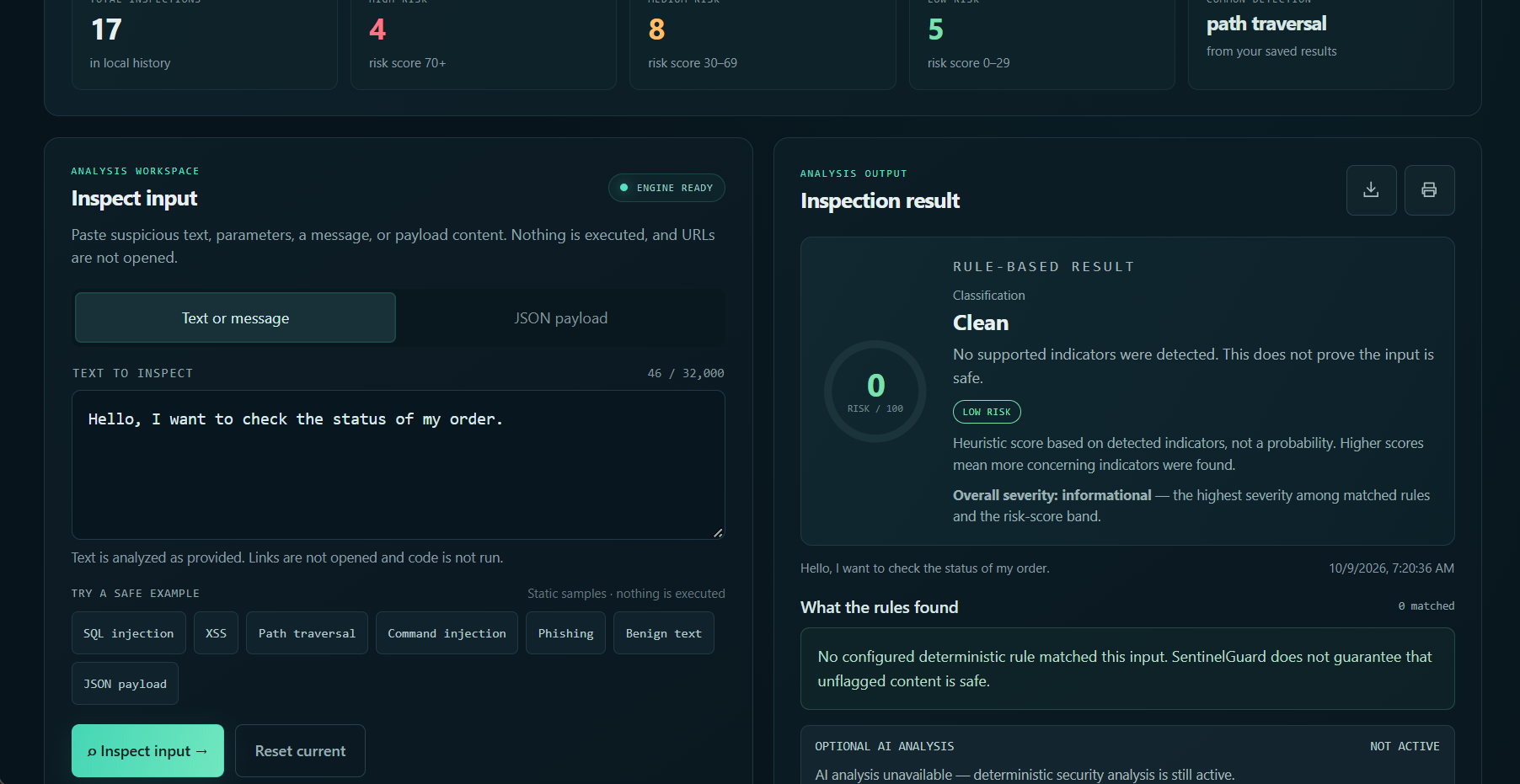
It presents matched evidence, a heuristic risk score from 0 to 100, severity classifications, and defensive recommendations. The application also includes a browser-based interface, local inspection history, summary metrics, and JSON report export.
The current version uses deterministic detection rules and does not have an external AI provider configured.
How we built it
We built SentinelGuard AI using Node.js and Express for the backend, with JavaScript, HTML, and CSS for the user interface. Zod supports input validation, while Helmet, CORS controls, rate limiting, and request and payload limits contribute to the application's defensive design.
The inspection engine evaluates submitted content against supported security rules and returns structured findings. The architecture also leaves room for optional AI enrichment in a future version.
Challenges we ran into
One challenge was making security findings understandable and actionable instead of showing users only a warning or risk score. We focused on connecting findings to evidence and practical defensive recommendations.
We also had to consider input validation, request limits, and safe handling of submitted content. Another important challenge was communicating risk responsibly: a low score or clean result does not guarantee that content is safe.
Accomplishments that we're proud of
We are proud to have developed a working cybersecurity inspection application that combines multiple detection categories in one interface. SentinelGuard AI presents evidence-based findings, risk scores, severity classifications, and recommendations in a format intended to help users understand potential threats.
We are also proud of its API structure, input validation, defensive middleware, local inspection history, and report-export functionality.
What we learned
We learned that cybersecurity tools should do more than identify suspicious patterns. They should explain their findings, communicate uncertainty, validate input carefully, and provide practical next steps.
We also learned the importance of distinguishing rule-based detection from AI-powered analysis and being transparent about a system's current capabilities and limitations.
What's next for SentinelGuard AI
Our next steps include integrating an optional AI provider, expanding detection coverage, exploring threat-intelligence integrations, and improving the clarity of recommendations.
We also aim to strengthen testing and evaluation against a broader range of malicious and benign examples, while preserving privacy-conscious handling, explainable findings, and responsible risk communication.
Built for ForgeHacks 2026 — Cybersecurity Track.
Built With
- api
- css
- cybersecurity
- detection
- express.js
- helmet
- html
- injection
- javascript
- node.js
- phishing
- rest
- sql
- xss
- zod


Log in or sign up for Devpost to join the conversation.