-
-
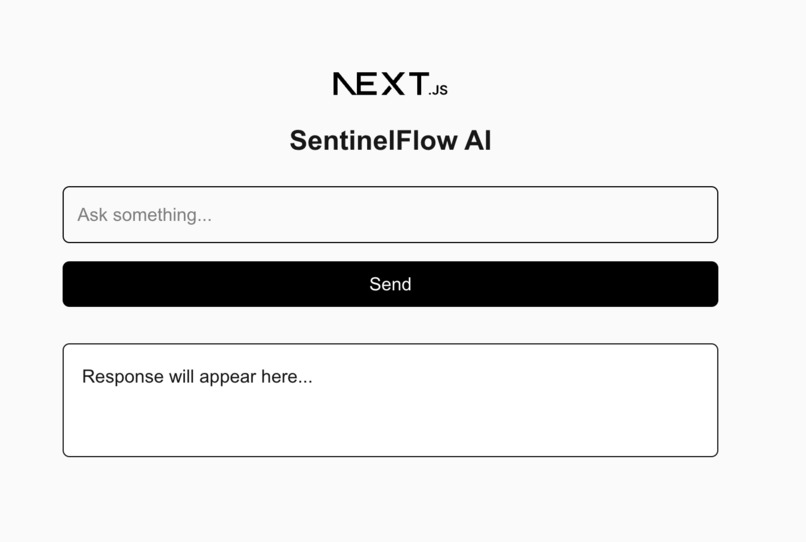
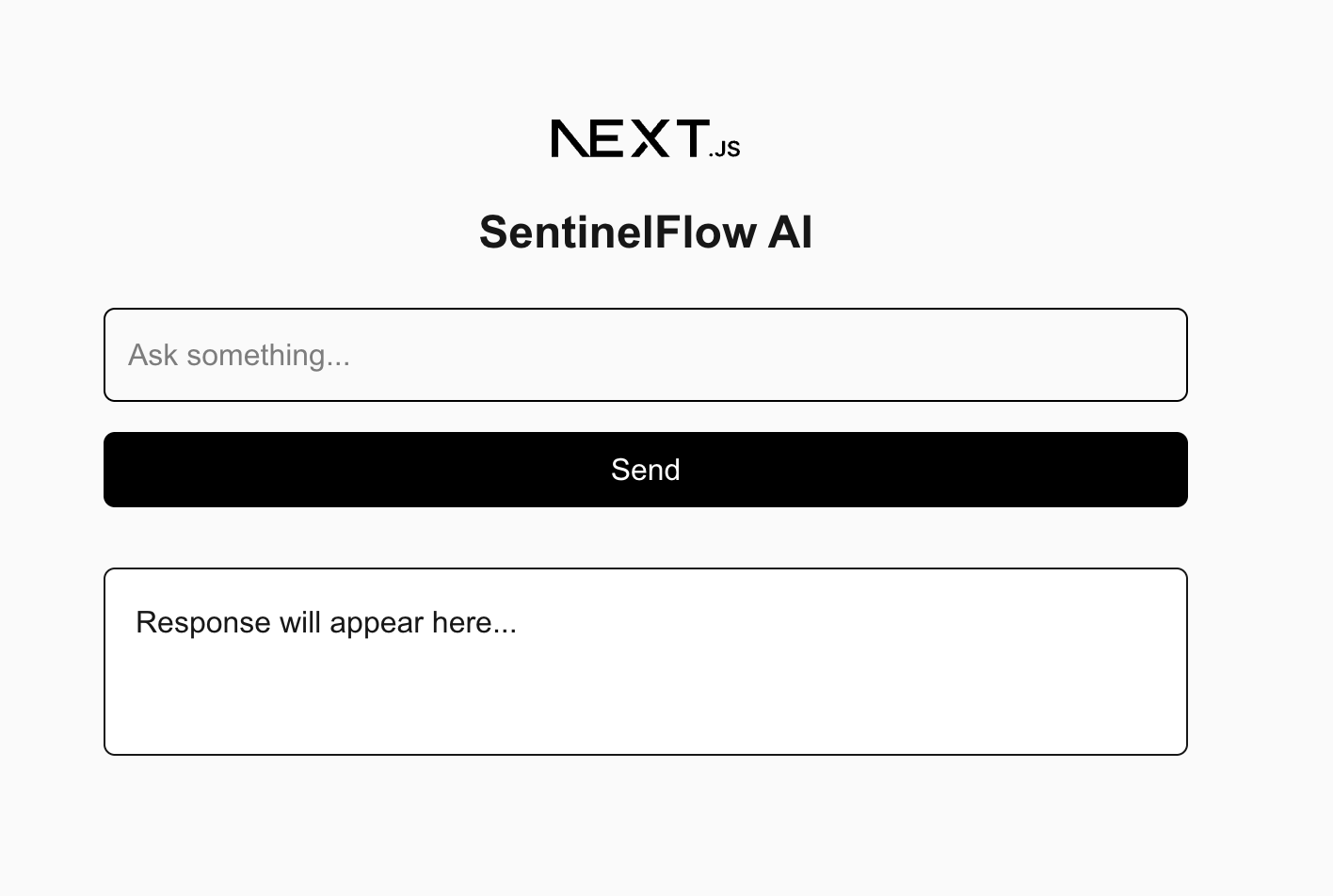
Home page chat window that sends the message to a fastAPI Server
Inspiration
Modern AI systems are incredibly capable — but also surprisingly fragile. Most AI demos assume ideal conditions where APIs respond instantly, retrieval systems never fail, and infrastructure is always healthy. In reality, production AI systems face outages, rate limits, MCP failures, latency spikes, malformed responses, and degraded services every day.
We built SentinelFlow AI to explore a critical question:
How do we build AI agents users can actually trust when infrastructure inevitably breaks?
The project was inspired by real-world reliability engineering principles used in distributed systems, cloud infrastructure, and observability platforms. Instead of focusing purely on model intelligence, we focused on resilience, graceful degradation, transparency, and production-readiness.
What it does
SentinelFlow AI is a resilient multi-agent orchestration platform designed to maintain stable and trustworthy AI interactions during infrastructure failures.
The system continuously monitors provider health and dynamically adapts when failures occur. If an LLM provider times out, an MCP server crashes, or latency becomes unacceptable, SentinelFlow automatically reroutes requests, retries intelligently, activates fallback providers, and preserves conversation continuity.
Key capabilities include:
- Multi-provider failover between OpenAI and Claude
- Brownout detection for degraded or slow services
- MCP failure recovery and backup retrieval strategies
- Graceful user-facing recovery messaging
- Real-time observability dashboards
- Chaos engineering controls for simulating outages
- Health-aware routing and retry orchestration
- Conversation continuity during provider failovers
Rather than exposing raw infrastructure errors to users, SentinelFlow communicates system state transparently and continues operating in degraded mode whenever possible.
How we built it
We built SentinelFlow AI using a modular orchestration architecture focused on resilience and observability.
Backend
- Python
- FastAPI
- asyncio-based orchestration engine
AI Infrastructure
- TrueFoundry Resilient Agents
- OpenAI API
- Claude API
Frontend
- React / Next.js
- Tailwind CSS
Core System Components
- Orchestrator Agent
- Provider Routing Layer
- Health Monitoring Engine
- Retry + Failover System
- MCP Simulation Layer
- Event Logging Pipeline
- Observability Dashboard
- Chaos Testing Controls
The orchestration layer continuously tracks:
- provider latency
- timeout frequency
- retry attempts
- error rates
- degraded states
- failover events
We also implemented simulated infrastructure chaos scenarios such as:
- provider outages
- artificial latency injection
- malformed MCP responses
- retrieval failures
This allowed us to stress-test the system and demonstrate resilience behavior live.
Challenges we ran into
One of the biggest challenges was designing graceful degradation behavior instead of simple error handling.
It’s relatively easy to detect failures. It’s much harder to:
- preserve user trust,
- maintain conversation continuity,
- and recover transparently without creating confusing experiences.
Another major challenge was balancing retry logic and failover timing. Aggressive retries increased latency, while early failovers sometimes caused unnecessary provider switching. Tuning health thresholds and brownout detection required careful orchestration design.
Handling partial failures was also difficult. Some providers didn’t fully fail — they became intermittently unreliable or significantly slower. Designing adaptive routing logic for degraded services became one of the most interesting engineering problems in the project.
We also learned that observability is essential. Without detailed event tracing and health monitoring, debugging orchestration behavior during simulated outages became extremely difficult.
Accomplishments that we're proud of
We’re especially proud that SentinelFlow AI feels like a real production system rather than a typical AI demo.
Some highlights include:
- Seamless failover between providers without losing conversation context
- Real-time provider health monitoring
- Brownout-aware intelligent routing
- Human-centered recovery UX instead of raw error messages
- Interactive chaos testing controls
- Live observability dashboards showing retries, latency, and failovers
- Stable degraded-mode operation during infrastructure failures
One of our favorite moments was intentionally disabling the primary provider during a live test and watching the system reroute automatically while continuing the conversation uninterrupted.
We’re also proud that the project demonstrates infrastructure maturity, reliability engineering, and systems thinking — not just prompt engineering.
What we learned
This project taught us that reliability is one of the most important unsolved problems in AI systems.
We learned:
- graceful degradation is a UX problem as much as an infrastructure problem
- observability is critical for debugging AI orchestration systems
- latency and brownouts are often more dangerous than full outages
- resilient AI systems require dynamic routing and adaptive recovery strategies
- user trust depends heavily on transparency during failures
We also gained a deeper understanding of production engineering concepts such as:
- health-aware routing
- retry orchestration
- distributed system resilience
- chaos engineering
- fault tolerance patterns
- failure-aware UX design
Most importantly, we learned that building trustworthy AI systems requires designing for failure from the beginning — not treating it as an edge case.
What's next for SentinelFlow-AI
We see SentinelFlow AI evolving into a broader resilience platform for production AI systems.
Future improvements include:
- predictive outage detection
- intelligent provider scoring
- cost-aware dynamic model selection
- semantic response caching
- persistent memory across failovers
- distributed multi-agent coordination
- self-healing orchestration policies
- adaptive recovery strategies based on workload type
We also want to expand the observability layer with:
- reliability scoring
- recovery-time analytics
- orchestration replay debugging
- infrastructure tracing visualizations
Long term, we believe resilient orchestration and trustworthy degradation handling will become foundational requirements for real-world AI infrastructure.
SentinelFlow AI is our exploration of what production-grade AI reliability could look like in the future.


Log in or sign up for Devpost to join the conversation.