Inspiration
Traditional web vulnerability scanners are notoriously noisy. They flood developers with unverified alerts, lack verifiable proof of remediation, and frequently demand that teams push sensitive internal infrastructure telemetry to cloud-hosted AI APIs for analysis.
We built SentinelAI to rethink application security assessments from first principles: deterministic, non-intrusive scanning paired with private, local AI. By coupling safe baseline checks with local LLM guidance and cryptographic evidence tracking, SentinelAI gives teams an audit-ready, zero-telemetry assessment pipeline where vulnerabilities require true proof of fix before they can be marked closed.
What it does
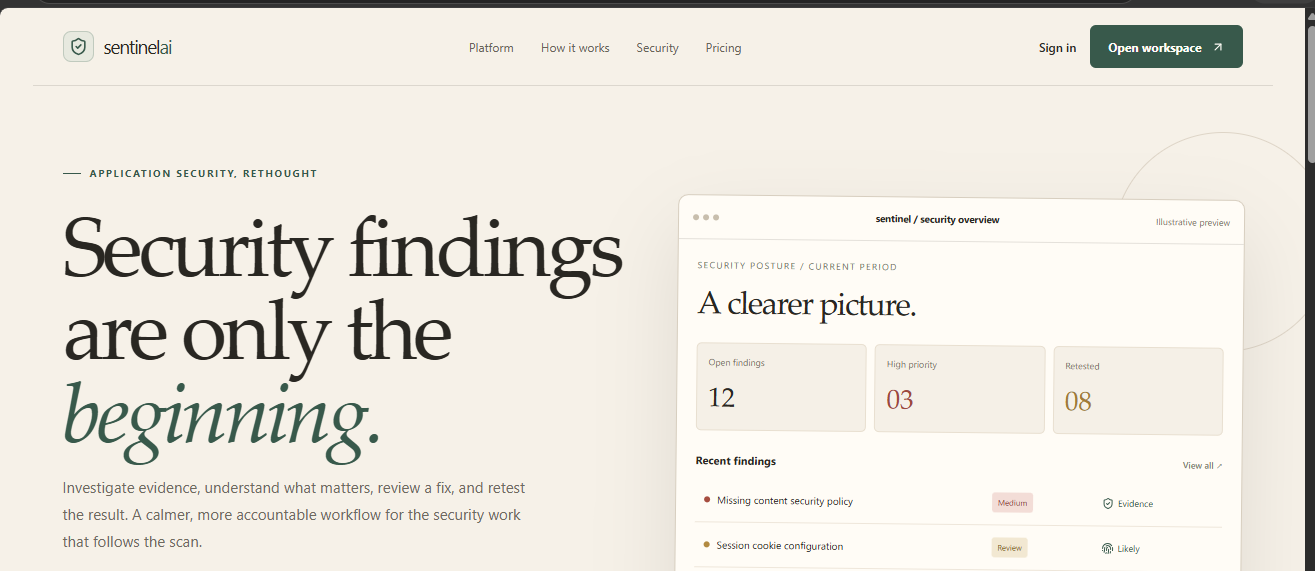
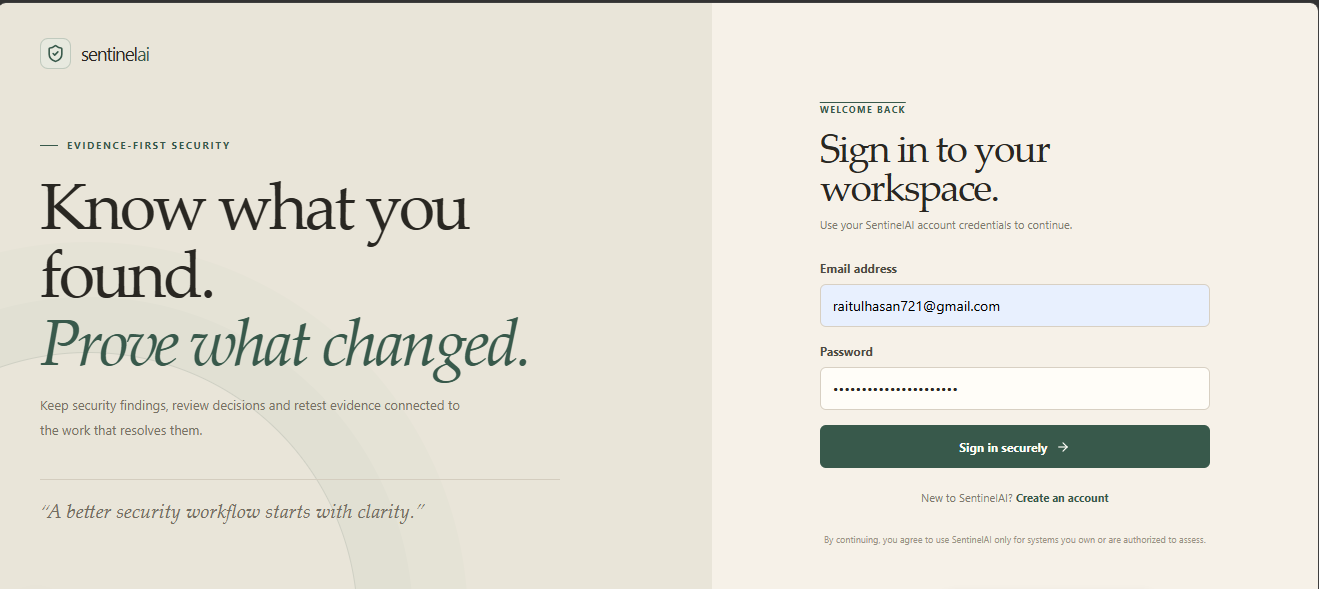
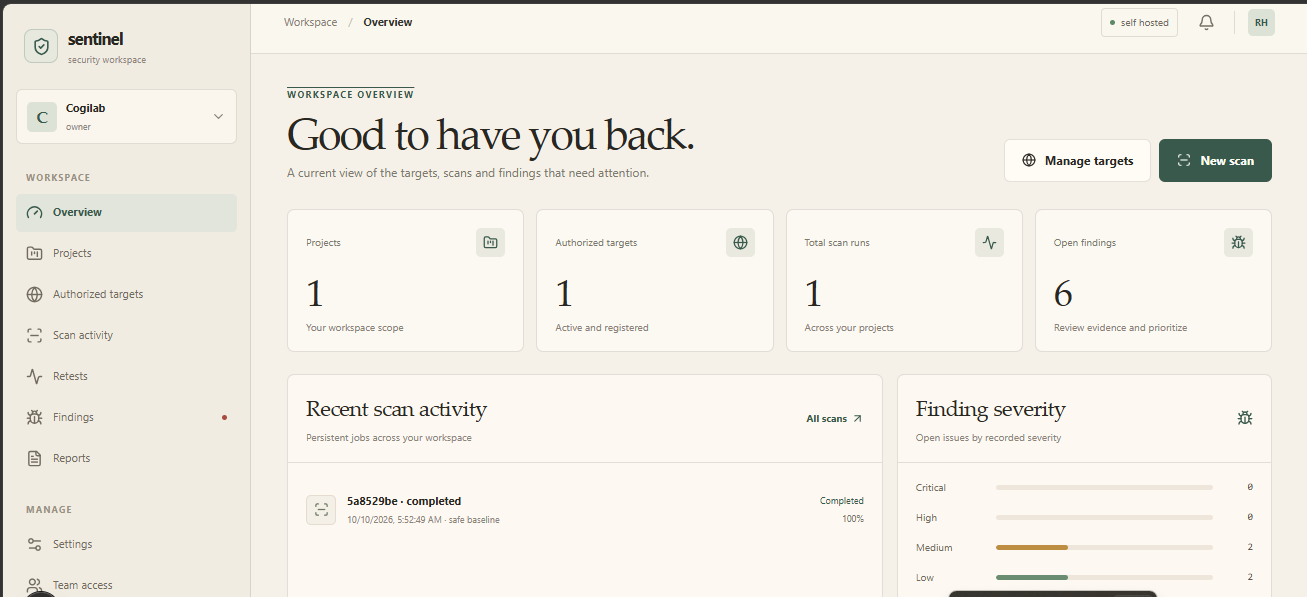
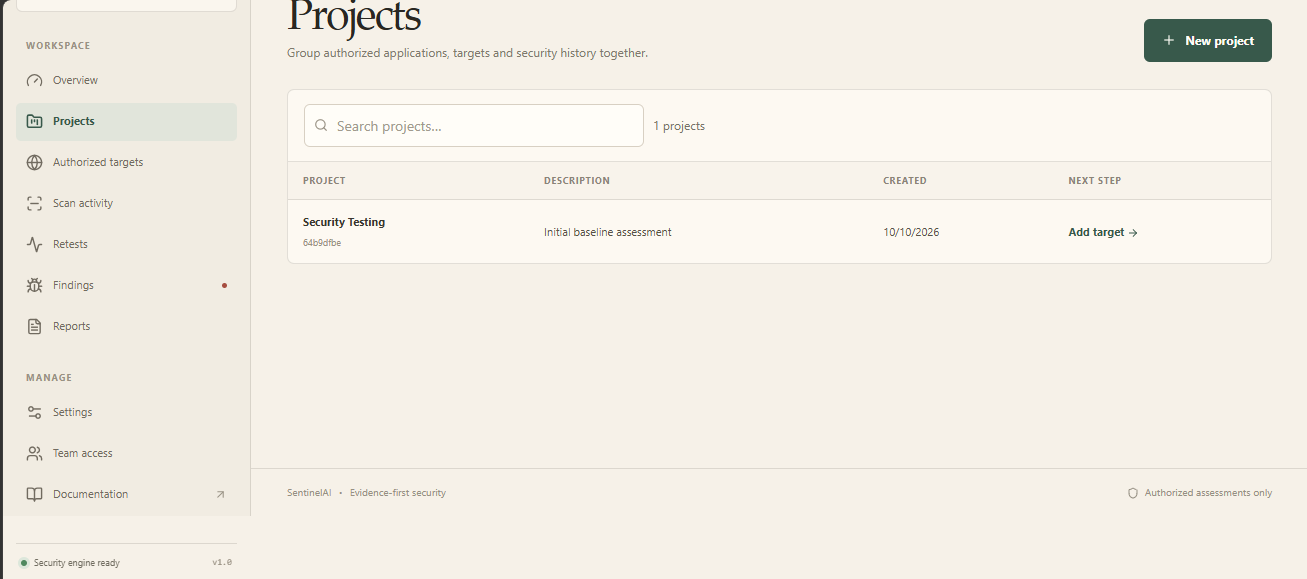
SentinelAI is a self-hosted, evidence-first web and API security evaluation workspace designed with an editorial aesthetic and an asynchronous architecture.
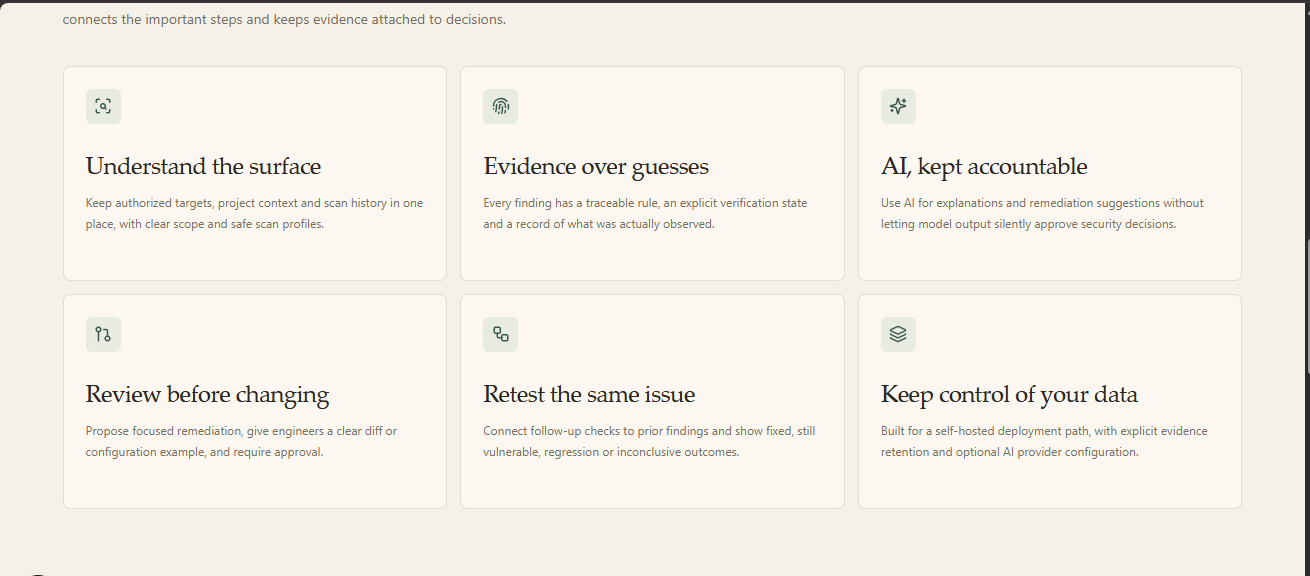
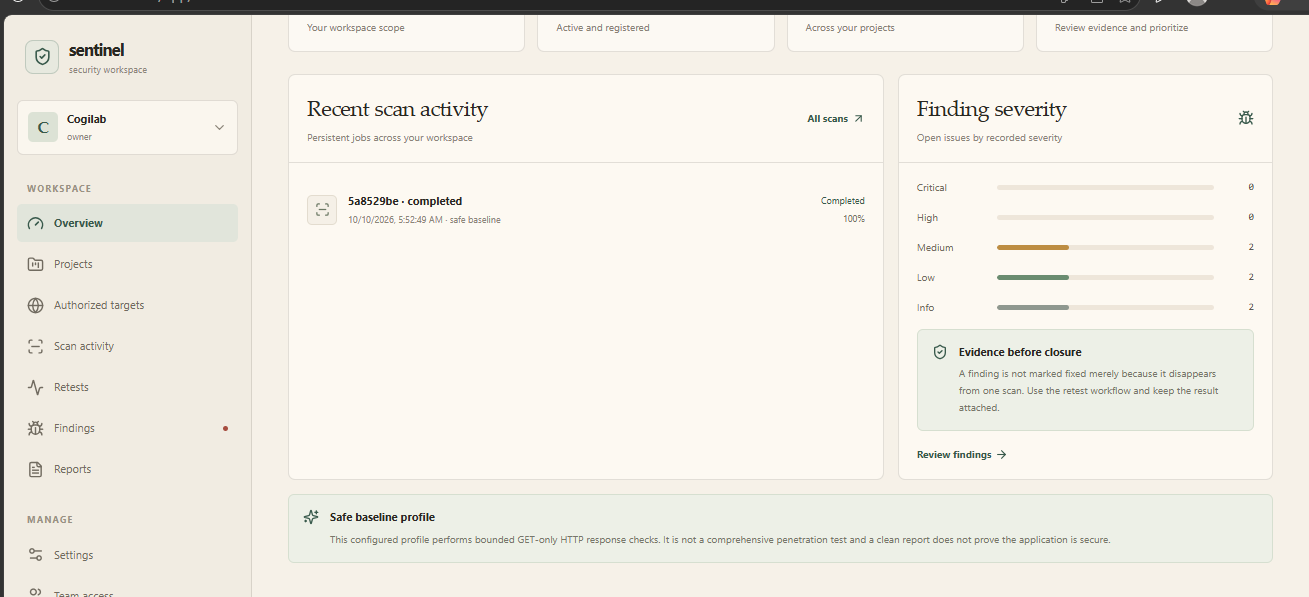
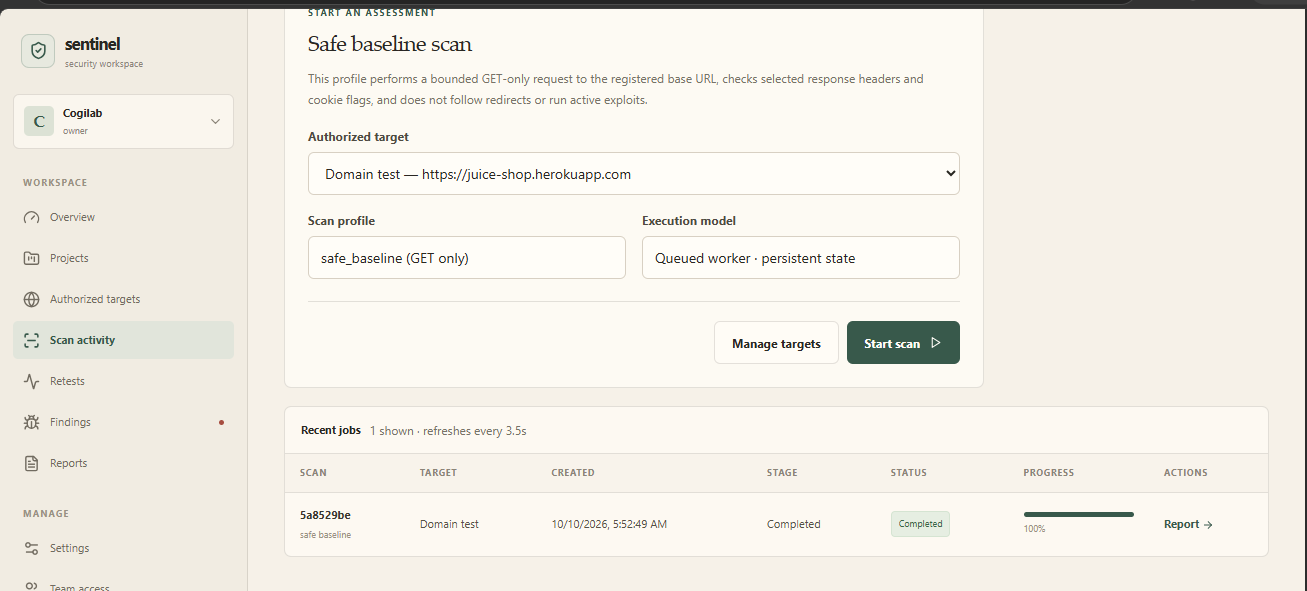
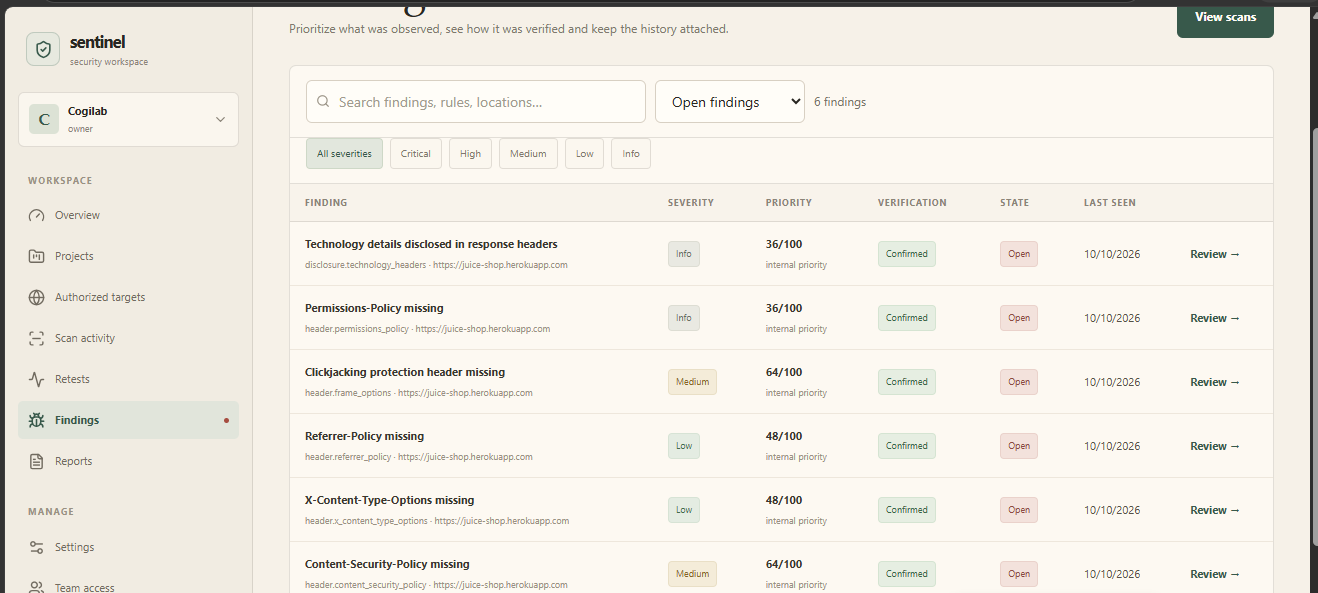
Bounded & Deterministic Scans: Runs non-intrusive, GET-only baseline checks across HTTP response headers, cookie configurations, and fingerprint disclosures. It enforces safe invariants: never following untrusted redirects, never storing sensitive cookie values, and never flooding target endpoints.
Air-Gapped Advisory AI: Embeds Qwen3:1.7B locally via Ollama. It analyzes findings to produce root-cause explanations, defensive remediation rationales, and safe patch diffs without leaking internal target details to third-party APIs.
Evidence Vault: Normalizes every finding into structured observation records backed by cryptographic hashes, priority heuristics (0–100), and confidence ratings.
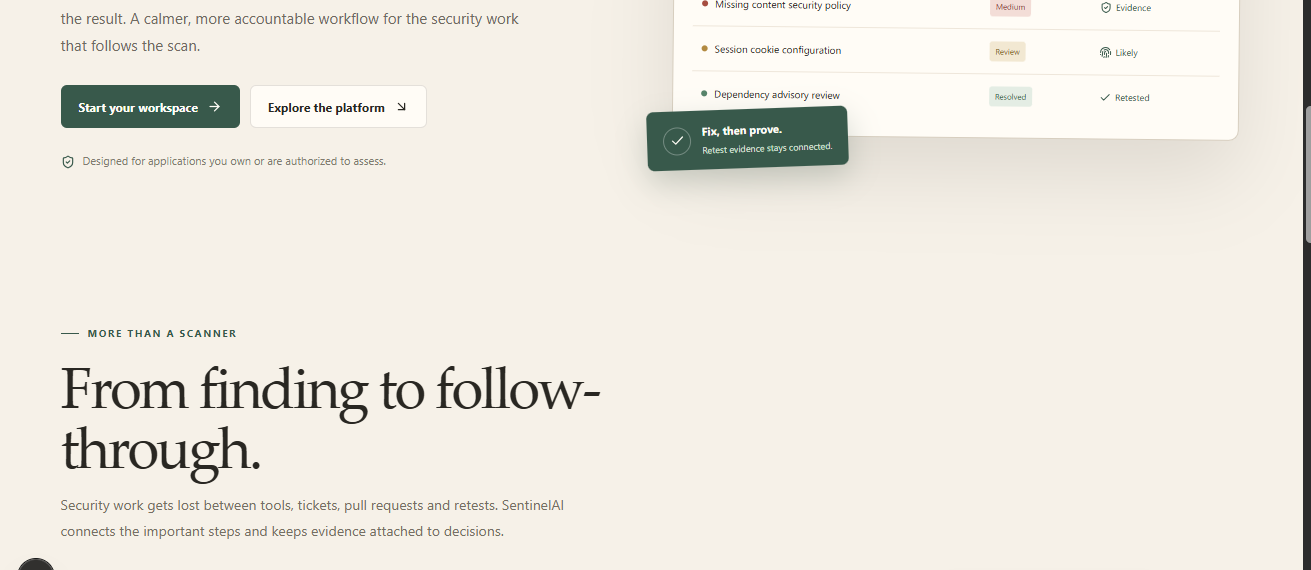
Proof-of-Fix Retests: Vulnerabilities are never marked closed simply because they vanished from a subsequent scan. Operators trigger targeted, single-finding retests that evaluate the original deterministic check against updated server responses.
Tenant Isolation & Scope Attestation: Enforces operator verification acknowledgments and strict target scoping to prevent unauthorized scanning.
How we built it
Backend: Built with Python 3.12 and FastAPI, backed by Celery and Redis for asynchronous job queueing, scan orchestration, and worker management.
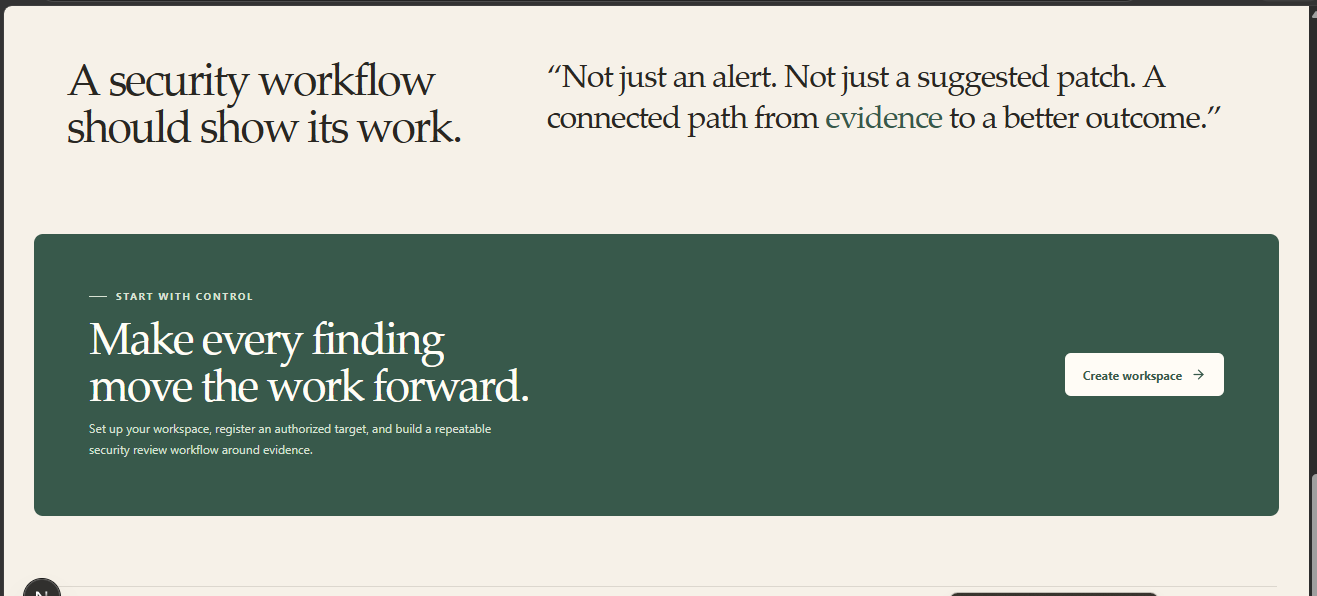
Frontend: Developed with Next.js (TypeScript) and Node.js 22, using a custom editorial ivory/cream design system crafted for long-form audit readability and low visual fatigue.
Local Inference Pipeline: Connected FastAPI to an OpenAI-compatible local endpoint powered by Ollama, orchestrating prompting for Qwen3:1.7B with strict temperature controls and deterministic output parsing.
Deployment & Tooling: Fully containerized using Docker Compose alongside a local PowerShell orchestrator (run-local.ps1) for single-command development boots.
Challenges we ran into
SSRF Mitigation & Scope Policy: Securing the scanner against Server-Side Request Forgery required strict URL normalization. We had to reject loopback addresses, private IP blocks (RFC 1918), link-local ranges, cloud metadata endpoints, and embedded basic-auth credentials before any request hits the network adapter.
Strict AI Sandboxing: Ensuring that generative AI never introduces security risks into the scanning pipeline. We designed the LLM layer to be strictly advisory—it has no access to shell tools, cannot alter scan state, and cannot mark vulnerabilities resolved.
State Synchronization Across Workers: Maintaining multi-tenant isolation and reliable status reporting while Celery workers executed asynchronous scan jobs across varying response latencies.
Accomplishments that we're proud of
100% Automated Test Coverage: Shipped a full test suite verifying tenant boundaries, Argon2id credential hygiene, bounded risk scoring formulas, and deterministic scanner guarantees.
Zero External Data Egress: Successfully engineered an automated remediation workflow that produces actionable, context-aware remediation diffs completely offline using a 1.7B parameter local model.
Eliminating Phantom Resolutions: Built a retest lifecycle that mandates reproducible, evidence-backed proof before a security issue can transition to resolved.
What we learned
Lightweight local models (like Qwen3:1.7B) are remarkably effective at targeted technical tasks—such as explaining missing Content-Security-Policy directives or drafting patch steps—when fed clean, normalized, structured payloads.
Deterministic scanning and non-intrusive testing provide high-signal baselines that developers actually trust, eliminating the alert fatigue typical of aggressive crawlers.
Designing defensive security tools requires applying the exact same threat modeling to the scanner itself, from tenant isolation down to strict cookie redaction.
What's next for SentinelAI
CI/CD Quality Gates: Developing GitHub Actions and GitLab CI runner plugins to automatically execute SentinelAI retests as pull-request status checks.
Deep API Inspection: Extending deterministic modules to validate OpenAPI/Swagger contracts, GraphQL introspection limits, and WebSocket handshake headers.
Standardized Compliance Exports: Adding automated export pipelines for SARIF, CycloneDX, and audit-ready PDF summaries to accelerate SOC 2 and ISO 27001 reviews.

Log in or sign up for Devpost to join the conversation.