-
-
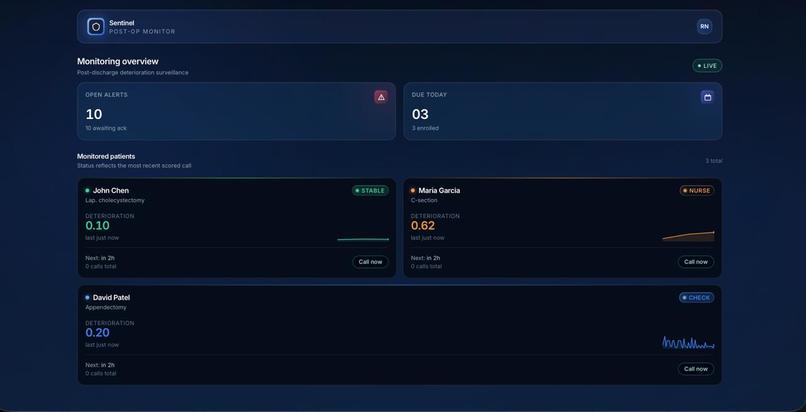
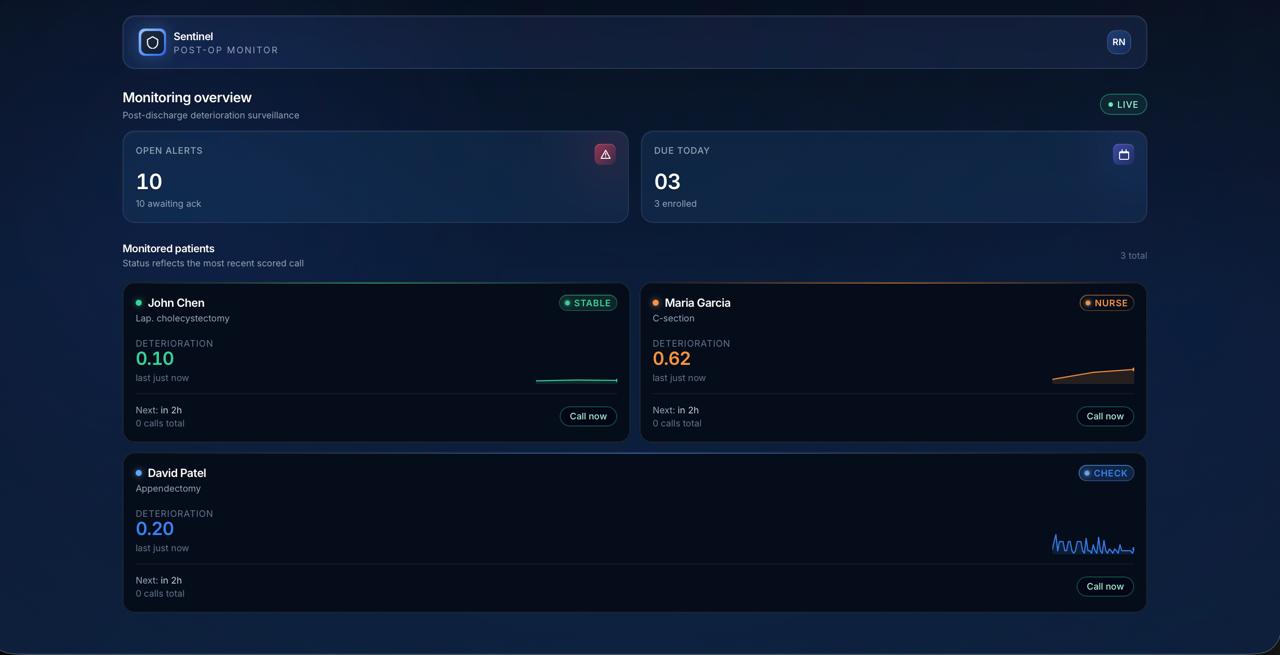
Clinician Landing Page
-
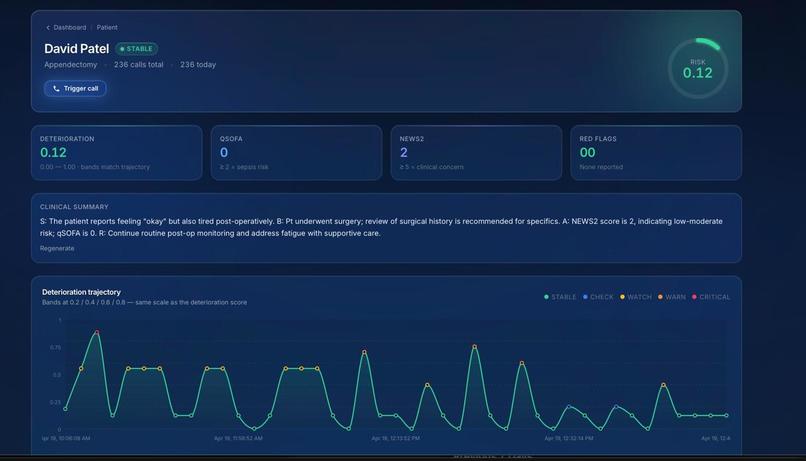
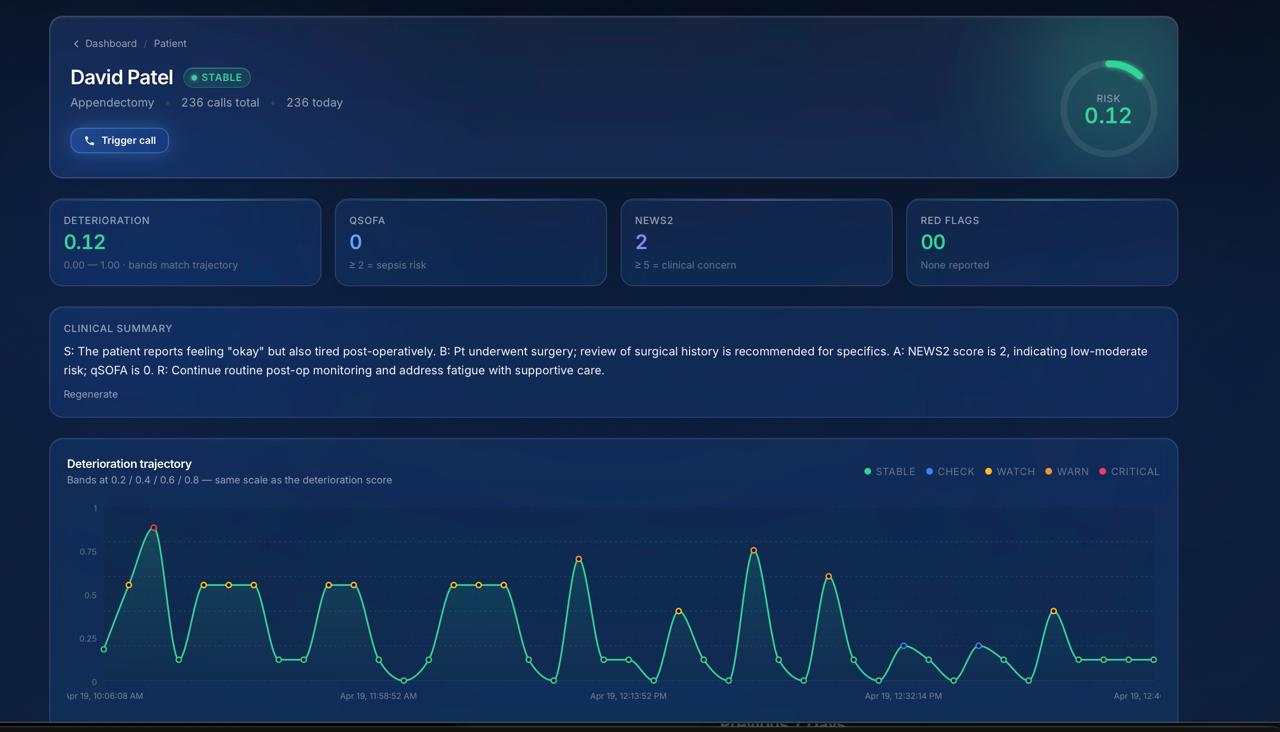
Patient Overview
-
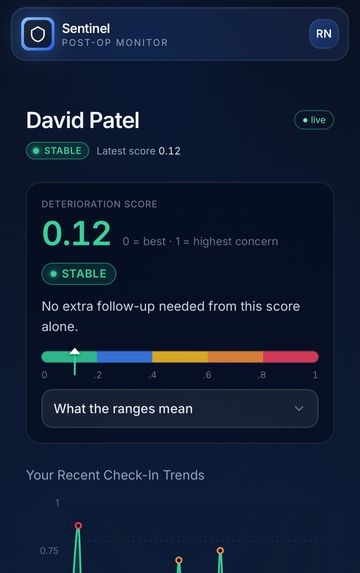
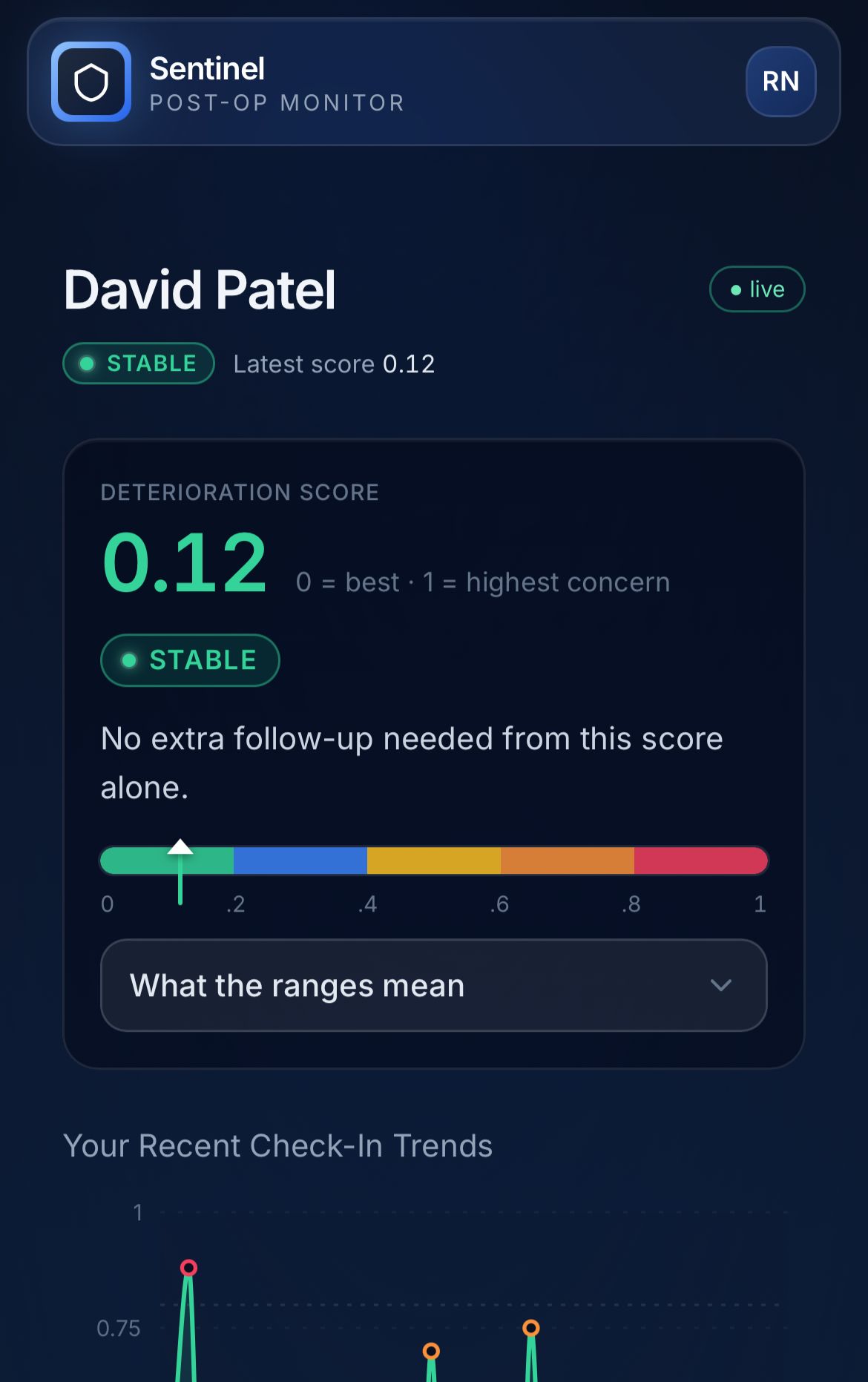
Patient Mobile Landing Page
-
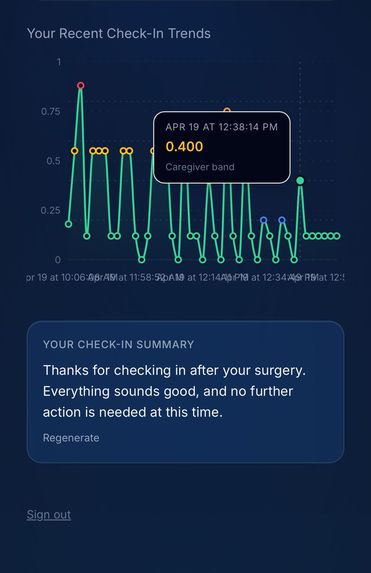
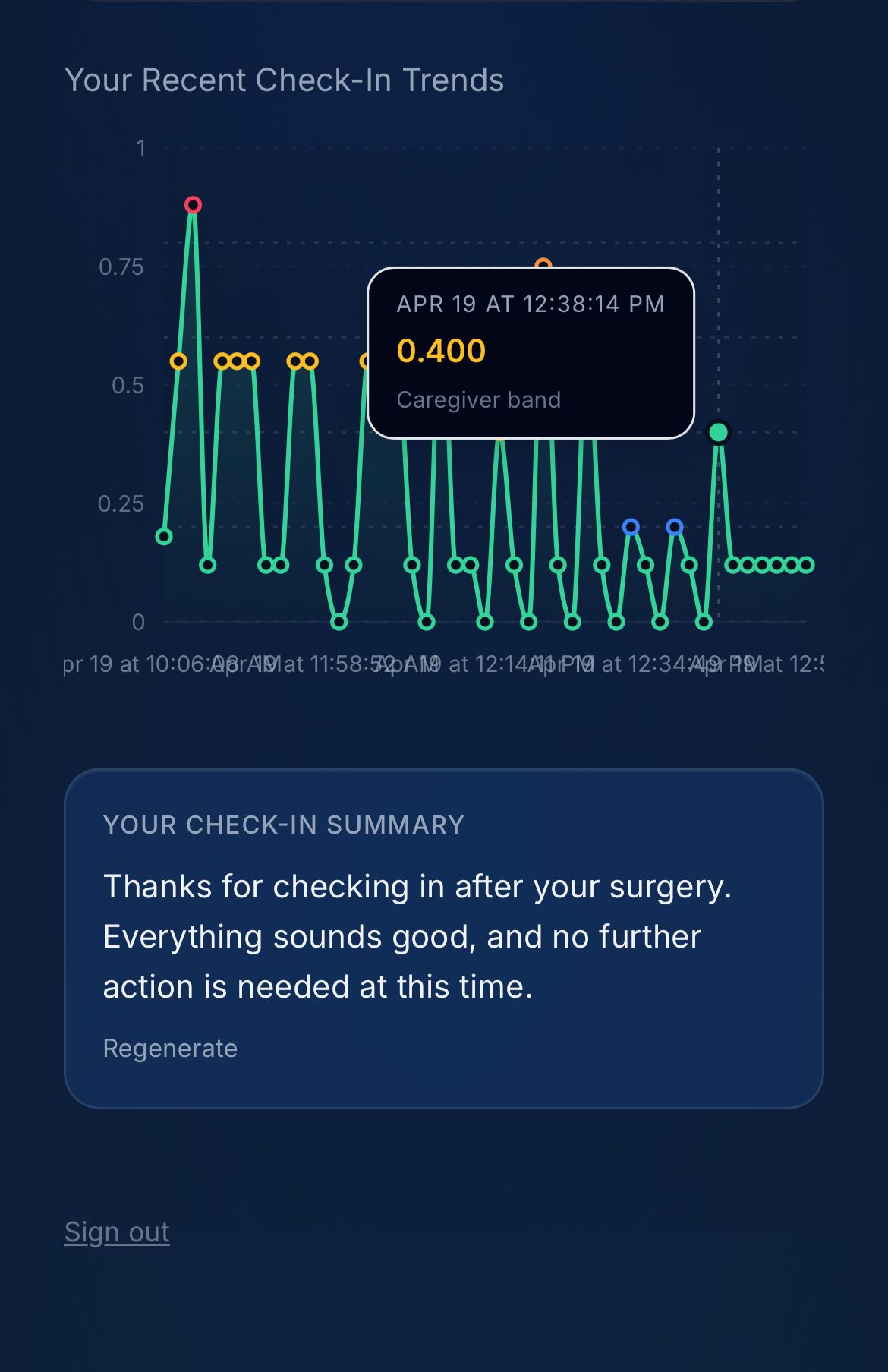
Critical Score Graph
Inspiration
Sepsis is fast, quiet, and often missed until it is too late. A large share of cases begin after discharge, when monitoring stops but risk does not. We built Sentinel to extend clinical awareness beyond the hospital to detect deterioration early, when intervention still changes outcomes.
What it does
Sentinel performs twice-daily voice check-ins and passively analyzes early physiological and cognitive signals: respiration, speech rate, latency, and confusion. These signals are fused into a continuous risk trajectory:
$$ R(t) = w_1 \cdot \text{respiration} + w_2 \cdot \text{speech} + w_3 \cdot \text{latency} + w_4 \cdot \text{confusion} $$
The system also incorporates continuous wearable data (e.g., heart rate, variability, activity) to strengthen detection. When risk crosses a calibrated threshold, Sentinel escalates in real time to patients, caregivers, and clinicians before a crisis develops.
How we built it
We built a real-time pipeline that combines voice-based signal extraction with wearable streaming (e.g., Apple Watch / Samsung devices) and a lightweight scoring engine. The system establishes a patient specific baseline on day one and tracks deviation over time, enabling personalized detection instead of one-size-fits-all thresholds.
Challenges
Working with incomplete, noisy signals (voice + wearables) required careful normalization and fusion. Limited time and tooling constraints forced us to prioritize reliability and clarity over complexity.
What we learned
Early detection is not about more data, it is about better signals and faster interpretation. Personal baselines and continuous monitoring are key to catching what static systems miss.
What’s next
Clinical validation, deeper wearable integration, and deployment into real post discharge workflows to turn early detection into measurable outcome improvement.
Built With
- api
- elvenlabs
- fastapi
- gemini
- javascript
- mongodb
- next.js
- react


Log in or sign up for Devpost to join the conversation.