-
-
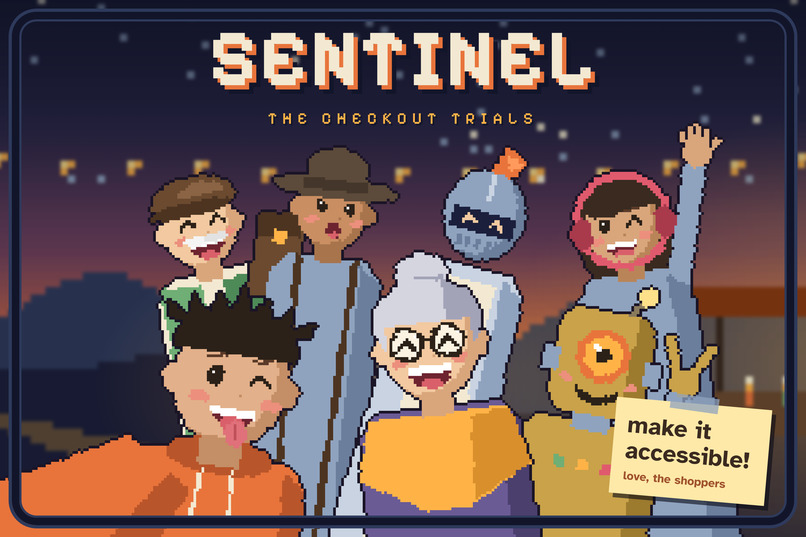
The seven shoppers. Make it accessible!
-
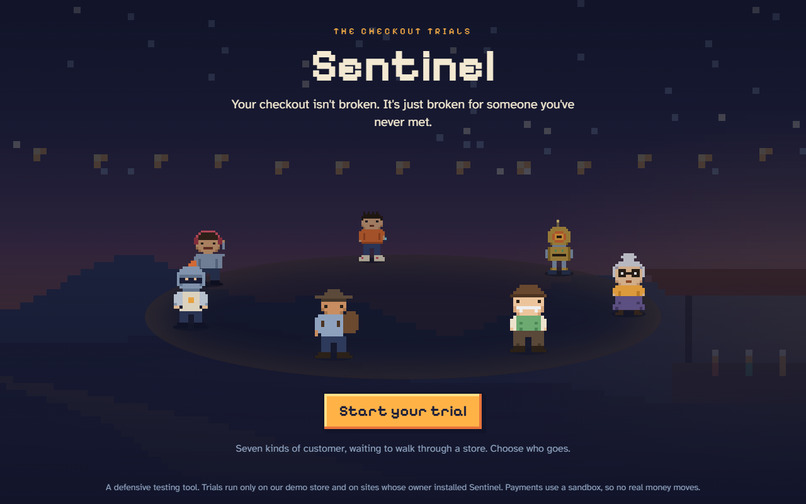
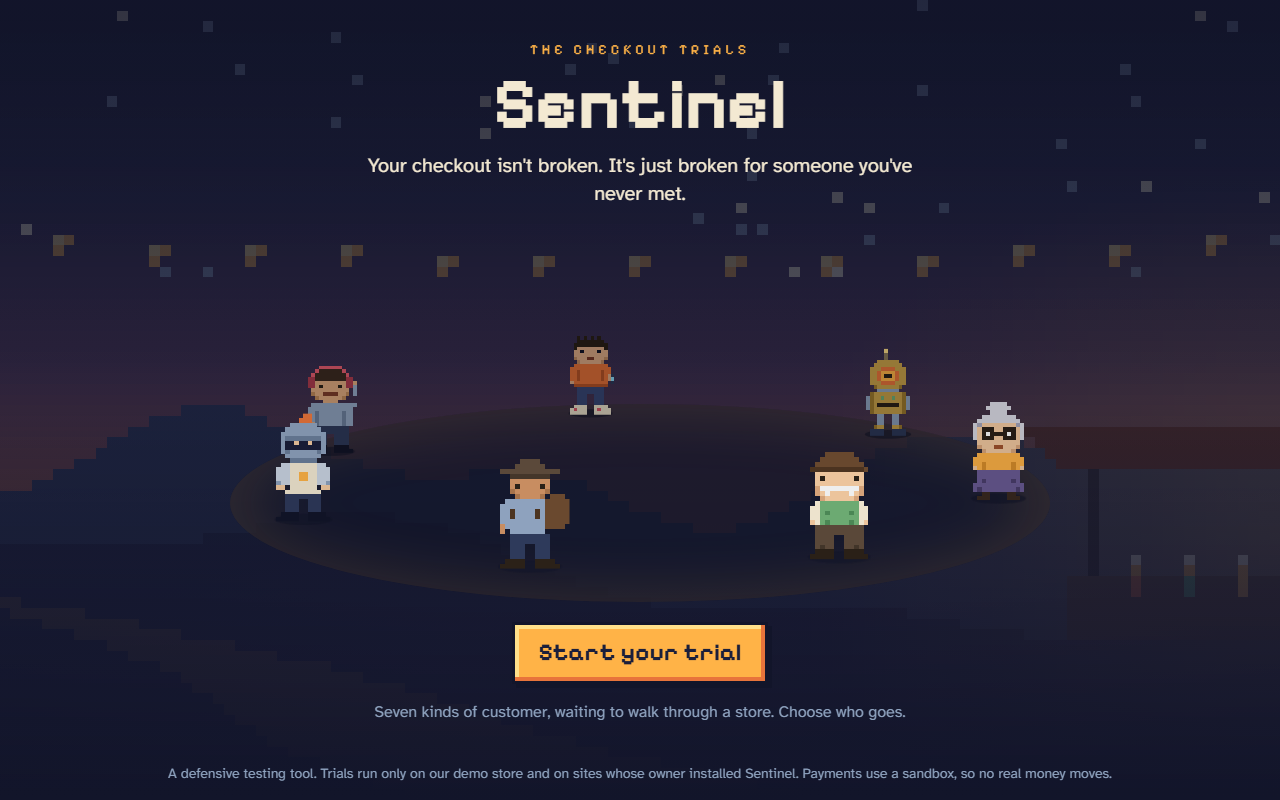
The lobby: seven kinds of customer, waiting to walk your store
-
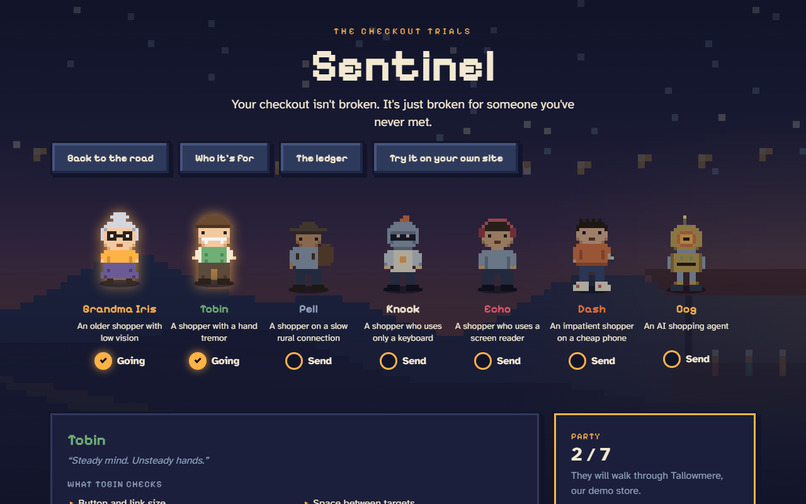
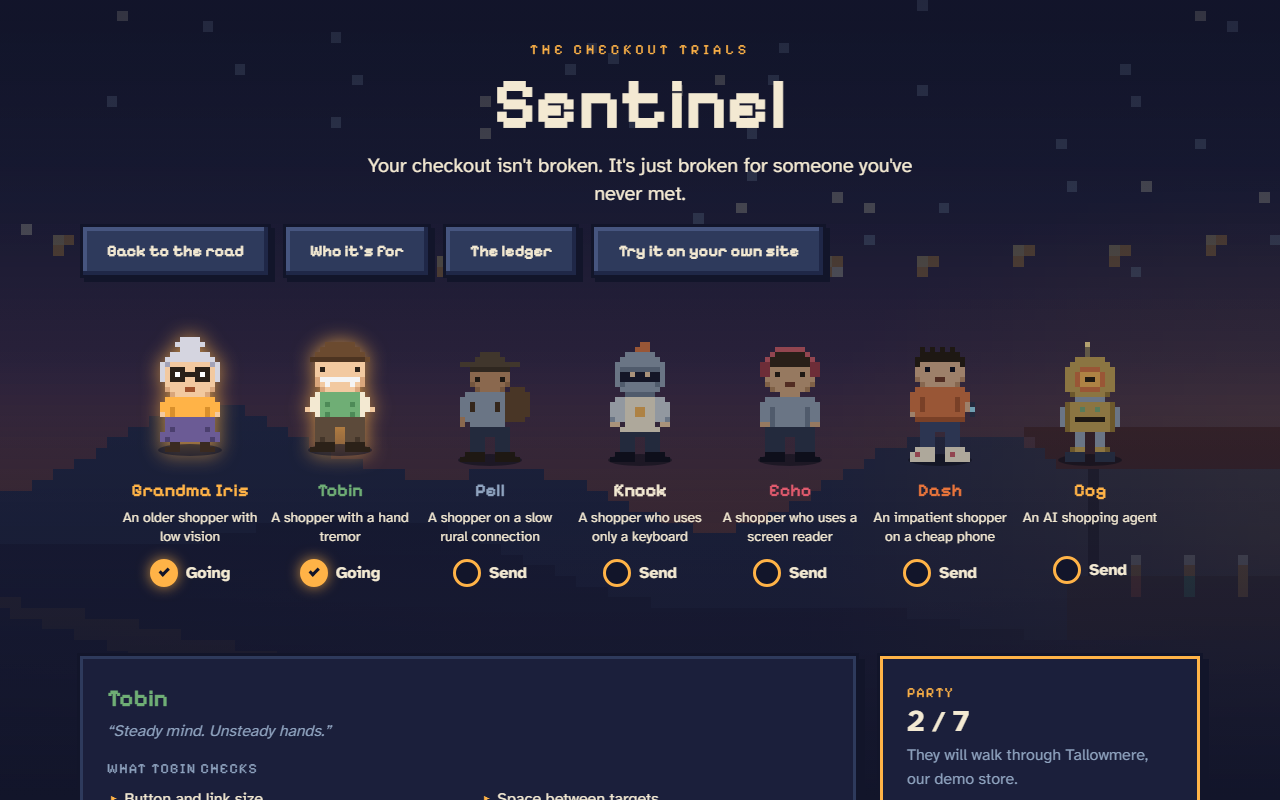
Pick who goes. Each one checks the page the way that customer would
-
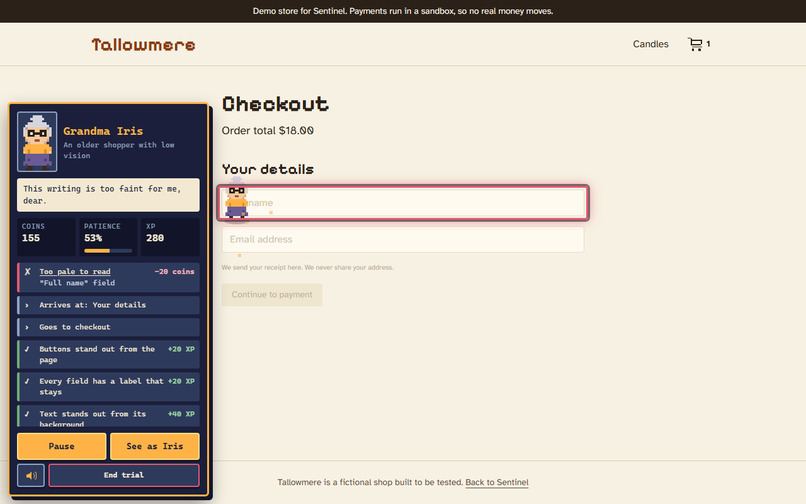
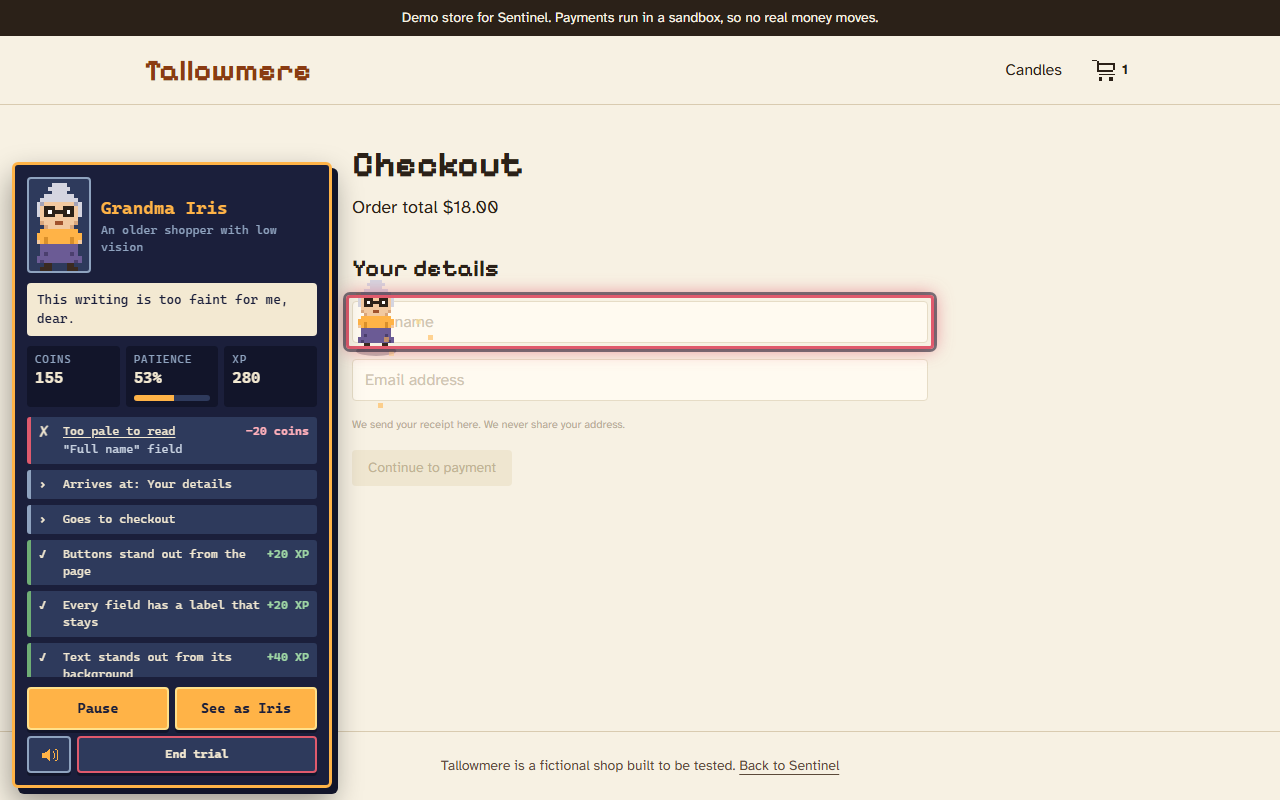
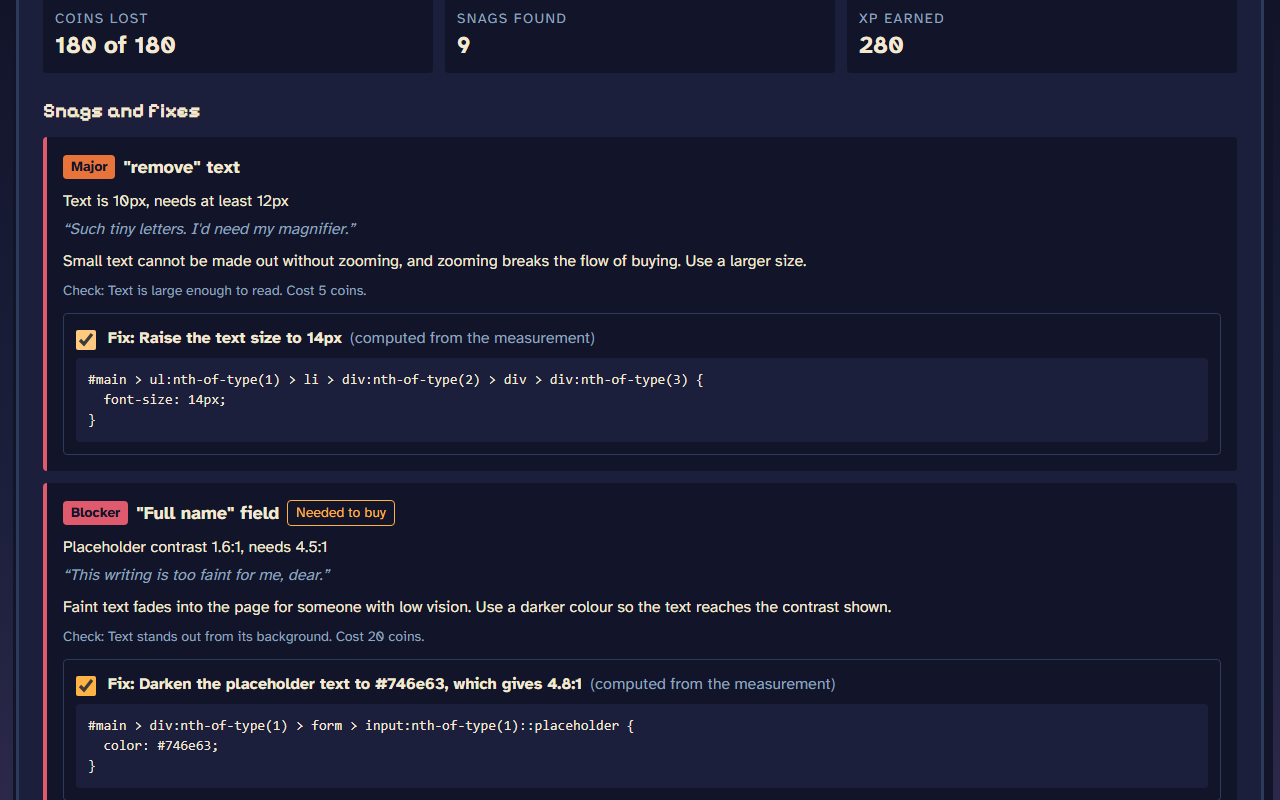
Grandma Iris finds a field too pale to read: 1.6:1 contrast, where 4.5:1 is needed
-
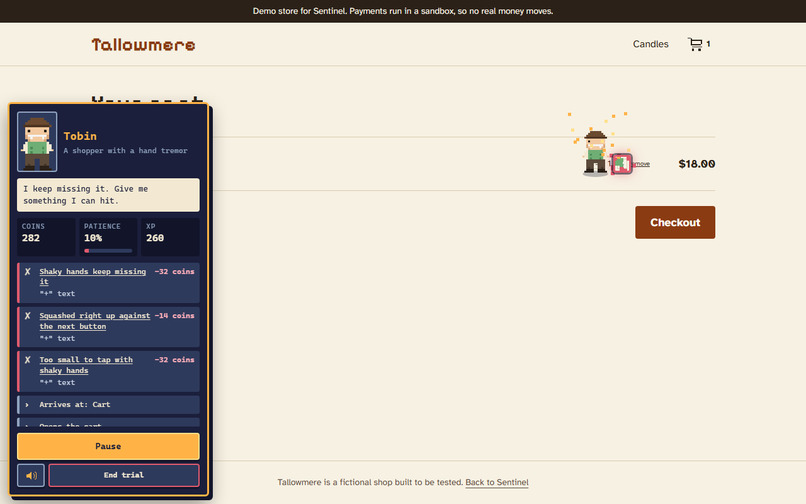
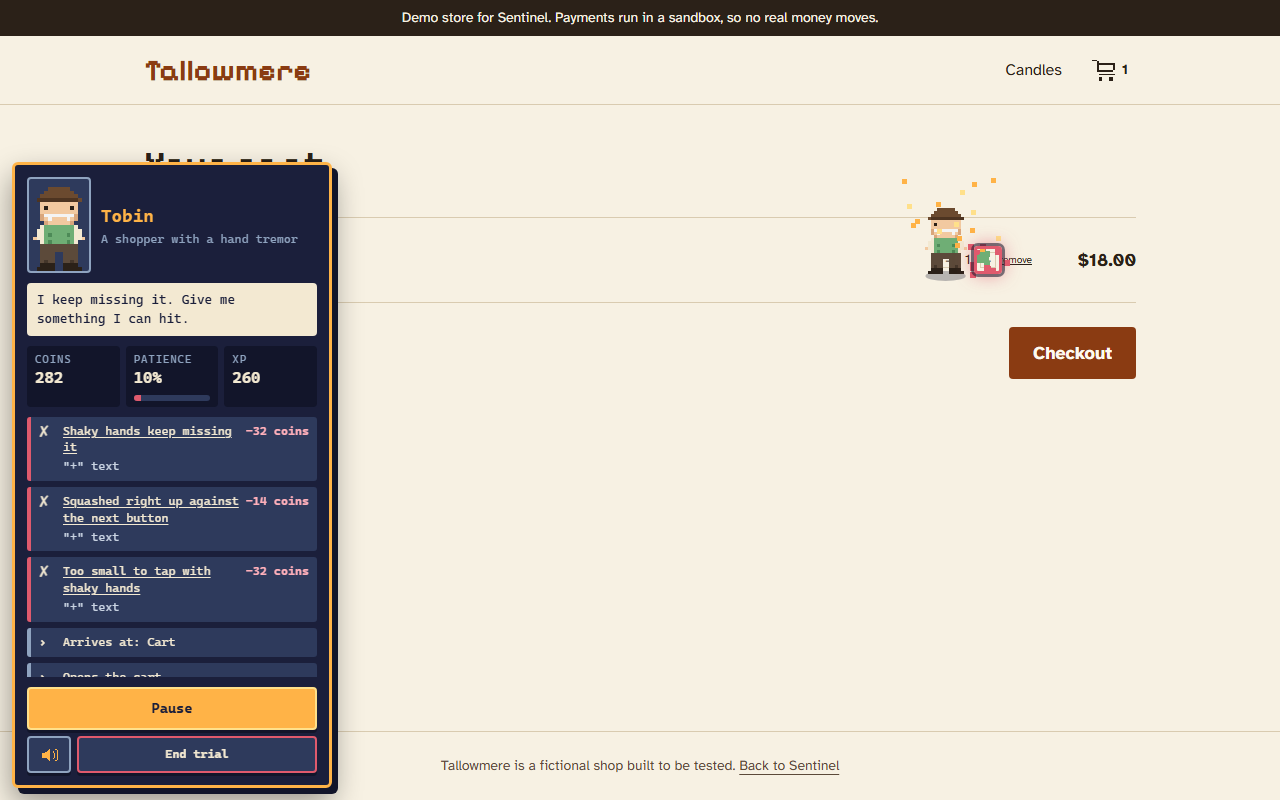
Tobin's 20 simulated shaky taps. The red ones missed
-
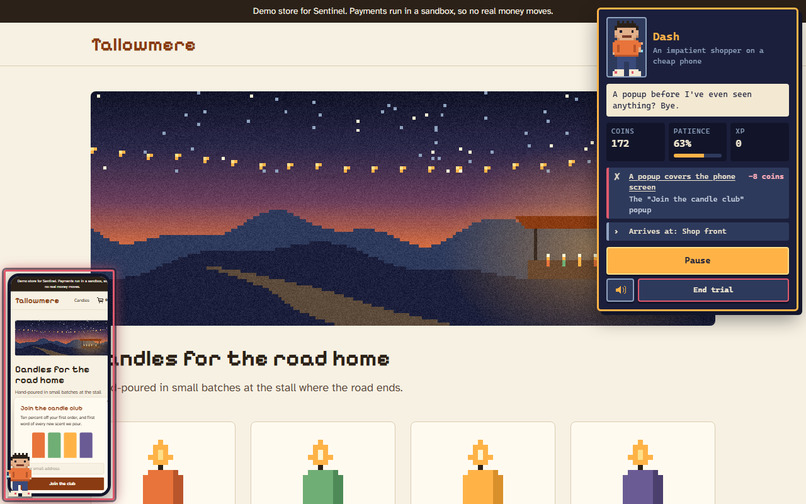
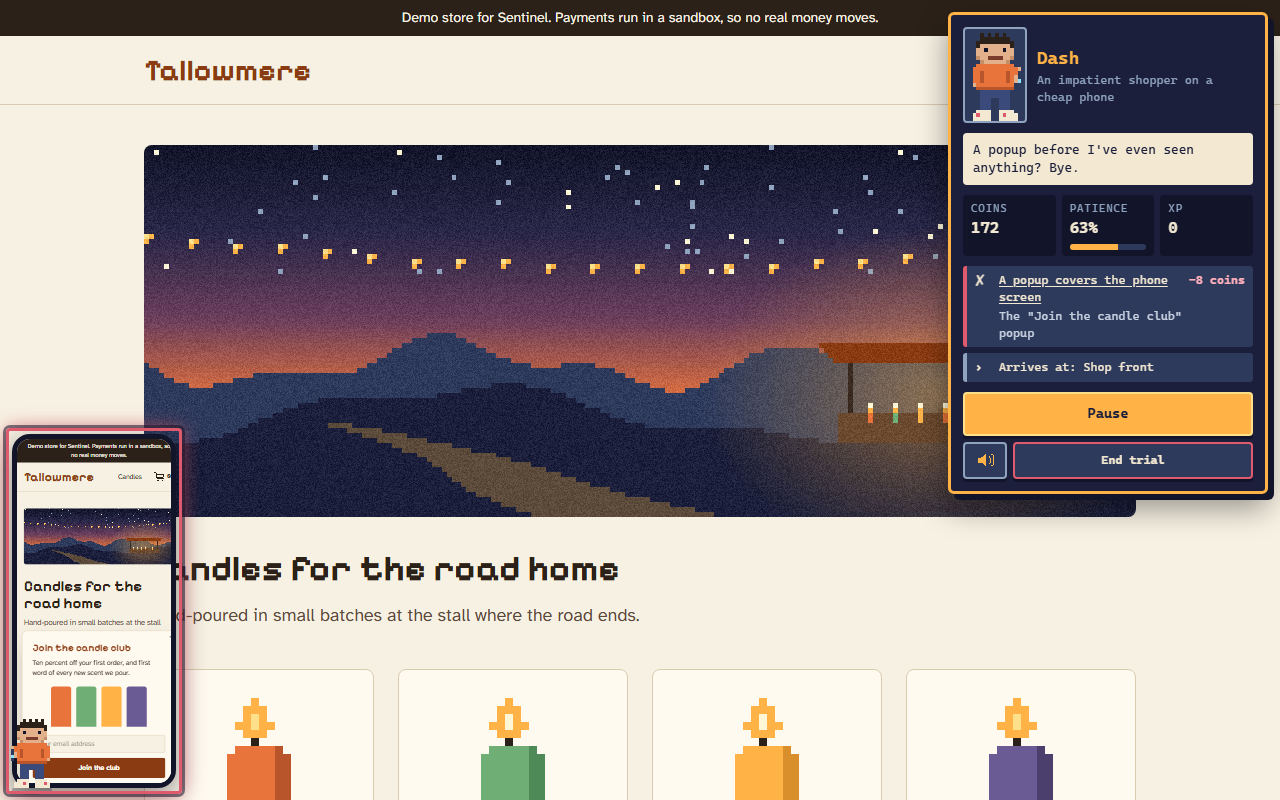
Dash on a cheap phone: a popup covers the screen
-
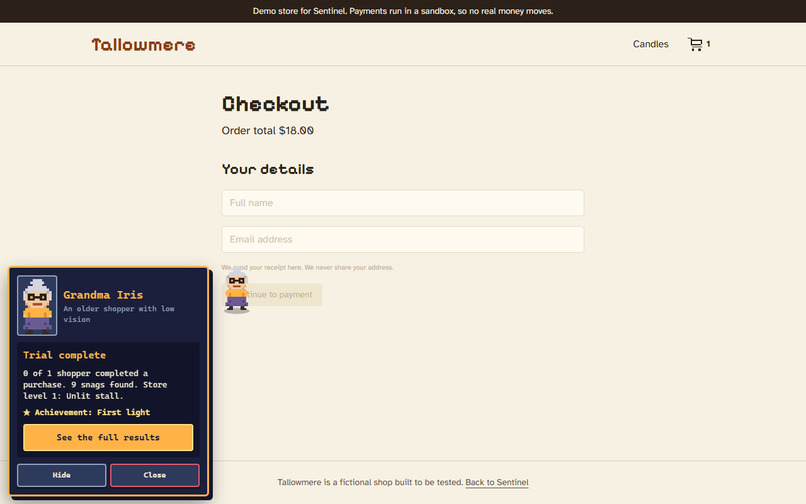
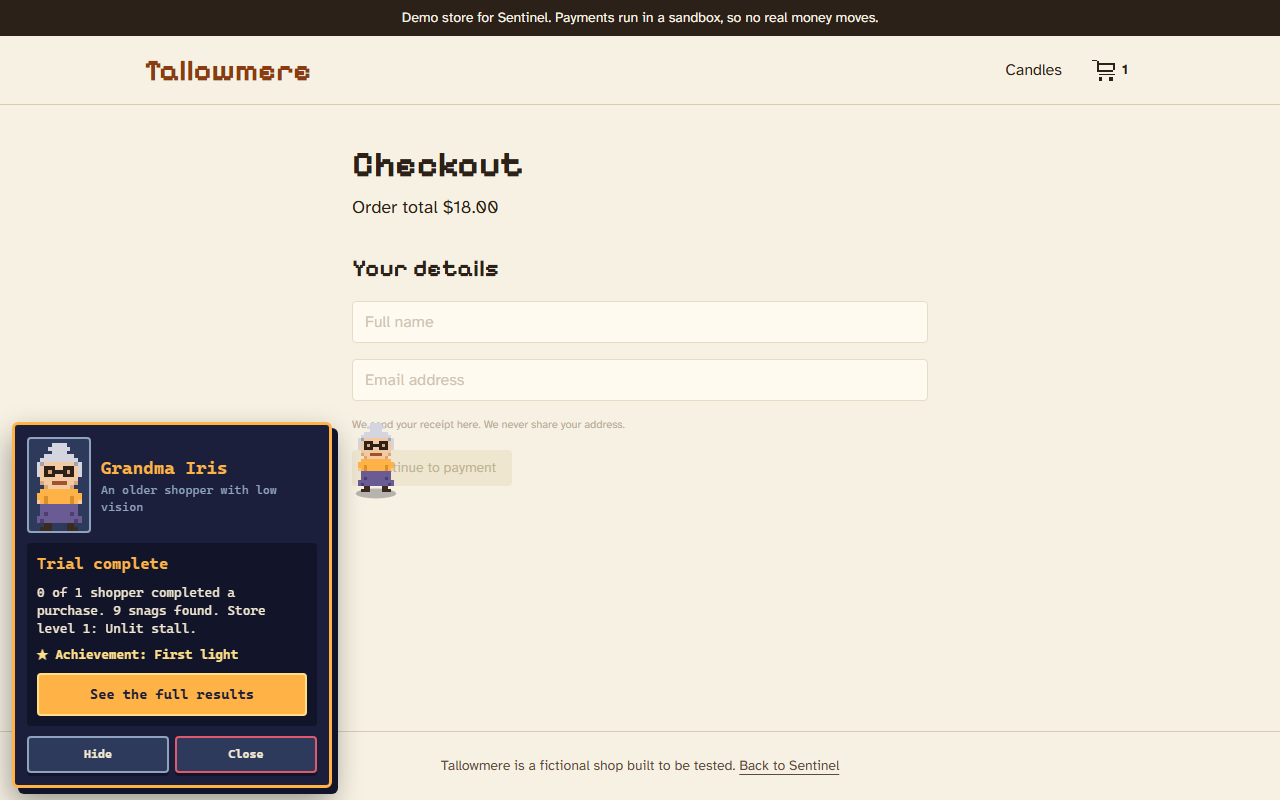
The end of a trial: who bought, who left, and achievements earned
-
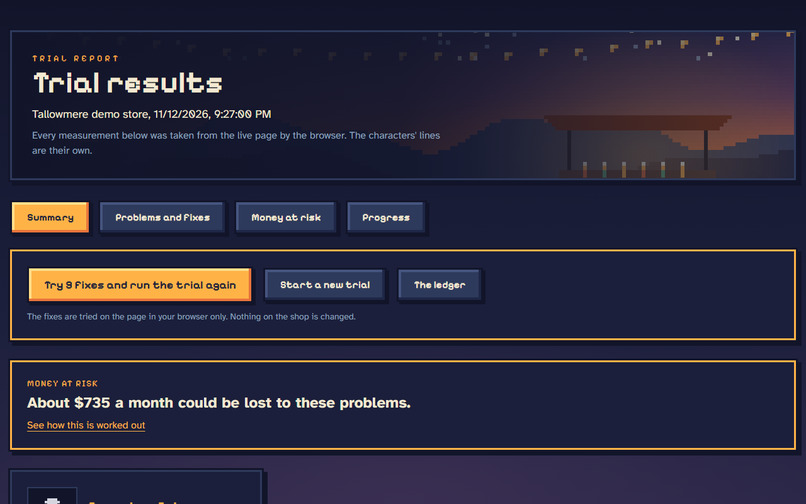
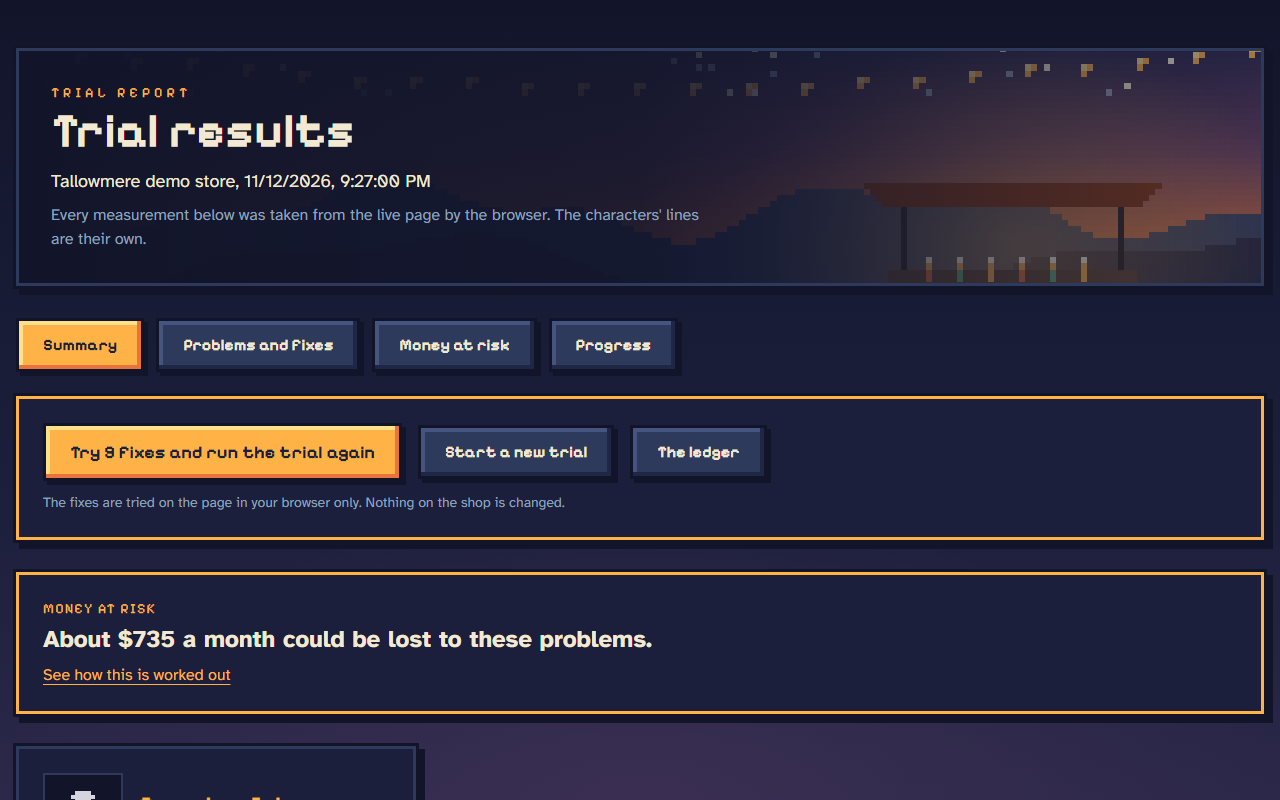
Results in plain words, with the money at risk each month
-
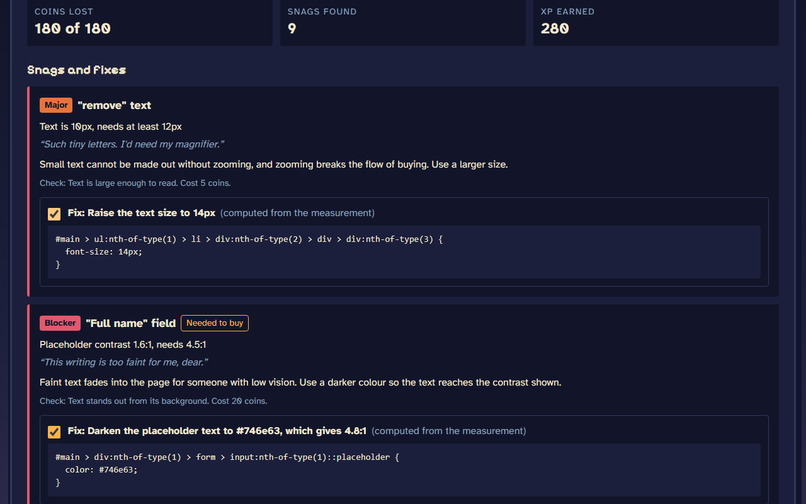
Every problem comes with a fix, as code
-
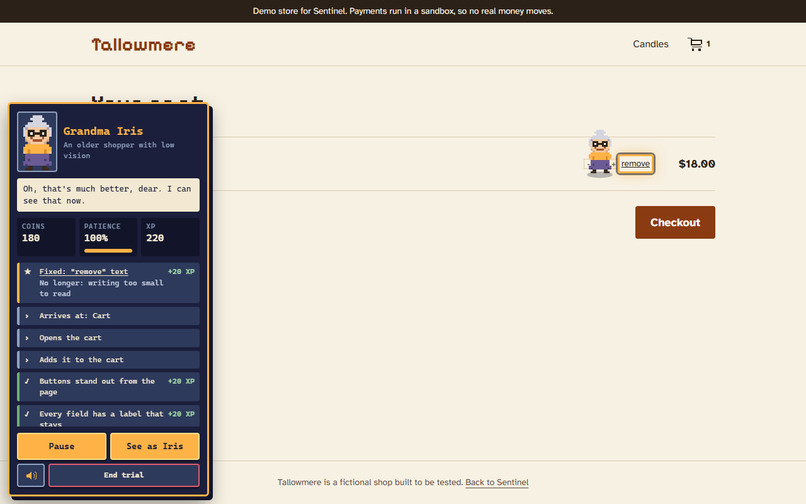
After the fixes: Iris keeps all 180 coins and pays in the Braintree sandbox
-
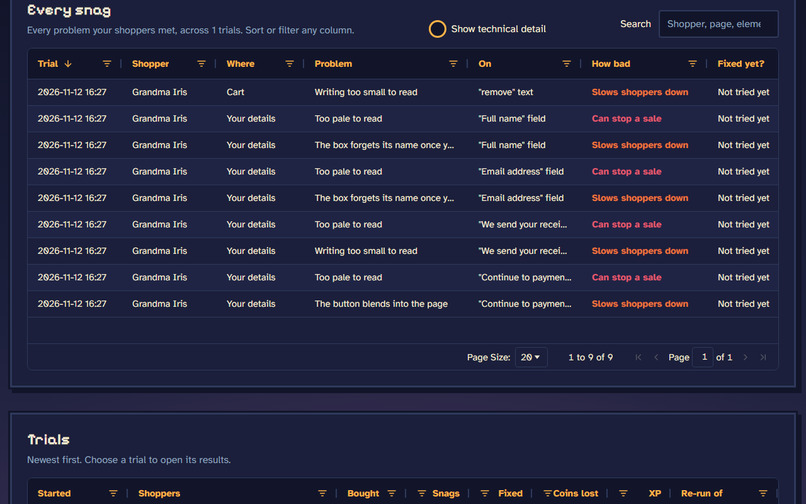
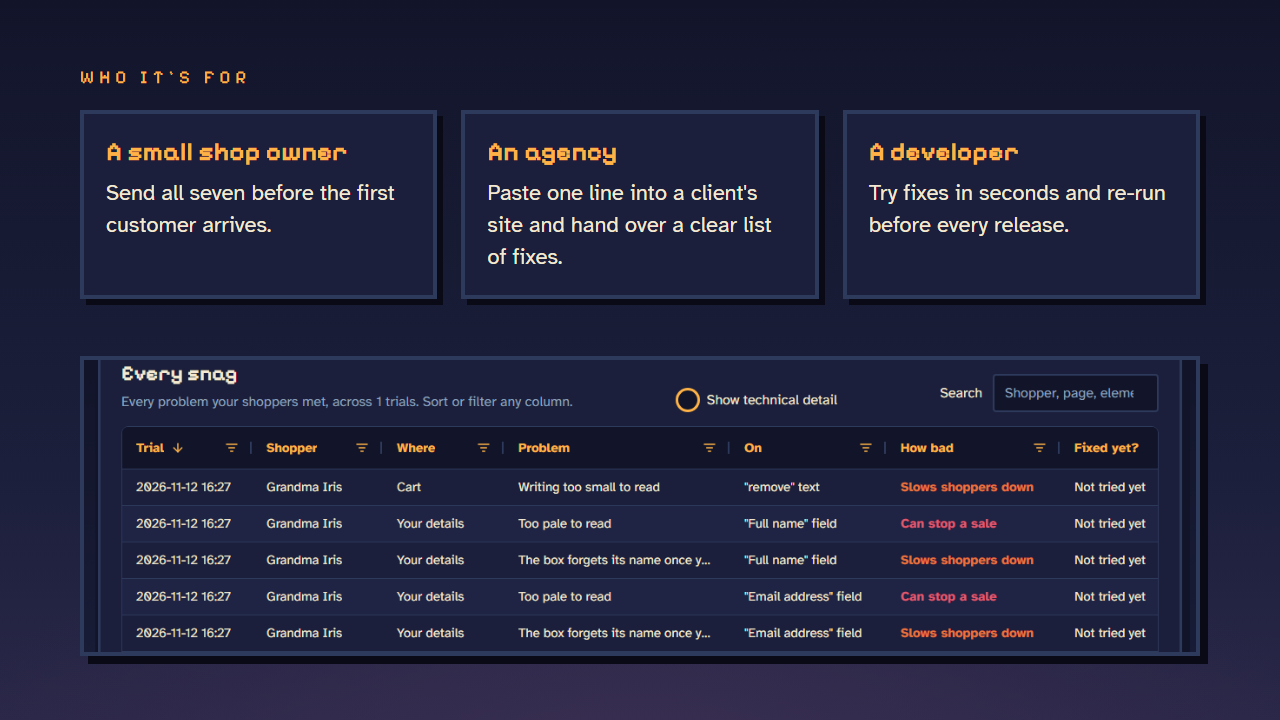
The ledger (AG Grid): every problem, sortable, and what's fixed
-
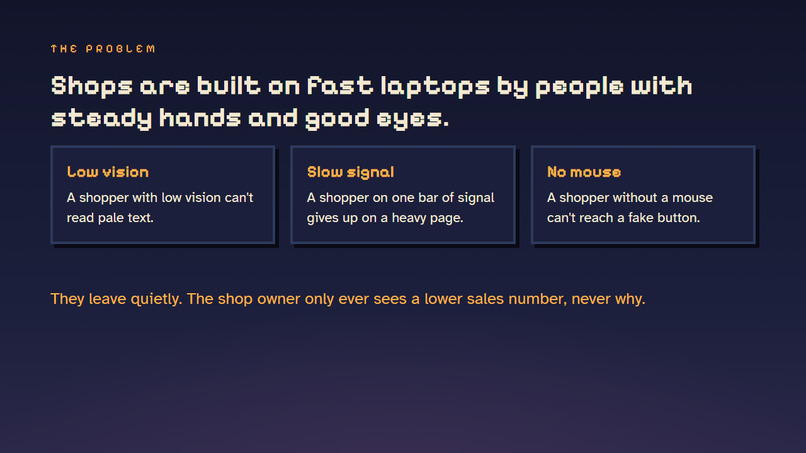
The problem
-
How PayPal (Braintree) and Gemini do real work
-
Who it's for
-
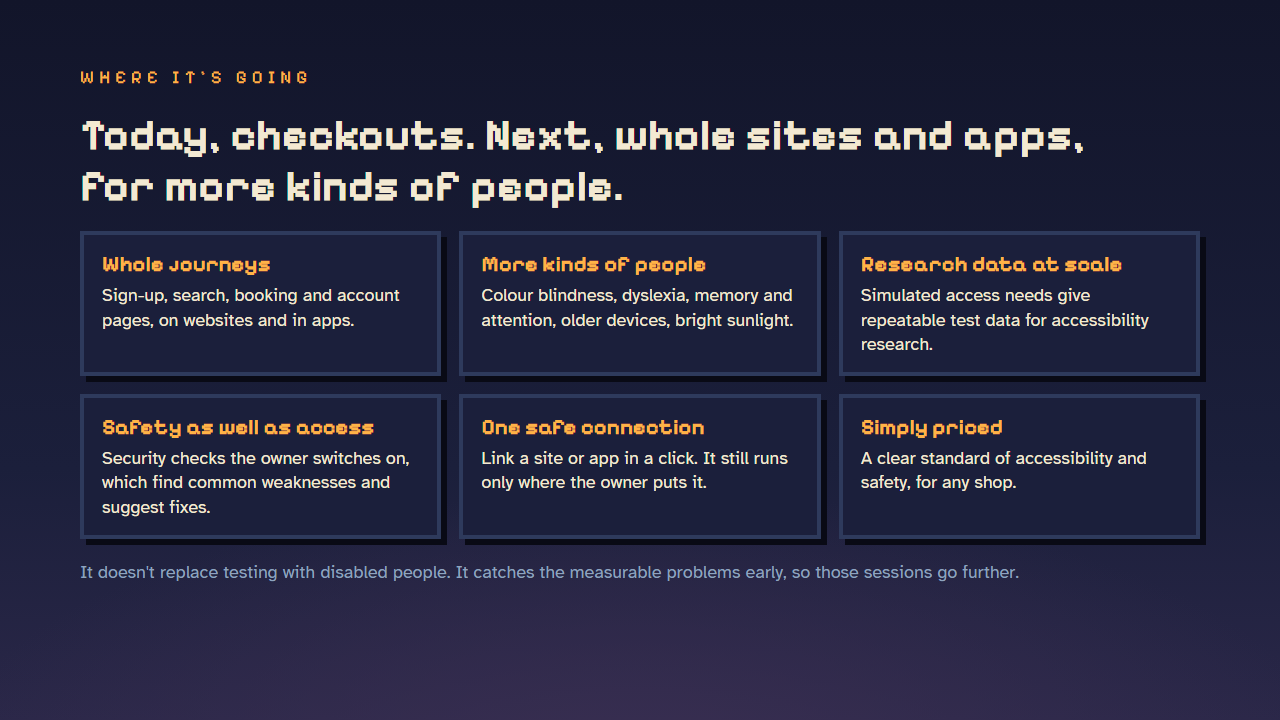
Where it's going
Inspiration
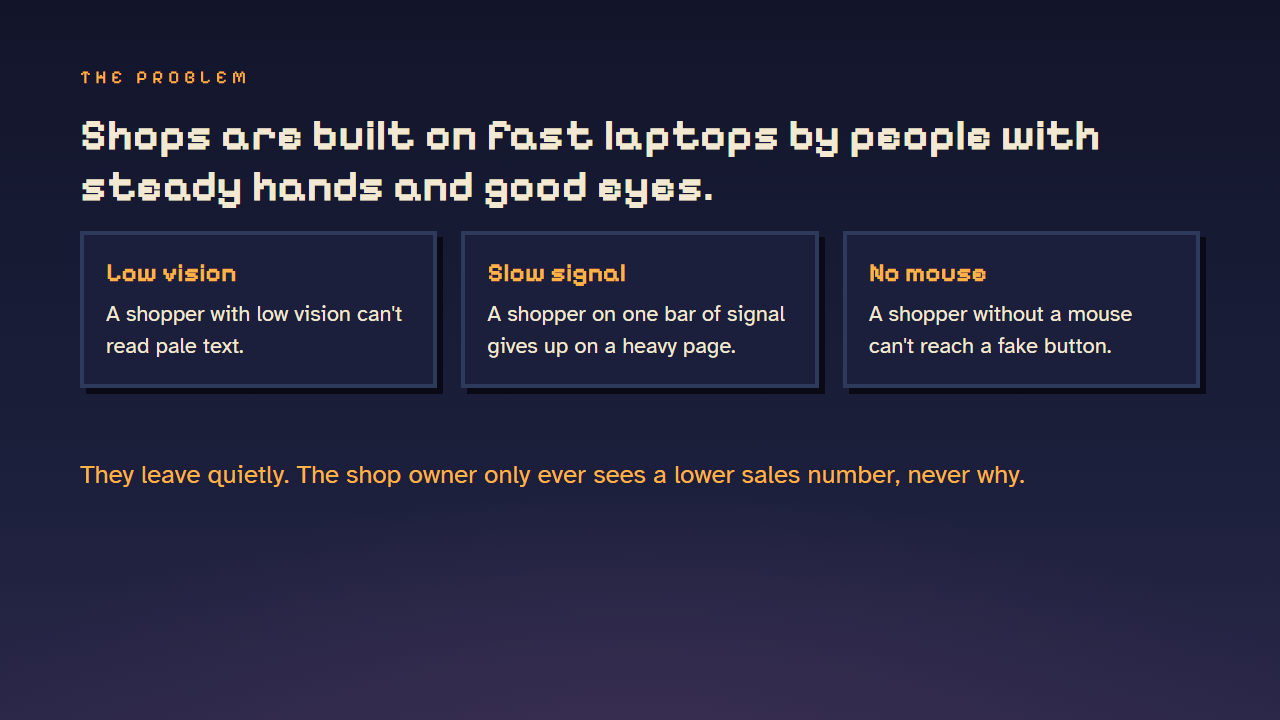
Most shops get built on fast laptops by people with steady hands and good eyes. Shoppers who don't fit that don't complain. They just leave. The owner sees a lower number and never finds out why.
Accessibility reports exist, but they're long lists of rule numbers, and shop owners put them off. We wanted something you'd actually watch: a person you can picture, stuck on your page, losing patience until the sale is gone. So we gamified accessibility testing.
What it does
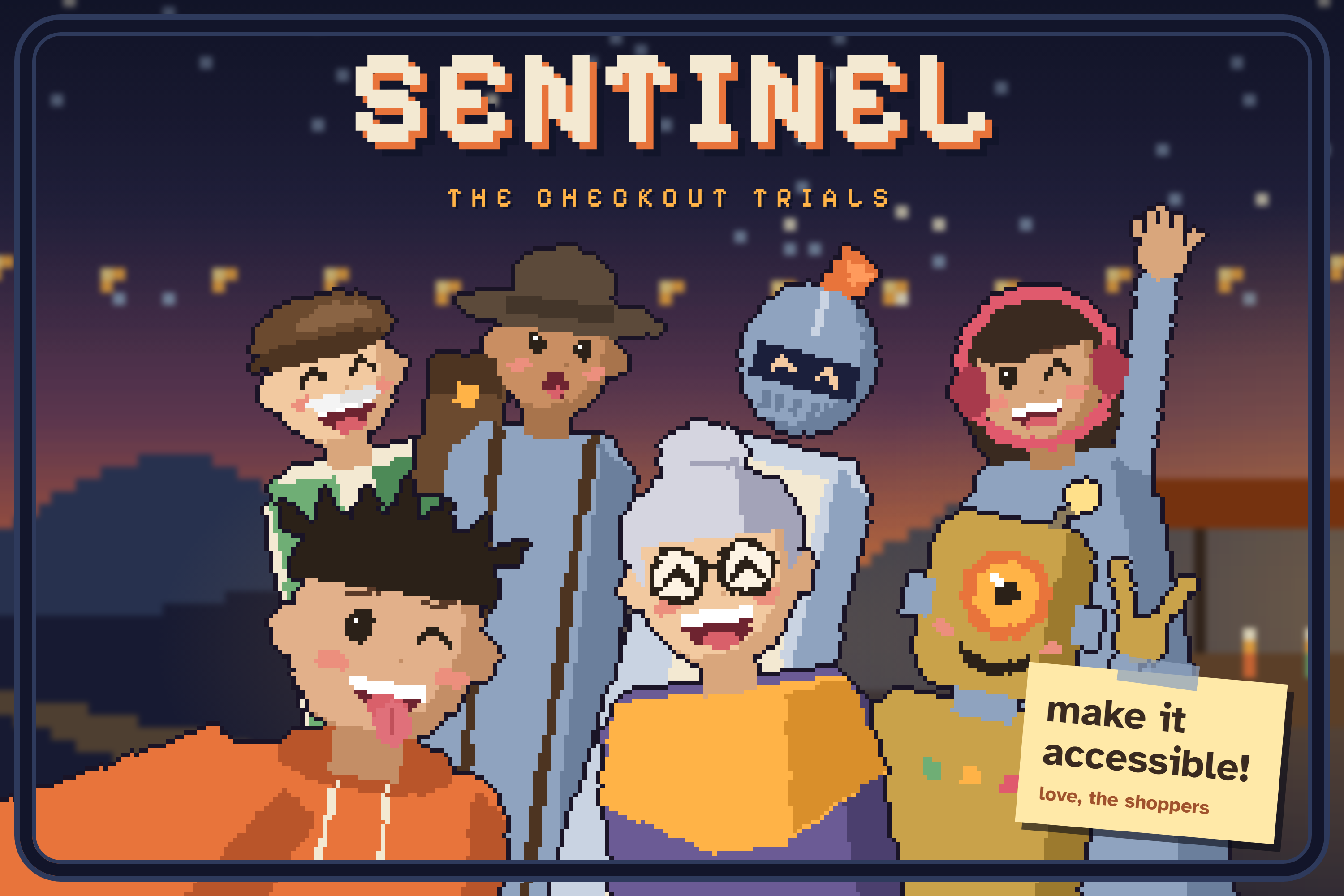
Sentinel sends seven pixel-art shoppers through a real checkout. Each one stands for a real kind of customer:
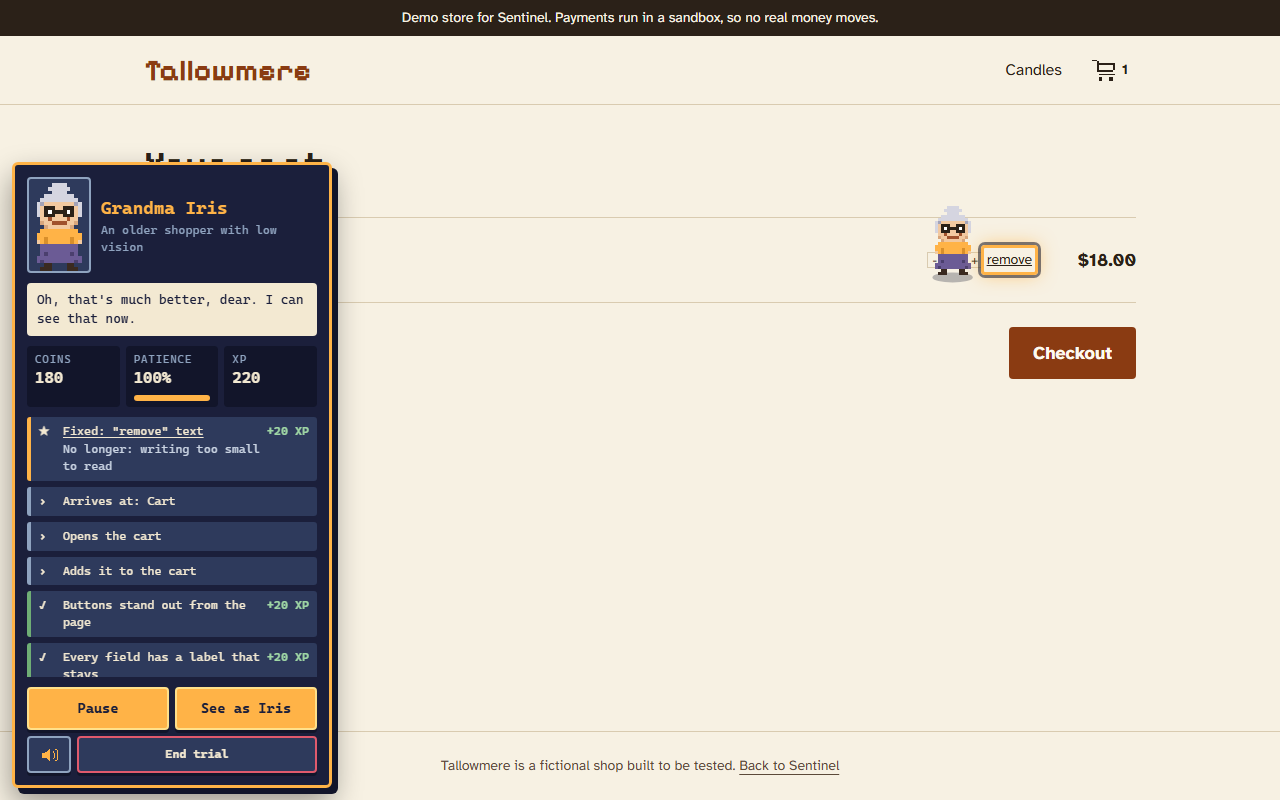
- Grandma Iris has low vision, and checks contrast, text size and labels.
- Tobin has a hand tremor, and checks tiny buttons and risky neighbours with 20 simulated shaky taps.
- Pell is on a slow rural connection, and checks page weight and wait times.
- Knock only uses a keyboard, and checks reachability, focus and tab order.
- Echo uses a screen reader, and checks names, image descriptions and headings.
- Dash is on a cheap phone in a hurry, and checks layout, popups and autofill.
- Cog is an AI shopping agent, and checks whether a machine can read the product and buy it.
They walk the store page by page, and every problem they meet costs them coins and patience. Lose enough, and they leave without buying. All 29 checks are measured by the browser on the live page. The AI never makes up a number.
Afterwards you get:
- Results in plain words: who bought, who left and where, with the worst problems first.
- An estimate of the money at risk each month, with every assumption shown.
- A verdict from Gemini for each shopper, written from the measurements.
- A fix for every problem, shown as code. Try them all on the page in one click, send the same shoppers back, and compare before and after. On our demo store, Grandma Iris goes from 9 problems and a lost sale to none, and pays through the Braintree sandbox.
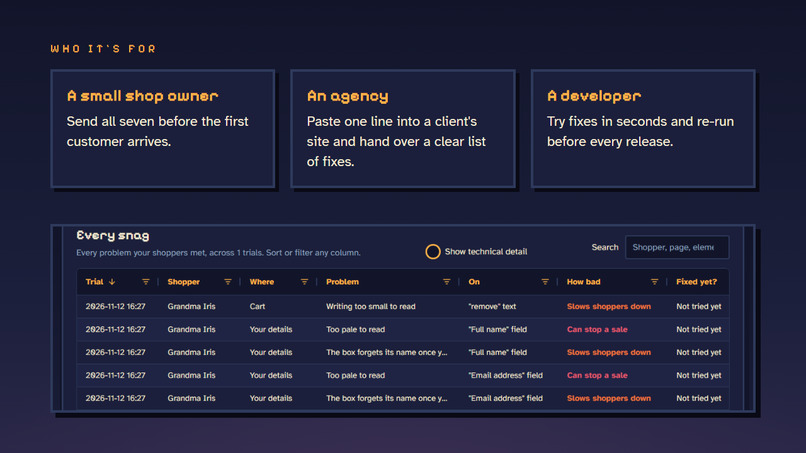
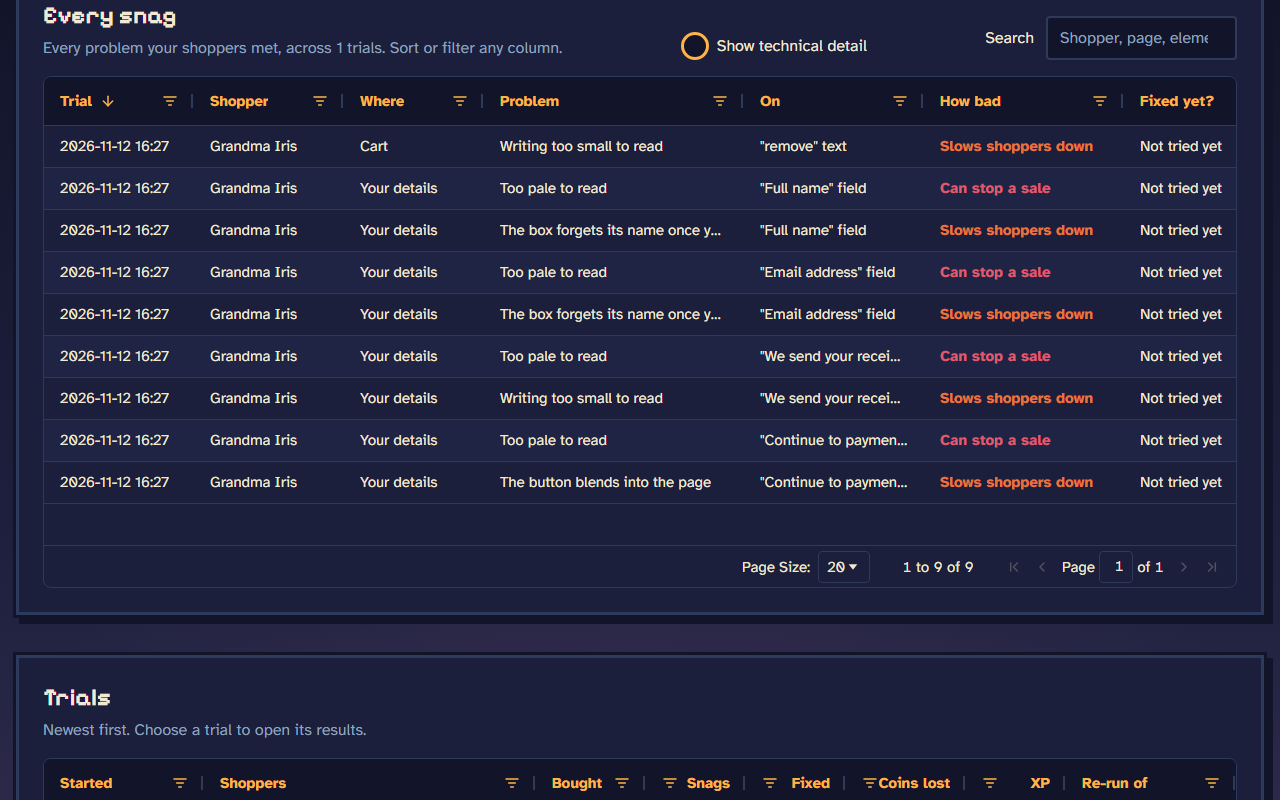
- The ledger: every problem from every trial in one AG Grid table, to sort, filter and track what's fixed.
- XP, store levels and achievements, so fixing your shop feels like levelling up.
Owners can also paste one line of code into their own site and send the shoppers there. On real sites, the shoppers only look. They never type, pay or buy.
How we built it
- Next.js 16 and React 19 (App Router), TypeScript and Tailwind CSS v4, deployed on Vercel.
- The trial engine is a separate script bundled with esbuild. It's injected into the store page and draws the shoppers and their panel inside a shadow root, so it never clashes with the shop's own styles. Sprites are drawn on canvas from pixel grids, and the sounds are made with Web Audio, all in code.
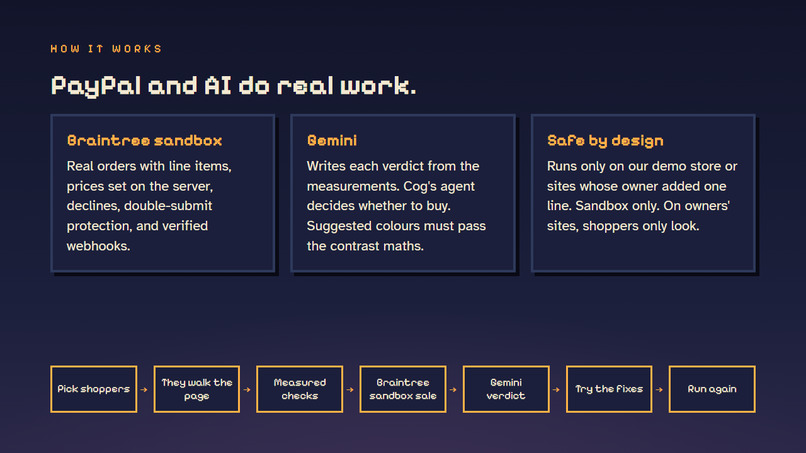
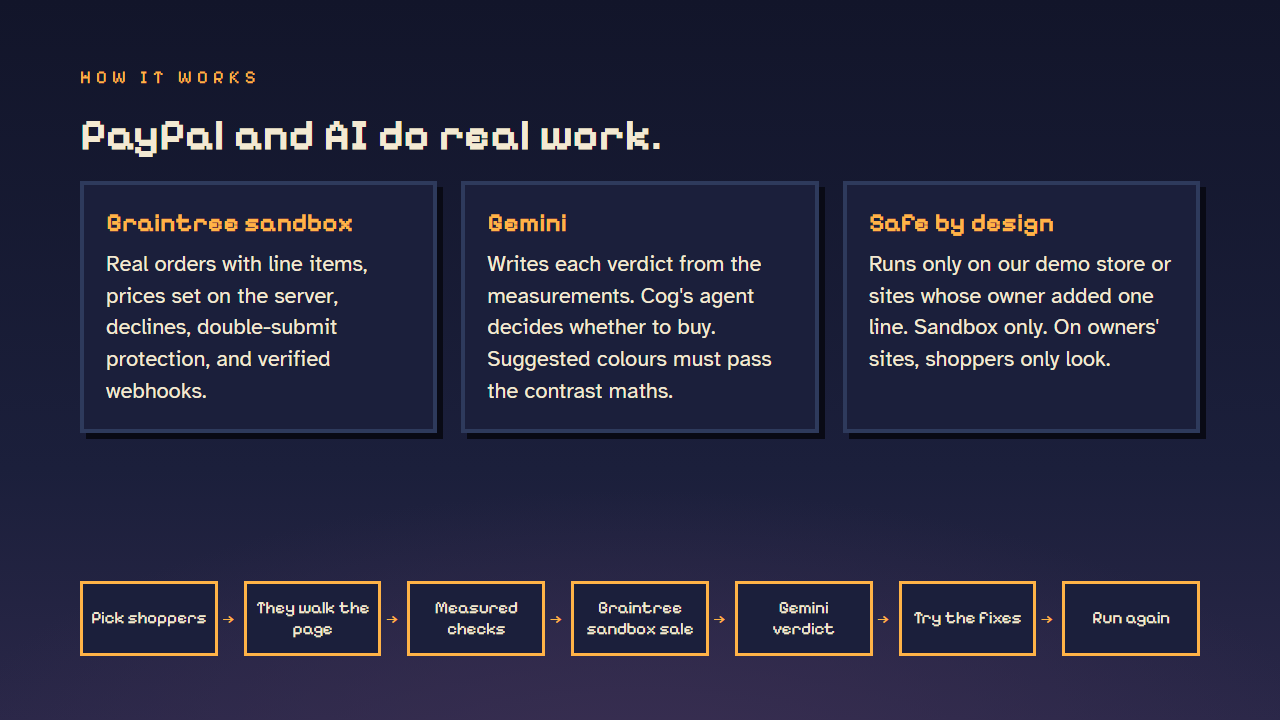
- Braintree sandbox (PayPal): the demo store, Tallowmere, has a real checkout. Prices are worked out on the server and sent as line items. Each order has its own ID to block double payments, declines are handled, and webhooks are signature-checked.
- Gemini writes each shopper's verdict as structured JSON from the measurements. It also suggests colours, which are only used if they pass the contrast maths, and it powers Cog's agent. If Gemini can't be reached, Sentinel uses its own notes and says so on screen.
- Agentic commerce: Cog reads the store's machine-readable product data and hands it to its agent, which decides whether the item and price are right. The server then places a sandbox order with nobody pressing Pay. If the product data is missing, Cog can't buy, and the fix that adds it is one of the fixes you can try.
- AG Grid Community powers the ledger, with plain columns by default and technical detail one switch away.
- Safety in code: trials run only on our demo store or on sites whose owner installed a signed key. A live payments setting makes the app refuse to start. Only allow-listed fixes can ever touch a page.
- Tests: 100 unit tests (Vitest) and 24 browser tests (Playwright) that walk real trials from start to finish.
Challenges we ran into
- Measuring, not guessing. Every number had to come from the real page: contrast against the actual background, target sizes after layout, and bytes actually downloaded. Pell once missed a heavy banner because the browser served it from cache and reported zero bytes, so we had to measure the file another way.
- Making AI useful without letting it invent things. Gemini writes the explanations, but the numbers always come from the browser, and any colour it suggests has to pass the contrast maths before we show it.
- A shopper that walks on someone else's page. The engine runs inside pages it doesn't control, so its panel had to find an empty corner on every page, stay out of the way, and keep working across page loads.
- Plain words. Our first results screens read like an audit. We rewrote every problem as a sentence a shop owner would say, like "Too pale to read", and moved the technical detail behind a switch.
- No PayPal account. PayPal accounts, including developer sandbox accounts, aren't available to developers in Pakistan, where we built Sentinel. So we built everything on Braintree's sandbox (a PayPal service) with test cards. The PayPal button in Braintree's payment form is wired in and turns on with one setting once a PayPal sandbox account is linked.
- A free AI tier. Gemini's free tier has a daily limit, so every AI feature has an honest fallback: if Gemini can't answer, Sentinel uses its own notes and says so on screen.
Accomplishments that we're proud of
- The full loop works end to end on a real sandbox checkout: shoppers fail, you try the fixes, they come back and pay.
- An AI agent shopper that can only buy once the store is readable by machines, which shows a real agentic-commerce problem in one picture.
- It's fun to watch, and every number on screen is still measured.
- Owners can try it on their own site safely, with one line of code and shoppers that only look.
What we learned
Showing beats telling. People care about a contrast ratio once they've watched Grandma Iris give up because of it. We also learned how much a checkout depends on details nobody notices until someone can't get past them.
What's next for Sentinel: The Checkout Trials
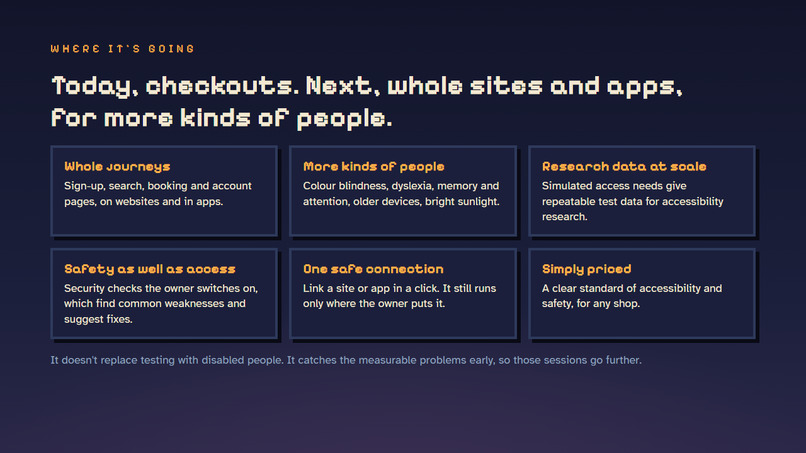
- Whole journeys, not just checkout: sign-up, search, booking and account pages, on websites and in apps.
- More kinds of people: colour blindness, dyslexia, memory and attention, older devices, a phone in bright sunlight.
- Research data at scale: as AI gets closer to simulating real people, it will need to simulate disability and other limits too. Simulated access needs could produce large, repeatable sets of test data on how people use software, to speed up accessibility research and product development. Very little work has been done here yet.
- Safety as well as access: security checks the owner switches on, which find common weaknesses and suggest fixes. They'll run under the same rules as today: only where the owner allows it.
- Easier, safe connection: a simpler way to link a site or app, keeping today's promise that it only runs where you put it and your customers' data stays untouched.
- A simply priced product that takes you through your site or app and makes sure it meets a clear standard of accessibility and safety.
Sentinel doesn't replace testing with disabled people. It catches the measurable problems early, so those sessions go further.
