-
-
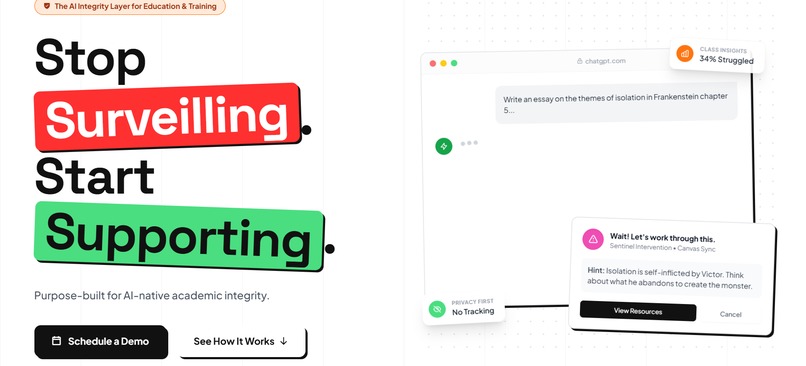
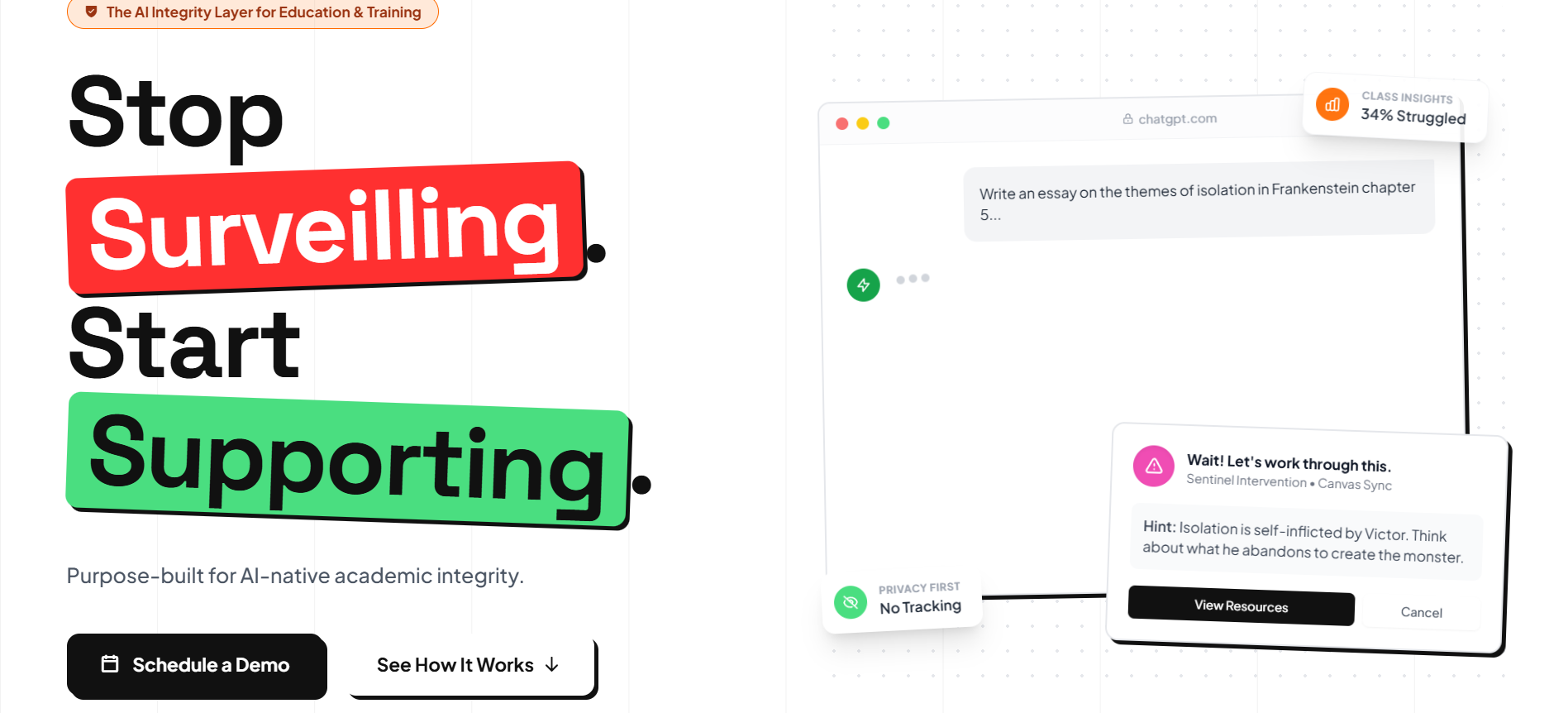
Sentinel “Teaches” Hero Section
-
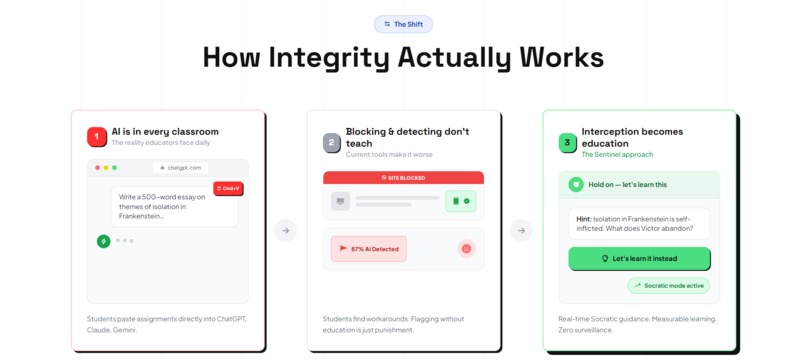
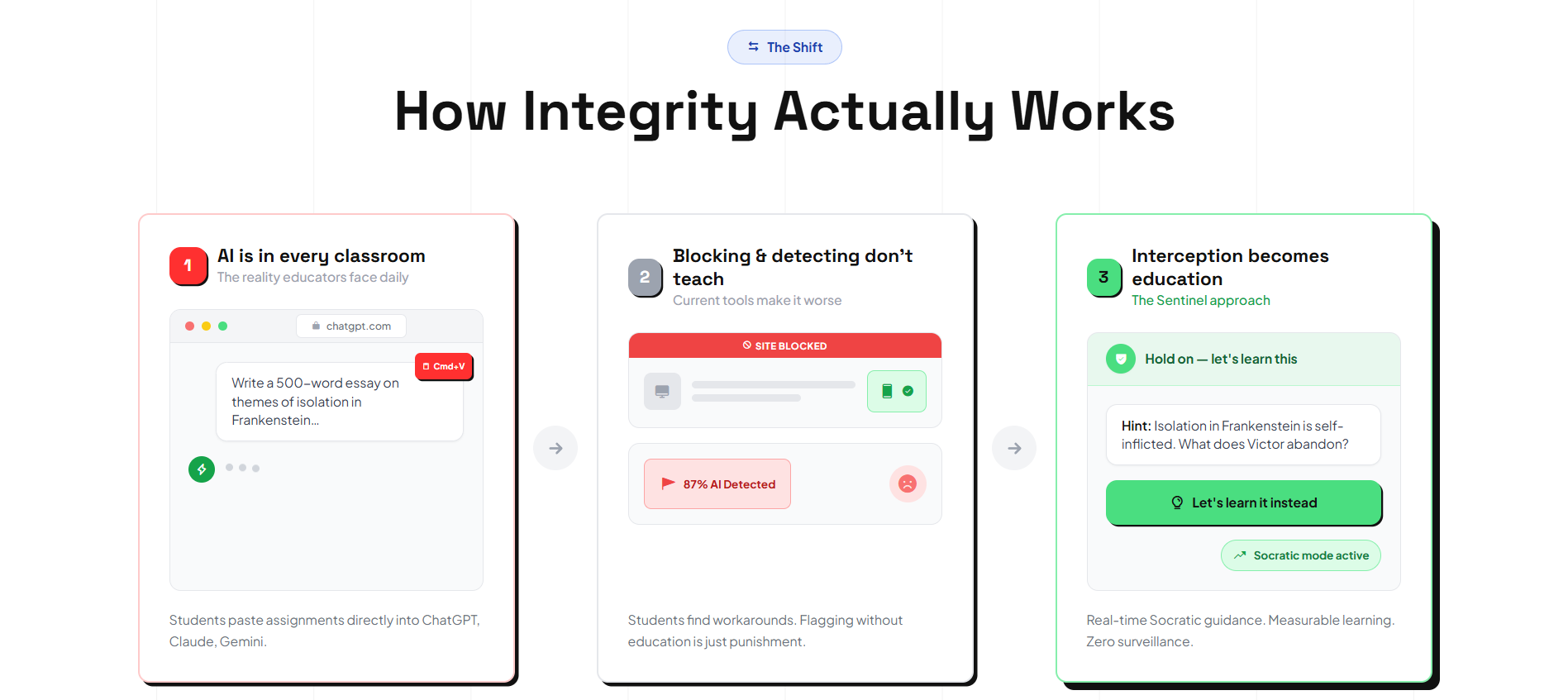
How Integrity Actually Works
-
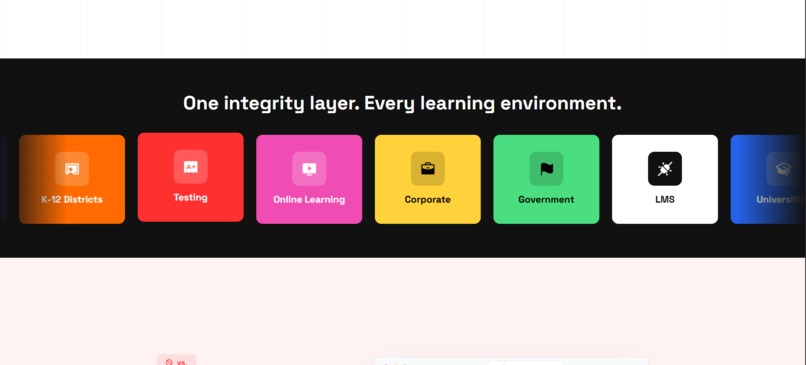
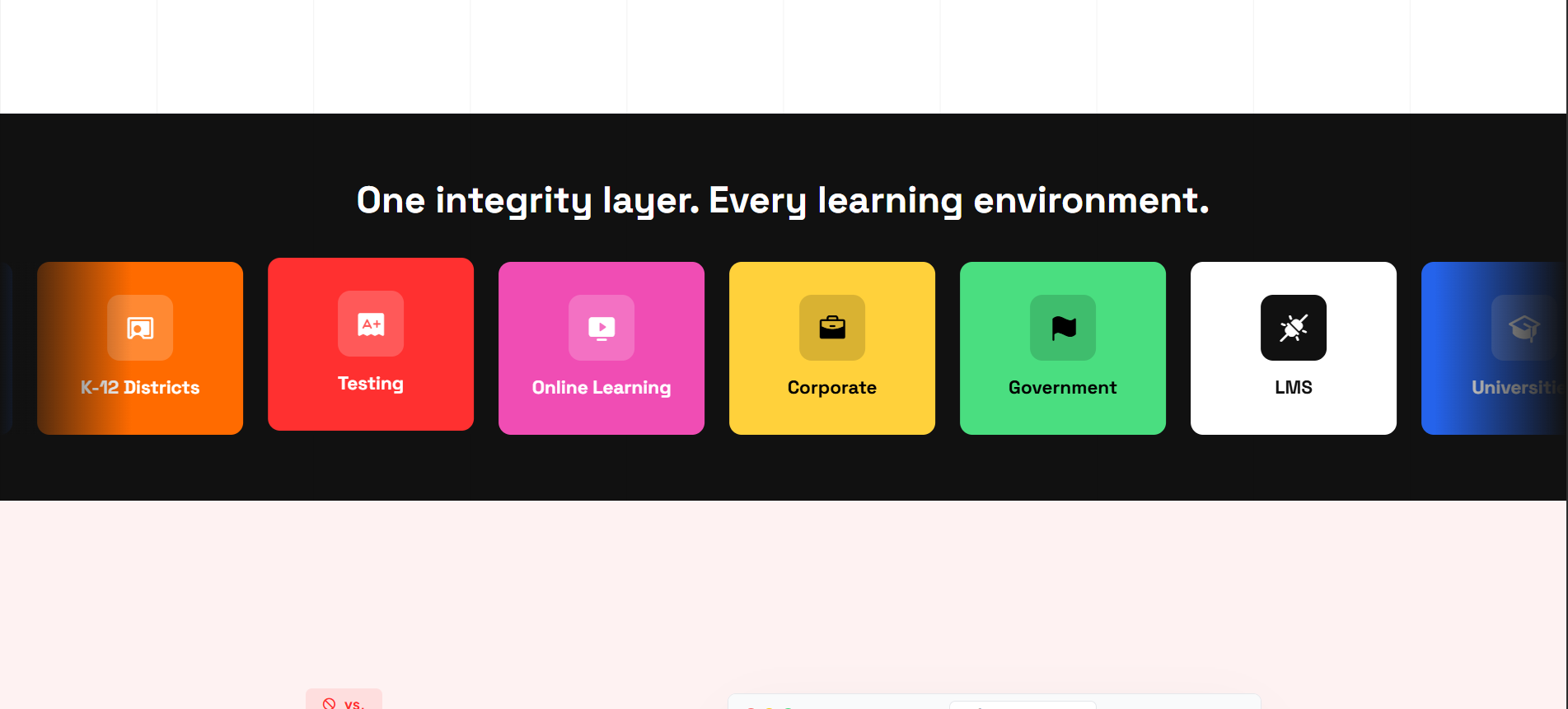
One Integrity Layer. Every Learning Environment.
-
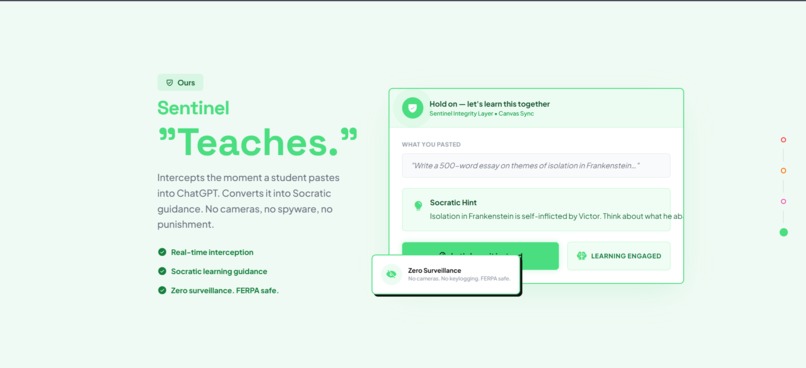
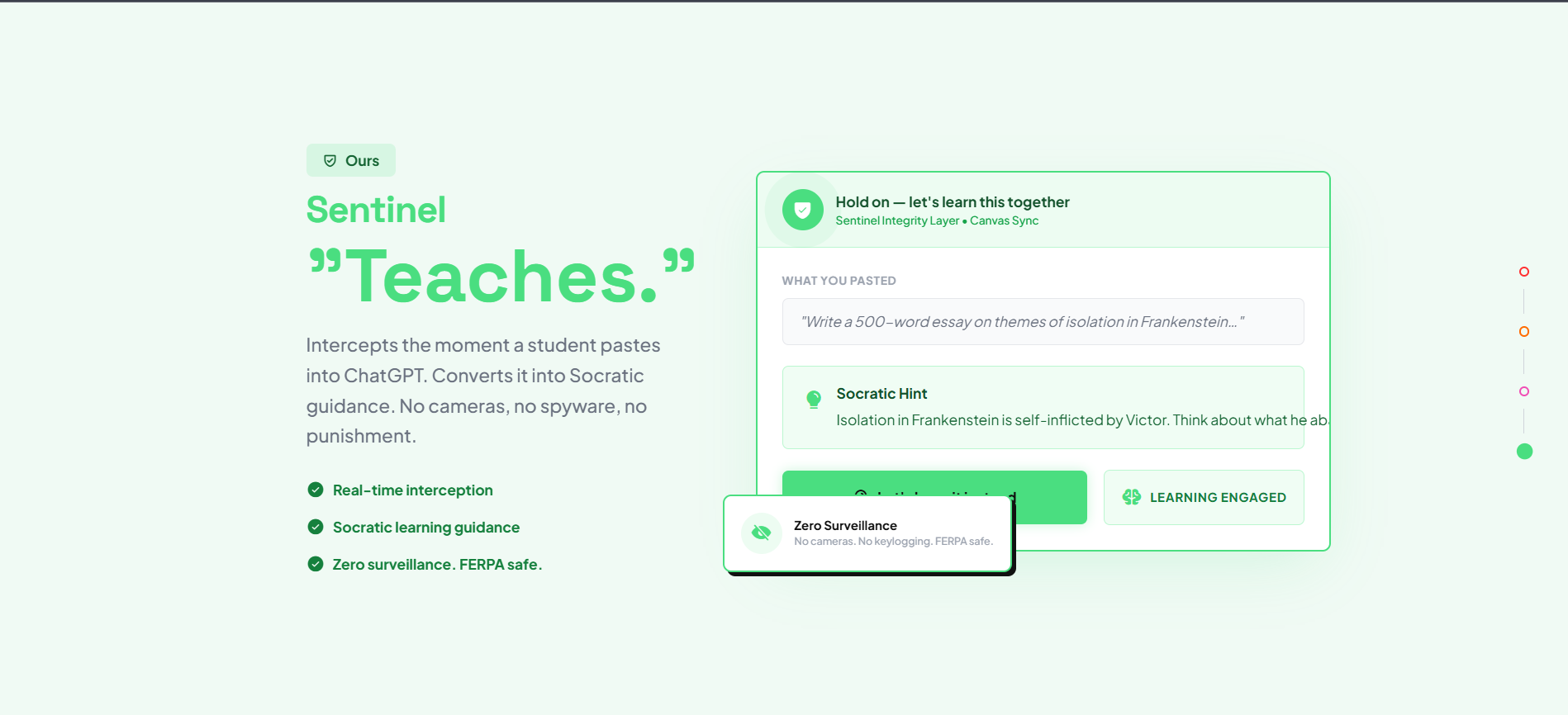
Sentinel “Teaches.”
-
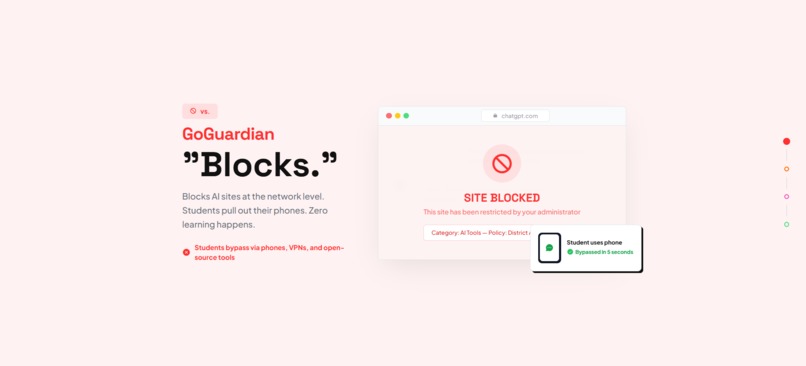
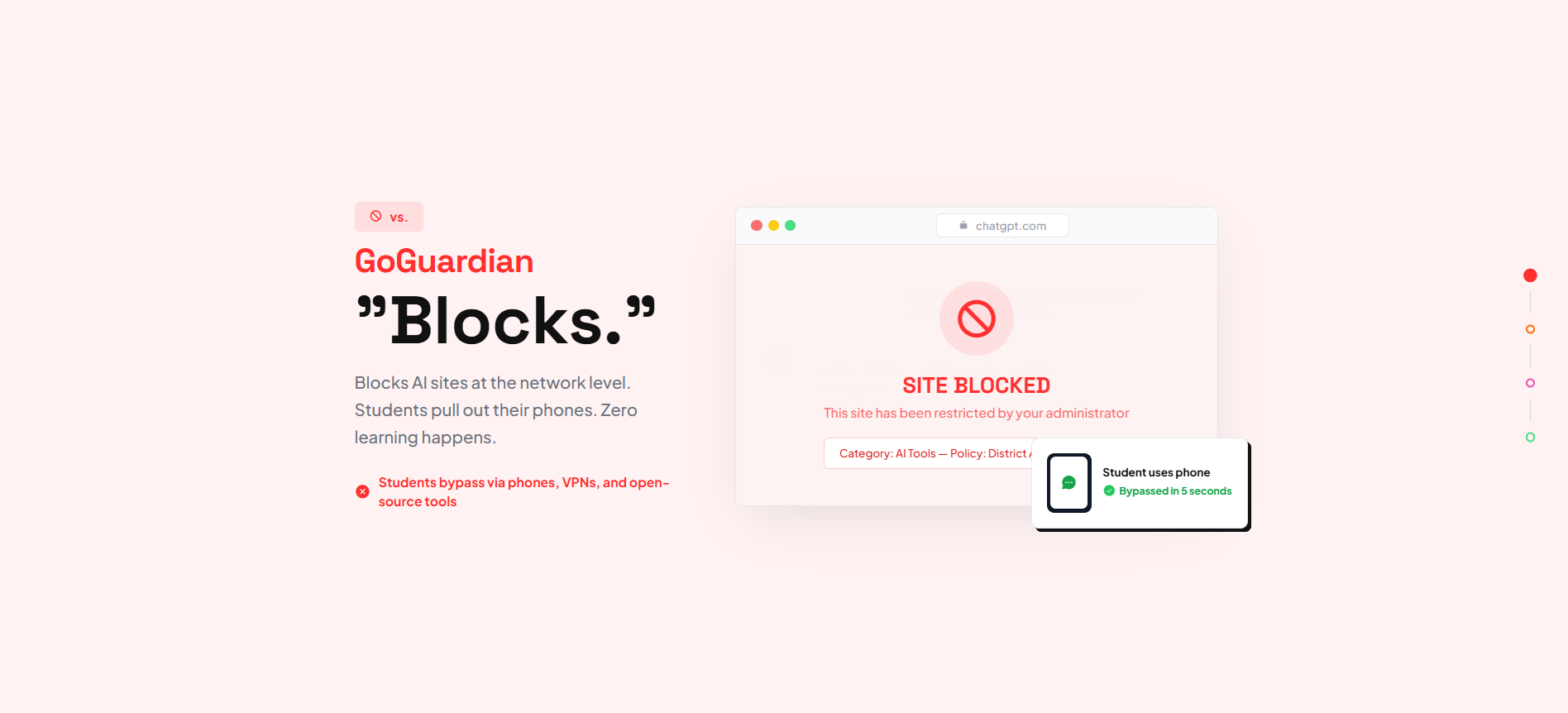
GoGuardian “Blocks.”
-
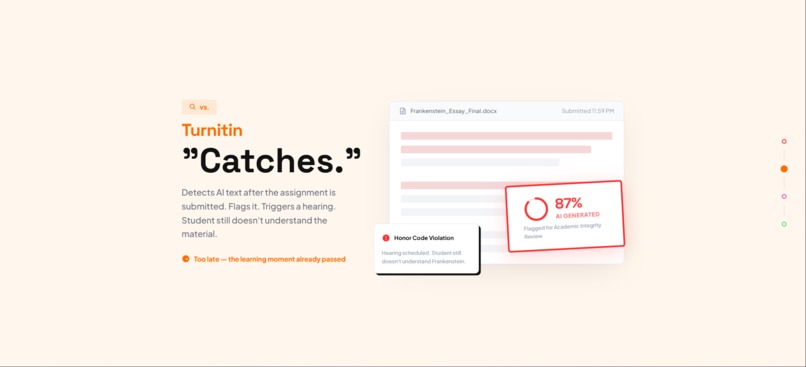
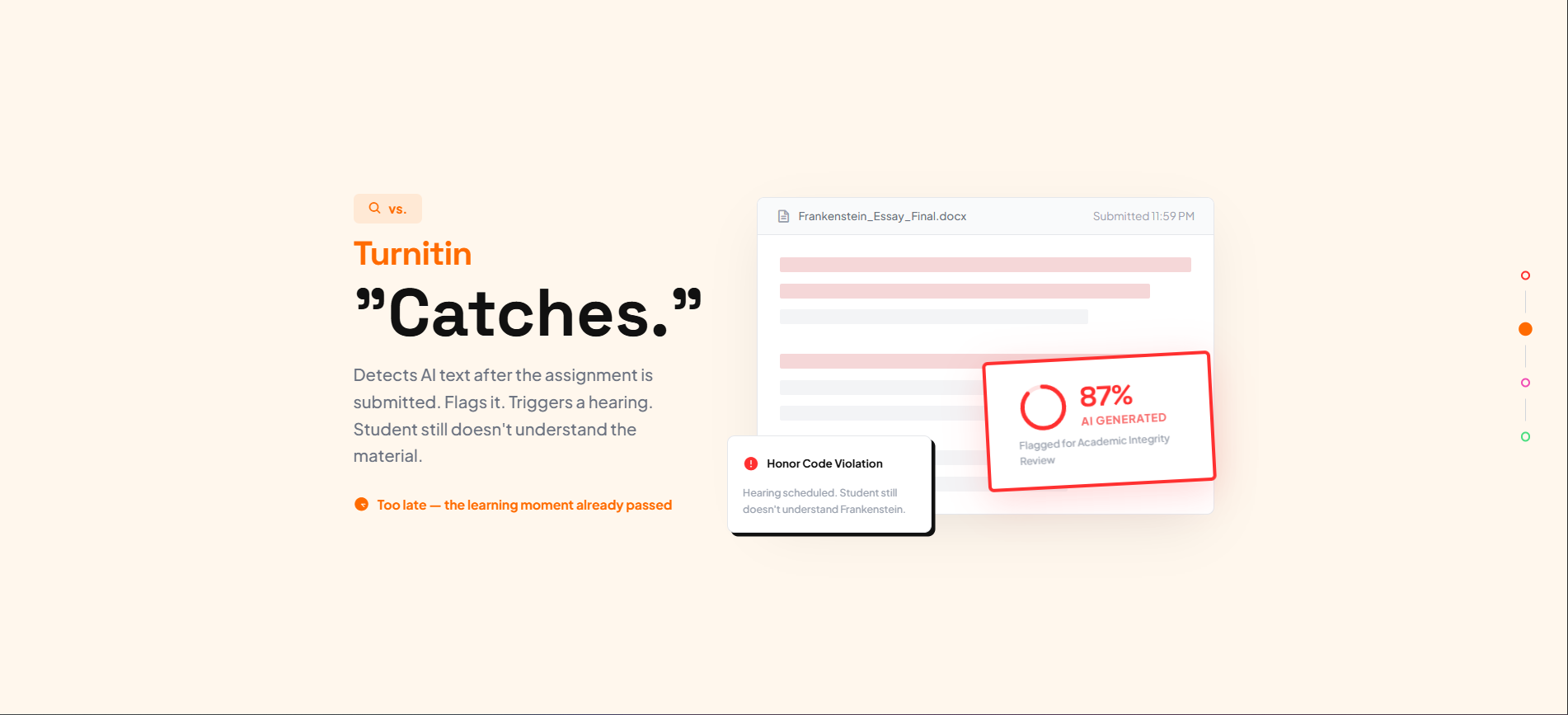
Turnitin “Catches.”
-
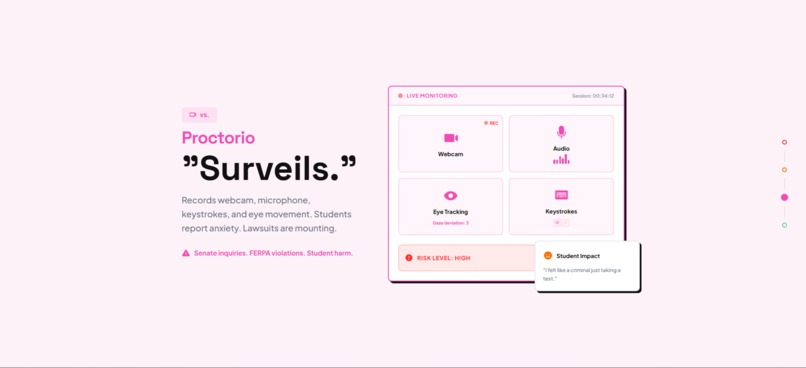
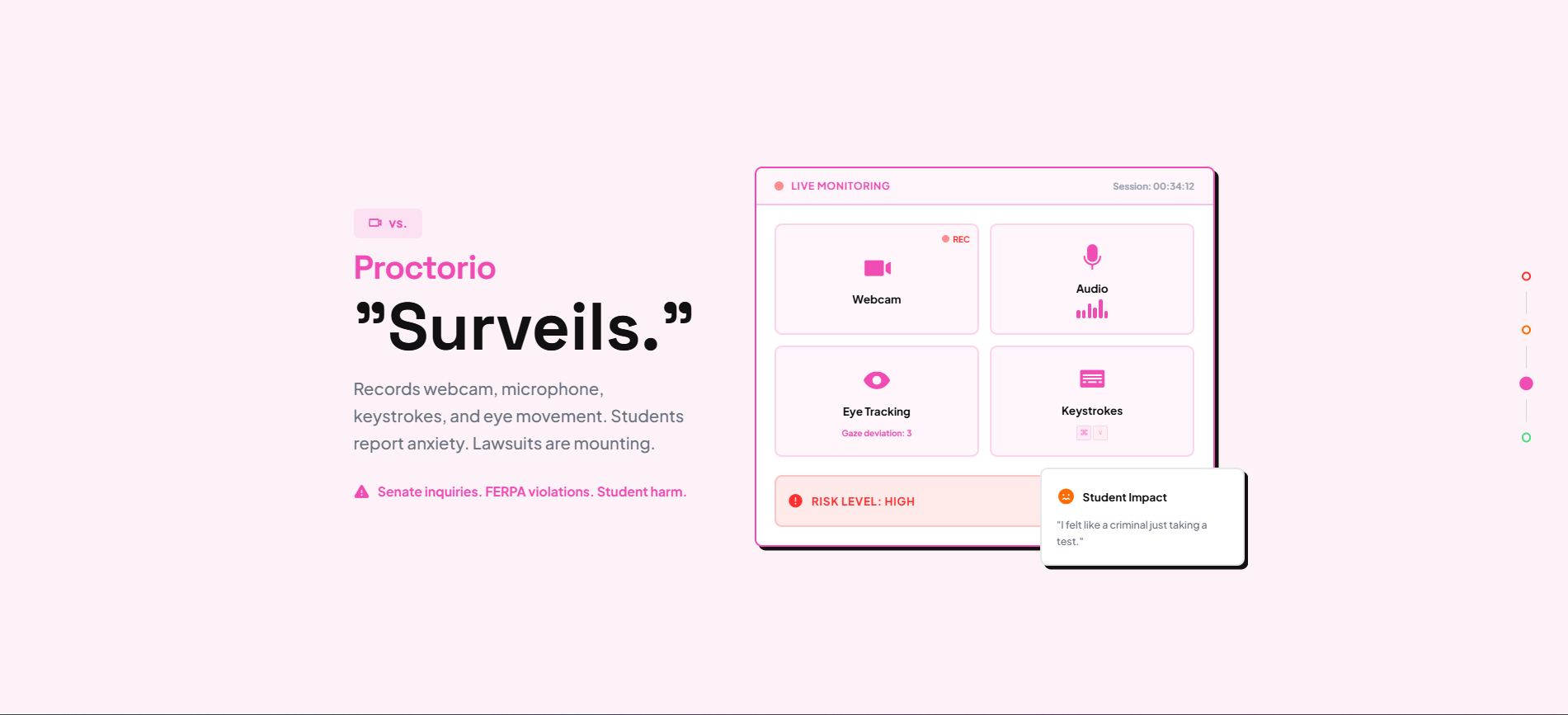
Proctorio “Surveils.”
-
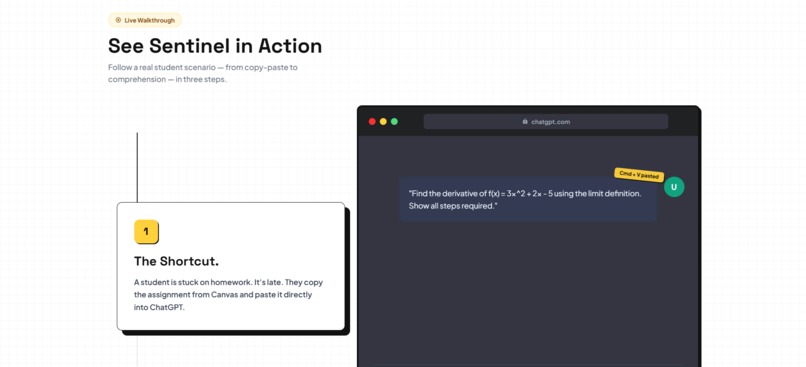
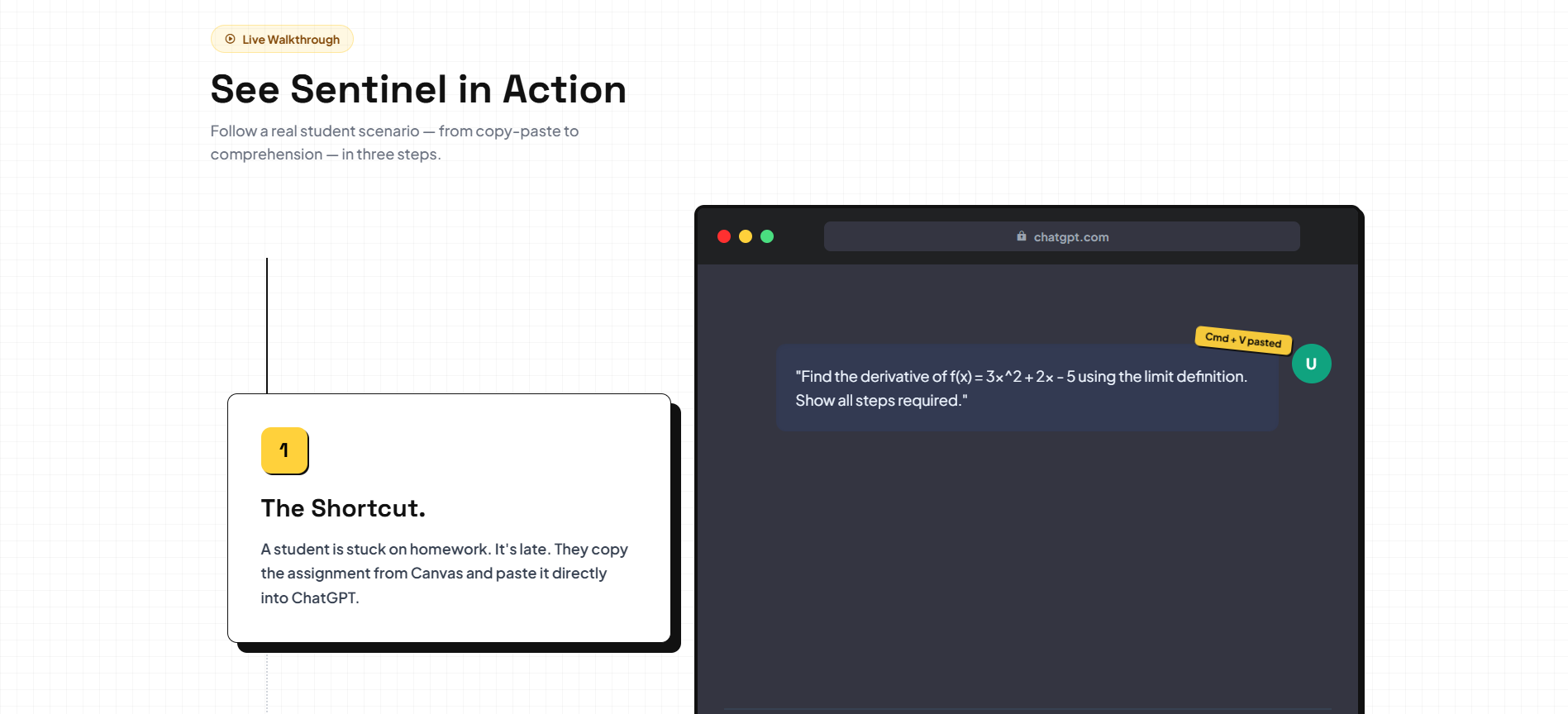
See Sentinel in Action – The Shortcut
-
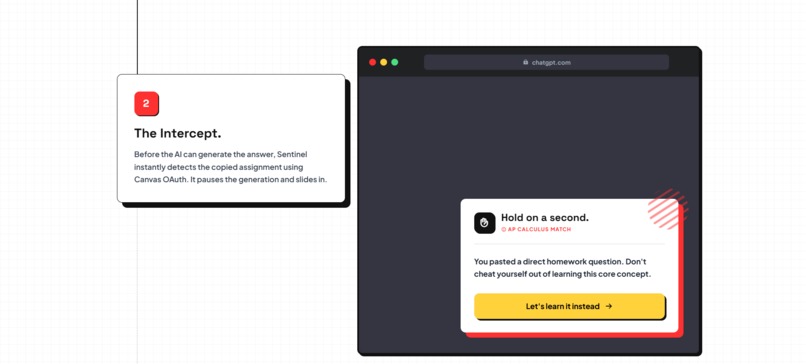
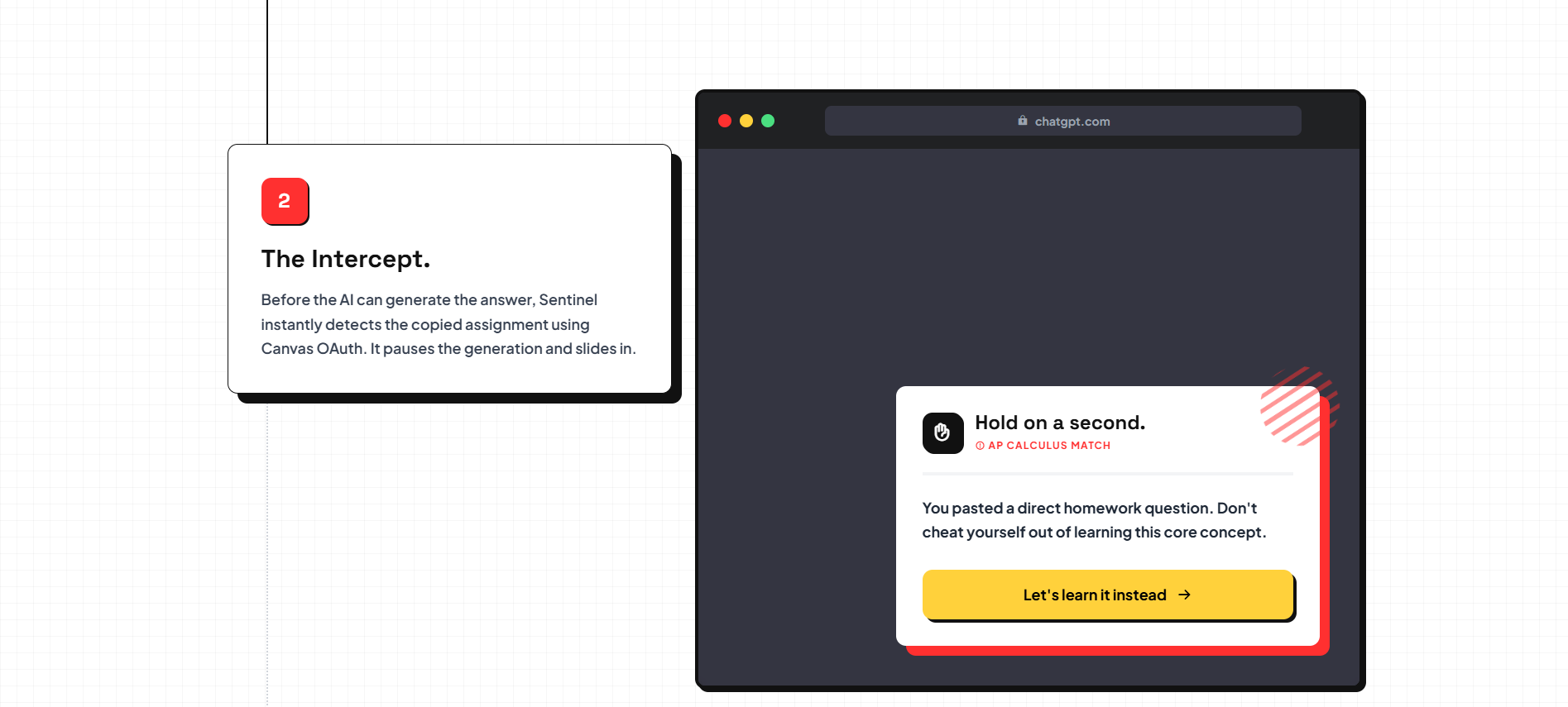
The Intercept
-
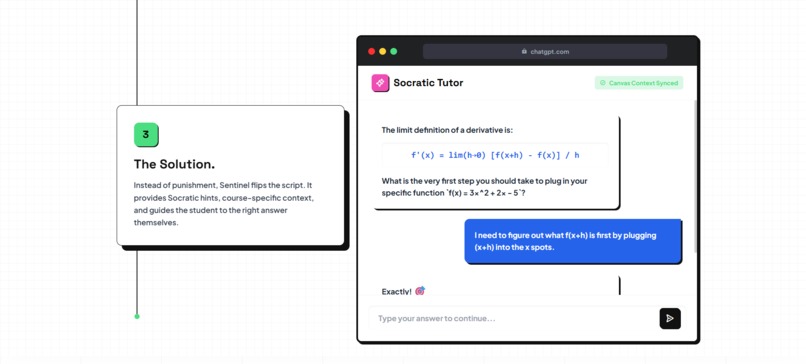
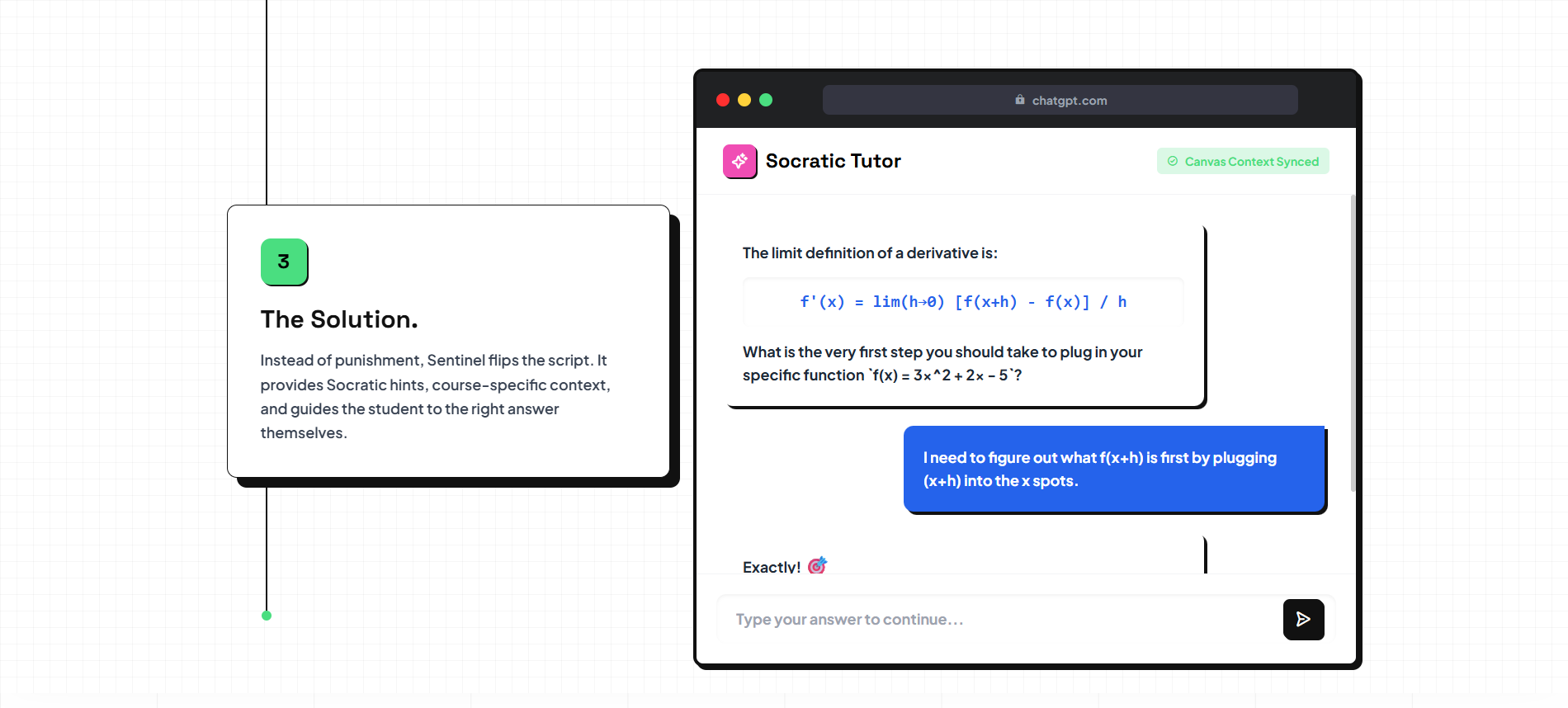
The Solution
-
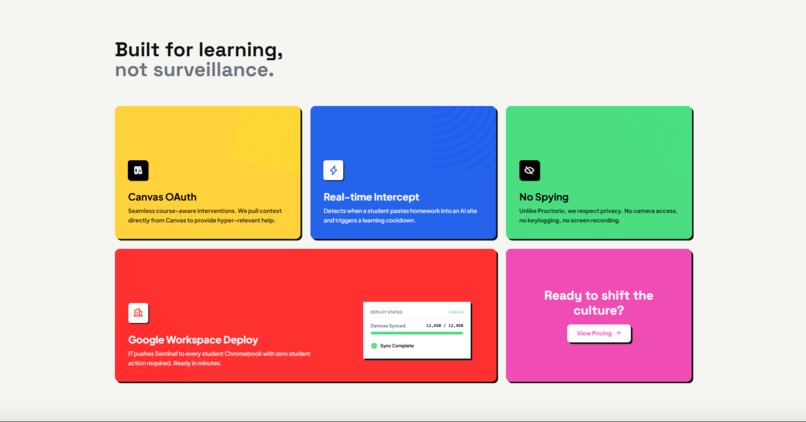
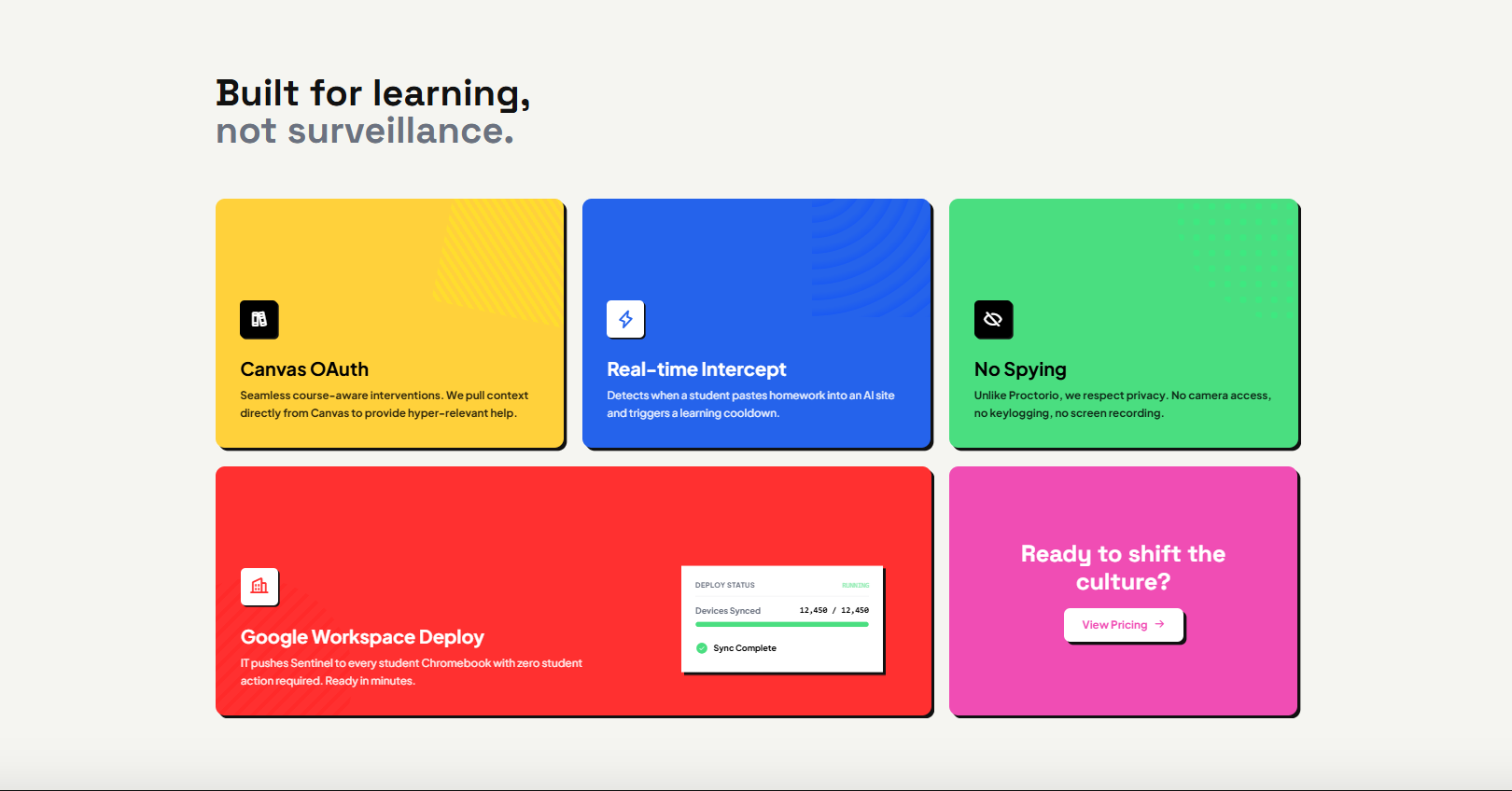
Built for Learning, Not Surveillance
-
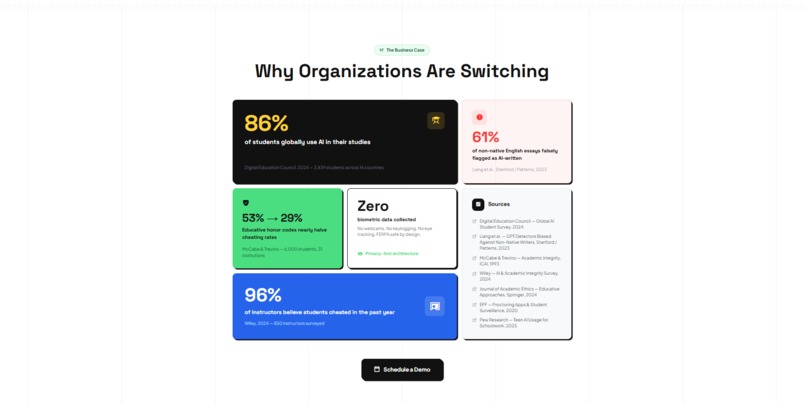
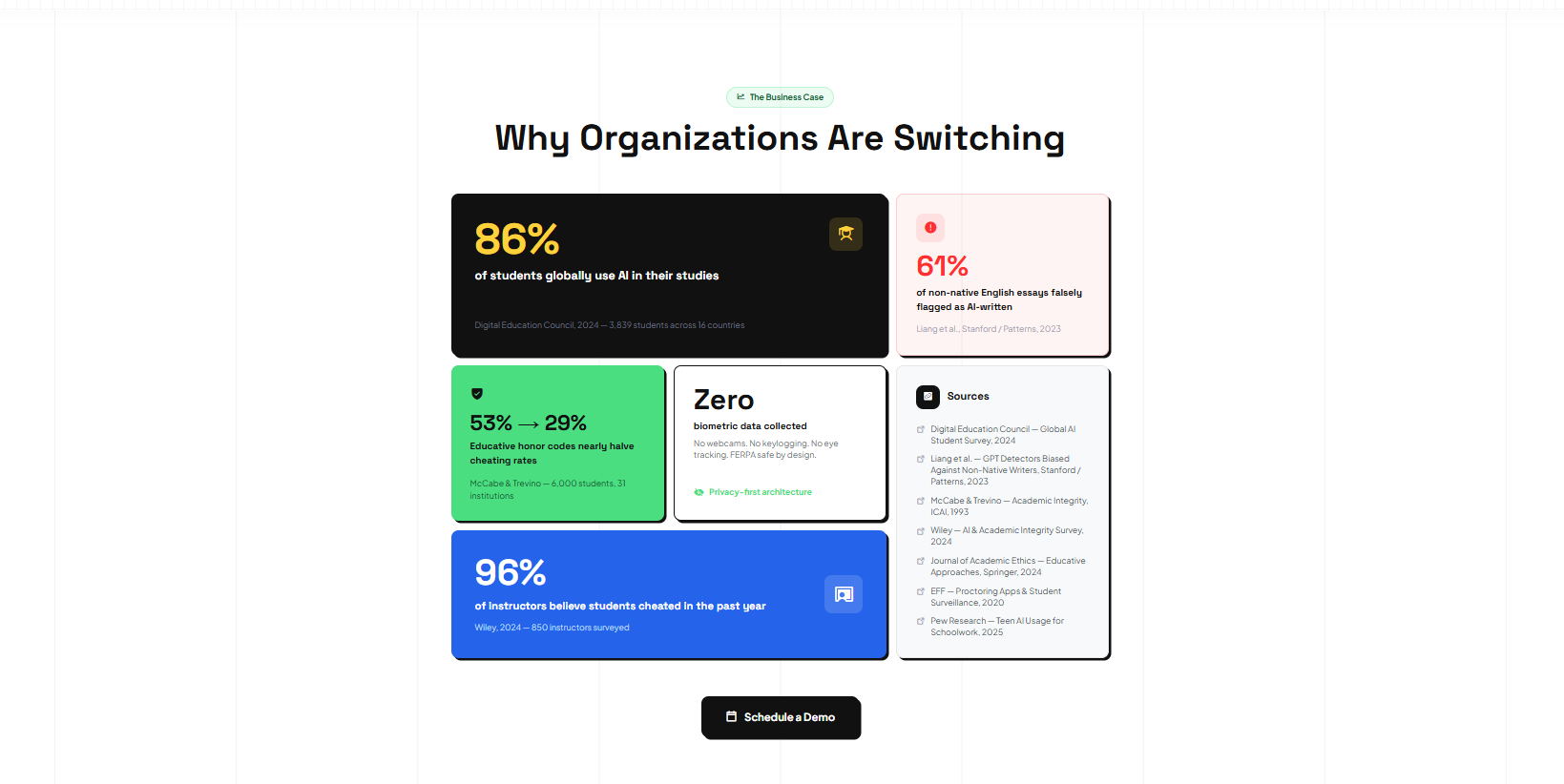
Why Organizations Are Switching
-
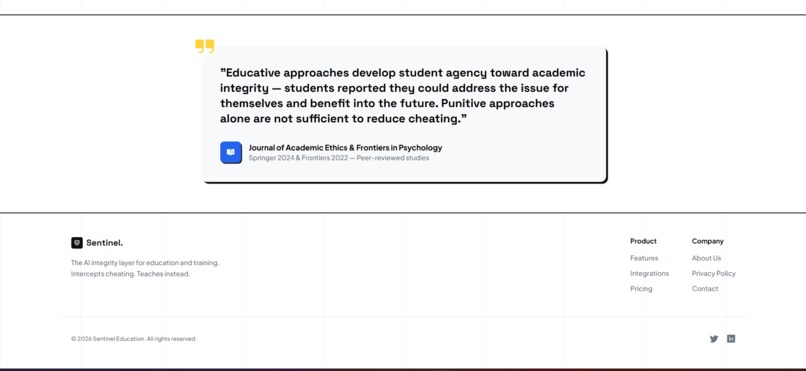
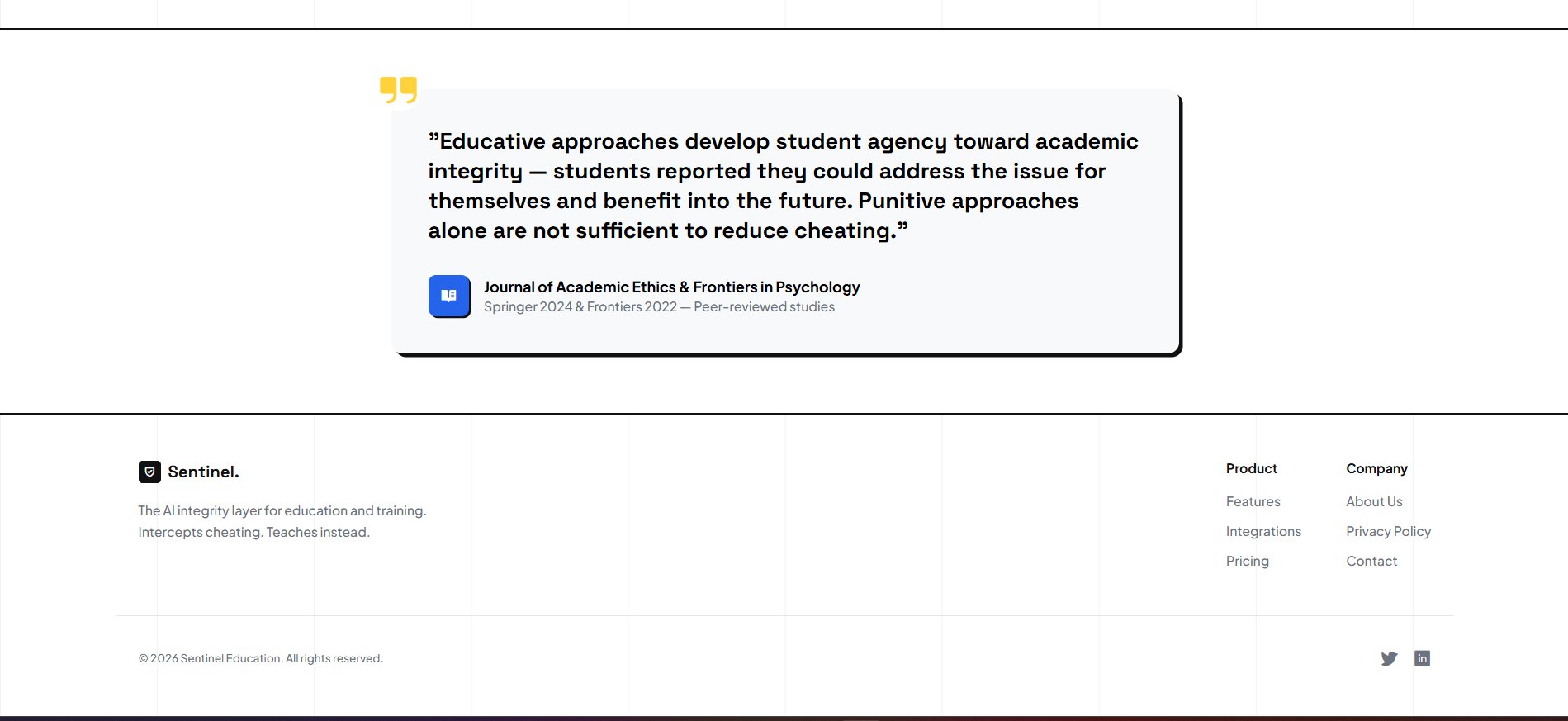
Research-Backed Integrity
-
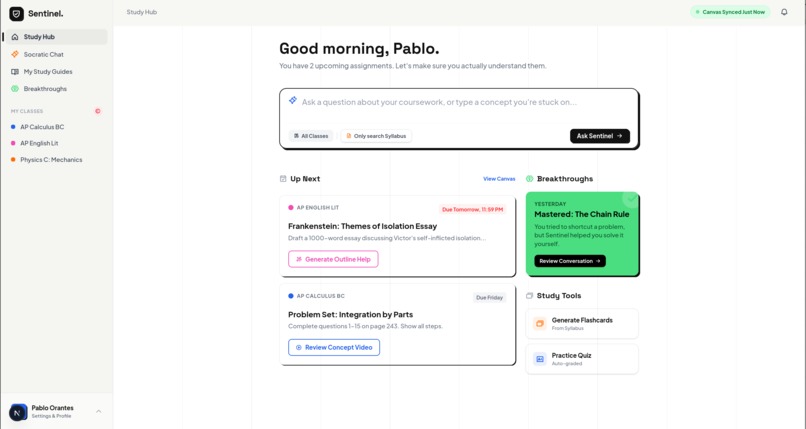
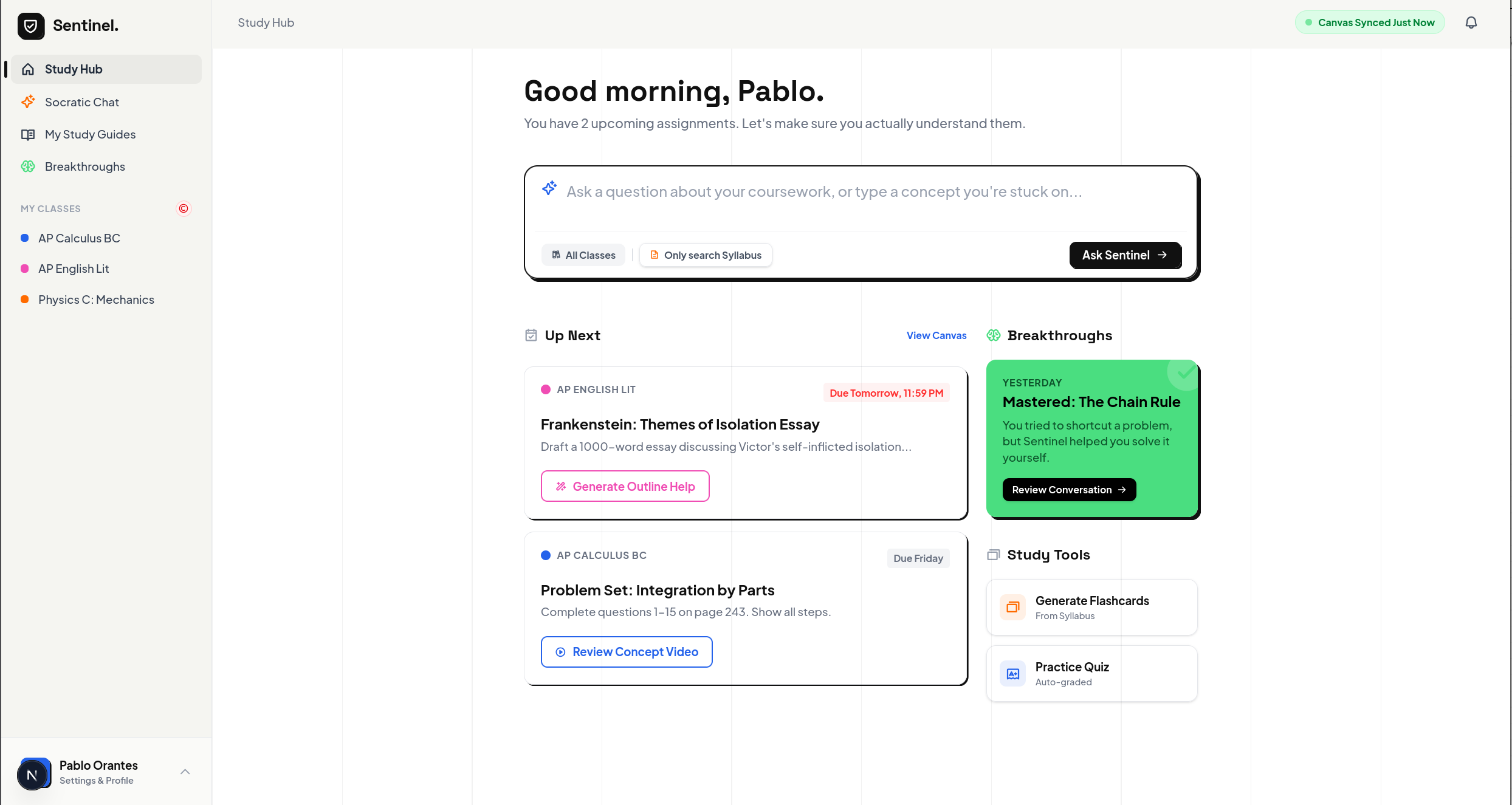
User Dashboard
Inspiration
AI is the problem, and also the solution. Though generative tools have made it easier than ever to cheat, what if we address the issue fundamentally? The idea was born from the idea that academic dishonesty is a major misuse of generative language tools that could instead be used to encourage learning tailored to everyone’s personal habits.
What it does
- Sentinel is a cross-platform Chrome extension designed for institutions to prevent AI-assisted cheating in real time. When a student pastes or types a homework question into AI platforms like ChatGPT, Claude, Gemini, Perplexity, or Copilot, Sentinel detects it instantly and intercepts the interaction before a full answer is generated. Instead of blocking the platform or flagging the student, Sentinel replaces the AI response with a guided learning overlay that explains the concept, provides progressive hints, links relevant resources, and prompts the student to attempt the problem themselves before receiving feedback. Unlike GoGuardian, it doesn’t rely on surveillance or simple website blocking, and unlike Turnitin, it doesn’t react after submission. Sentinel prevents the shortcut at the source — making AI compatible with real learning.
How we built it
- Built with WXT, React, and TypeScript as a Chrome MV3 extension. It hooks into paste events, keyboard input, and send button clicks across all major AI sites. Classification runs through a local Ollama AI model. The backend uses Express.js and Supabase for auth, intervention logging, and usage stats.
Challenges we ran into
Every AI platform structures its chat input differently, so building reliable detection across all of them required designing a universal listener system. We also had to carefully balance sensitivity — too strict, and students get constantly interrupted; too lenient, and misuse slips through.
Beyond the technical hurdles, we struggled with defining our true differentiation: what makes our solution meaningfully better than other anti-cheating tools? Clarifying our unique value proposition and identifying our target customers took significant iteration. We had to refine who we’re really building for (students vs. educators vs. institutions) and articulate why our approach stands out in a crowded academic integrity market.
Accomplishments that we're proud of
- We built a fully working browser extension with real-time detection, a polished multi-tab overlay (Understand, Hints, Resources, Try It), progressive hints, and a complete backend with authentication and usage statistics. The extension works seamlessly across all major online LLM platforms. Along the way, we significantly elevated our UI/UX design and implementation skills, and even provided an intuitive user-interface for the end user.
What we learned
- Instead of punishing students for cheating, why not help them learn better? That became our core design principle. Every feature in Sentinel is built to guide, not block.
What's next for Sentinel.so
- A teacher dashboard showing class-wide intervention trends, direct outreach to schools and universities as institutional partners, Firefox, and Safari support.
Built With
- chrome-manifest-v3
- css
- express.js
- html
- javascript
- node.js
- ollama-(local-ai)
- react
- shadow
- supabase-(postgresql-auth)
- tailwind-css
- typescript
- vite
- wxt-(extension-framework)


Log in or sign up for Devpost to join the conversation.