-
-
-
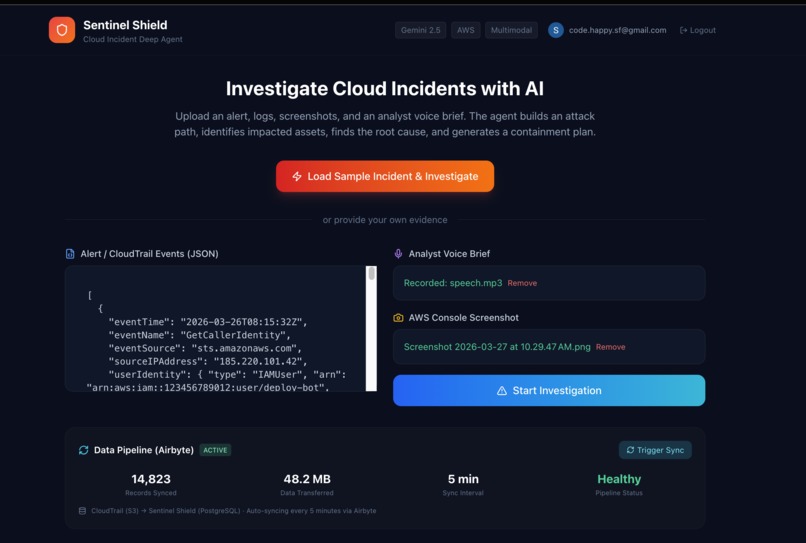
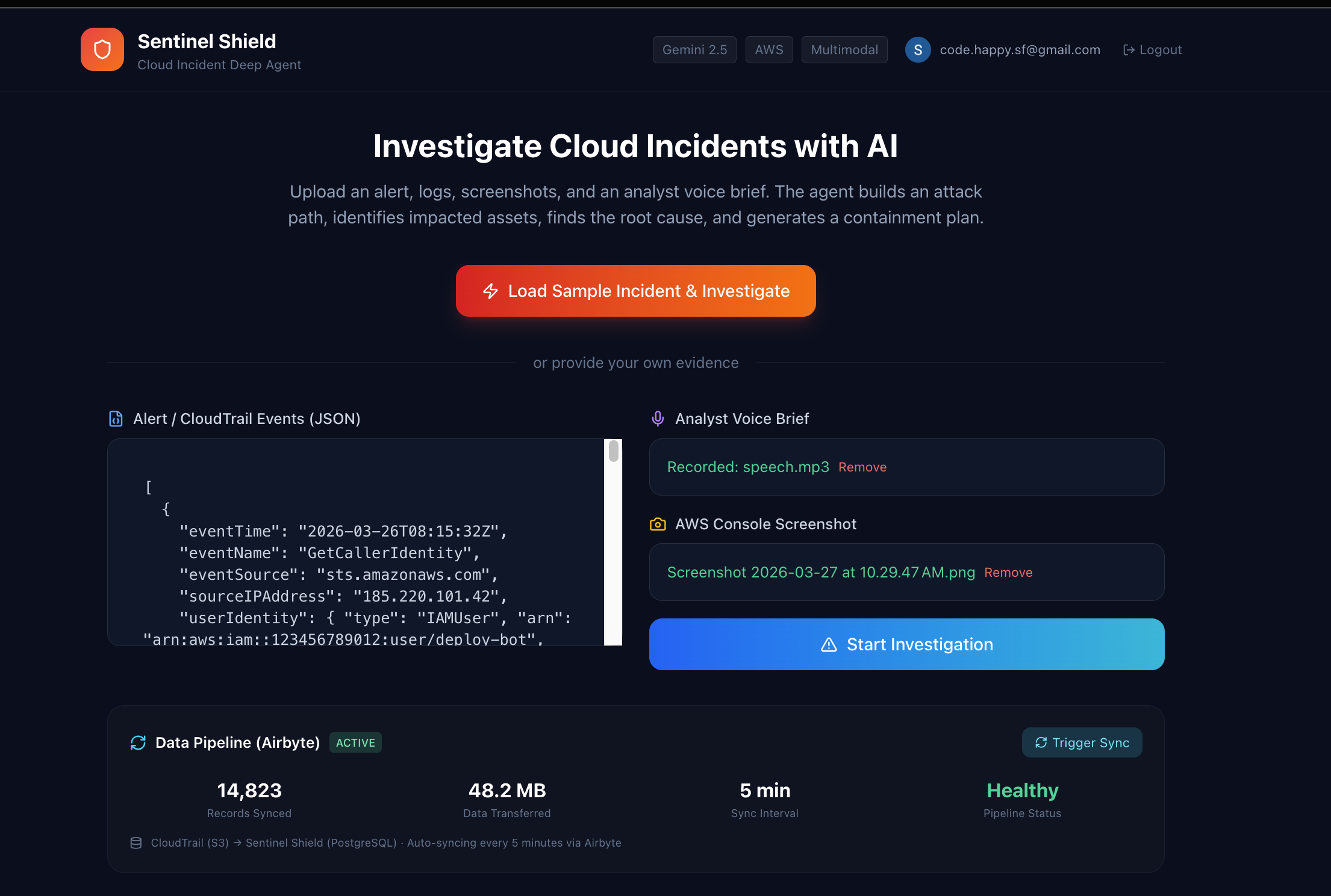
home page- upload (json, screenshot, jpeg, audio)
-
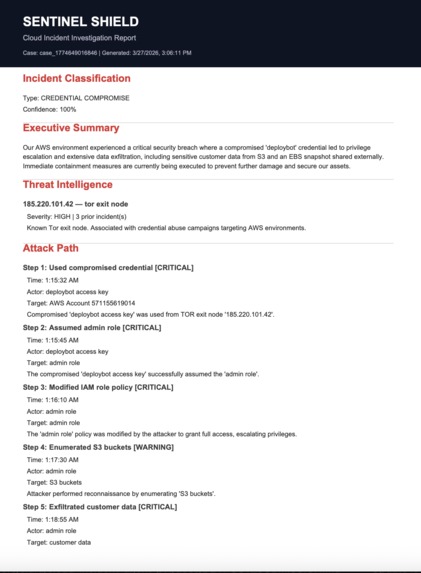
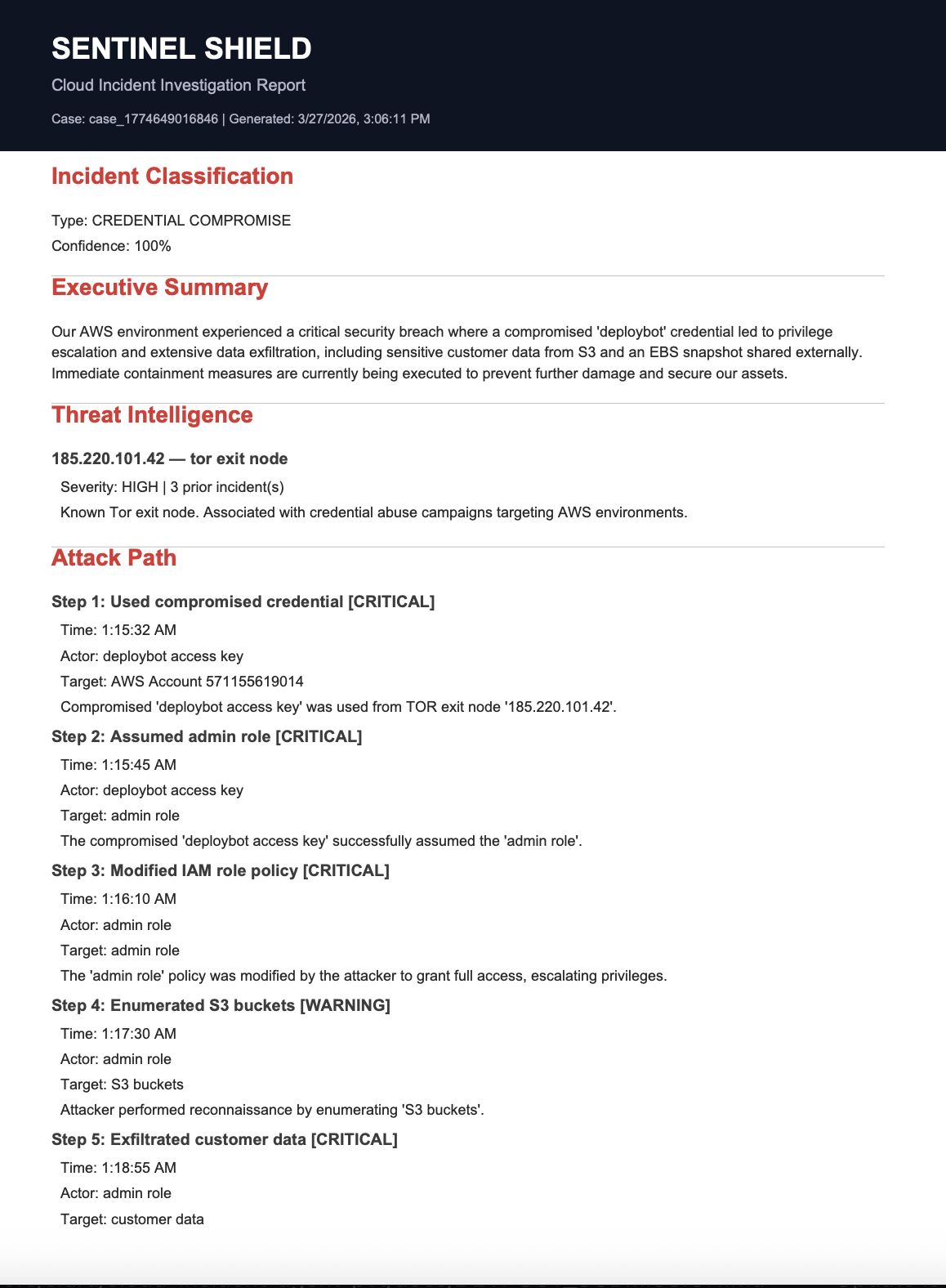
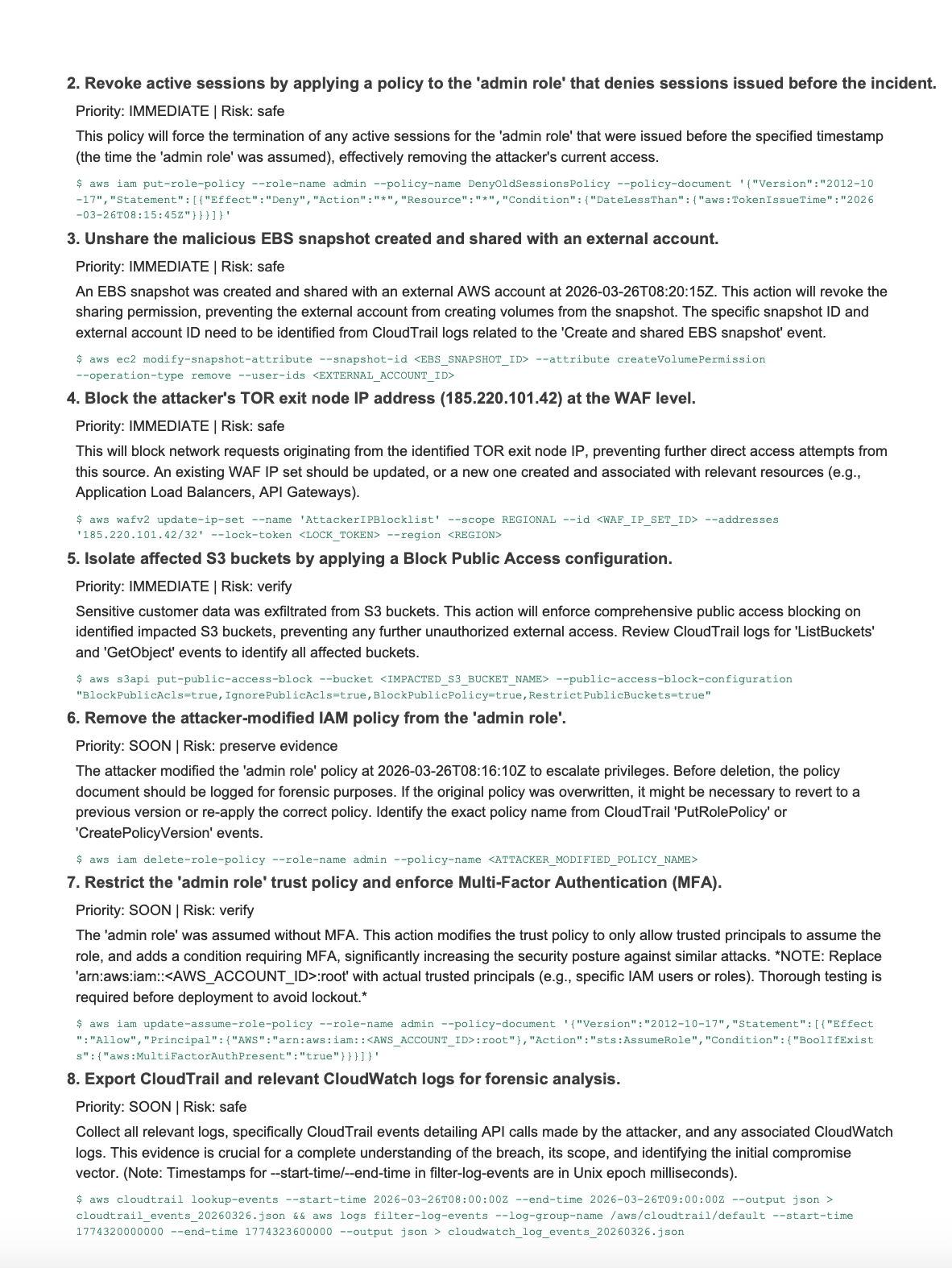
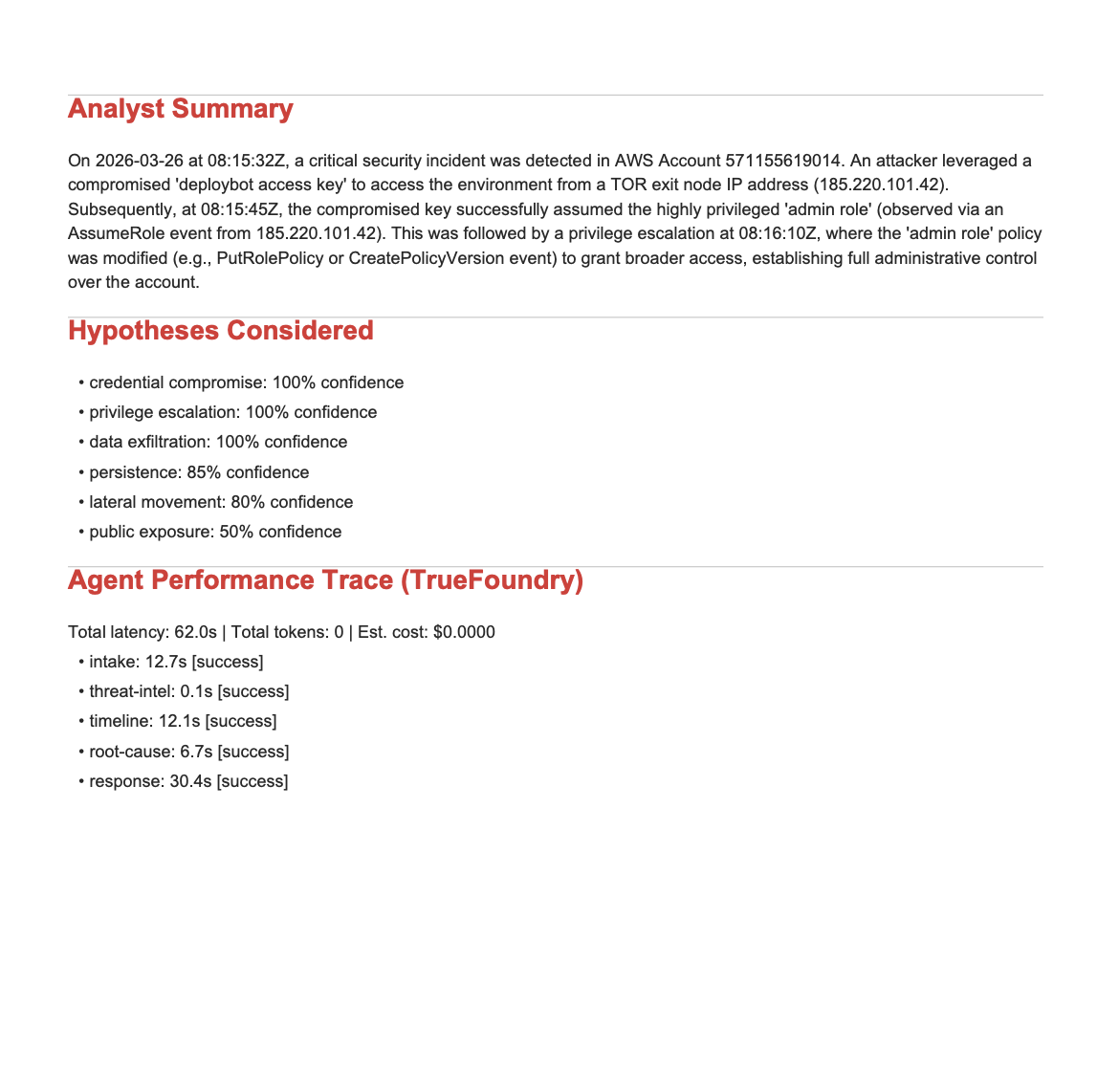
report (pdf)
-
-
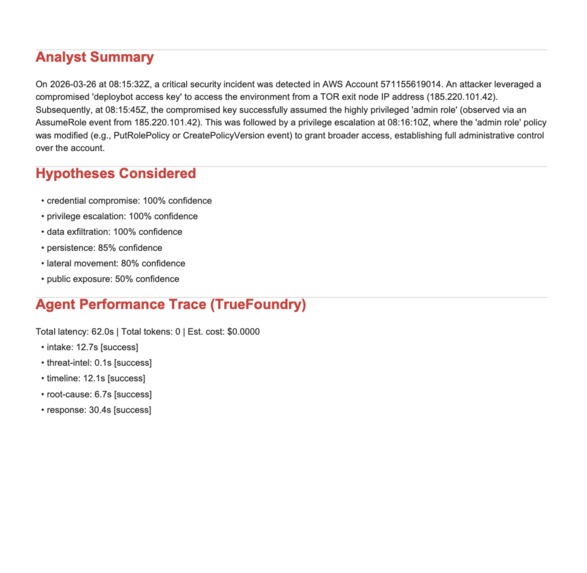
-
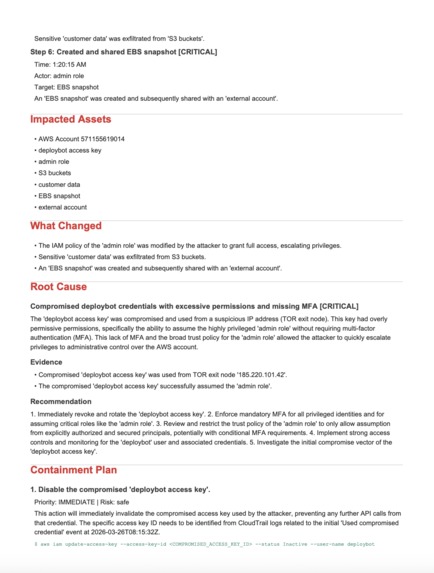
-
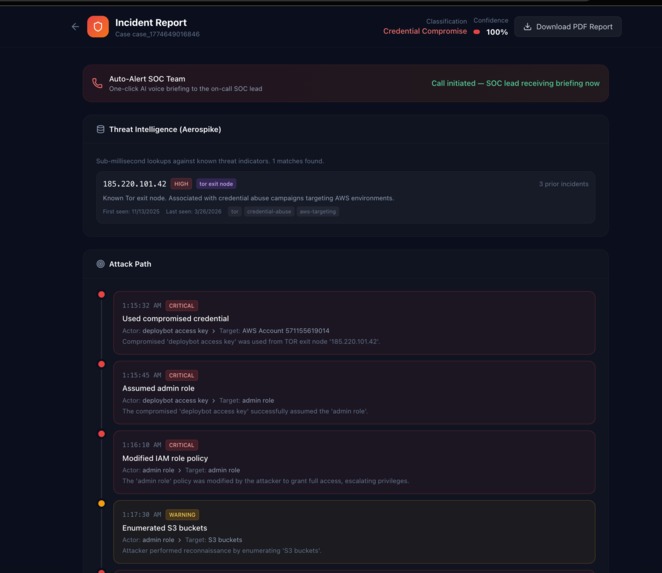
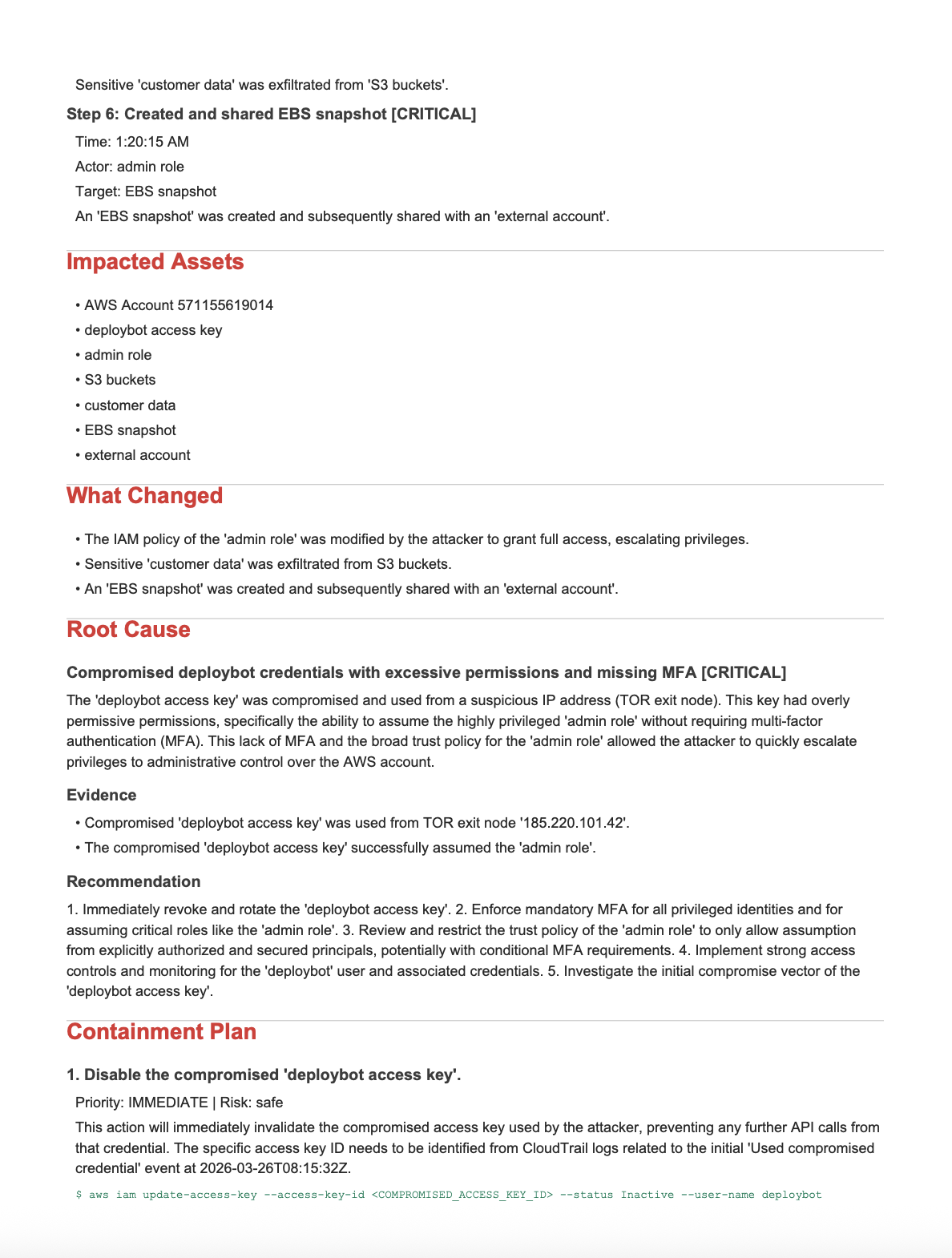
Analysis Report of the uploaded material
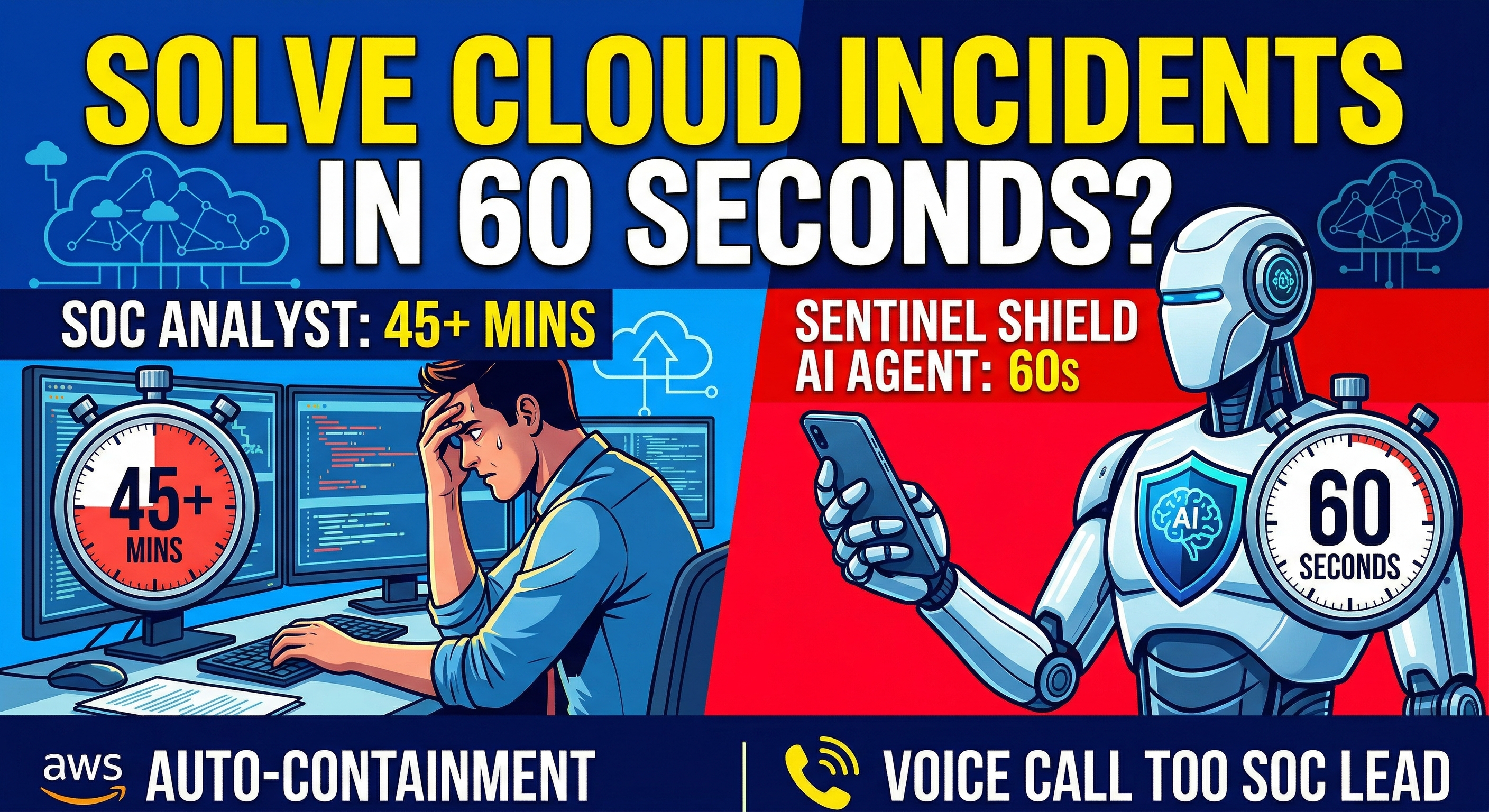
## Inspiration
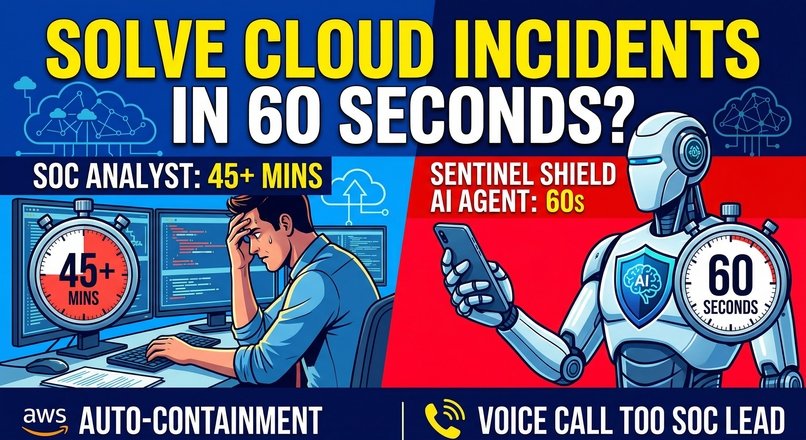
A SOC analyst investigating a cloud incident today opens 5+ consoles — CloudTrail, IAM, S3, GuardDuty, VPC flow logs — spending 45 minutes piecing together what happened. By the time they find the root cause, the attacker has already exfiltrated data. I built Sentinel Shield to do the entire investigation autonomously in 60 seconds.
## What it does
Sentinel Shield is an autonomous cloud incident investigator. It ingests CloudTrail events, analyst voice memos, and console screenshots, then runs a 5-agent pipeline:
- Intake Agent — parses events, extracts all entities (identities, IPs, resources, accounts)
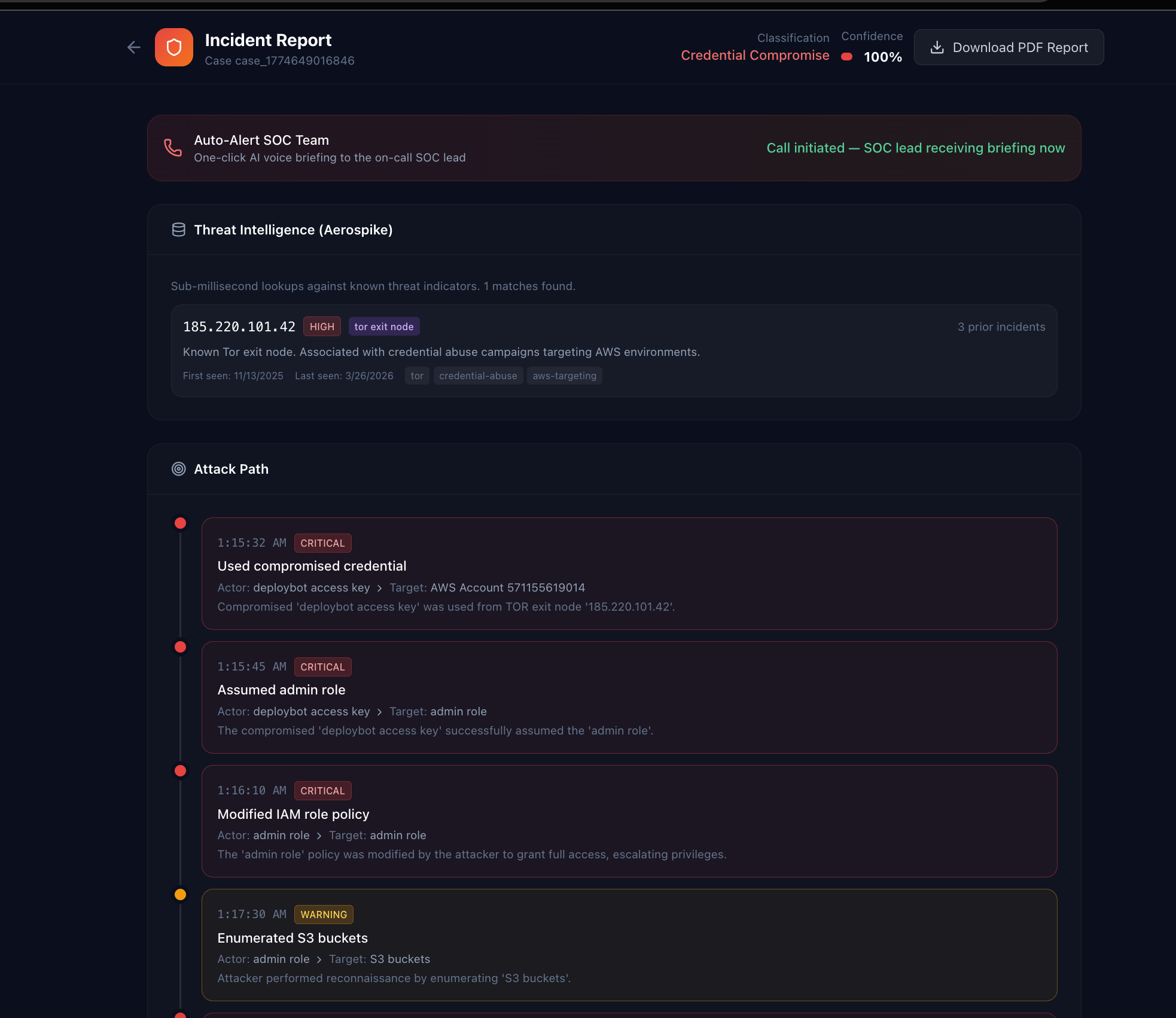
- Threat Intel — sub-millisecond Aerospike lookups against known-bad indicators
- Timeline Agent — builds a color-coded attack path and ranks 6 hypothesis types by confidence
- Root Cause Agent — identifies the specific misconfiguration that enabled the attack
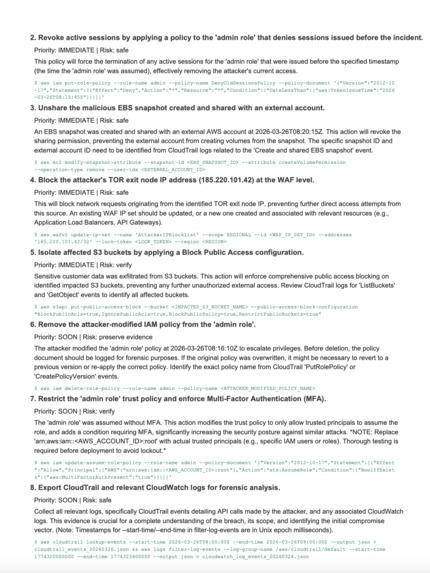
- Response Agent — generates a containment plan with executable AWS CLI commands
The output includes: attack path visualization, blast radius graph, impacted assets, root cause with evidence citations, containment actions with approve/execute workflow (runs real AWS CLI), analyst and executive summaries, downloadable PDF report, and a one-click voice call to the SOC lead via Bland AI.
## How I built it
- Frontend: Next.js 16, React 19, Tailwind CSS 4
- AI: Gemini 2.5 Flash via Vercel AI SDK (reasoning, vision, transcription)
- Auth: Auth0 Next.js SDK v4
- Threat Intel: Aerospike real-time cache (sub-ms key-value lookups)
- Data Pipeline: Airbyte pattern — CloudTrail logs auto-ingested from real S3 bucket
- Observability: TrueFoundry agent tracing (latency, tokens, cost per agent)
- Voice: Bland AI auto-call with dynamic incident briefing
- Containment: Real AWS CLI execution with human approval gate
## Challenges I ran into
- Gemini 2.5 Flash response times for structured output — solved with retry and timeout wrappers with exponential backoff
- Aerospike native bindings with Next.js server bundling — solved with dynamic imports and serverExternalPackages
- SSE streaming reliability during long agent runs — solved with watchdog timers and graceful degradation
## Accomplishments I'm proud of
- Full investigation in ~90 seconds with real AI reasoning across 5 agents
- Live AWS containment execution — not just suggestions, actual CLI commands running against a real account
- Voice call that actually rings during the demo
- 3 threat intel matches from Aerospike on the sample incident
- Cross-incident memory — the system learns from past investigations
- PDF export of the full incident report
## What I learned
- Structured output with Zod schemas makes AI agents reliable and type-safe
- Sub-millisecond caching (Aerospike) transforms threat intel from "nice to have" into real-time enrichment
- The gap between "AI that suggests" and "AI that acts" is where the real value is
## What's next for Sentinel Shield
- Live SIEM connectors (Splunk, Sentinel, Datadog)
- Cross-incident learning — agents improve from resolved cases
- Response playbooks per incident type
- Multi-cloud support (Azure, GCP)
Built With
- aerospike
- airbyte
- amazon-web-services
- auth0
- bland-ai
- docker
- gemini
- jspdf
- nextjs
- react
- tailwindcss
- truefoundry
- typescript
- vercel-ai-sdk

Log in or sign up for Devpost to join the conversation.