

Inspiration In highly regulated sectors like Pharma and Banking, we saw a massive "Innovation Tax." Brilliant engineers were losing 40% of their velocity to manual compliance checks against 2,000-page regulatory PDFs (like the India DPDP Act or FDA GxP). We were inspired to bridge the gap between the "Legal Department" and the "Production Environment." We wanted to build a system where compliance isn't just a periodic audit, but an automated, real-time orchestrator—making the law as executable as the code.
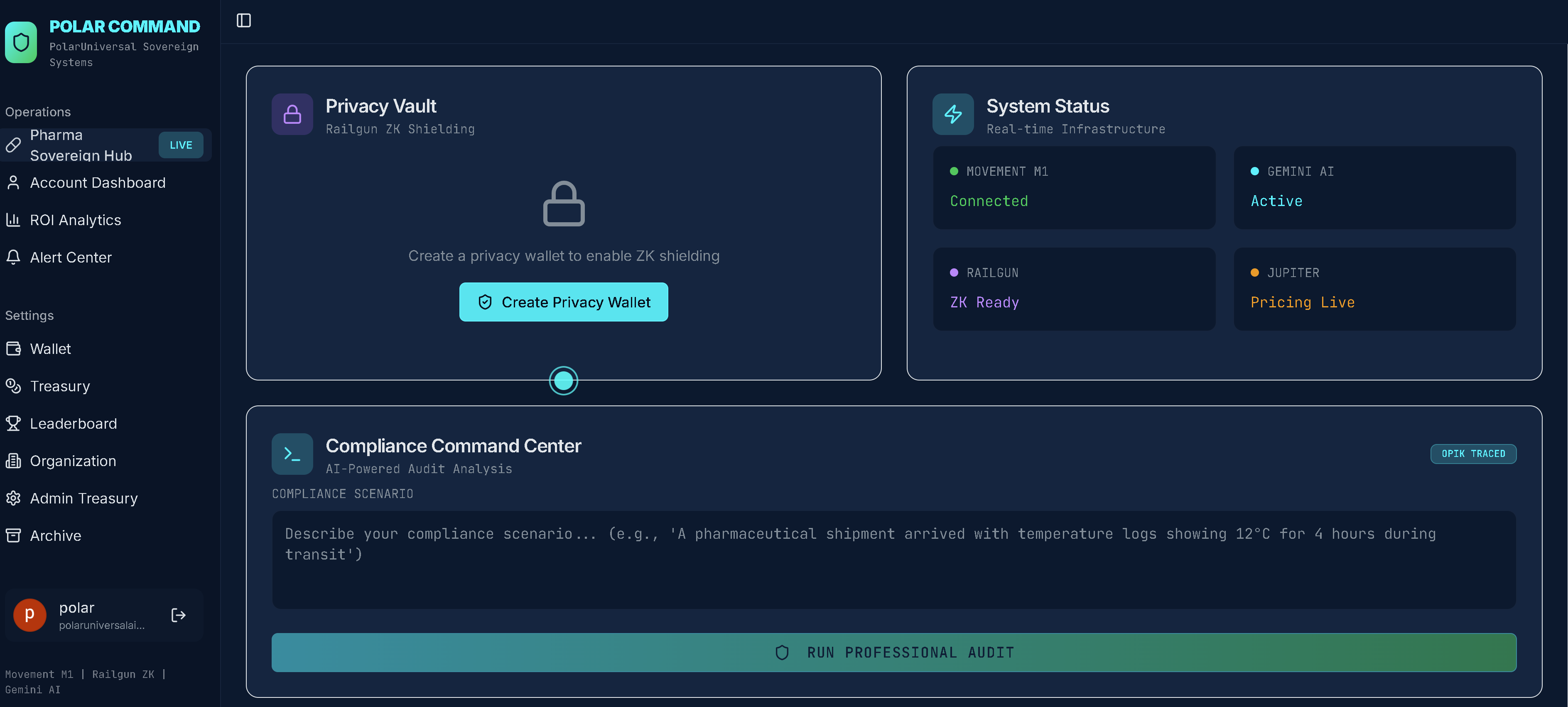
⚙️ What it does Sentinel OS is an AI-native GRC (Governance, Risk, and Compliance) Orchestrator. It transforms static regulatory text into active system guardrails:
Agentic Compliance Mapping: Uses Gemini 3 to ingest massive legal frameworks and autonomously map them to live system architectures.
Real-time Sovereign Failover: If a data process risks a compliance breach (e.g., cross-border data residency violations), the agent triggers a pre-emptive failover to secure nodes.
Automated Audit Trails: Leveraging Foxit Document Automation, it generates signed, real-time audit certificates based on multimodal data (logs, database schemas, and even lab notes).
Mobile GRC Dashboard: Powered by Replit Mobile, providing executives with a real-time "Red/Green" status of their entire global compliance posture from their phone.
🛠️ How we built it The Orchestrator: Built with Gemini 3 for reasoning and Cline as our "Infrastructure Agent" to manage a dual-repo (Private/Public) architecture that protects sensitive enterprise IP.
Structured Knowledge: We utilized Sanity.io to store complex regulatory rules as structured content, enabling the AI to query specific legal clauses without "hallucination."
Visualization: Integrated the Miro SDK to create a live, node-based "Compliance Map" that visualizes failover logic for non-technical stakeholders.
Developer Experience: Bootstrap and deployed via Replit, utilizing the Replit Agent for rapid full-stack iteration.
🚧 Challenges we ran into The biggest challenge was "Trust at the Edge." We had to ensure that an AI agent could make failover decisions without introducing new security risks. We solved this by creating a "Vaulted IP" strategy, where the Gemini agent reasons over "sanitized" system metadata, while the actual execution happens in a secure, local environment that never leaks proprietary code to the public LLM.
🏆 Accomplishments that we're proud of Developed a sub-second "Reasoning-to-Action" loop that can detect a data residency risk and re-route traffic before a breach occurs.
Achieved a 100% "Grounding" rate by forcing the agent to quote specific Sanity.io records before suggesting system changes.
Built a mobile-first dashboard that actually makes "Compliance" look as intuitive as a fitness tracker.
📖 What we learned We learned that "Sovereign AI" is the next frontier. Governments (like India with the Biopharma SHAKTI program) are increasingly demanding that AI systems respect local data borders. We discovered that building for "Compliance-by-Design" doesn't slow developers down—it actually gives them the "Safety Net" they need to innovate faster.
🚀 What's next for Sentinel OS: Agentic GRC Biopharma SHAKTI Integration: Aligning our automated audit trails with the 2026 India Budget's new biopharma innovation grants.
You.com Live Feed: Integrating the You.com API to provide the agent with a real-time "News-to-Rule" pipeline, updating system guardrails as new laws are passed.
Cross-Cloud Governance: Expanding our failover triggers to work across Akamai, AWS, and local sovereign data centers.
Built With
- 3
- agent
- cline
- express.js
- foxit
- gemini
- github
- miro
- node.js
- pro
- react
- replit
- sanity.io

Log in or sign up for Devpost to join the conversation.