Inspiration
Modern e-commerce businesses are forced to stitch together multiple platforms for storefronts, marketplaces, advertising analytics, attribution, and security. This creates fragmented data, complicated integrations, weak attribution, and blind spots against fraud and automated attacks.
We were inspired by a simple question:
What if commerce, advertising intelligence, and security could operate as one intelligent system?
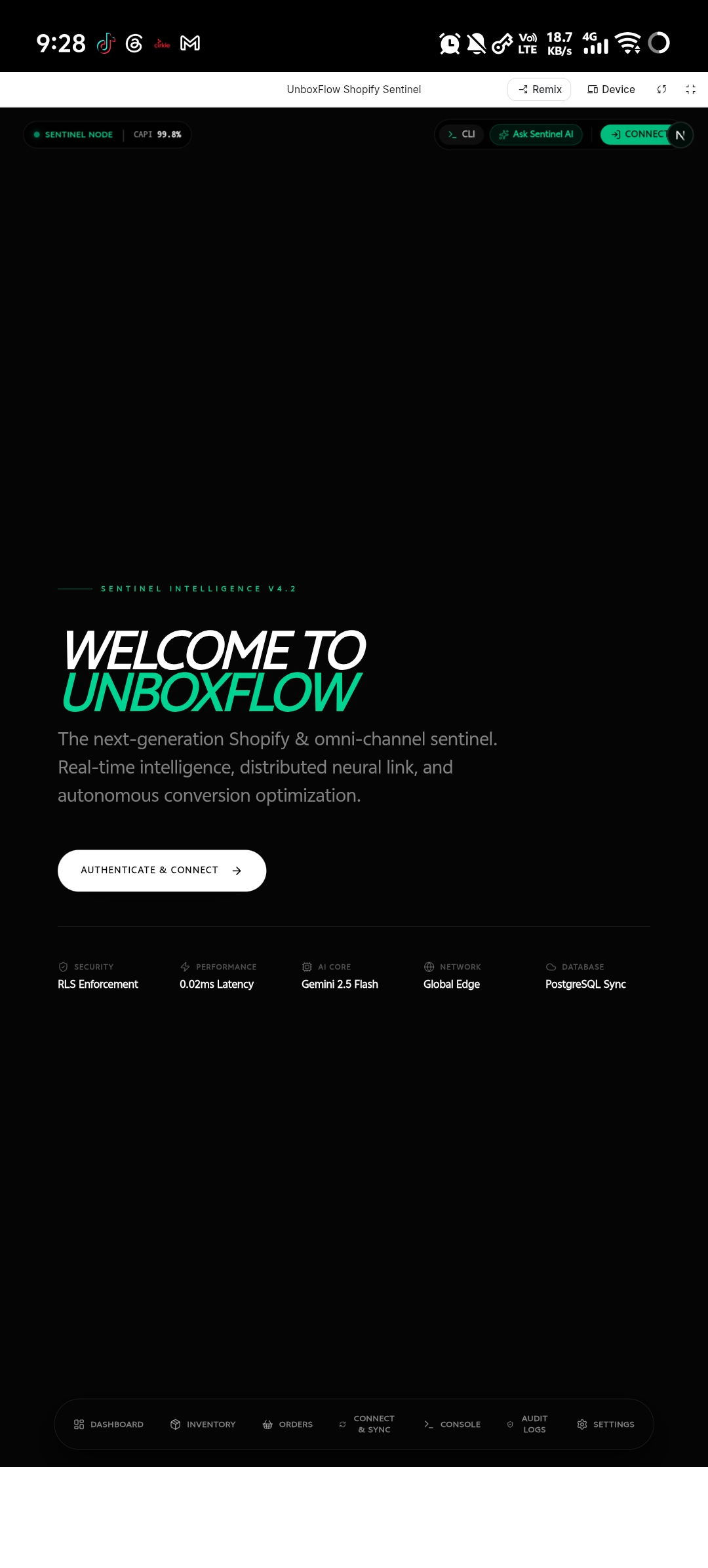
That idea became Sentinel — a unified Commerce OS, AdTech OS, and Security OS designed to help businesses build, operate, grow, and protect their digital commerce ecosystem from a single platform.
Instead of treating storefronts, vendors, customer behavior, advertising events, and security threats as separate systems, Sentinel connects them through a unified infrastructure and event-driven intelligence layer.
What it does
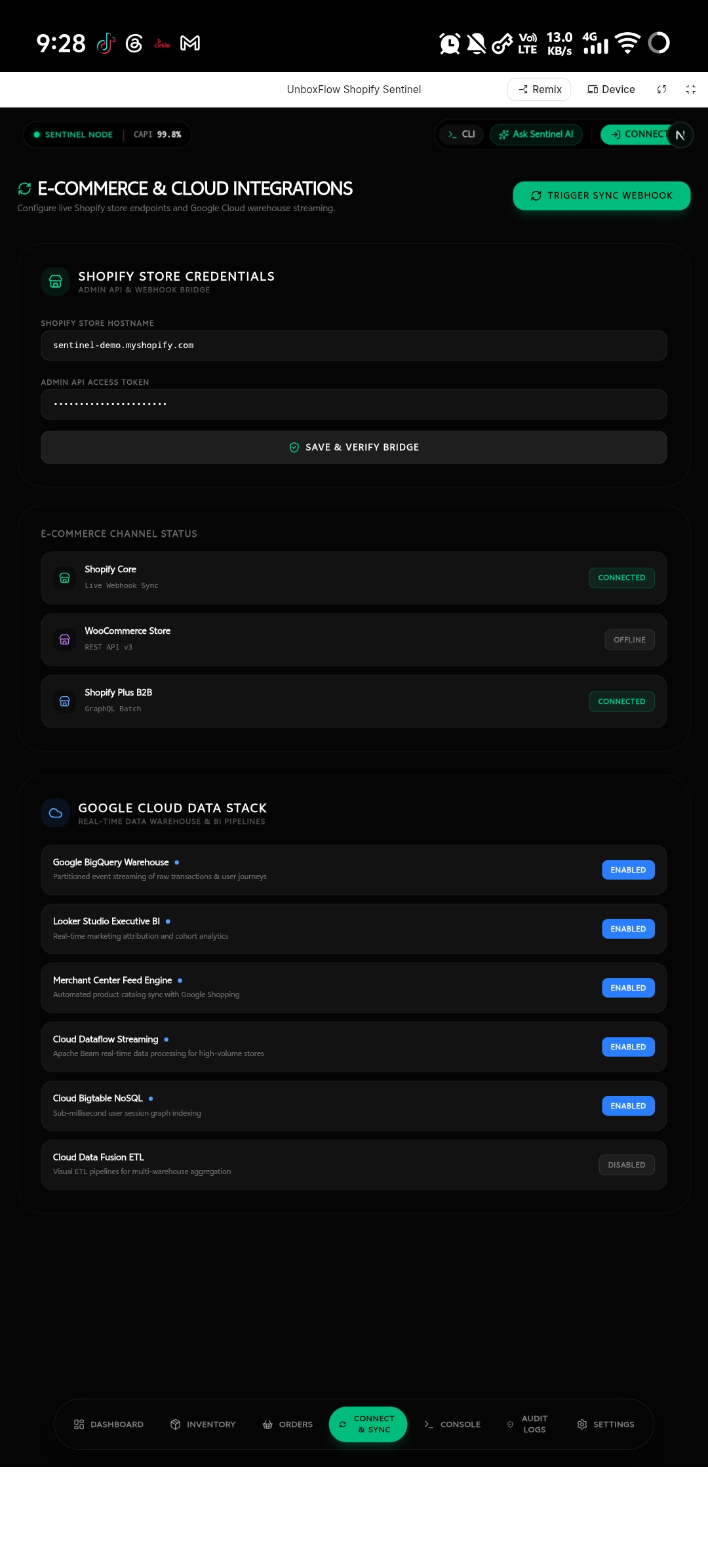
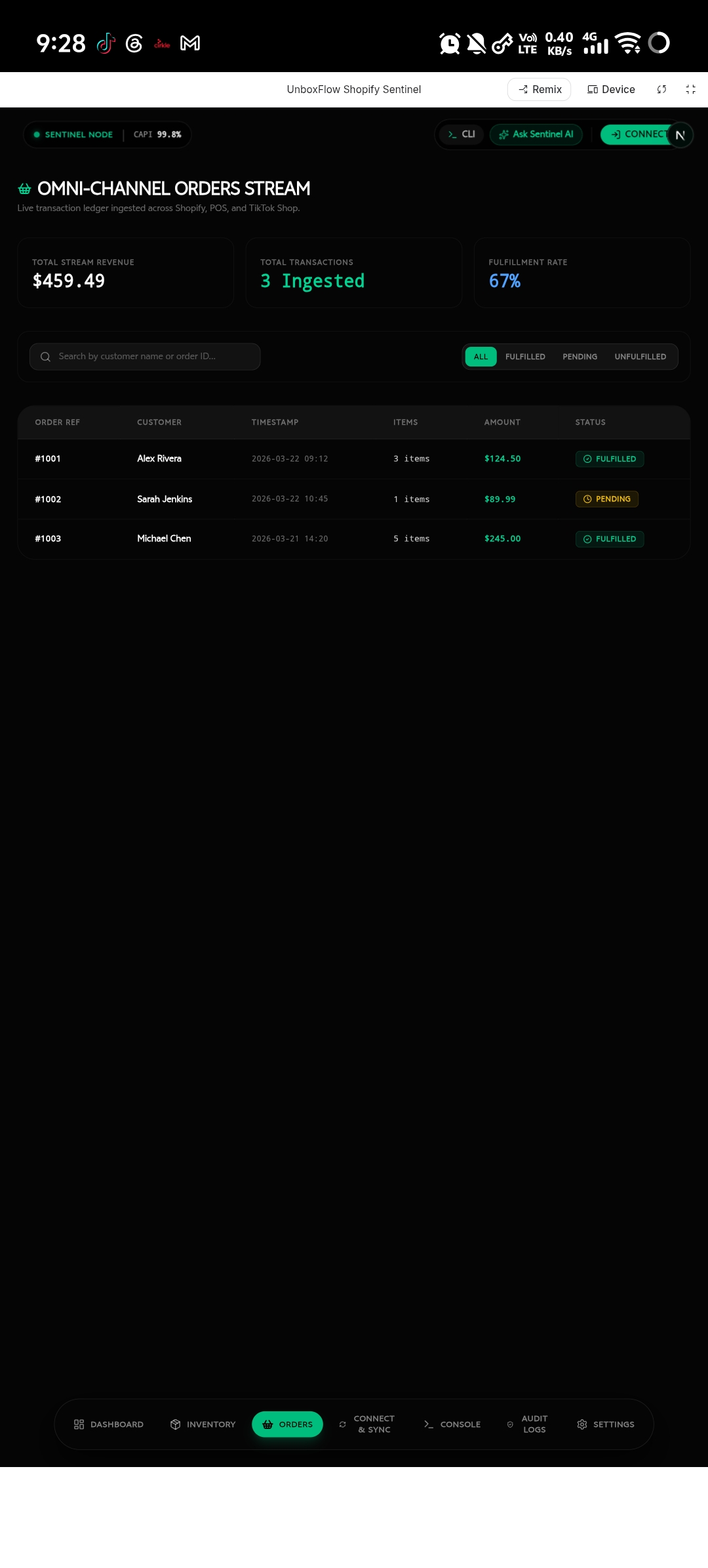
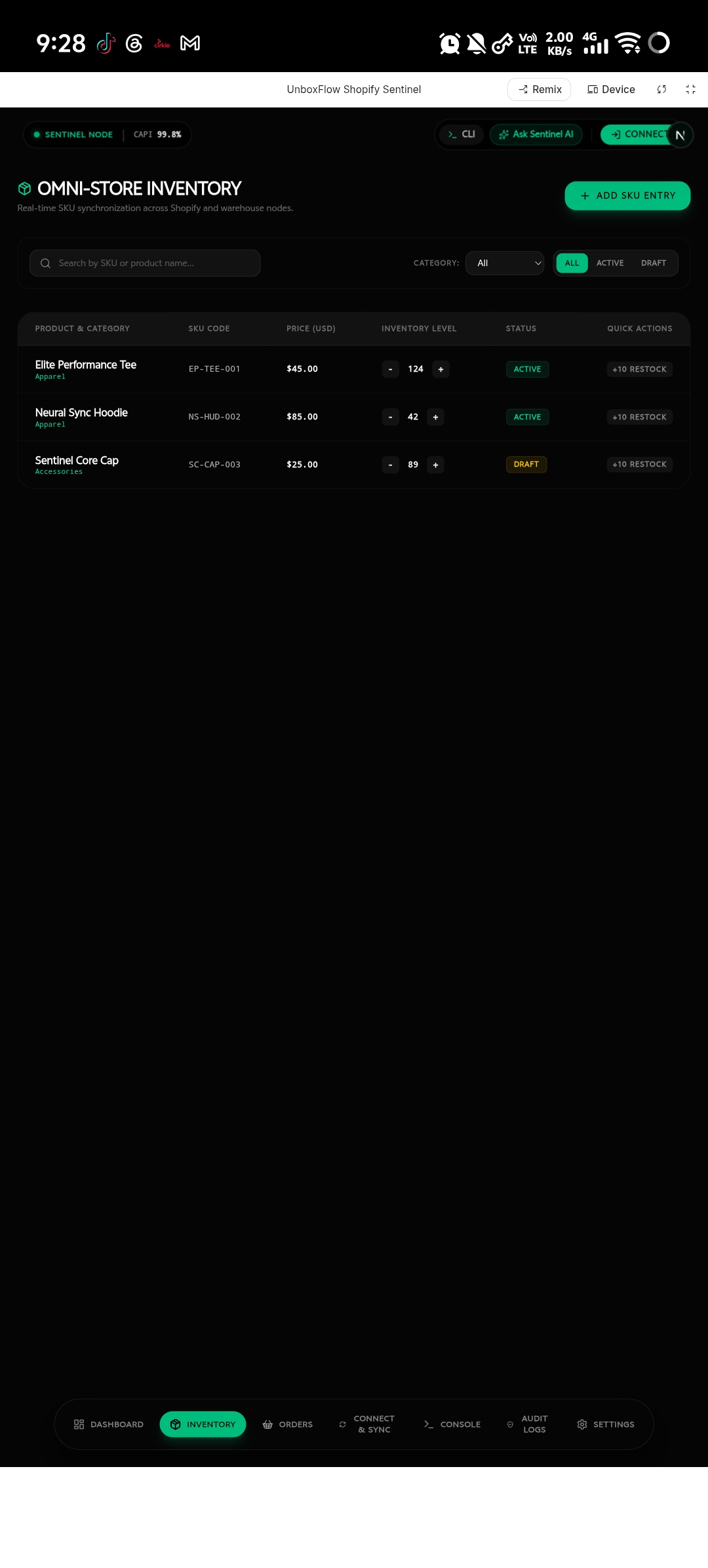
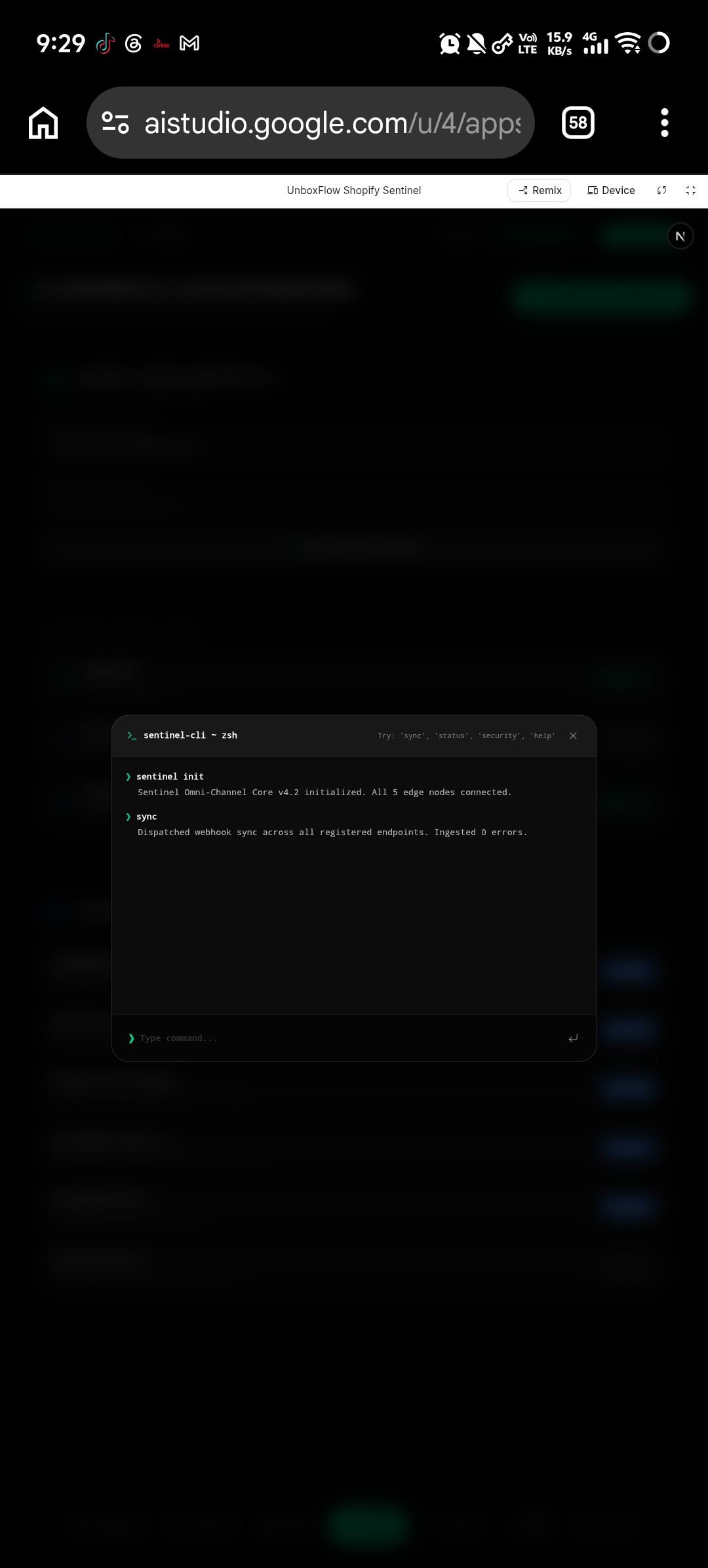
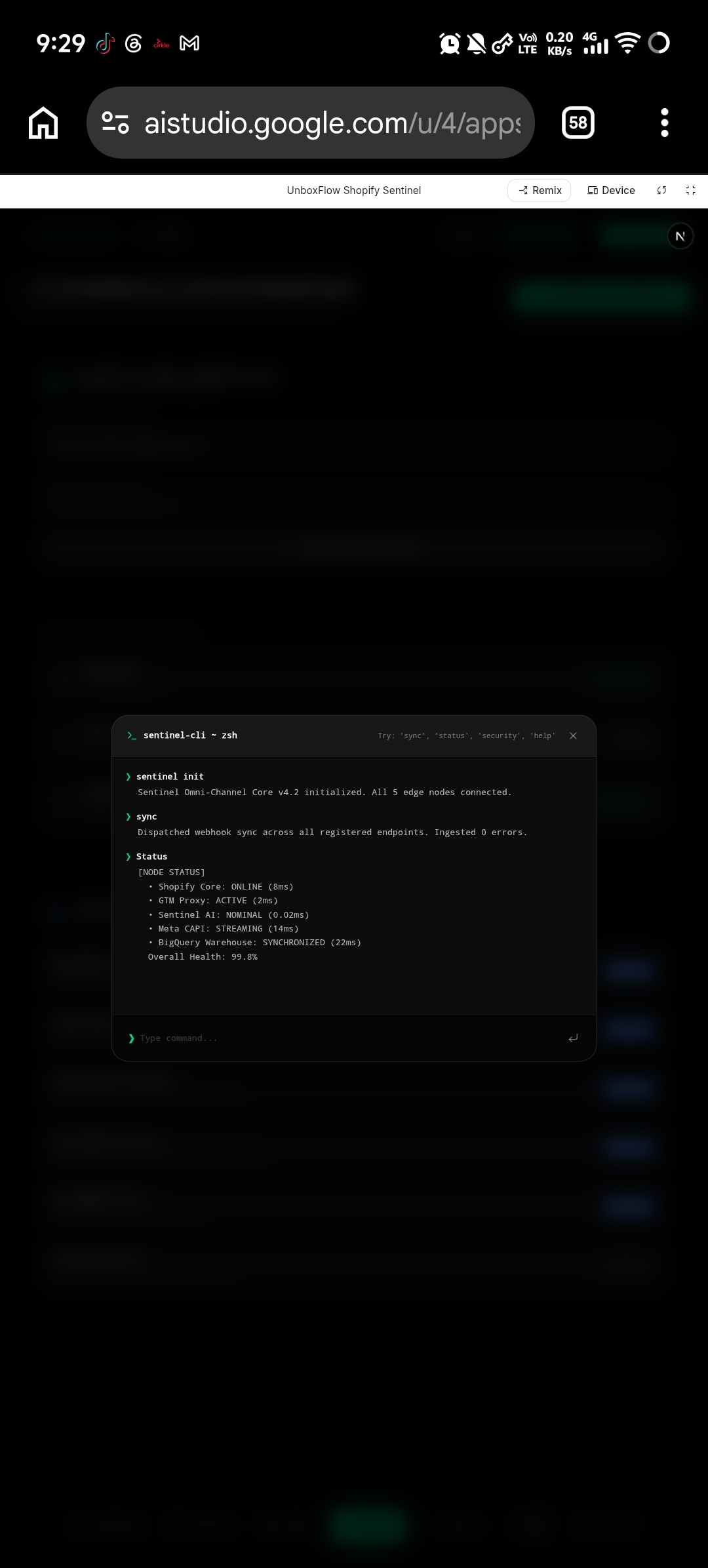
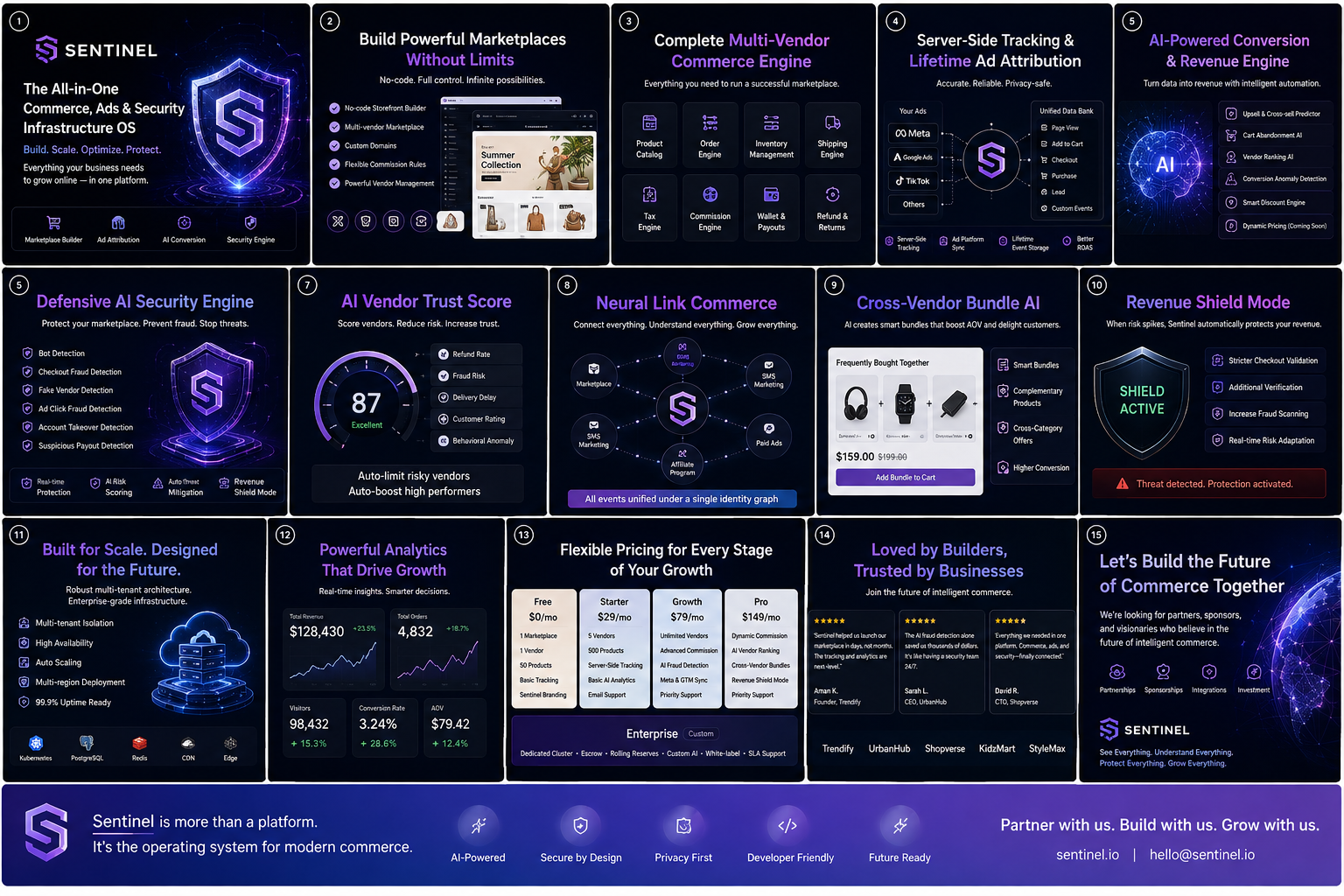
Sentinel is a SaaS marketplace and commerce infrastructure platform that combines six core capabilities:
- No-code Storefront Builder — businesses can create and customize their own commerce experiences.
- Multi-Vendor Marketplace Engine — store owners can onboard vendors, manage products, orders, commissions, inventory, and payouts.
- Server-Side Ad Tracking & Attribution — Sentinel captures important customer events and creates a unified advertising data layer with lifetime event storage.
- AI Conversion & Revenue Engine — behavioral data can be used for conversion insights, vendor ranking, anomaly detection, smart offers, and revenue optimization.
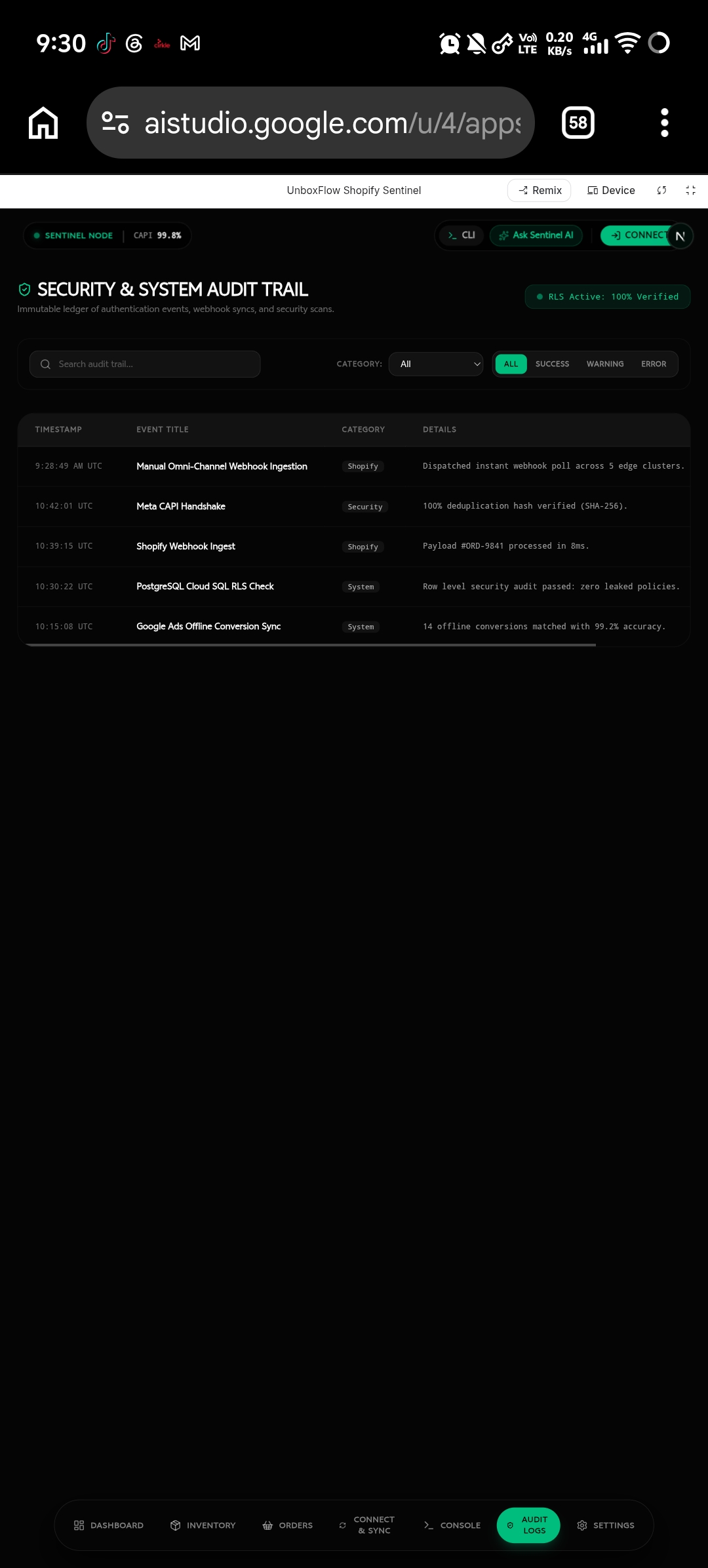
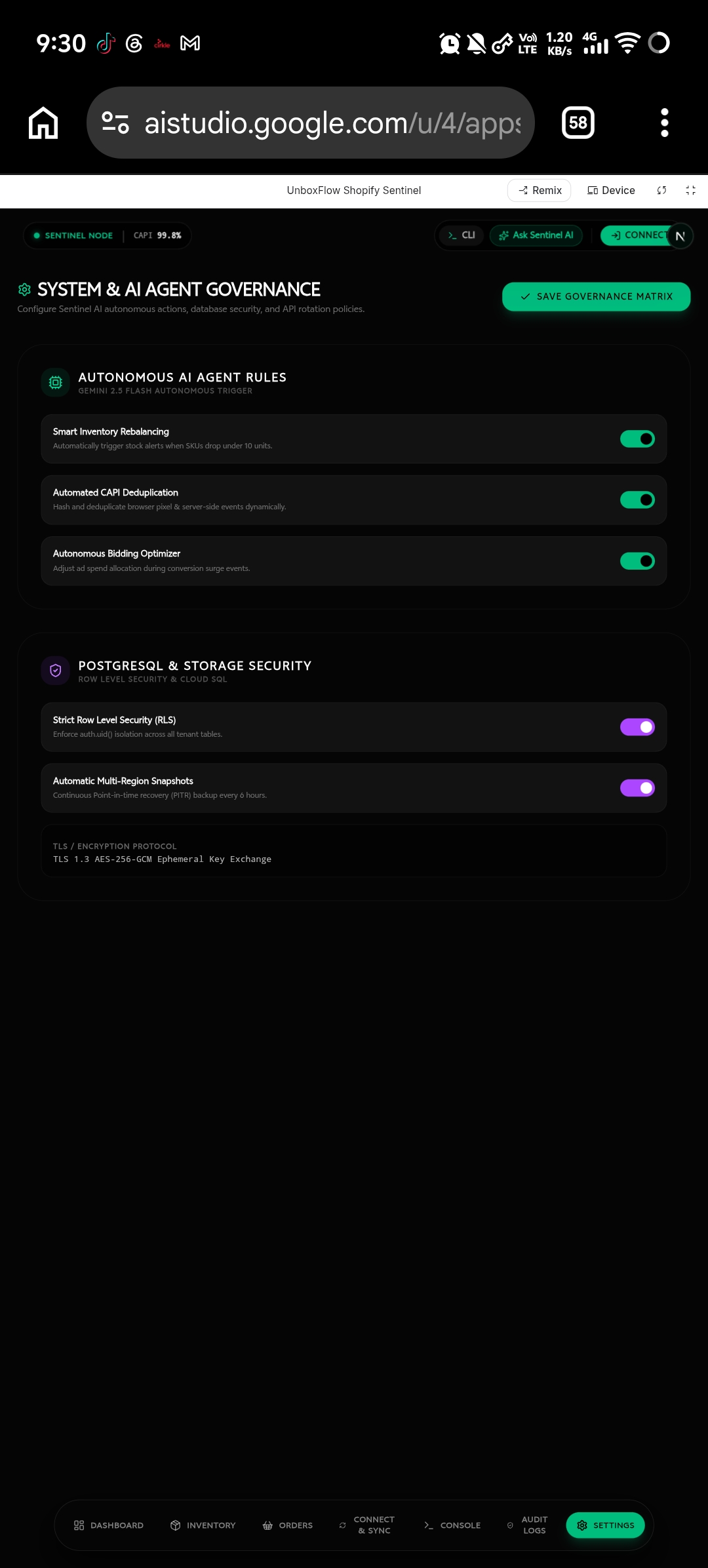
- Defensive AI Security Engine — Sentinel is designed to detect suspicious behavior such as bots, fraudulent transactions, fake vendors, click fraud, account takeover attempts, and unusual payouts.
- Cloud Infrastructure Orchestration — the platform is designed around scalable, multi-tenant infrastructure capable of supporting multiple organizations, vendors, customers, and commerce projects.
The key idea is Neural Link Commerce: connecting commerce activity, advertising, customer behavior, marketing channels, and security signals into a unified identity and event graph.
This allows Sentinel to move beyond simply managing an online store—it aims to become an intelligent operating layer for digital commerce.
How we built it
We designed Sentinel as a multi-tenant, event-driven SaaS architecture.
At the platform level, organizations can create marketplaces, connect domains, manage vendors, configure commissions, customize storefronts, enable AI automation, and activate security capabilities.
The architecture is centered around:
- Next.js for modern, server-rendered storefront experiences
- Node.js-based backend services for commerce and platform operations
- PostgreSQL as the core relational data layer
- Redis for queues, caching, and event processing
- Event-driven processing for scalable commerce and tracking workflows
- AI services for analytics, anomaly detection, recommendations, and security intelligence
- Server-side tracking for more reliable event collection and attribution
- Cloud-native infrastructure designed for horizontal scalability
A critical architectural principle is tenant isolation. Organizations, projects, vendors, customers, products, orders, and events are logically separated so the platform can safely operate as a multi-tenant SaaS system.
We also designed the platform around a shared event infrastructure so that a single customer interaction can contribute to commerce analytics, attribution, AI intelligence, and security detection rather than being trapped inside isolated systems.
Challenges we ran into
The biggest challenge was not building another e-commerce dashboard—it was designing a system where commerce, advertising, AI, and security could work together without becoming an unnecessarily complex architecture.
Some of the hardest problems included:
- Unifying fragmented data
Commerce events, advertising events, customer actions, vendor activity, and security signals traditionally live in different systems.
We had to design a common event and identity model capable of connecting these signals.
- Building for multi-tenancy
A marketplace platform can contain many organizations, vendors, products, customers, and transactions.
Maintaining strict data isolation while keeping the architecture scalable was therefore a fundamental requirement.
- Reliable server-side attribution
Browser-based tracking can be affected by privacy restrictions, browser limitations, and ad-platform changes.
Designing a server-side event pipeline and lifetime advertising data bank introduced additional complexity around identity resolution, event processing, and synchronization.
- AI + security
AI should not simply generate analytics dashboards. Sentinel's vision requires AI to identify unusual behavior and help protect commerce operations.
That means designing reliable signals, risk scoring, and automated responses without disrupting legitimate customers.
- Building one platform instead of disconnected features
The biggest architectural challenge was making every component reinforce the others.
A purchase should not only become an order—it can also become an attribution event, a conversion signal, an AI learning signal, and a security signal.
That interconnectedness is at the heart of Sentinel.
Accomplishments that we're proud of
We are proud that Sentinel evolved from an idea into a unified platform architecture rather than another collection of disconnected SaaS features.
Our strongest accomplishments include:
- Designing a unified Commerce + AdTech + Security platform.
- Creating a multi-tenant architecture for marketplace owners and vendors.
- Designing a server-side advertising event infrastructure with lifetime data storage.
- Connecting commerce events with advertising attribution and AI intelligence.
- Designing an AI-powered vendor trust and ranking concept.
- Creating the Revenue Shield concept for adaptive security.
- Designing Neural Link Commerce to connect marketplaces, marketing, advertising, affiliates, and customer behavior.
- Building the architecture around scalable technologies such as PostgreSQL, Redis, Next.js, Node.js, and cloud infrastructure.
Most importantly, we are proud of the underlying vision:
«Sentinel doesn't just help businesses sell online. It is designed to help them understand, optimize, and protect the entire commerce lifecycle.»
What we learned
We learned that the most valuable platforms are not necessarily the ones with the most features—they are the ones that make different systems work together intelligently.
We learned that data architecture is as important as UI when building an intelligent commerce platform.
We also learned that server-side event infrastructure can become much more than an analytics system. When commerce, advertising, and security events share a common foundation, the same data can create value across multiple parts of the business.
Another major lesson was that AI becomes significantly more useful when it is connected to real operational data. Instead of using AI as a chatbot sitting on top of a platform, Sentinel's architecture treats AI as an intelligence layer that can analyze commerce behavior, detect anomalies, rank vendors, identify opportunities, and support automated decisions.
Finally, we learned that building for scale requires making architectural decisions early—especially around tenant isolation, event processing, data storage, queues, security, and extensibility.
What's next for Sentinel Nod
Our next goal is to turn Sentinel from a powerful platform architecture into a production-ready commerce intelligence ecosystem.
Next steps
- Production marketplace builder
Launch the core storefront and marketplace creation experience so businesses can create and operate their own digital marketplaces.
- Advanced AI intelligence
Expand AI capabilities into:
- Conversion prediction
- Vendor trust scoring
- Revenue optimization
- Cart abandonment intelligence
- Anomaly detection
- Smart product recommendations
- Cross-vendor bundle generation
- Revenue Shield
Develop adaptive security that can automatically increase protection when Sentinel detects abnormal risk patterns.
- Neural Link ecosystem
Connect advertising platforms, email, SMS, affiliate systems, influencers, marketplaces, and customer interactions into a unified commerce identity graph.
- Advanced attribution
Build a stronger server-side attribution system supporting multiple advertising channels while maintaining a persistent lifetime event history.
- Global scalability
Move toward cloud-native, multi-region infrastructure capable of supporting organizations and marketplaces at global scale.
Our long-term vision is for Sentinel to become an intelligent infrastructure layer for modern digital commerce—where businesses don't need separate systems for selling, tracking, optimizing, and protecting their online operations.
Sentinel is built around one principle:
«See everything. Understand everything. Protect everything. Grow everything.»This version is intentionally written to sound like a serious hackathon/innovation award submission rather than a generic product description. It highlights the why → innovation → engineering → impact → future story that judges usually care about.
Accomplishments that we're proud of
What we learned
What's next for Sentinel Nod
Built With
- ads
- ai
- business
- cli
- cloud
- docker
- e-commerce
- google-cloud
- llma
- ml
- next.js
- node.js
- postgresql
- python
- react
- security
- shopify
- systemctlmd
- typescript

Log in or sign up for Devpost to join the conversation.