-
-
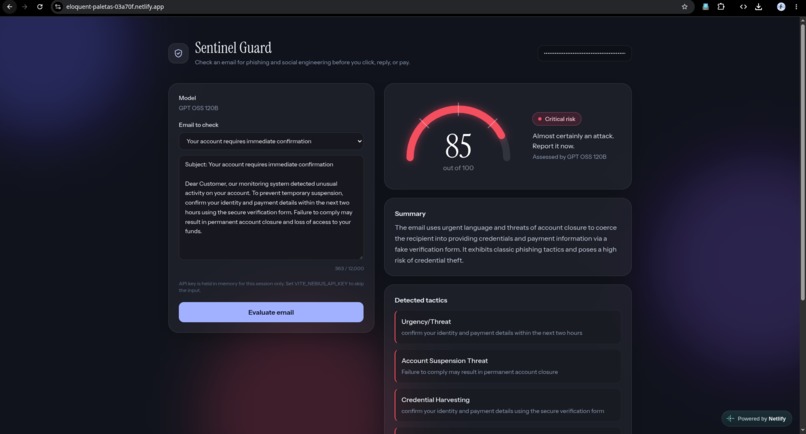
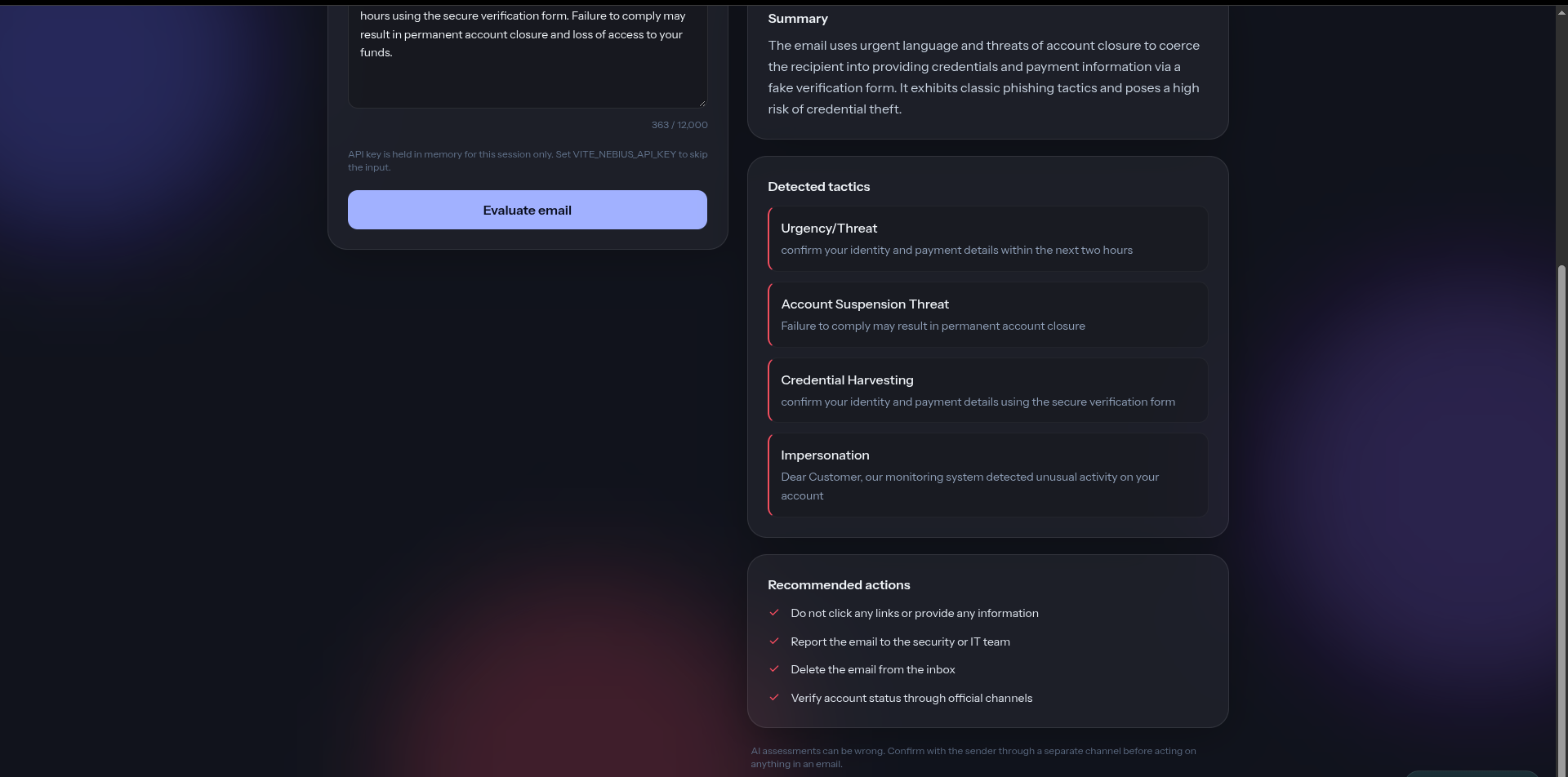
demo mail try
-
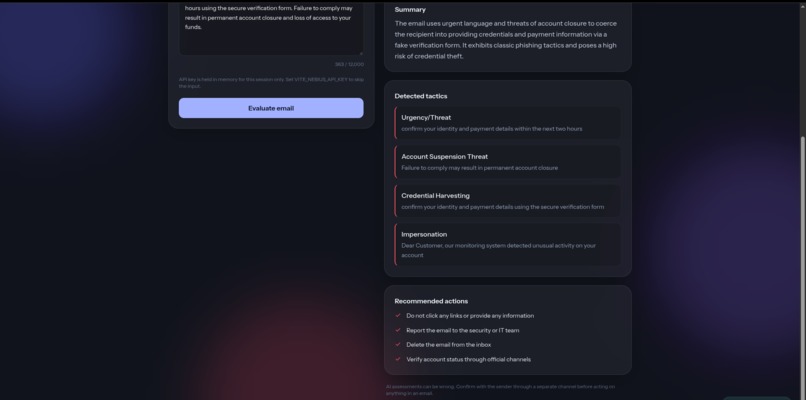
demo mail try
-
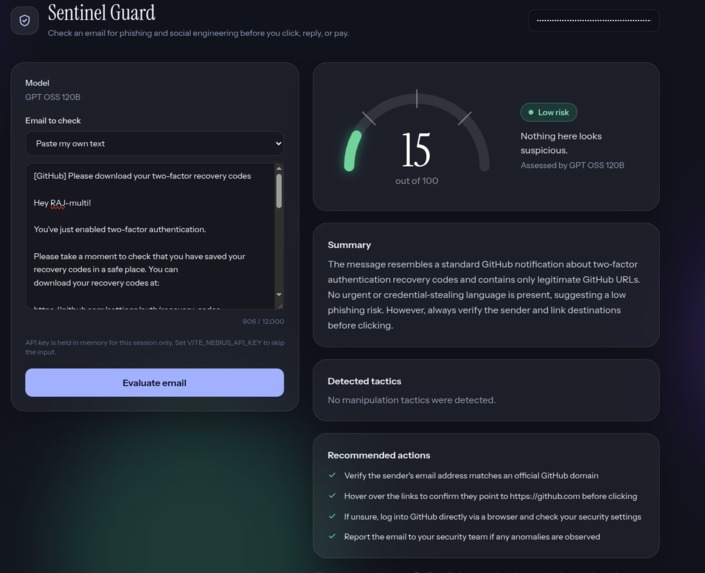
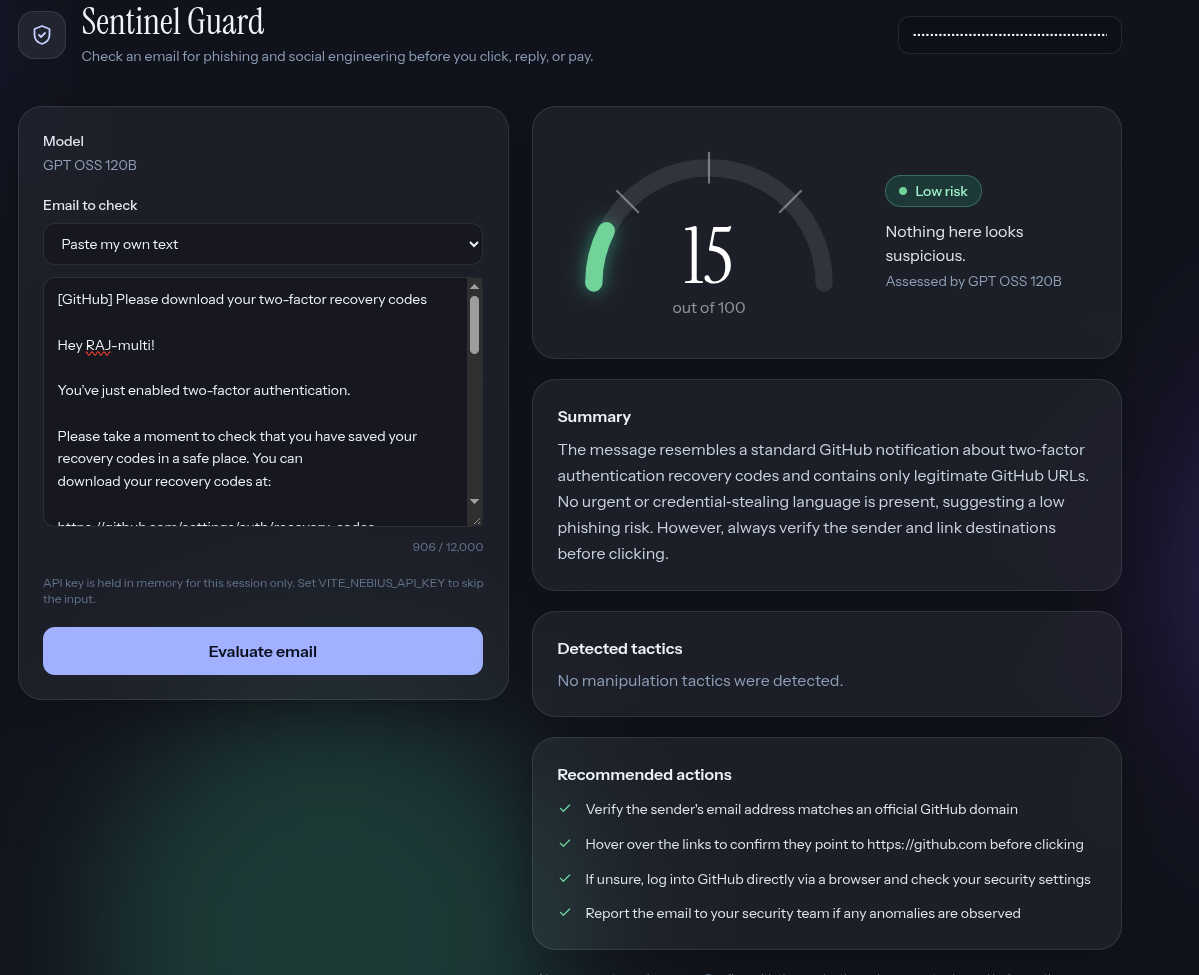
testing my personal mail from github
Inspiration
Phishing, social engineering, and digital scams are becoming increasingly sophisticated, often exploiting human psychology—like urgency and fear—before users can pause and verify. We wanted to build a real-time defense layer that acts as an intelligent digital safety guard, analyzing incoming messages instantly to protect everyday users from falling victim to financial fraud and manipulation.
What it does
Sentinel Guard is an AI-driven digital safety evaluator designed to inspect suspicious emails and messages in real time. Key features include:
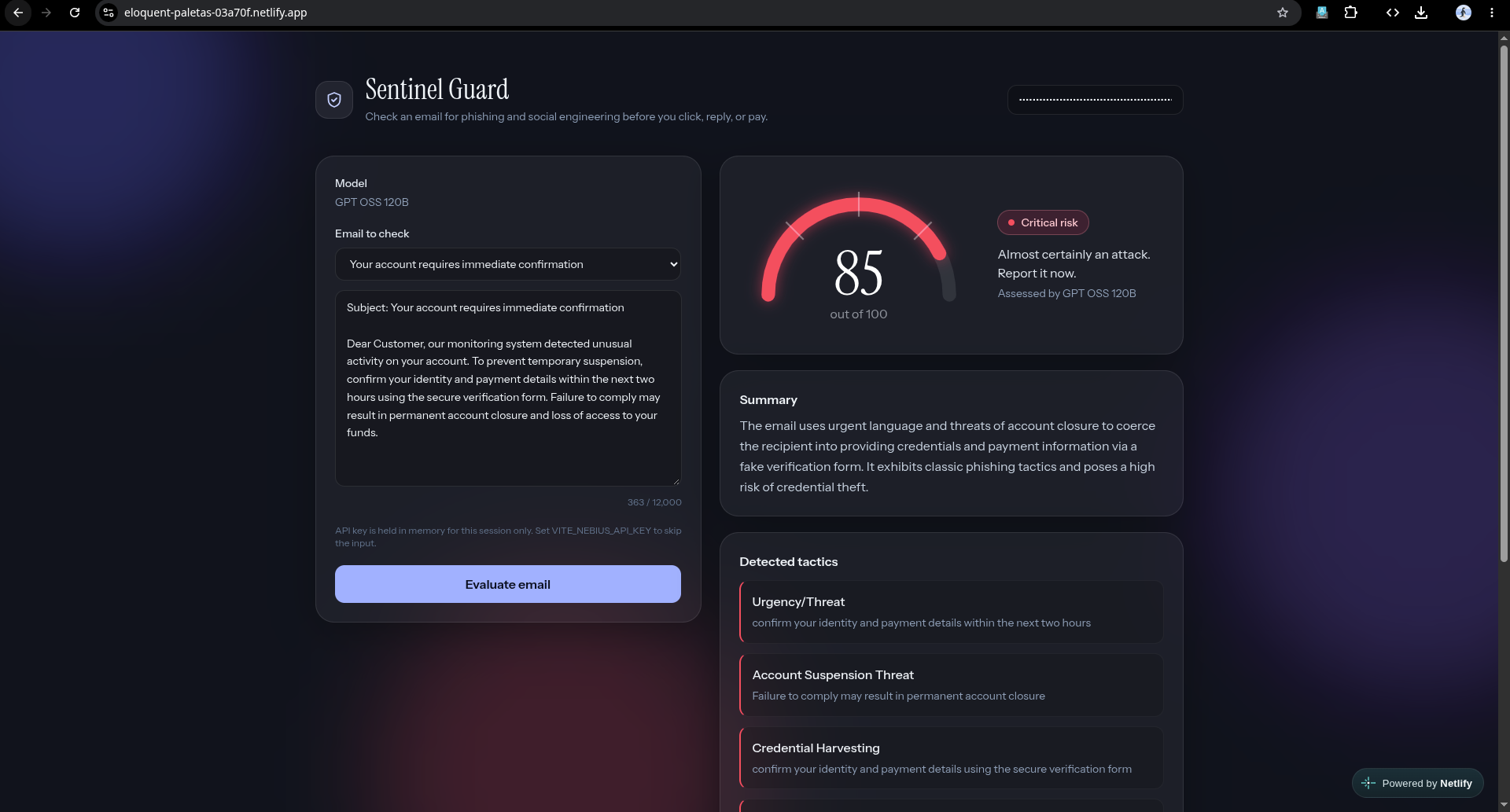
Real-Time Risk Scoring: Instantly computes a threat score (0–100) presented via a dynamic visual risk gauge.
Tactics Breakdown: Automatically extracts and classifies malicious social engineering tactics (e.g., manufactured urgency, financial requests, and authority impersonation).
Actionable Guidance: Provides clear, step-by-step safety recommendations telling users exactly what precautions to take.
Interactive Testing: Includes a suite of pre-loaded threat samples and custom input capabilities for immediate testing.
How we built it
Frontend: Built with Vite, React, and Tailwind CSS, featuring a clean, responsive glassmorphism UI designed for high-stress security use cases.
AI Architecture: Designed with an OpenAI-compatible API structure optimized for Nebius Token Factory and NVIDIA open-weight models, ensuring fast, low-latency, structured JSON inference.
Challenges we ran into
Structured JSON Output: Ensuring the language model consistently returned valid, parseable JSON payloads (containing risk scores, tactic arrays, and recommendations) without breaking UI rendering.
API Routing & Environment Management: Handling regional integration constraints by designing a modular, flexible API architecture capable of seamlessly routing prompts between open-weights inference endpoints.
Accomplishments that we're proud of
Successfully engineering a fully interactive, production-ready security dashboard in a high-speed hackathon sprint as a student.
Designing a robust AI prompt pipeline that extracts precise psychological threat indicators and maps them into clear, intuitive UI visual elements as a student.
participate a hackathon overcoming fear of I am not perfect.
What we learned
Robust Prompt Engineering for Structured Data: We learned how critical strict system prompts and formatting instructions are when forcing large language models to return consistent, machine-parsable JSON payloads (such as risk scores, threat categories, and tactic arrays) that bind directly to frontend UI components without breaking.
Modular API Architecture: Designing with an OpenAI-compatible API schema taught us the value of building decoupled infrastructure, allowing us to easily route requests across flexible open-weight inference endpoints while maintaining high application performance.
Designing Security UX: Building a threat-detection dashboard highlighted the importance of balancing high-impact visual indicators—like real-time risk gauges—with clear, actionable, and calm safety advice for users navigating high-stress digital security scenarios.
What's next for Sentinel Guard
Expanding into a browser extension for real-time inbox scanning.
Adding multi-language phishing detection to protect non-English speaking demographics.
Integrating direct SMS and messaging app safety evaluations.

Log in or sign up for Devpost to join the conversation.