-
-
Banner
Inspiration
AI makes it faster to write code, but production failures still happen when code faces concurrency, load, or resource pressure. Sentinel.dev was built to catch those failures before deployment.
What it does
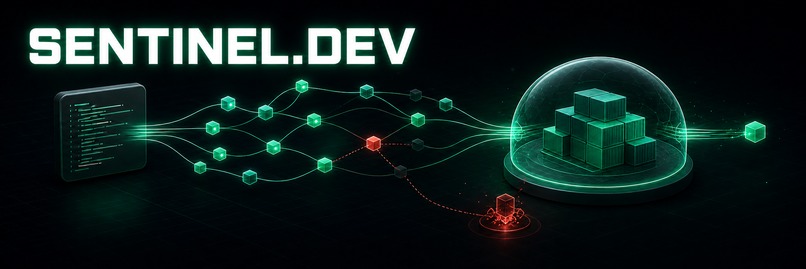
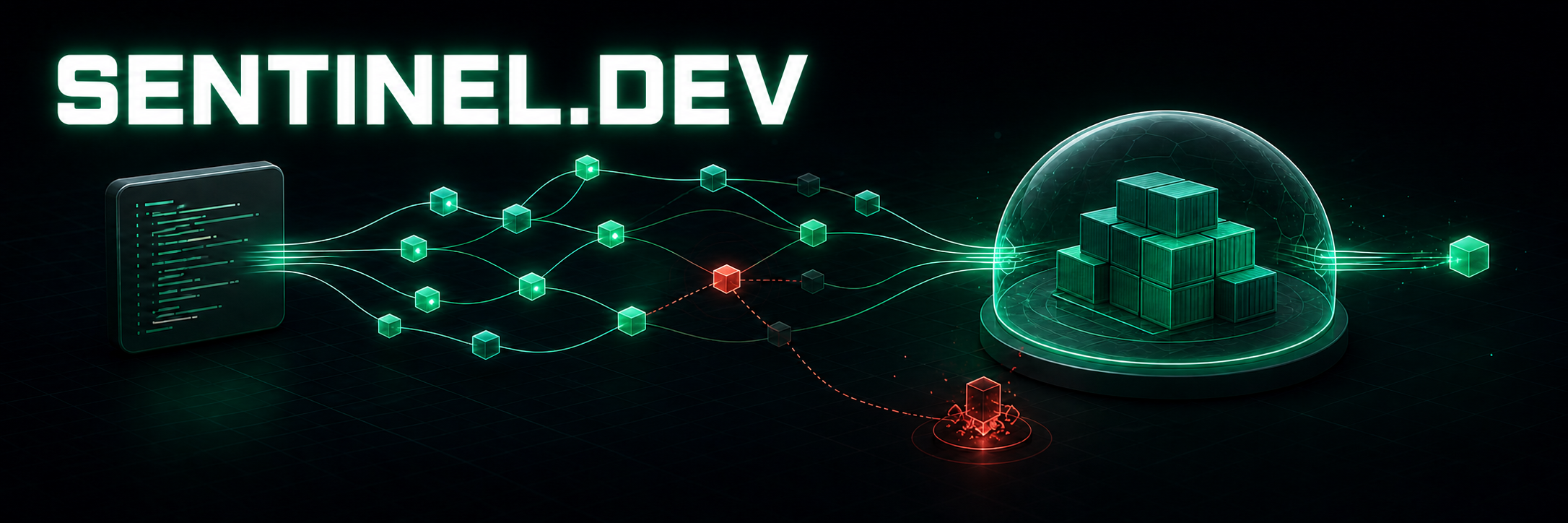
Sentinel.dev maps a codebase with Graphify, identifies the affected dependency area, and runs focused chaos tests inside an isolated Docker container.
The demo shows a realistic flow:
- Local happy-path tests pass.
- Sentinel finds a production-style race condition.
- It captures Docker execution evidence and logs.
- It applies a reviewed remediation strategy.
- It reruns the same probe to verify the fix.
How we built it
- Gpt 5.6 Tera for majority complicated coding orchestrations -OpenAI SDK for model-provider integration, including OpenAI and Gemini’s OpenAI-compatible API endpoint for live probe and remediation selection
- Python 3.12 CLI managed with
uv - Graphify for code-relationship mapping and blast-radius analysis
- Docker SDK for isolated, resource-limited test execution
- FastAPI demo targets for race conditions, memory pressure, and ReDoS-style risks
- Gemini or OpenAI-compatible models for live probe and remediation selection using Openai Sdk
- React dashboard for graph, telemetry, evidence, and terminal logs
Challenges we ran into
- Preventing sandbox hangs caused by bad or slow test code
- Making Docker execution reliable across operating systems
- Handling slow or malformed model responses safely
- Ensuring generated fixes are validated before being presented as successful
- Keeping repeat demo runs safe when Git branches already exist
Accomplishments that we're proud of
- Graphify is the core of the workflow, not a mock graph.
- The Docker arena runs the real demo API and sends real concurrent requests.
- Local tests can pass while Sentinel still proves a deployment-style failure.
- Every accepted remediation is checked by rerunning the same Docker probe.
- The project supports both deterministic demos and live model-assisted demos.
What we learned
- Passing unit tests does not guarantee production survivability.
- A code graph gives AI agents much better context than sending an entire repository.
- AI output needs strict boundaries and verification before it can affect code.
- Real execution evidence is more useful than a vulnerability claim alone.
What's next for Sentinel.dev
- Support additional application frameworks and deployment targets.
- Connect Sentinel checks directly to pull-request workflows.
- Add more production failure scenarios and organization-wide risk reporting.
- Improve the dashboard with historical runs, trends, and remediation review controls.

Log in or sign up for Devpost to join the conversation.