-
-
Home
-
Digital Twin
-
BioDust Scan
-
Sentinel Console
-
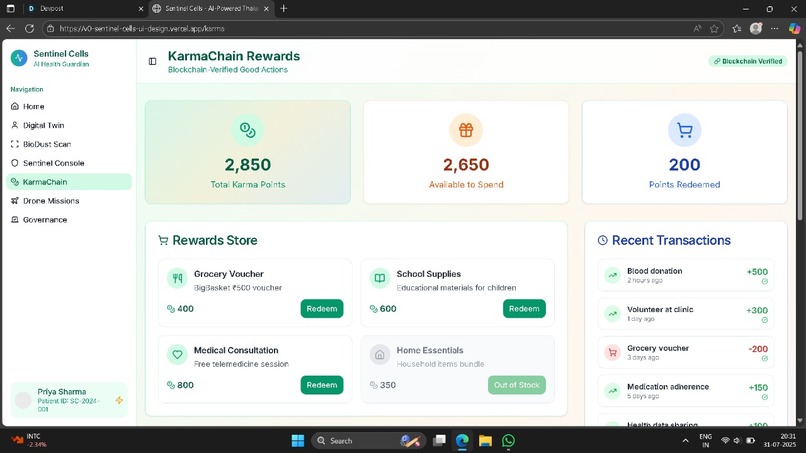
KarmaChain
-
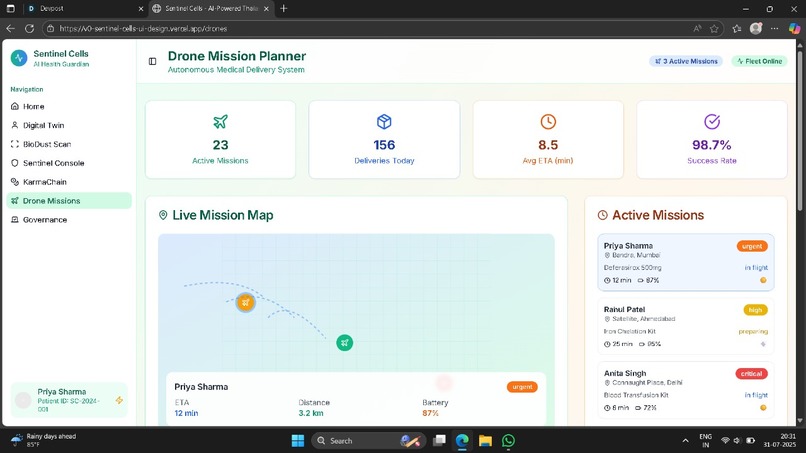
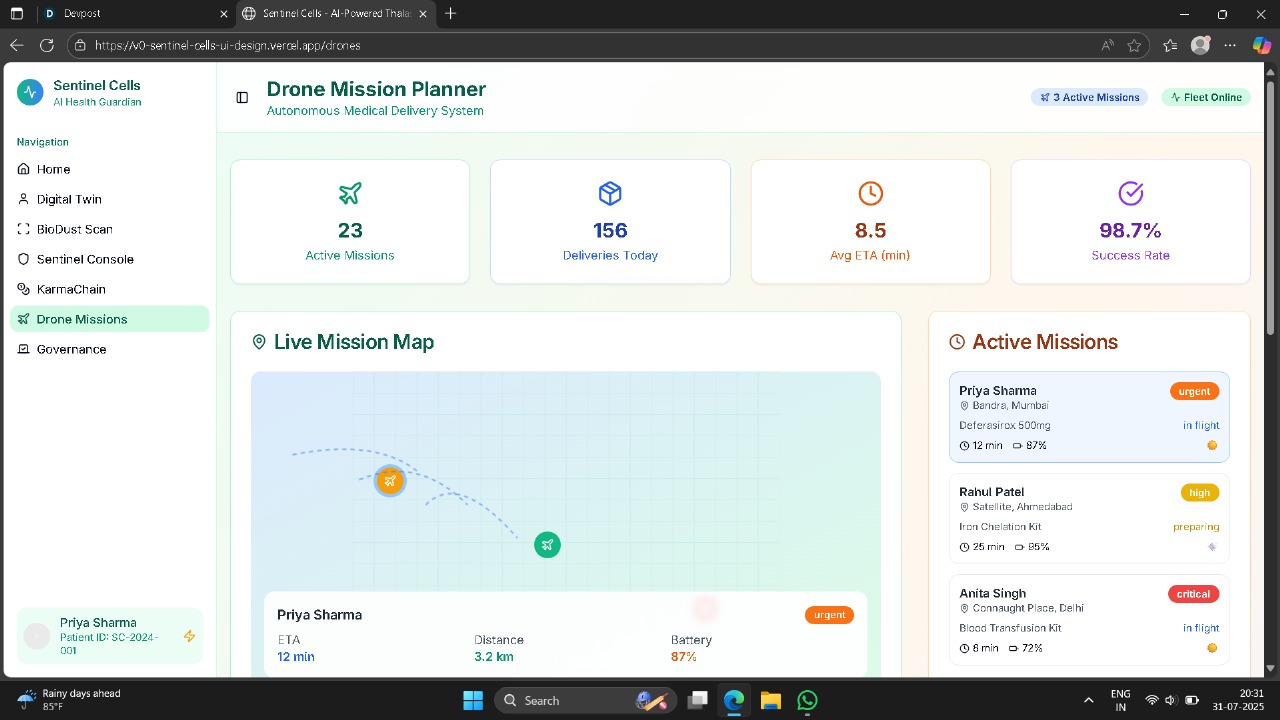
Drone Missions
-
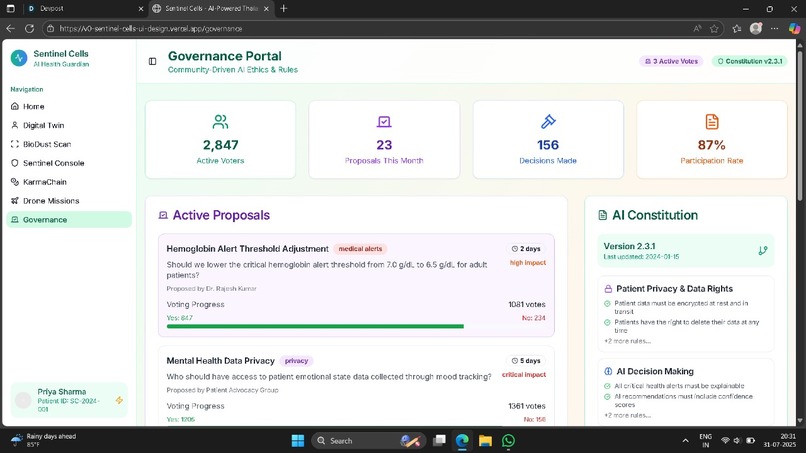
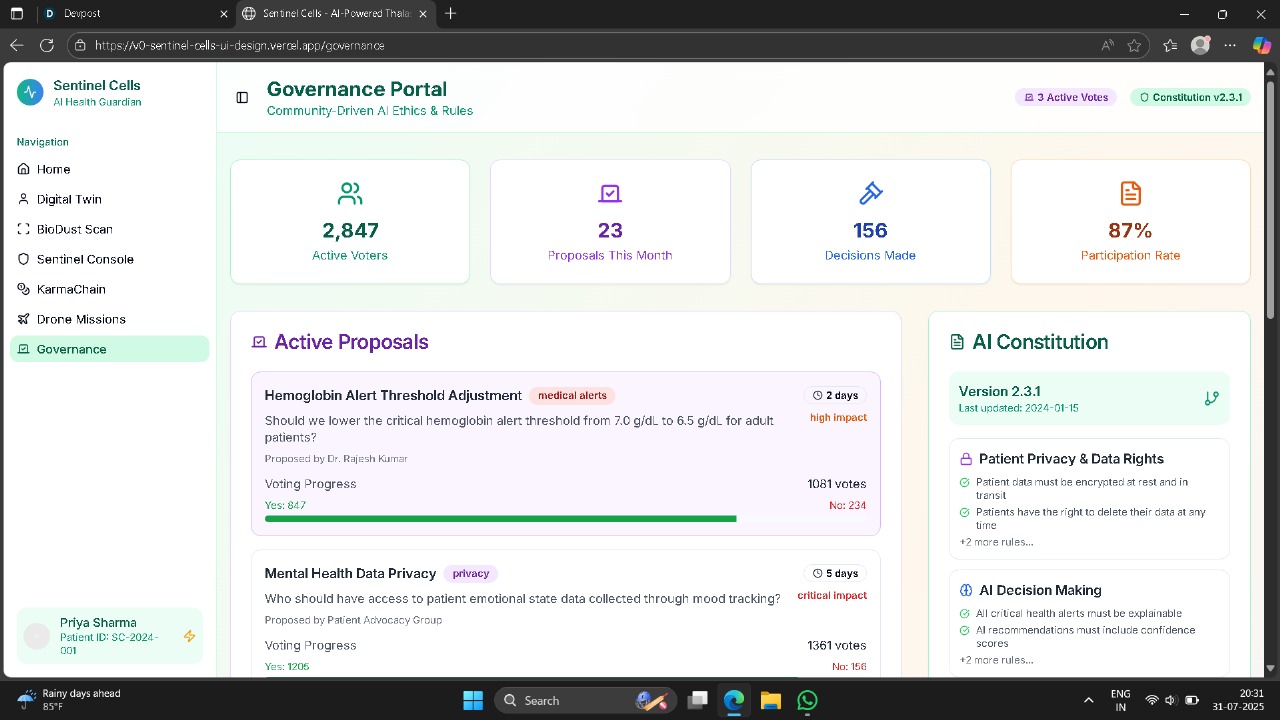
Governance
Inspiration
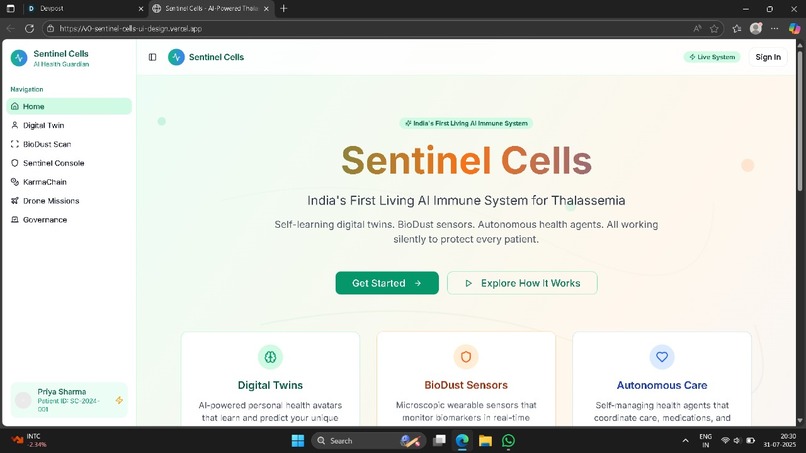
Thalassemia affects over 100,000 children in India, many in rural regions with limited access to consistent care, blood donations, and early diagnosis. Existing digital health tools fail to address the real-life complexity — sudden blood shortages, caregiver burnout, medication lapses, or silent complications like iron overload. We asked: What if AI could become a self-evolving immune system — just like the human body — and protect every Thalassemia patient, at scale, without needing 24/7 internet or doctors nearby? "Sentinel Cells" was born from this vision — a digital biosphere that detects, thinks, and acts to safeguard lives.
What it does
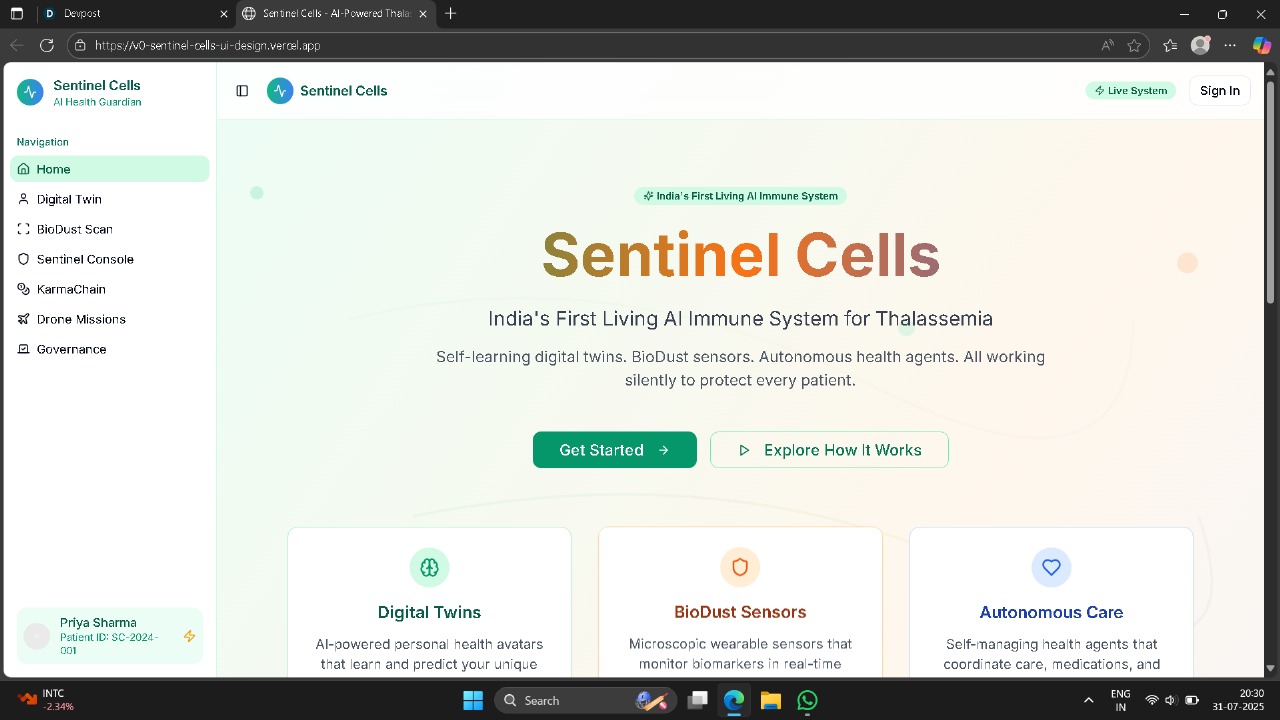
Sentinel Cells is a decentralized, AI-powered health ecosystem for Thalassemia that:
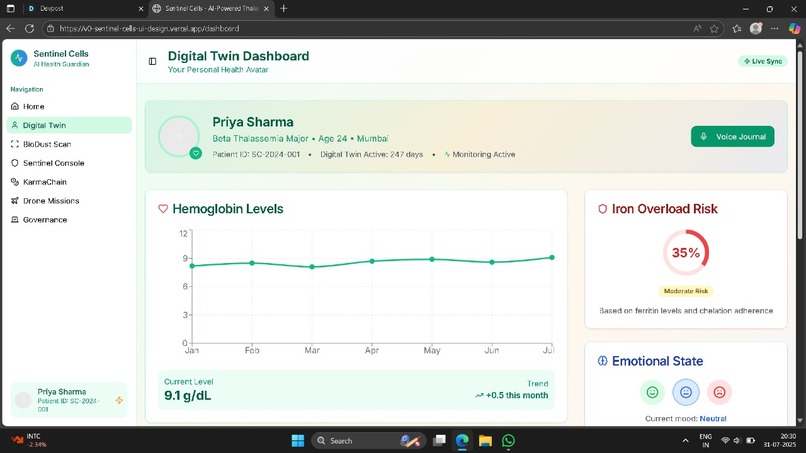
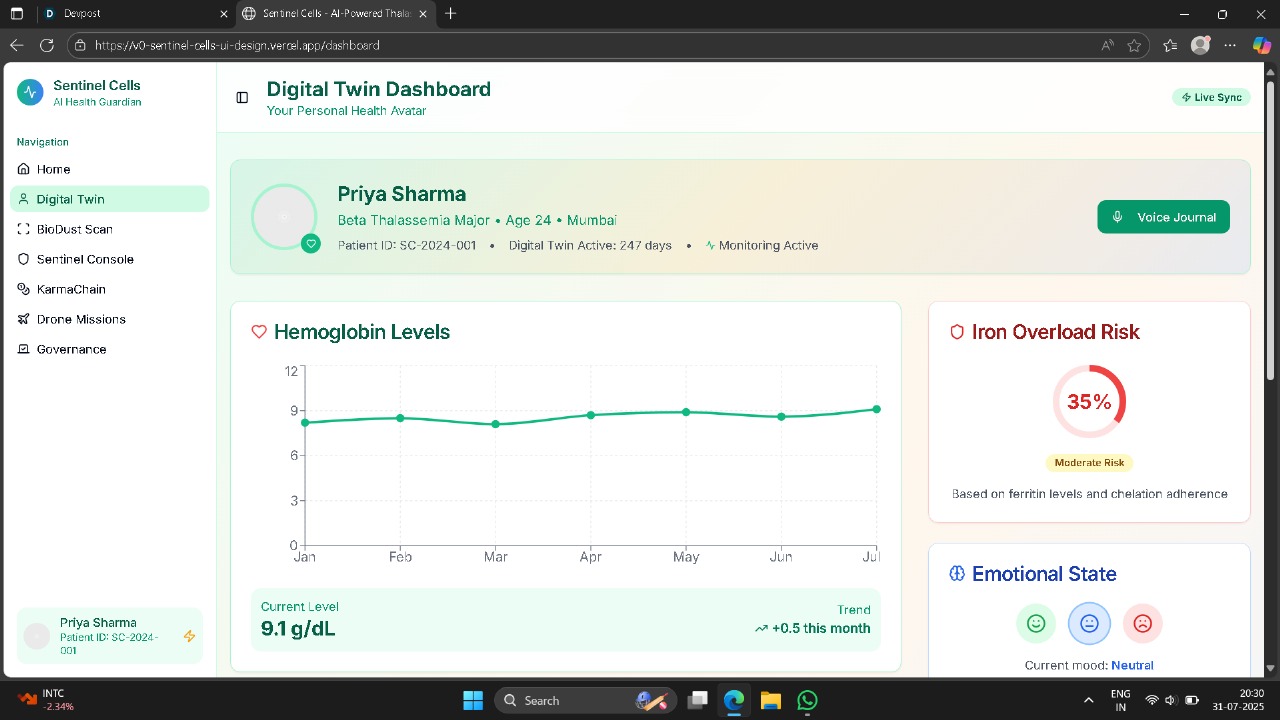
Builds real-time digital twins for every patient and donor
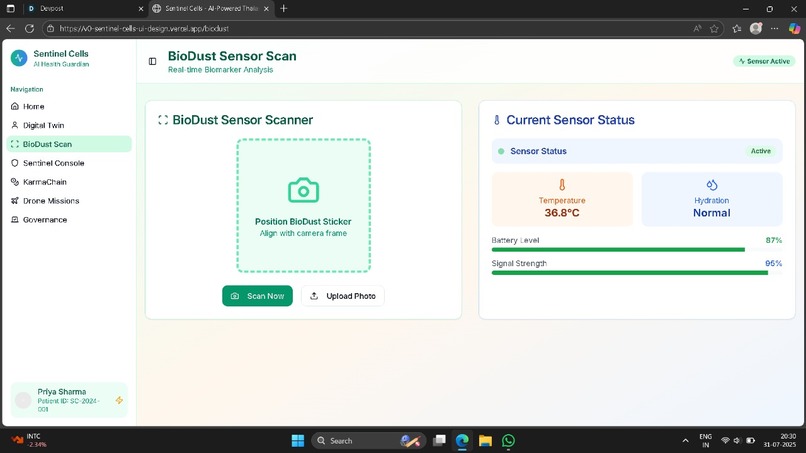
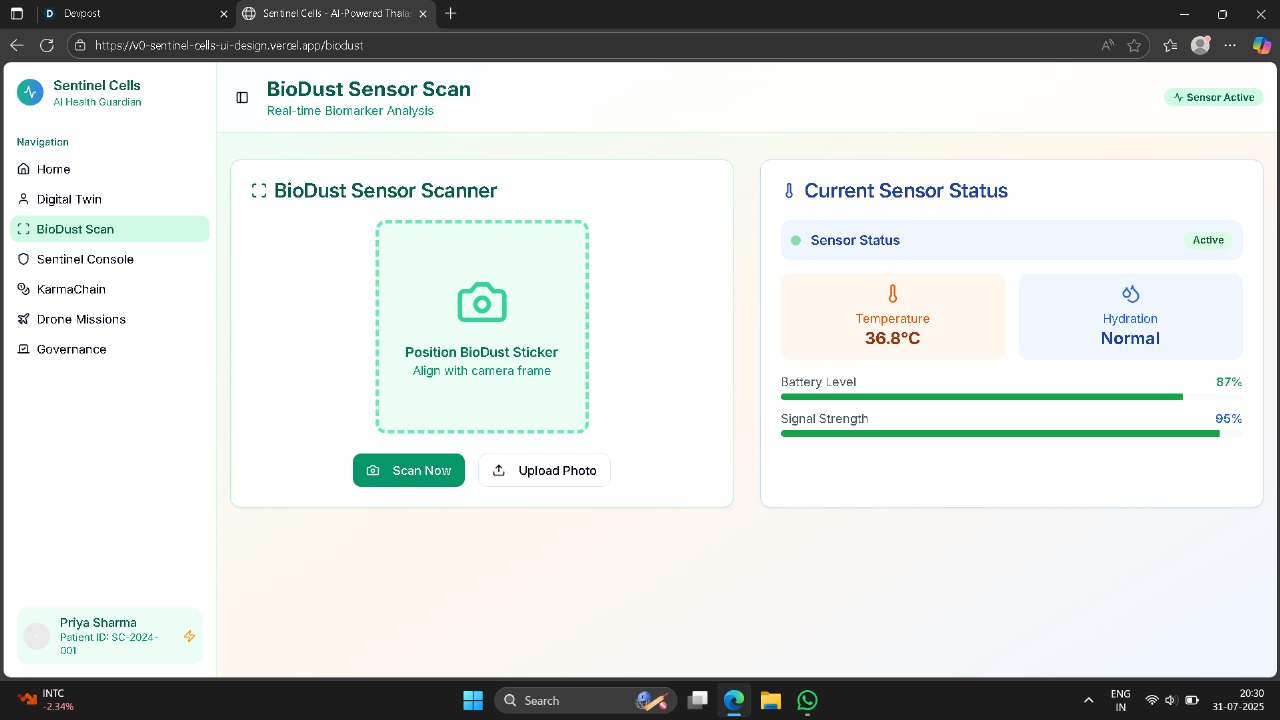
Uses ₹5 sticker-sized BioDust sensors to monitor sweat biomarkers
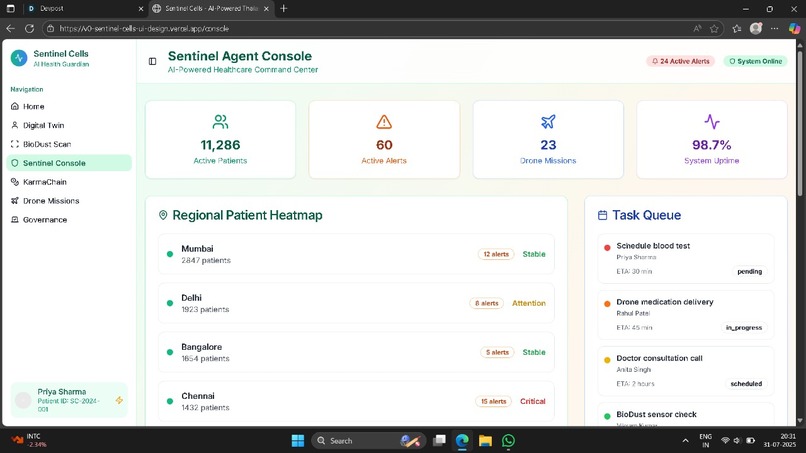
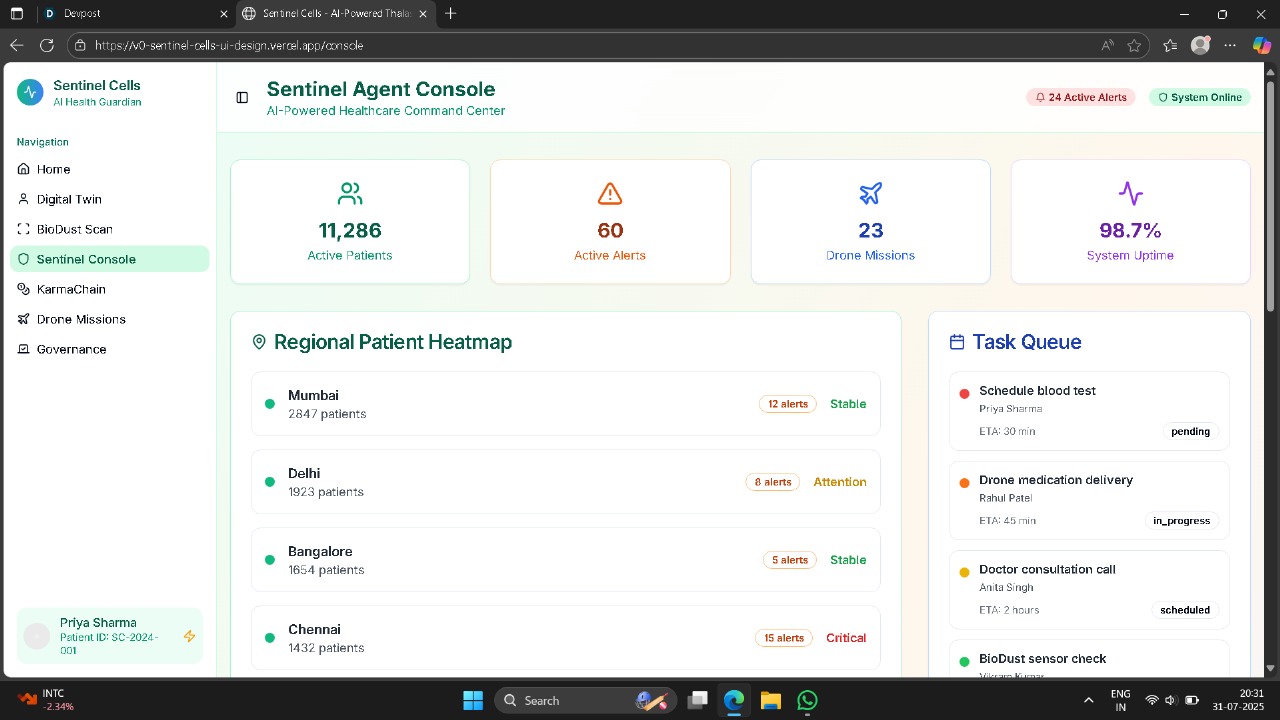
Deploys Sentinel AI agents to detect risk, coordinate care, and speak to patients via voice
Forms a Swarm Intelligence mesh network, syncing insights across rural phones and hospital devices
Sends preemptive nudges to donors, schedules drone deliveries, and even flags emotional distress through voice-based dream journaling
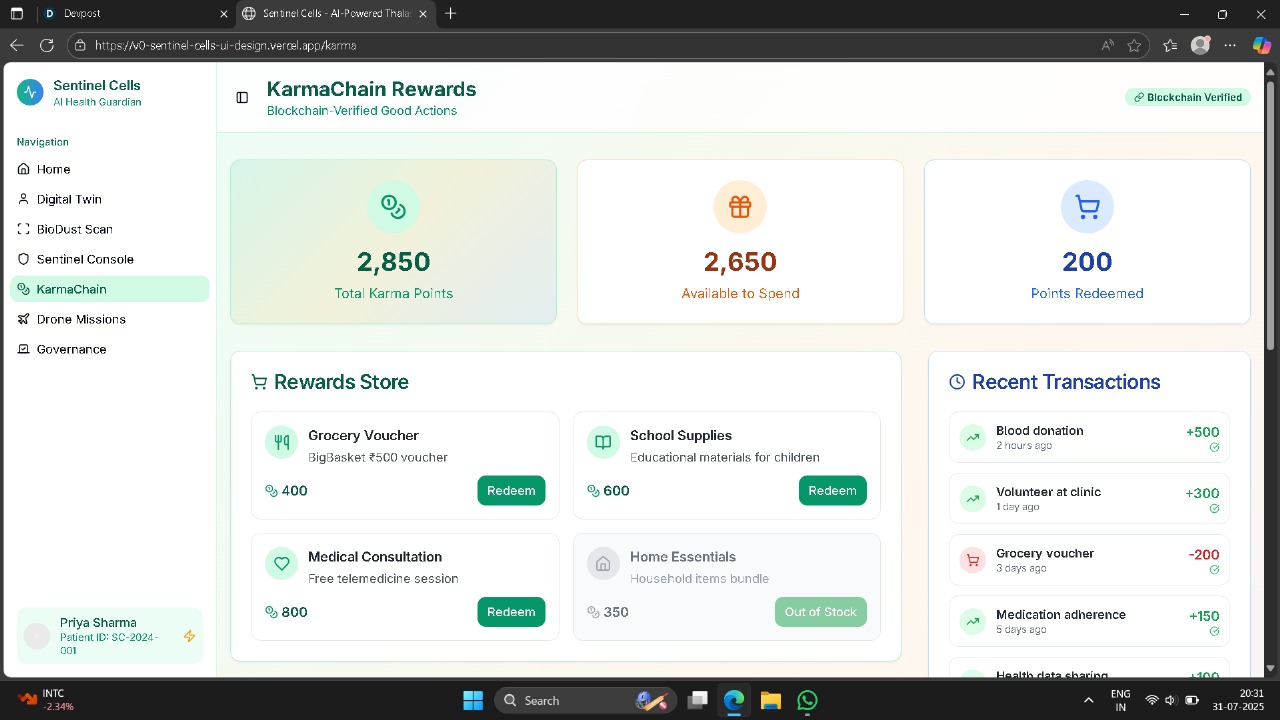
Rewards human contribution with KarmaChain, a blockchain-based goodwill engine that gamifies volunteering and care
It’s a living, learning digital immune system — one that adapts, predicts, and heals in real time.
How we built it
We used a hybrid of AI modeling, bio-sensor design, and distributed systems thinking:
Digital Twin Engine: Simulates patient states using real-time inputs (hemoglobin, behavior, voice mood)
BioDust Sensor Prototype: Paper-thin, battery-free sweat patch scanned by phone cameras
Sentinel Agents: Autonomous care bots powered by rule-based and reinforcement learning models
Federated Learning Framework: Swarm intelligence trains models across devices without centralized data
Voice AI: Emotional state estimation via Whisper + custom sentiment classifier
KarmaChain: Solidity-based smart contract system to reward verified impact
Offline-first mesh sync: Syncs agent data when connectivity is restored (LoRa + peer relay)
We created working prototypes for all major flows, even simulating care coordination using agent-based modeling.
Challenges we ran into
Synthesizing patient behavior + biometrics into meaningful digital twin models was complex
Building a scalable mesh architecture for rural areas without relying on real-time cloud access
Ensuring fake-proof reward systems in KarmaChain, especially around location spoofing or ghost donors
Translating mental health through voice journaling into clinically relevant flags
Designing low-cost, passive sensors that could be used in low-resource environments
Accomplishments that we're proud of
Built the first offline-first AI biosphere for Thalassemia care
Created a working demo of a digital twin, simulating iron overload detection + agent response
Designed and simulated a BioDust sensor flow that can be scanned without power or app installs
Developed a KarmaChain prototype with real-time validation + impact scoring
Created a story-driven UX that connects emotion, science, and automation into one humane platform
What we learned
AI alone isn’t enough — real health impact comes from fusing behavior, biology, and culture
People engage more when systems are emotionally intelligent and offer dignity, not just data
Offline-first, edge-smart design is critical in healthcare for underserved regions
Using AI as a metaphorical immune system helps us design systems that are adaptive, proactive, and resilient
What's next for "Sentinel Cells": A Self-Evolving AI Network for Thalassemia
Partnering with nonprofits & Thalassemia foundations to test the digital twin + BioDust prototype
Developing open-source toolkits for community health workers to deploy Sentinels locally
Launching a pilot in rural Maharashtra or UP, syncing BioDust + drone deliveries with AI agents
Expanding KarmaChain into a broader “carecoin” ecosystem to include maternal health, anemia, and mental health
Publishing a white paper + open-source protocol for other disease communities to replicate
Sentinel Cells is not just a project. It’s a new way to imagine care — alive, autonomous, and available to all.


Log in or sign up for Devpost to join the conversation.