-
-
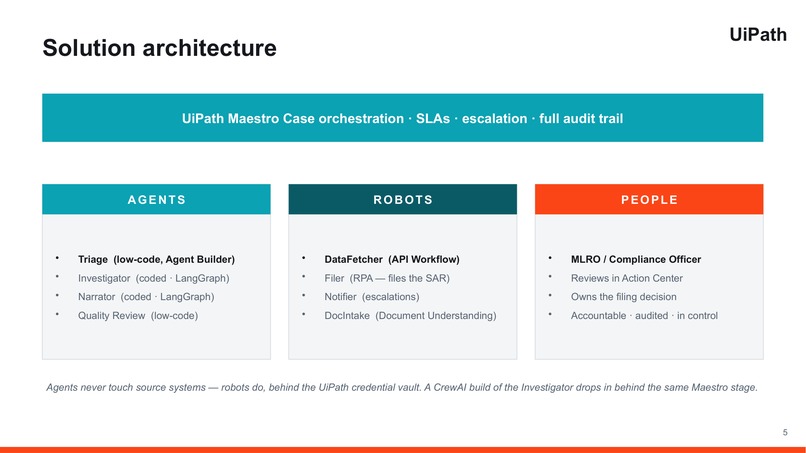
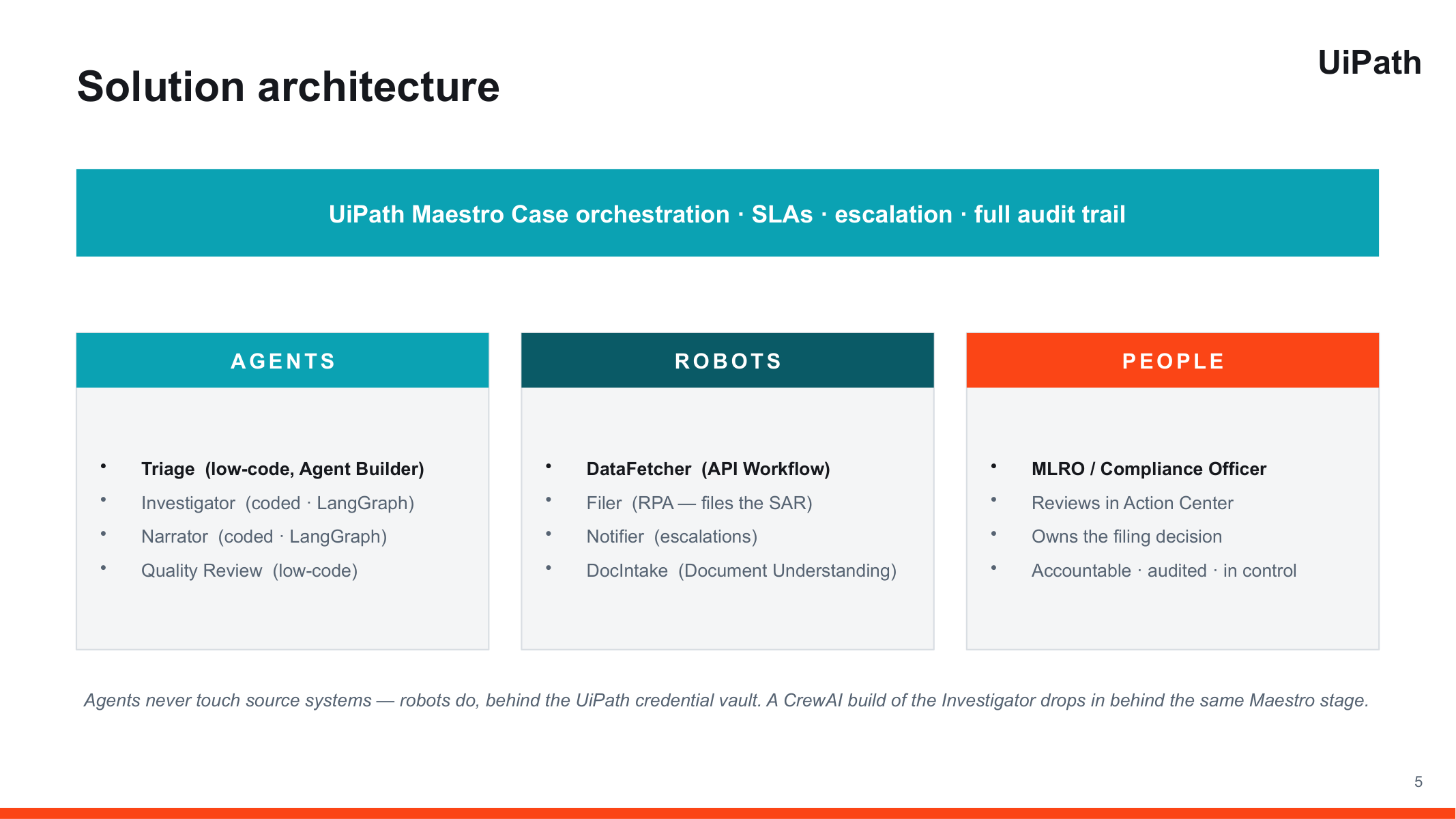
Architecture diagramme
-
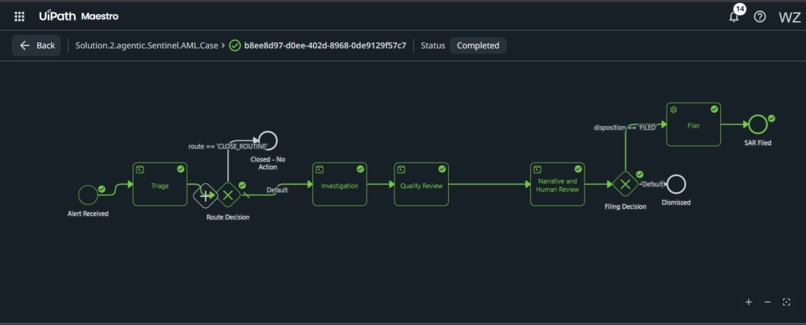
SAR filed
-
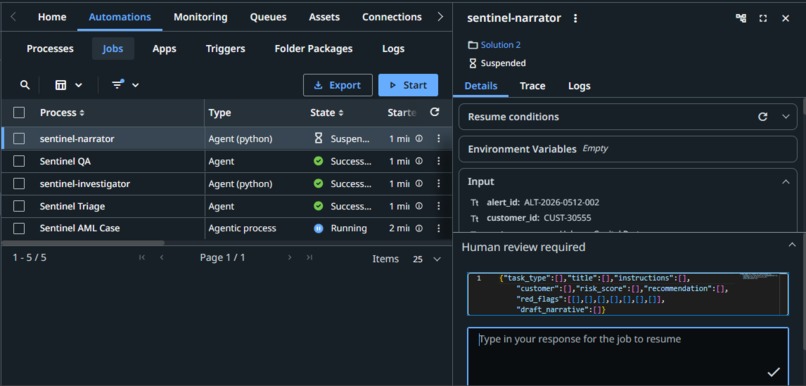
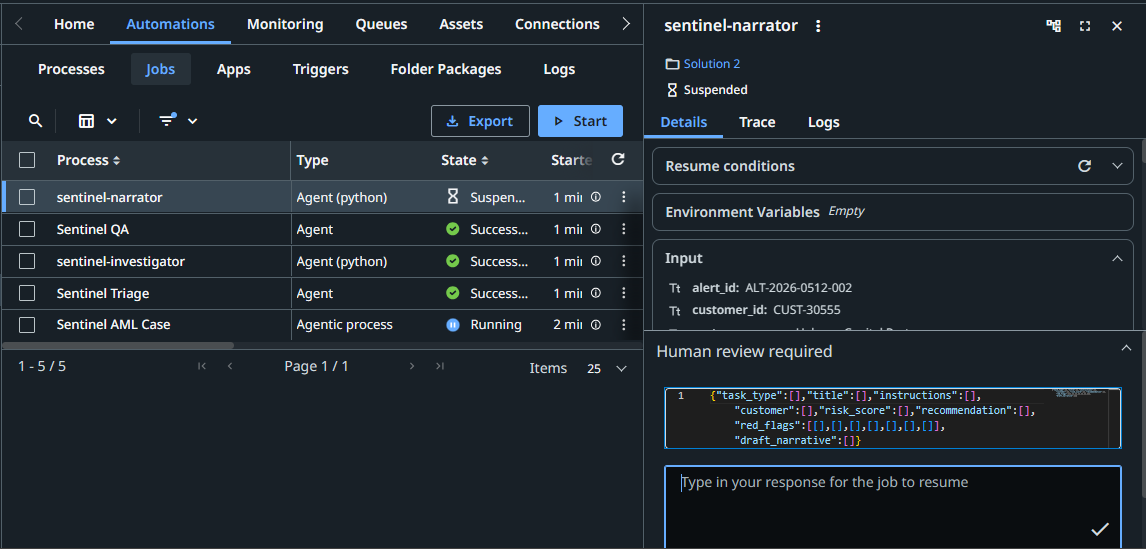
Action center: the human-in-the-loop
-
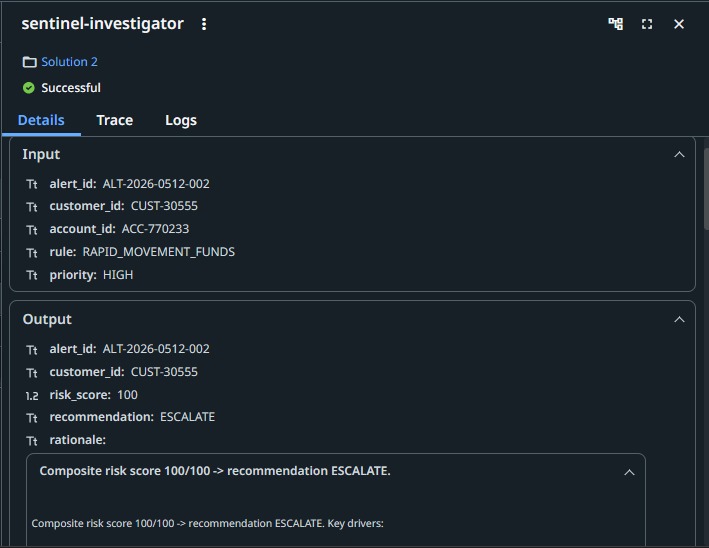
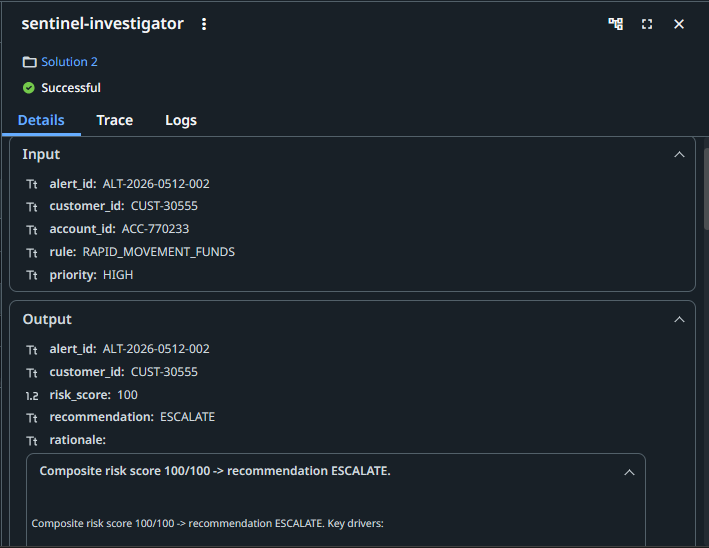
Investigation agent output
-
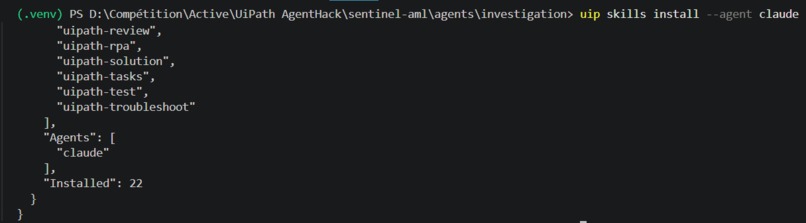
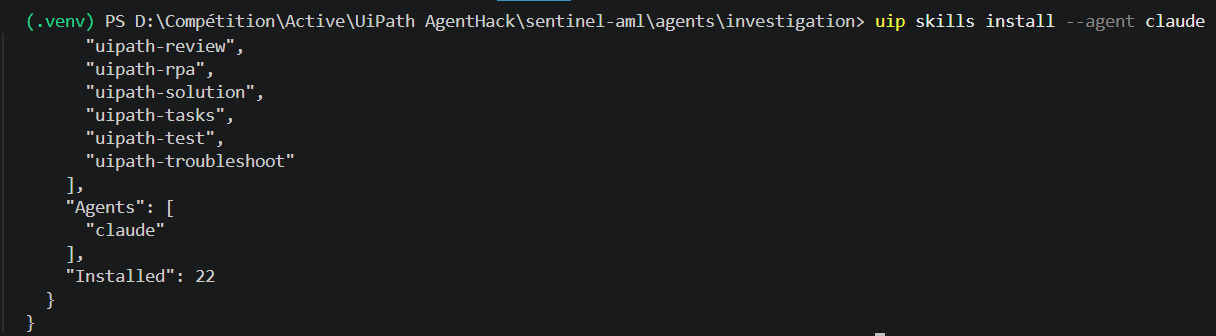
Claude Code
-
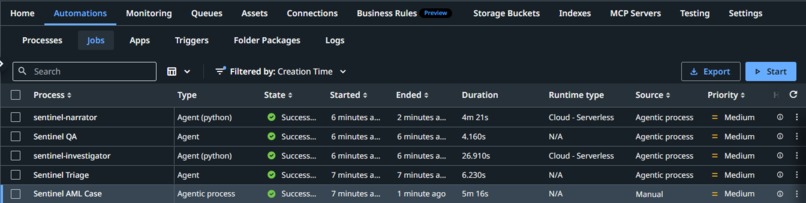
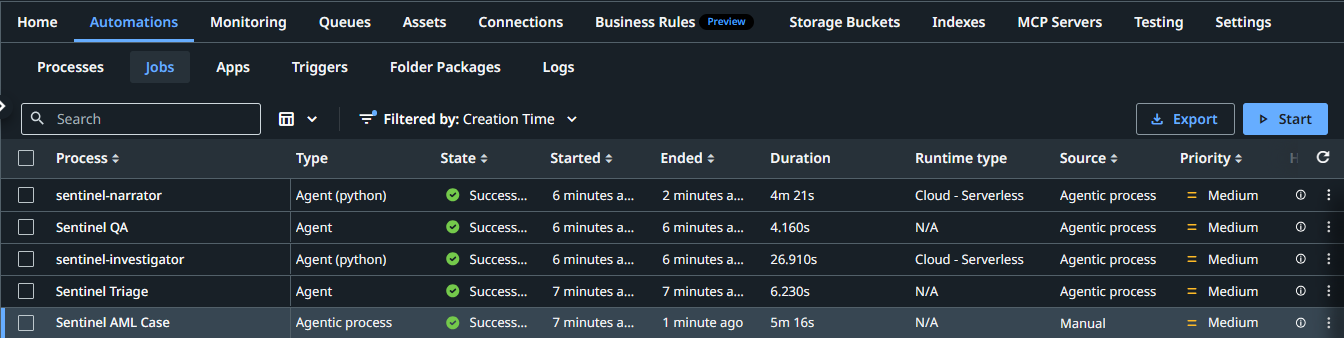
Jobs Successful in Orchestrator
Inspiration
Banks generate millions of AML transaction-monitoring alerts a year , and roughly 95% are false positives. Every single one is still investigated by hand: an analyst pulls transactions from core banking, resolves the customer and its counterparties, screens sanctions and PEP lists, searches adverse media, writes a Suspicious Activity Report (SAR) narrative, and routes it for compliance sign-off. It is slow, expensive, inconsistent from one analyst to the next, and the final filing decision is legally required to stay with an accountable human.
That is the definition of work that needs agentic case management: the goal is fixed (decide and document every alert correctly and on time), but the path is not. Each investigation branches as evidence emerges, loops back when a case is thin, and escalates the moment sanctions or an SLA deadline comes into play. A fixed flowchart can't model that, but a case can. That gap is what I set out to close with Sentinel.
What it does
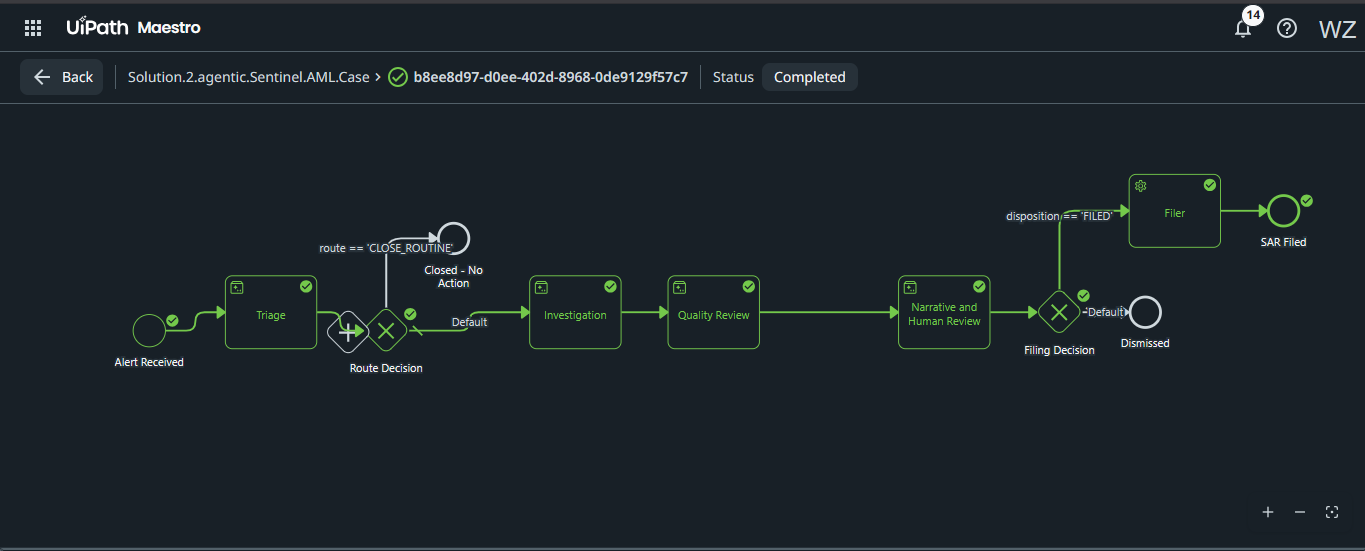
Sentinel turns every alert into a governed case in UiPath Maestro that moves through five stages, with the right kind of worker on each task:
Triage: a low-code Agent Builder agent deduplicates, classifies the typology, sets priority and SLA, and routes (duplicates auto-close instantly). Investigation: a coded LangGraph agent resolves the entity, runs transaction-typology detection (sub-threshold structuring, same-day layering, high-risk geography), screens sanctions/PEP, and checks adverse media. It outputs a transparent risk score and a recommendation where every finding cites its source. Narrative: a second coded agent drafts a FinCEN "5 Ws" SAR narrative from that evidence. Quality Review: a low-code agent checks that every claim is evidence-backed and loops the case back to Investigation with specific gaps if it's thin. Disposition: the case suspends for a human MLRO in UiPath Action Center. Approve and a robot files the SAR; reject and it's dismissed with a rationale. No SAR is ever filed without a human decision. The behavior is deliberately exception-heavy: duplicates close themselves, sanctions hits fast-track to a senior MLRO, weak cases loop back with a guard against infinite cycles, and SLA breaches escalate. Every step is recorded against the case, so a regulator can follow exactly how each decision was made.
How we built it
UiPath Maestro Case is the control plane. On top of it I combined:
Coded agents (Python + LangGraph via uipath-langchain) for the Investigator and Narrator, deployed to Orchestrator. The Narrator's interrupt() maps natively to an Action Center task for human sign-off. Low-code agents (Agent Builder) for Triage and Quality Review. API Workflows + RPA for the deterministic, system-of-record work (pull data, file the SAR, send escalations) and Document Understanding for KYC extraction. A second CrewAI build of the Investigator with the same input/output contract, so it drops in behind the same Maestro stage, letting external frameworks run under one governance layer. The risk score is a transparent weighted sum over evidence severity, so it can be reconstructed by a reviewer; the LLM writes the rationale, never the score. I built and deployed the coded agents using Claude Code through the UiPath uip CLI ("UiPath for Coding Agents"), and the agents run offline with a deterministic fallback so anyone can test the repo with no credentials.
Challenges we ran into
Learning UiPath from zero. This was my first UiPath project, so wiring Maestro Case stages, Action Center, and coded-agent deployment was a real climb. Human-in-the-loop across a coded agent. Getting a LangGraph interrupt() to surface as an Action Center task and then resume the suspended graph with the officer's decision took careful design of the resume payload and a checkpointer. Keeping decisions defensible. AML is regulated, so I had to make sure the LLM never invents the score. It only narrates a score the code computed transparently. Making it testable. I wanted judges to run it without a UiPath tenant or an API key, which meant building a deterministic fallback path that mirrors the real one. A genuine bug. A LangGraph state reducer was duplicating evidence on the final projection; I caught it by running the agent and reading the output, and fixed it. Accomplishments that we're proud of A working, tested, end-to-end solution with 8 passing automated tests across the coded agents, and it runs fully offline. Two agent frameworks (LangGraph and CrewAI) behind one UiPath contract, producing identical decisions, swappable at the Maestro stage. A human-in-the-loop gate that is real and binding, not decorative: it legally controls whether a SAR is filed. Transparent, reconstructable risk scoring instead of a black box, which is what a regulated domain actually needs. Built solo, as a first-time UiPath builder, with coding agents doing the heavy lifting on the coded components.
What I learned
The practical difference between BPMN and agentic case management (flow complexity versus context complexity, path versus goal), and how to tell which one a problem needs. How to assign the right actor to each task: reasoning to agents, exact actions to robots, accountability to a human. How UiPath can govern external frameworks (LangChain/LangGraph, CrewAI) while keeping credentials, logging, and policy centralized. How to package and deploy coded agents with the uip CLI, and how coding agents fit into the UiPath SDLC. Designing for auditability and graceful degradation from the start, rather than bolting them on. What's next for Sentinel AML More typologies: trade-based laundering, funnel accounts, and smurfing networks. Context Grounding over a bank's AML policy so the agents cite the exact thresholds they apply. Swapping the mocked connectors for real ones: core banking, a sanctions provider, and the FinCEN BSA E-Filing portal. A live A/B between the LangGraph and CrewAI investigators, and production hardening (retries, rate limits, queue-based intake at scale).
Built With
- action-center
- agent-builder
- aml
- anthropic
- claude
- claude-code
- coded-agents
- crewai
- document-understanding
- langchain
- langgraph
- maestro-case-management
- orchestrator
- python
- uipath
- uipath-maestro


Log in or sign up for Devpost to join the conversation.