-
-
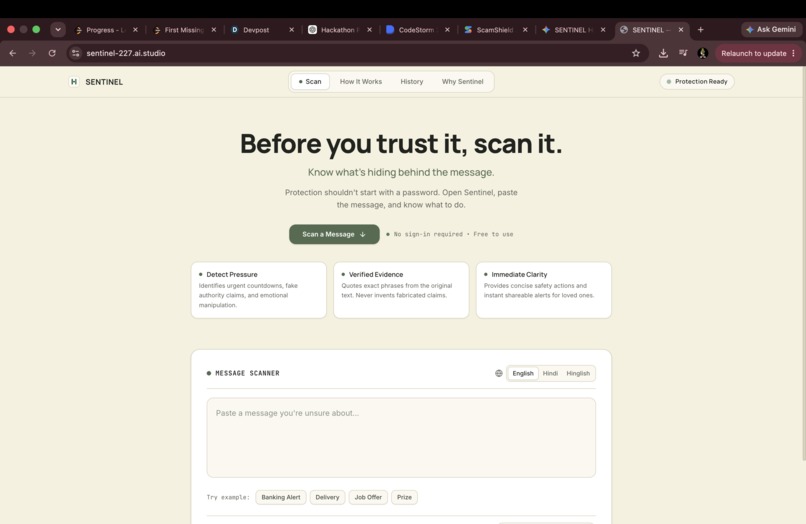
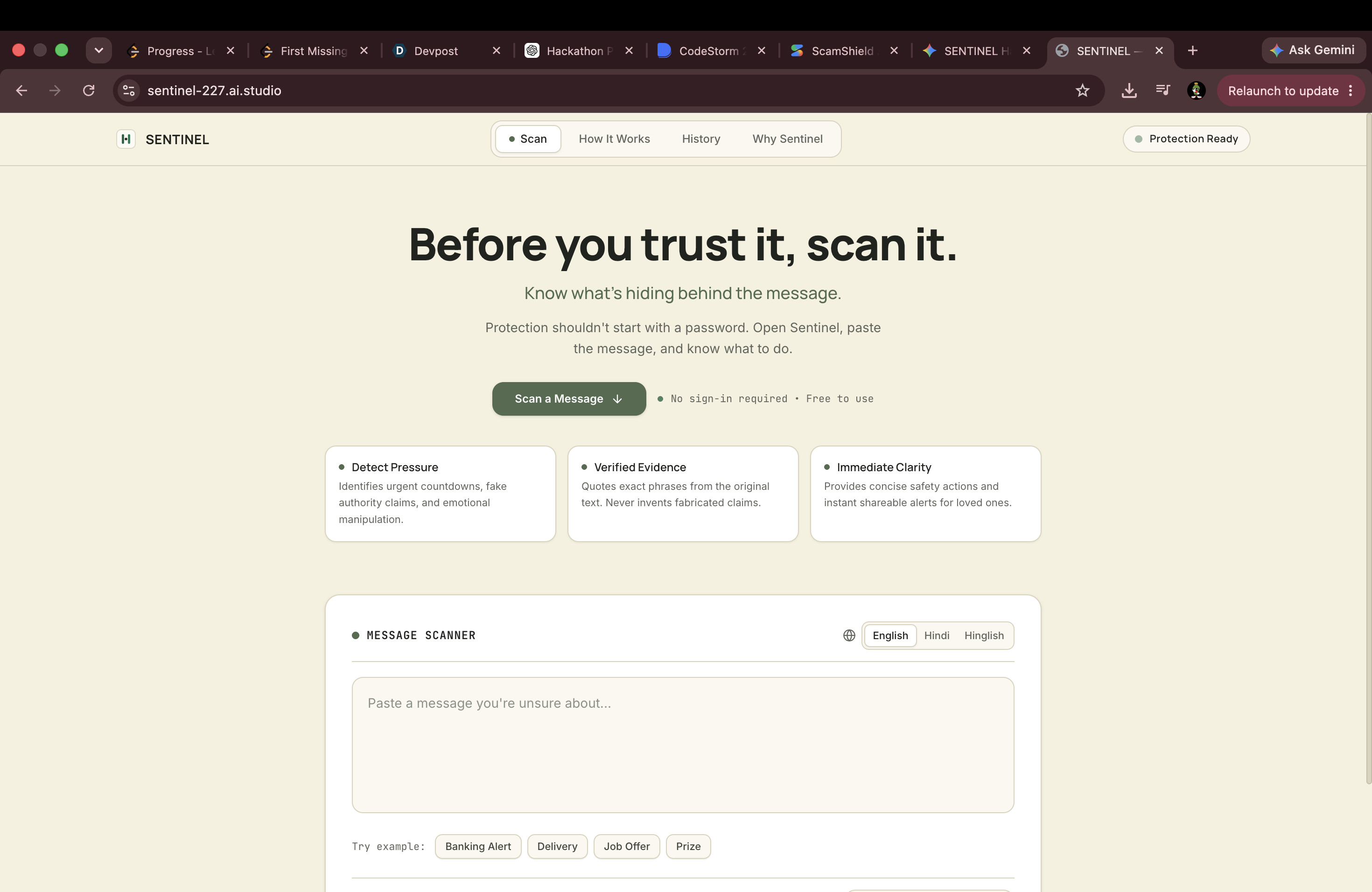
landing page
-
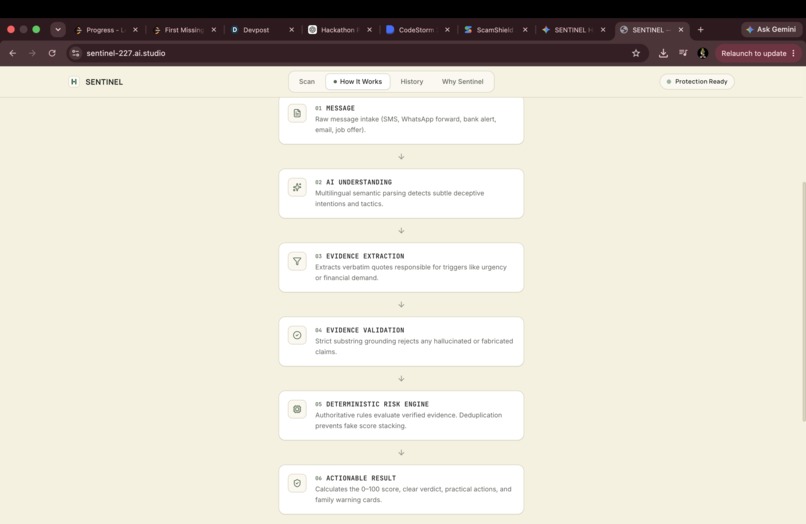
explaination-2
-
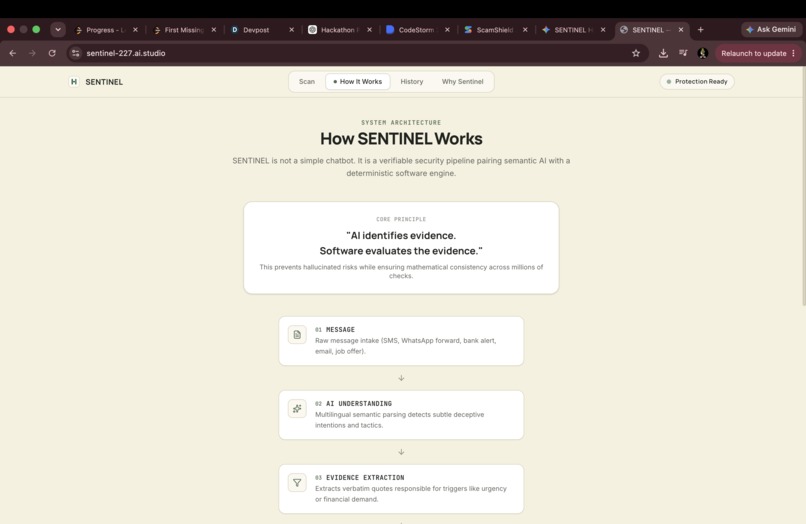
explaination-1
-
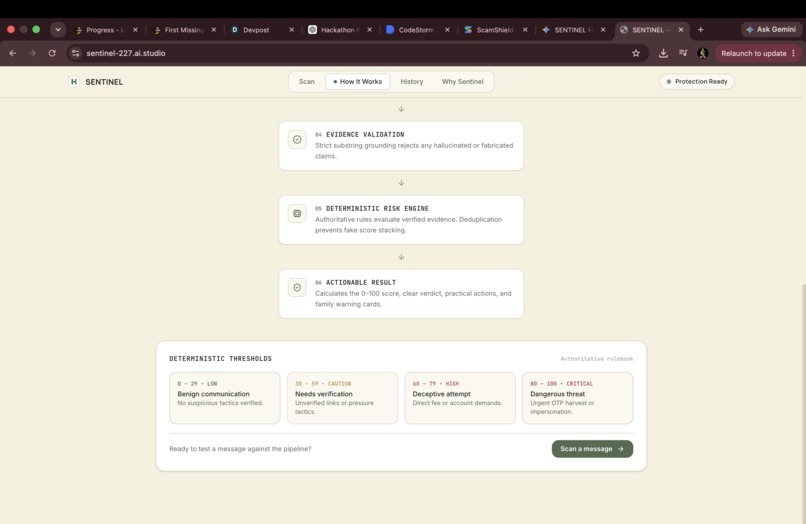
explaination-3
-
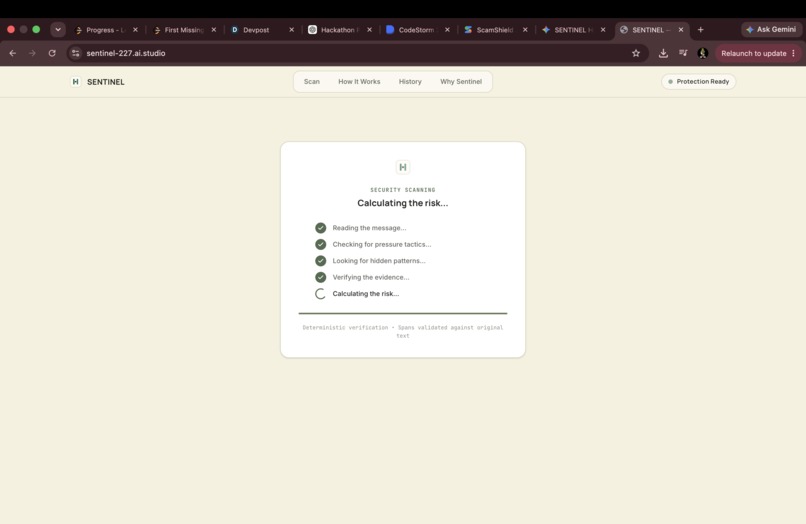
evaluation
-
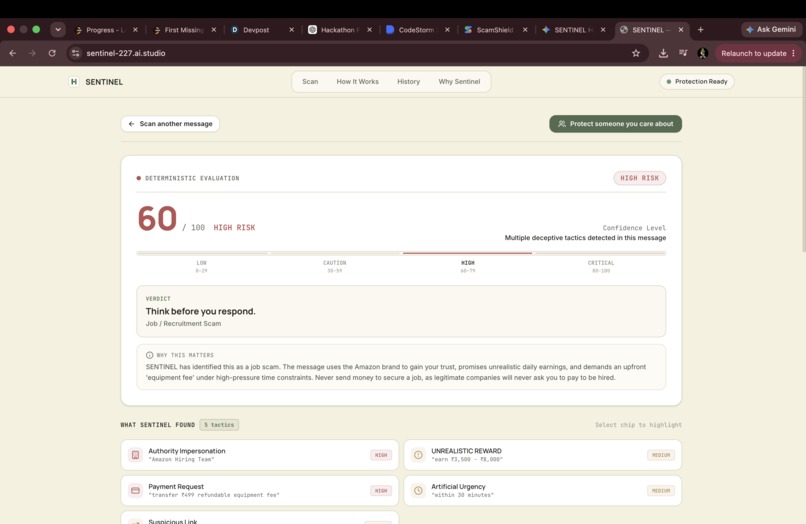
evaluation-result-1
-
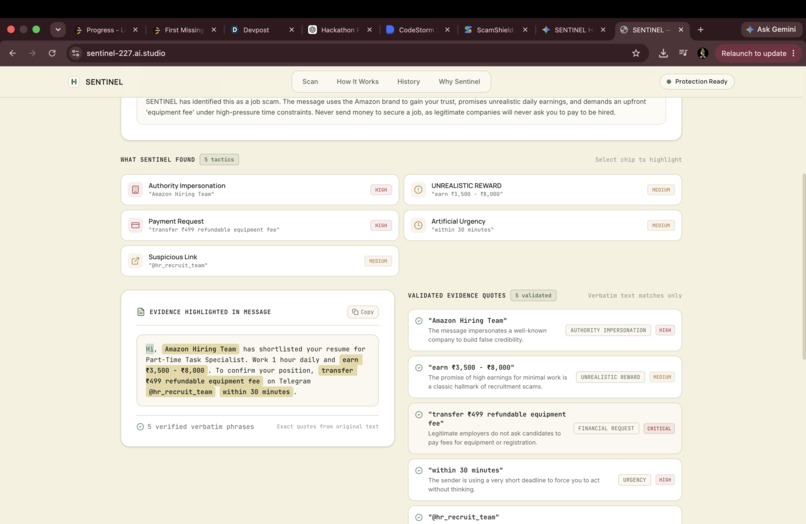
evaluation-result-2
-
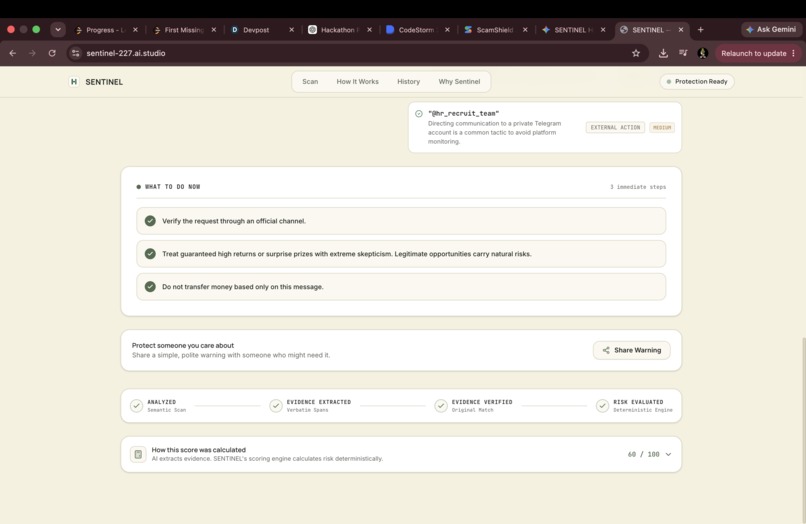
evaluation-result-3
-
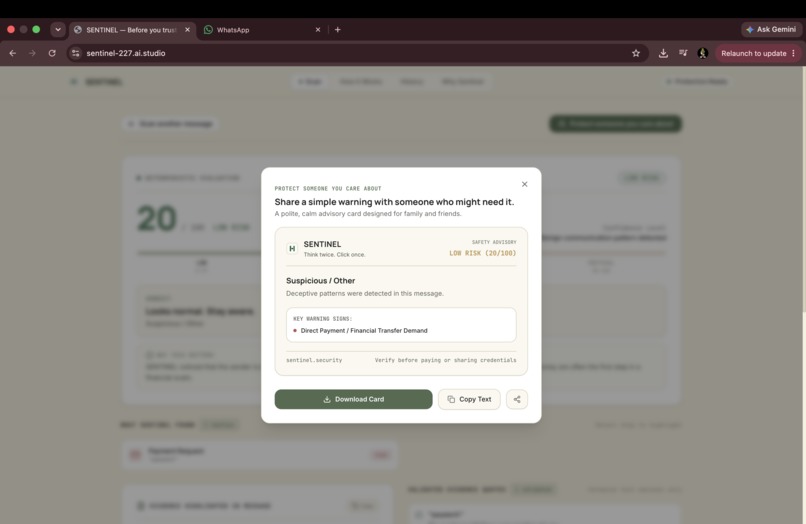
report-card
-
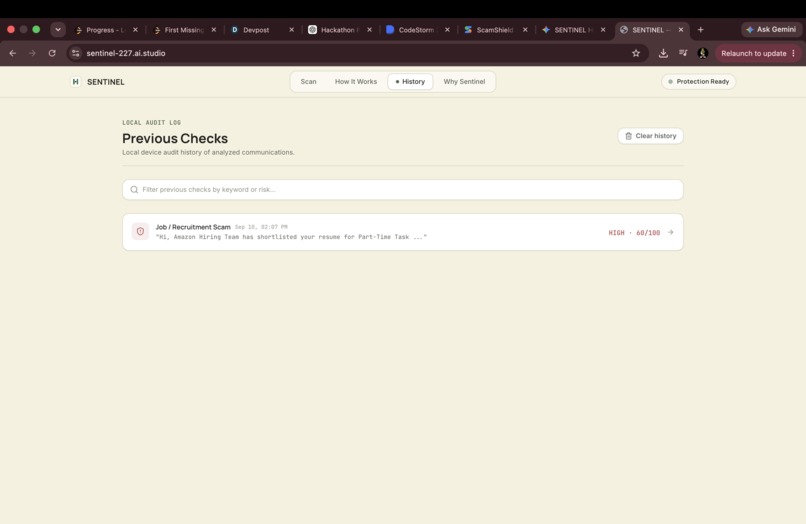
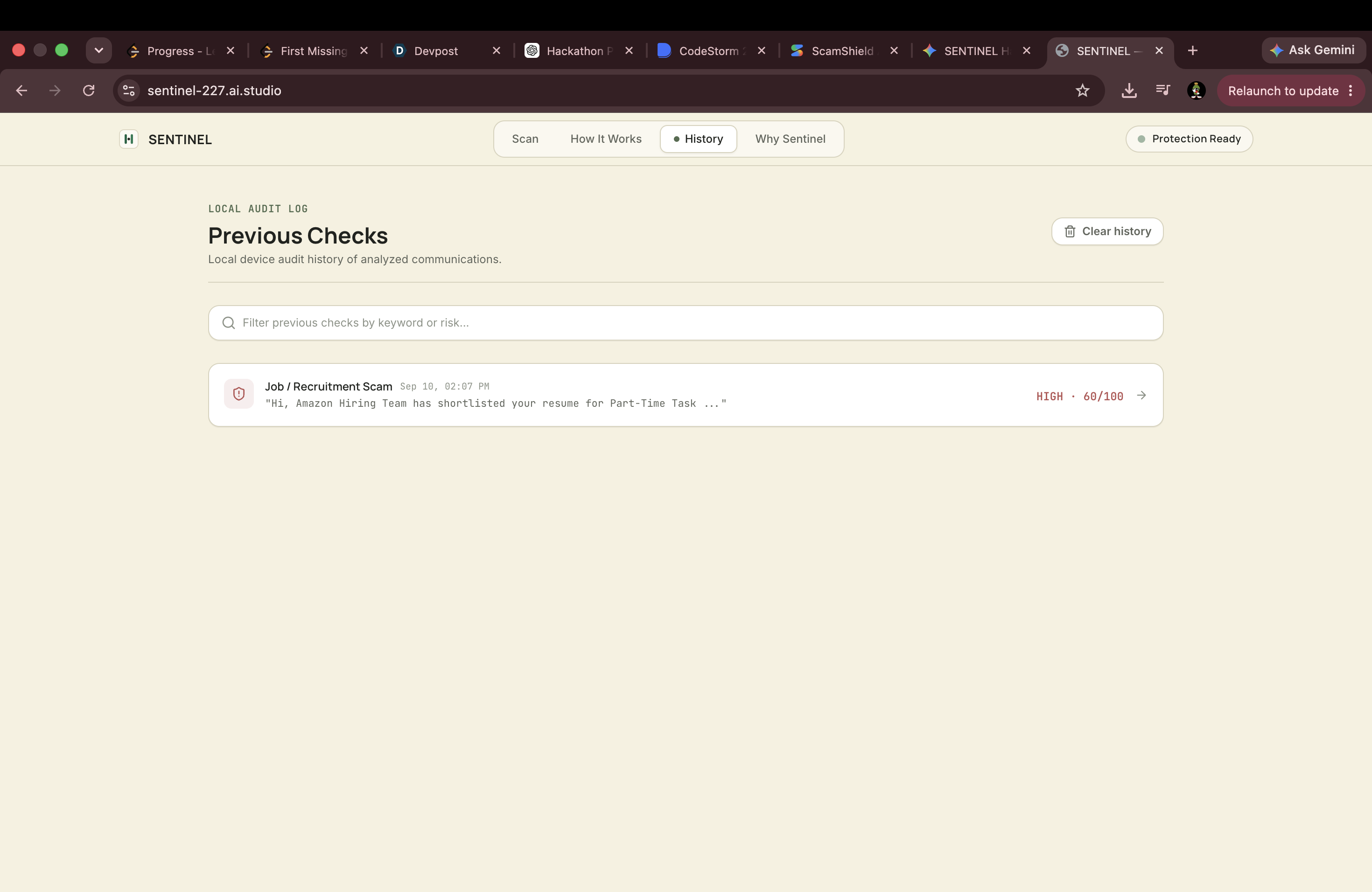
history-section
-
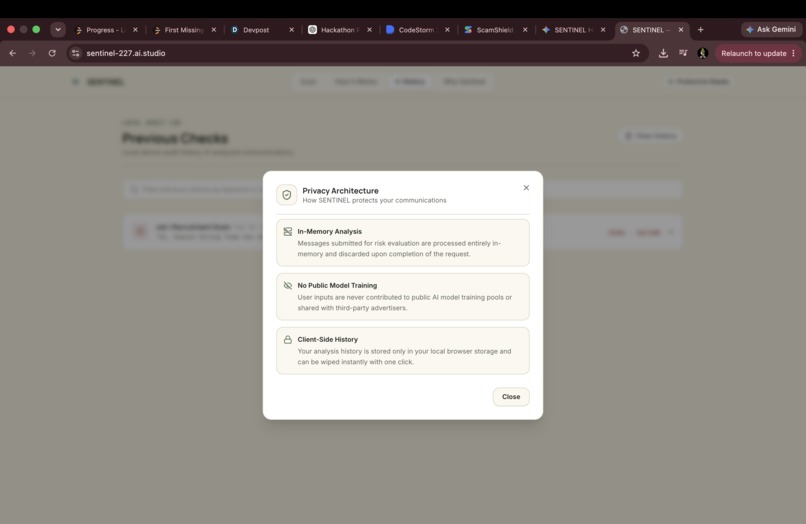
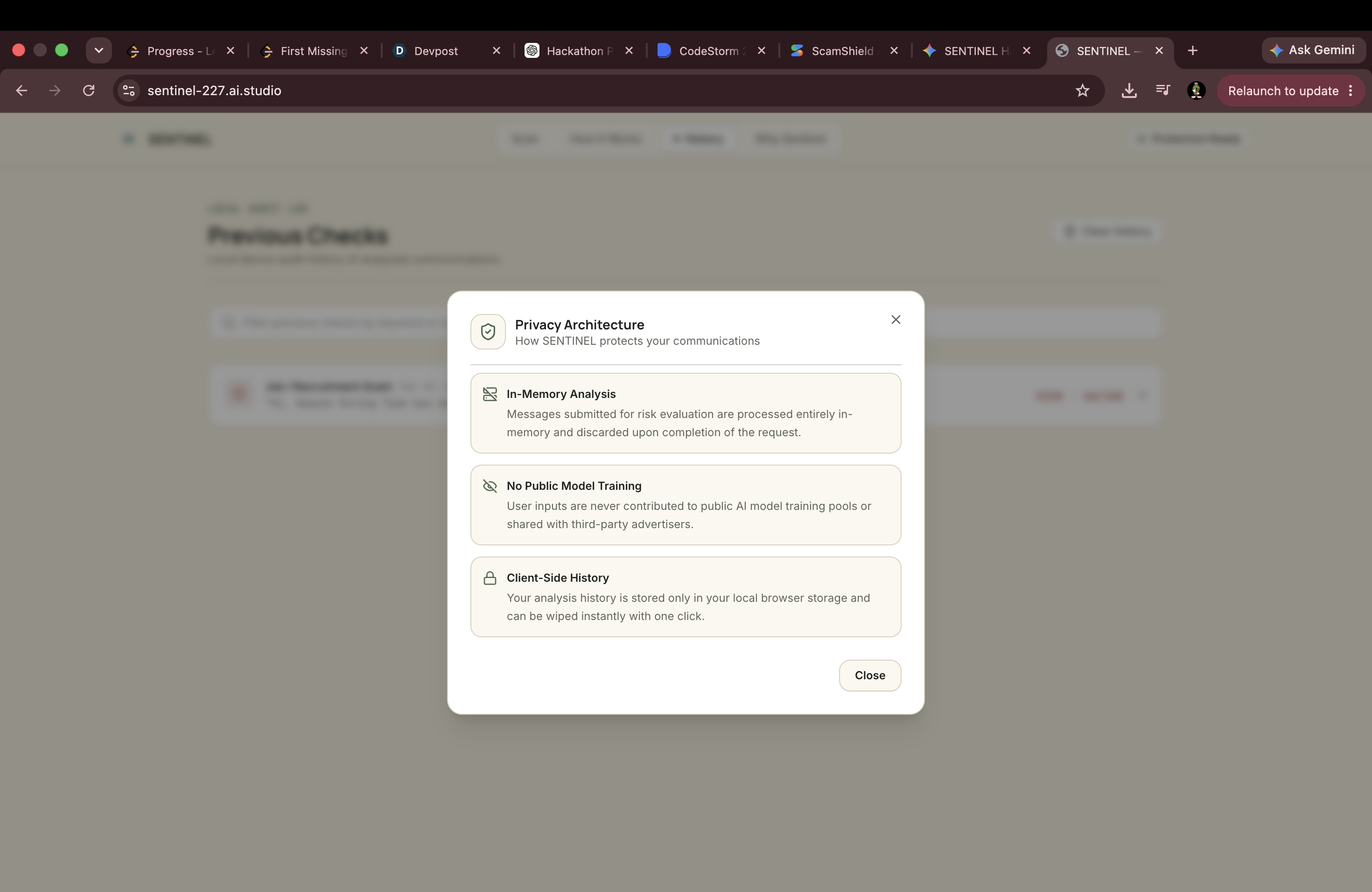
why-sentinel
Inspiration
Scam messages are becoming harder to recognize. They often use urgency, authority, fear, rewards, or payment requests to make people act before they think.
I wanted to build something that does more than simply label a message as a "scam." It should show the user what looks suspicious and why.
That idea became Sentinel.
Before you trust it, scan it.
What it does
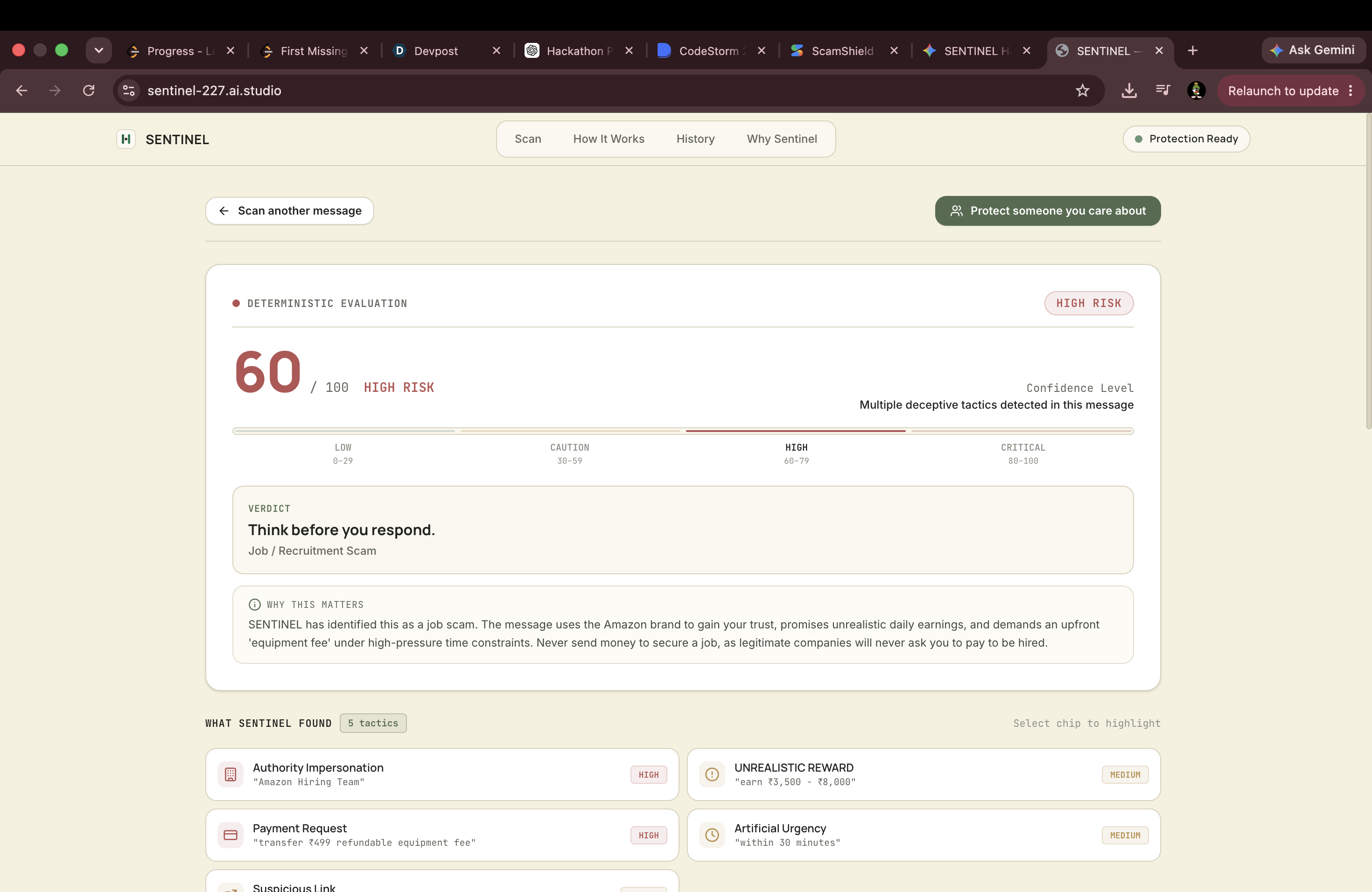
Sentinel is an AI-powered security tool that analyzes suspicious SMS, WhatsApp messages, emails, and notifications.
Users paste a message and Sentinel:
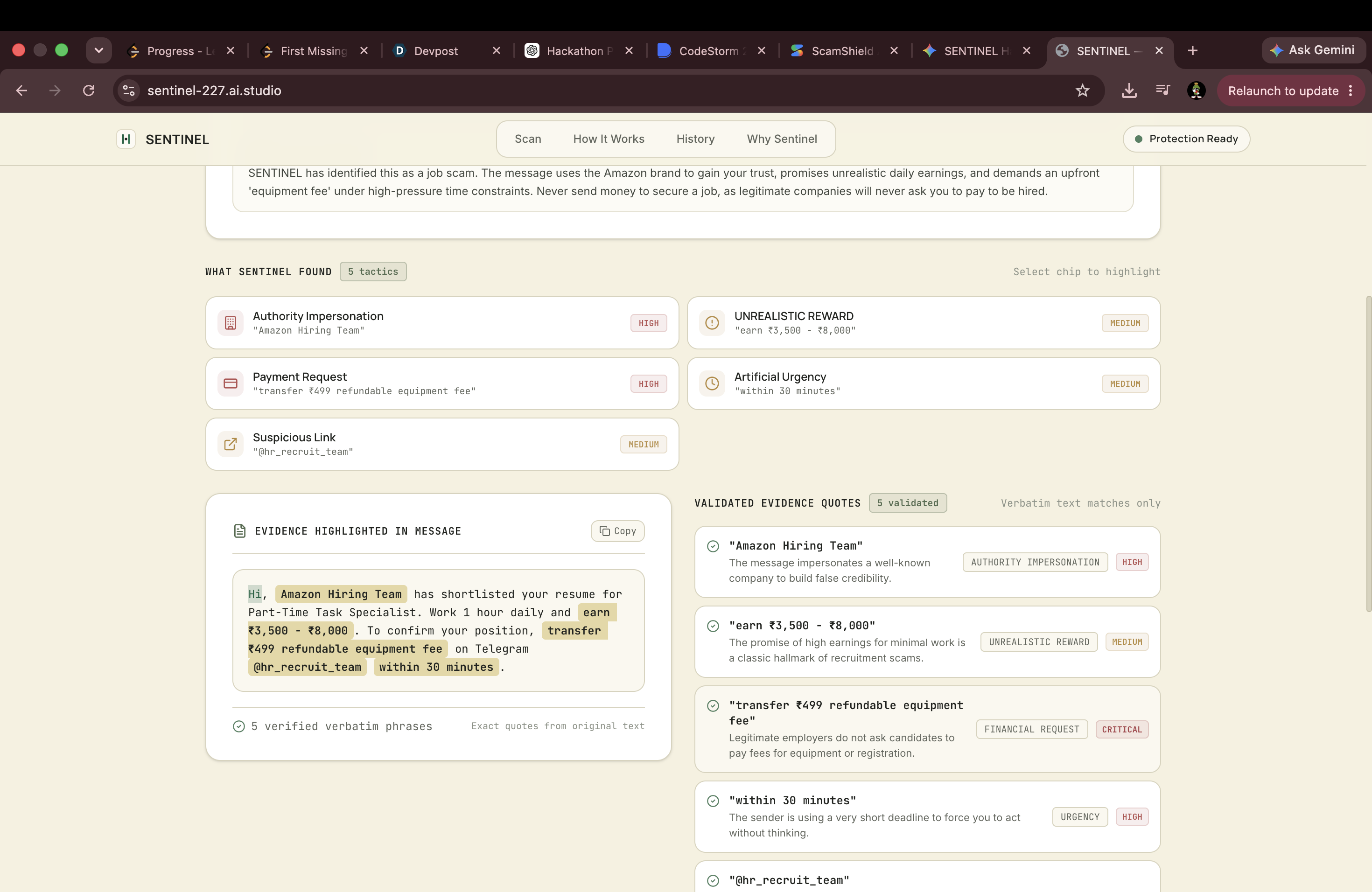
- Identifies suspicious tactics and evidence
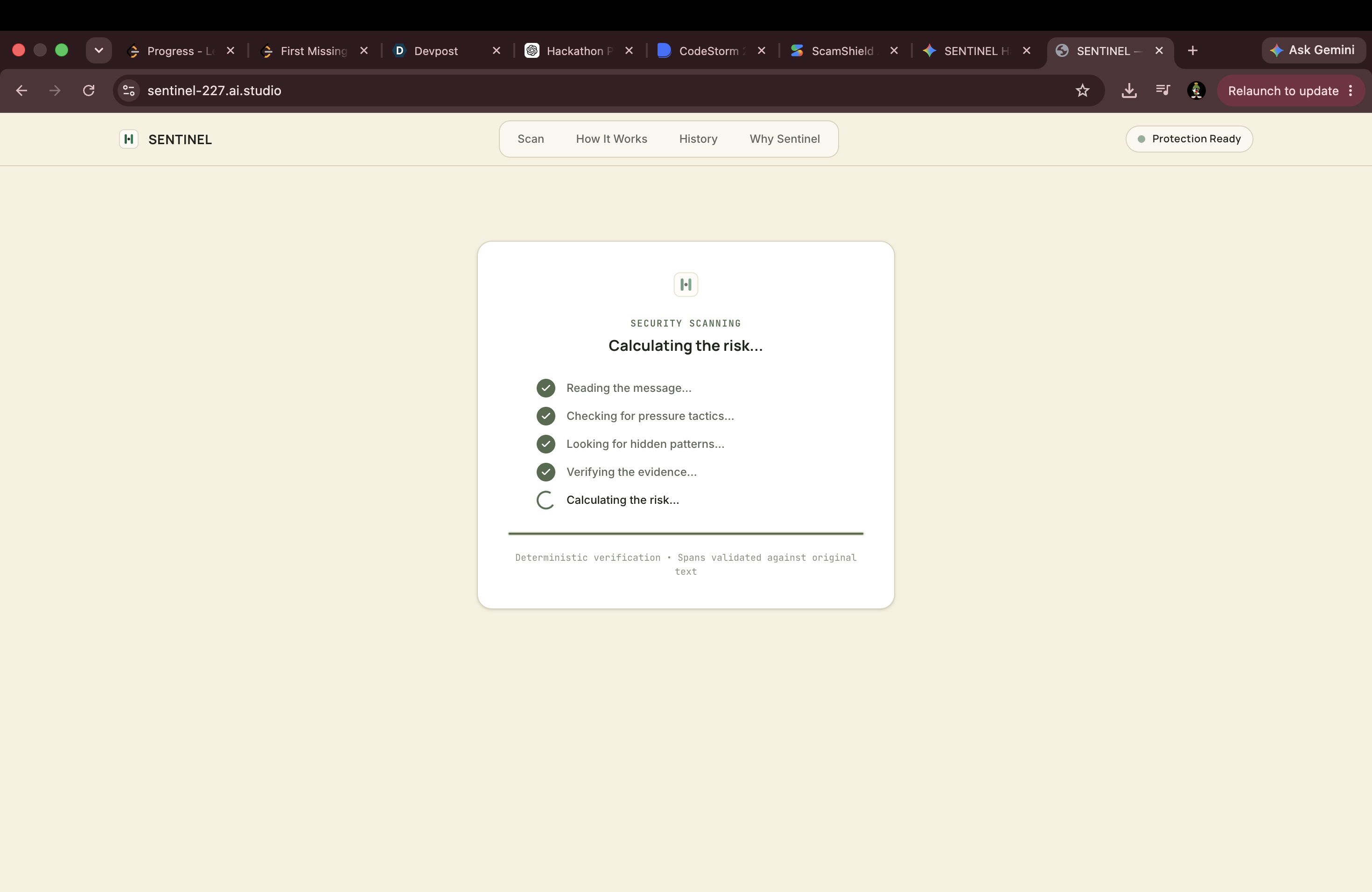
- Verifies that the detected evidence actually exists in the message
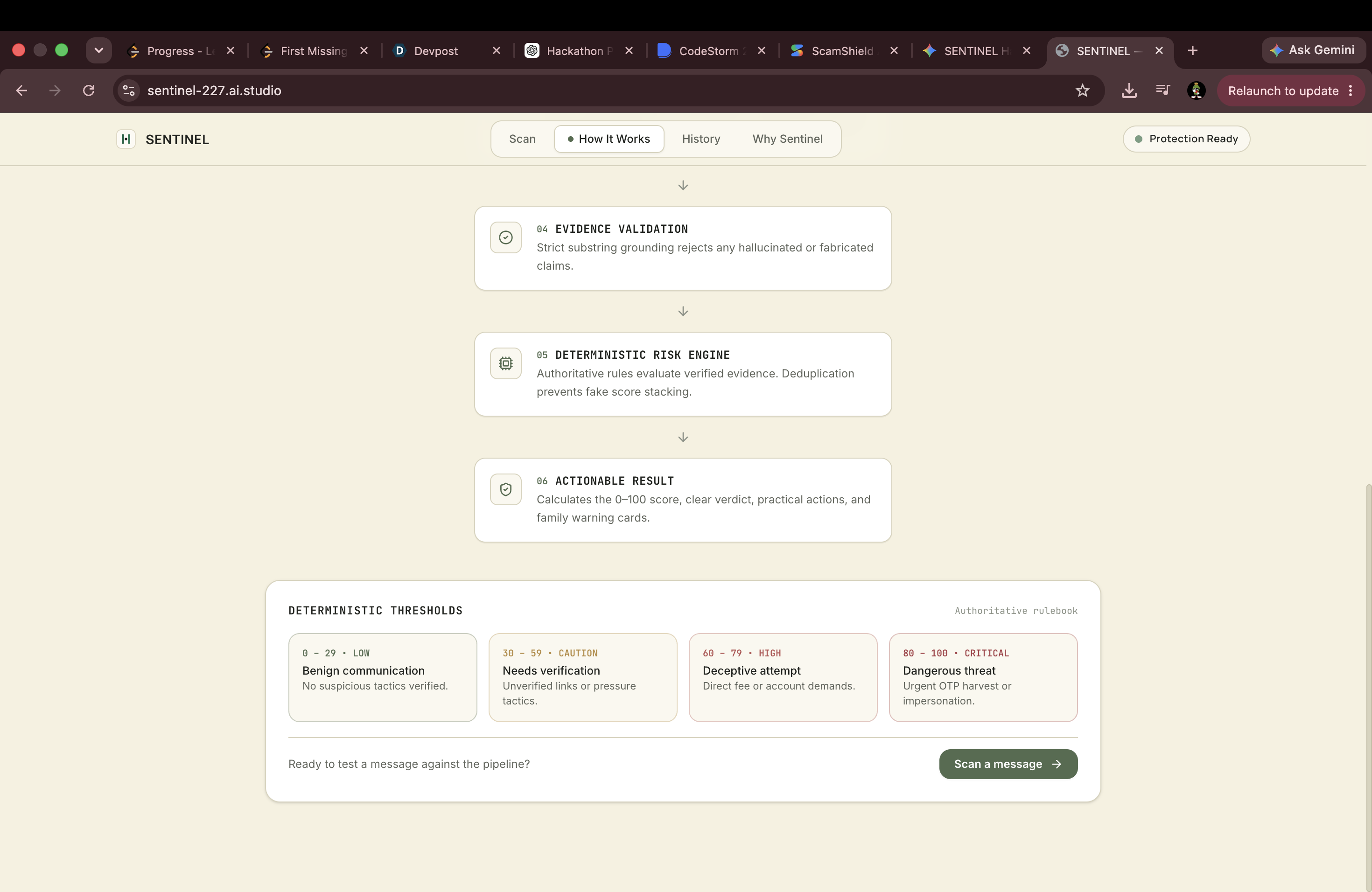
- Calculates a transparent 0–100 risk score
- Explains why the message may be dangerous
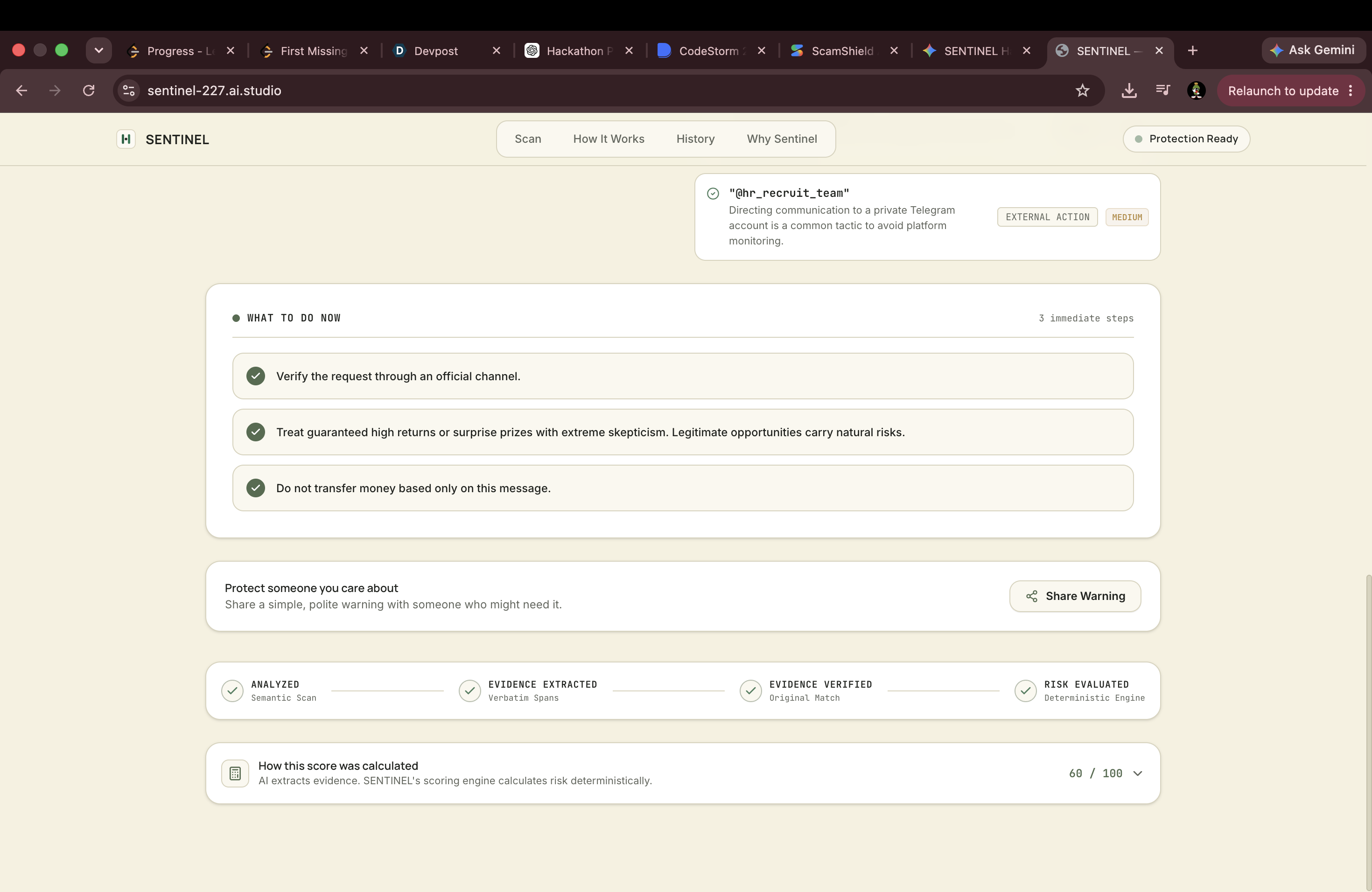
- Provides practical actions the user can take
- Supports English, Hindi, and Hinglish
The goal is not to replace the user's judgment, but to give them a clearer one.
How we built it
Sentinel is built with React, TypeScript, Express, and Gemini.
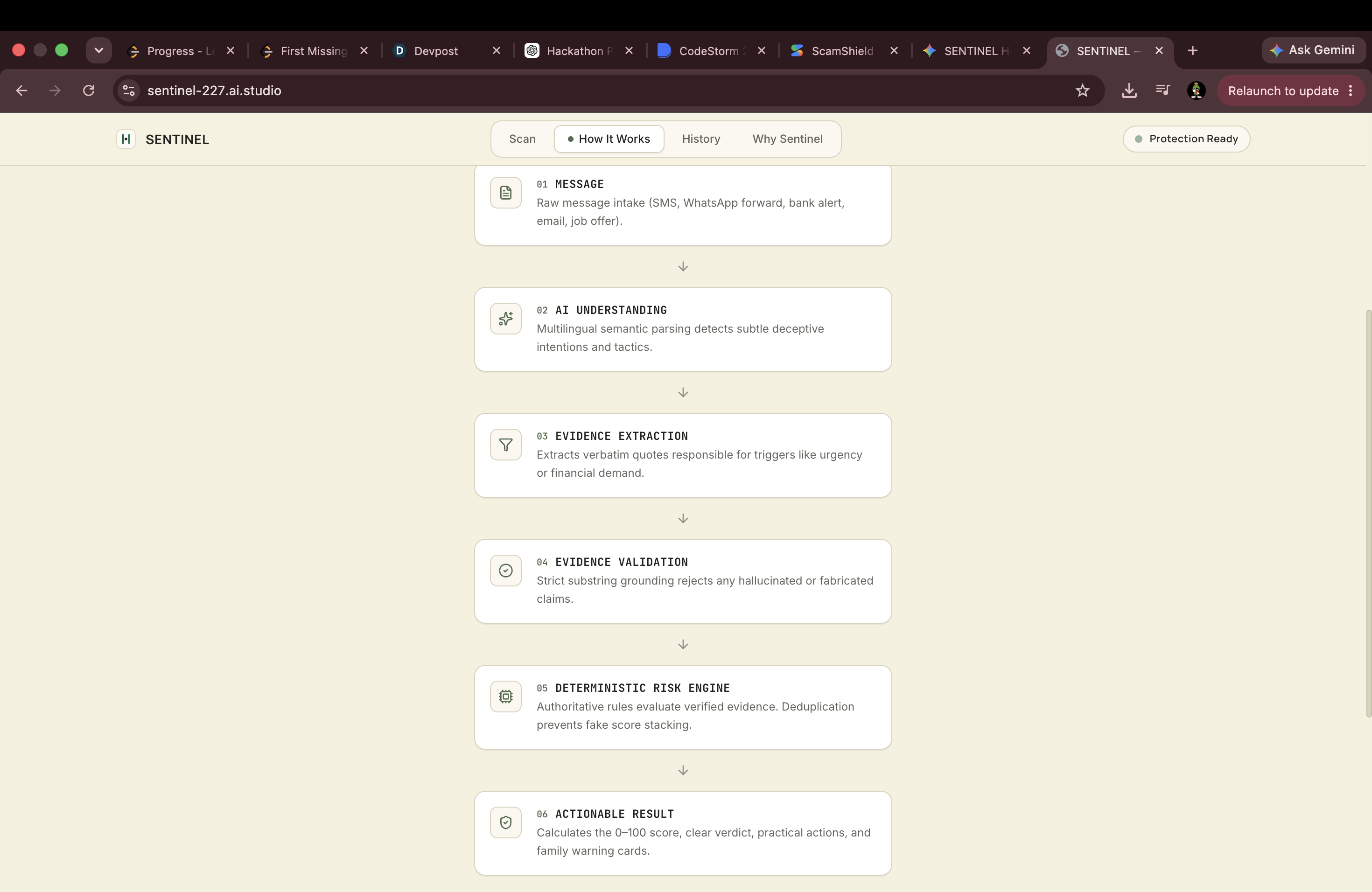
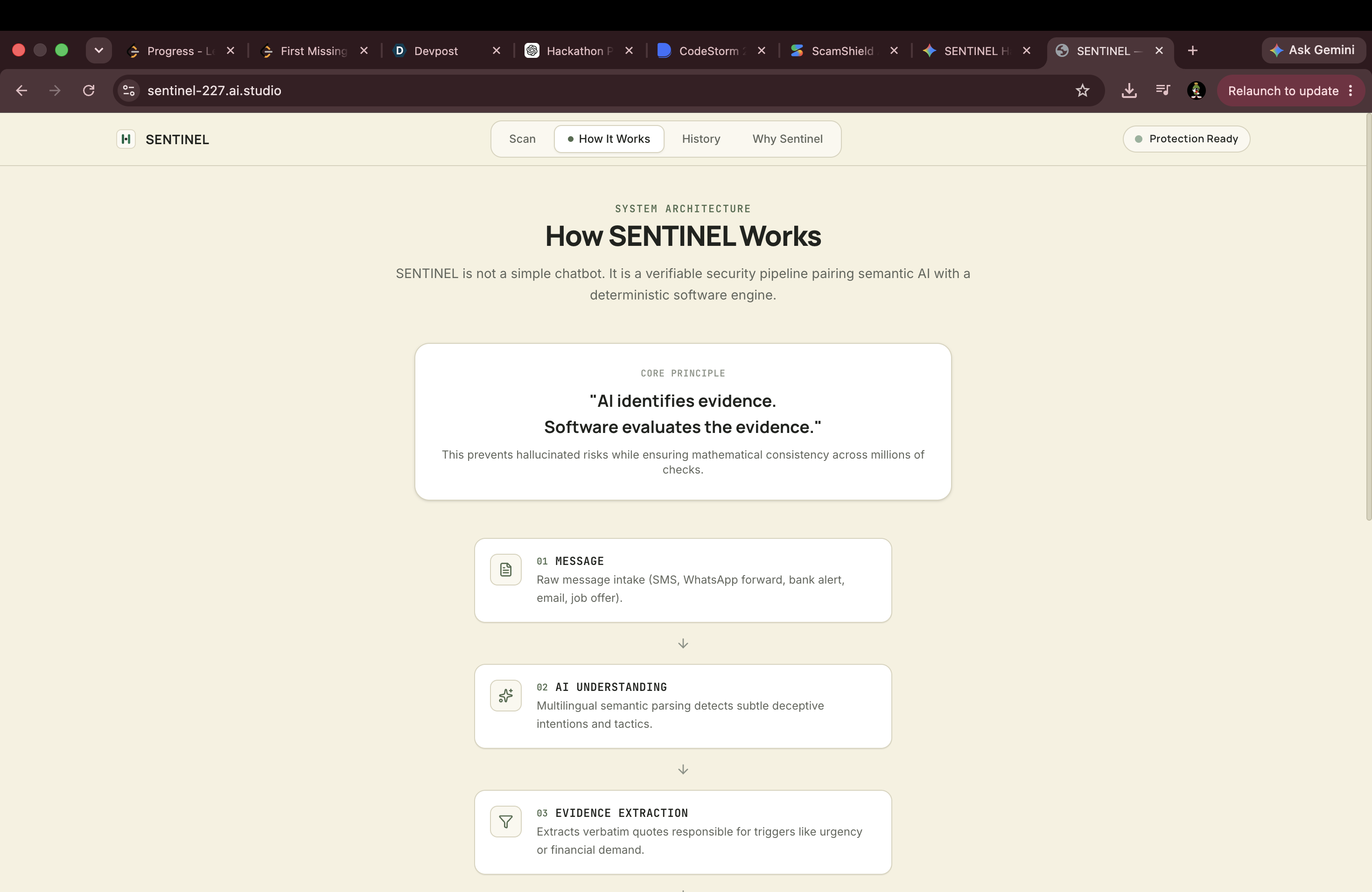
The core pipeline is:
Message → Gemini → Structured Evidence → Evidence Validation → Risk Engine → Safety Actions
Gemini handles the semantic understanding of the message, while the final risk score is calculated by a deterministic rules engine.
This was an important design decision:
AI identifies the evidence. Software evaluates the evidence.
Every suspicious text span returned by the model is checked against the original message before it can influence the final result.
Challenges we ran into
The biggest challenge was making AI output reliable enough for a security-focused application.
LLMs can sometimes produce plausible-looking evidence that isn't actually present in the input. We solved this by building an evidence-validation layer that rejects fabricated or invalid evidence before scoring.
We also had deployment issues with our initial multi-runtime architecture. Moving the deterministic analysis components to TypeScript allowed us to run the production system in a single Node.js environment.
Another challenge was preventing repeated mentions of the same tactic from artificially increasing the score, which we addressed through tactic deduplication.
Accomplishments that we're proud of
We're proud that Sentinel is more than an AI wrapper.
We built a complete analysis pipeline where AI output is structured, validated, and constrained before it reaches the user.
We also achieved:
- Deterministic and explainable risk scoring
- Evidence verification against the original message
- English, Hindi, and Hinglish support
- Local fallback analysis when Gemini is unavailable
- Automated tests covering core scam-detection behavior
- A frictionless experience with no sign-in required
Most importantly, Sentinel doesn't just tell users "this is suspicious."
It helps them understand why.
What we learned
We learned that building with AI is less about making an API call and more about designing the system around the model's limitations.
LLMs are powerful at understanding context, but deterministic software is better suited for validation, scoring, and enforcing rules.
We also learned how much product design matters in security. The experience needs to make people pause and understand a risk without creating unnecessary fear or friction.
What's next for Sentinel-AI
Sentinel is currently focused on analyzing messages users are unsure about.
Next, we want to move protection closer to the moment of risk:
- Browser and mobile integration
- Real-time message and notification analysis
- Threat-intelligence integration
- More Indian languages
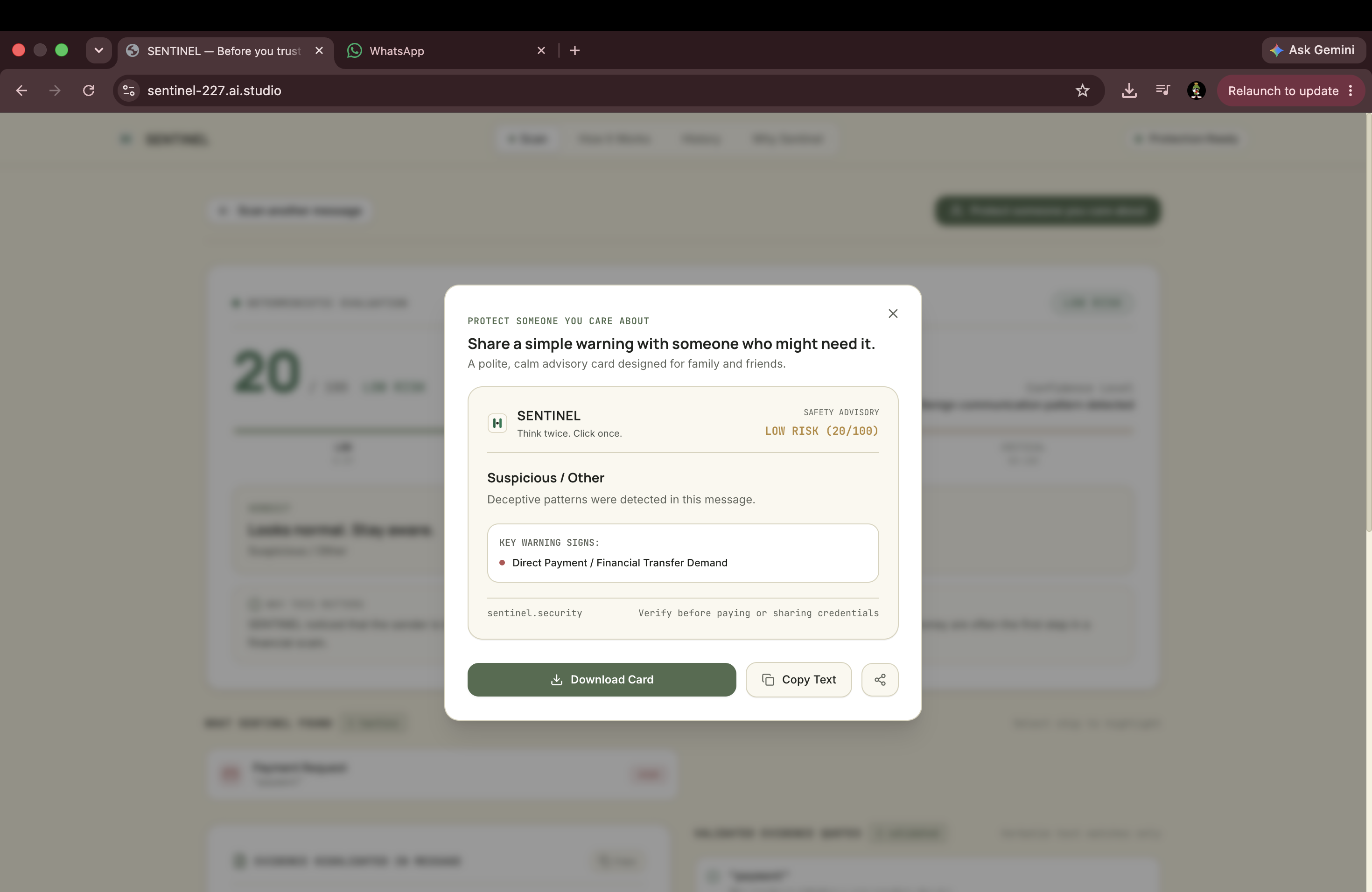
- Family safety alerts
- Email and link protection
- Enterprise and financial-security integrations
The long-term vision is simple:
Make verification a habit before trust becomes a mistake.
Built With
- api
- css3
- express.js
- gemini
- html5
- react
- tailwind
- typescript
- vite

Log in or sign up for Devpost to join the conversation.