Inspiration
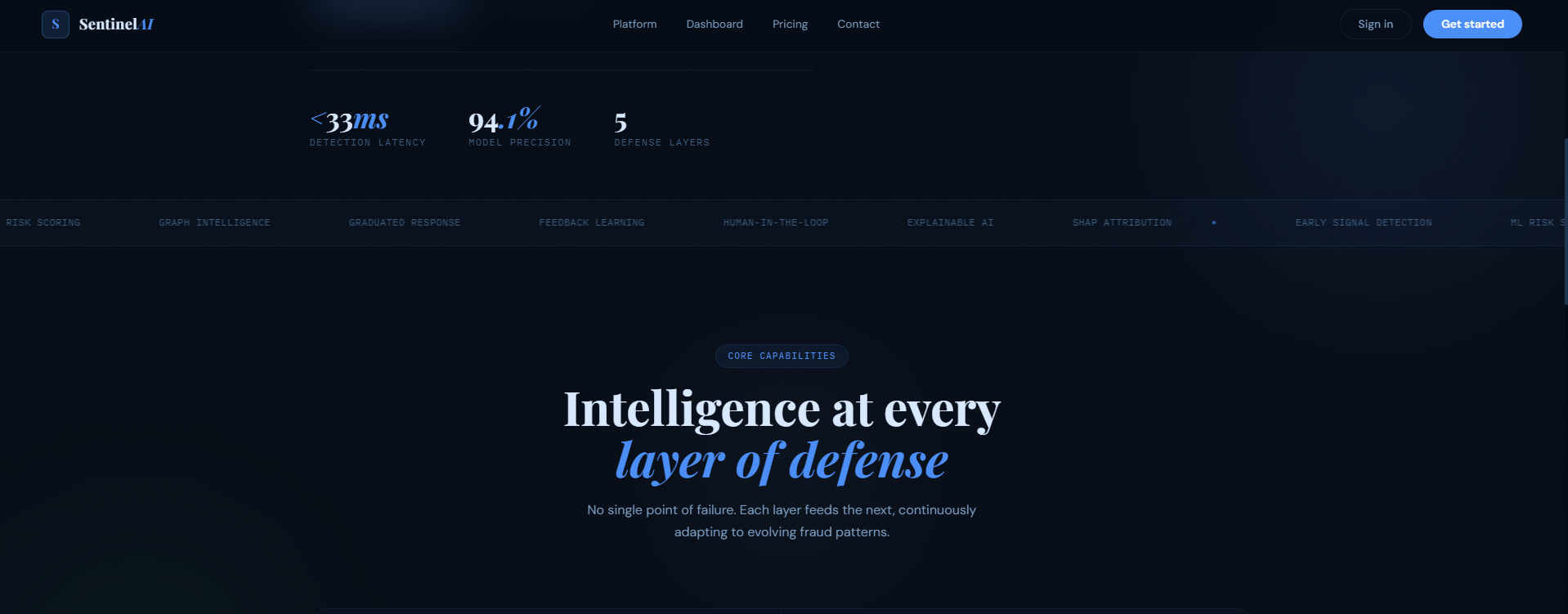
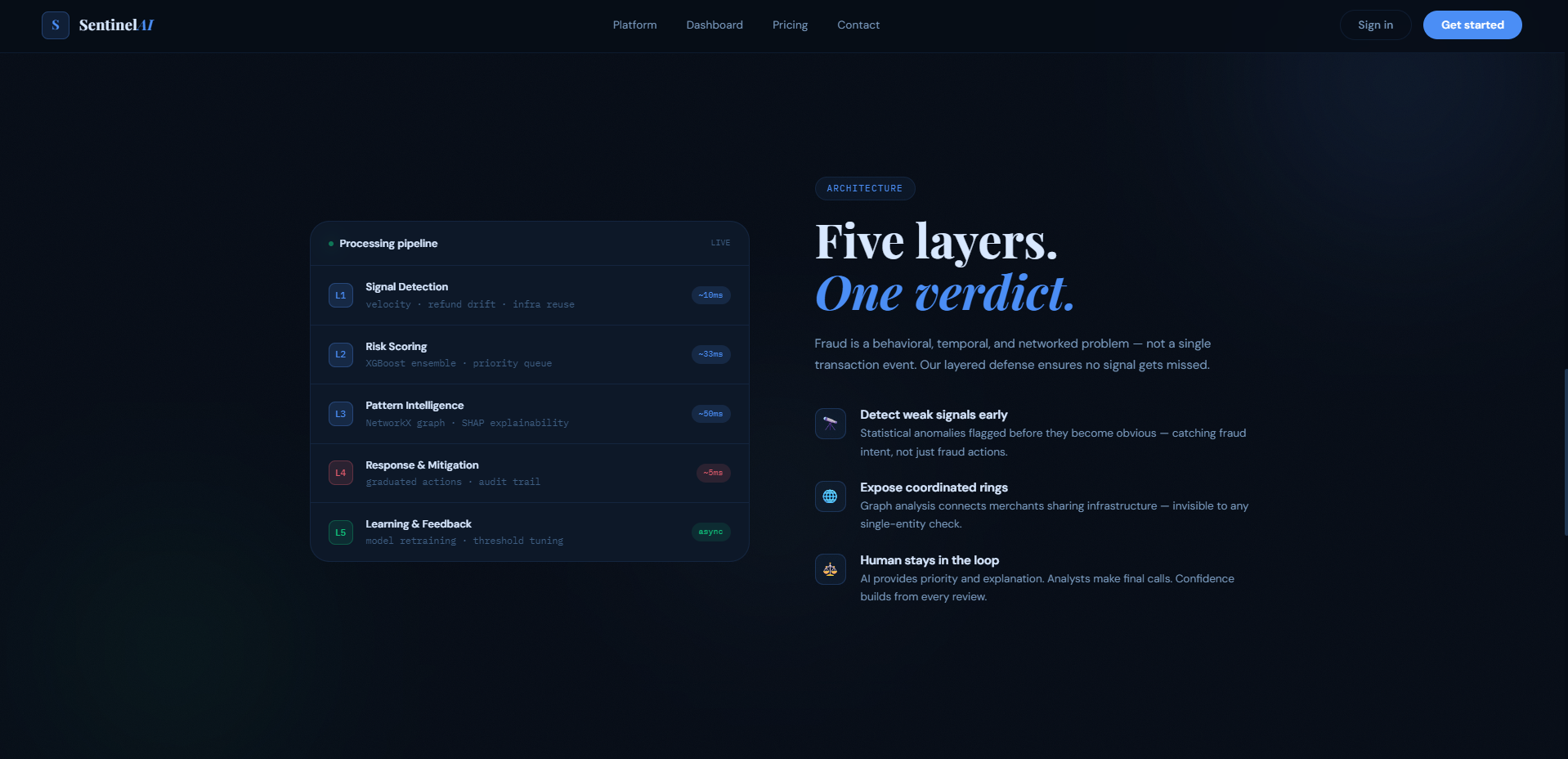
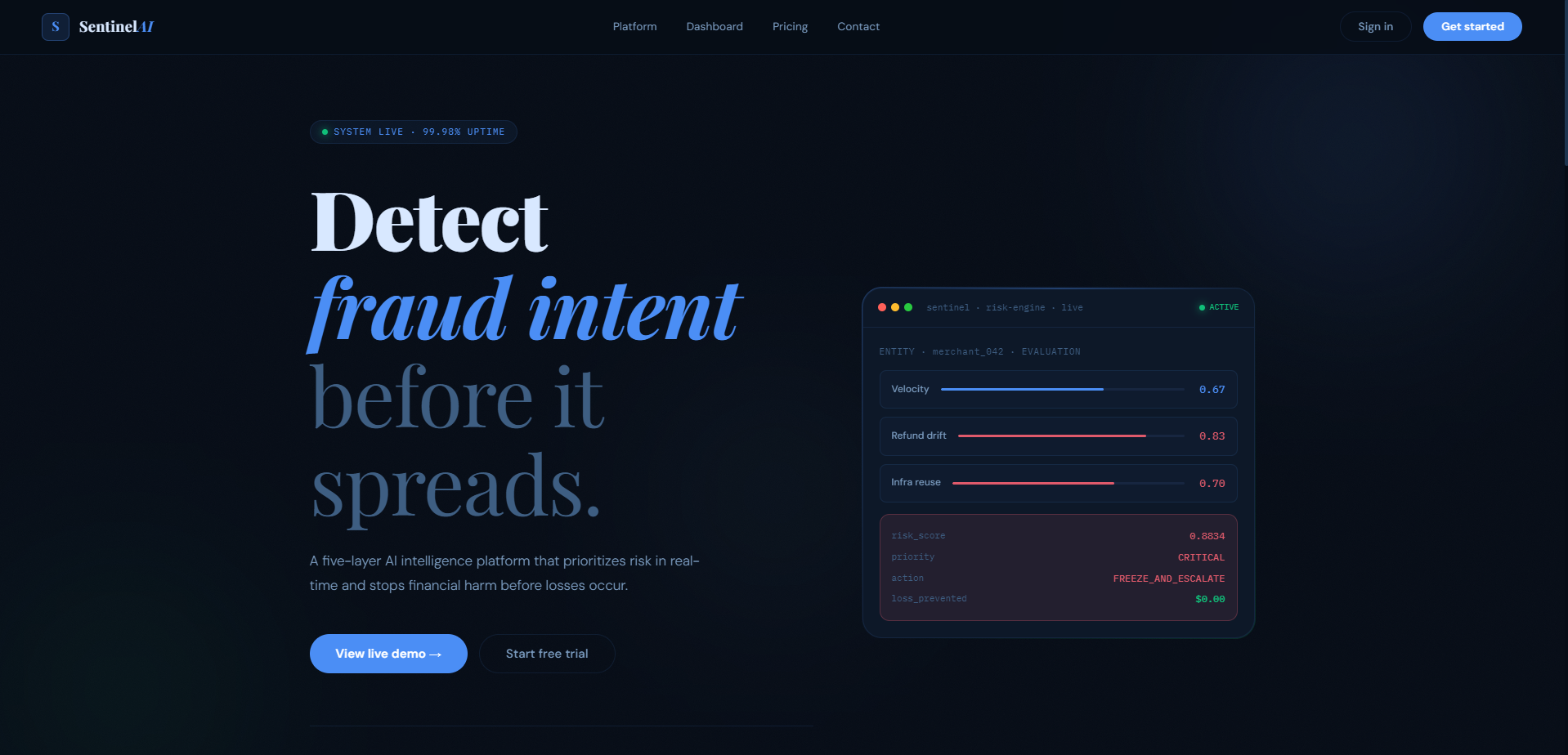
Sentinel AI was inspired by a real gap in fraud operations: teams often have strong detection models but weak operational clarity. We wanted a platform that does more than score risk, it should show why risk is happening, how entities are connected, and what action should happen next. The goal was to make fraud intelligence feel live, explainable, and directly useful to compliance and analyst teams.
What it does
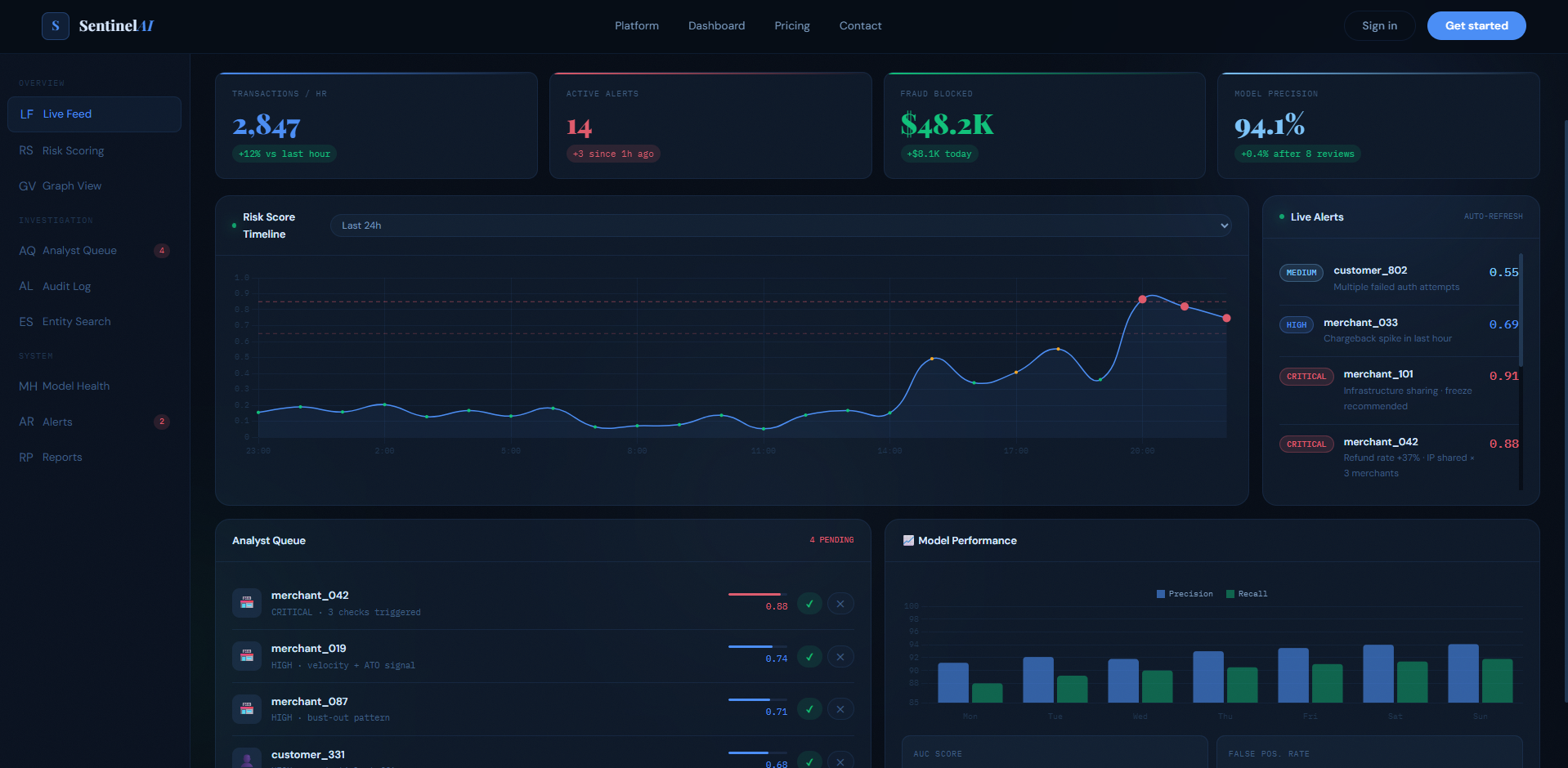
Sentinel AI is an end-to-end fraud intelligence dashboard that:
- Ingests and scores transaction risk signals through layered backend services.
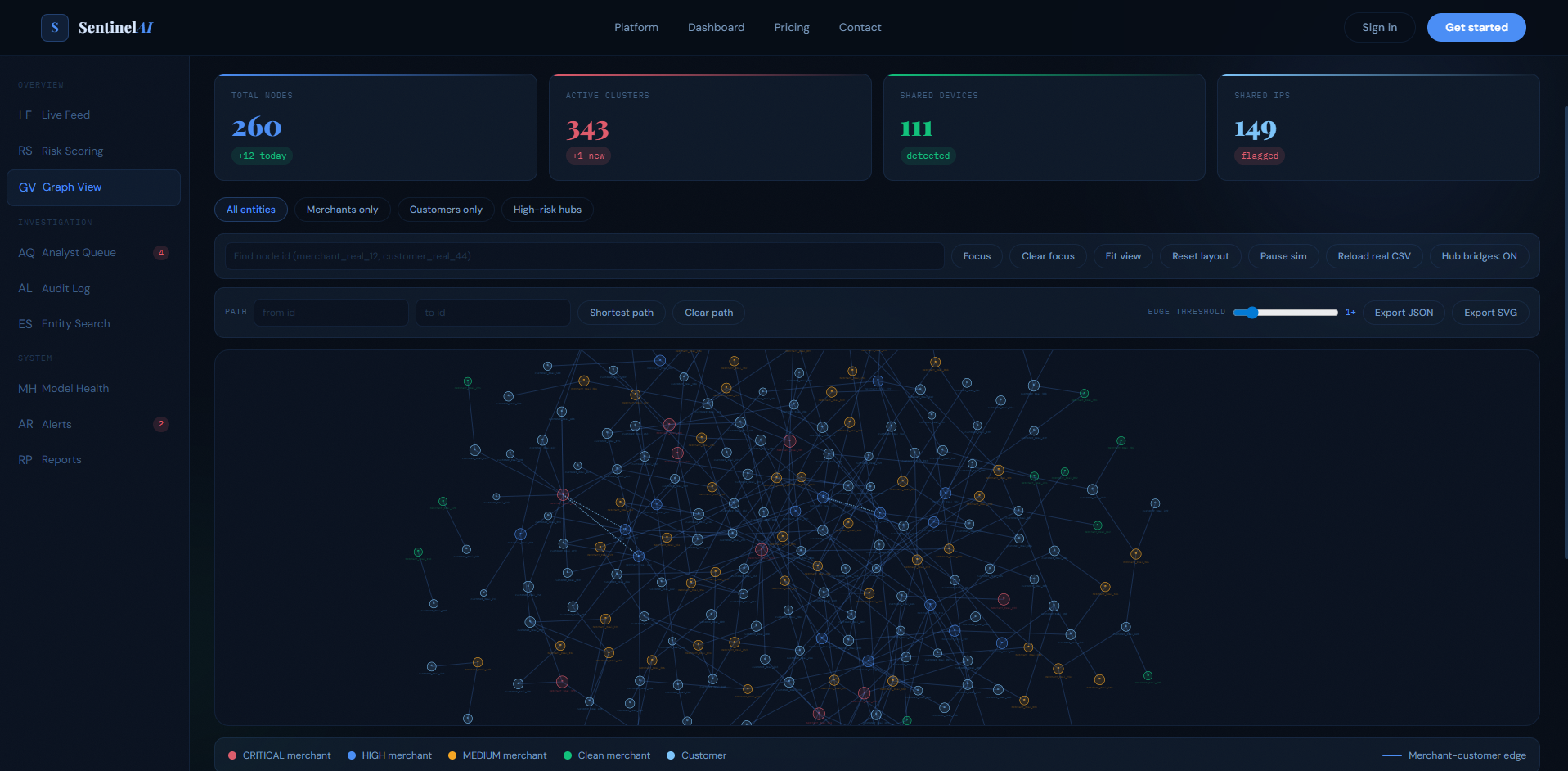
- Visualizes merchant-customer relationship graphs from CSV-seeded data.
- Surfaces high-risk hubs and connected clusters with interactive graph controls.
- Provides analyst queue, audit trail, and compliance-focused reporting workflows.
- Generates downloadable PDF reports from backend endpoints.
- Tracks model provenance and training split visibility for transparency.
How we built it
- Frontend: A custom dashboard UI in sentinelai.html with interactive tabs, charts, and a draggable/zoomable SVG graph.
- Backend: FastAPI routes for risk, graph entities, audit data, and report generation.
- Data Layer: SQLite with schema + migration-safe table setup.
- Graph Pipeline: Merchant/customer nodes and links built from transaction data with filtering, pathfinding, and optional hub-bridge overlays.
- Reporting: Server-side PDF generation and persistent report history storage.
- Data Seeding: CSV ingestion logic to bootstrap realistic graph entities and maintain large node counts.
Challenges we ran into
- Graph collapse issue: the graph briefly showed hundreds of nodes, then dropped to only 2.
- CSV identifier quality: some files had low-entropy or zero-like fields, causing entity IDs to collapse.
- Runtime mismatch: backend code had new routes, but running server process was stale, causing 404 behavior.
- Visual density: with many nodes, overlap made the graph hard to read.
- Feature rollback pressure: we had to selectively undo some graph additions while keeping core improvements intact.
Accomplishments that we're proud of
- Restored large, CSV-driven graph behavior with hundreds of meaningful nodes.
- Added robust fallback entity ID derivation to prevent node collapse.
- Enabled high-risk hub bridging to connect sections and reveal cross-cluster structure.
- Improved graph readability by tuning spacing physics and reducing active node cap to around 250.
- Implemented working backend PDF report downloads and report history persistence.
- Improved audit/report usability while keeping the interface fast and actionable.
What we learned
- Graph usability depends as much on data quality and ID strategy as on visualization code.
- Stale processes can mimic code bugs; runtime verification is essential.
- Fraud tooling benefits from layered explainability: score, graph context, action, and audit all need to - align.
- Small UX controls (filters, spacing, toggles, thresholds) dramatically improve analyst productivity.
What's next for Sentinel AI
- Add adjustable bridge strictness control for hub-to-hub links.
- Expand graph analytics with community detection and risk propagation views.
- Add richer audit drill-through from selected nodes to related actions/cases.
- Introduce scenario simulation to test policy thresholds before rollout.
- Add role-based report packs for fraud ops, compliance, and executives.
- Improve deployment readiness with health checks, background workers, and CI validation.


Log in or sign up for Devpost to join the conversation.