-
-
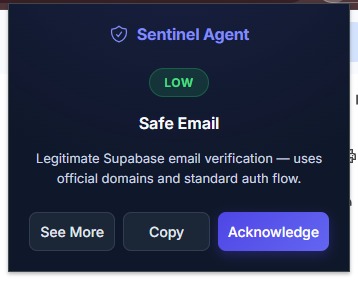
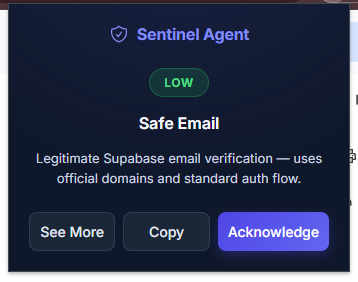
Extension result Display
-
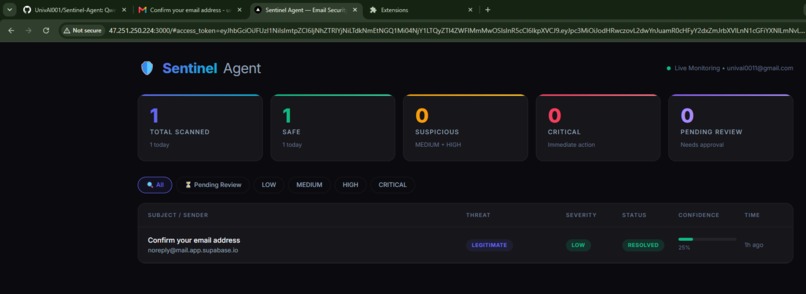
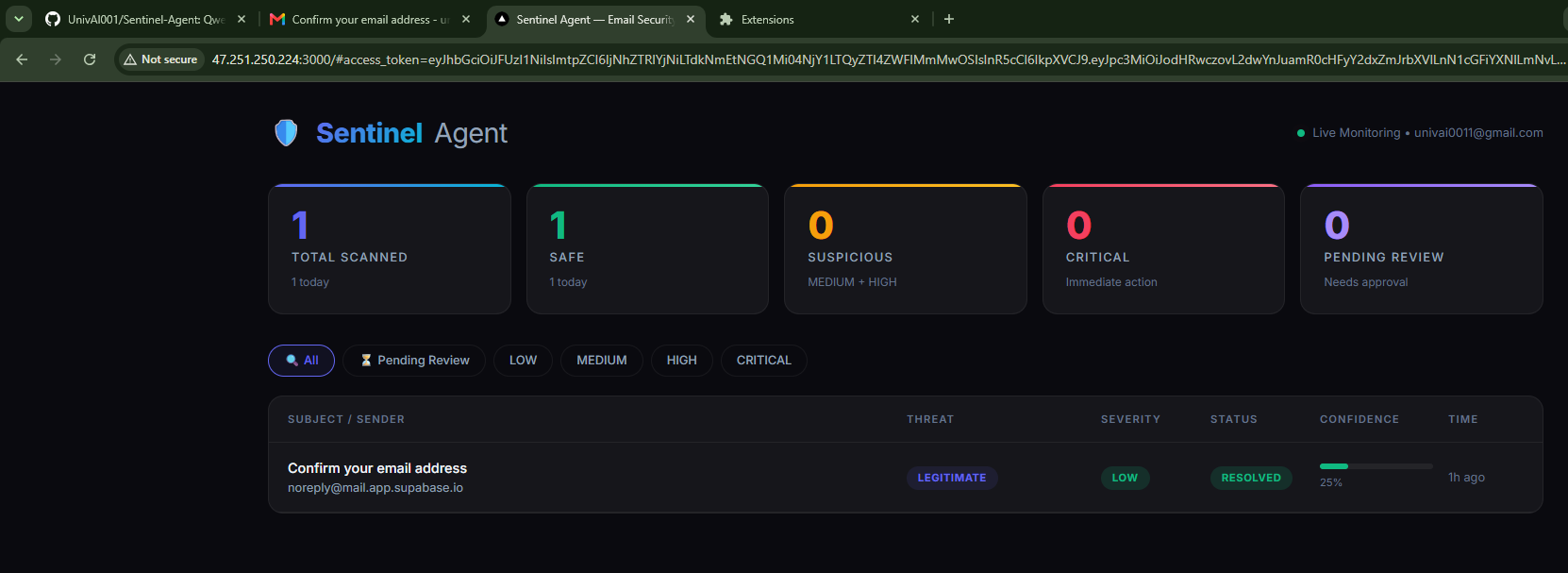
Live dashboard
-
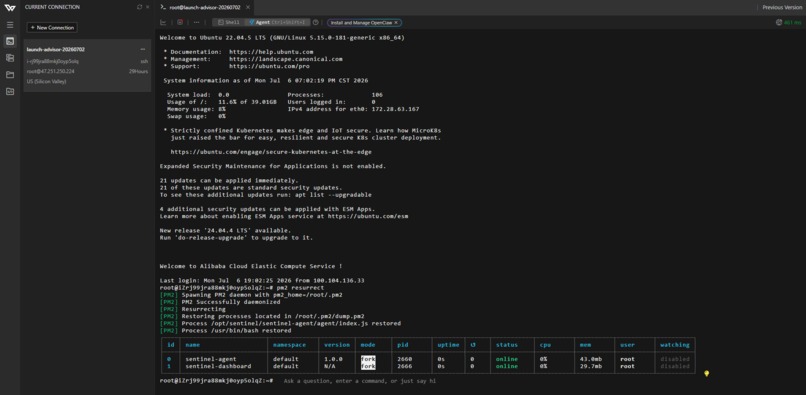
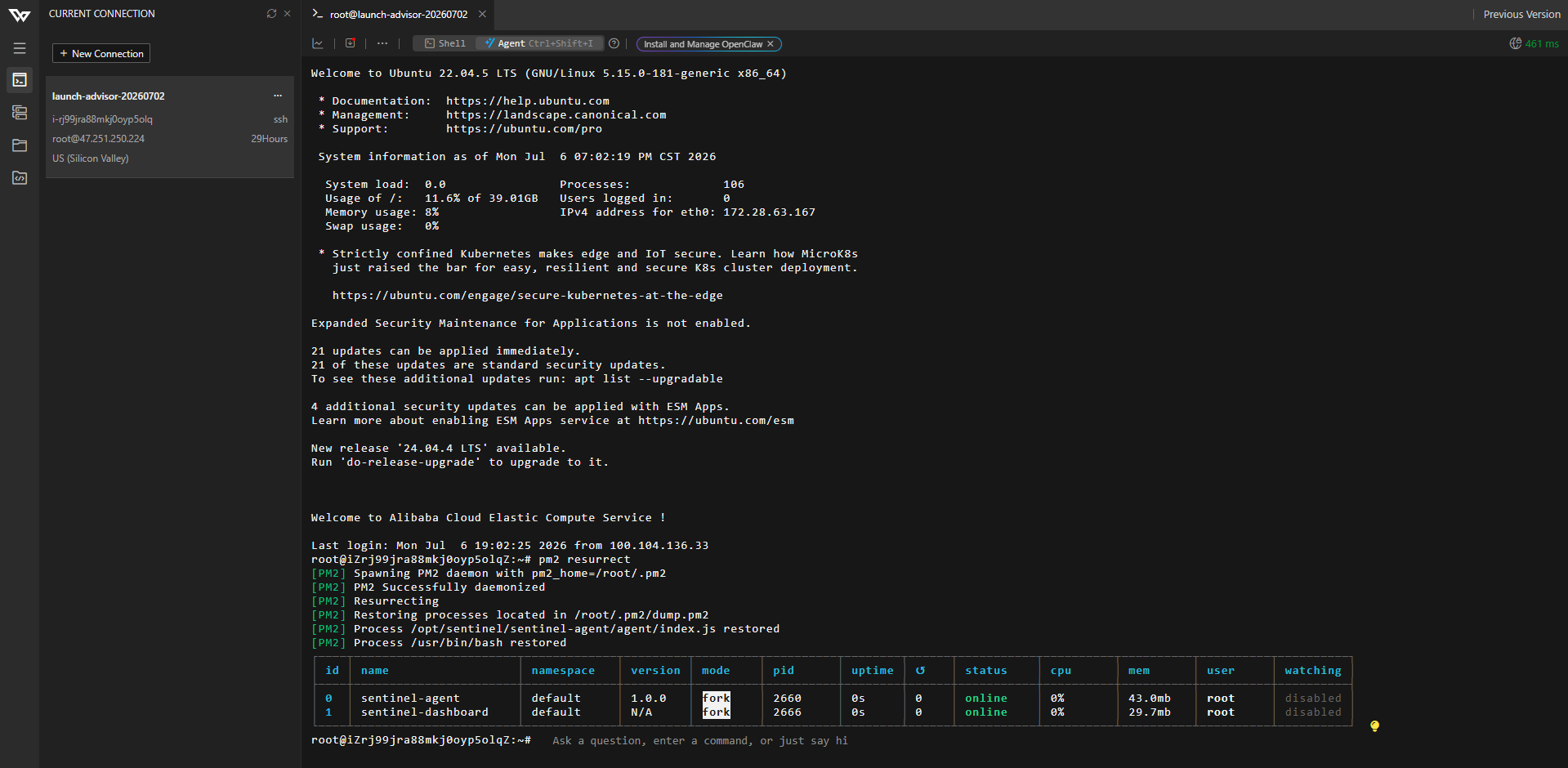
Alibaba ECS Terminal of Project
-
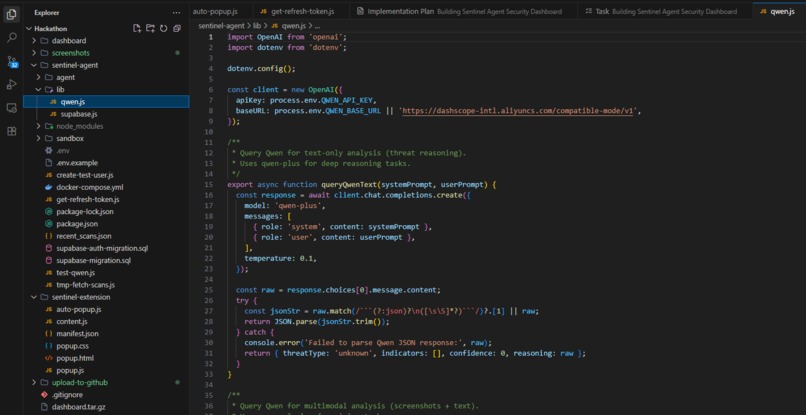
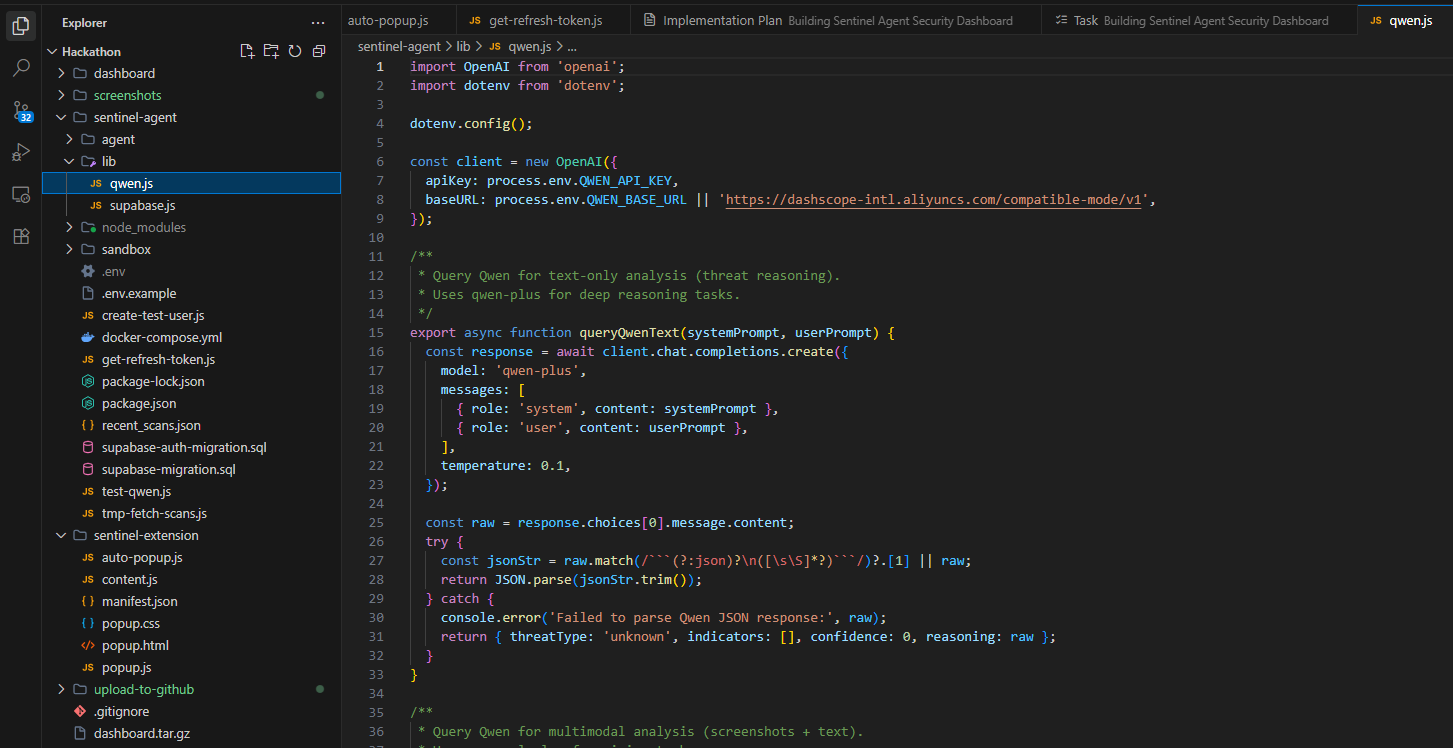
Qwen API Proof
-
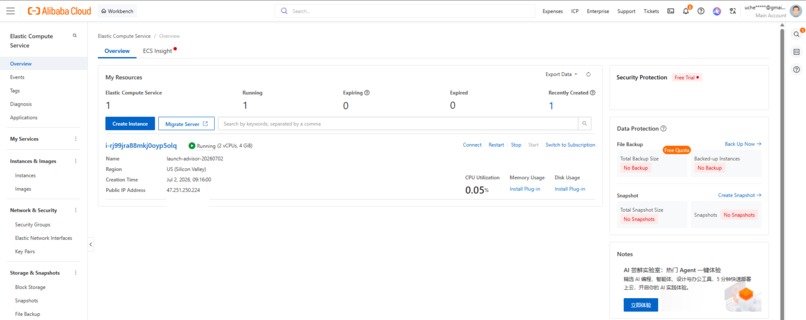
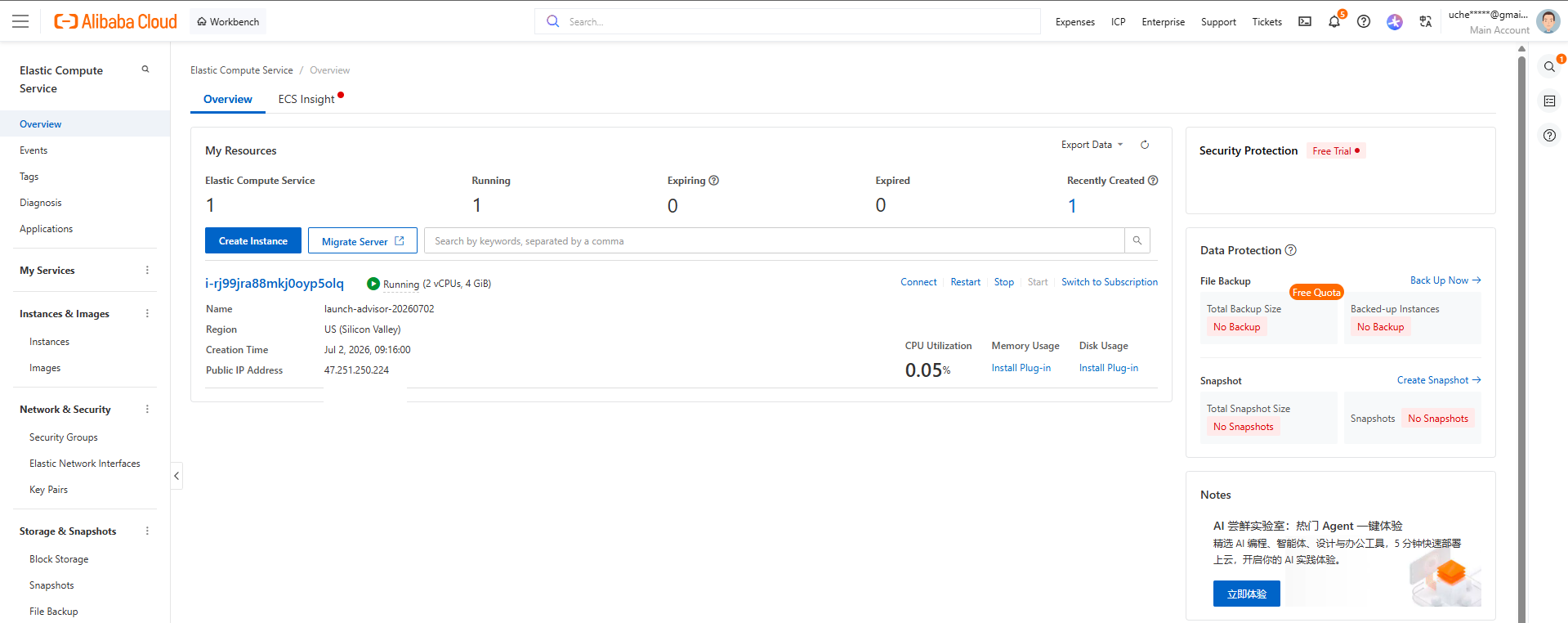
Alibaba Instance Overview
-
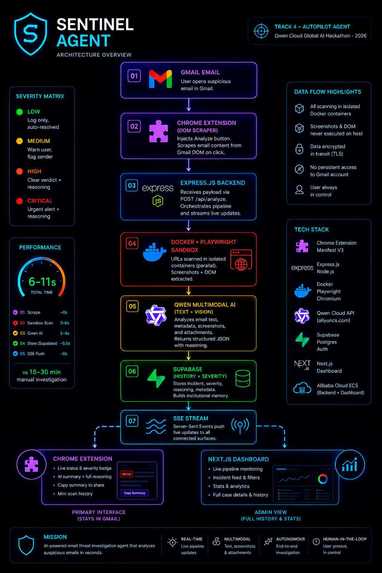
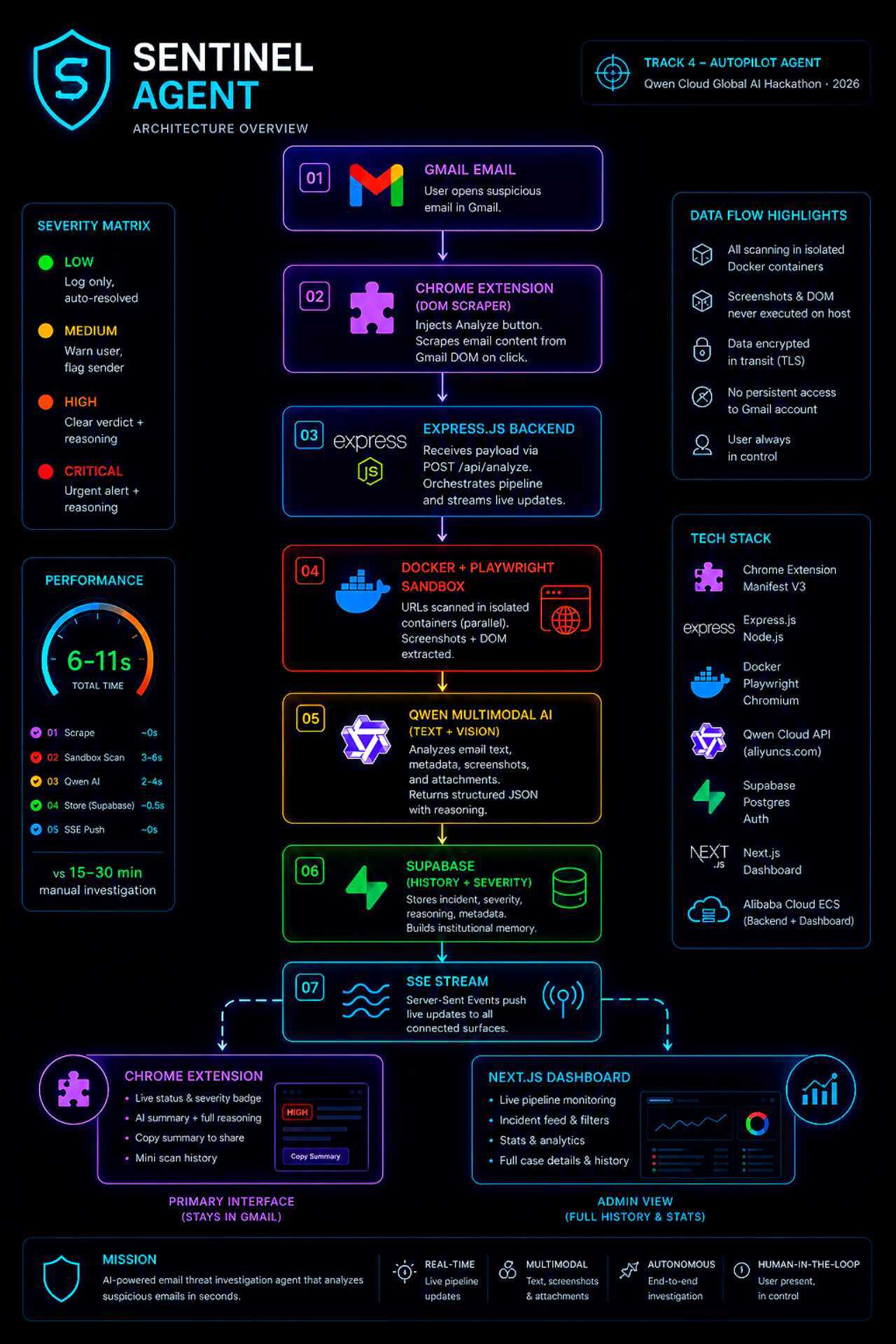
Sentinel Architecture
Inspiration
Phishing and email-based attacks remain the number one entry point for devastating security breaches. While large enterprises can afford dedicated Security Operations Centers (SOC) to manually investigate suspicious emails, SMEs and individuals are often left defenseless, a case example was when my favourite youtuber Mysticmartian youtube account got hacked from a phishing email claiming to be sponsors but were bad actors and hijacked his associated youtube account. We were inspired to bridge this gap by creating an autonomous "SOC-in-a-box"—a proactive agent that doesn't just flag emails, but actively investigates them the same way a human security analyst would.
What it does
Sentinel is a production-ready, autonomous AI-powered email security agent. It lives where the user lives: right inside Gmail via a Chrome Extension.
When an email is opened, Sentinel autonomously initiates a robust 6-stage pipeline:
- Ingest: Scrapes email content directly from the DOM without requiring OAuth access.
- Sandbox Scan: Ships suspicious URLs to an isolated Docker+Playwright container pool running on our Alibaba Cloud ECS where they are safely rendered stealthily to bypass bot-detection, taking screenshots of the final destination.
- Analyze: A single multimodal Qwen API call receives the email text, headers, and the sandboxed screenshots, reasoning through the context to identify spoofing, brand impersonation, and intent.
- Decide: Calculates a severity score based on Qwen's analysis and historical Supabase data.
- Act: Employs dynamic human-in-the-loop branching—auto-resolving low threats, but immediately escalating critical threats (like malware or credential harvesting) for admin intervention.
- Report: Generates a detailed incident report visible in the live Next.js Liquid Glass Dashboard.
How we built it
We architected a purely Agentic Workflow using Qwen. Rather than using rigid scripting, we rely on the Qwen model to dynamically reason through the varied landscape of phishing attempts.
We deployed the entire system on an Alibaba Cloud ECS (US Silicon Valley) instance. The backend is orchestrated in Node.js and Express, which securely manages our isolated Docker scanning pools. For our database and real-time state management, we implemented Supabase. To ensure low-latency communication across the pipeline, we utilized Server-Sent Events (SSE), allowing the Next.js Dashboard and the Chrome Extension to instantly flash the threat verdict the second Qwen reaches a conclusion.
Challenges we ran into
Building a stealth web-scraper inside an isolated Docker container was immensely difficult. Modern phishing pages often employ Cloudflare or CAPTCHAs to block automated security scanners. We overcame this by heavily customizing our headless Playwright configuration with stealth plugins, randomized user agents, and specific viewport dimensions to exactly mimic human behavior, allowing us to capture the true payload of malicious links.
Additionally, handling context limits and structuring multimodal prompts so that Qwen accurately connected the dots between suspicious email text and deceptive landing page screenshots required significant prompt engineering.
What's next for Sentinel Agent
In the future, we plan to implement automatic remediation actions—such as utilizing Google Workspace APIs to proactively purge malicious emails from all company inboxes the moment a single threat is verified by the agent. We also aim to train a specialized fine-tuned Qwen model dedicated purely to identifying zero-day phishing heuristics.
Built With
- alibaba-cloud
- docker
- javascript
- manifest-v3
- next.js
- node.js
- playwright
- qwen
- supabase


Log in or sign up for Devpost to join the conversation.