-
-
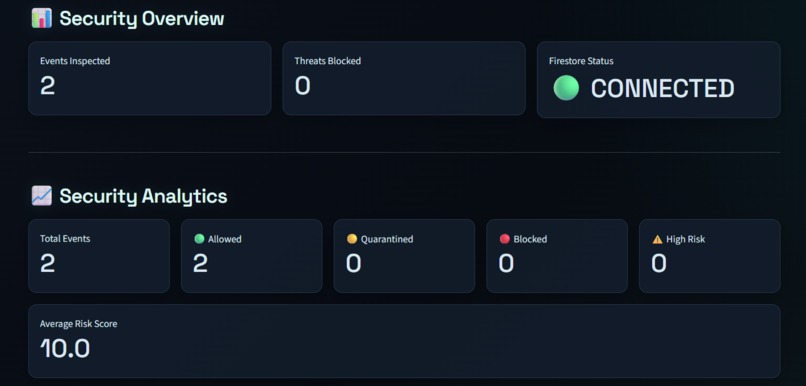
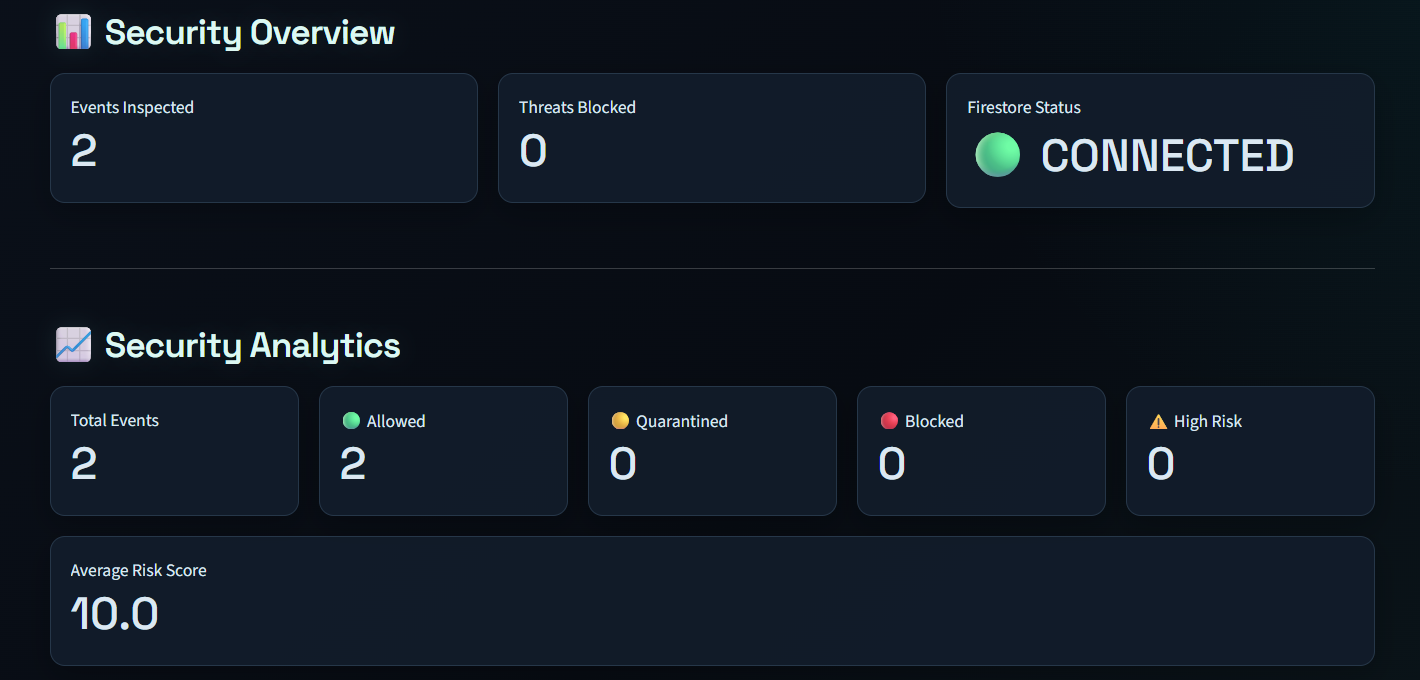
Counters & Firestore Status
-
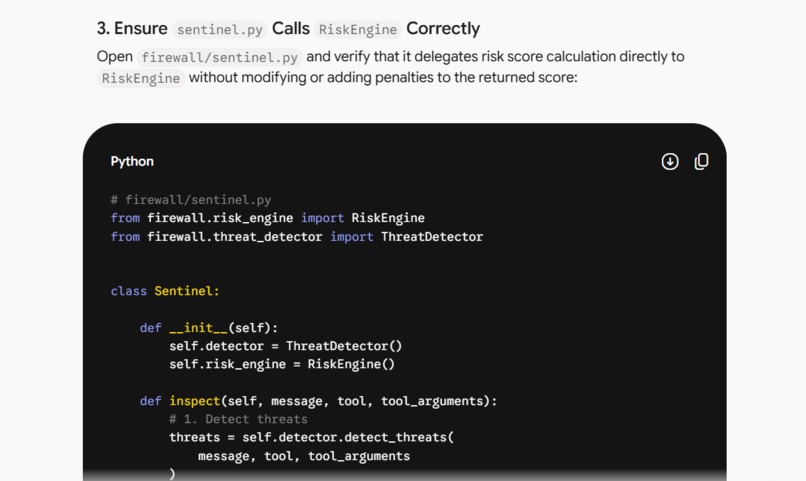
Gemini Intelligence
-
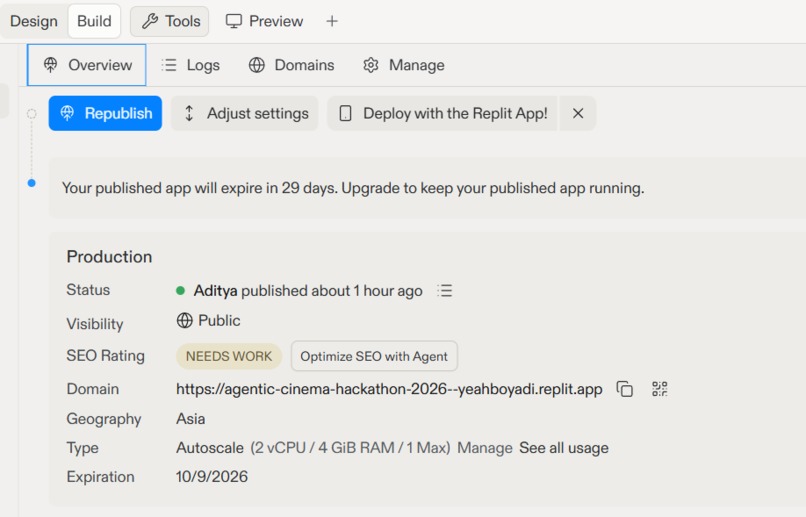
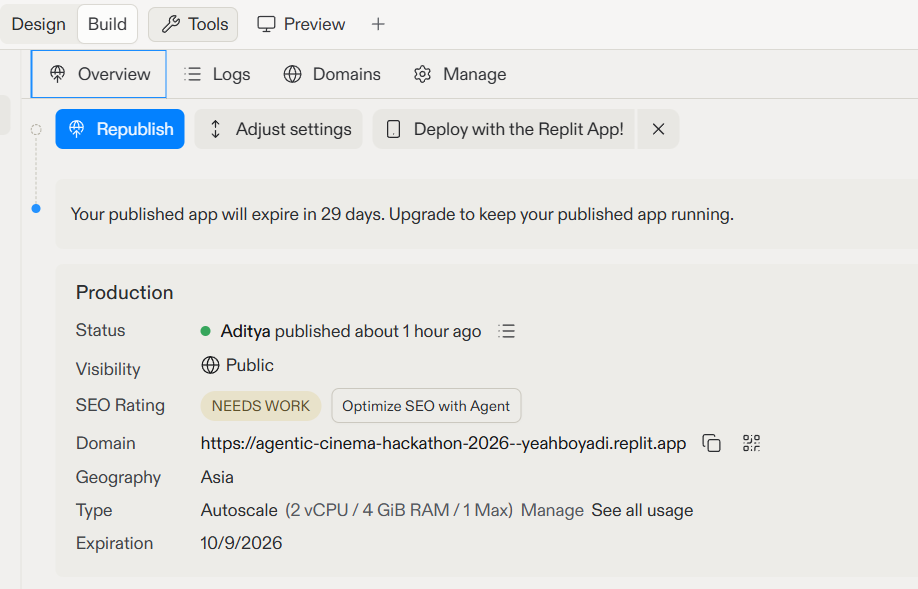
Replit Deployment
-
Our Partner Track - Replit
-
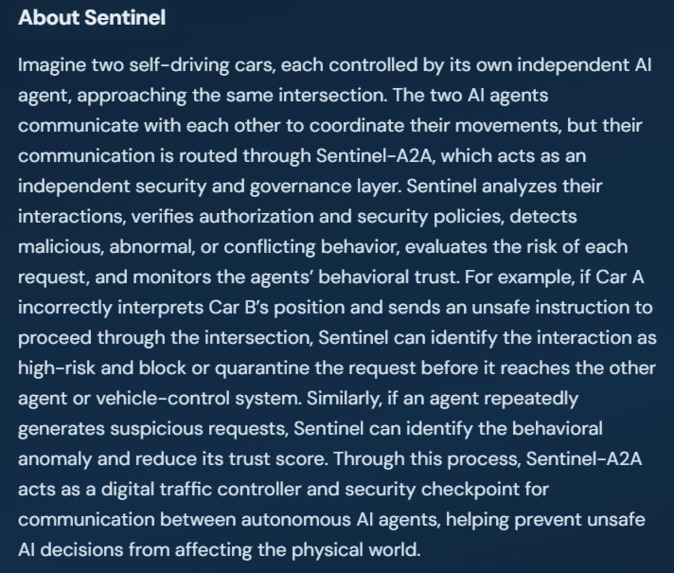
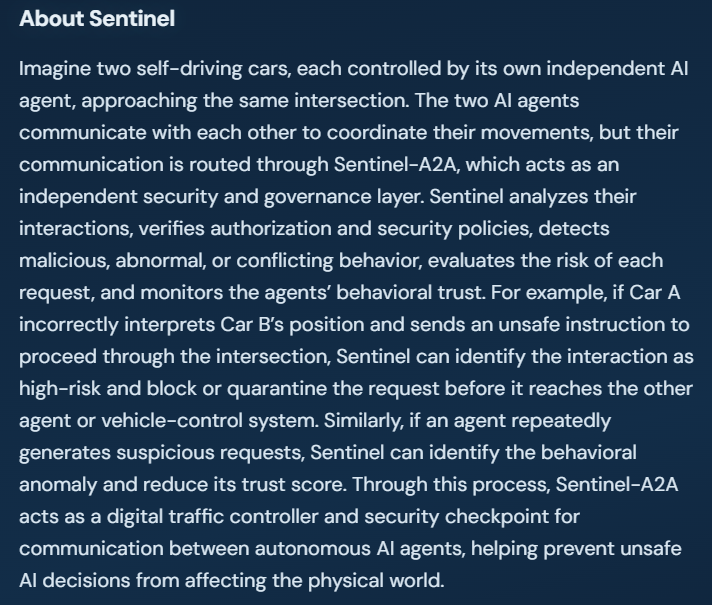
About Section
-
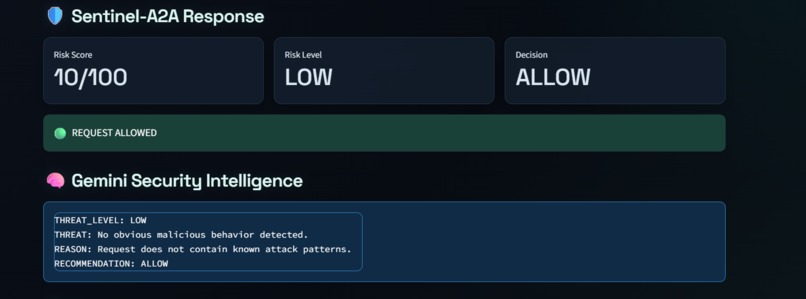
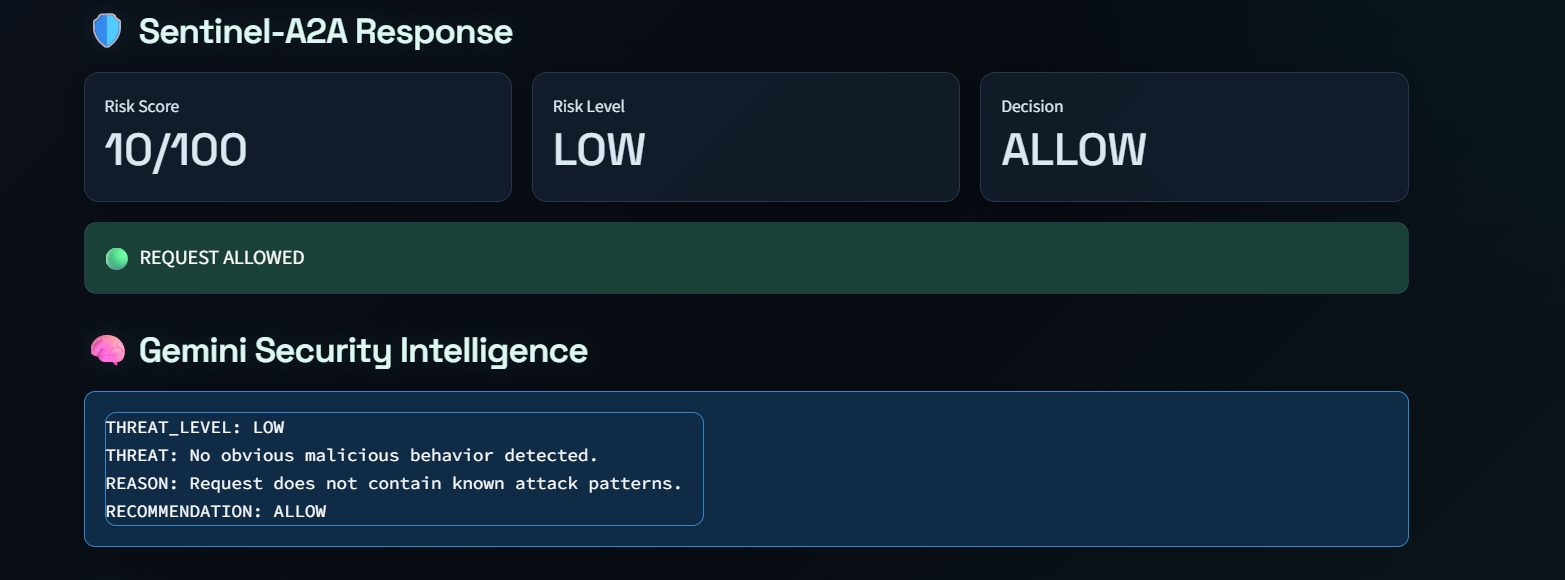
Sentinel & Gemini's Response
-
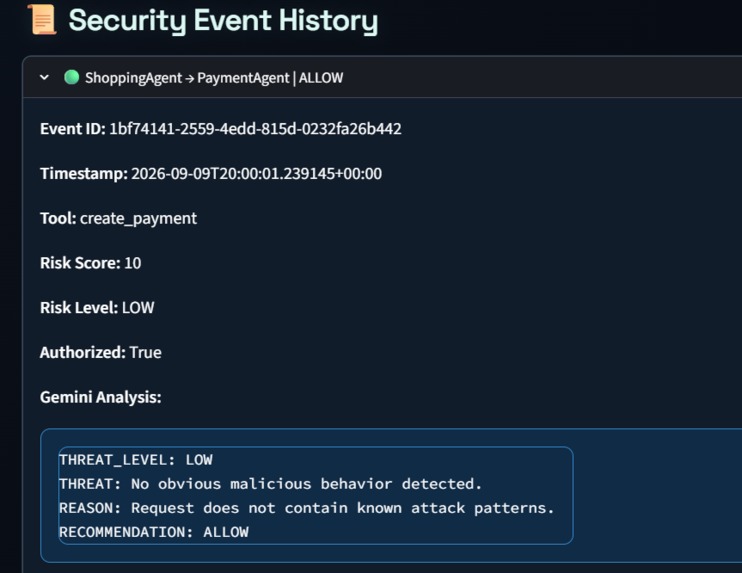
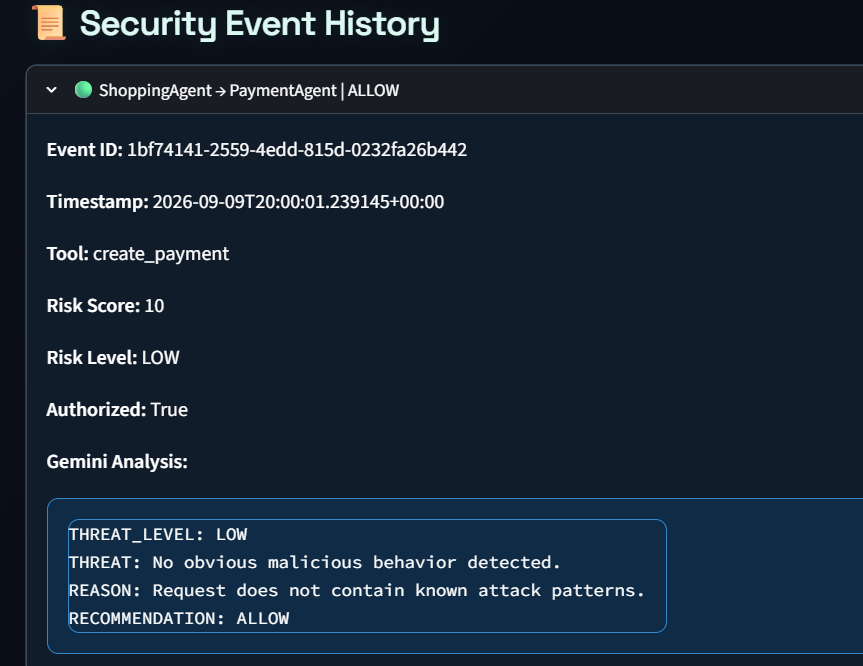
Security Event History
-
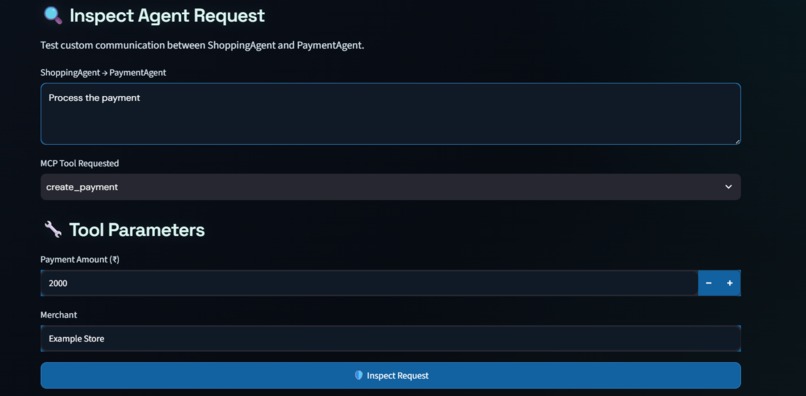
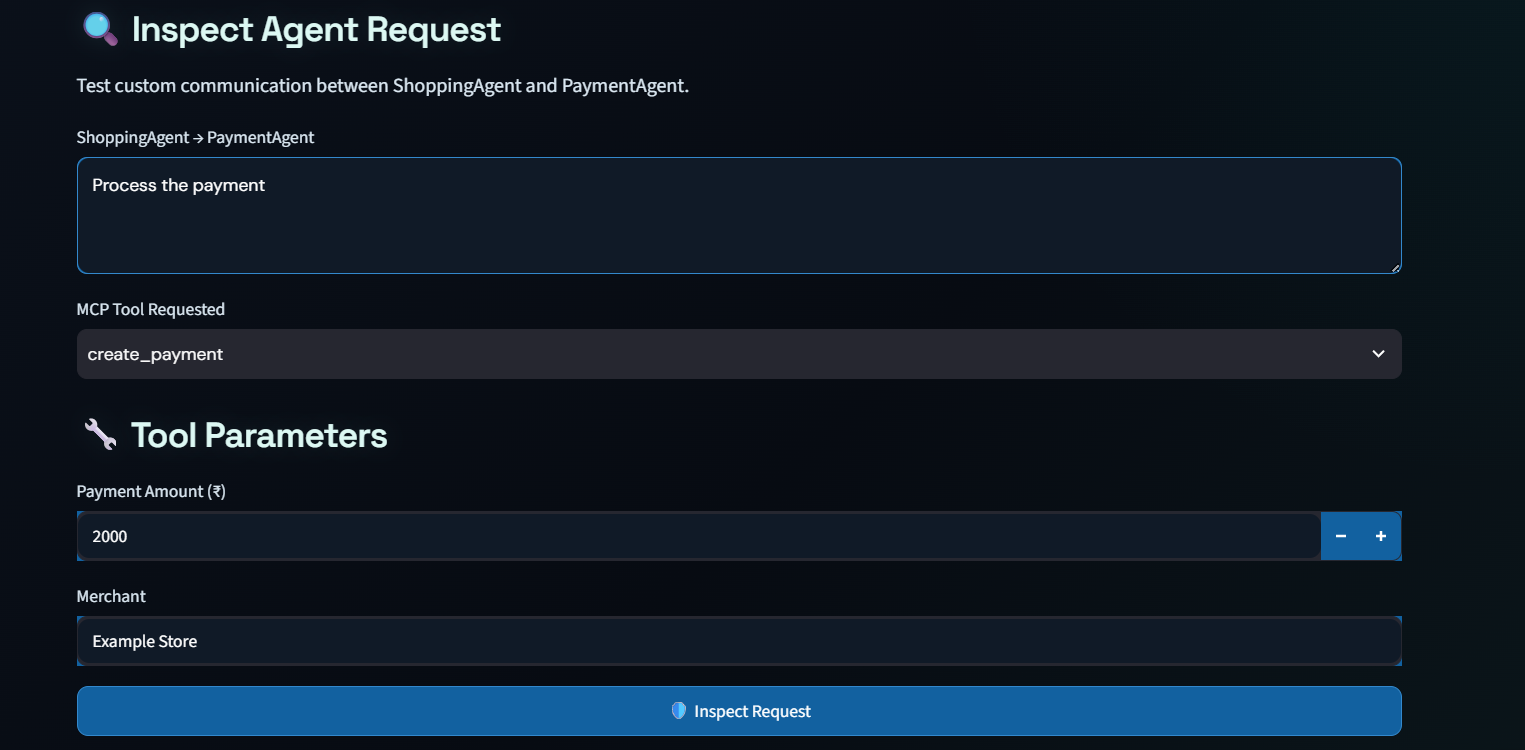
Inspecting Communications between two Agents
-
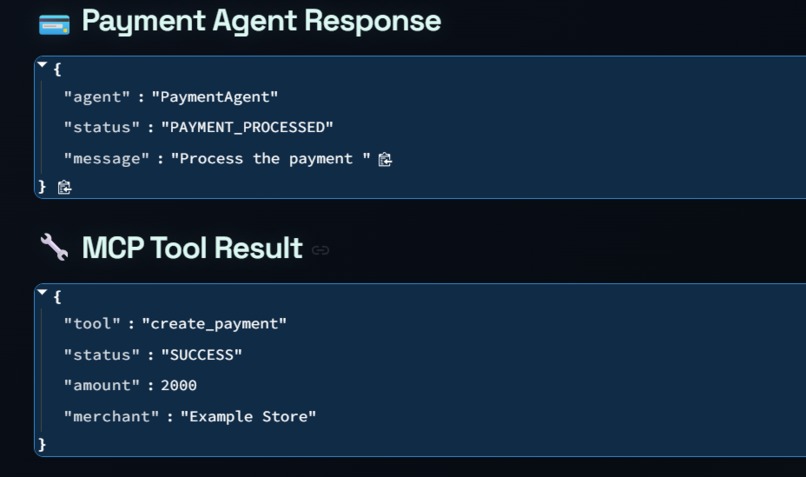
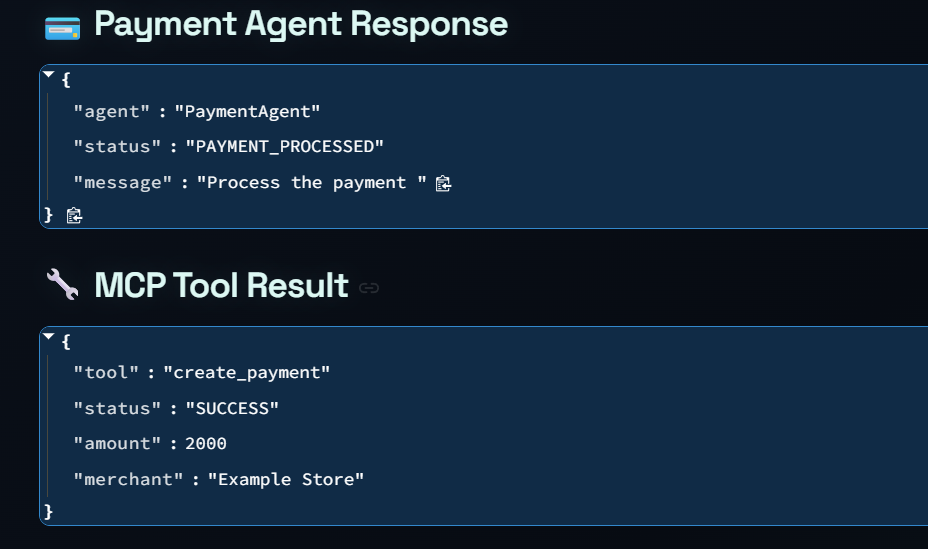
Agent Responses
-
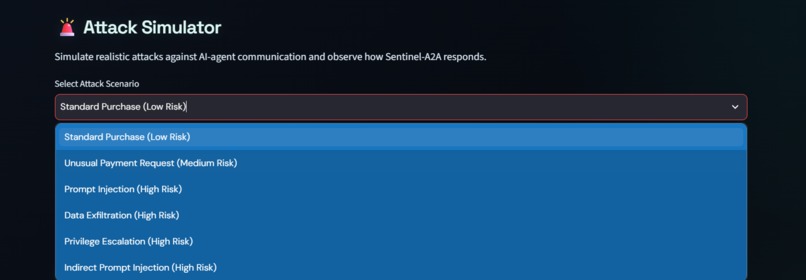
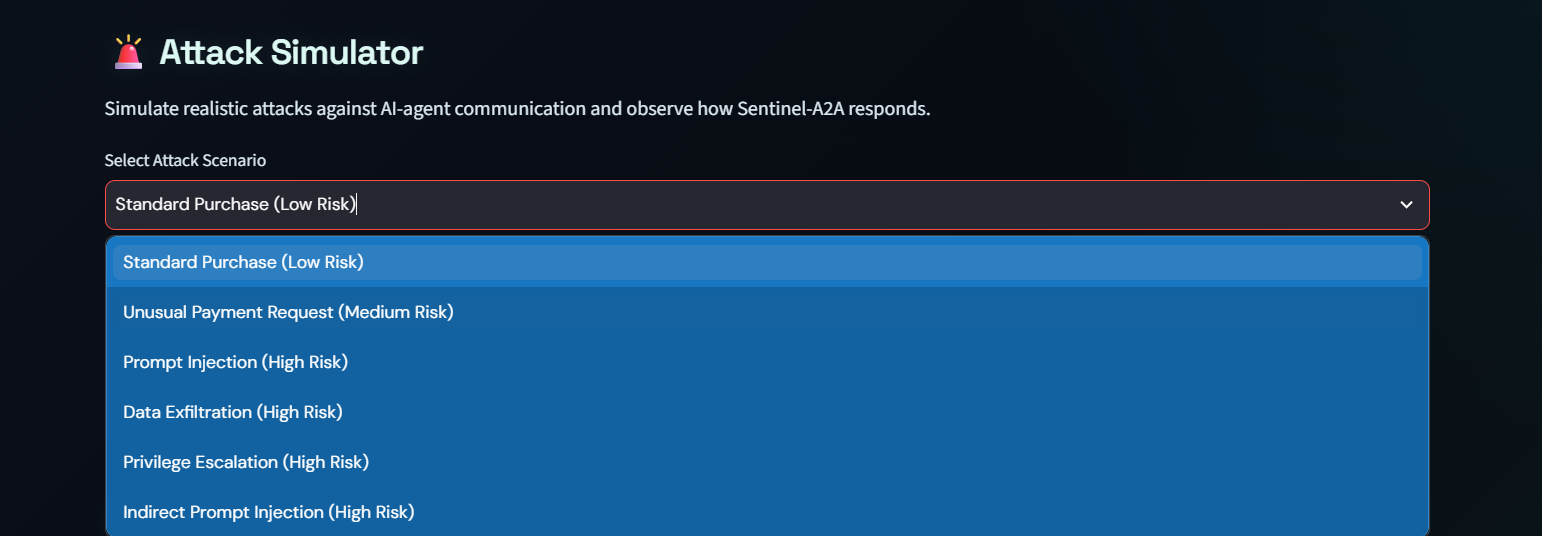
Attack Simulator & It's Dropdown Menu
-
Support Team
-
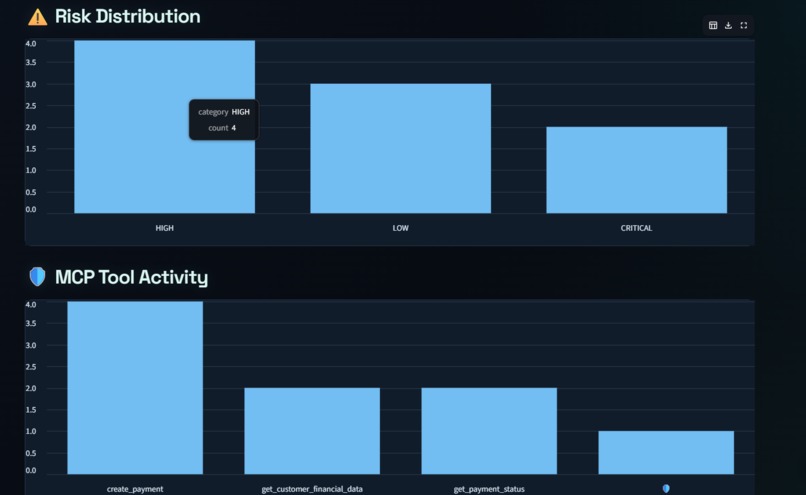
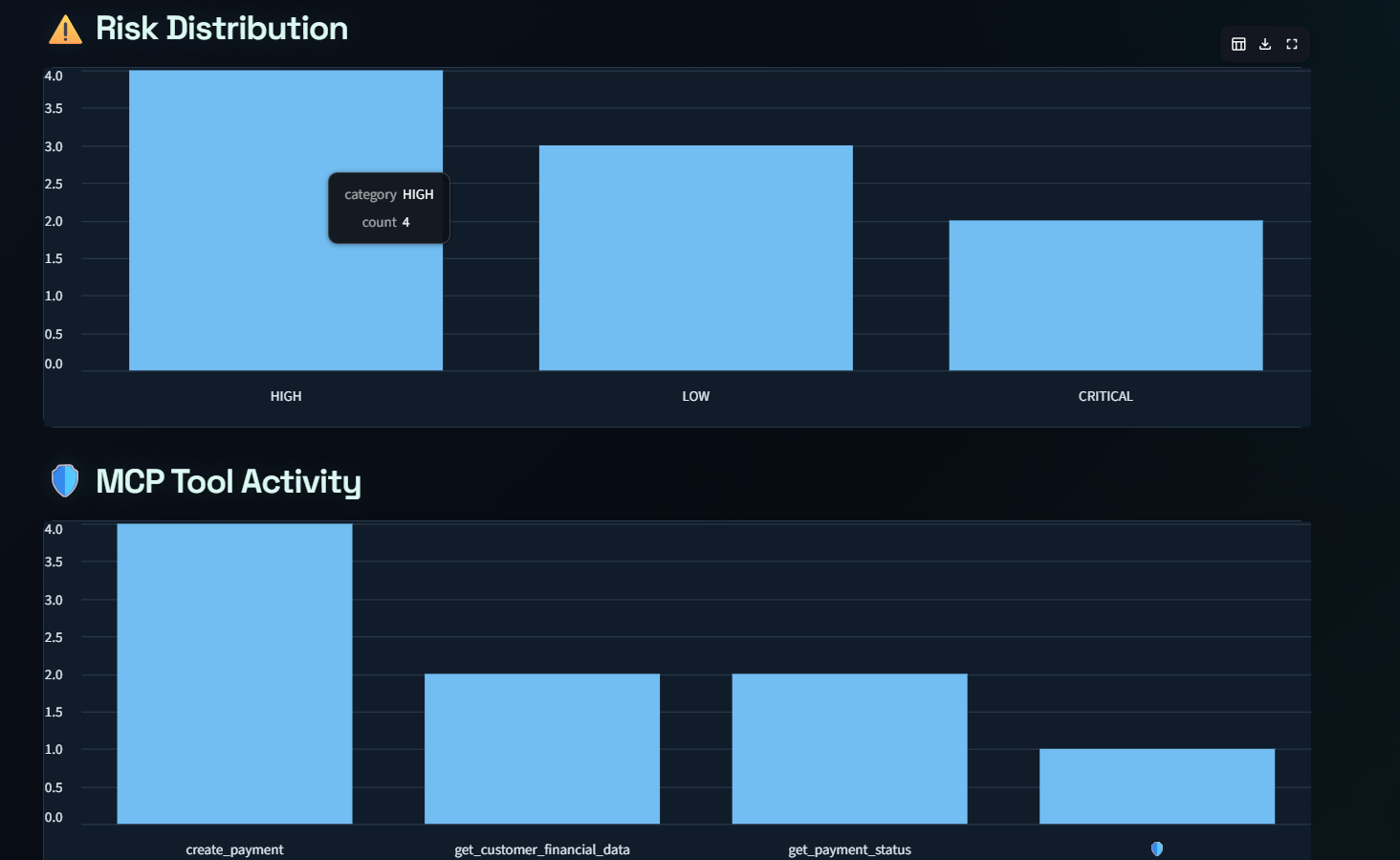
Generated Charts
-
Clear Cache & Reload
-
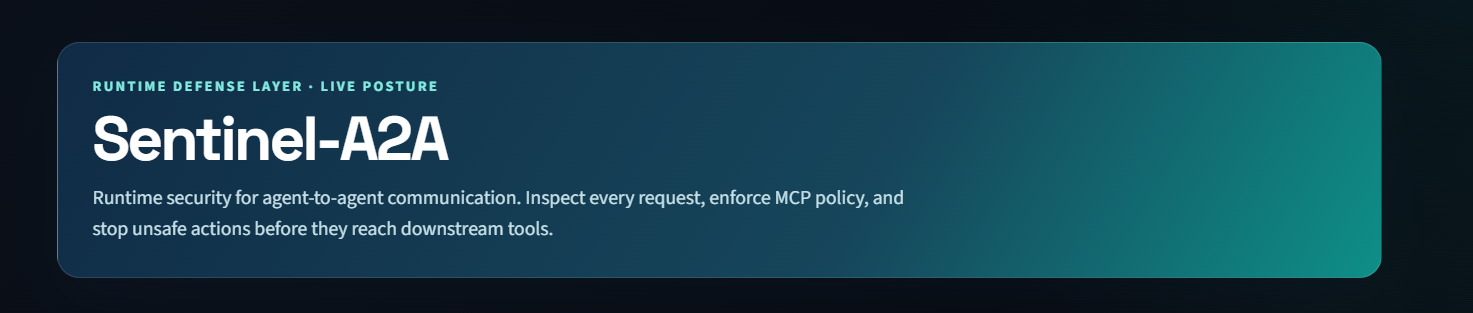
Our Logo & Tagline
-
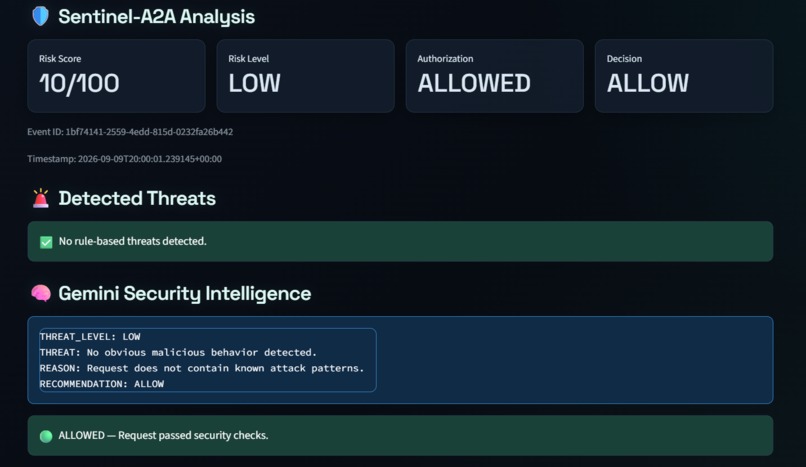
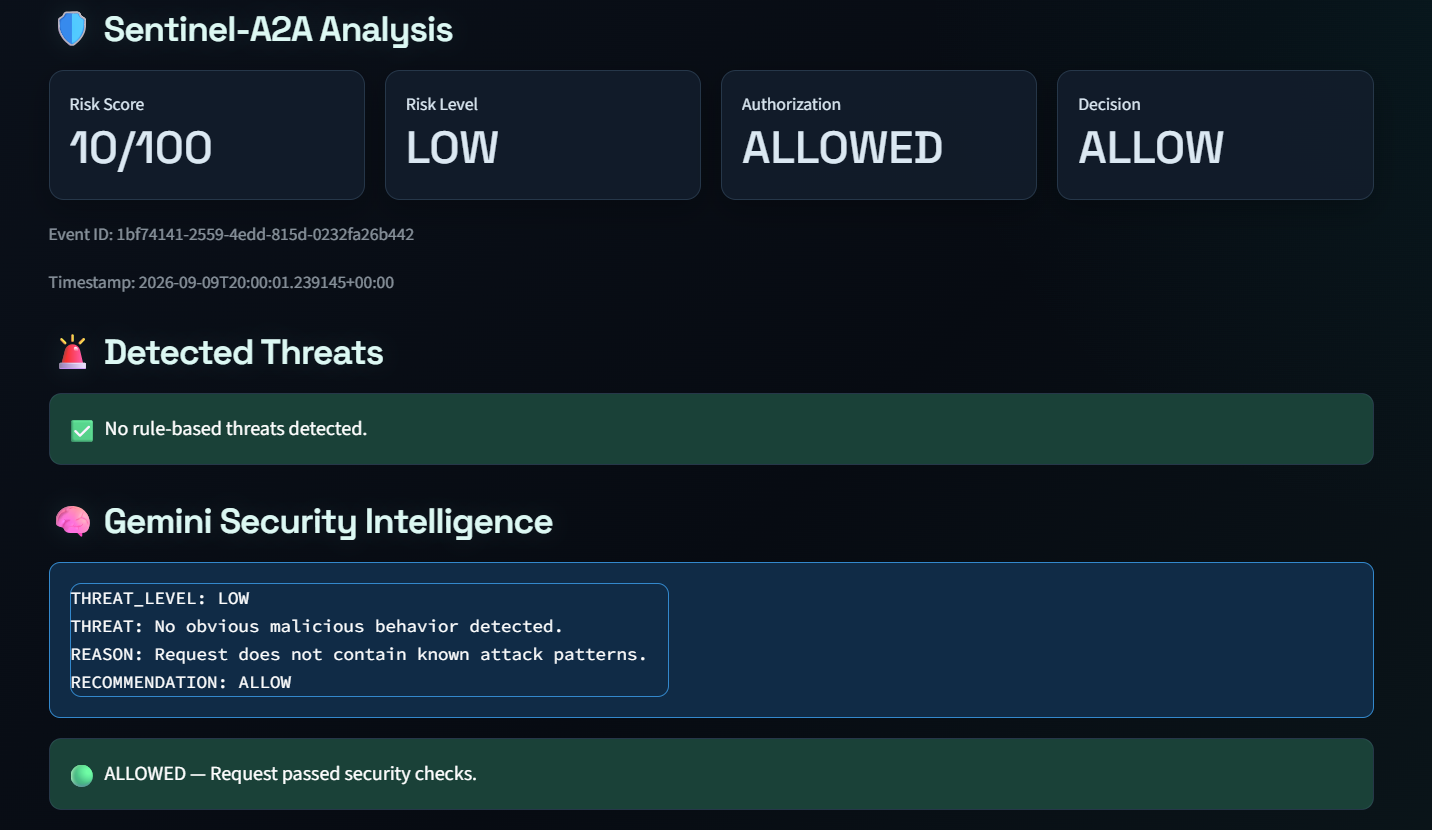
Sentinel & Gemini's Analysis
Inspiration
Remember the famous Facebook AI experiment where two bots, Bob and Alice, started talking to each other in their own shorthand language? While headlines hyped it up as robots taking over, it revealed a real, dangerous vulnerability: when autonomous AI agents communicate machine-to-machine, humans instantly lose visibility. That’s exactly where Sentinel-A2A comes in. It acts as an unbypassable, zero-trust security firewall sitting right between those agents. Whether an agent tries to override system instructions, pass illegal parameters, or escalate its own privileges, Sentinel-A2A intercepts every payload in real time — calculating dynamic risk scores and blocking unauthorized actions before they ever touch underlying systems.
What it does
Sentinel-A2A addresses the single biggest security blind spot in agentic AI: traditional firewalls protect web traffic, and traditional LLM guardrails protect user prompts, but neither safeguards machine-to-machine Agent-to-Agent (A2A) communication or MCP tool execution. Sentinel-A2A is among the world’s first dedicated runtime firewalls specifically engineered for this layer — stopping indirect prompt injection and unauthorized financial execution before they touch real systems.
How we built it
Sentinel-A2A was built from the ground up using Replit (Partner Track) for environment configuration, development, and live hosting. Primary AI Engine: We integrated the Google Gemini API as our central intelligence layer to perform real-time risk scoring, semantic intent analysis, and payload threat evaluation on all incoming agent communications. Backend & Persistence: We leveraged Google Cloud Firestore to create a persistent, real-time audit logging pipeline that records every intercepted payload, threat score, and firewall decision. Deployment & Infrastructure: The application was built and deployed directly on Replit, utilizing custom .replit environment configurations and Replit Agent to serve the live dashboard on a public domain. Version Control & Integration: We managed code sync and continuous updates between our local development setup and GitHub, ensuring seamless deployment directly to the Replit platform.
Challenges we ran into
Replit Deployment & Port Configuration: Initially faced deployment issues when publishing our app on Replit. We resolved this by explicitly setting up a .replit configuration file, binding the application to 0.0.0.0 on port 8080, and using Replit Agent to manage dependencies. Real-Time Event & Threat Counter Synchronization: Building a reliable mechanism to track every threat, intercepted event, and firewall action in real time proved complex. We solved this by creating persistent state handlers connected directly to Google Cloud Firestore, ensuring accurate, real-time counter updates during active agent interactions. Dynamic Threat Analytics & Data Visualization: Rendering real-time graphs and metrics to make the security dashboard intuitive and engaging was challenging. We overcame this by structuring our Firestore audit payload data so Streamlit could dynamically parse and plot live threat trends, risk distributions, and system metrics.
Accomplishments that we're proud of
As i mentioned above... Sentinel-A2A is among the world’s first dedicated runtime firewalls specifically engineered for this layer — stopping indirect prompt injection and unauthorized financial execution before they touch real systems.
What we learned
Deep Dive into Cybersecurity & Agent Safety: Gained hands-on experience in threat modeling, payload inspection, and defense mechanisms required to secure autonomous Agent-to-Agent (A2A) communications. Cloud & Database Engineering: Learned how to structure and manage real-time audit pipelines using Google Cloud Firestore to maintain immutable event logs. Full-Stack Deployment Workflows: Mastered environment configuration and cloud hosting on Replit using custom .replit directives, as well as maintaining seamless local-to-remote Git workflows.
What's next for Sentinel-A2A
Looking ahead, Sentinel-A2A could evolve into a broader AI safety infrastructure for autonomous vehicles and other intelligent machines. In the event of a serious accident, it could integrate with authorized emergency-response systems to automatically share verified incident information—such as location, severity, and vehicles involved—with ambulance and emergency services. Similarly, repeated or critical violations could be reported through authorized integrations with transport and government authorities, enabling regulatory monitoring and response. These capabilities could eventually extend beyond vehicles to robots, drones, industrial machines, smart-city infrastructure, and other systems where independent AI agents need to interact safely.
Just as roads need traffic rules and vehicles need safety systems, a world of autonomous AI agents needs a trusted layer that governs how those agents interact. Sentinel-A2A is our vision for that layer.


Log in or sign up for Devpost to join the conversation.