-
-
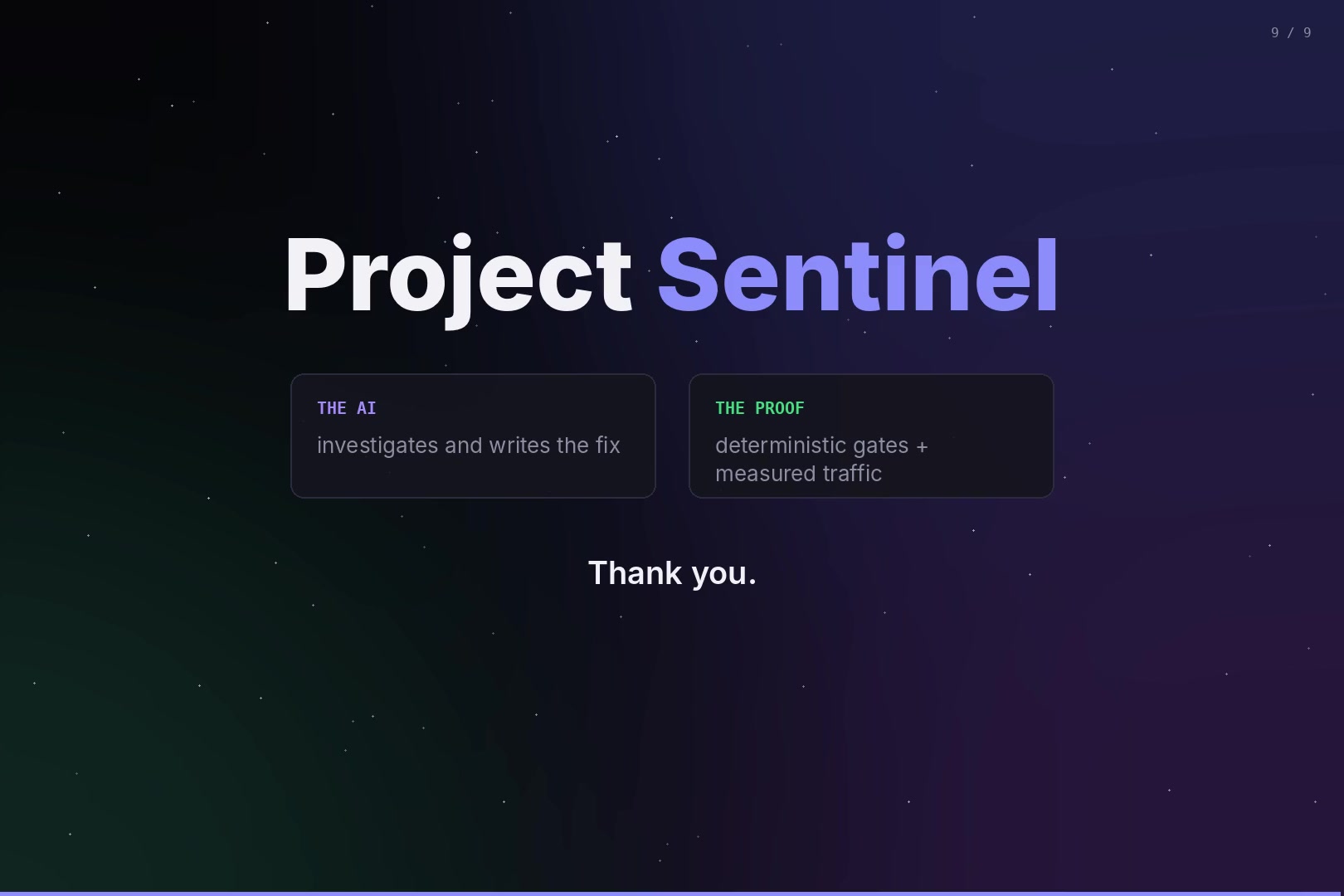
Project Sentinel: the AI proposes, deterministic gates decide
-
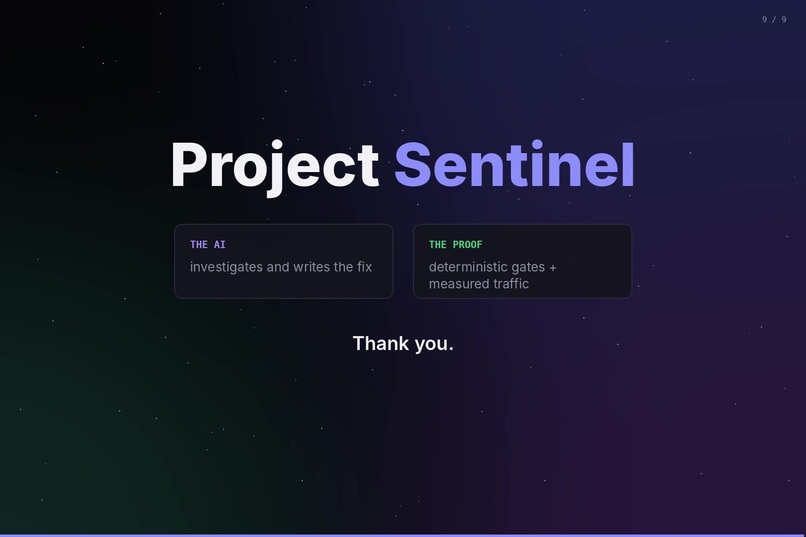
AI investigates; gates and measured traffic prove the fix
-
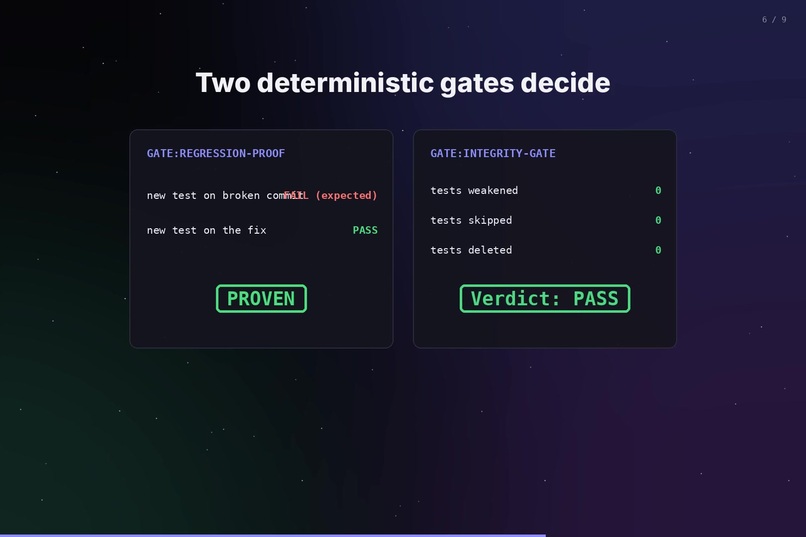
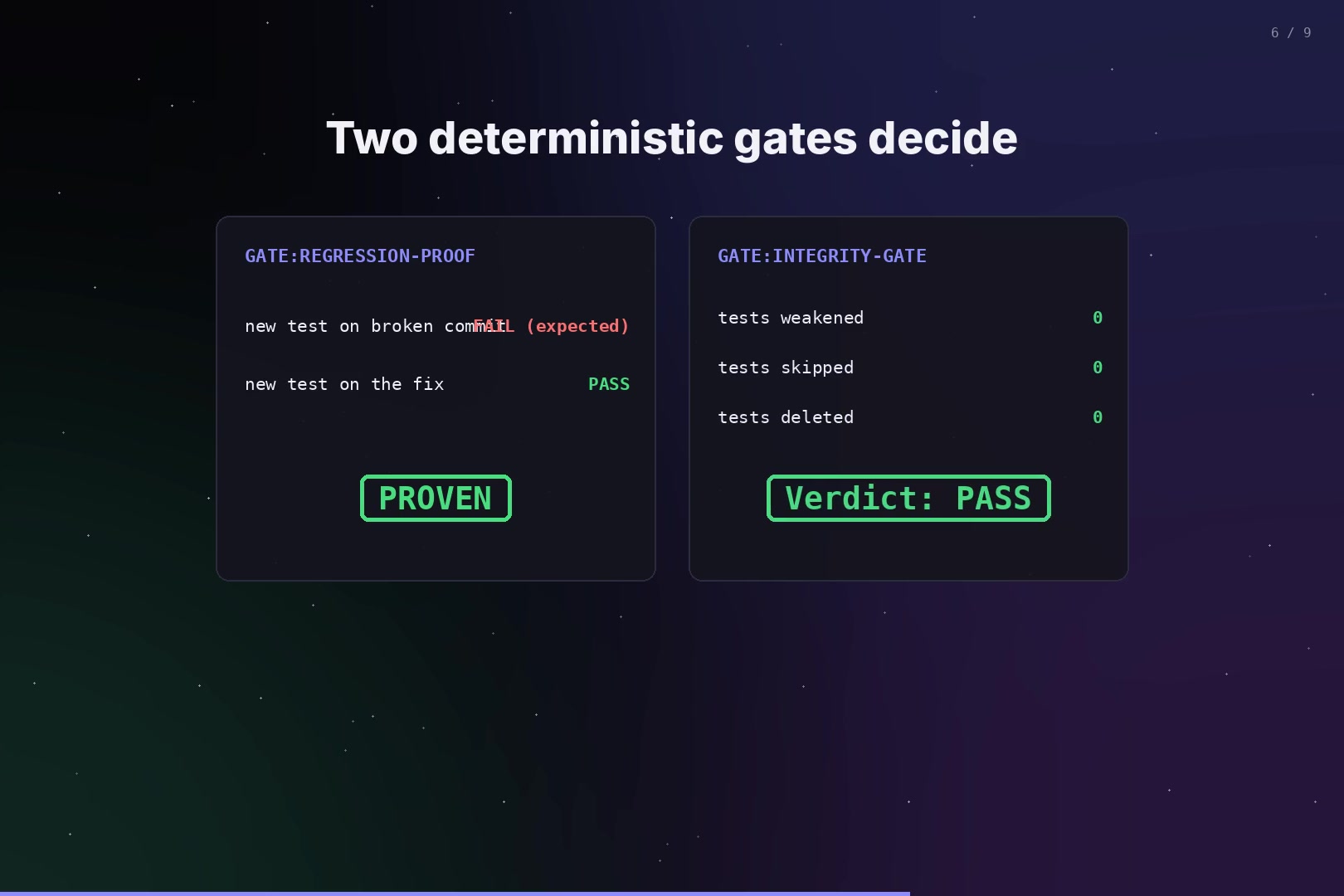
Regression proof PROVEN and integrity gate PASS
-
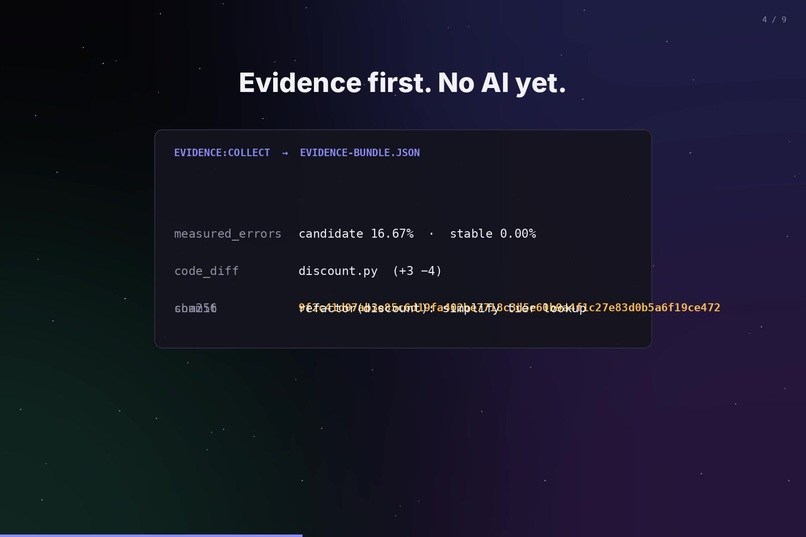
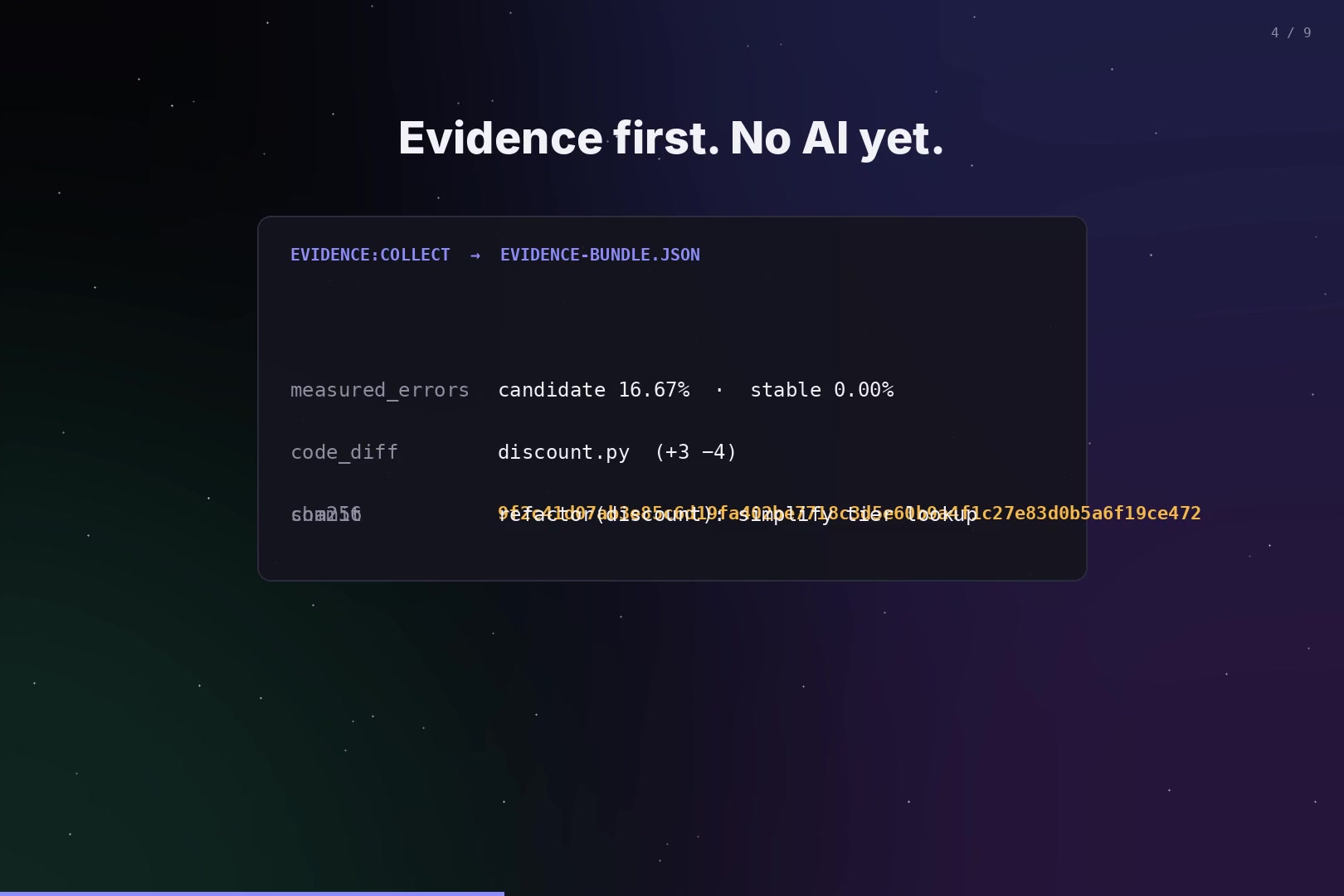
Evidence sealed with a SHA-256 hash before any AI runs
-
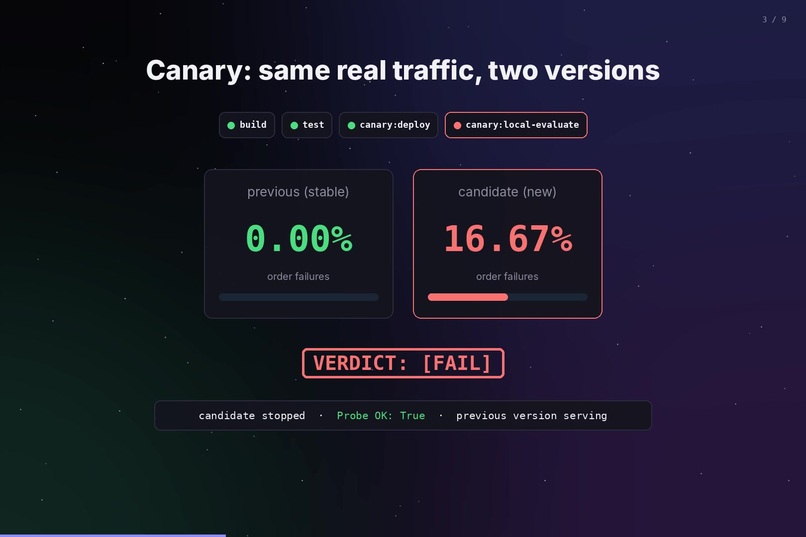
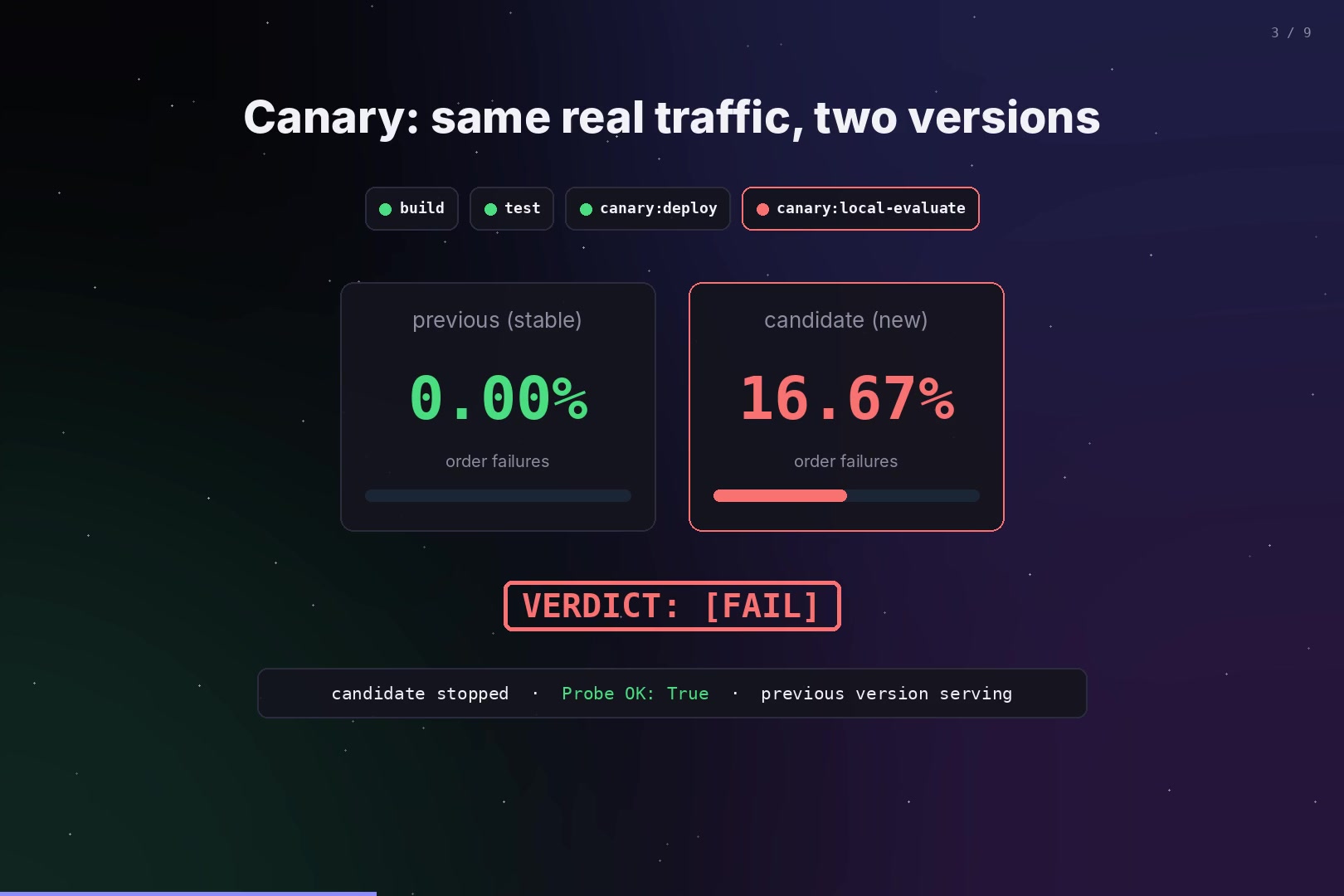
Canary catches the bad release: 16.67% vs 0% order failures → FAIL
-
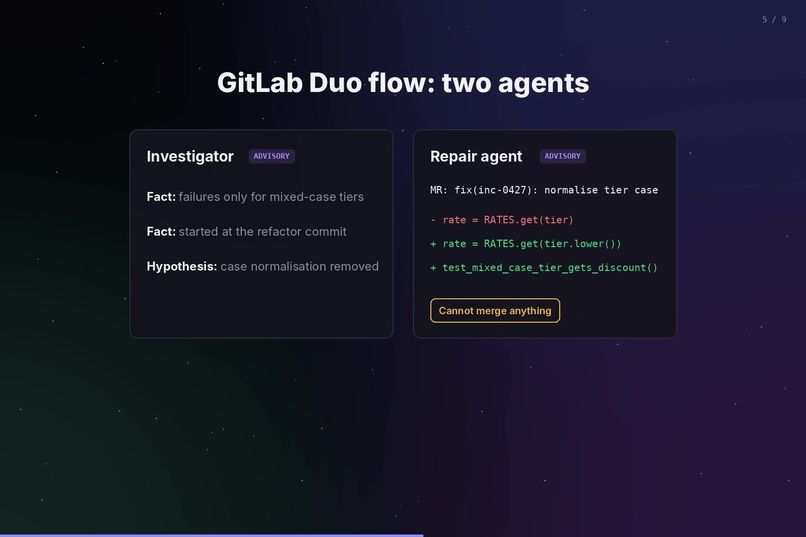
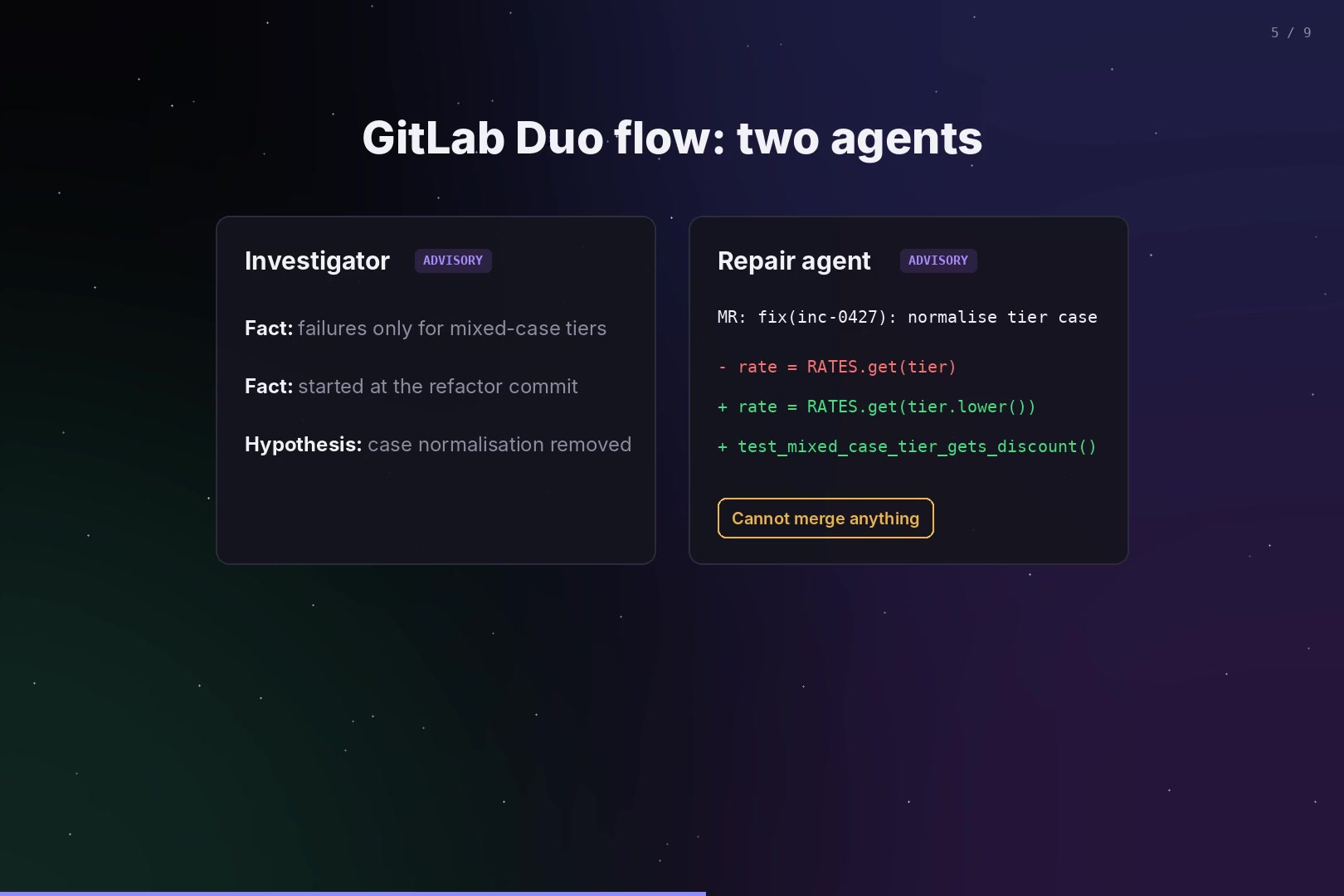
GitLab Duo agents investigate and open a fix MR, but can’t merge
-
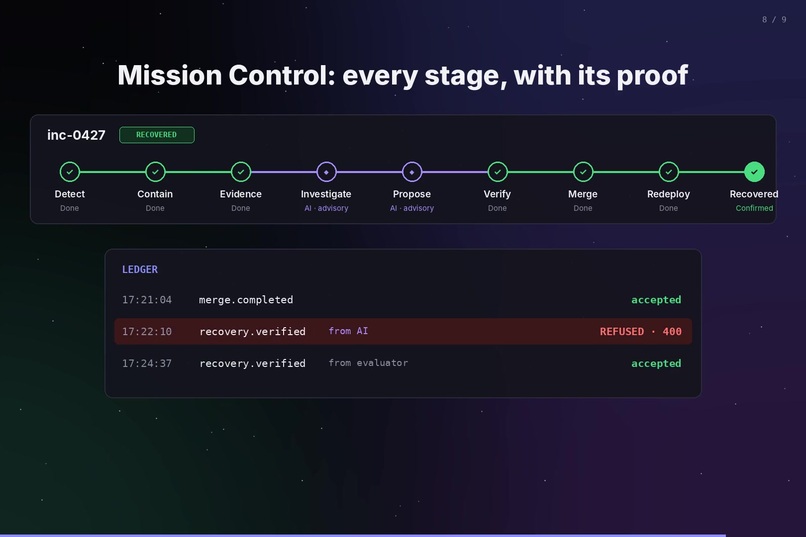
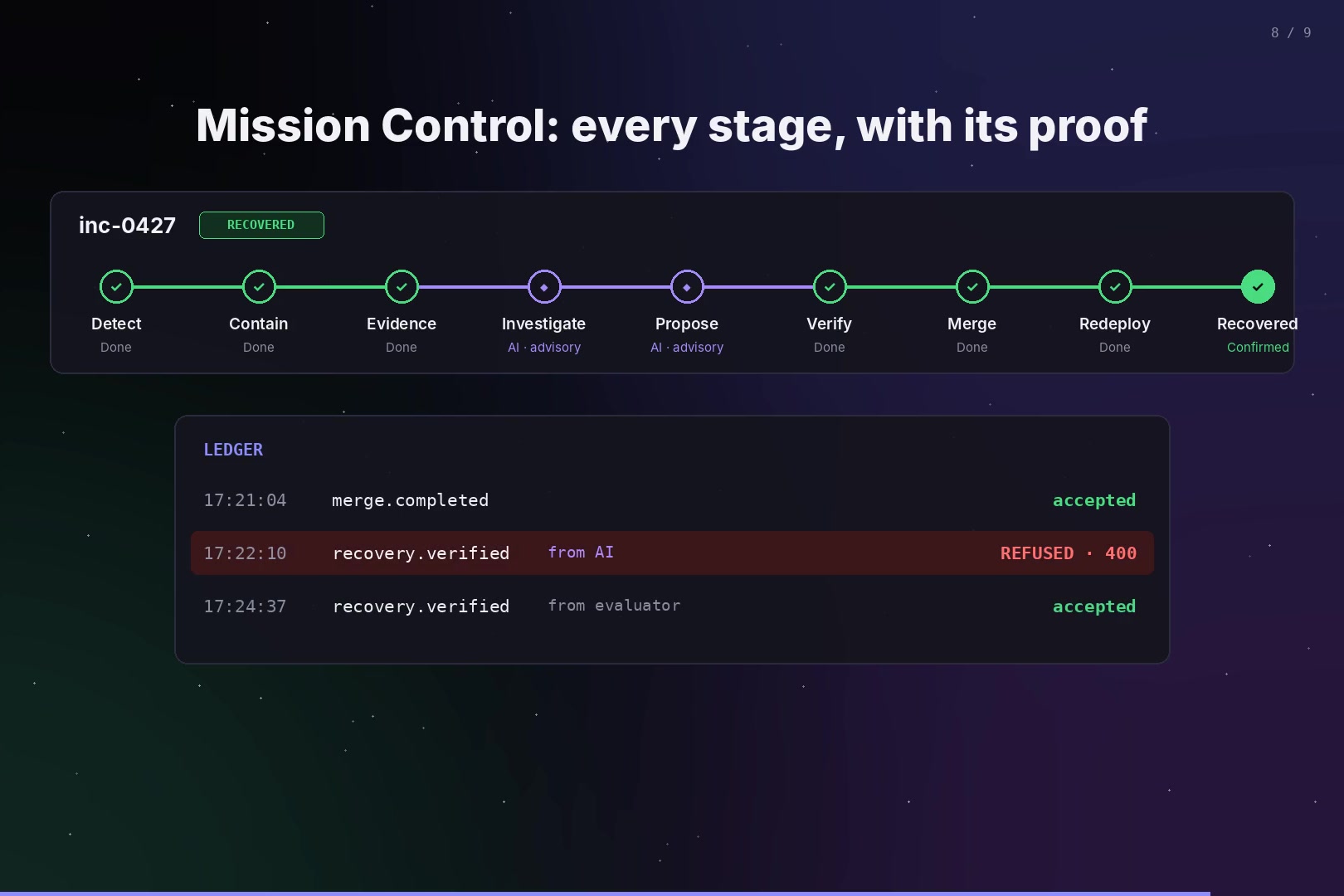
Mission Control: 9 stages, and the AI’s recovery claim refused
Inspiration
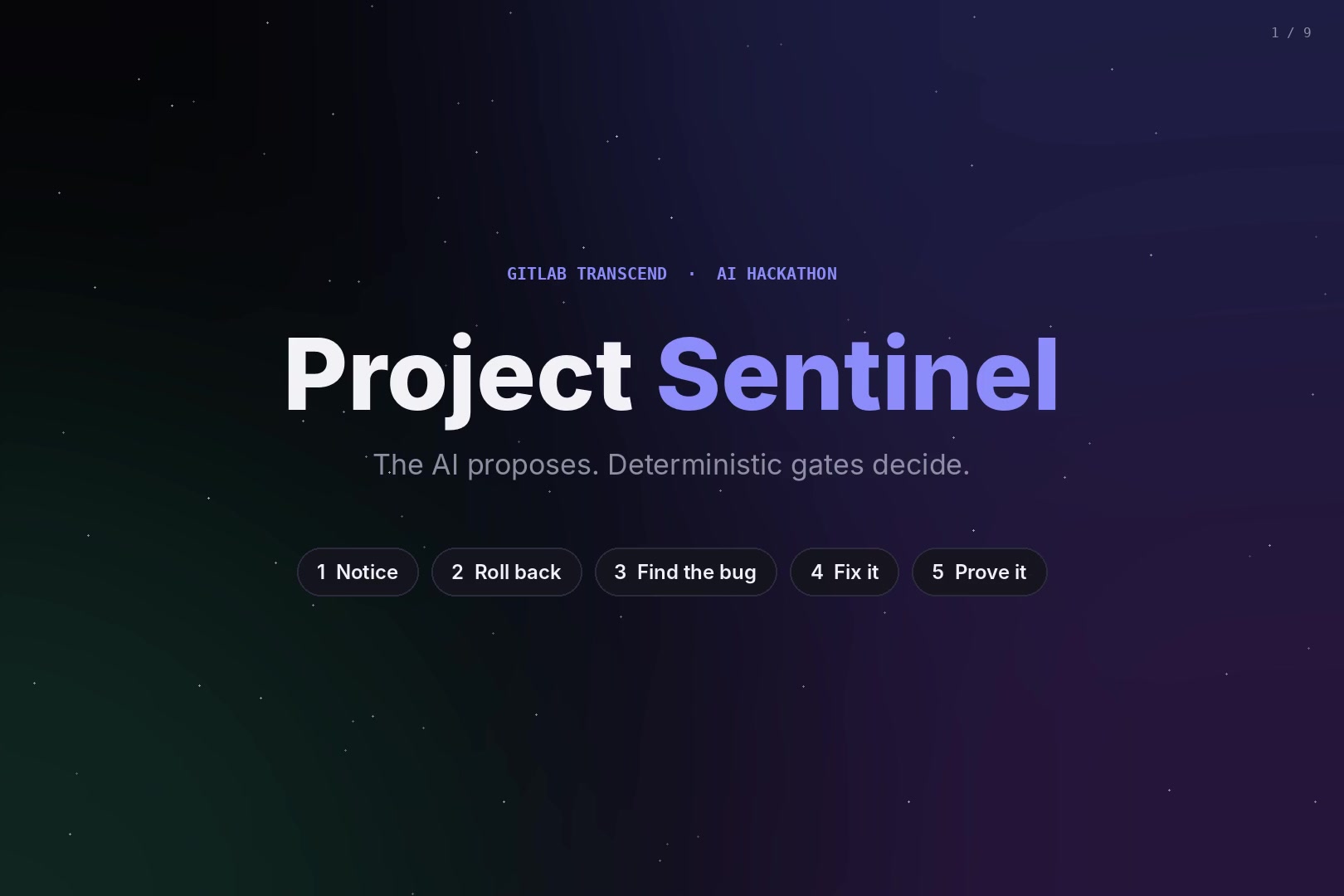
When a bad release reaches production, someone has to notice it, roll it back, find the bug, fix it, and prove the fix works, usually at 3 a.m. AI can help with the investigation, but we didn't want an AI that can ship its own fixes unchecked. Our rule: the AI proposes, deterministic gates decide.
What it does
Sentinel runs the whole incident loop inside GitLab:
- Detect & contain: a canary runs the new version next to the previous one on the same real requests. The faulty refactor failed 16.67% of orders vs 0%; the evaluator fails the release, stops the candidate, and a health probe confirms the previous version is still serving.
- Evidence: before any AI runs, the measured errors, code diff and commit details are sealed with a SHA-256 hash.
- Investigate & propose (AI, advisory): a GitLab Duo flow reads the evidence, separates facts from hypotheses, and opens a merge request with a one-line fix plus a new regression test.

Log in or sign up for Devpost to join the conversation.