-
-
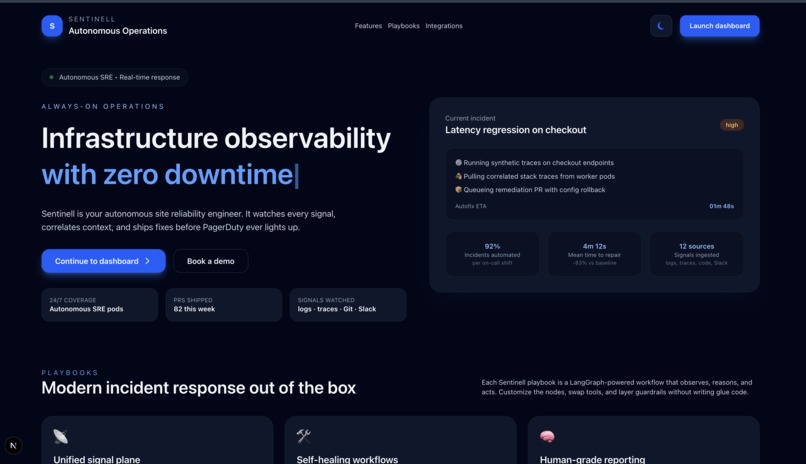
Landing Page
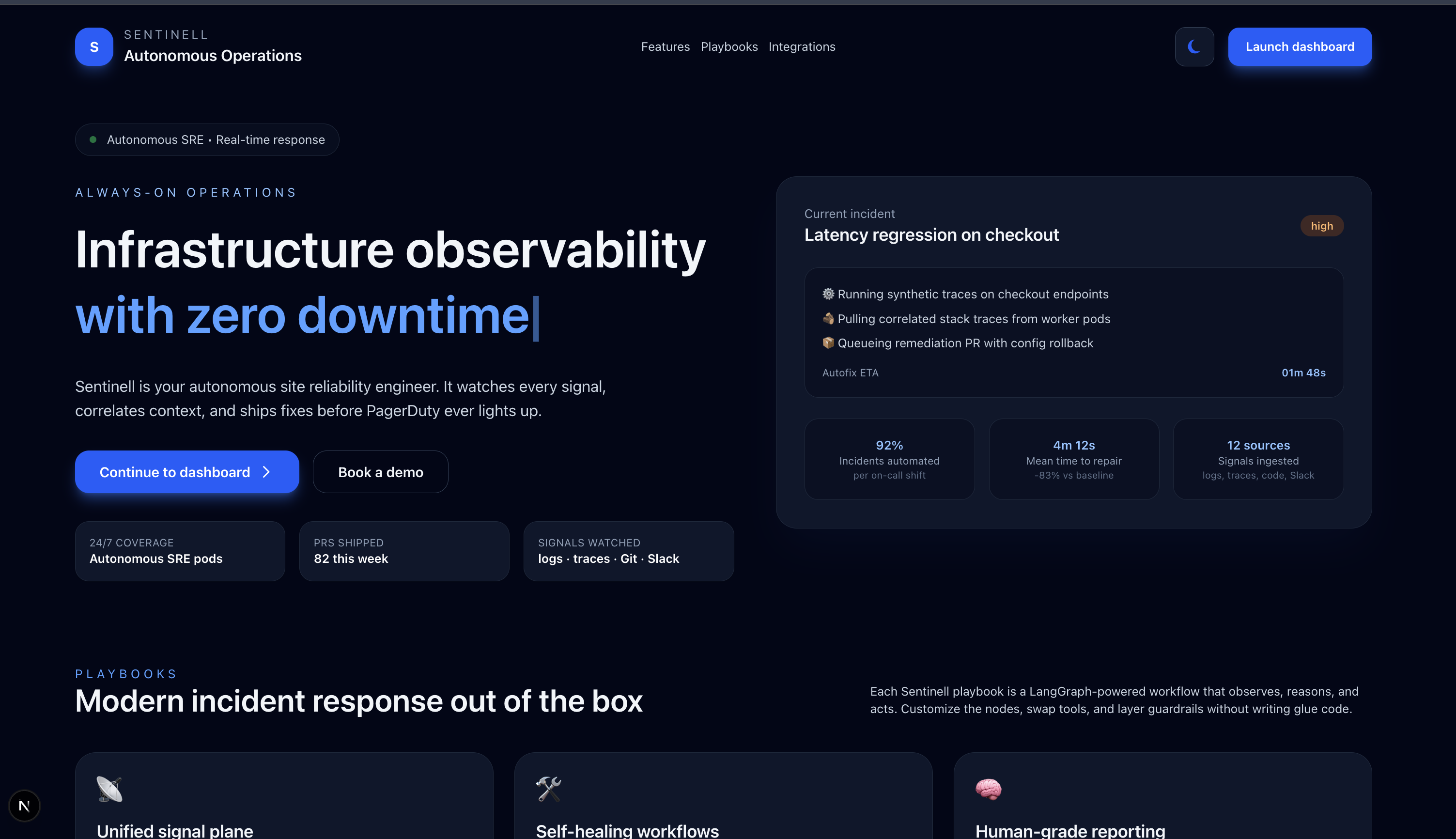
Inspiration
Infrastructure teams at tech companies get up to hundreds of on-call pages a week. These issues that are repetitive, noisy, or solvable with the same handful of checks every time. On-call work eats into sleep, weekends, and focus time. Most of the time, it's simply a matter of searching Slack threads, digging through logs, checking dashboards, and running the same playbooks over and over. We wanted to build something that could shoulder that burden: an agent that can read the same signals humans do, reason about what’s going on, and either automate the fix or at least fast-forward an engineer straight to the answer.
What it does
- Continuously monitors Slack and the codebase for new messages, incidents, and code changes.
- Searches Slack, log files, and code through dedicated tool calls to gather the same context an engineer would.
- Creates pull requests and edits code when it identifies a fixable issue or a needed change.
- Verifies its own actions by running follow-up checks to confirm whether the applied solution resolved the problem.
How we built it
We started by building a LangGraph-based agent for looping, stateful reasoning. Then we set up a vector database and a simple RAG pipeline to ingest Slack messages for searchable context. After that, we added tool calls for creating PRs, reading and writing code, pulling Slack messages, and parsing logs. Finally, we connected everything to a frontend and backend that visualizes the agent’s reasoning in real time through an admin dashboard.
Challenges we ran into
Our biggest challenge was getting all the components to work together. The agent, vector DB, RAG pipeline, Slack ingestion, codebase reader, and PR tools all worked individually, but integrating them into one system was difficult. We also struggled with exposing clear agent observability, which required custom logging and frontend work. Each tool call added its own hurdles, from Slack auth to safe code execution and Git handling. Making everything run reliably without stalls or loops ended up taking a large portion of our time.
Accomplishments that we're proud of
We’re proud that we built the full system end to end and got the agent to reliably gather context, reason, and create real pull requests. Seeing all the parts work together in a live demo was a major milestone.
What we learned
We learned a lot about the agent development lifecycle, especially how important clear tool boundaries, observability, and maintainable code are when building complex autonomous workflows.
What's next for Sentinel
Next, we plan to extend Sentinel beyond Slack and code changes by adding active monitoring for Docker and Kubernetes, as well as giving it controlled access to AWS so it can take on more real operational tasks.


Log in or sign up for Devpost to join the conversation.