-
-
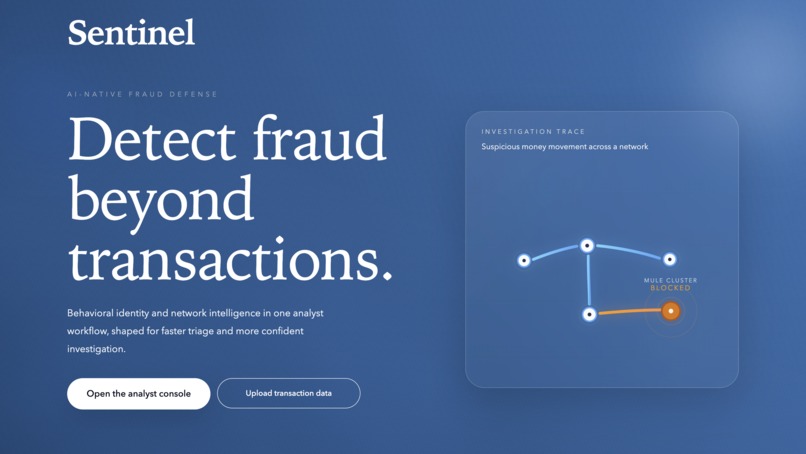
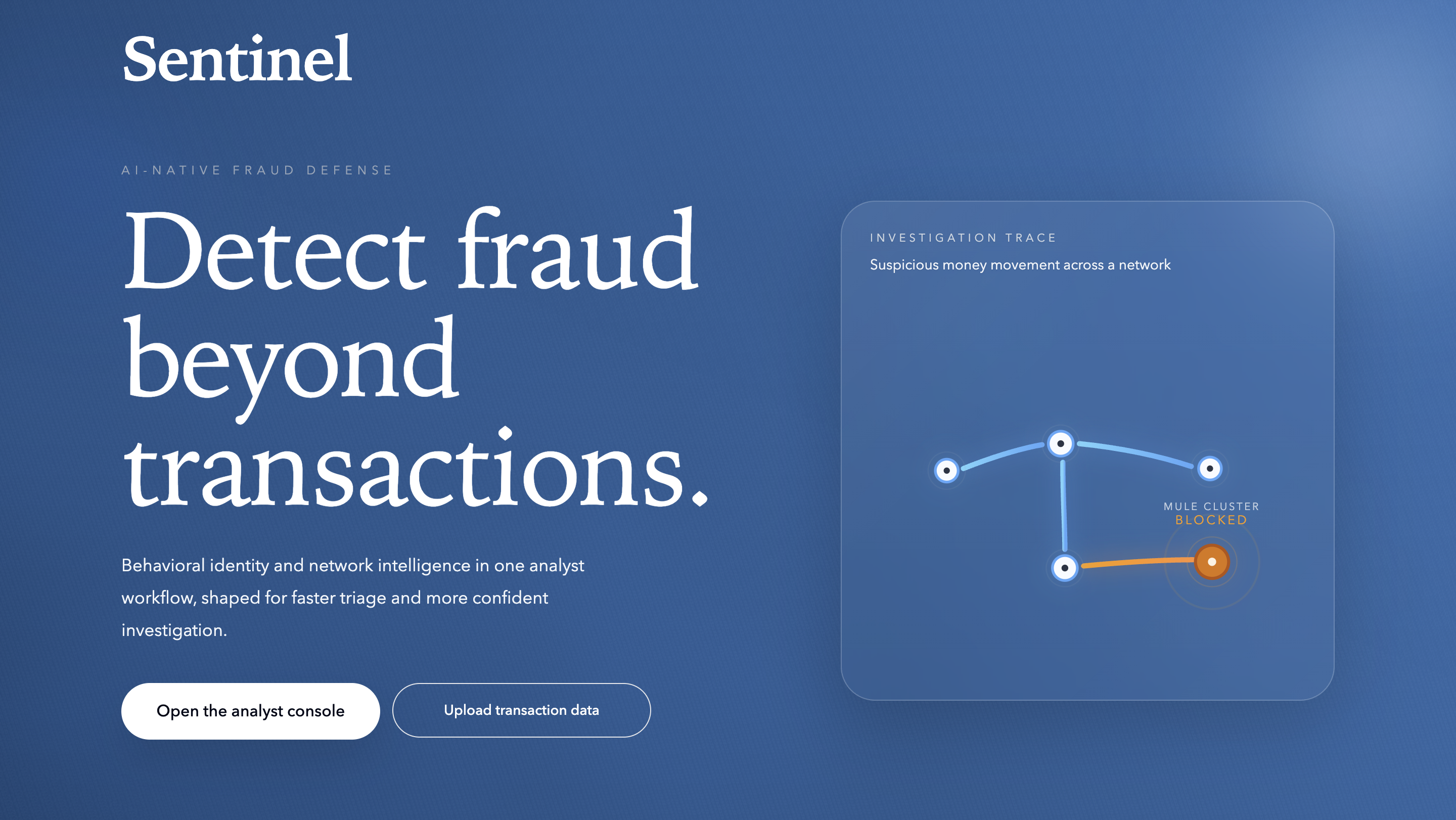
Sentinel landing page introducing real-time fraud detection and network intelligence.
-
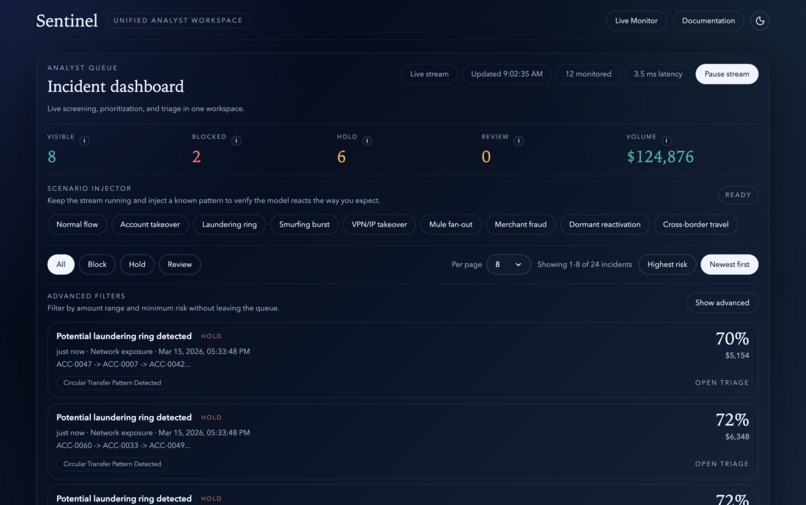
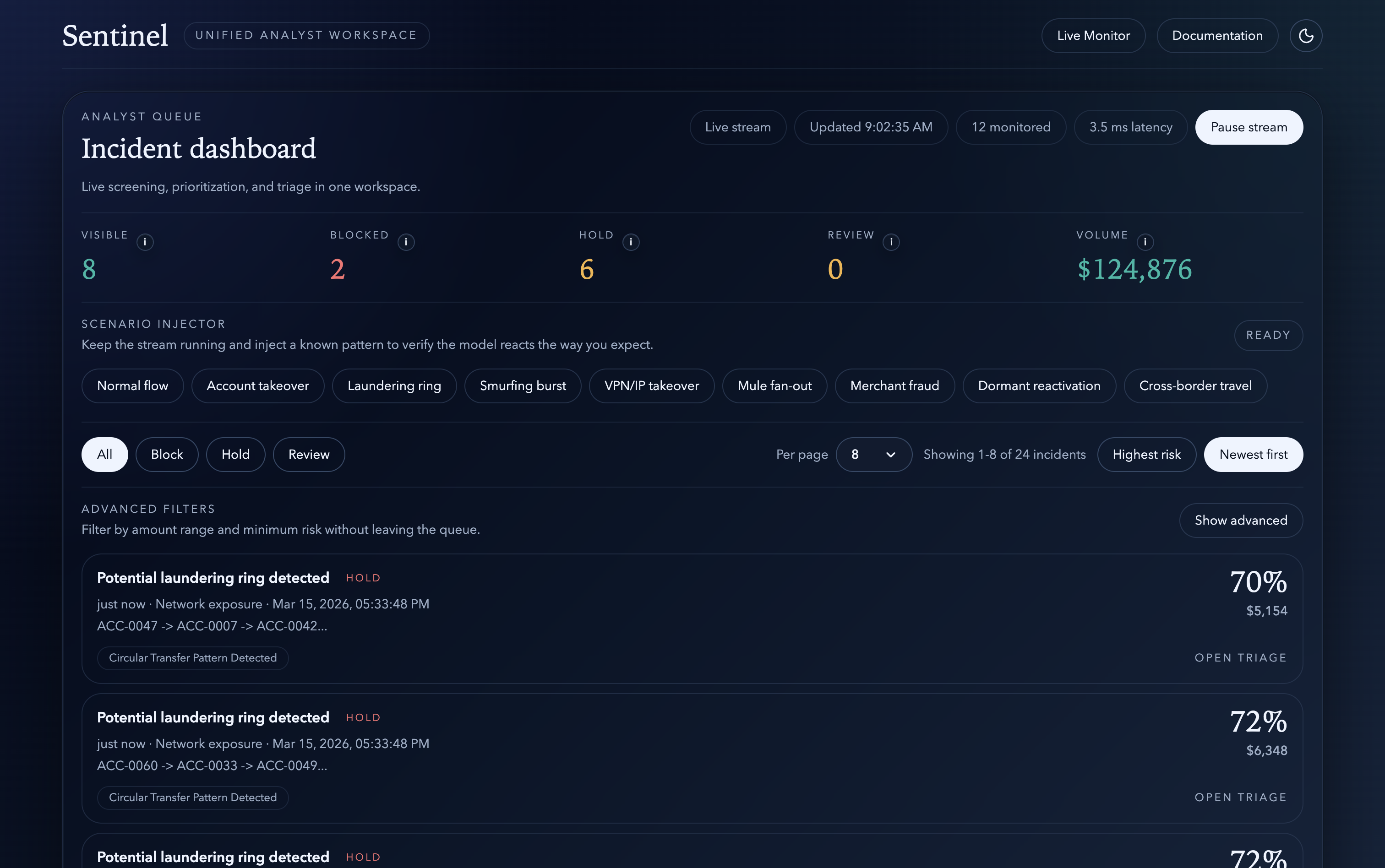
Incident dashboard in dark mode for live fraud monitoring and prioritization.
-
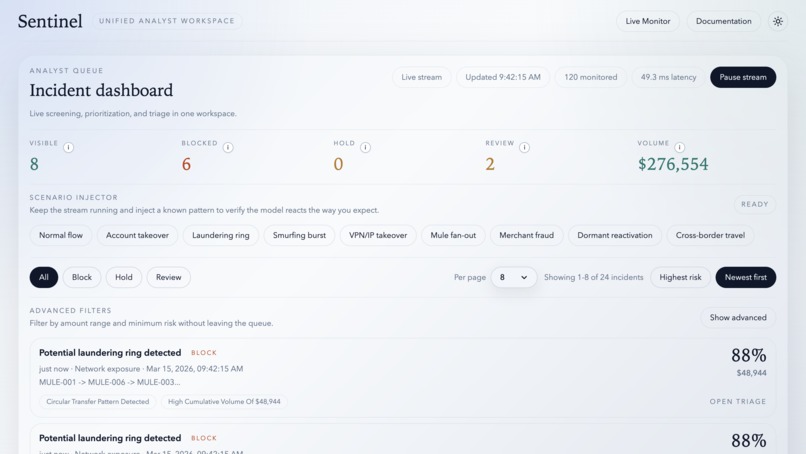
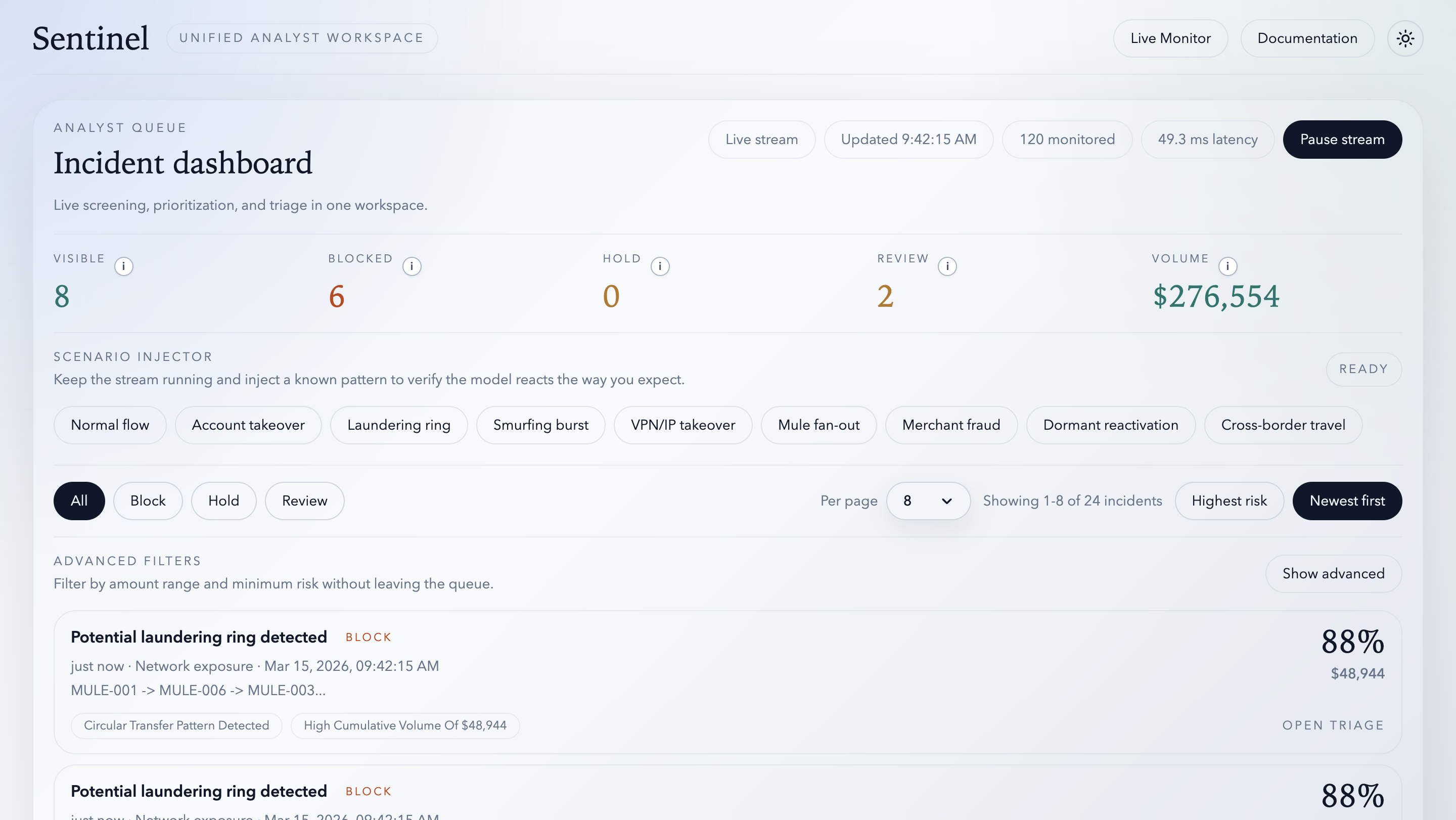
Incident dashboard in light mode for live fraud monitoring and prioritization.
-
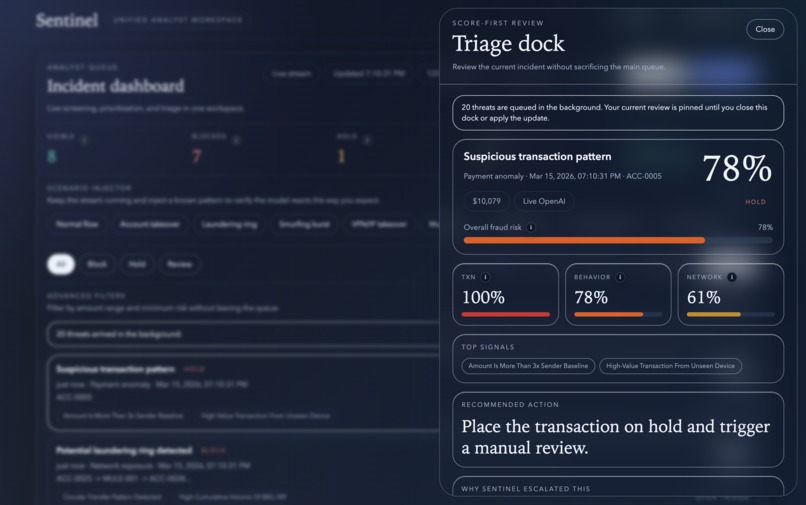
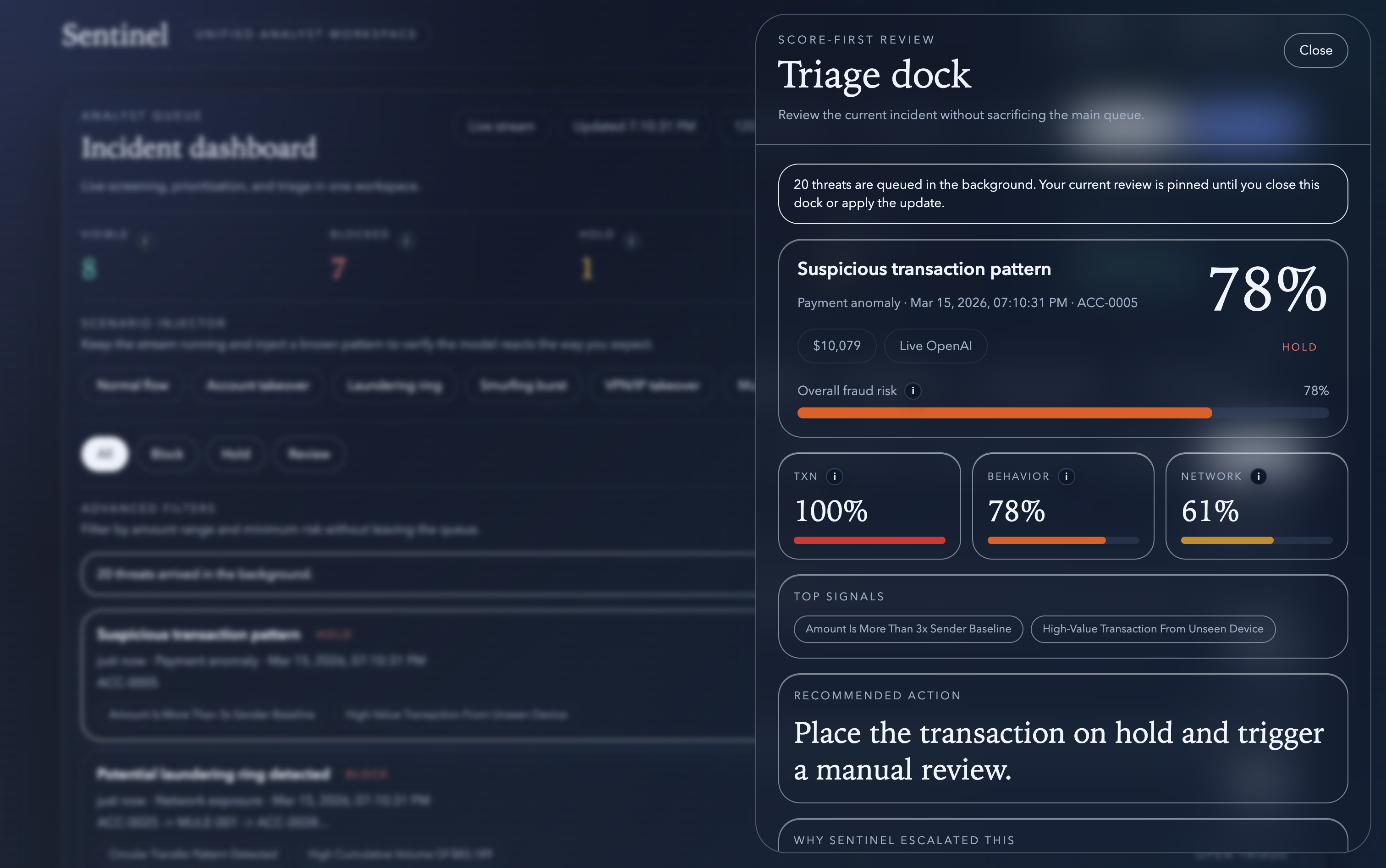
Triage dock in dark mode with explainable risk scoring and recommended actions.
-
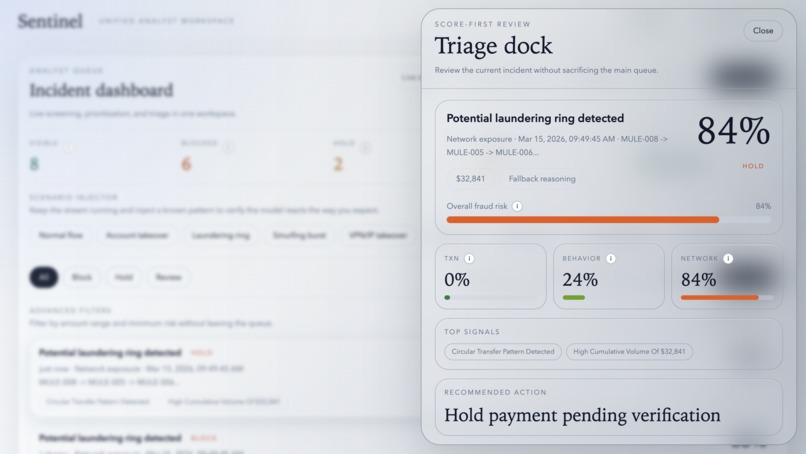
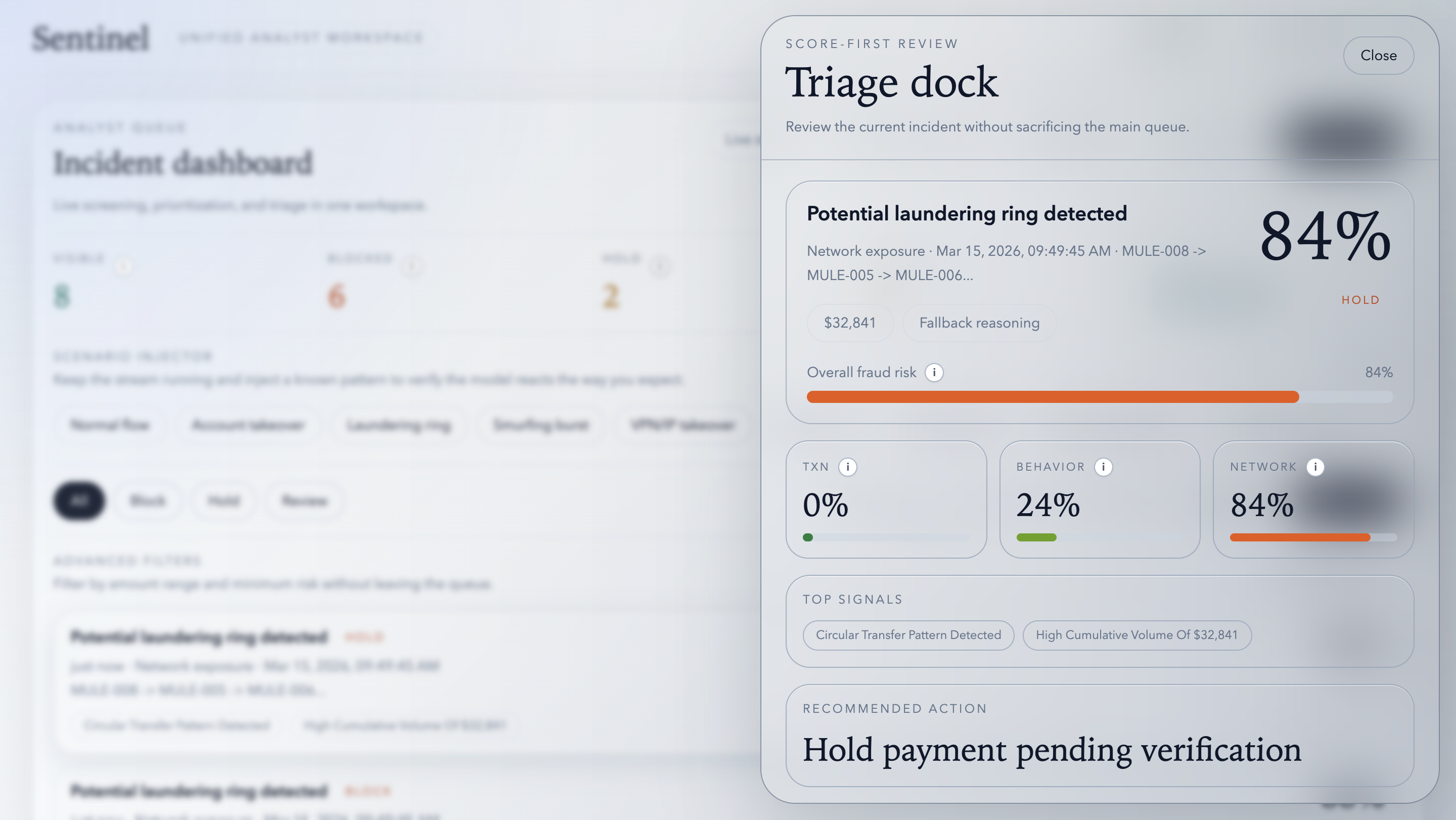
Triage dock in light mode with explainable risk scoring and recommended actions.
-
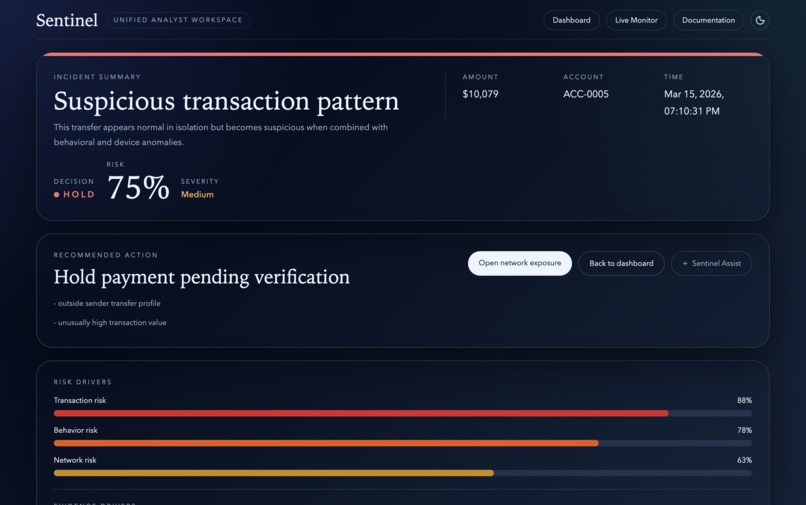
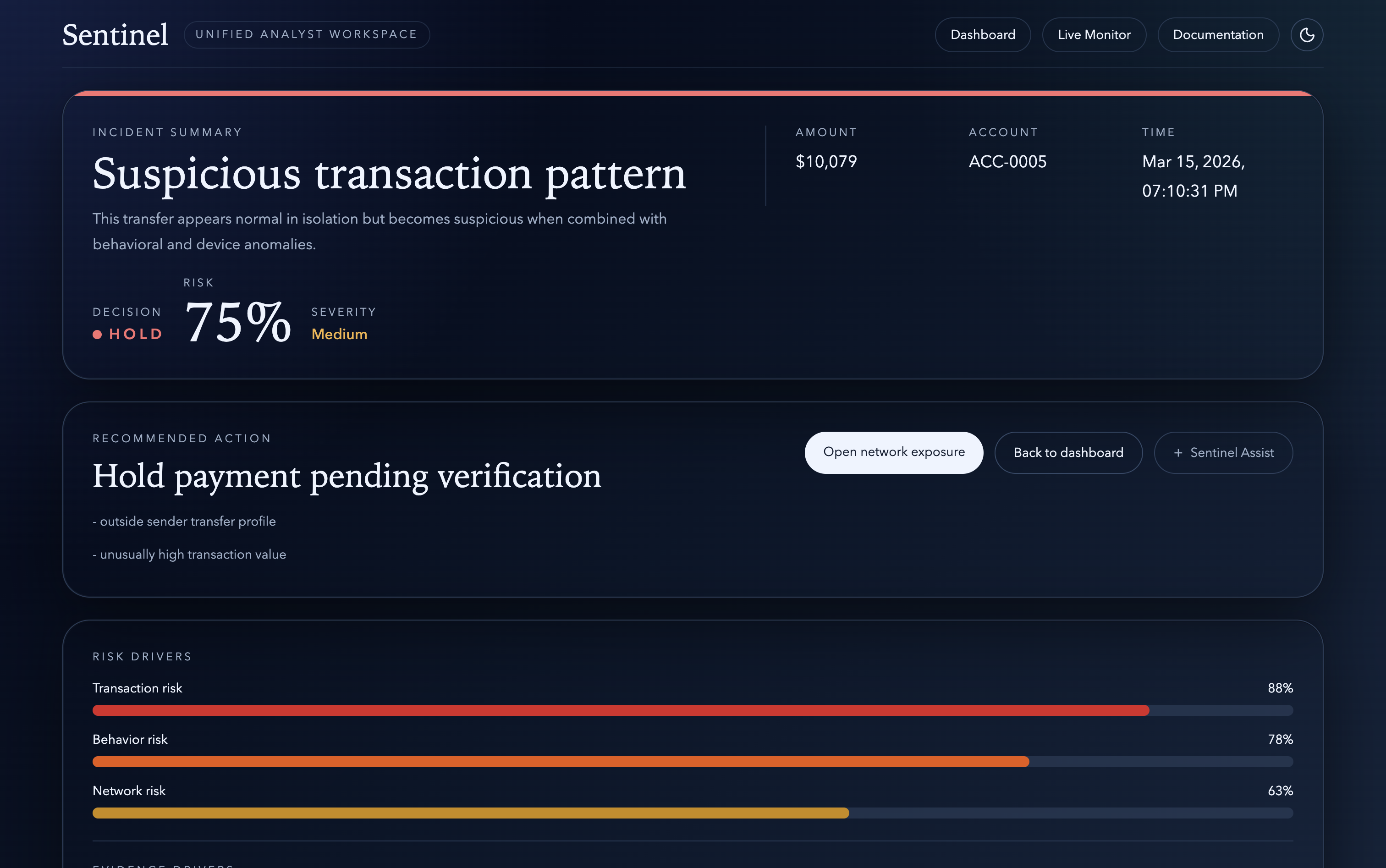
Detailed case view in dark mode showing fraud severity and hold recommendations.
-
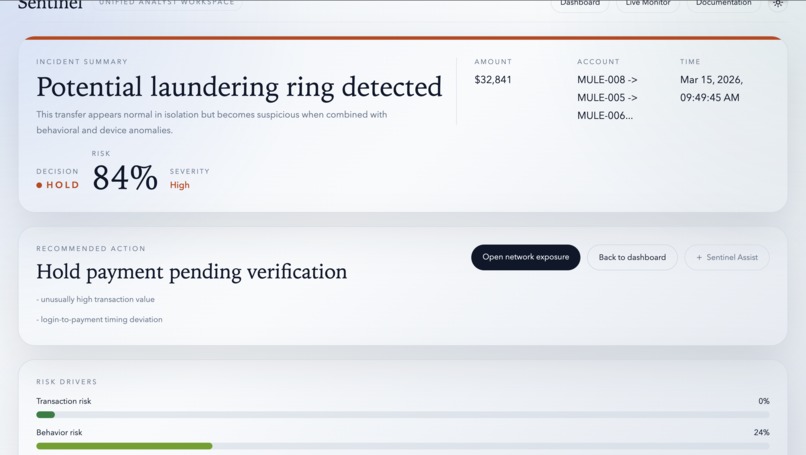
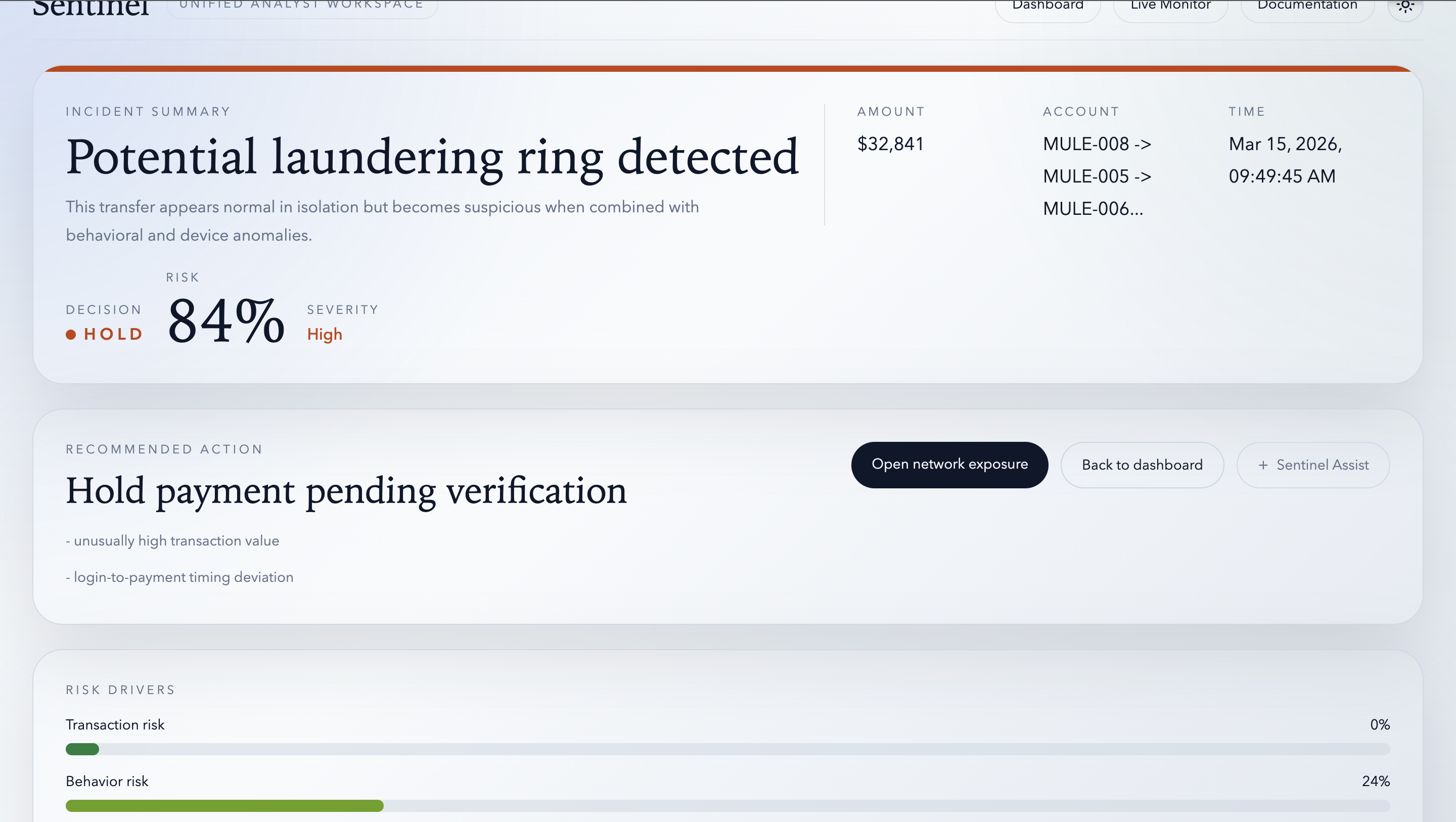
Detailed case view in light mode showing fraud severity and hold recommendations.
-
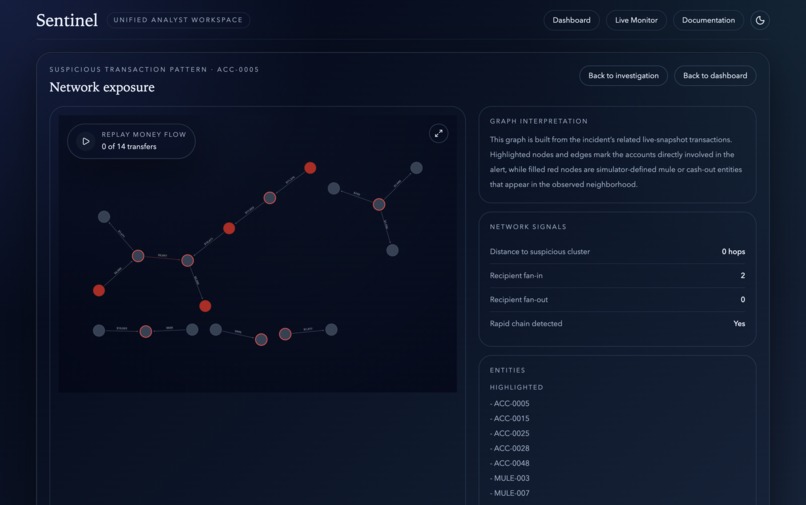
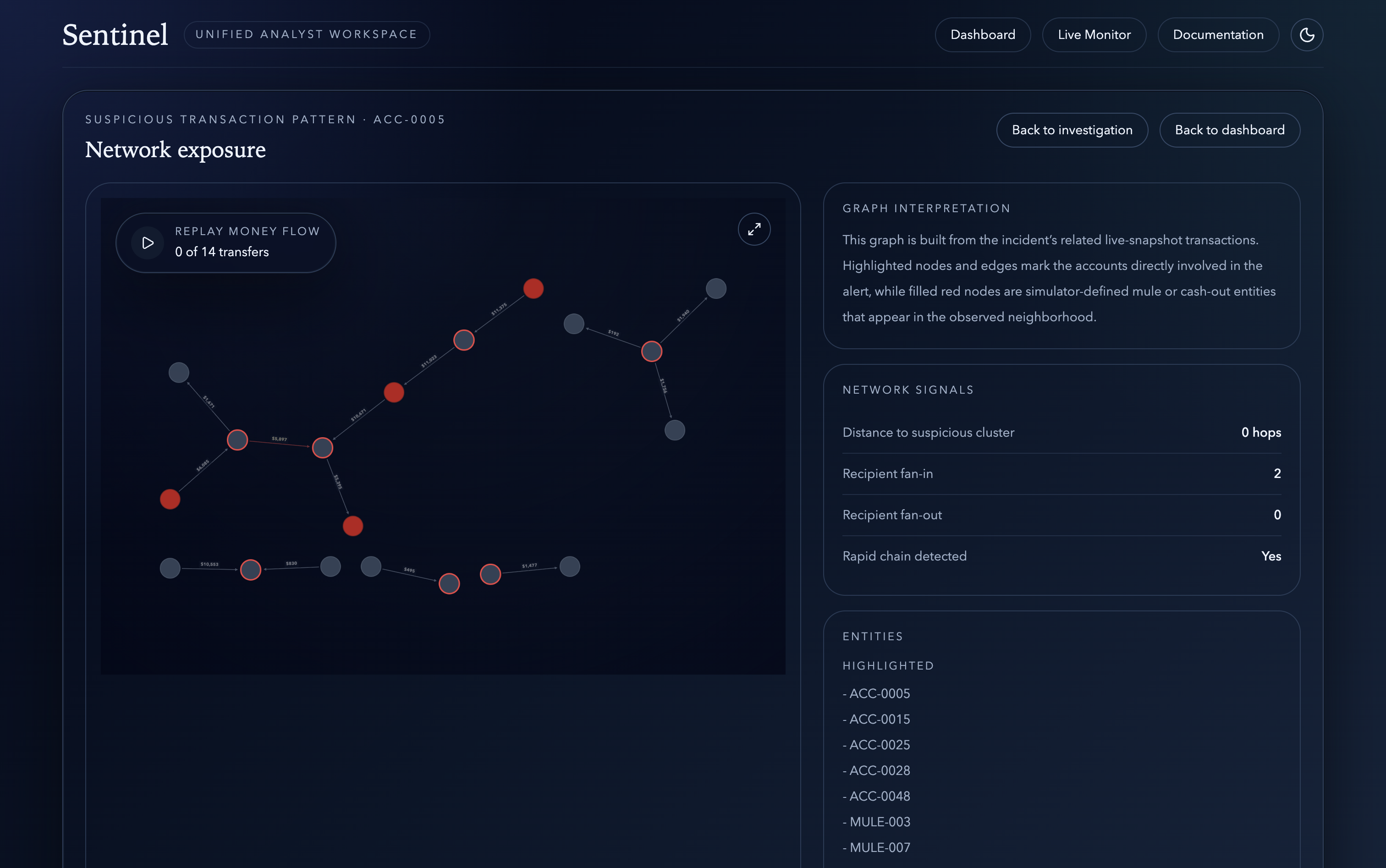
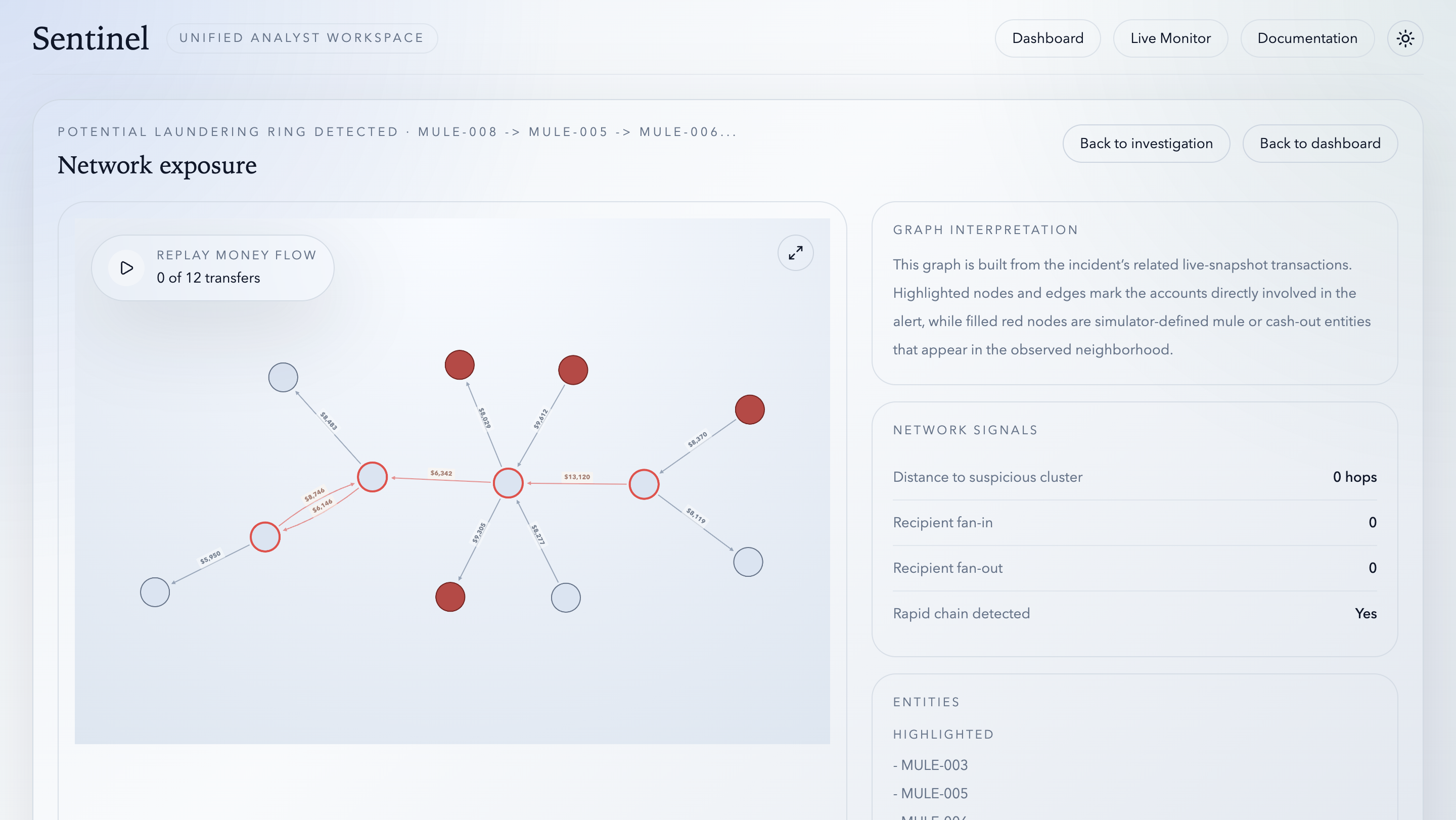
Network exposure panel in dark mode for tracing suspicious account relationships.
-
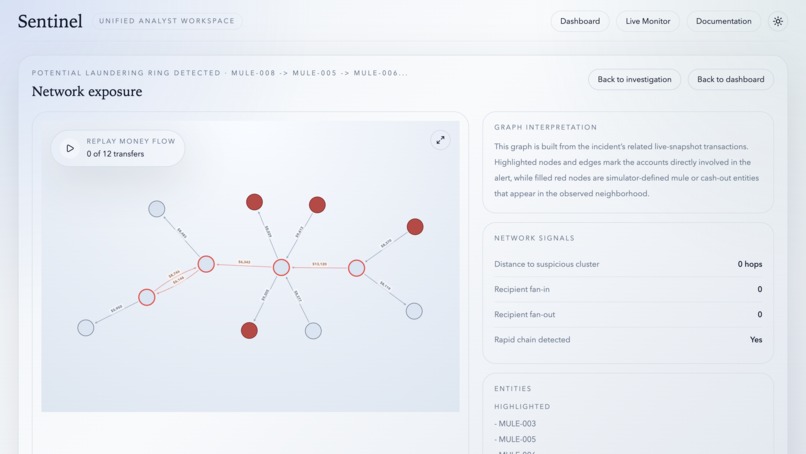
Network exposure panel in light mode for tracing suspicious account relationships.
-
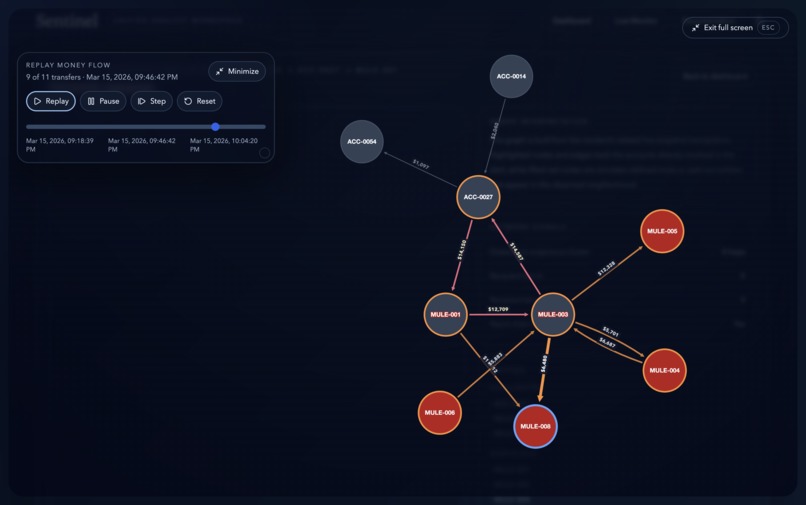
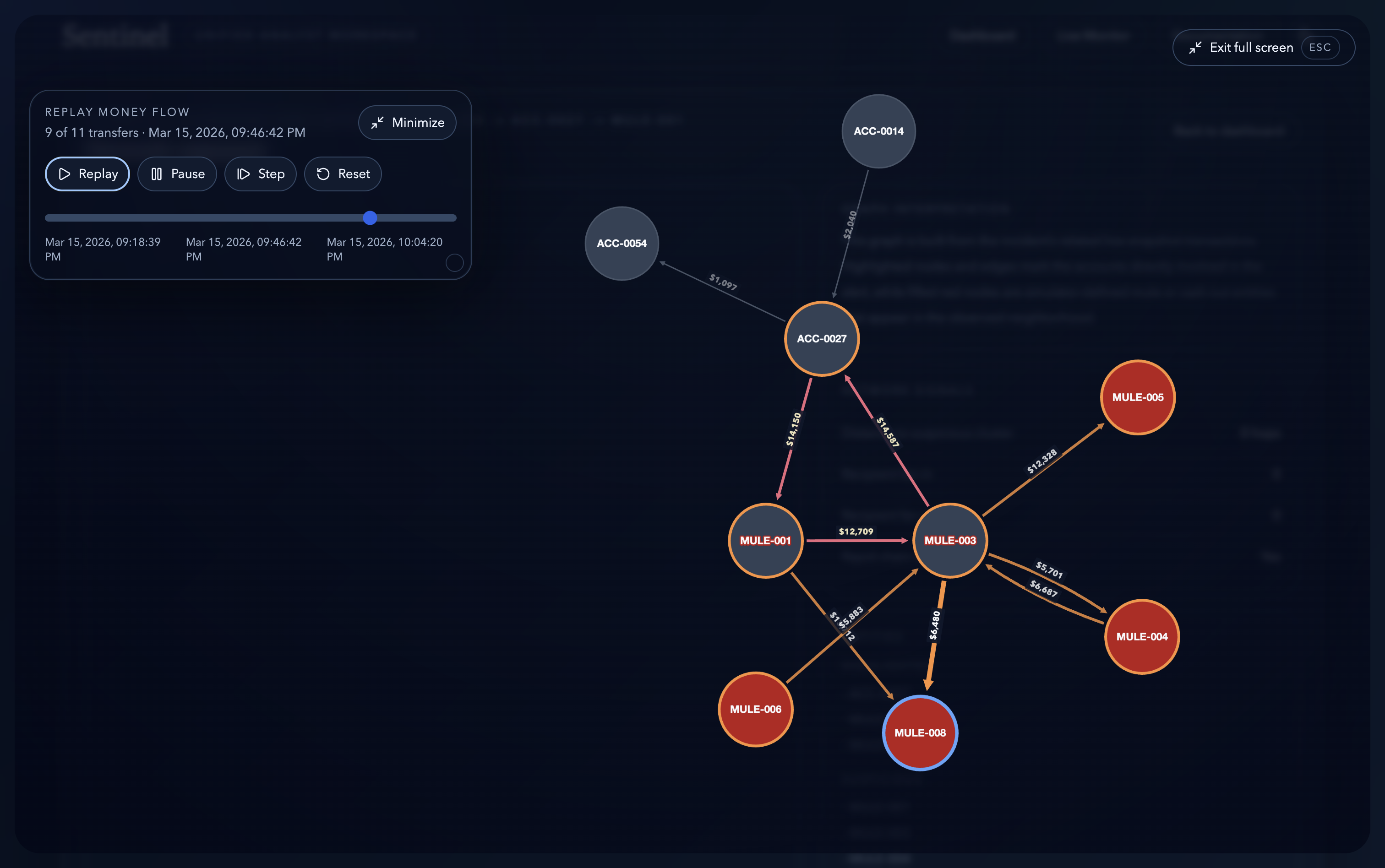
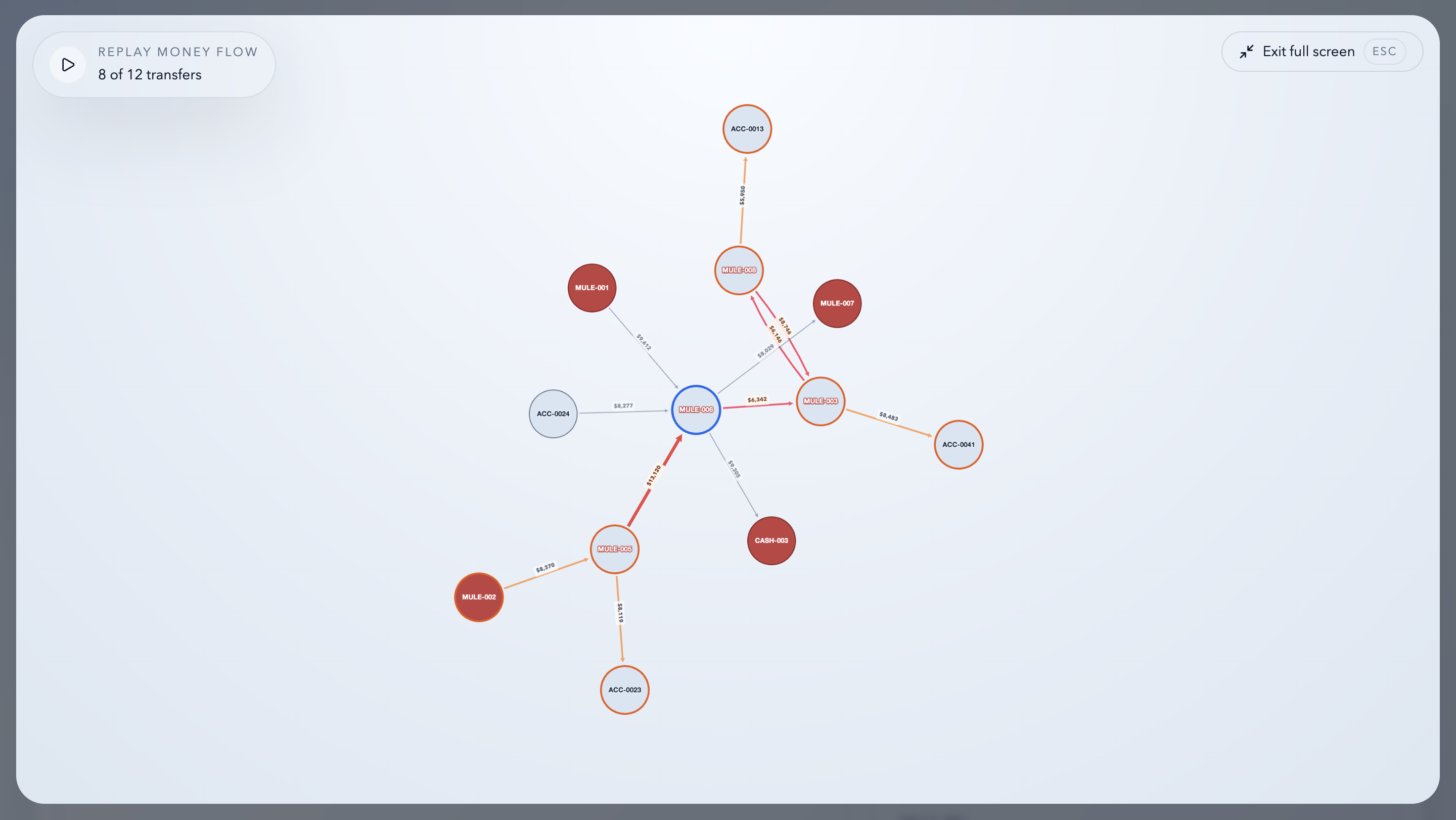
Entity graph in dark mode highlighting connected fraud rings and risky nodes.
-
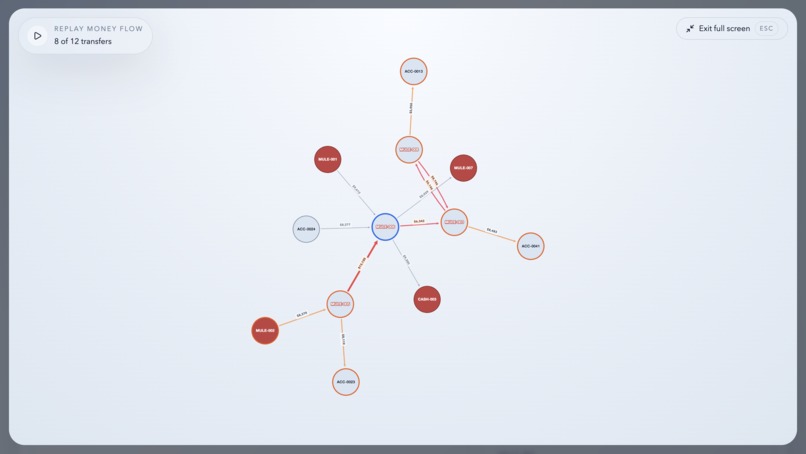
Entity graph in light mode highlighting connected fraud rings and risky nodes.
-
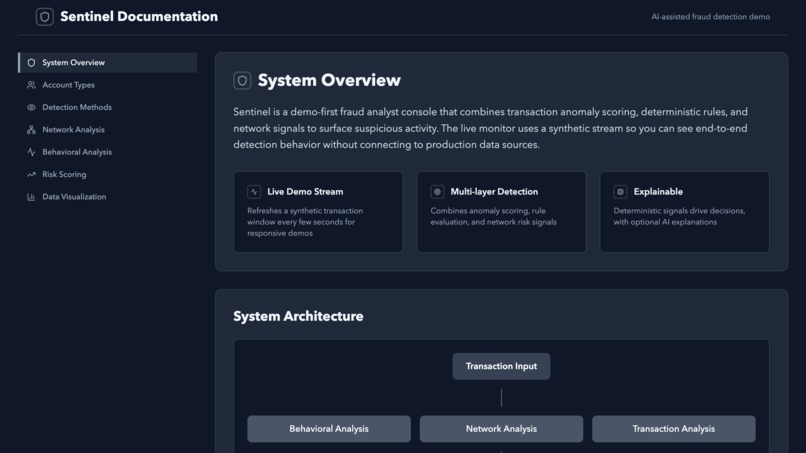
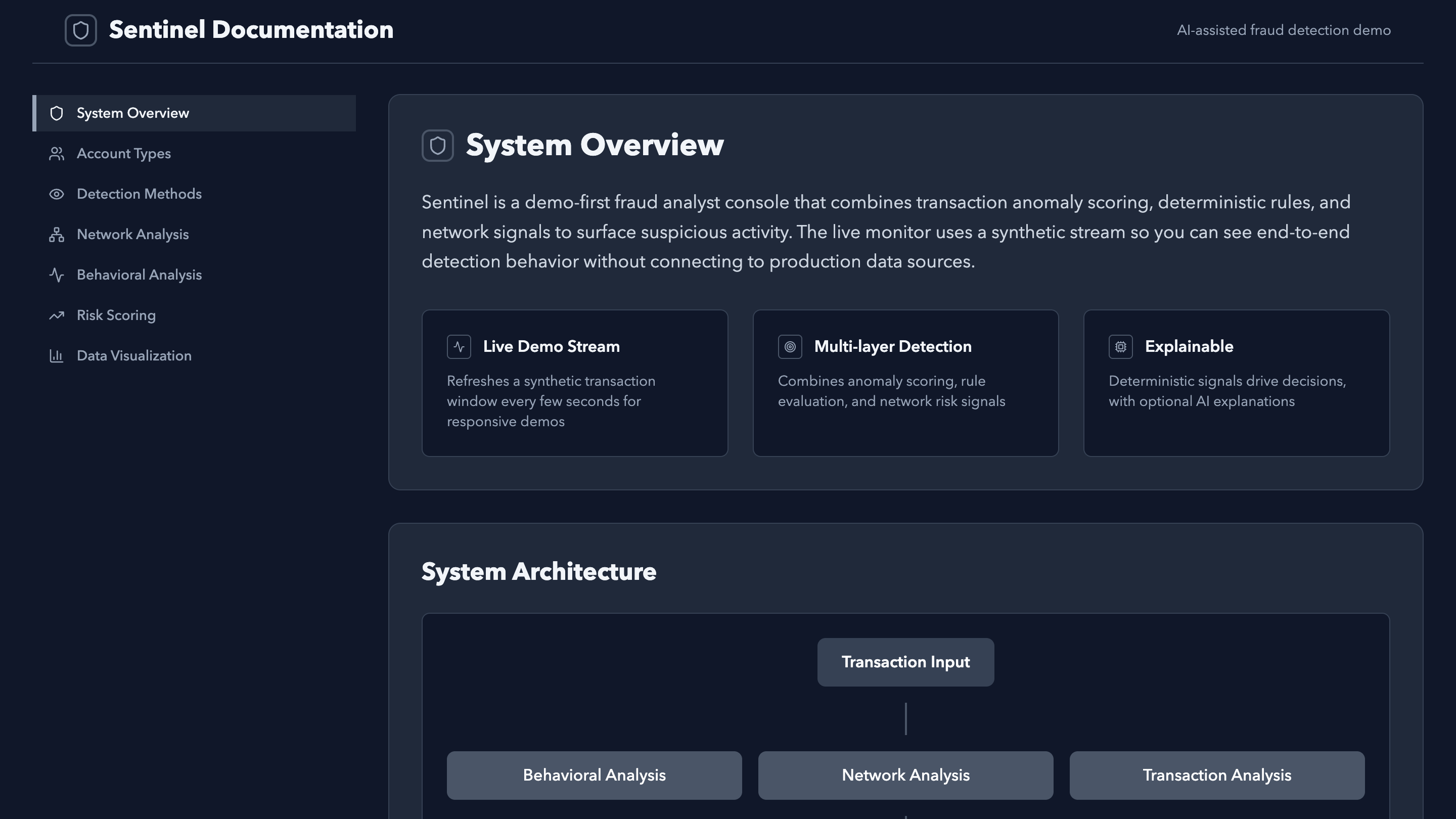
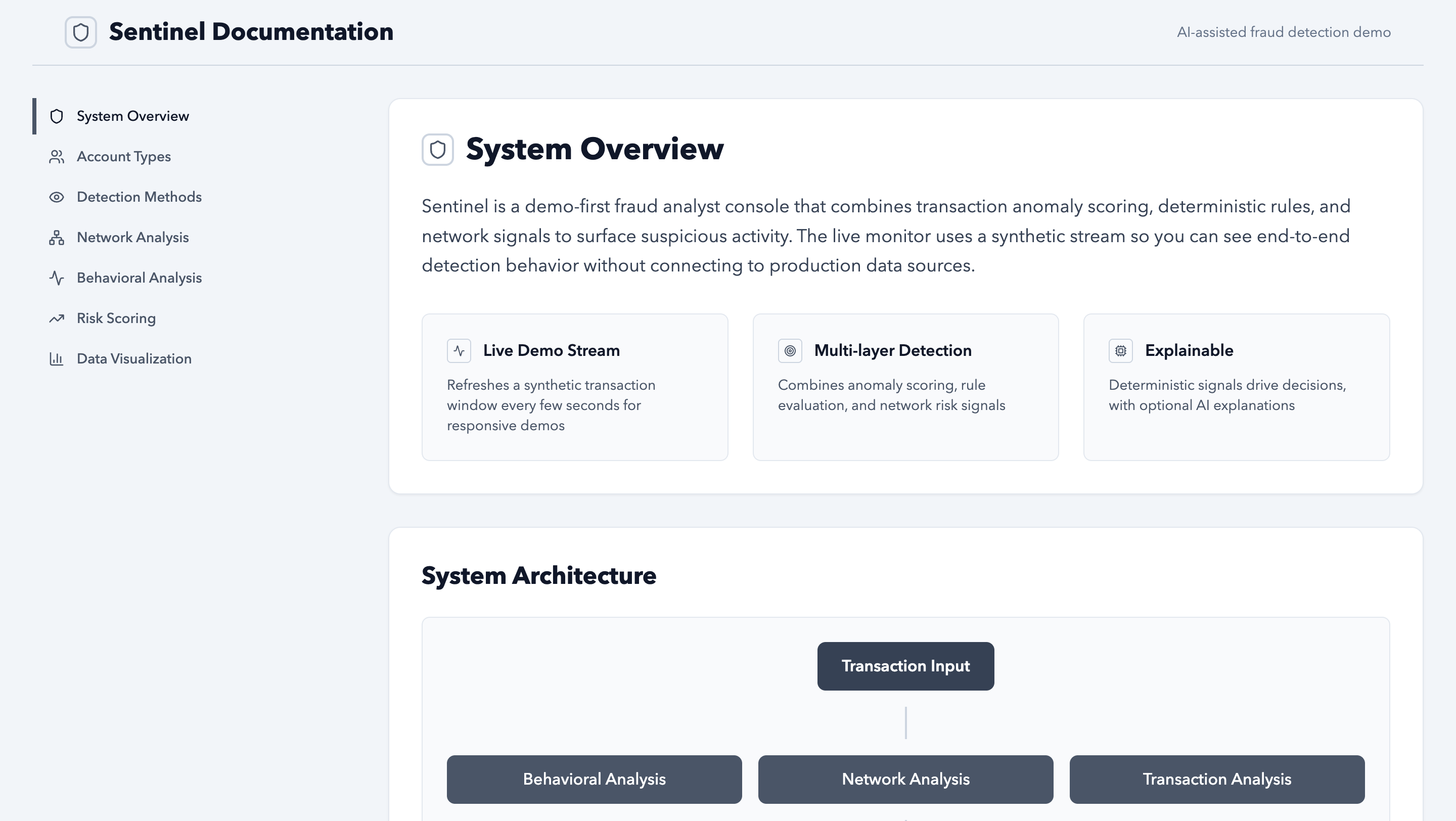
Sentinel documentation in dark mode explaining architecture and detection logic.
-
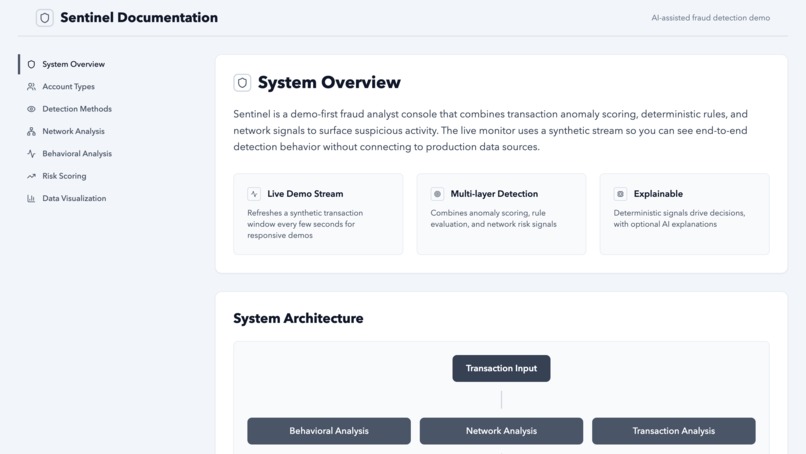
Sentinel documentation in light mode explaining architecture and detection logic.
-
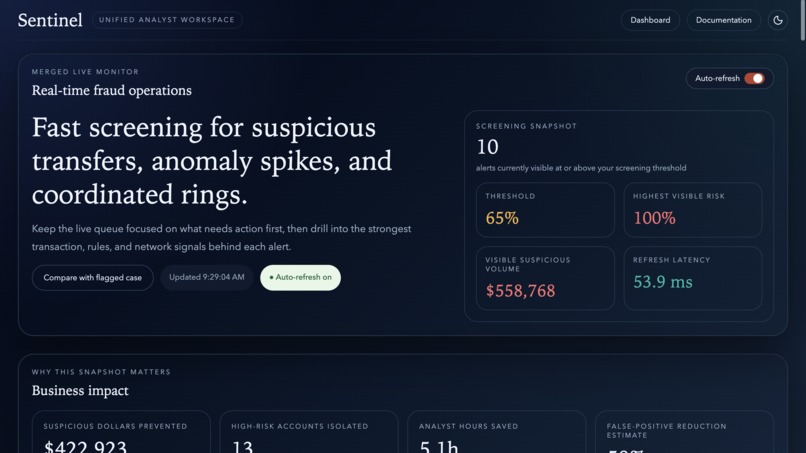
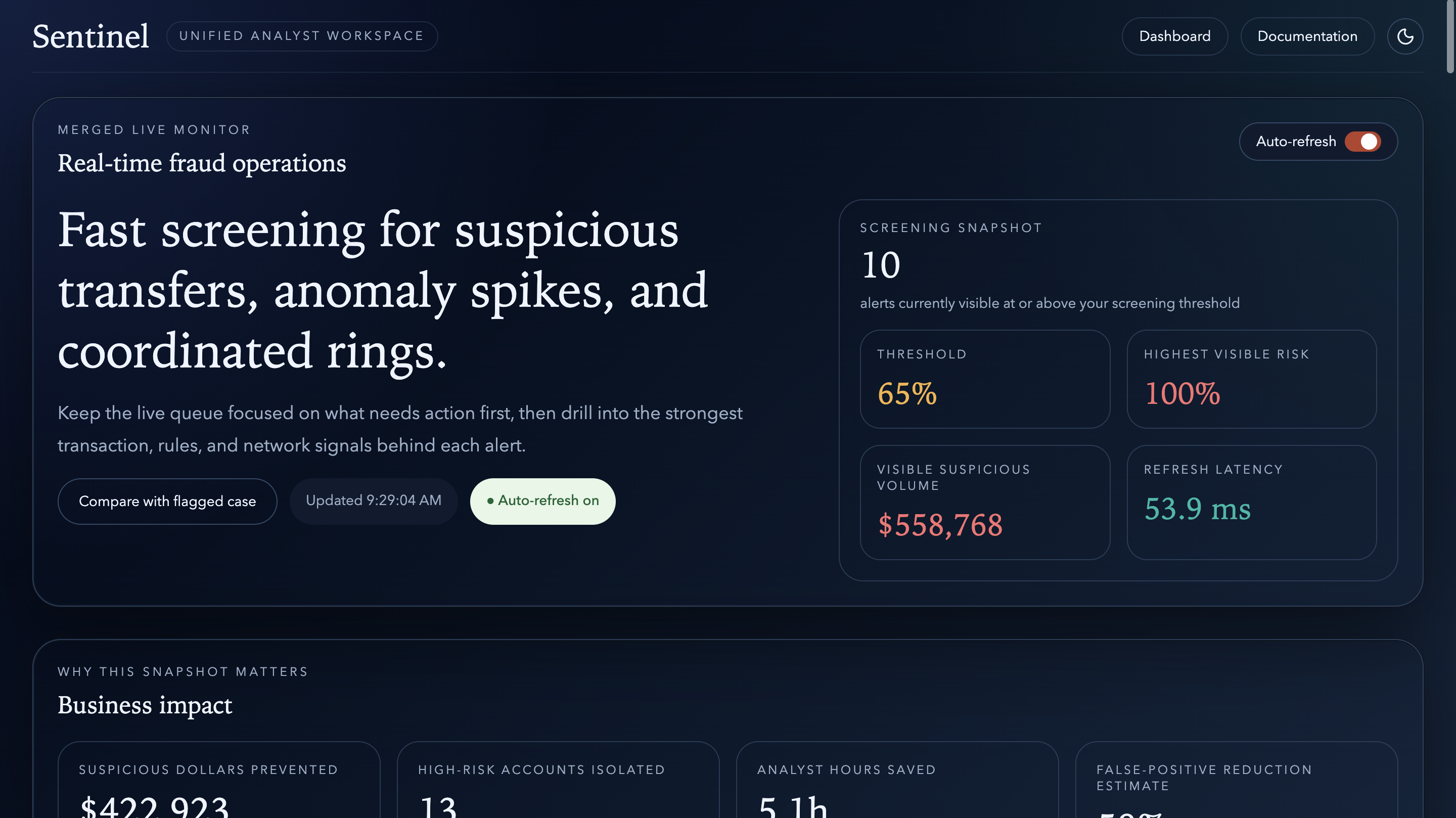
Live monitor in dark mode showing real-time risk and business impact metrics.
-
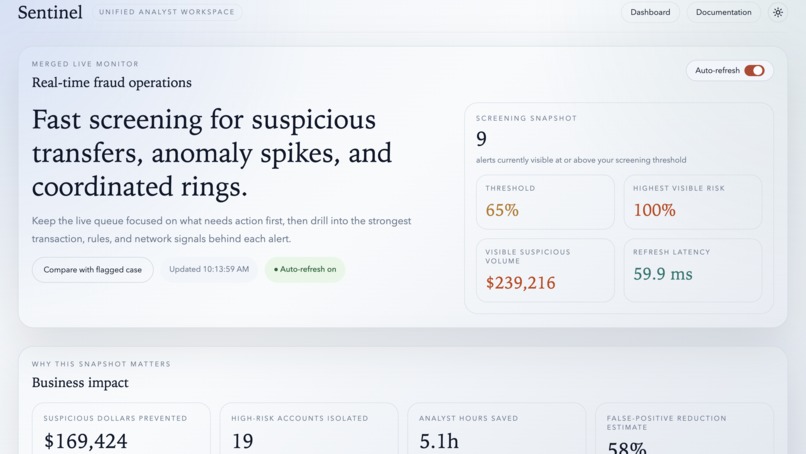
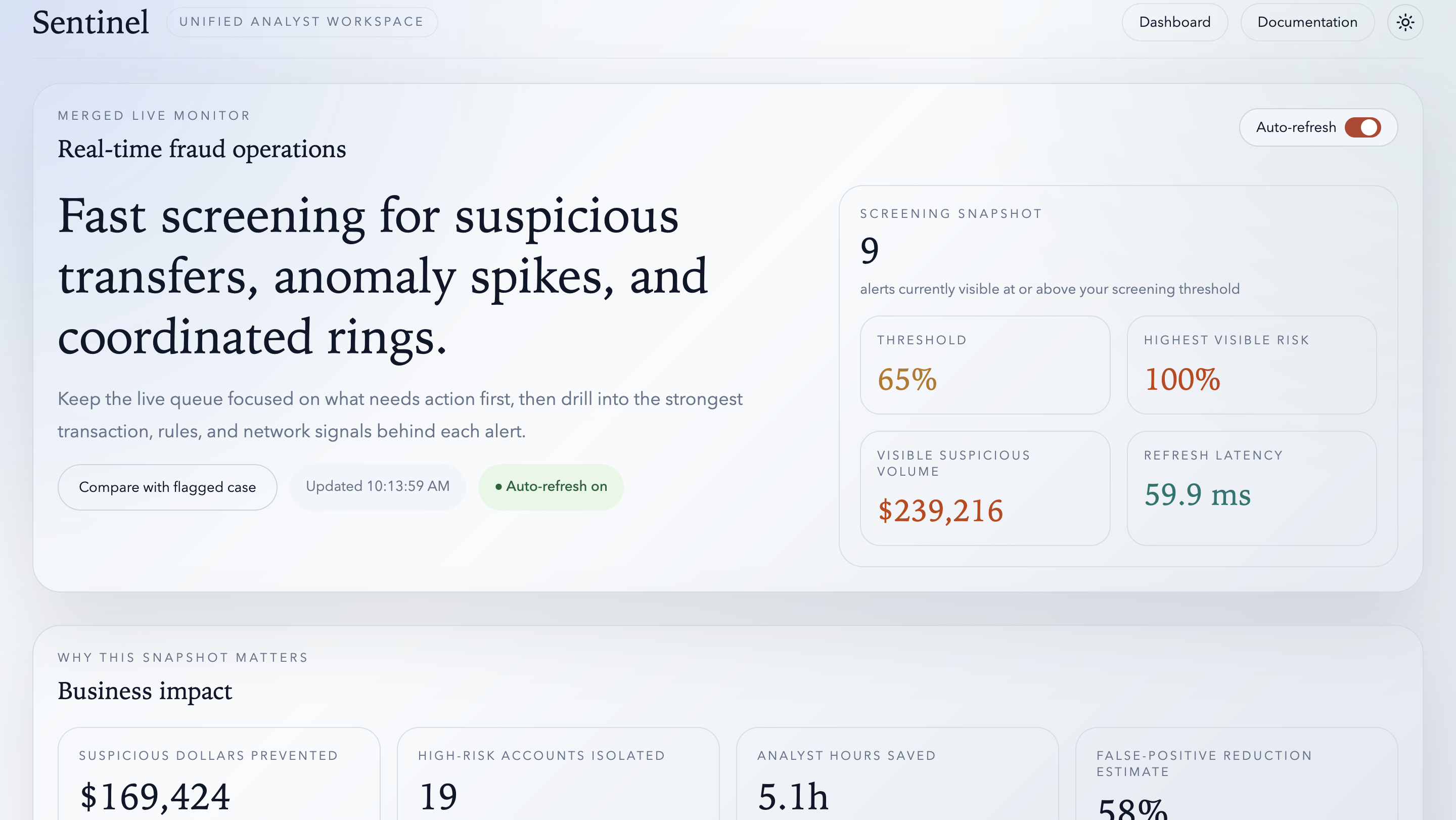
Live monitor in light mode showing real-time risk and business impact metrics.
-
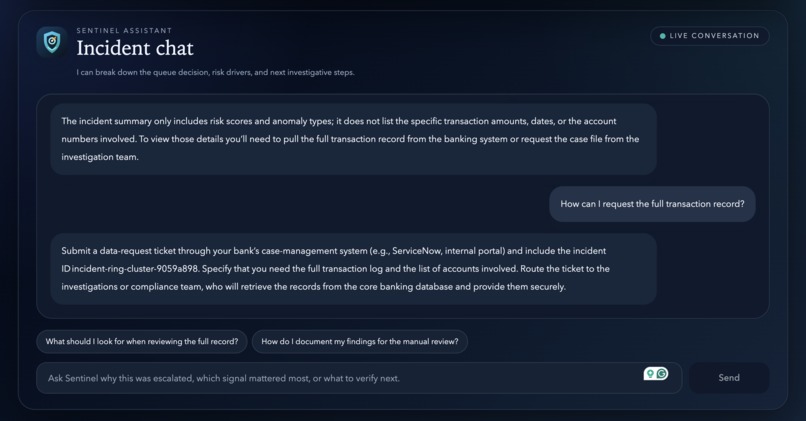
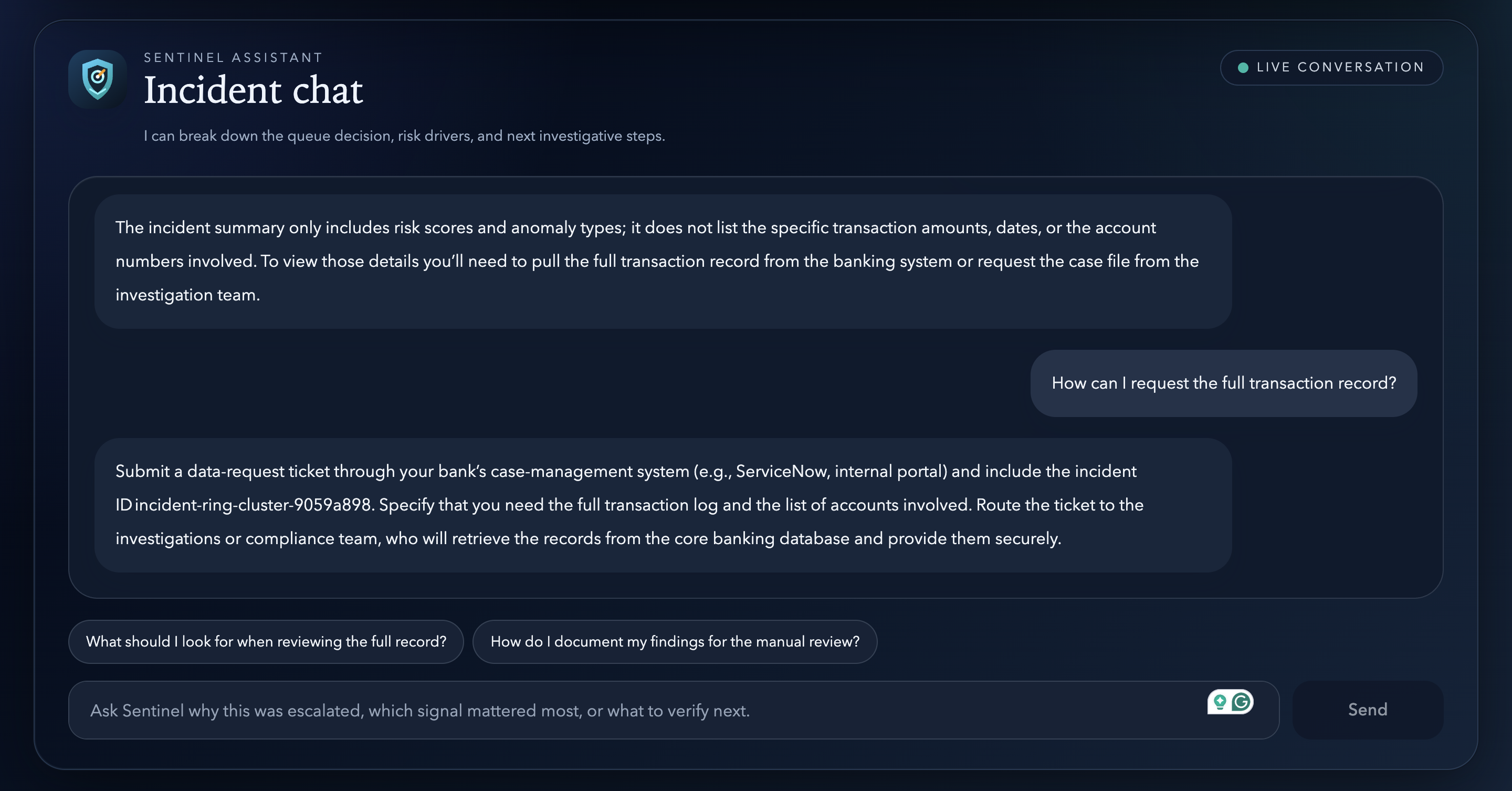
AI chatbot that explains why a fraud case was flagged, which signals mattered most, and what analysts should verify next.
Inspiration 💡
Financial fraud evolves faster than traditional review workflows can keep up. We wanted to build something that feels like a real analyst workspace instead of a static model demo — a platform that can detect suspicious transfers in real time, uncover hidden laundering rings and network exposure, and clearly explain why a transaction was escalated. Sentinel was inspired by the gap between how quickly fraud tactics change and how slow, manual, and fragmented many investigation tools still are.
What it does 🚨
Sentinel is an AI-powered fraud operations platform for real-time transaction monitoring. It analyzes live transaction streams, scores suspicious activity, detects coordinated laundering rings and unusual money movement, and prioritizes the highest-risk cases for review. Analysts can investigate alerts through an incident queue, decision-logic breakdowns, business impact metrics, network exposure graphs, and supporting documentation. Sentinel also includes scenario injection for demos and a CSV upload workflow that mirrors the live monitoring experience.
How we built it 🛠️
We built Sentinel with a FastAPI backend and a Next.js frontend. On the backend, we designed a modular fraud detection pipeline so each signal type could be scored independently and then combined into a final decision. Our rule engine captures deterministic fraud indicators like rapid transfer velocity, new-device activity, unusual geography, and circular transfer behavior. Alongside that, we use Isolation Forest for anomaly detection to identify transactions that deviate from a customer’s normal behavior, helping us catch suspicious activity that fixed rules alone might miss. We also added graph-based network analysis to detect coordinated rings, linked accounts, and suspicious money flow patterns.
On the frontend, we turned those outputs into an analyst-friendly experience with live monitoring, incident triage, interactive graph exploration, documentation, and explainable risk summaries. We also built decision-point explanations, counterfactual reasoning, business impact metrics, and an incident chatbot so users can understand not just that a case was flagged, but why it was flagged and what to investigate next.
Architecture Overview
| Layer | Technology | Purpose |
|---|---|---|
| Frontend | Next.js 15, React 19, TypeScript, Tailwind CSS | Powers the analyst workspace, dashboards, and investigation flows |
| Visualization | Cytoscape.js, Recharts, React Three Fiber | Supports network graphs, business-impact metrics, and experimental 3D views |
| Backend | FastAPI, Python | Handles fraud scoring, incident APIs, live monitoring, and upload processing |
| Data Processing | pandas, networkx | Powers transaction analysis, graph-based detection, and network exposure modeling |
| AI / Explanation Layer | OpenAI-compatible chat flows, deterministic fallback logic | Generates incident explanations and keeps demos reliable even without a live model |
| Live Monitoring | Synthetic live transaction stream | Simulates real-time fraud activity for monitoring and demo scenarios |
| Upload Analysis | CSV upload pipeline | Lets users analyze external transaction datasets in the same Sentinel workflow |
| Investigation Layer | Incident queue, triage panels, graph exploration | Helps analysts review flagged cases, understand score drivers, and trace suspicious flows |
Challenges we ran into ⚠️
One of our biggest challenges was validating how closely our synthetic data reflects real-world financial fraud. Because access to production-grade fraud data is limited, we had to simulate suspicious behaviors and laundering patterns as realistically as possible. That gave us a strong environment for building and demonstrating Sentinel, but it also raised an important question: how well do these patterns map to the complexity of real financial systems? This challenge pushed us to think more carefully about evaluation, realism, and how to make the platform more production-ready over time.
Accomplishments that we’re proud of 🏆
We’re proud that Sentinel feels like a complete product, not just a model demo. It brings together live fraud monitoring, explainable scoring, network analysis, scenario injection, documentation, and business-facing metrics in one cohesive experience. We’re especially proud of the decision logic layer, which shows what pushed an alert from review to block, and the business impact panel, which translates technical detections into clear operational value. We also built a polished visual identity and a smooth workflow that makes the demo compelling and easy to present.
What we learned 📚
We learned that in fraud detection, accuracy alone is not enough. People need to understand why the system made a decision and what action should happen next. We also learned how important interface and workflow design are when presenting AI systems — trust comes from clarity, not just model complexity. On the technical side, we gained valuable experience building full-stack real-time systems, stabilizing graph-based visualizations, and turning raw fraud signals into investigator-friendly explanations.
What’s next for Sentinel 🚀
Next, we want to make Sentinel even more production-ready. That includes adding stronger evaluation metrics, more realistic fraud scenarios, smarter graph layouts, and a cleaner presenter mode for live demos. We also want to expand the upload pipeline so users can bring in their own datasets and instantly receive actionable fraud insights. Longer term, Sentinel could evolve into a full fraud operations copilot that helps analysts investigate, explain, and respond to suspicious activity at scale.


Log in or sign up for Devpost to join the conversation.