-
-
Thumbnail
-
-
-
-
-
-
-
-
-
-
-
-
-
-
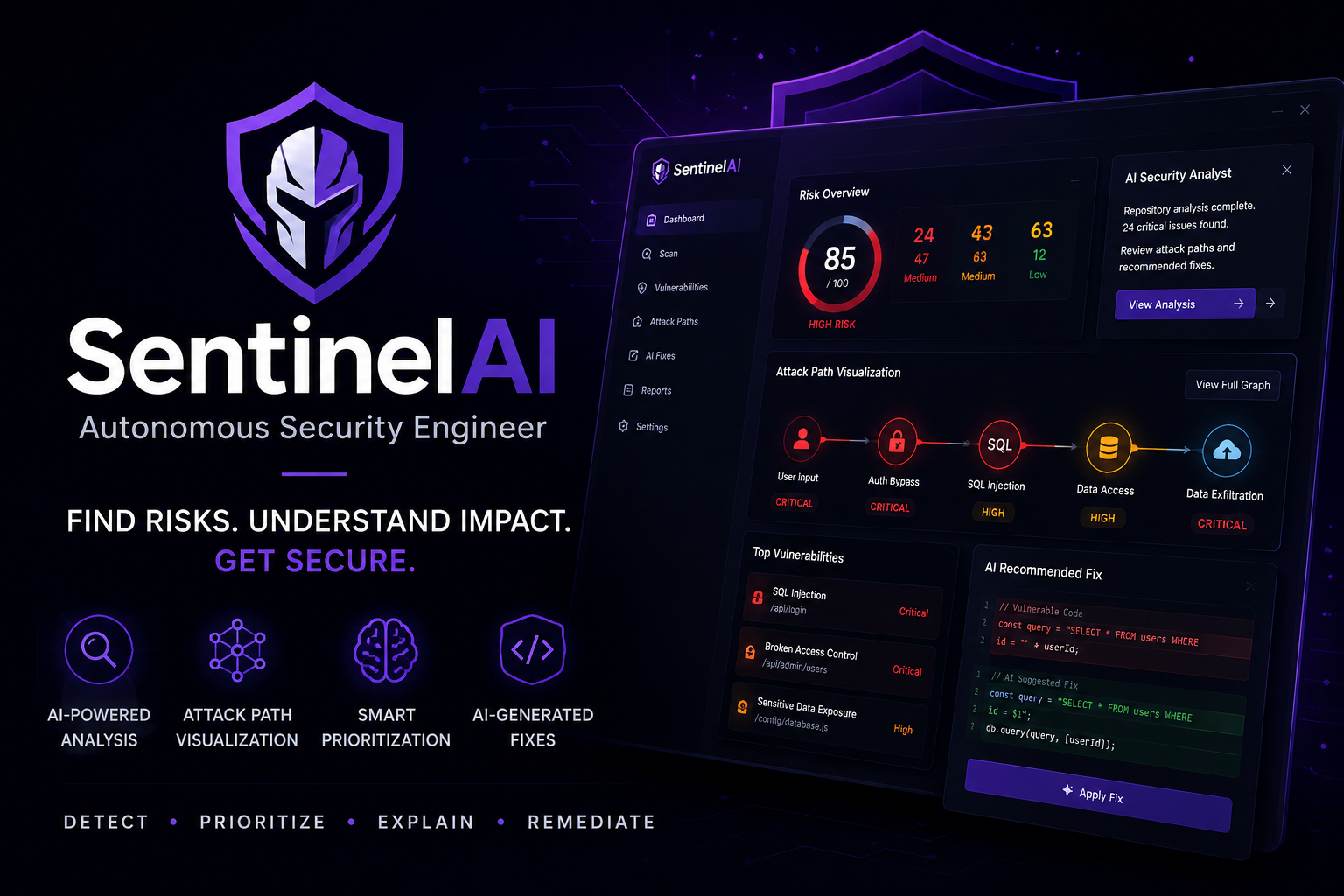
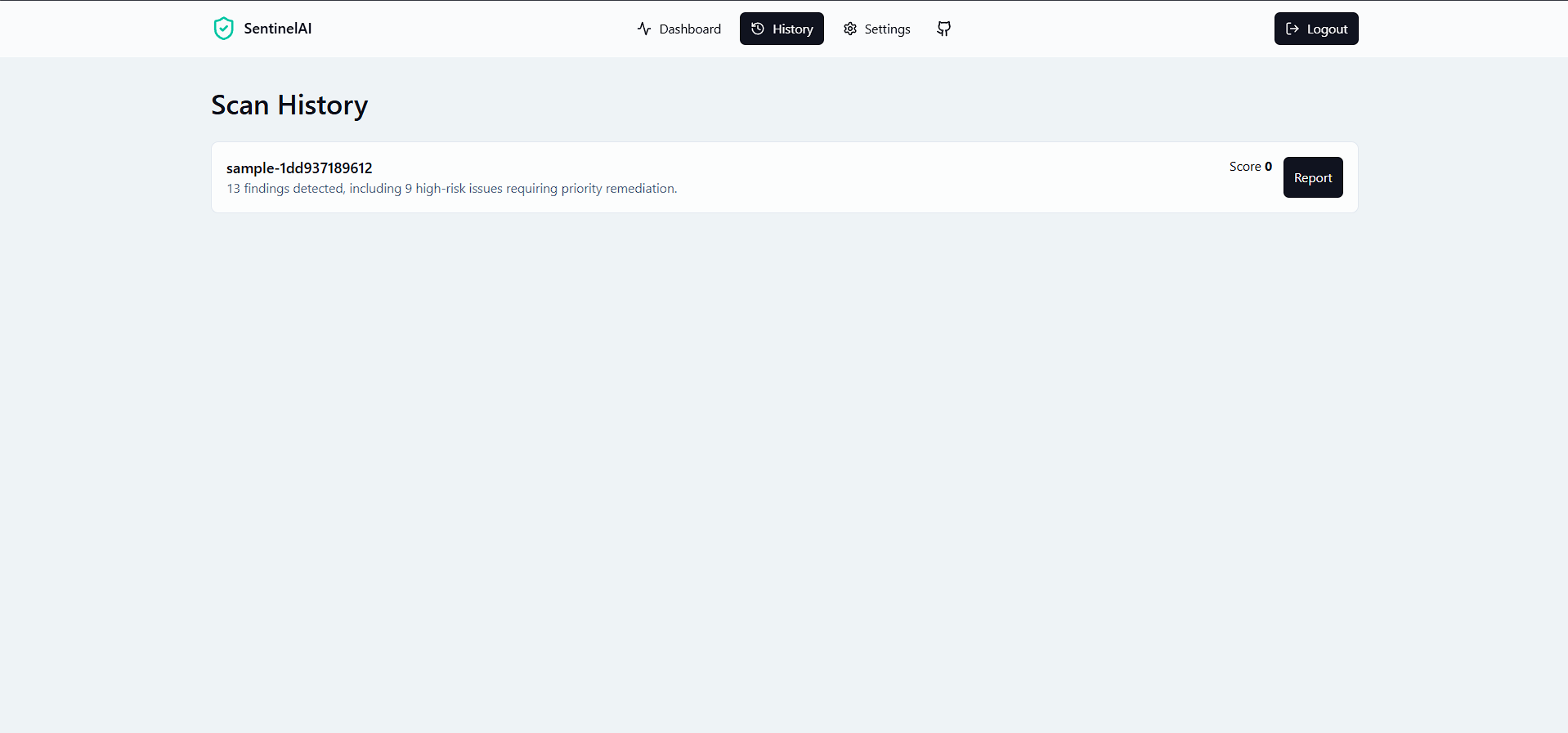
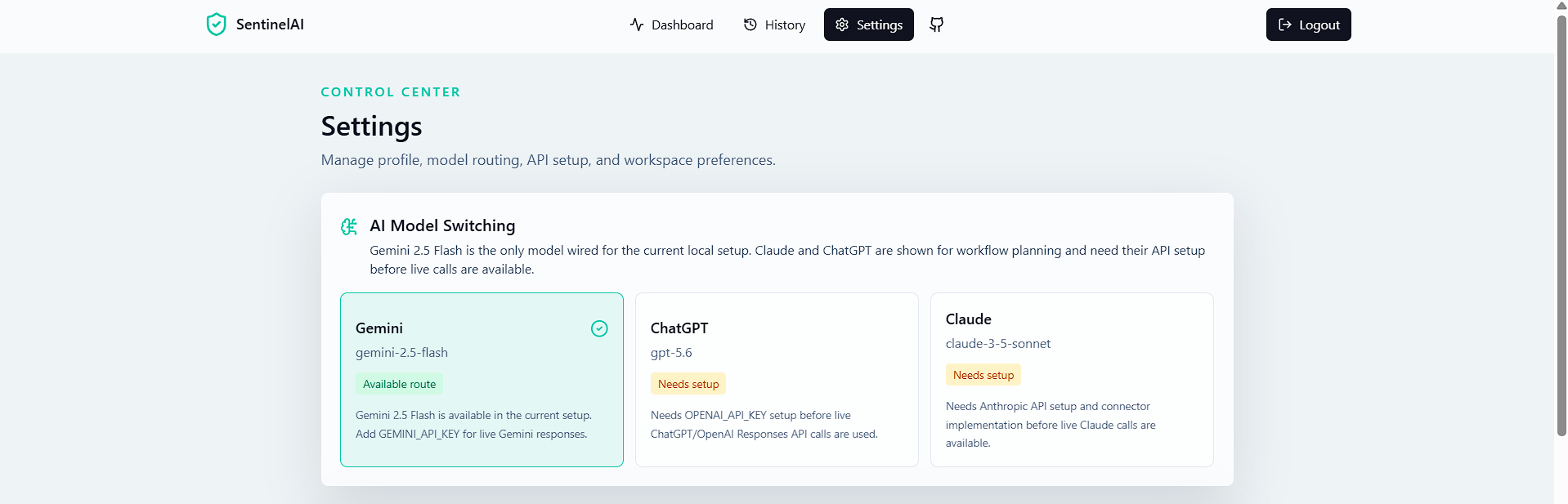
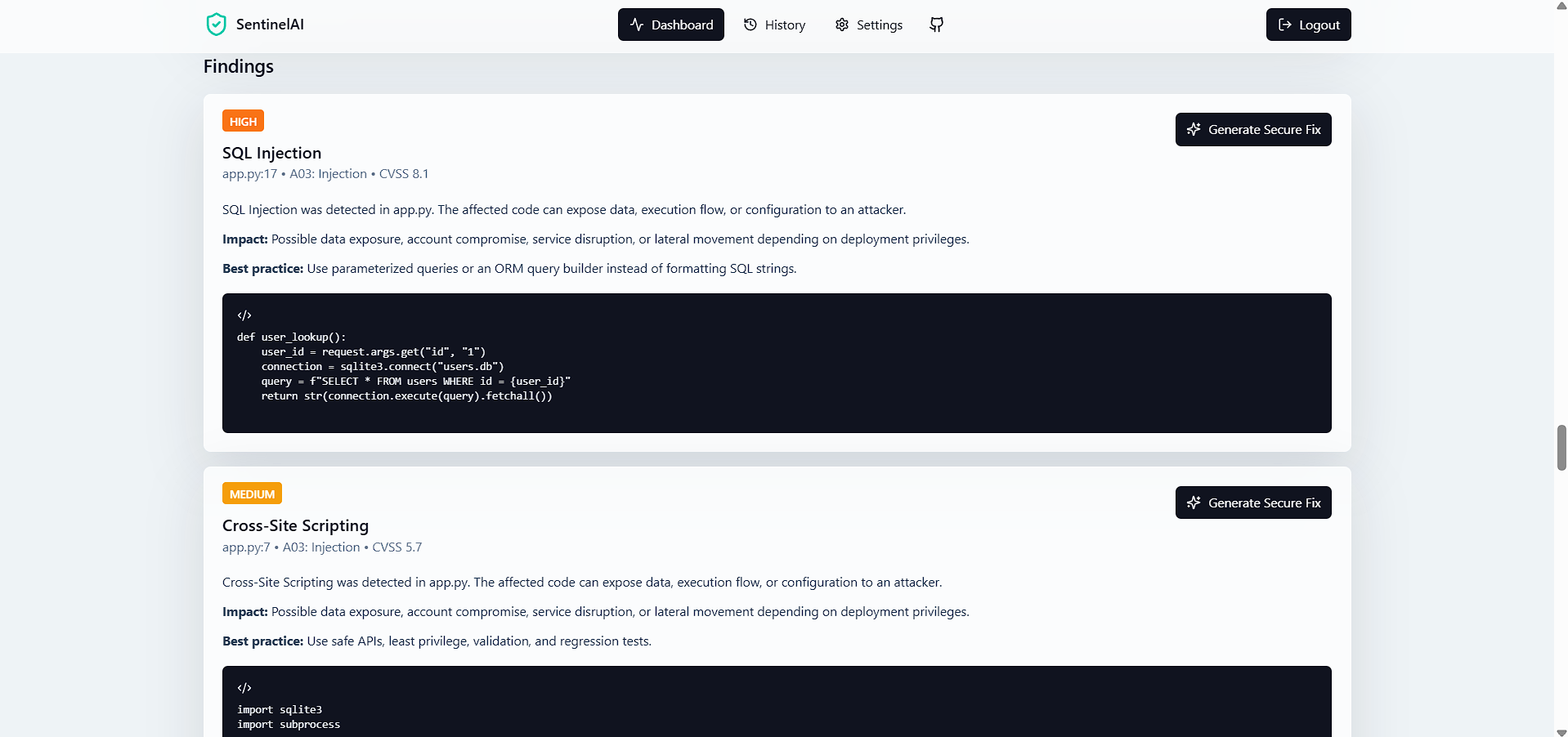
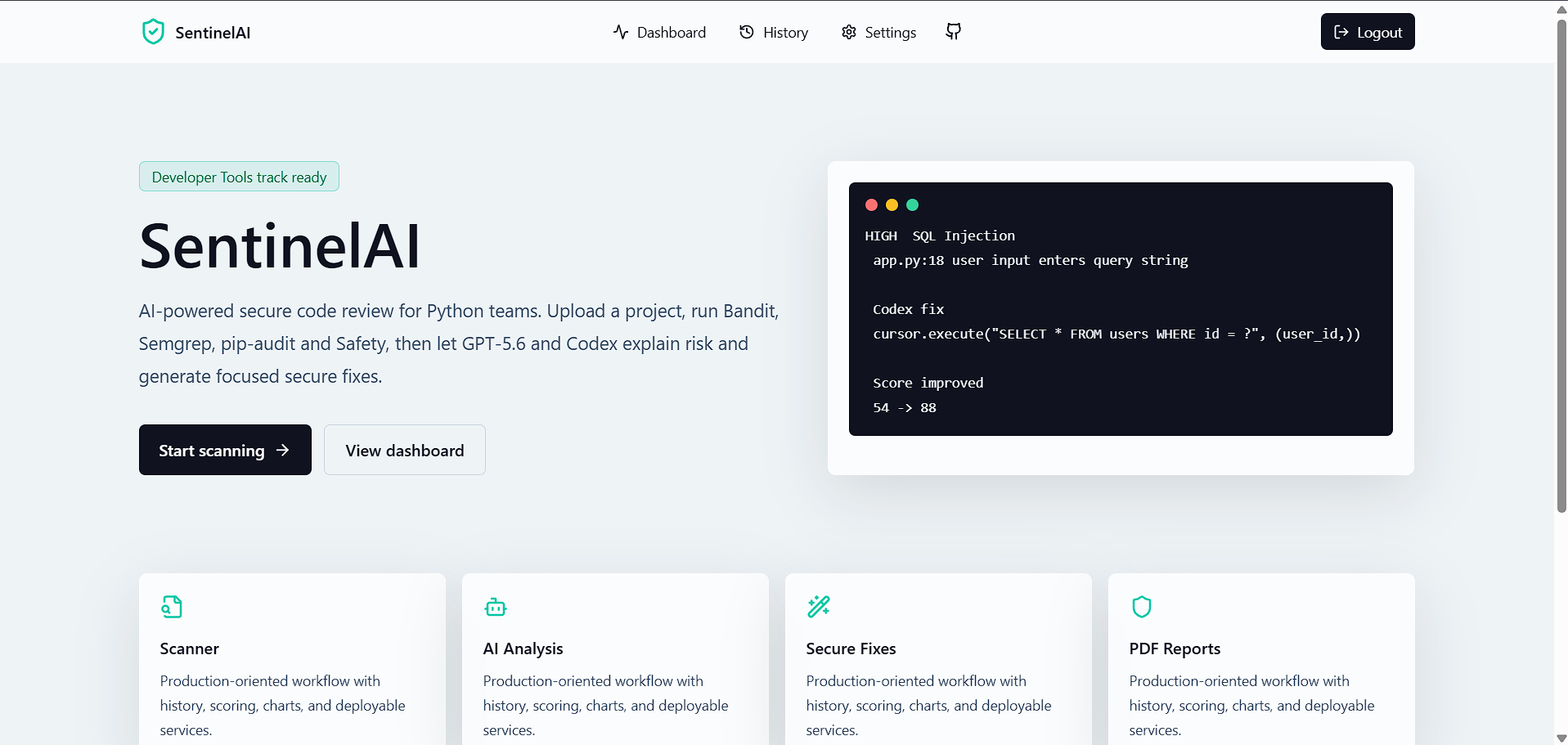
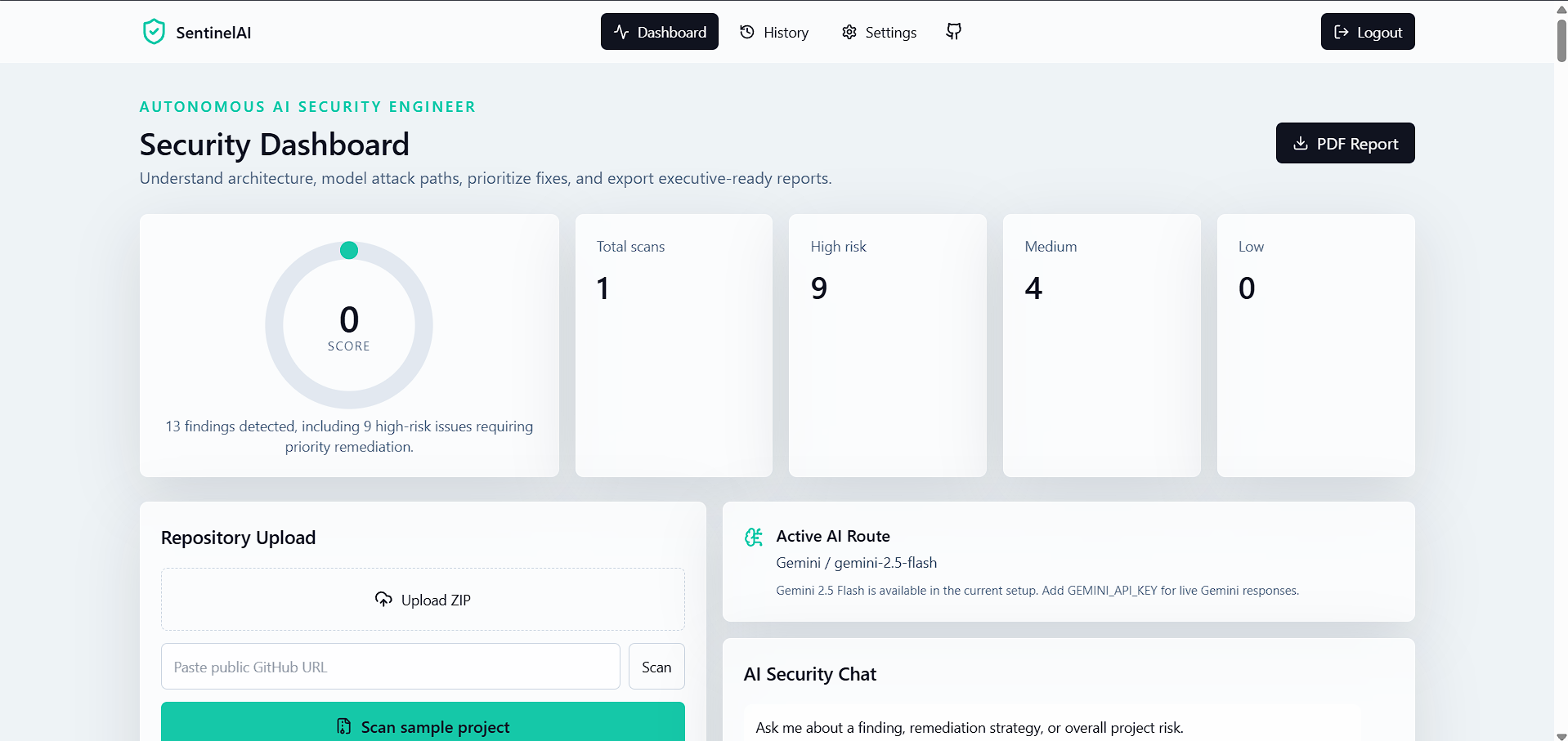
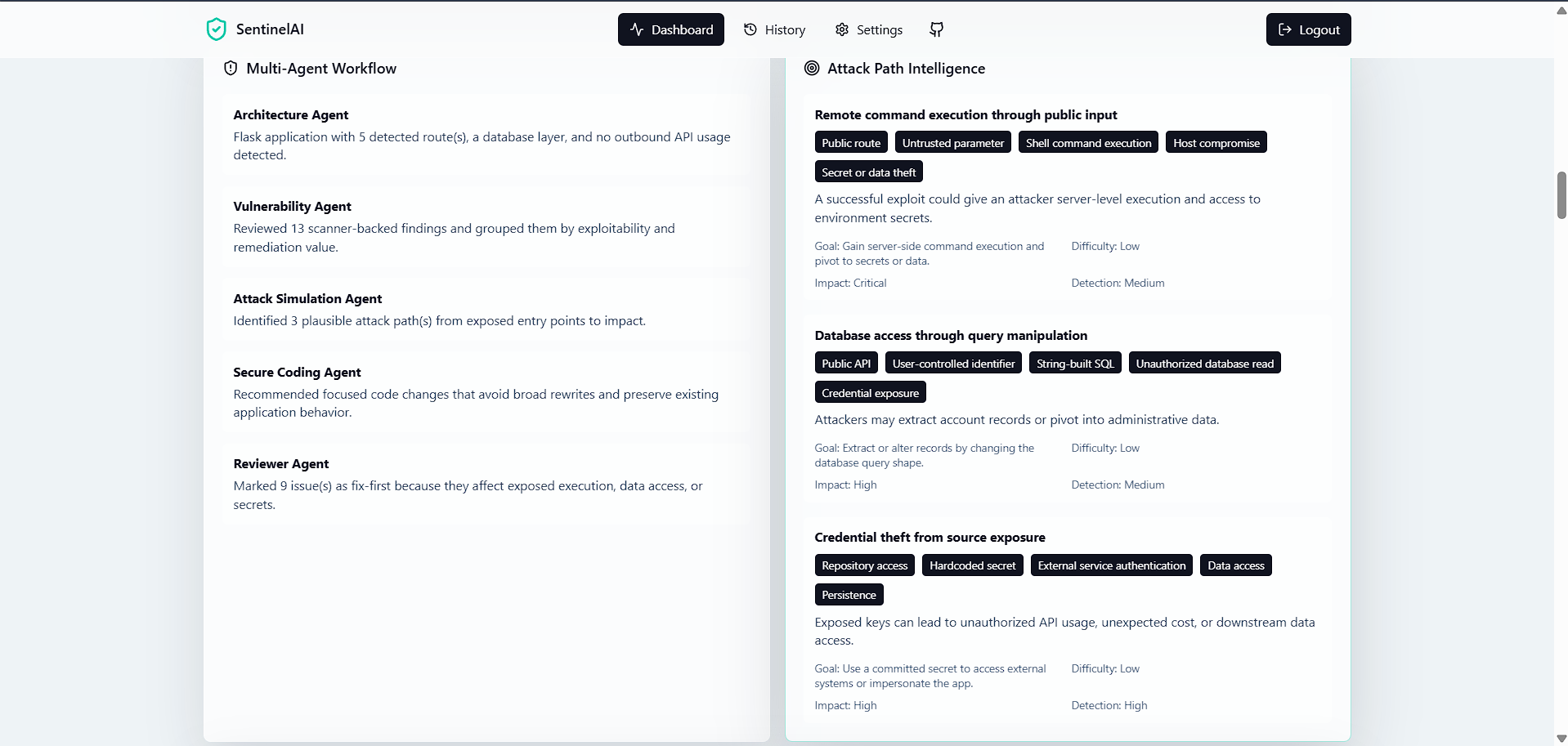
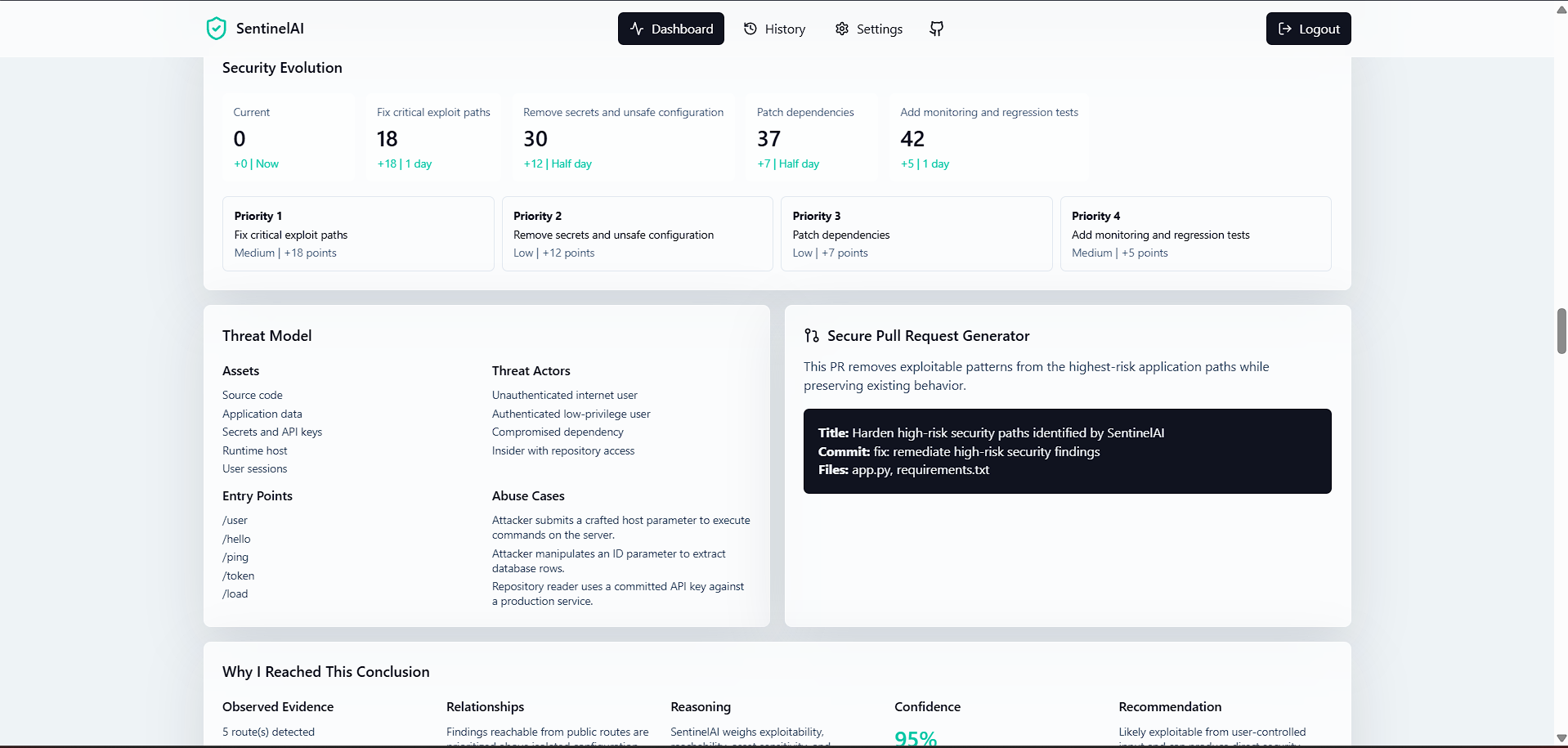
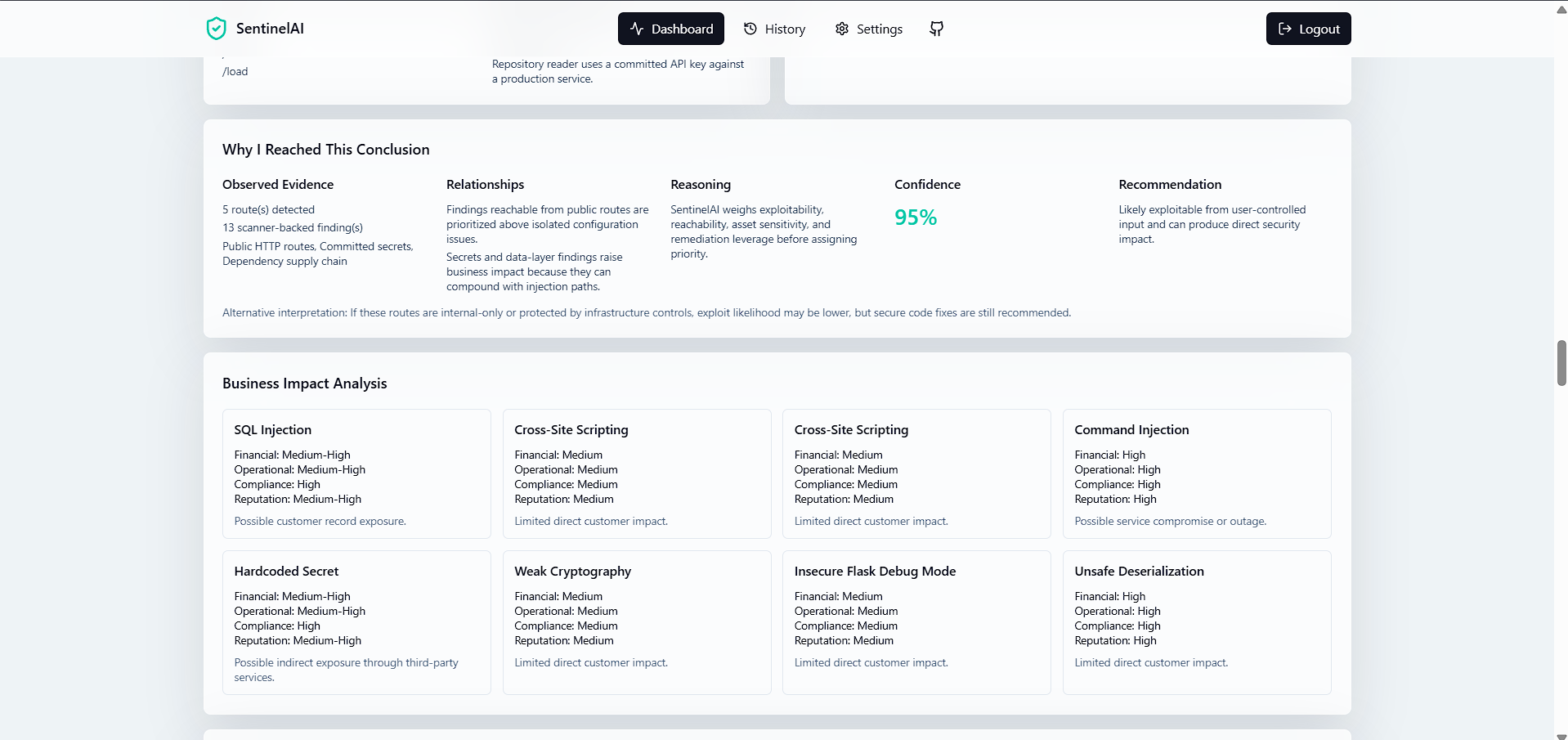
SentinelAI — Autonomous AI Security Engineer
Inspiration
Modern security scanners are excellent at finding vulnerabilities, but they leave developers with a difficult problem: understanding what actually matters.
A single scan can produce hundreds of findings, forcing developers to manually investigate attack paths, prioritize fixes, and interpret technical reports. We wanted to build an AI teammate that doesn't just detect vulnerabilities—but reasons about them.
That idea became SentinelAI.
What it does
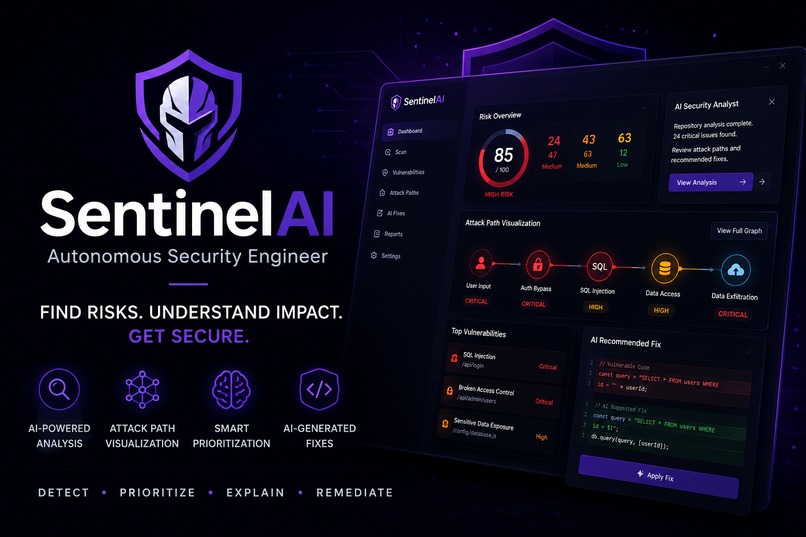
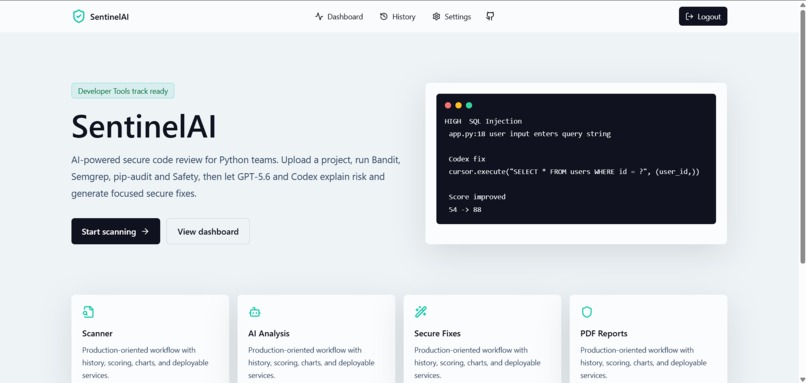
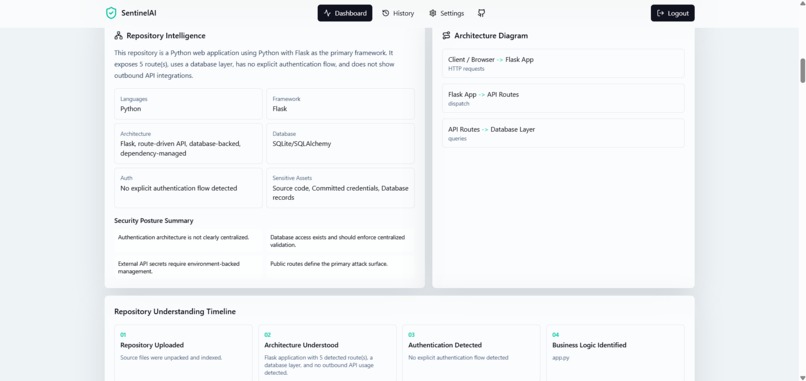
SentinelAI is an AI-powered Autonomous Security Engineer that analyzes entire software repositories rather than isolated files.
It combines traditional security analysis with GPT-5.6 reasoning to:
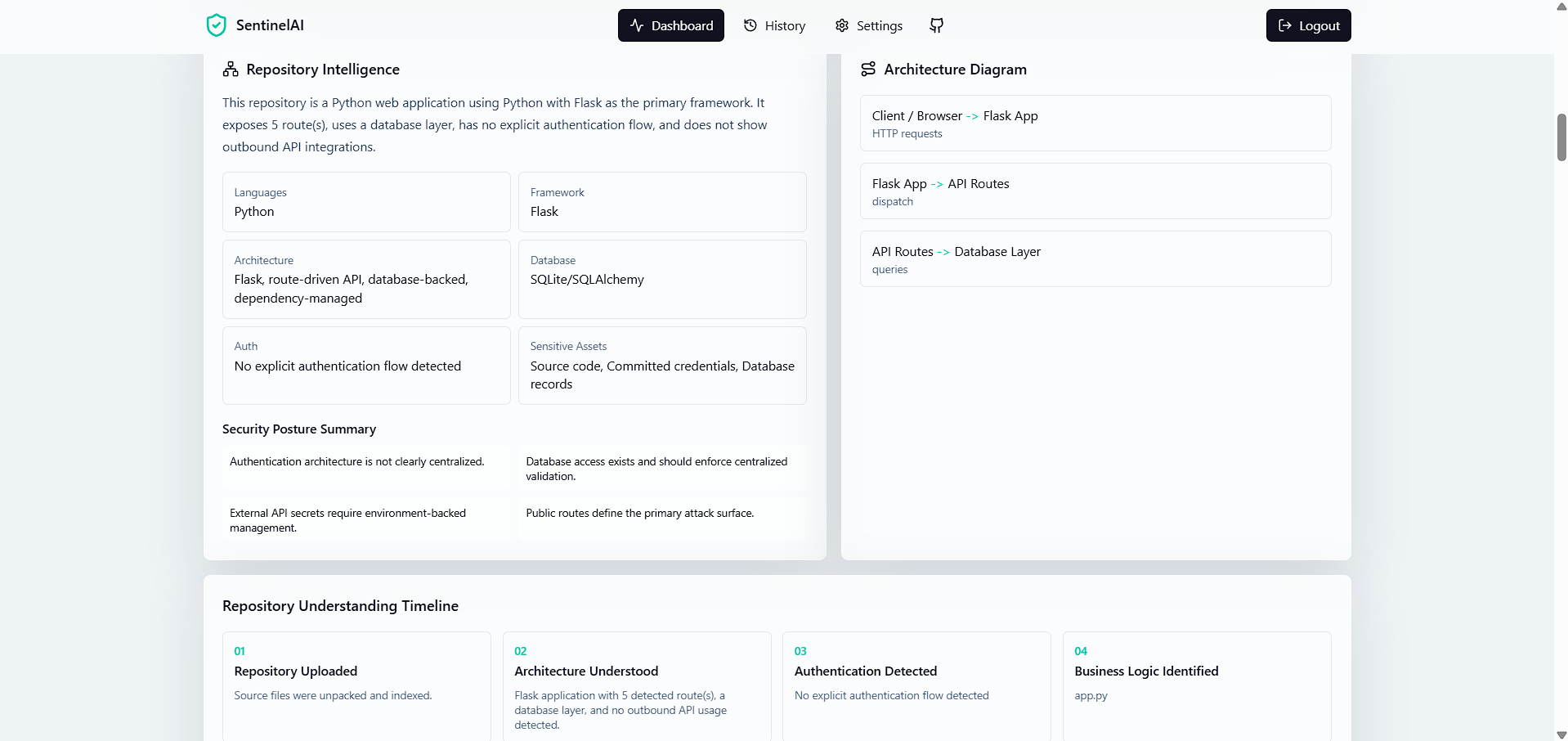
- Understand repository architecture
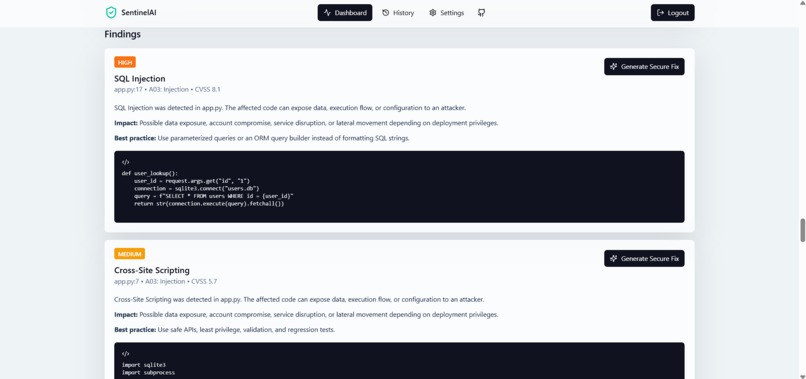
- Detect security vulnerabilities
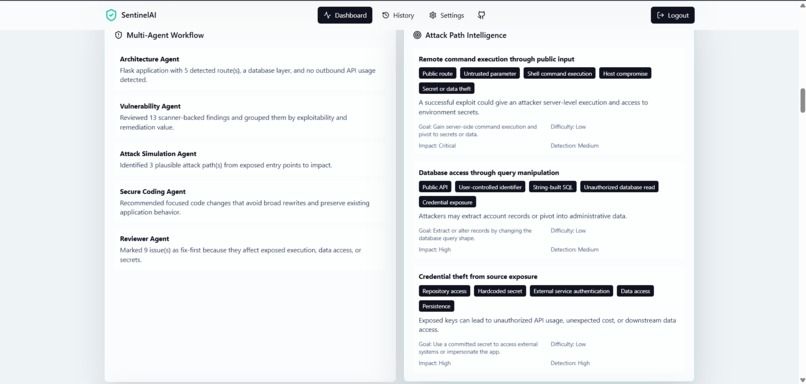
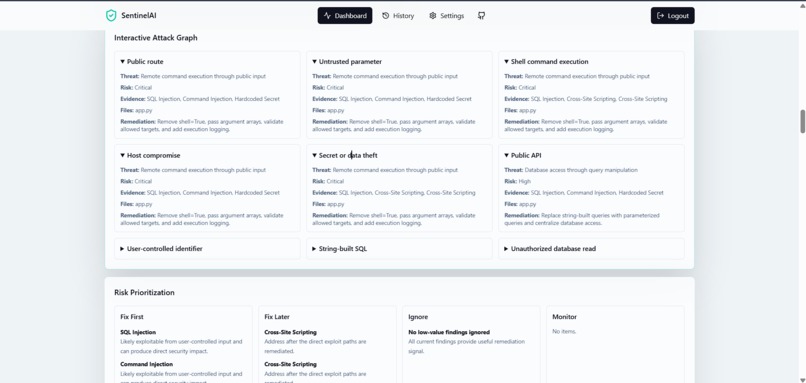
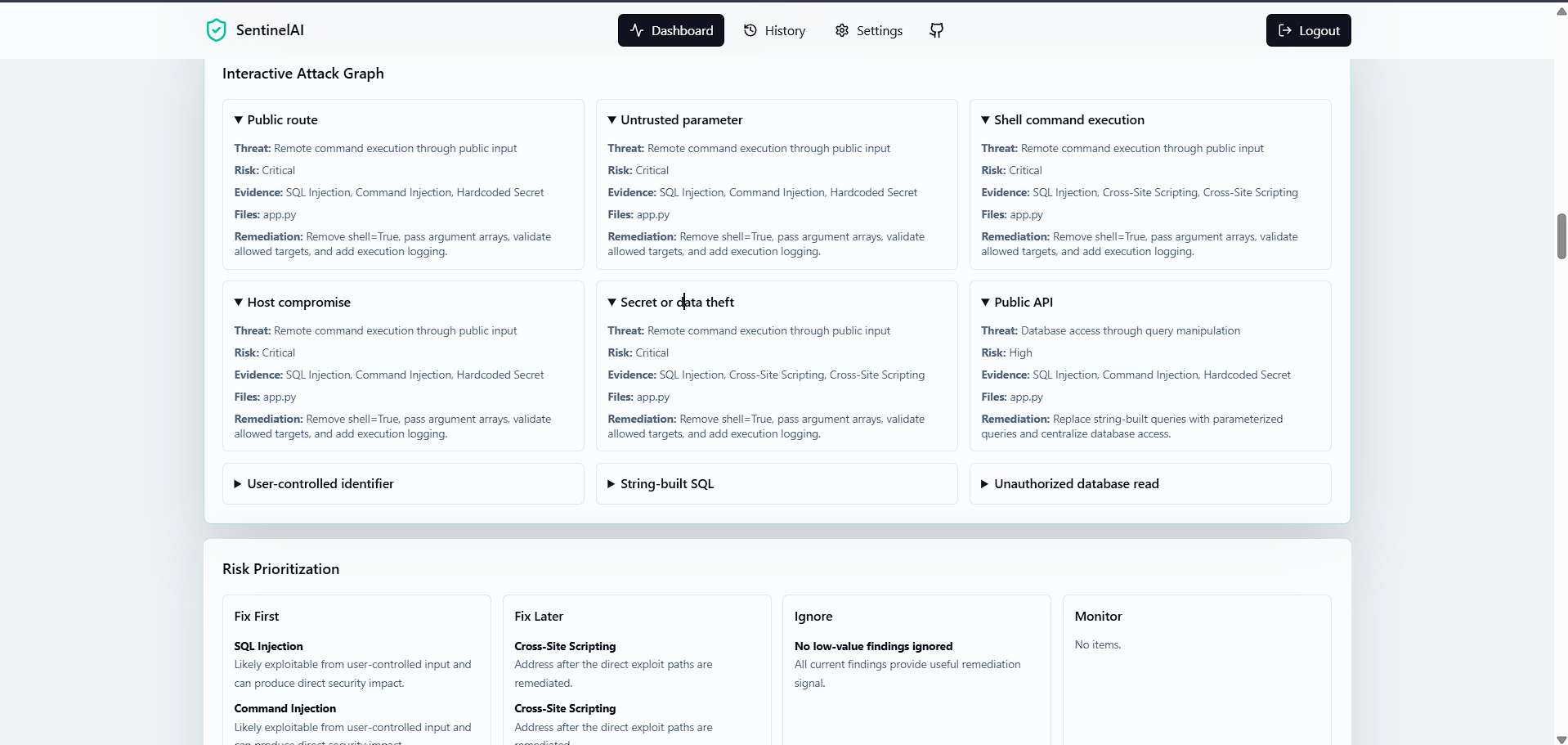
- Correlate findings into realistic attack paths
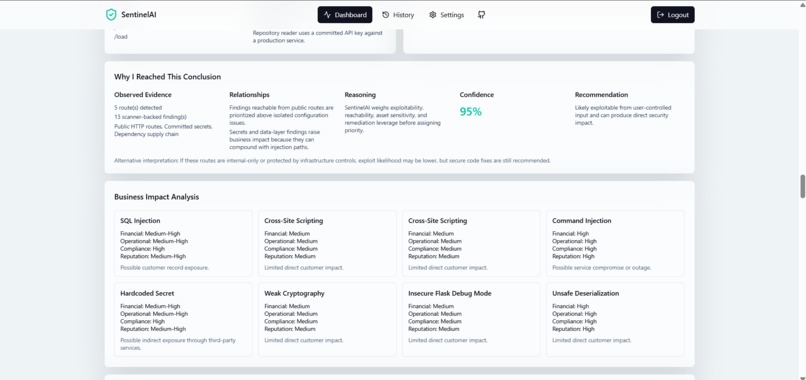
- Explain business and technical impact
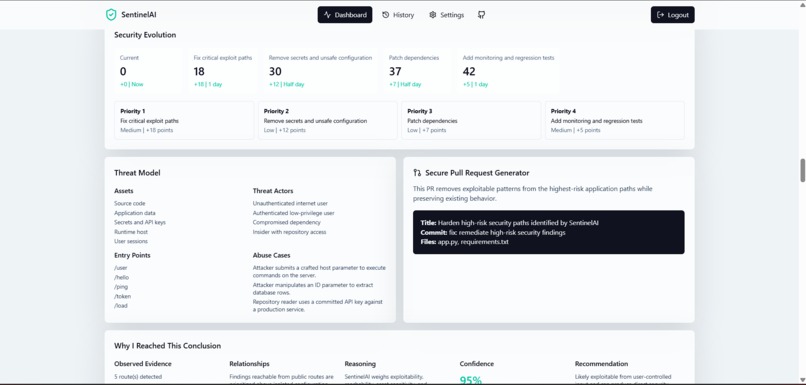
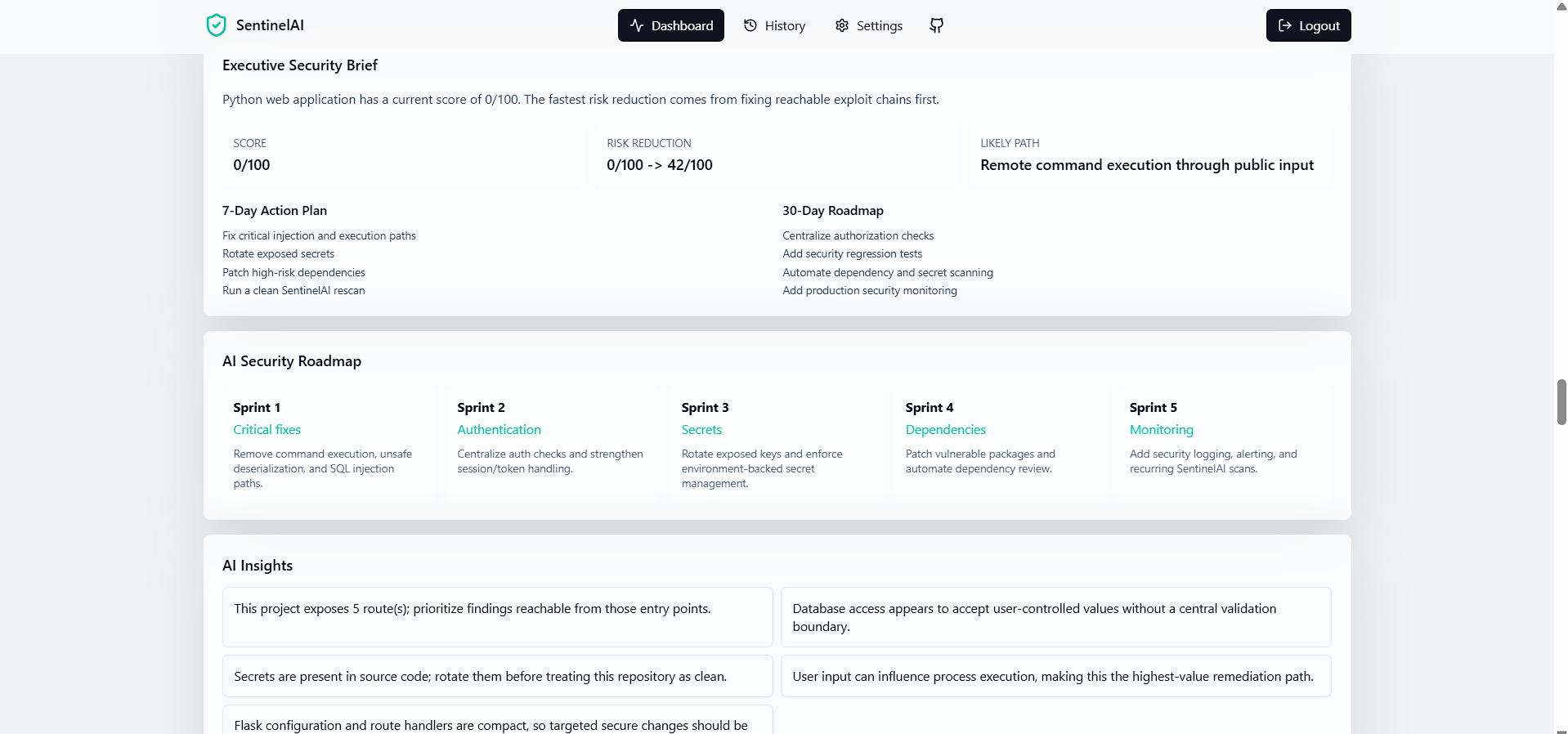
- Prioritize remediation
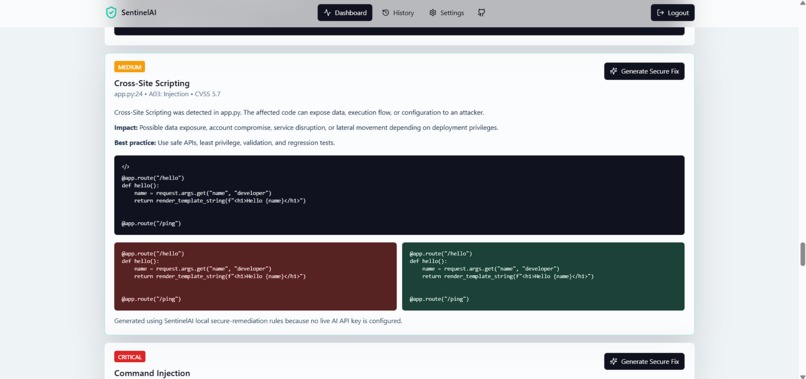
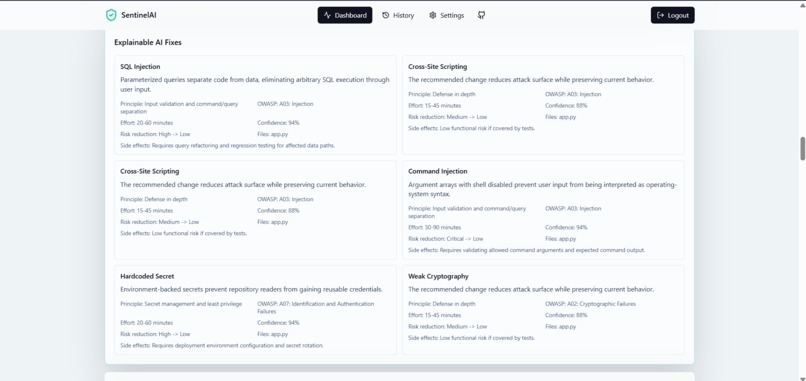
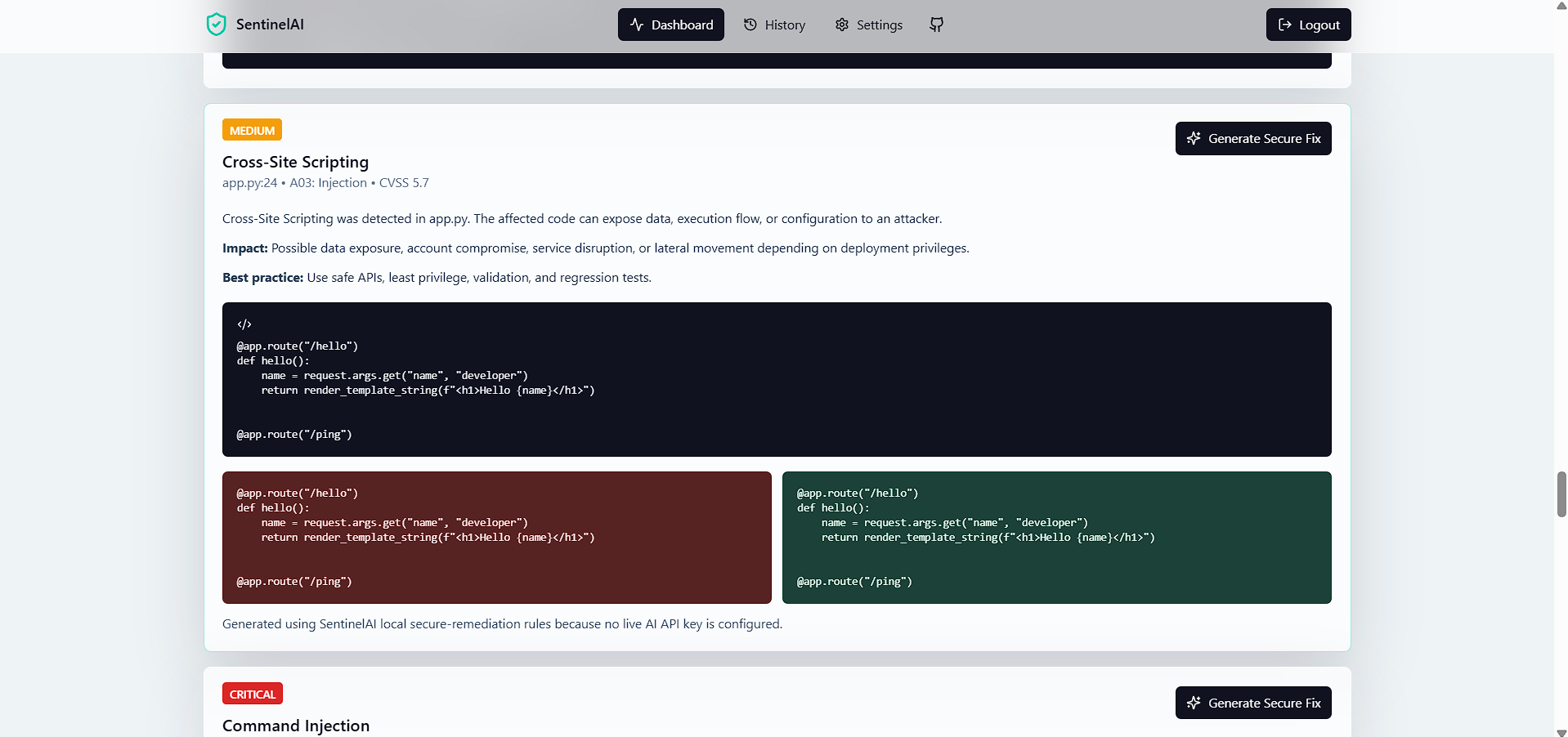
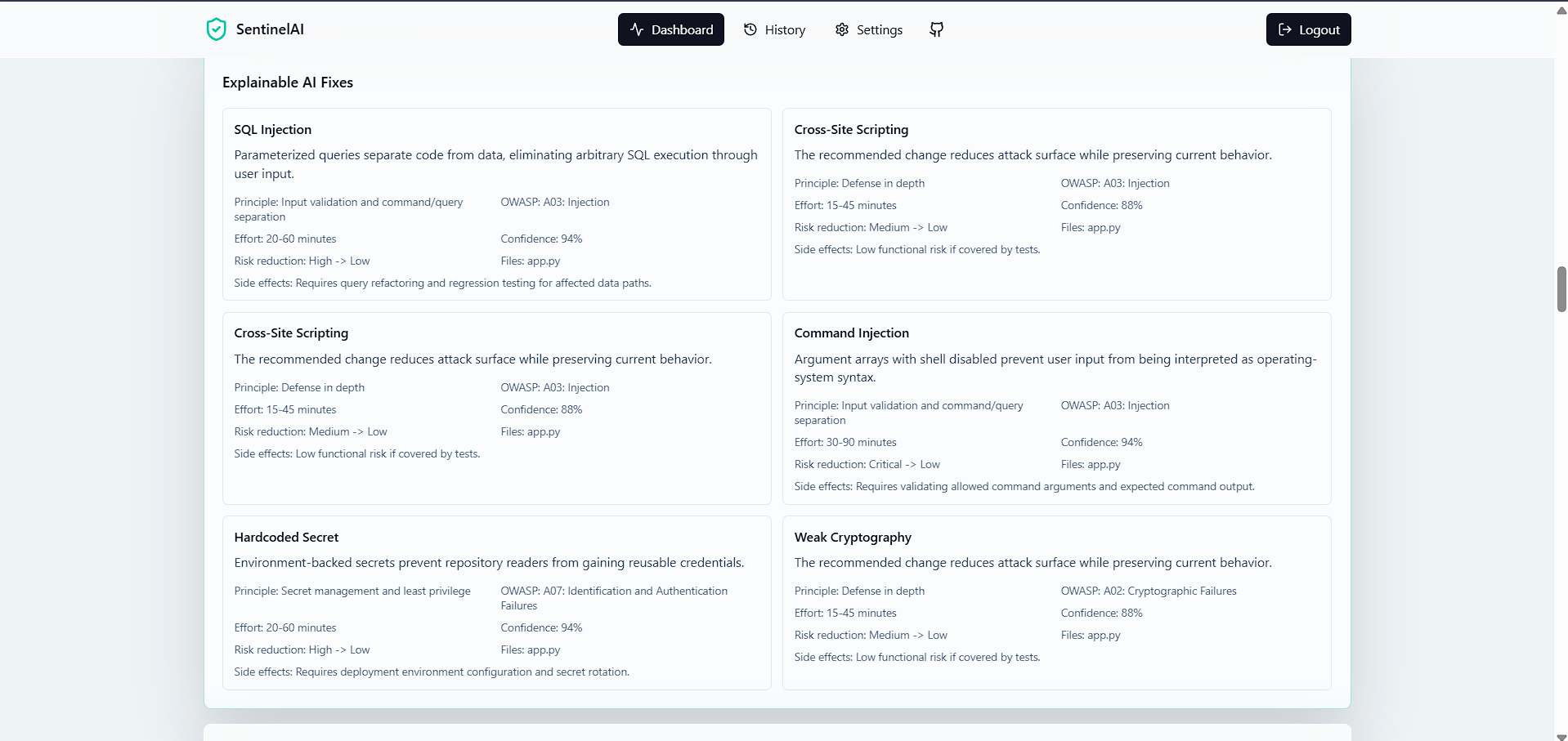
- Generate secure code fixes using Codex
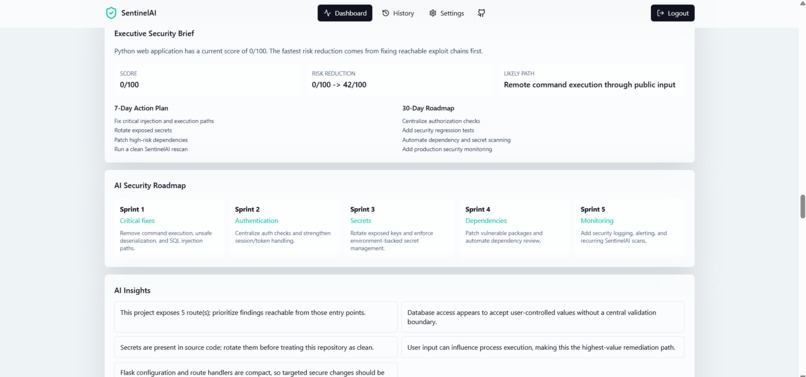
- Produce developer and executive security reports
Instead of overwhelming developers with raw scanner output, SentinelAI transforms security findings into clear engineering decisions.
How I built it
Frontend
- React
- TypeScript
- Tailwind CSS
- Framer Motion
- Recharts
Backend
- Python
- FastAPI
- PostgreSQL
Security Engine
- Bandit
- Semgrep
- pip-audit
- Safety
AI Usage
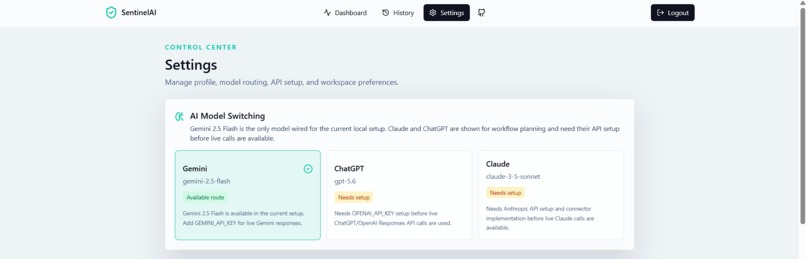
- GPT-5.6 for repository understanding, attack-path reasoning, prioritization and explainability.
- Codex for secure code generation, remediation, refactoring and implementation acceleration.
Key Features
✅ Repository Intelligence
AI understands the application's architecture before performing security analysis.
✅ Attack Path Analysis
Correlates vulnerabilities into realistic exploit chains.
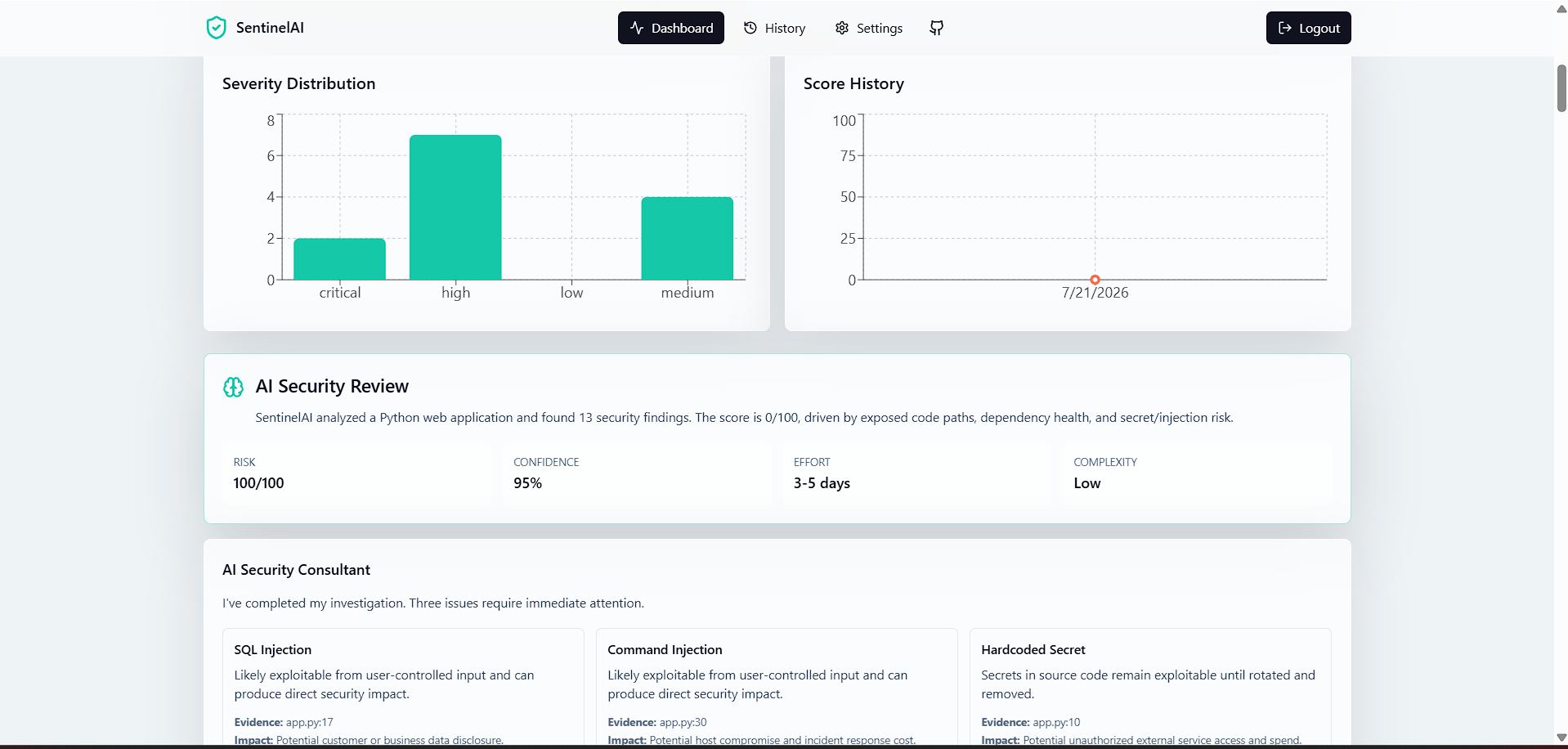
✅ AI Risk Prioritization
Ranks findings based on technical severity and business impact.
✅ Secure Code Generation
Generates production-ready remediation suggestions using Codex.
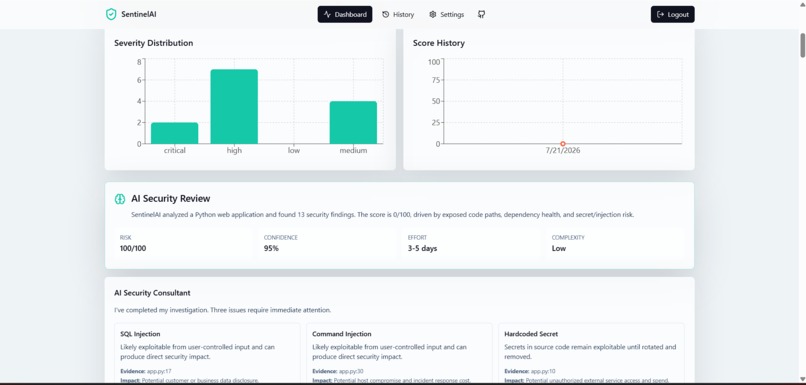
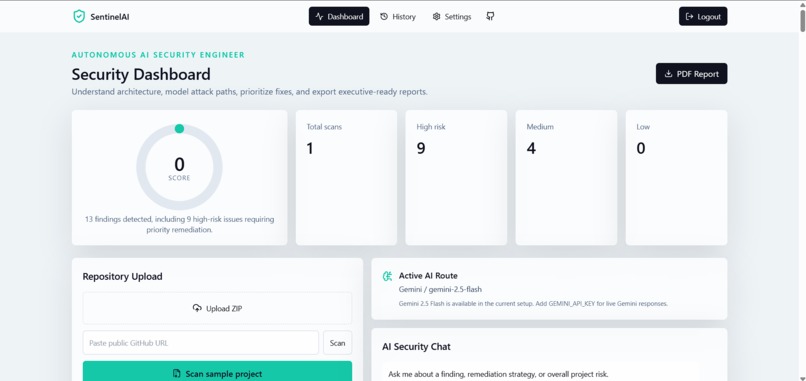
✅ Interactive Security Dashboard
Security score, attack graph, risk heatmap and recommendations.
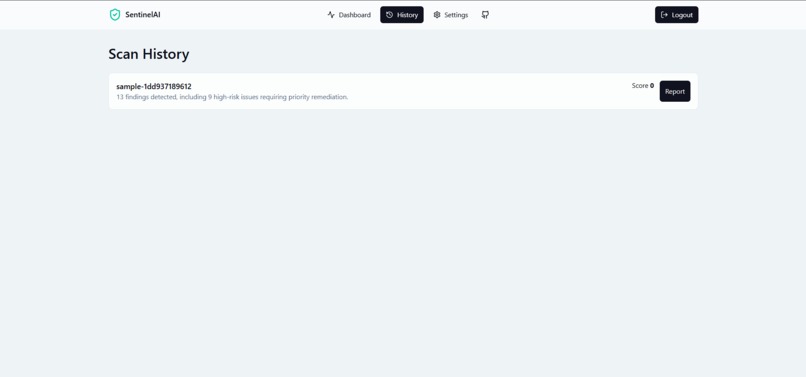
✅ Executive & Developer Reports
Technical reports for engineers and business summaries for stakeholders.
Challenges
The biggest challenge was moving beyond "AI explains scanner results."
We redesigned the system so GPT-5.6 reasons across the entire repository, understands relationships between vulnerabilities, and prioritizes remediation like a security engineer instead of a static scanner.
Accomplishments
- Built an end-to-end AI security workflow.
- Combined traditional AppSec tools with LLM reasoning.
- Created explainable AI recommendations backed by evidence.
- Designed an intuitive security experience suitable for both developers and leadership teams.
What I learned
Building AI-native developer tools requires balancing automation with transparency.
Developers need explanations they can trust, evidence behind every recommendation, and actionable fixes rather than generic summaries.
What's next
- Pull request generation
- CI/CD integration
- GitHub App
- IDE extensions
- Multi-language support
- Team collaboration
- Continuous repository monitoring
Built With
- bandit
- chatgpt
- codex
- docker
- fastapi
- framer-motion
- github
- postgresql
- python
- react
- recharts
- safety
- semgrep
- tailwind
- typescript

Log in or sign up for Devpost to join the conversation.