-
-
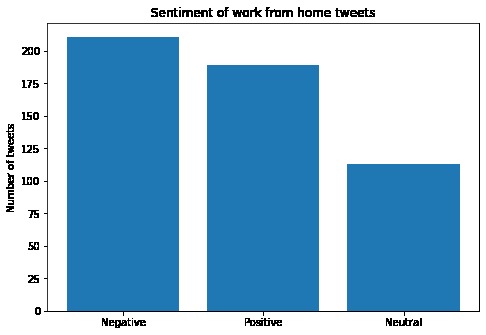
Sentiment of work from home tweets
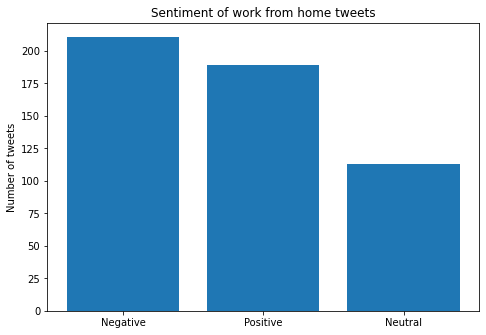
Inspiration
To prevent the spread of the virus during Covid, many people were required to work from home. For the majority of the population, working from home is a relatively new experience, and there were numerous challenges. The data from Twitter was used to determine how people reacted to the new change.
What it does
Based on tweets containing work from home/ remote work/ virtual work text, the model determines whether the user's sentiment is positive, negative, or neutral.
How we built it
We processed Twitter data and conducted data cleansing activities. The polarity and scores of the tweets were then analyzed using the NLTK package and a pretrained Vader model. We classified the emotions based on their polarity and scores.
Challenges we ran into
We encountered a number of difficulties while importing the data because it was in compressed json lines format and the files were large in size. Preprocessing and cleaning data was also a difficult task.
Accomplishments that we're proud of
Completing the project on time despite having no previous experience with natural language processing.
What we learned
Data preprocessing, cleaning and performing Sentiment analysis using Nltk package
What's next for Sentiment analysis on remote work using twitter data
Although the result is not exact, it does provide some insight into people's views toward remote work. We intend to label the data and train the model in the future to obtain a more accurate result.

Log in or sign up for Devpost to join the conversation.