-
-
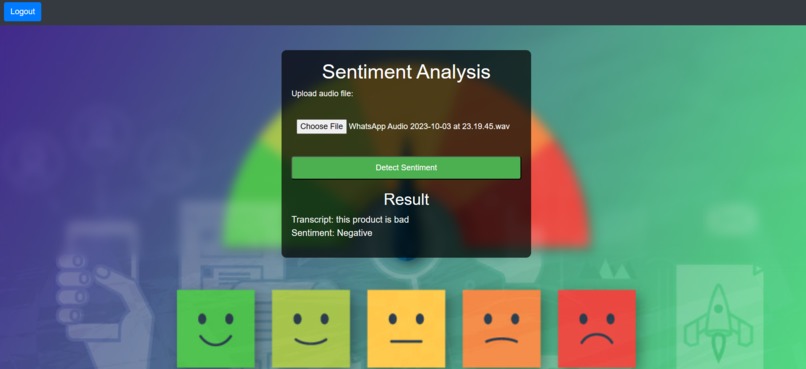
Sentiment analysis of voice calls

Inspiration The importance of sentiment analysis of voice calls in enhancing customer satisfaction and customer care interactions is the driving force behind our project. In today's connected world, voice calls are an essential means of communication, and how a customer is handled during a call can greatly influence their perception of a business or service. With the ultimate objective of enhancing client happiness and the overall customer experience, by bridging the gap between spoken conversations and data-driven insights, our project has the potential to revolutionize customer service. Because it has the potential to improve the quality and significance of customer service interactions for both customers and service providers, this project has a big impact. The inspiration behind the project stemmed from the increasing need for more nuanced sentiment analysis, especially in the context of customer interactions. Recognizing the limitations of traditional text-based sentiment analysis, the idea emerged to develop a solution specifically tailored for analyzing sentiments conveyed in spoken conversations, with a primary focus on incoming calls. The goal was to create a tool that could provide businesses with deeper insights into customer emotions, facilitating more effective and personalized communication.
Learning Journey: The learning journey involved delving into advanced natural language processing (NLP) techniques, machine learning algorithms, and speech recognition technologies. Understanding the intricacies of converting spoken language to text and extracting tone features became a key focus. Additionally, exploring sentiment classification models and staying abreast of the latest advancements in the field of NLP played a crucial role in refining the project's approach.
Project Development: The project was meticulously built in phases. The foundational element, the speech-to-text module, required intensive research into the latest advancements in speech recognition. The tone extraction module evolved through iterative testing, refining its ability to capture emotional nuances effectively. The integration framework played a pivotal role, demanding a thoughtful design to harmonize the outputs of both modules seamlessly.
Challenges Faced: Challenges were inevitable but instrumental in shaping the robustness of our solution. One key hurdle was achieving a balance between high accuracy and real-time processing in the speech-to-text module. Developing tone extraction algorithms that could adapt to diverse linguistic expressions posed another intricate challenge. Scalability, both in terms of handling increased call volumes and integrating with new templates, demanded careful consideration. Despite the challenges, the commitment to delivering a reliable, accurate, and scalable sentiment analysis solution kept the project moving forward. Each obstacle became an opportunity to refine our approach, and the collaborative efforts of the team were pivotal in overcoming these hurdles.
Conclusion: The journey of building this sentiment analysis solution has been transformative. It not only resulted in a technologically advanced product but also deepened our understanding of the complexities involved in deciphering human emotions through technology. The commitment to continuous improvement remains at the core, ensuring that our solution continues to evolve and meet the dynamic needs of businesses in understanding the sentiment within their customer interactions.

Log in or sign up for Devpost to join the conversation.