Inspiration
As college students, we often see how important cybersecurity has become in our digital world. We created SentinelFlow AI with the inspiration to make security monitoring smarter, faster, and easier. Our goal is to help identify potential cyber threats, investigate suspicious activities, and suggest safe responses using AI.
What it does
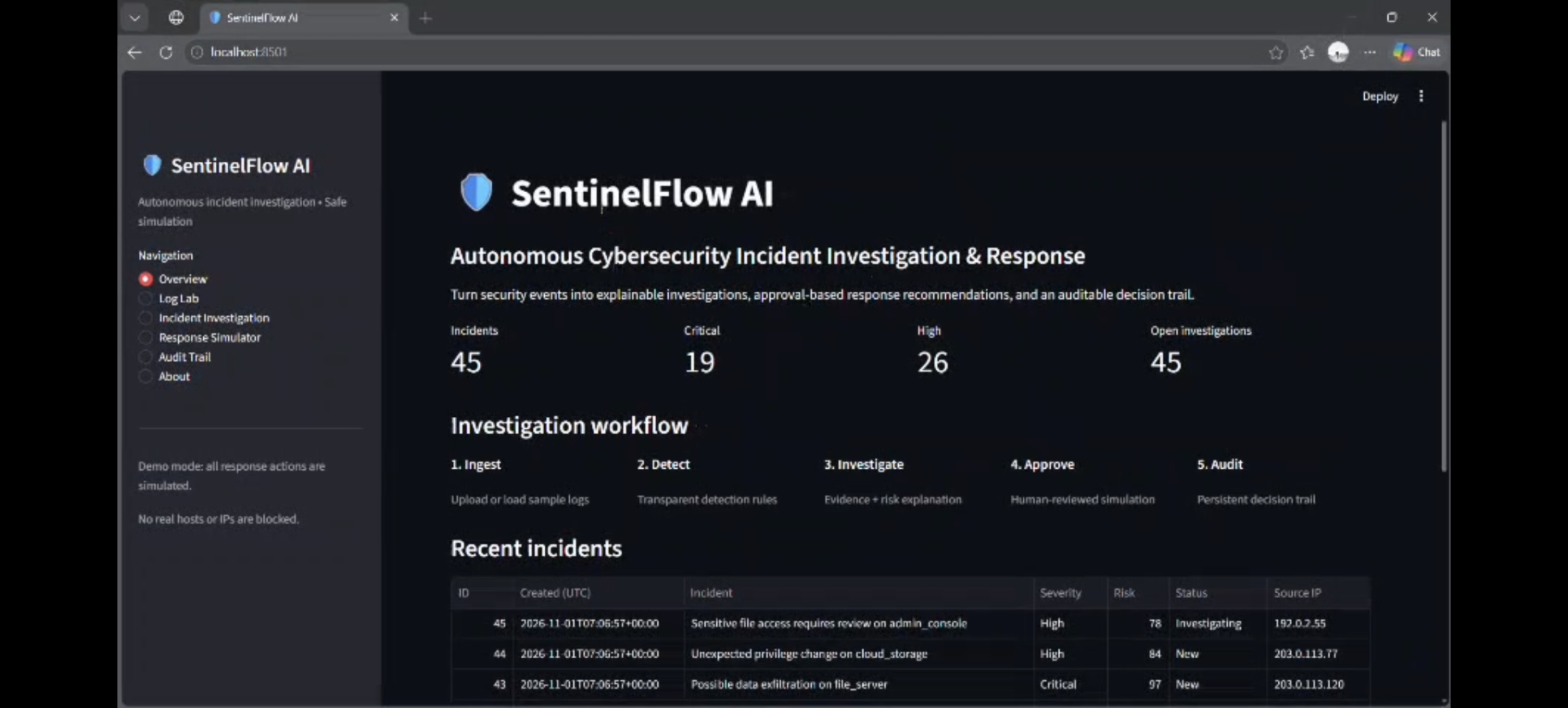
SentinelFlow AI is an AI-powered cybersecurity system that detects suspicious activities, investigates potential cyber threats, and recommends suitable security responses to help protect digital systems.
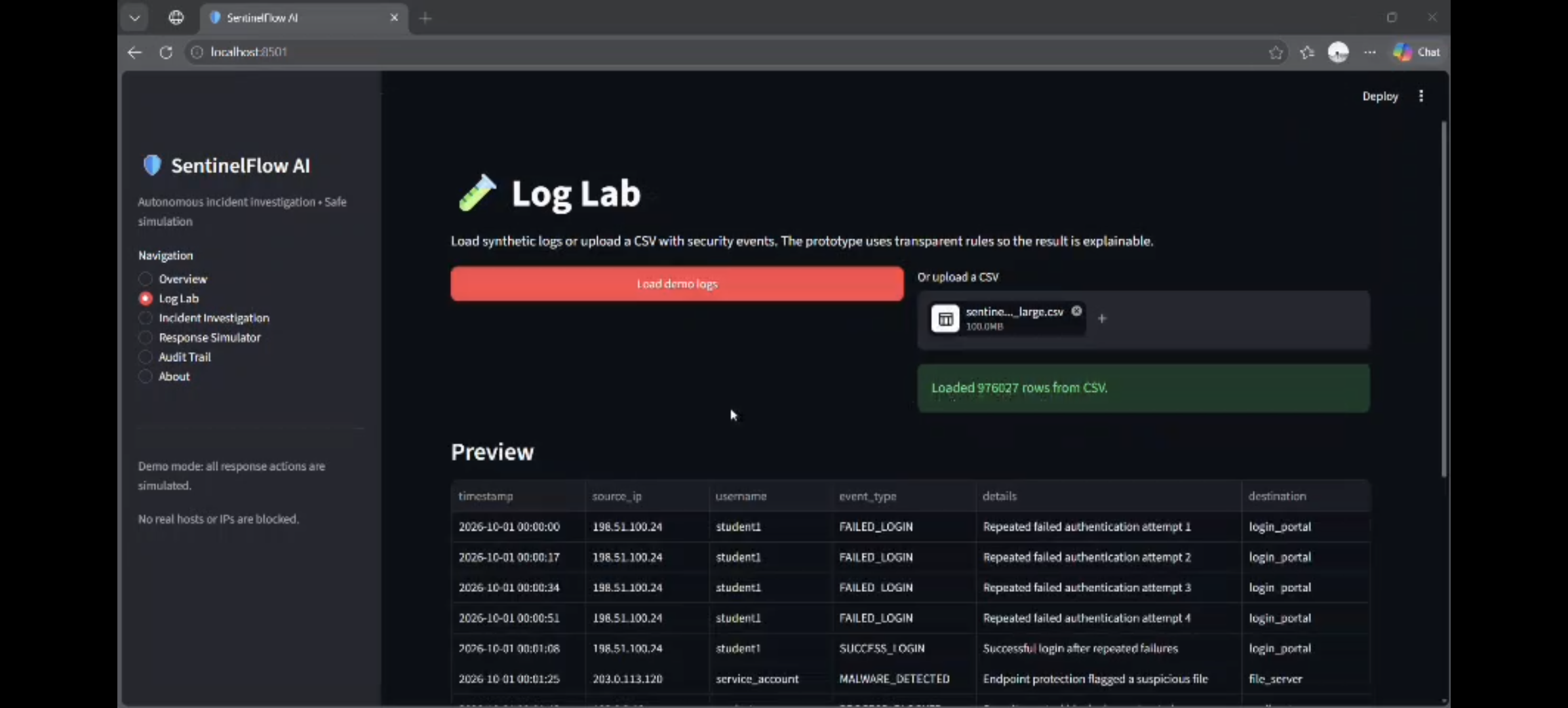
Log Collection: Collects security logs containing login attempts, user activities, IP addresses, and system events.
Log Analysis: Analyzes the collected logs to identify unusual activities and suspicious patterns.
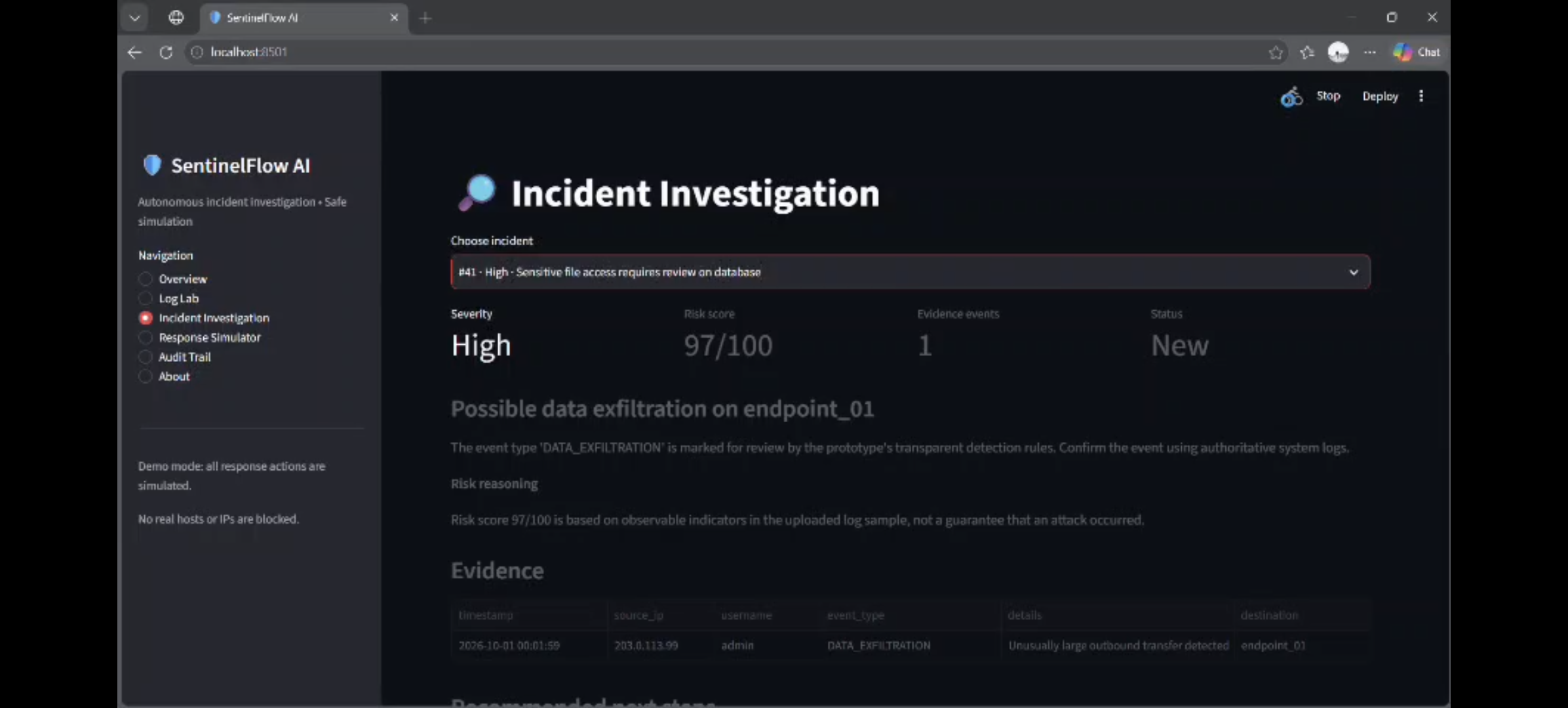
Threat Detection: Detects possible threats such as repeated failed logins, unauthorized access, and suspicious privilege changes.
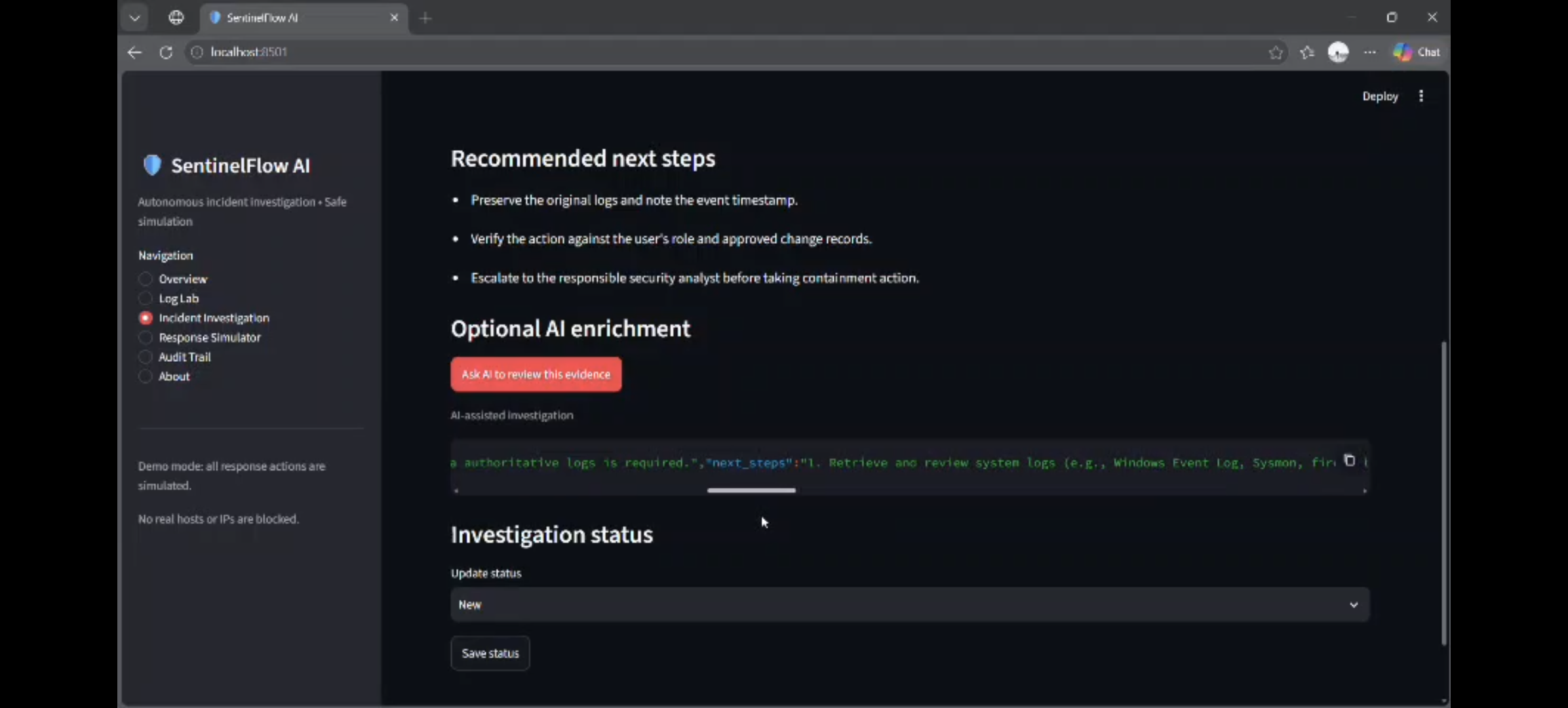
AI Investigation: Uses Groq AI to examine detected incidents and generate easy-to-understand explanations.
Risk Assessment: Assigns a risk score and classifies incidents as Low, Medium, High, or Critical based on available evidence.
Response Recommendation: Suggests suitable actions, such as reviewing suspicious accounts, checking login sessions, or escalating incidents to security analysts.
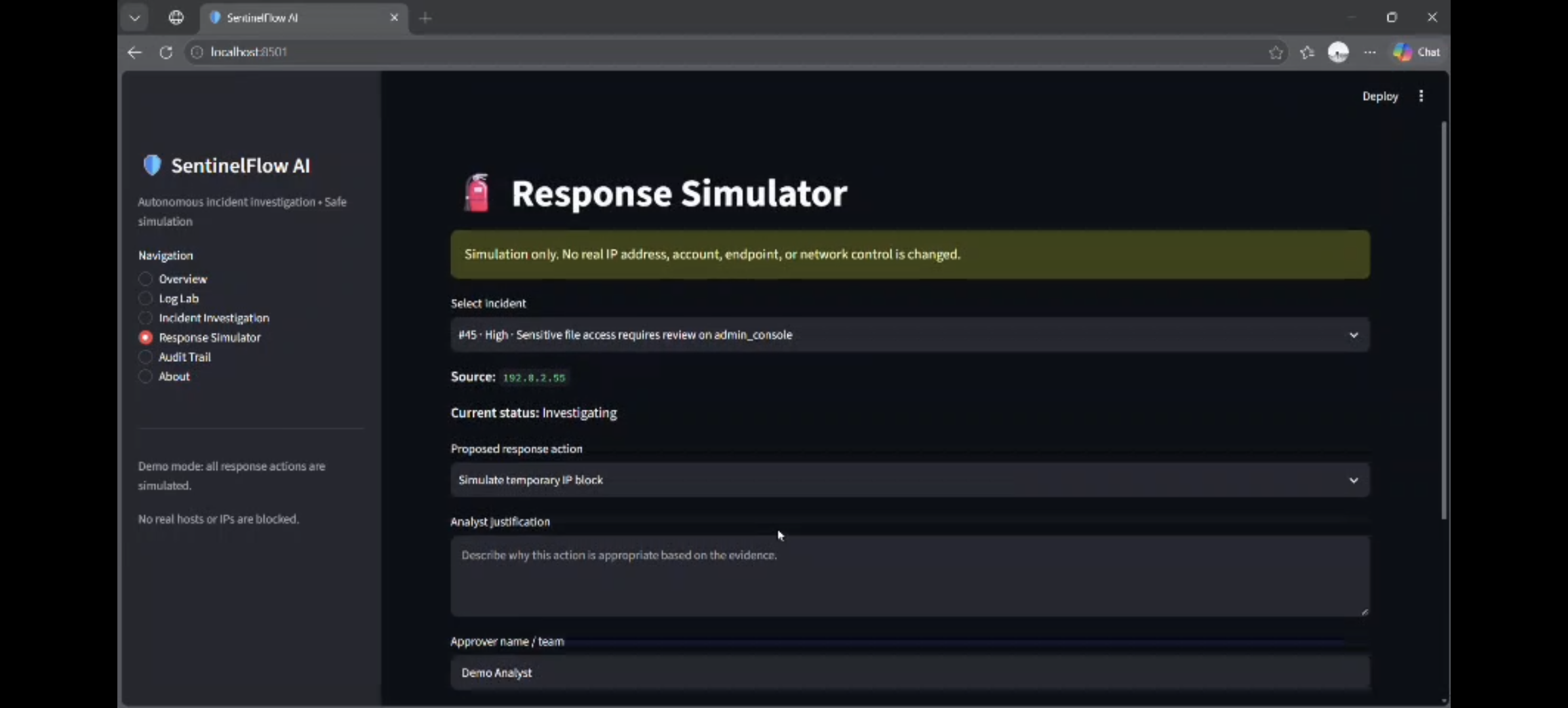
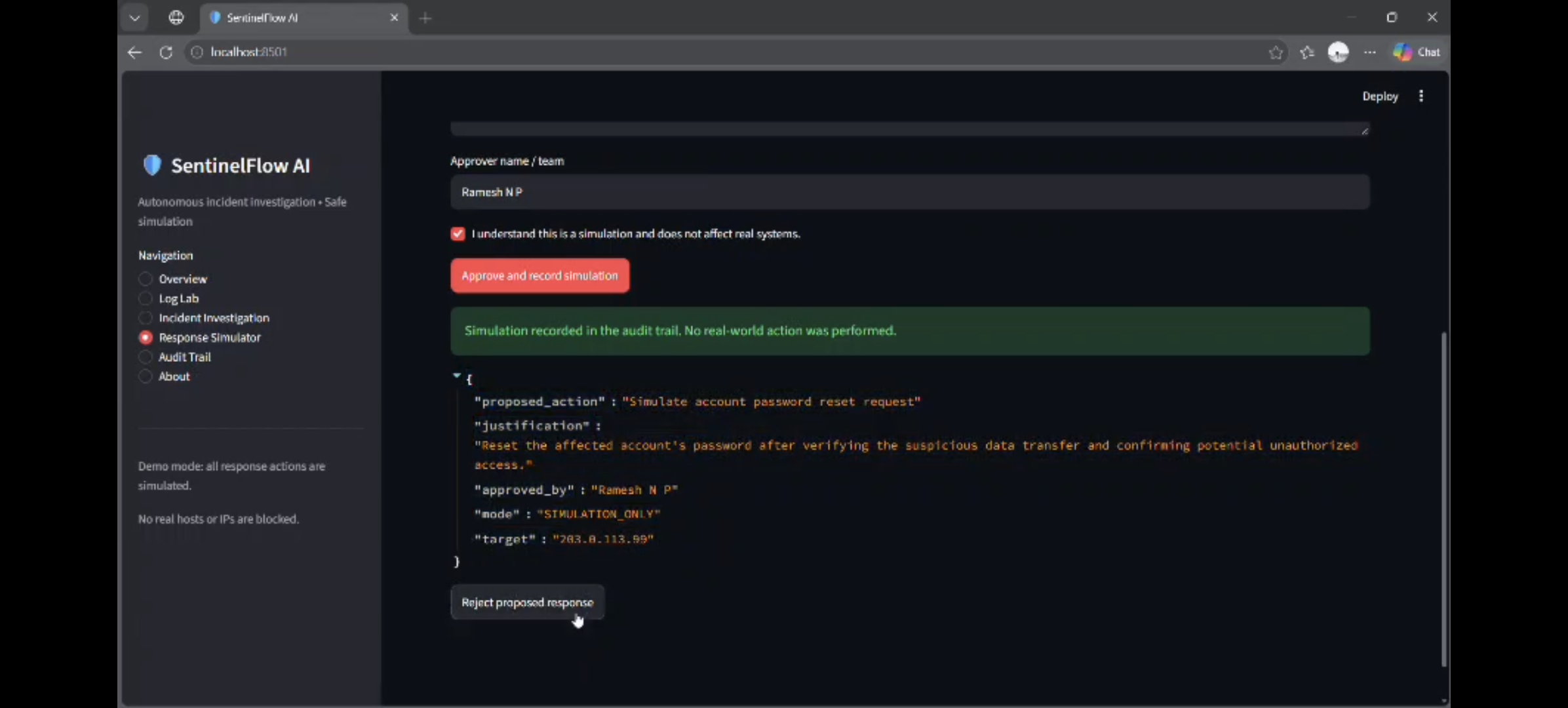
Human Approval: Allows an authorized user to approve or reject proposed response actions.
Response Simulation: Demonstrates the approved security response without affecting real systems.
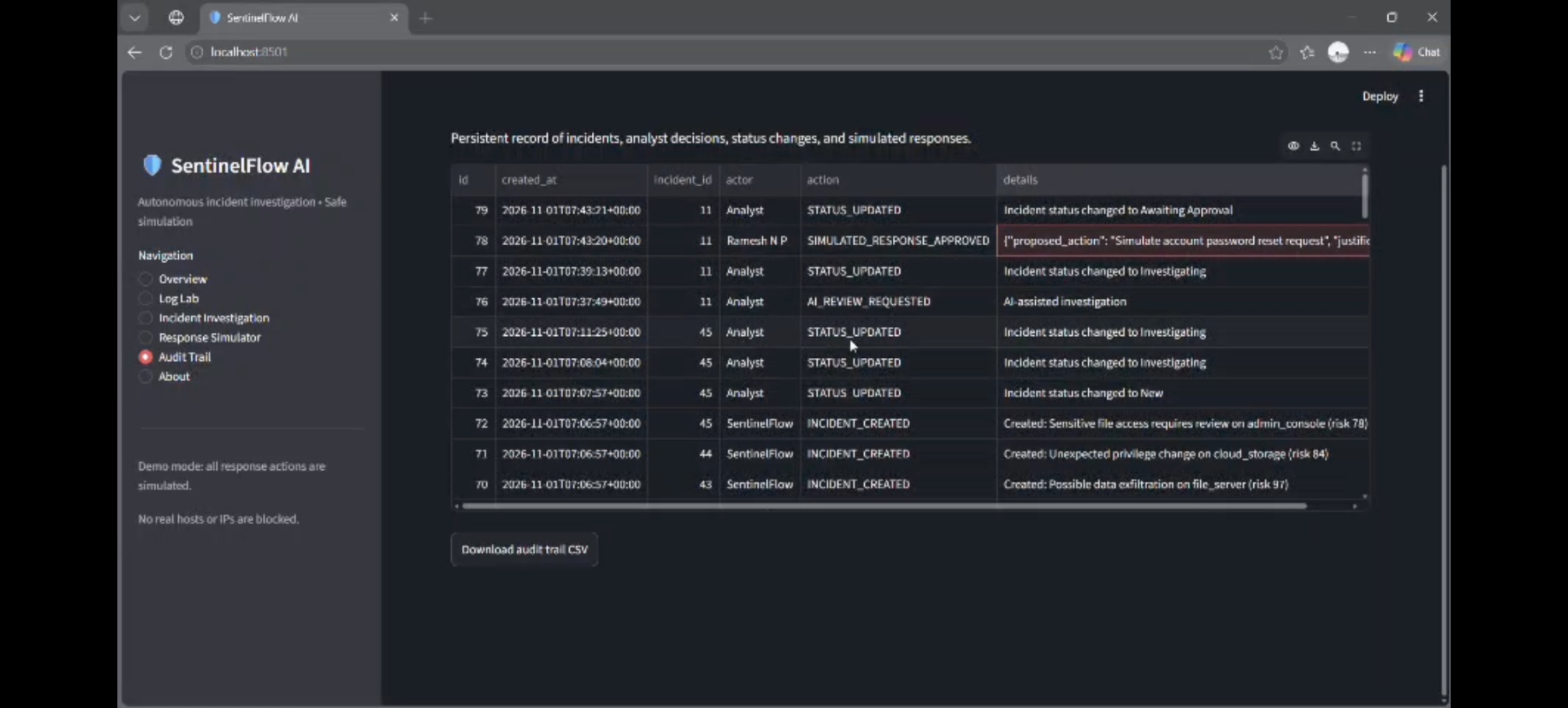
Audit Trail: Stores incident details, investigation results, and response decisions for future reference.
o make cybersecurity monitoring more intelligent and accessible by combining AI-based investigation, automated threat detection, and human-approved response workflows.
How we built it
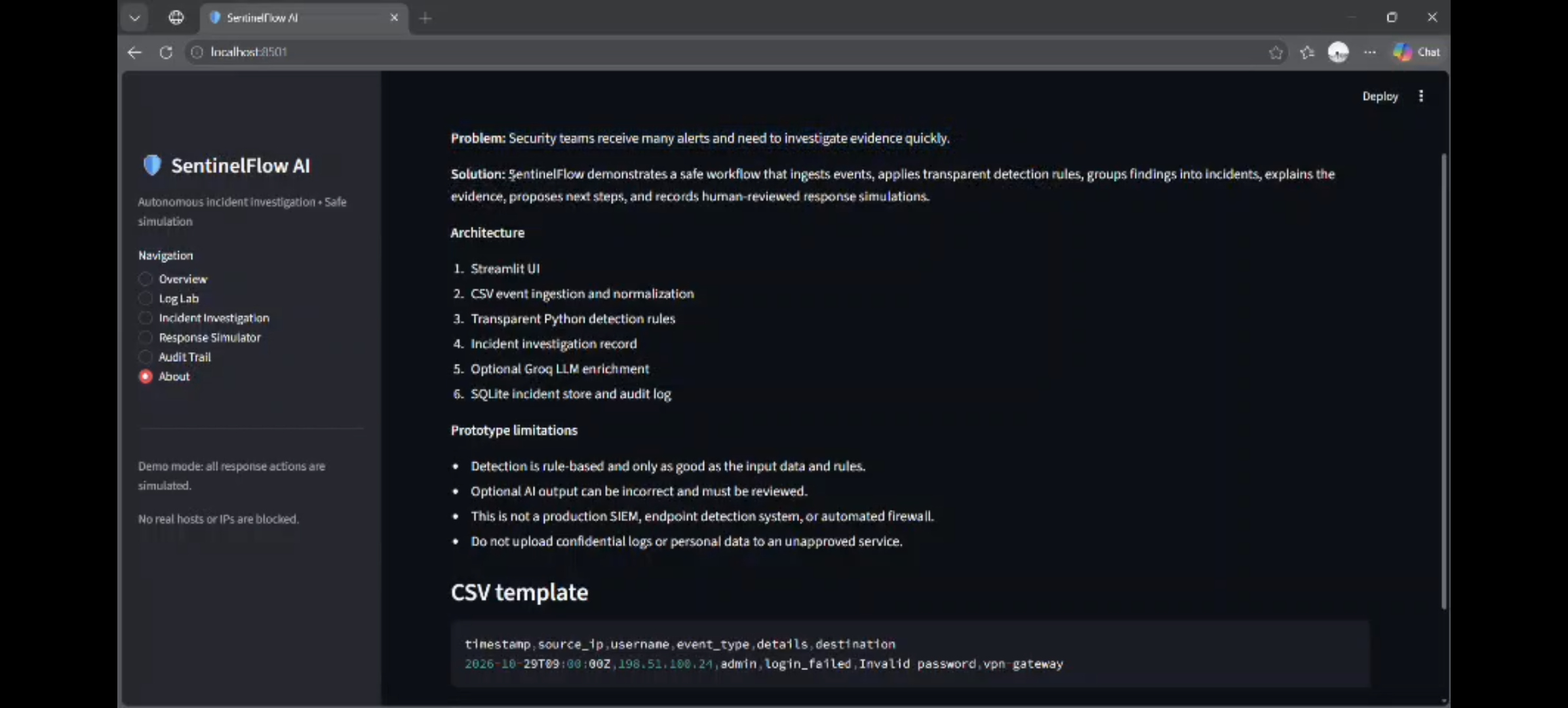
Frontend Development: We used Streamlit to create an interactive dashboard for displaying security incidents, risk scores, and investigation results.
Backend Development: We used Python to handle security logs, analyze events, detect suspicious activities, and manage the application workflow.
Log Management: We used Pandas to read, process, and organize security logs from CSV files.
Threat Detection: We developed rule-based detection logic to identify suspicious login attempts, privilege changes, and unusual activities.
AI Integration: We integrated the Groq API to help investigate detected incidents and generate human-readable threat explanations.
Risk Assessment: We implemented a risk-scoring mechanism to classify detected incidents based on their severity.
Response Management: We developed a human approval system to review and simulate recommended security actions.
Database Management: We used SQLite to store incident records, investigation details, and audit logs.
Testing: We tested the application using sample cybersecurity logs and simulated attack scenarios to check its detection and investigation workflow.
Challenges we ran into
During the development of SentinelFlow AI, we faced several challenges, including integrating the Groq API, processing different security log formats, identifying threats accurately, and reducing false alerts. We also found it challenging to connect the AI, backend, database, and dashboard smoothly within the limited hackathon time. By testing with sample security logs, improving our detection rules, and working together as a team, we gradually overcame these challenges and improved our project.
Accomplishments that we're proud of
We are proud of building SentinelFlow AI as a college project that combines artificial intelligence with cybersecurity. We successfully integrated the Groq API for AI-powered incident investigation, developed a system to detect suspicious activities, created an interactive dashboard, and implemented risk assessment and response simulation features. We are especially proud that we brought all these components together into one working platform as a team within a limited time. This project helped us gain practical experience in AI integration, Python development, and real-world problem-solving.
What we learned
We are proud of building SentinelFlow AI as a college project that combines artificial intelligence with cybersecurity. We successfully integrated the Groq API for AI-powered incident investigation, developed a system to detect suspicious activities, created an interactive dashboard, and implemented risk assessment and response simulation features. We are especially proud that we brought all these components together into one working platform as a team within a limited time. This project helped us gain practical experience in AI integration, Python development, and real-world problem-solving.

Log in or sign up for Devpost to join the conversation.