-
-
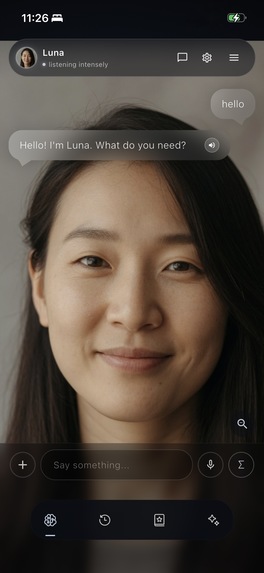
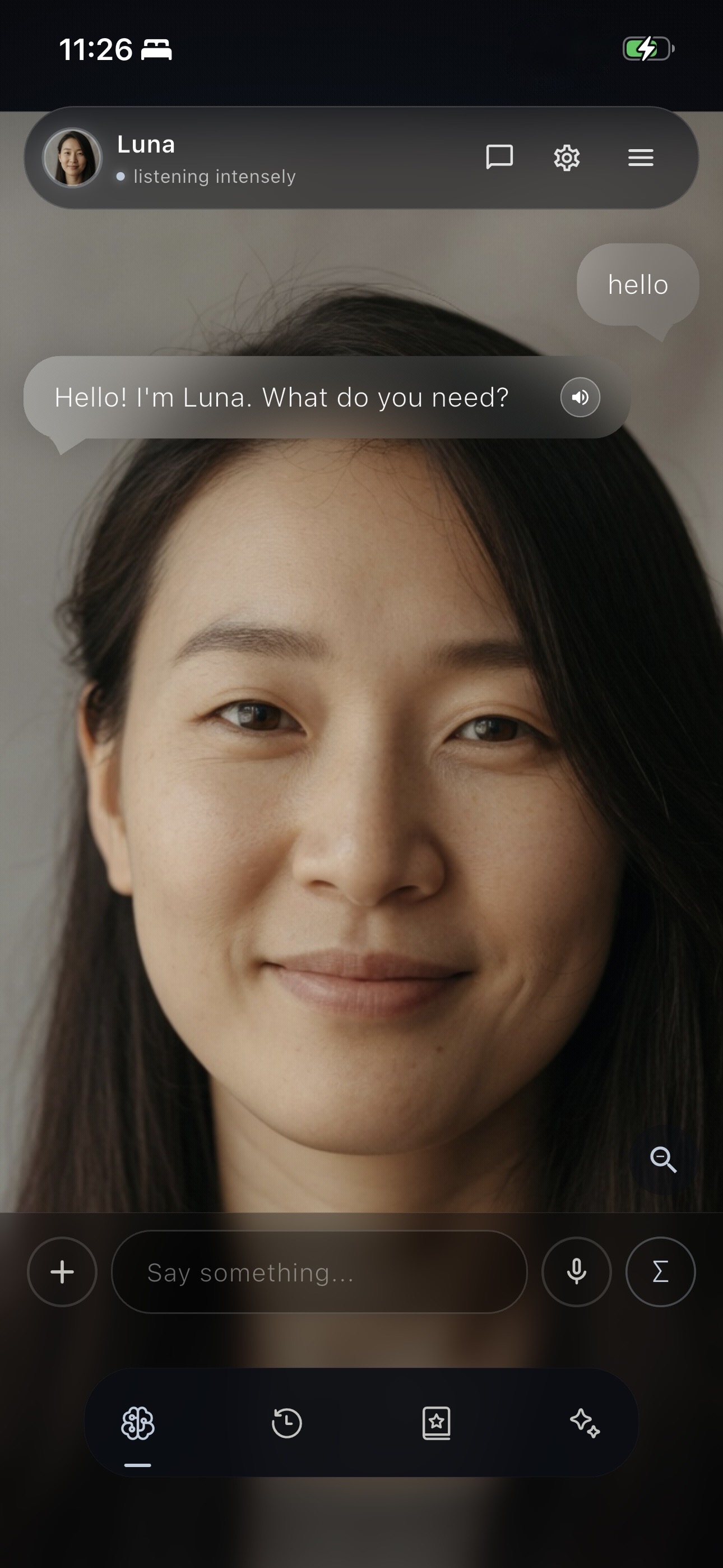
Sentiens Animated 3D AI Character
-
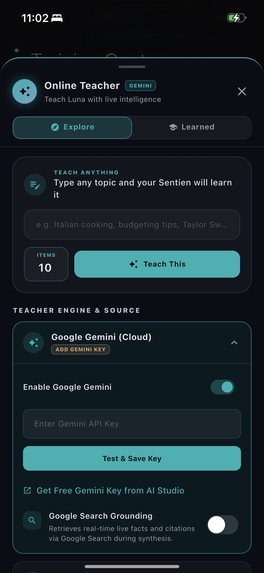
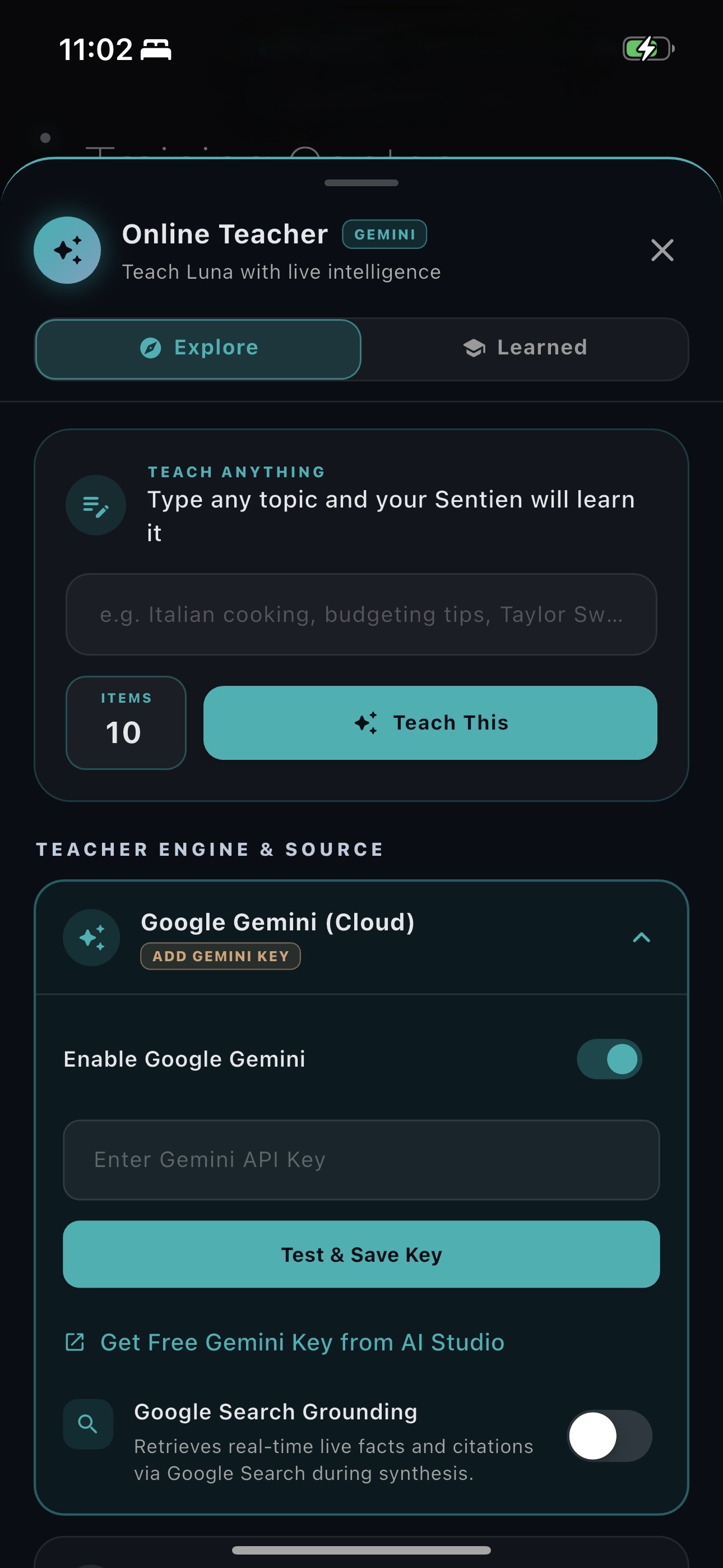
Sentiens AI Gemini Online Teacher
-
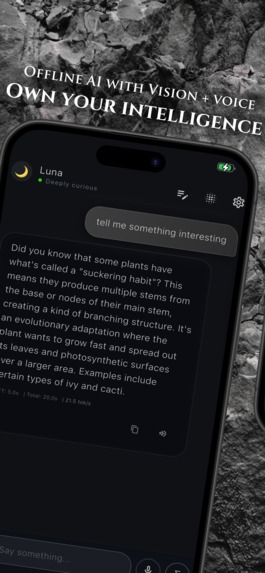
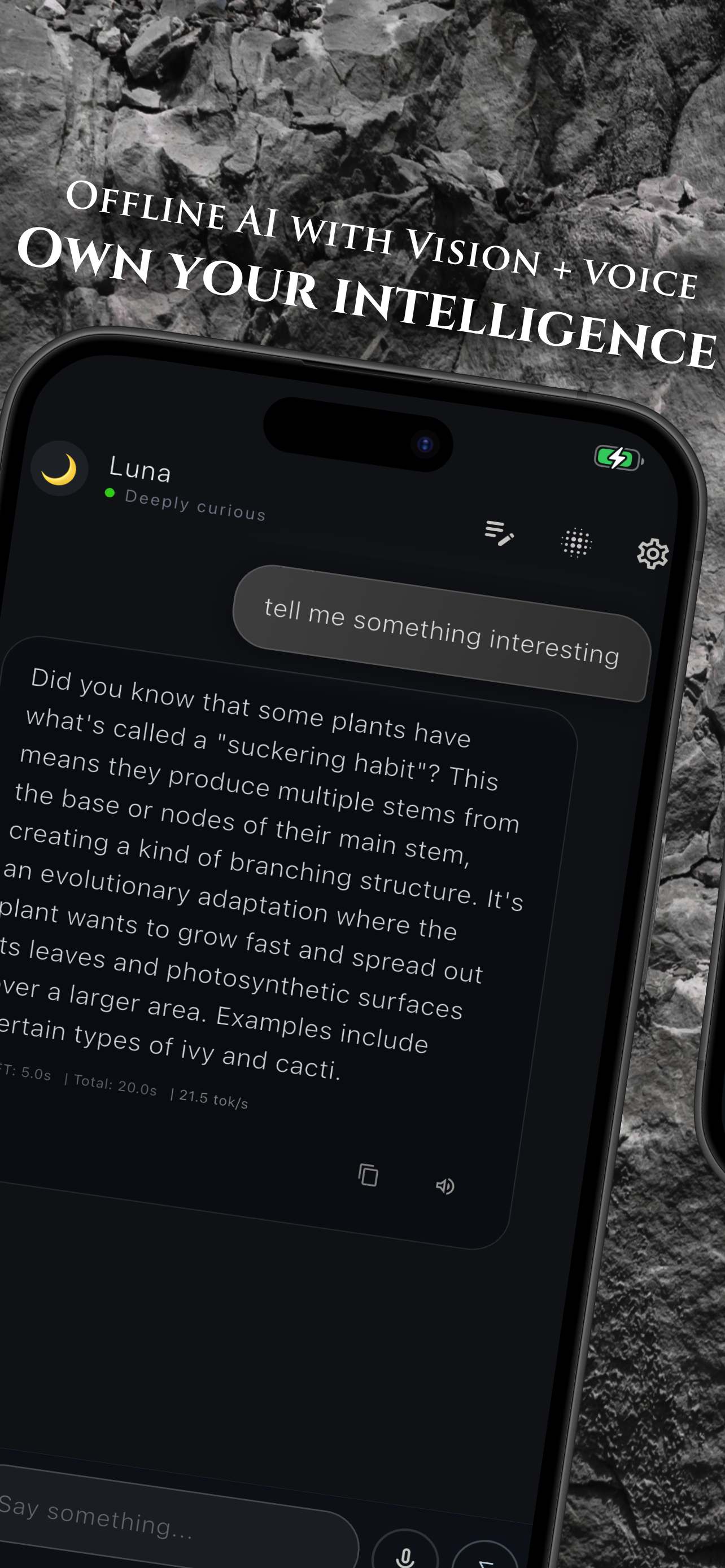
Chat View
-
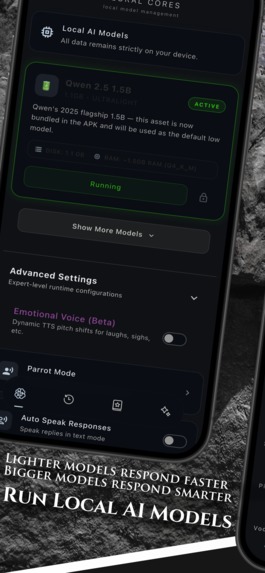
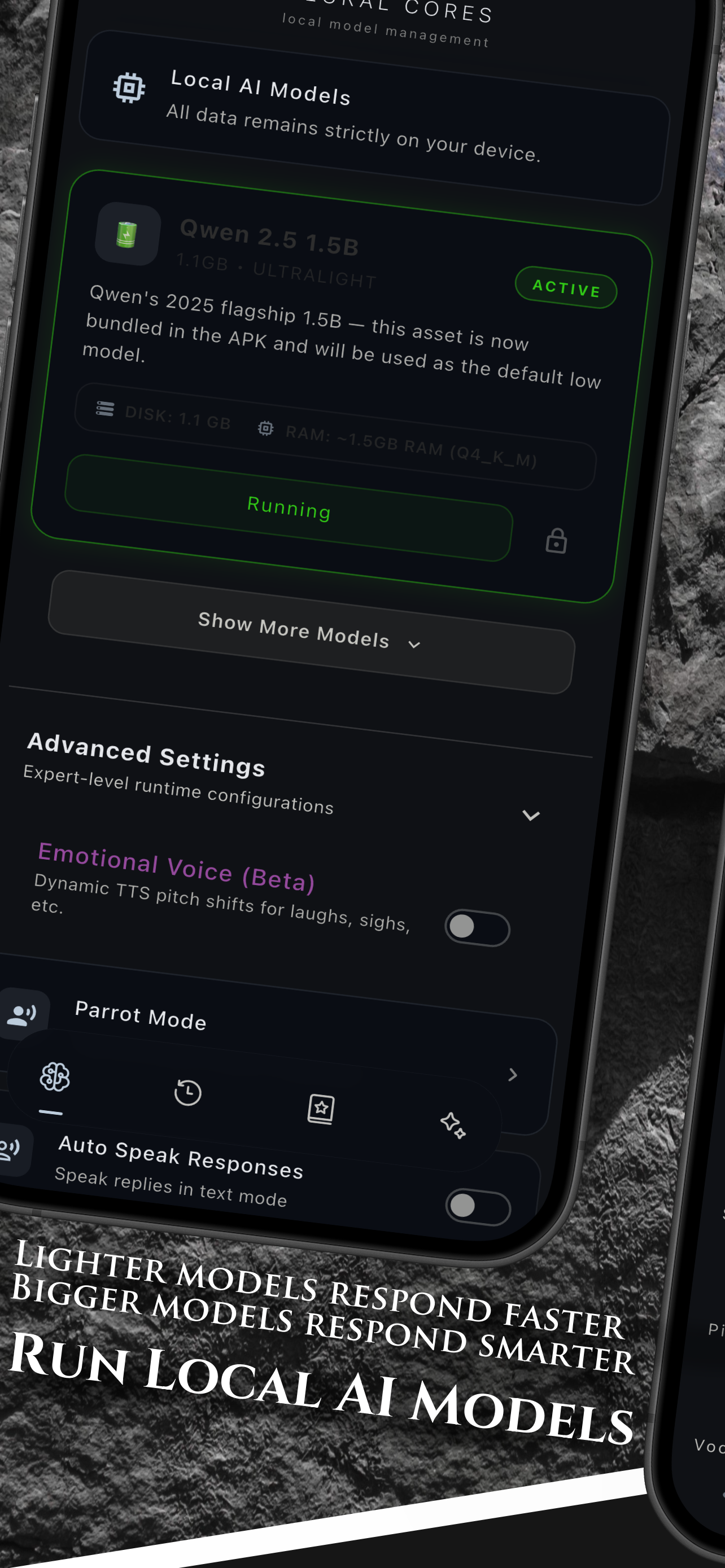
Settings
-
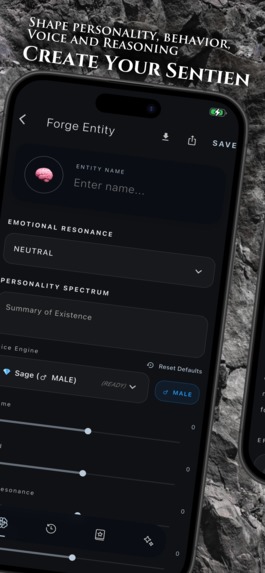
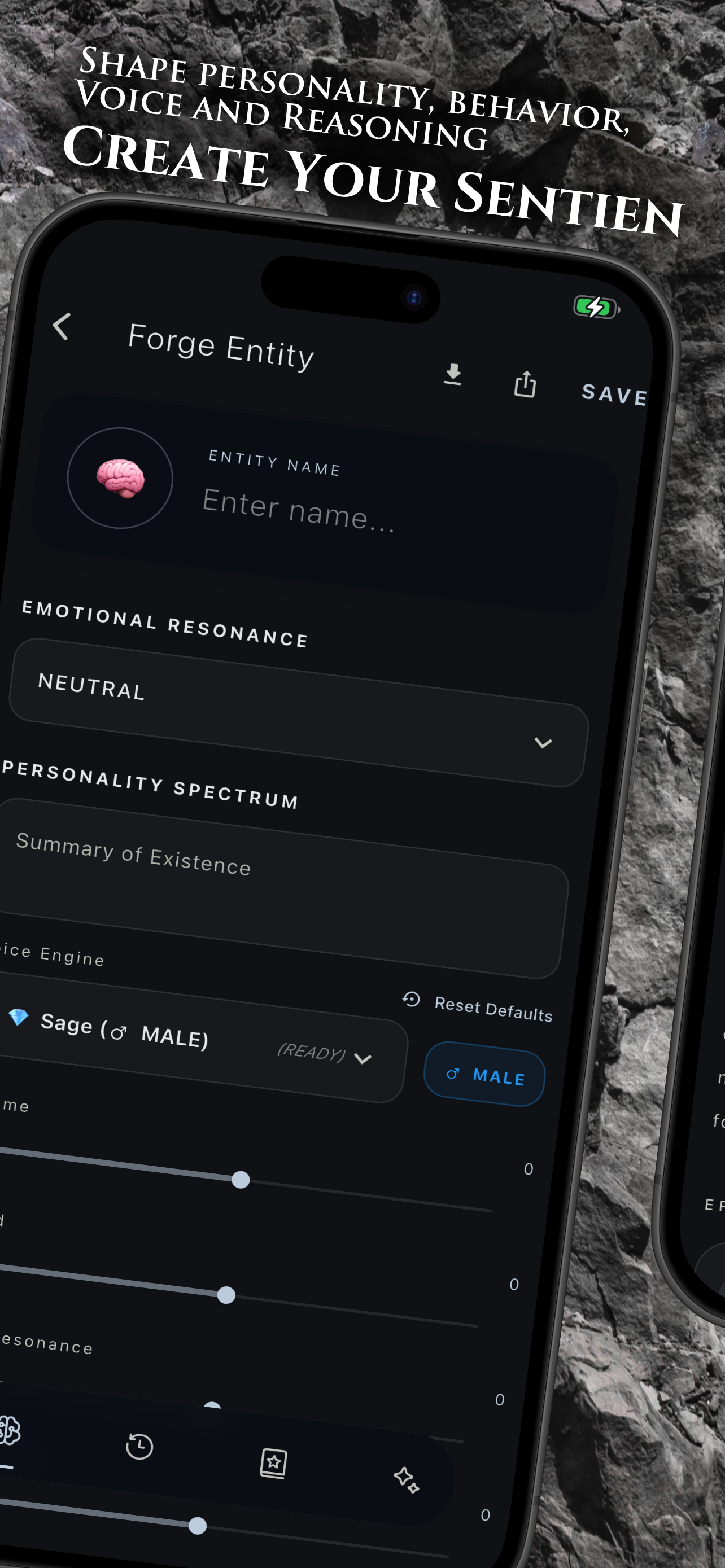
Edit sentiens screen
-
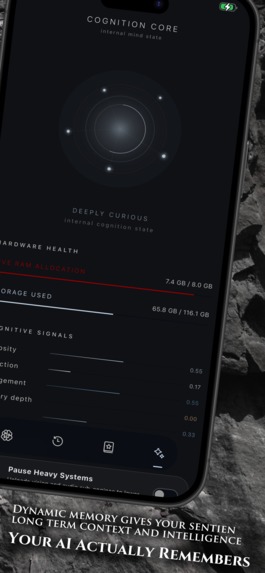
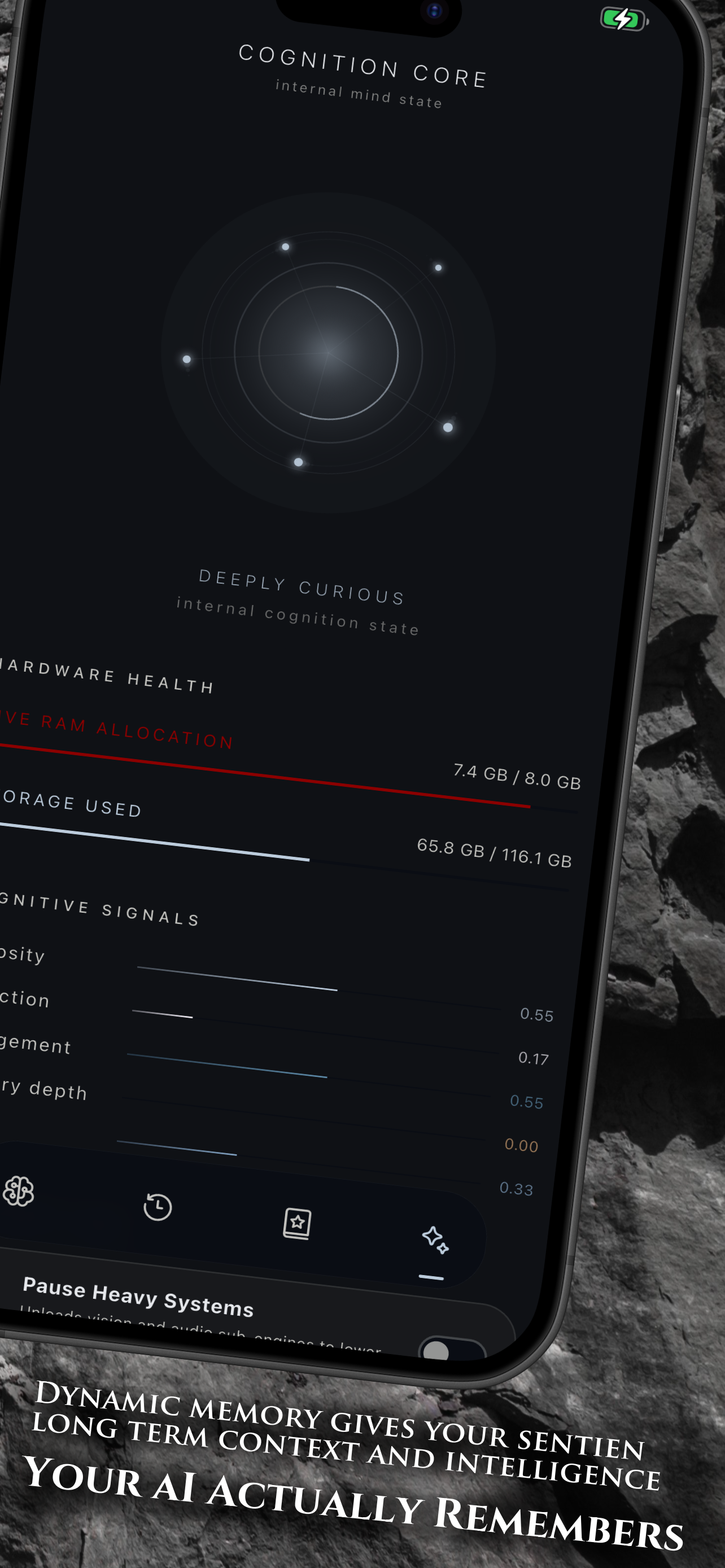
Cognition Core
-
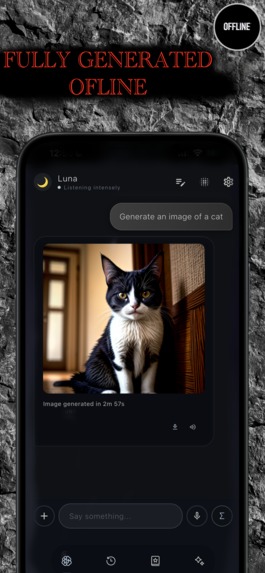
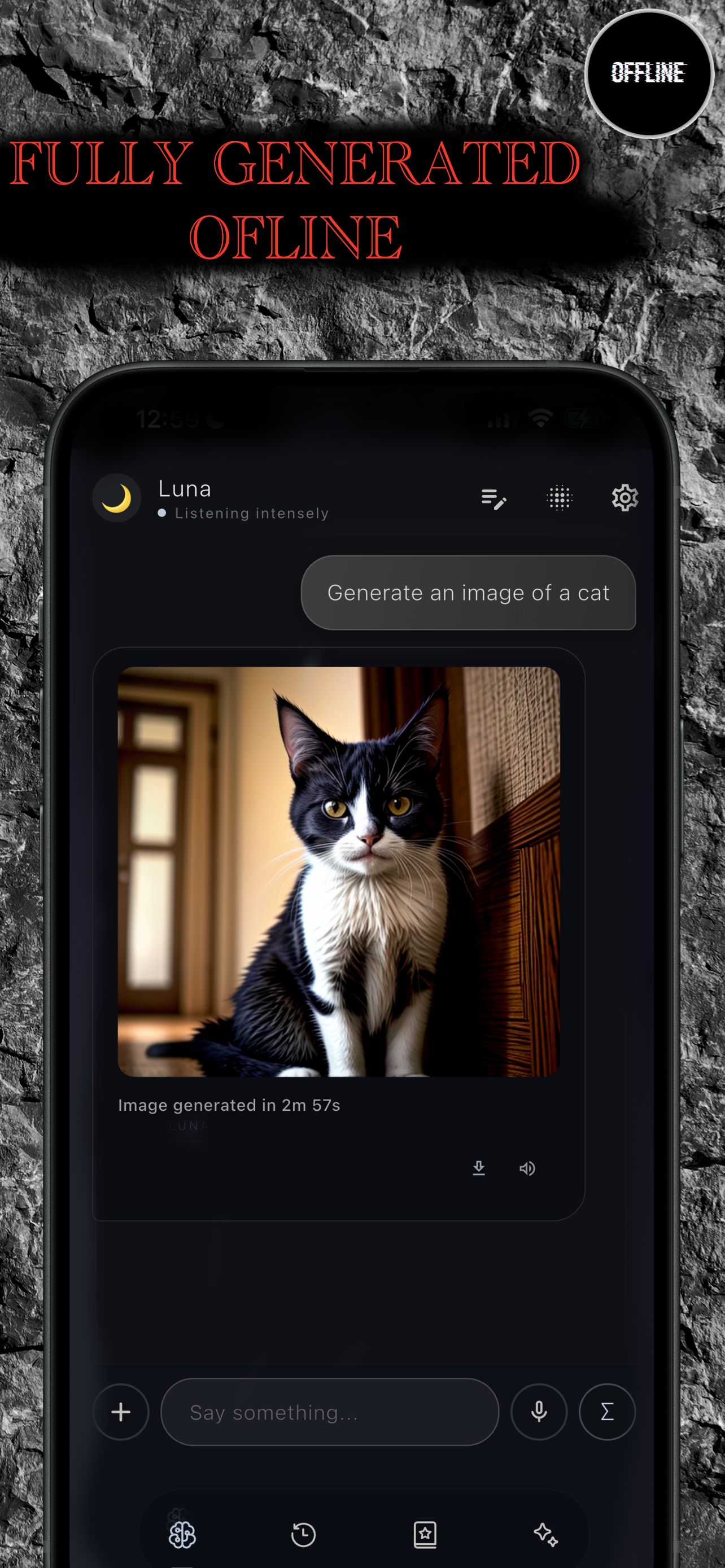
Cat generated offline
-
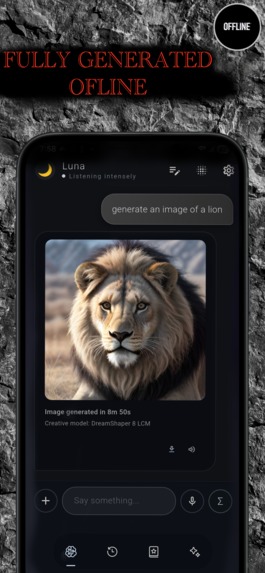
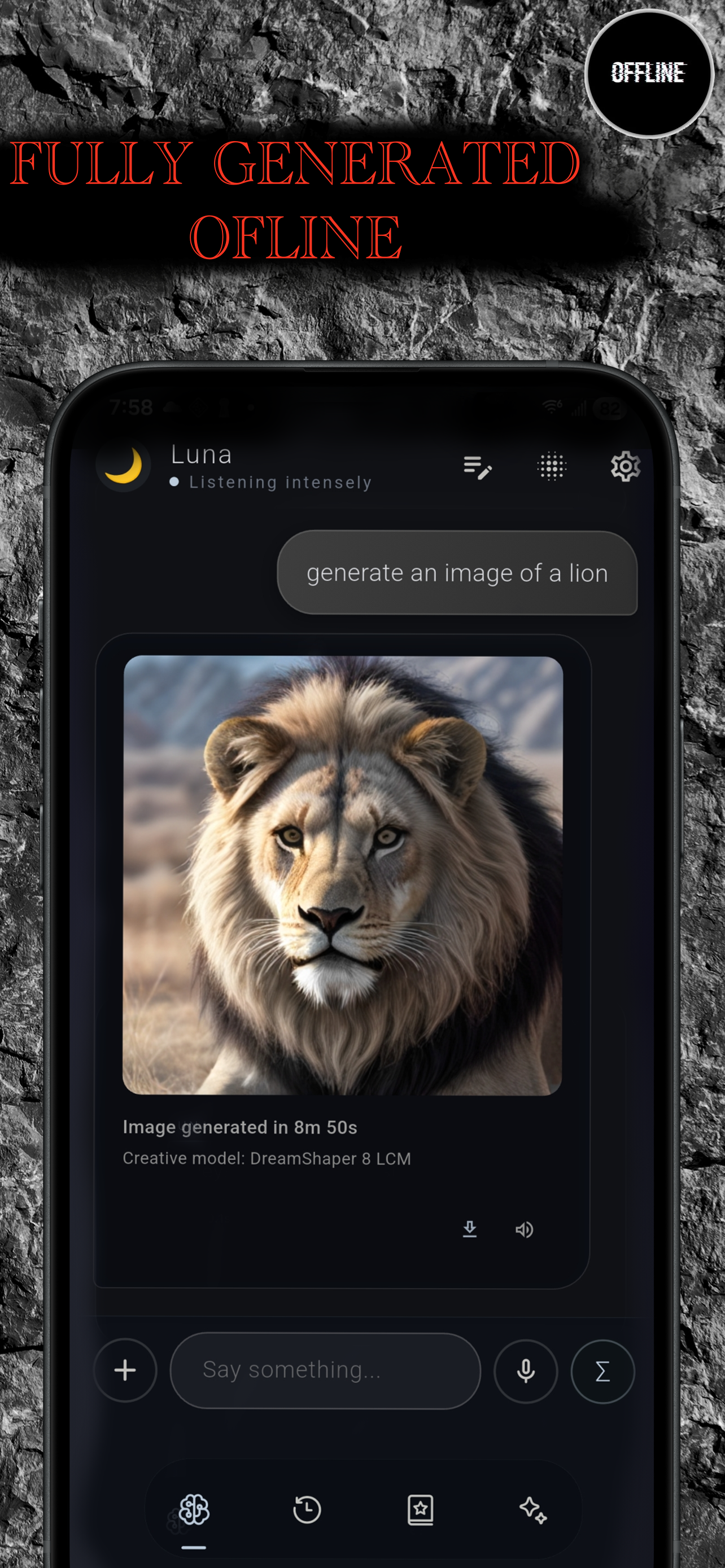
Lion generated offline
-
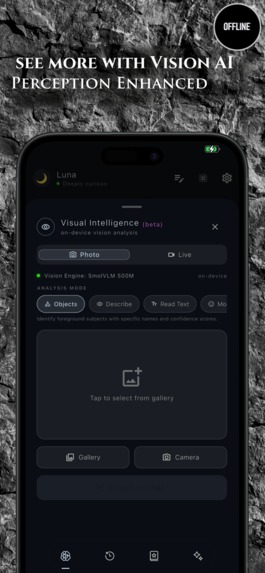
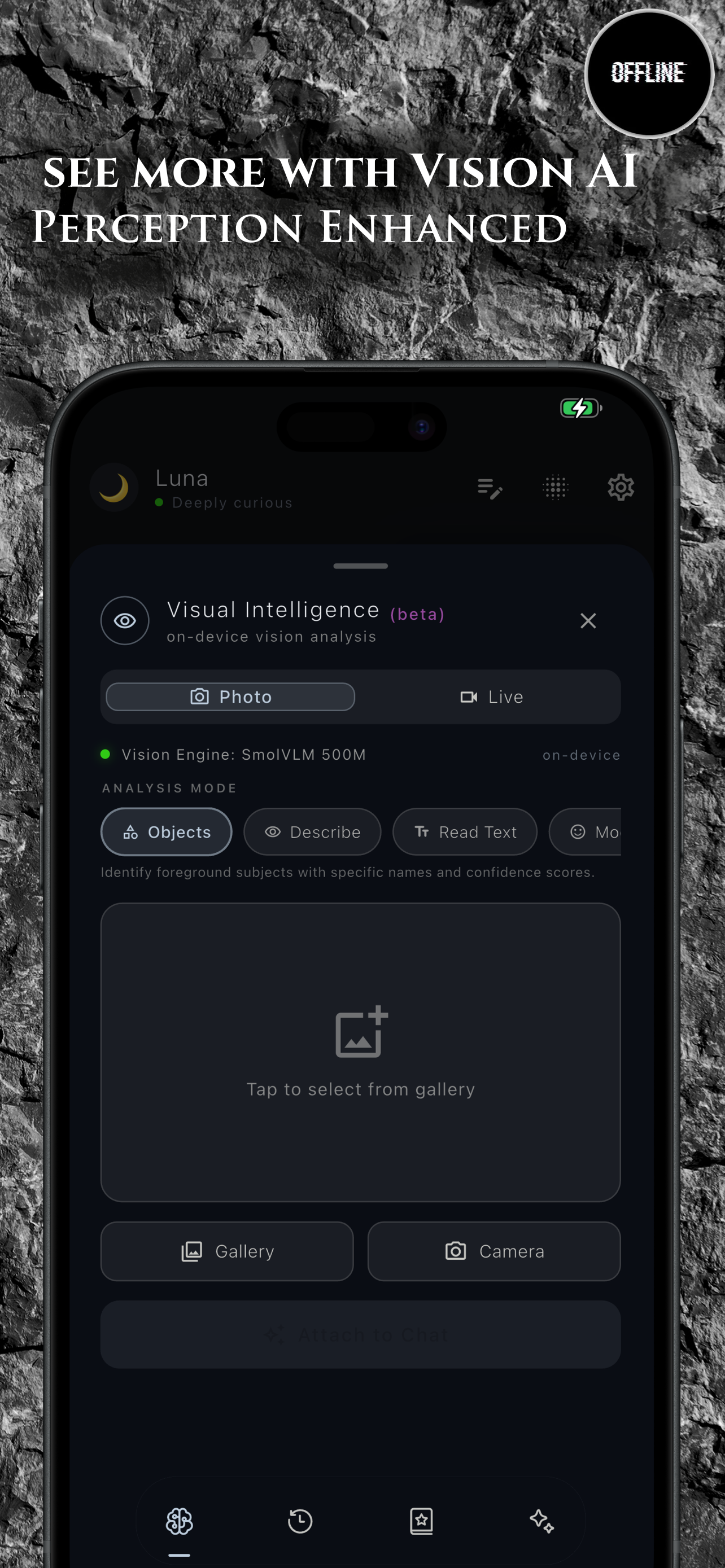
Visual Intelligence
-
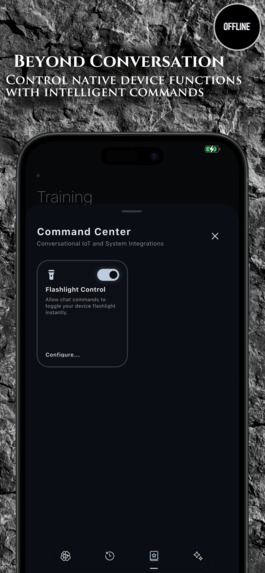
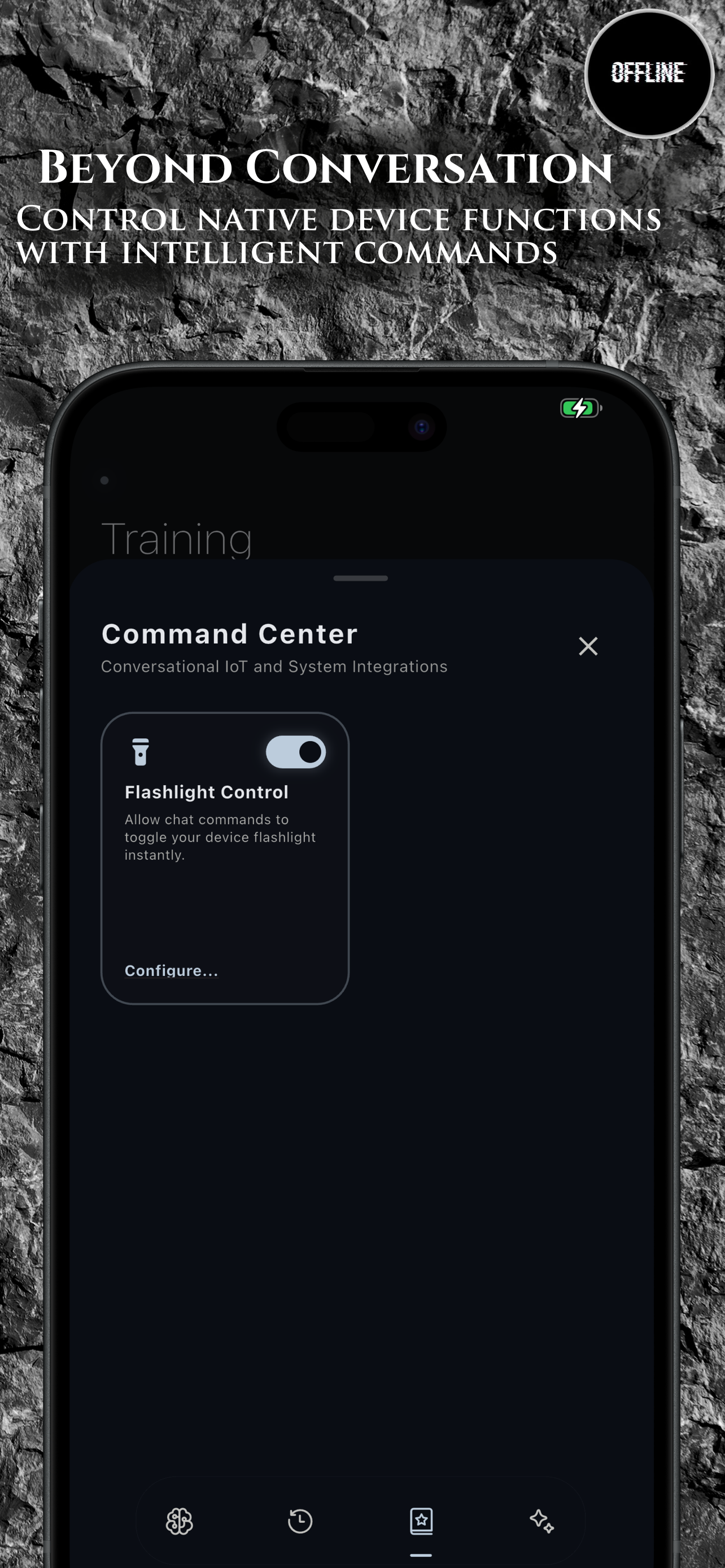
Command Center
-
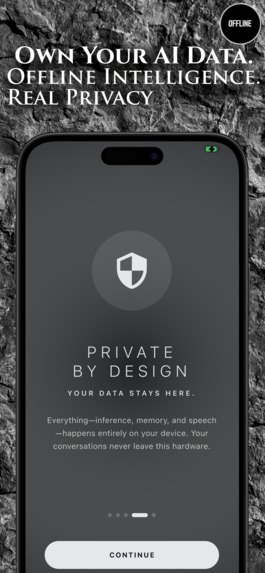
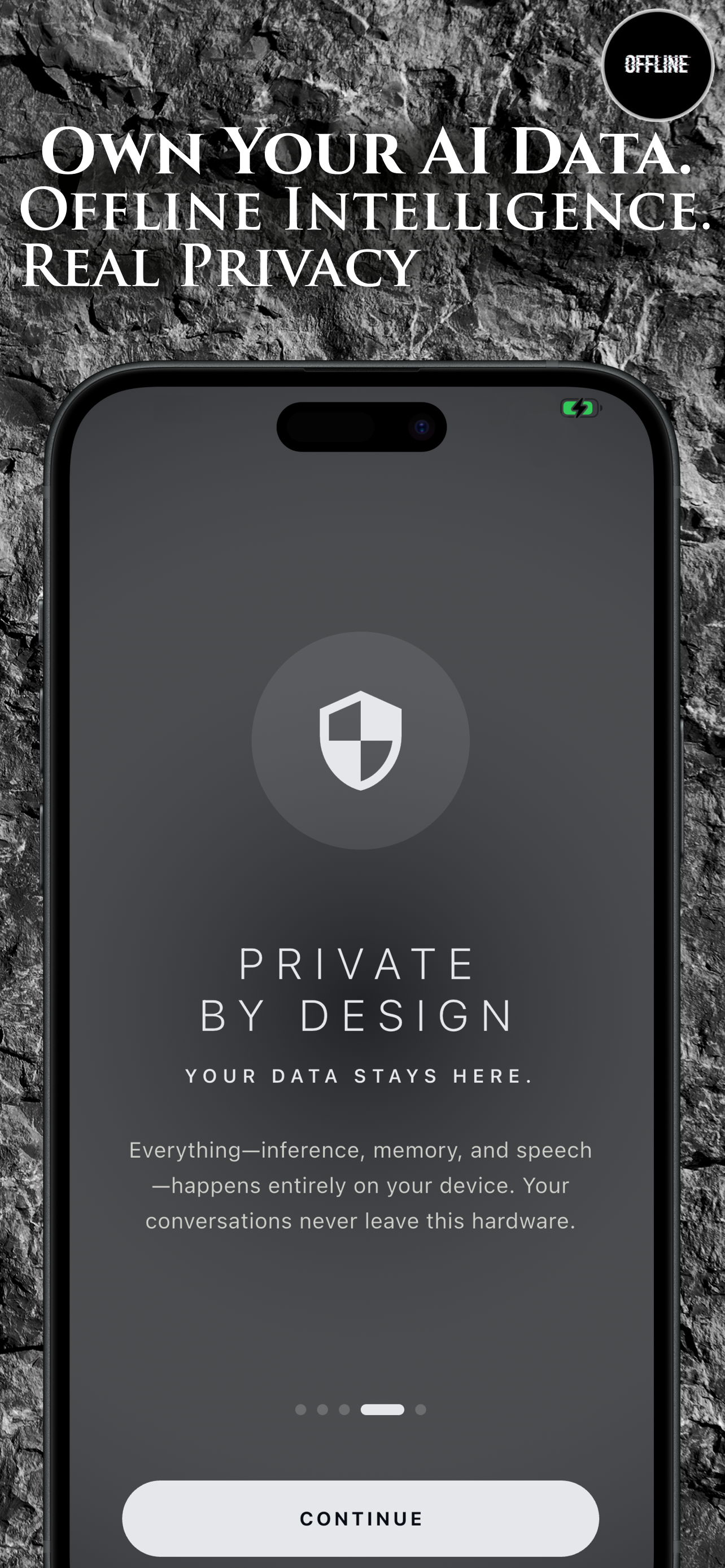
Privacy onboarding screen
-
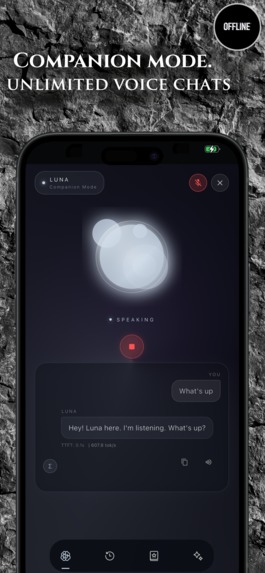
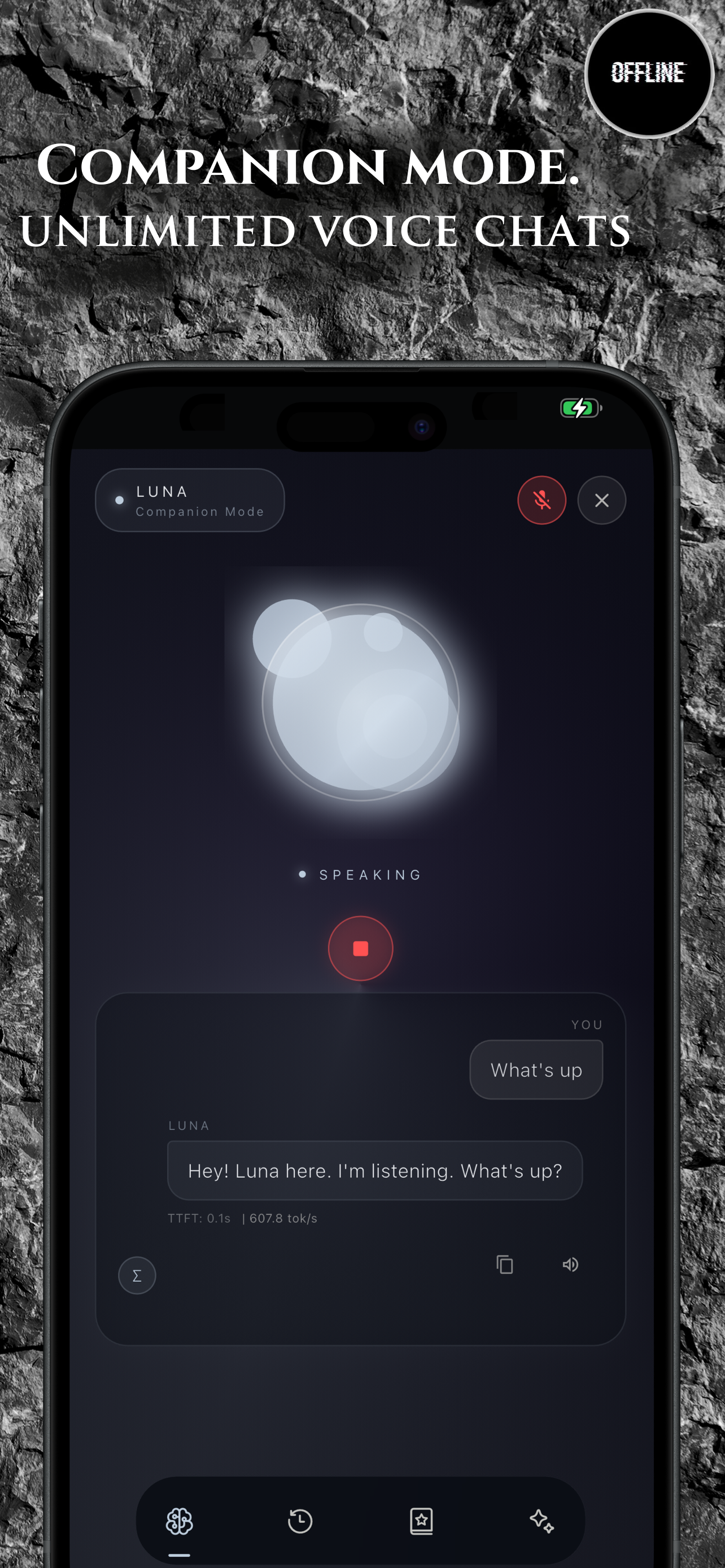
Companion Mode
-

Cat generated offline on iPhone 16 plus steps stable diffusion
-

Peacock generated offline on iPhone 16 plus steps stable diffusion
-
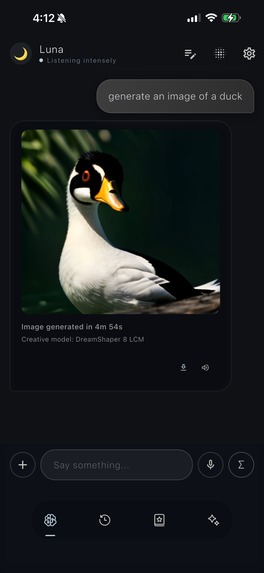
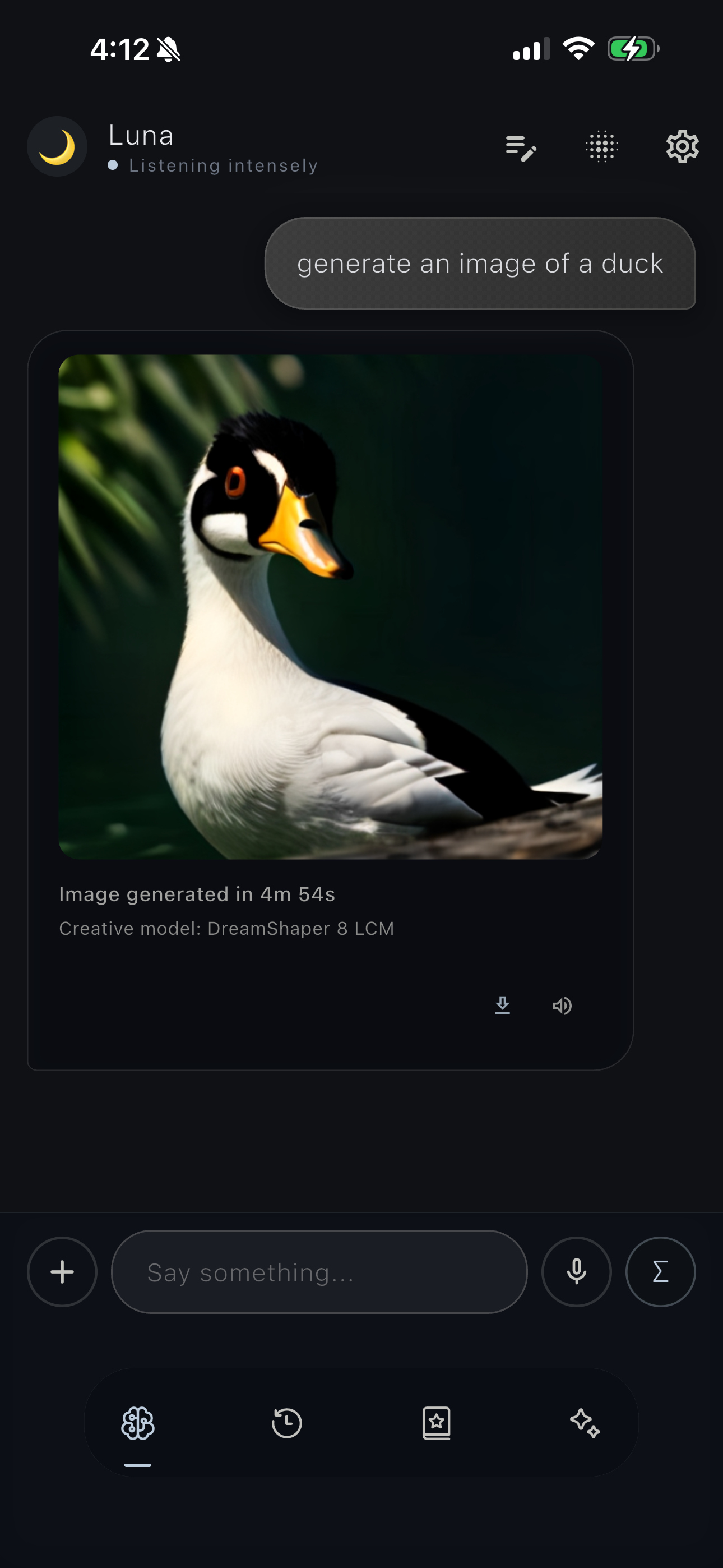
Duck generated Offline


Headline
Sentiens: Offline AI for Everyone
Sentiens began as a journaling app two years ago, built to help people reflect on their thoughts, emotions, and personal patterns. But when I entered this hackathon, I wanted to use that foundation to build something bigger: my own offline AI.
I started working on it just one week after the hackathon began, and the goal was to turn a personal journaling template into a real on-device intelligence system that could function without constant internet access.
The question behind Sentiens was simple:
Why should powerful AI only be available to people with fast, reliable internet?
Billions of people deal with unreliable connectivity, expensive mobile data, or privacy concerns when using cloud-based AI. I wanted to explore a different possibility: what if powerful AI could live entirely on the device in your pocket?
That idea became Sentiens.
Inspiration
Sentiens was inspired by a simple question:
Why should powerful AI only be available to people with fast, reliable internet?
I wanted to prove that modern smartphones are capable of running advanced AI experiences entirely on-device. With Sentiens, my goal was to make AI more private, resilient, accessible, and personal.
The larger dream behind the project is accessibility. I want to help make advanced AI available to people who may not always have reliable access to the internet. In the future, I hope technology like Sentiens can help bring intelligence to communities where cloud-based AI is difficult or impossible to access.
What it does
Sentiens is a fully offline, on-device AI platform.
It can run multiple AI capabilities directly on the user’s device, including:
- Offline AI conversations using local language models
- Vision understanding for analyzing images
- Speech recognition
- Neural text-to-speech
- Offline image generation
- Personalized AI personalities and behavior
- Native device interactions and voice commands
- Animated AI presence with custom avatar support
- Personalized learning and memory systems
One of the more distinctive parts of Sentiens is its avatar system. Instead of a generic chat interface, the AI can present itself as a live presence with animated visual behavior. I built a custom avatar setup where multiple image frames are used to create the illusion of motion and expression. This helps the assistant feel more alive and more personal.
Making that animation feel believable was surprisingly difficult. A set of just four images had to look natural, smooth, and expressive rather than like a basic slideshow. I spent a lot of time tuning the timing, transitions, and expression changes so the avatar could feel like a living character. I also wanted users to be able to add their own avatar sets, which made the app more personal and customizable, but added a lot of technical complexity.
The most important part is that these capabilities run locally. A user’s conversations, voice data, images, and personal context do not need to leave the device for the AI to function.
Sentiens is designed around a simple idea:
$$ \text{AI Capability} + \text{Local Hardware} = \text{Private Intelligence Anywhere} $$
How we built it
I built Sentiens using Flutter, allowing me to create a cross-platform experience for both iOS and Android while still working closely with the native hardware capabilities of each device.
The app is built around a modular architecture. Different AI capabilities can be integrated and optimized independently, including:
- Local language models for conversations
- Vision-language models for image understanding
- Speech recognition models
- Neural text-to-speech models
- Stable Diffusion-based image generation
- Memory and learning systems
- Avatar and presence systems
A key part of the project is the Gemini teaching mode. Instead of relying only on basic web scraping or static knowledge ingestion, I used Gemini API to help teach the app’s offline AI more accurately and more effectively. Gemini was used to synthesize and structure information in a way that gave the local model better grounding and more meaningful context.
This matters because an offline AI needs high-quality learning signals in order to be reliable. By using Gemini as a teaching and curation layer, the app can better organize concepts, refine knowledge, and help the local assistant answer with more relevant, contextual information than a scraping-only approach typically provides.
I also used Gemini throughout development as an AI partner to reason through implementation strategies, debug technical problems, and accelerate the overall build process. The app still required extensive hands-on engineering, testing, optimization, and native integration across mobile platforms.
One of the most important aspects of building Sentiens was optimizing AI models for mobile hardware. Unlike a cloud server, a smartphone has limited memory, processing power, battery capacity, and thermal headroom.
I had to carefully balance:
$$ \text{Model Quality} \leftrightarrow \text{Memory Usage} \leftrightarrow \text{Speed} \leftrightarrow \text{Battery Consumption} $$
On Apple devices, I worked with hardware acceleration through Metal. On Android, I explored Vulkan acceleration and also supported CPU-based execution when GPU acceleration was unavailable or unstable.
Challenges we ran into
Building a fully offline AI platform for mobile devices presented significant engineering challenges.
One of the biggest challenges was Android hardware fragmentation. Different Android devices can have completely different GPUs, drivers, memory capacities, and Vulkan implementations. Code that worked perfectly on one device could crash or behave differently on another.
I spent significant time testing Vulkan acceleration on Android devices. While GPU acceleration worked well in some situations, different drivers and older hardware created stability issues. This forced me to design Sentiens around multiple execution paths instead of relying on a single hardware backend.
Memory was another major challenge. AI models can be extremely large compared to typical mobile applications. Running a language model, vision model, voice model, and image generation model at the same time can quickly exceed the available RAM on a smartphone.
The avatar system also proved to be more difficult than expected. Getting a set of four frames to feel like a believable animated character required tuning the timing, expression changes, and transitions so it would not look mechanical or artificial. Supporting custom user-added avatar sets added another layer of complexity because the system had to remain flexible while still producing consistent animation.
Offline image generation was another major technical challenge. Running diffusion models locally requires significant computation and memory. I experimented with different optimizations and execution modes to make image generation practical on mobile hardware while balancing generation speed, image quality, resolution, memory usage, and compatibility.
Supporting multiple platforms also made development more complex. Apple devices generally provided a more consistent hardware acceleration environment through Metal, while Android required much more variation because of differences in chipsets and GPU drivers.
Accomplishments that we’re proud of
I am proud that Sentiens is not just a concept or a prototype. It is a real application that demonstrates multiple AI capabilities running directly on consumer devices.
I am especially proud of building a system that combines:
- Language models
- Vision
- Speech recognition
- Neural voices
- Image generation
- Personalized memory
- AI personas
- Animated presence and custom avatars
while maintaining an offline-first architecture.
I am also proud that this project started as a journaling app and evolved into a personal AI platform in a very short time. I began working on it just one week after the hackathon started, and the progression from reflective journaling to real on-device AI is something I find especially meaningful.
The most meaningful part of the project is seeing AI capabilities that are normally associated with cloud services running directly on a phone while preserving privacy and resilience.
What we learned
The biggest lesson I learned is that mobile devices are far more capable than many people realize.
When I started this project, it was easy to think of advanced AI as something that required a large data center. But after spending time optimizing models and testing them on real smartphones, I learned that the challenge is often not whether something is possible. The challenge is making it efficient enough.
I learned that building on-device AI requires thinking about the entire system:
- The model
- The hardware
- Memory
- Power consumption
- Acceleration APIs
- User experience
- Device compatibility
- Personalization and avatar design
I also learned that optimization is often more important than simply choosing the largest model. A smaller model that runs quickly, privately, and reliably on a device can be more useful than a much larger model that depends on constant cloud access.
Most importantly, I learned that AI development is becoming increasingly accessible. With tools like Gemini helping me reason through complex problems and accelerate development, a solo developer can attempt projects that would have previously required a much larger team.
What’s next for Sentiens
The next major step for Sentiens is expanding beyond mobile devices.
I want to create native executables for macOS, Windows, and Linux so that Sentiens can take advantage of the larger memory capacity available on many personal computers. Modern smartphones may commonly have around 8 GB of RAM, while many desktops and laptops provide 16 GB or more. That extra headroom could allow Sentiens to run larger and more capable local models that would not be practical on a phone.
My vision is for Sentiens to become a platform that adapts to the hardware it runs on:
- Mobile devices can run efficient, optimized AI anywhere
- Laptops and desktops can run larger and more capable models
- Schools and communities can potentially host local AI systems without requiring constant cloud connectivity
The long-term dream is to bring useful AI intelligence to remote schools and communities in developing countries where internet access may be limited, unreliable, or expensive.
Imagine a school with limited internet connectivity being able to install Sentiens on a local computer and provide students with access to a powerful AI tutor or study assistant without relying on a cloud service.
That is the future I want to work toward.
I want Sentiens to help make intelligence more accessible, not just to people with the fastest internet connections or the most expensive technology, but to people everywhere.
The goal is to continue improving performance, supporting larger models, expanding multimodal capabilities, improving hardware acceleration, and making Sentiens available across mobile and desktop platforms.
Ultimately, I want to help prove that advanced AI does not have to exist only in massive data centers.
Sometimes, intelligence can live in your pocket.
Sometimes, it can live on your laptop.
And one day, I hope it can help a student learn in a classroom where the internet is limited, unreliable, or nonexistent.

Log in or sign up for Devpost to join the conversation.