Inspiration: When we started thinking about Sentinel AI, we wanted to build something that tackles real-world emergencies where every second counts, specifically focusing on maritime, subsea, and flood hazards. We realized that first responders often have to sift through messy, low-visibility footage, complex hydrostatic math, and scattered data sources under immense pressure. We wanted to create a unified command center that brings computer vision, real-time telemetry, and smart multi-model AI together into one slick interface.
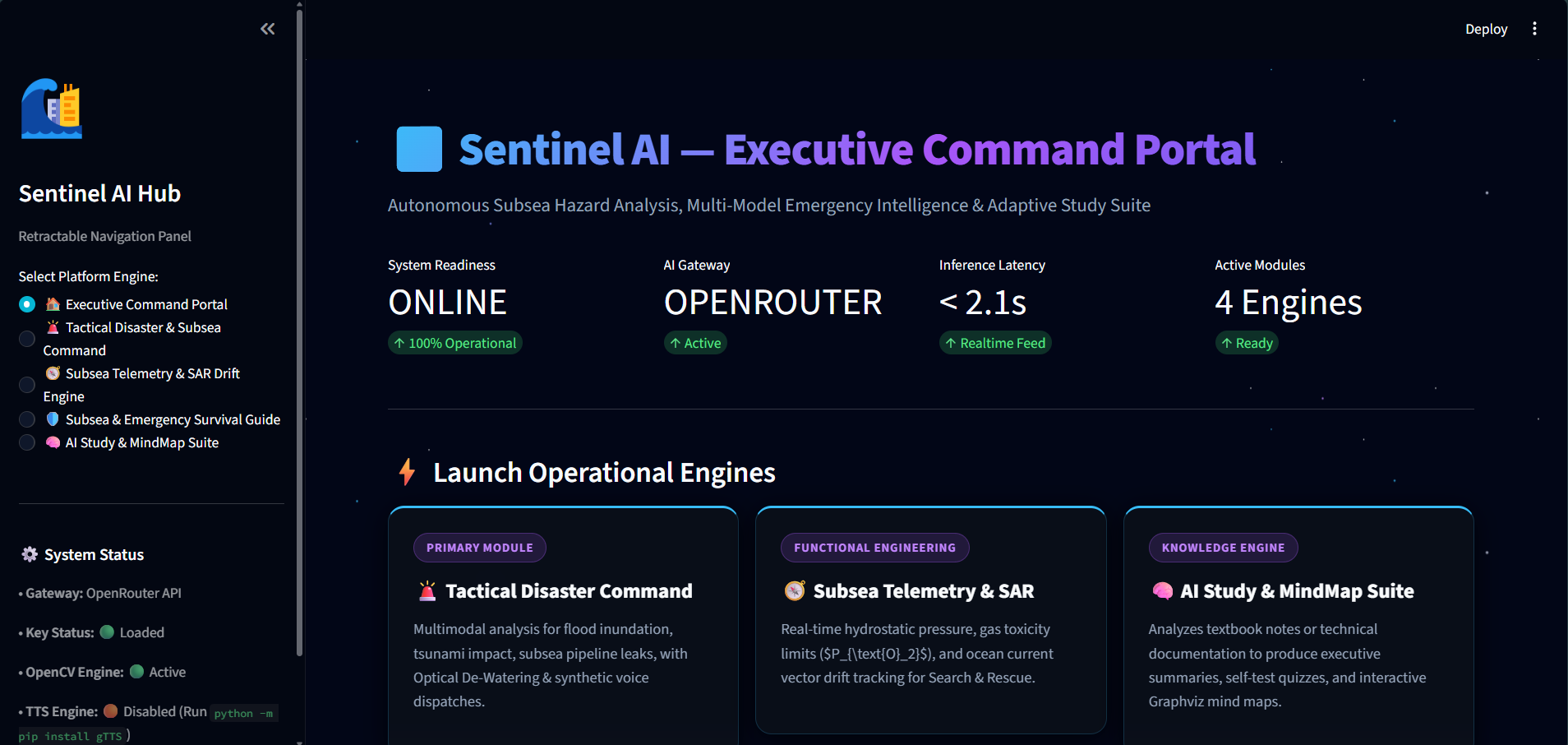
What it does: Sentinel AI is an all-in-one emergency command and technical analysis hub built with Streamlit.
It features:
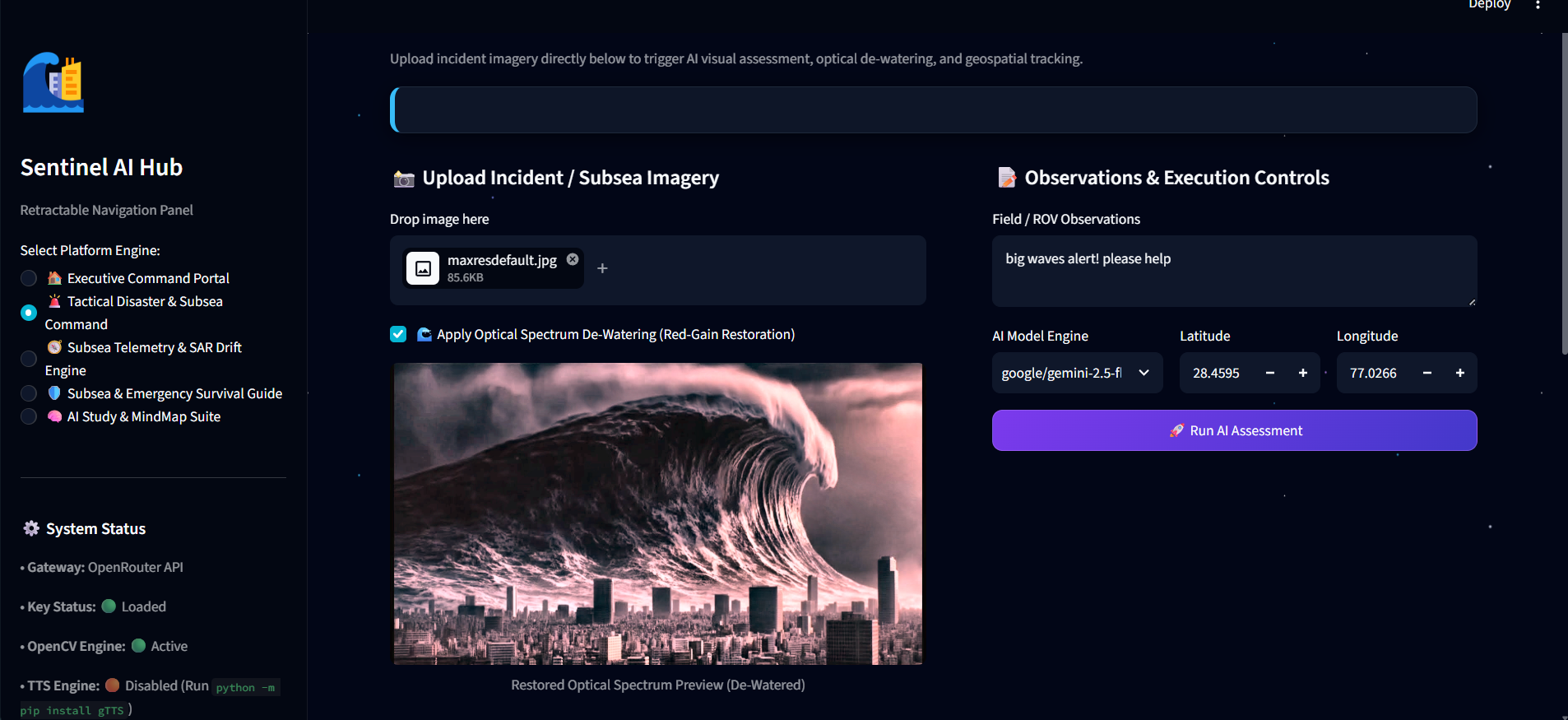
Tactical Disaster Command: Multimodal AI analysis for floods, tsunamis, and infrastructure breaches, complete with an optical de-watering filter to clean up murky underwater images.
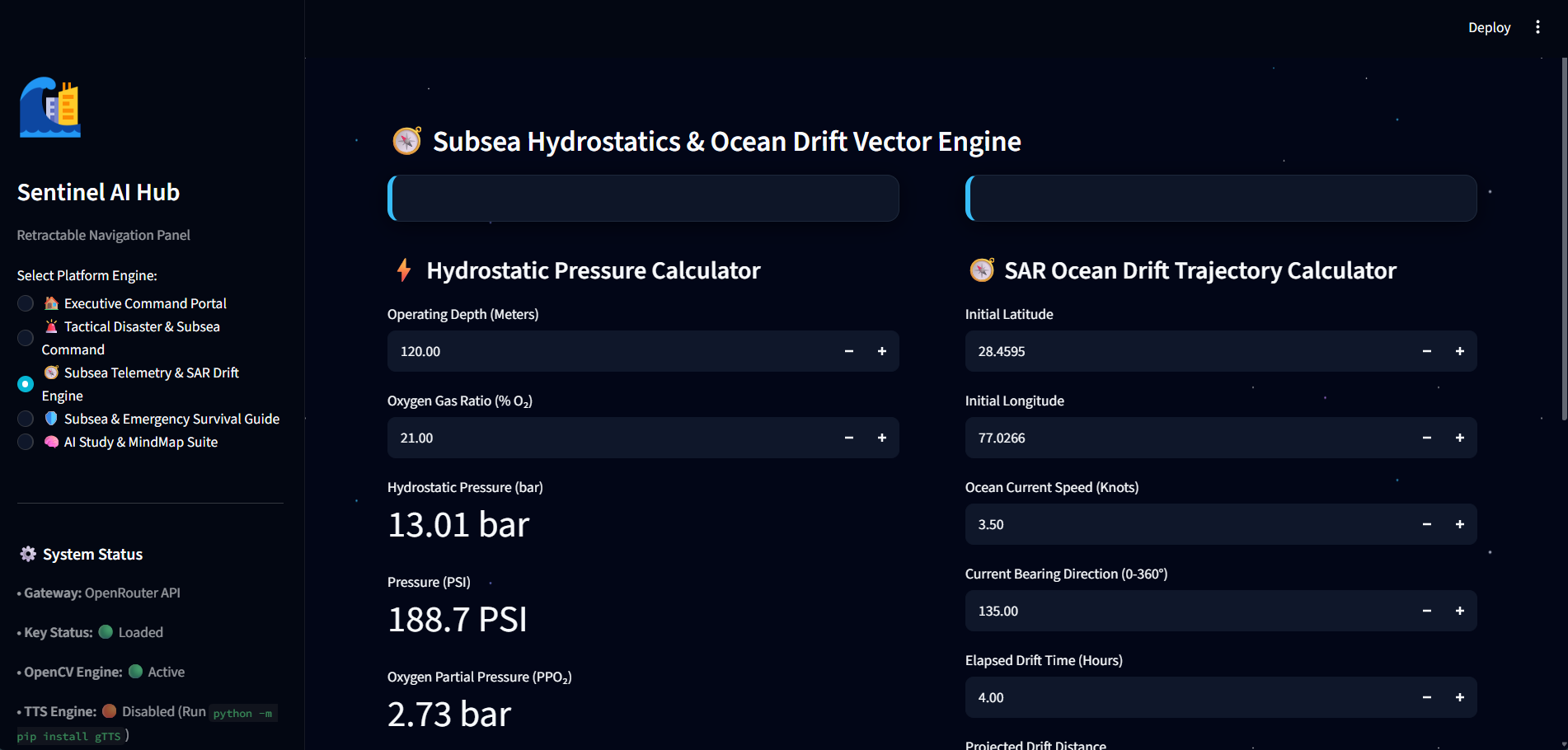
Subsea Telemetry & SAR Drift: Real-time hydrostatic pressure and 02 gas toxicity calculators, alongside ocean current vector drift tracking for search and rescue operations.
Acoustic & Voice Intelligence: Hydrophone frequency spectrogram analysis and automated synthetic voice dispatch for responder communication.
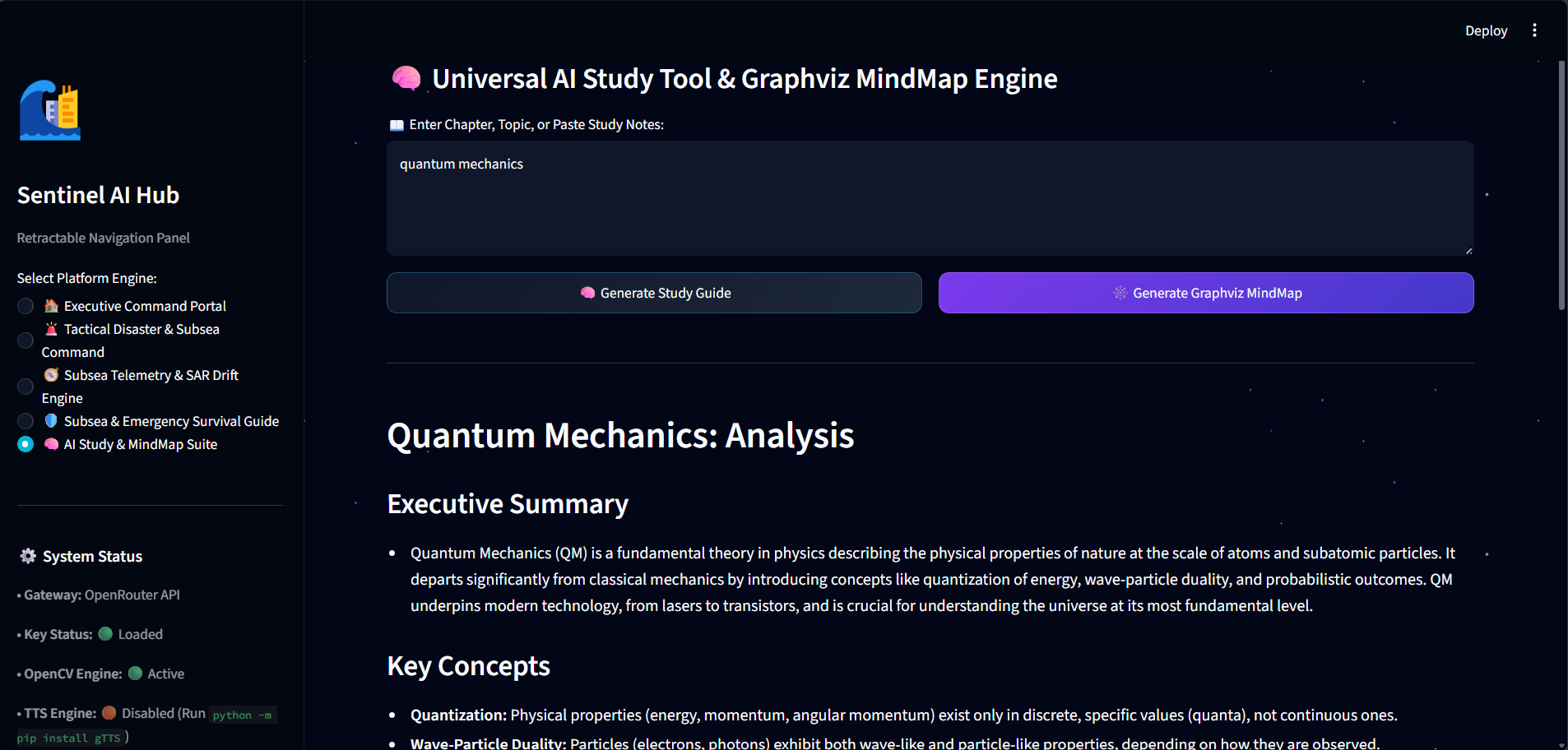
AI Study & Mind Map Suite: An adaptive learning tool that turns study notes into structured summaries, quizzes, and interactive Graphviz mind maps.
How we built it: The app is built entirely in Python using Streamlit for a responsive, dark-mode sci-fi command UI. For the brains of the operation, we integrated Google's Gemini Flash models via OpenRouter to handle multimodal image reasoning and text parsing. OpenCV and NumPy power the computer vision pipeline for optical spectrum de-watering and red-gain restoration, while SciPy processes hydrophone audio files to generate acoustic spectrogram heatmaps. We also utilized Folium and Streamlit-Folium for interactive geospatial maps and gTTS for automated voice dispatch generation.
Challenges we ran into: Let's be honest, managing API quotas was our biggest headache. We hit plenty of rate limits while testing heavy multimodal requests, which forced us to rethink our setup, optimize token limits, and pivot to OpenRouter for a stable gateway. Another fun challenge was writing custom NumPy and OpenCV algorithms to automatically correct underwater color distortion without making images look oversaturated, as well as reliably parsing AI-generated JSON for the dynamic mind map engine.
Accomplishments that we're proud of: We're super proud of how cohesive the final dashboard feels. Getting the optical de-watering filter to work in real-time alongside the AI assessment was a huge win. We also managed to pack four distinct, heavy-duty operational engines, covering disaster command, hydrostatics, survival guides, and a study suite, into a single web app without making it feel cluttered or laggy.
What we learned: This project gave us a massive appreciation for robust error handling and API fallback logic. We learned a lot about integrating computer vision pipelines directly into web interfaces, managing Streamlit session states across multiple complex modules, and balancing heavy data processing with smooth user experience.
What's next for Sentinel-AI: Looking ahead, we want to integrate live IoT and hydrophone sensor streaming feeds, expand the SAR drift engine with real-time ocean current APIs, and add multi-agent collaboration features to coordinate multiple rescue teams simultaneously.

Log in or sign up for Devpost to join the conversation.