-
-
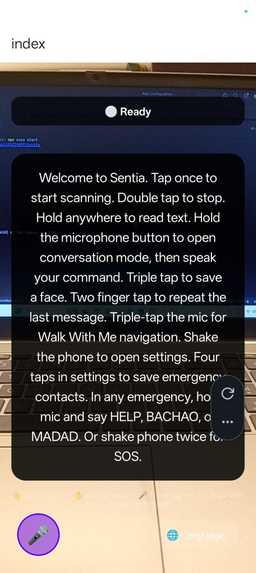
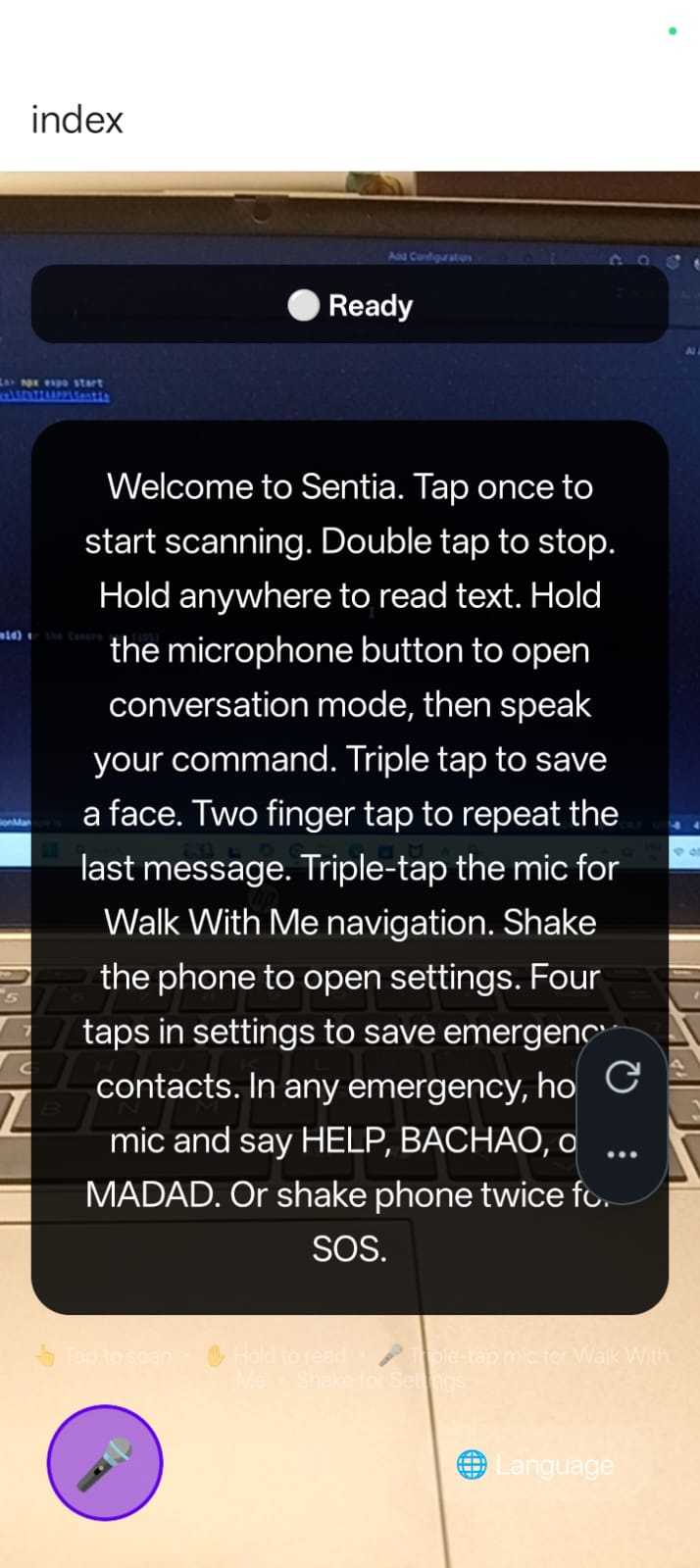
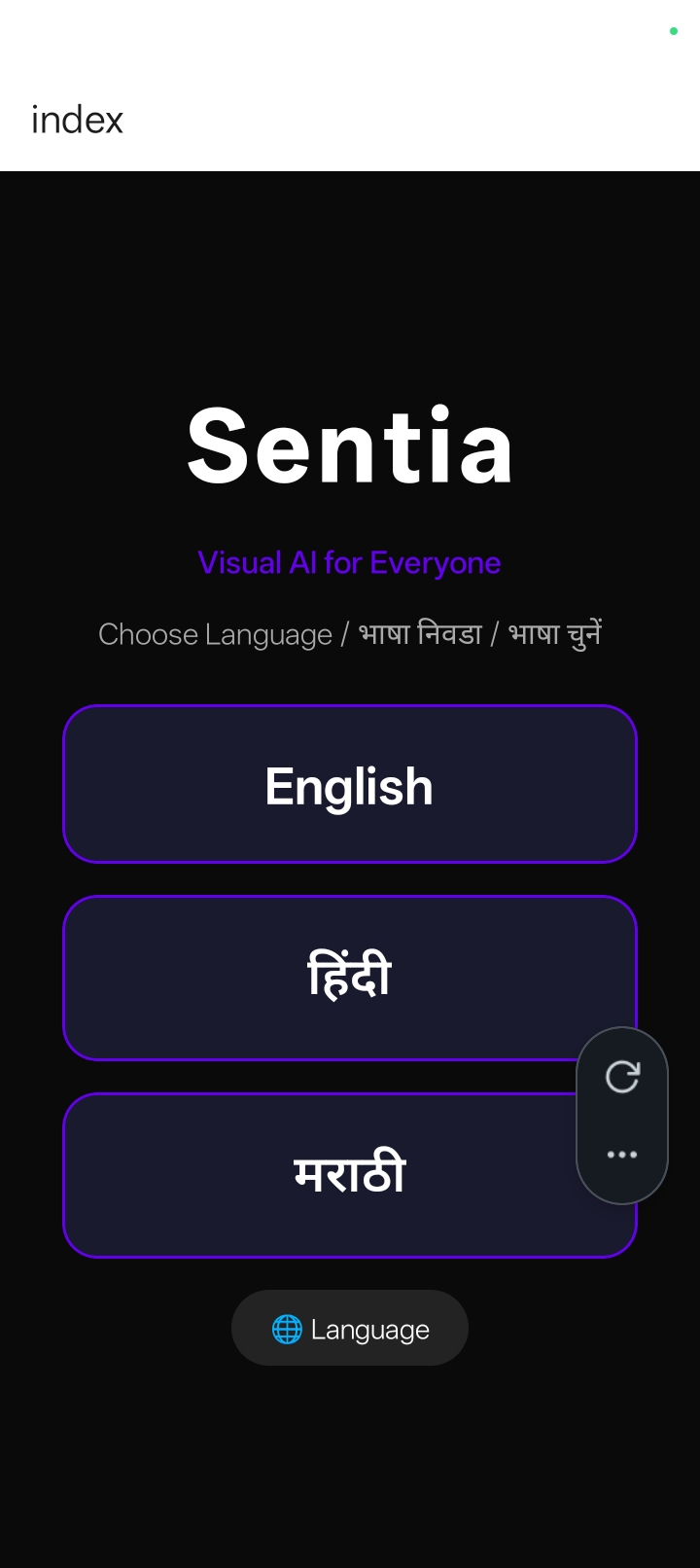
The screen of SENTIA.
-
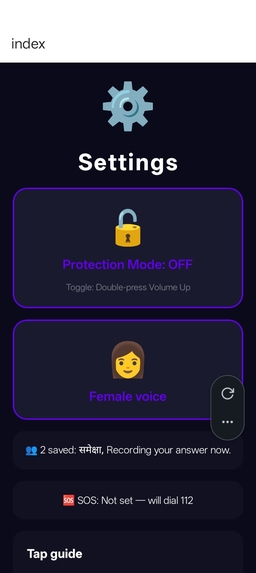
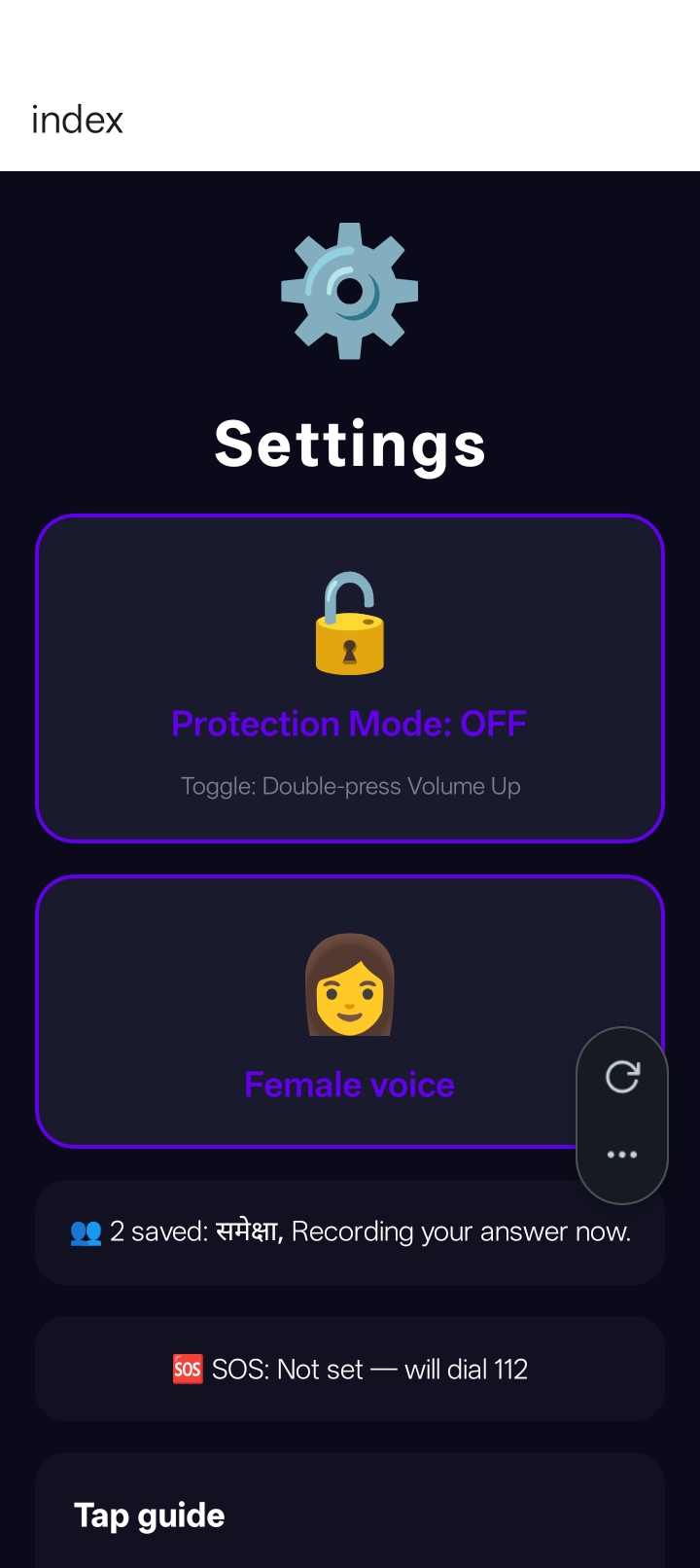
Settings operated by senses.
-
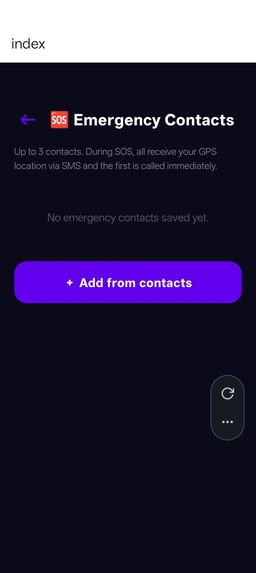
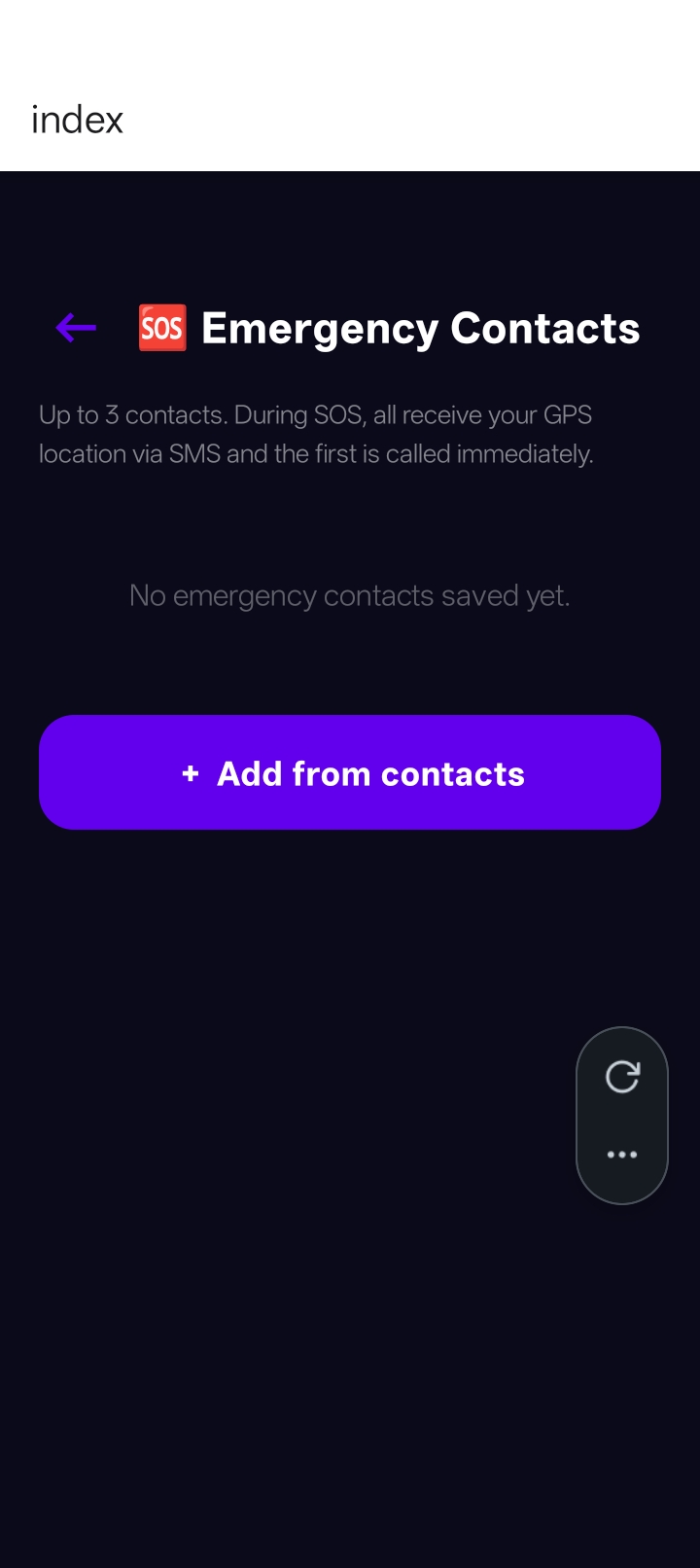
Emergency contact page for SOS
-
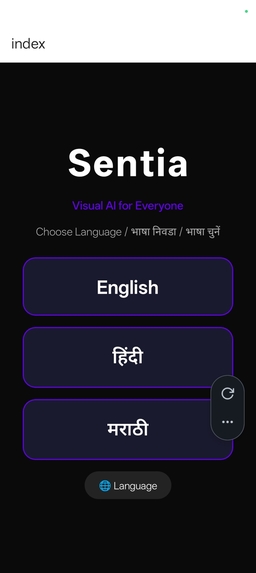
Multilingual support
-
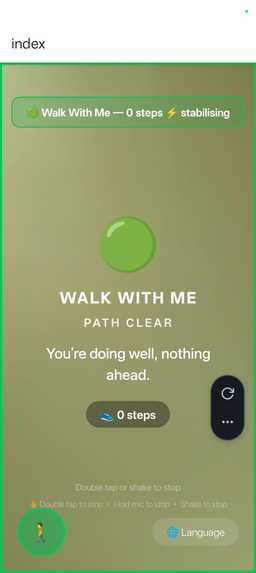
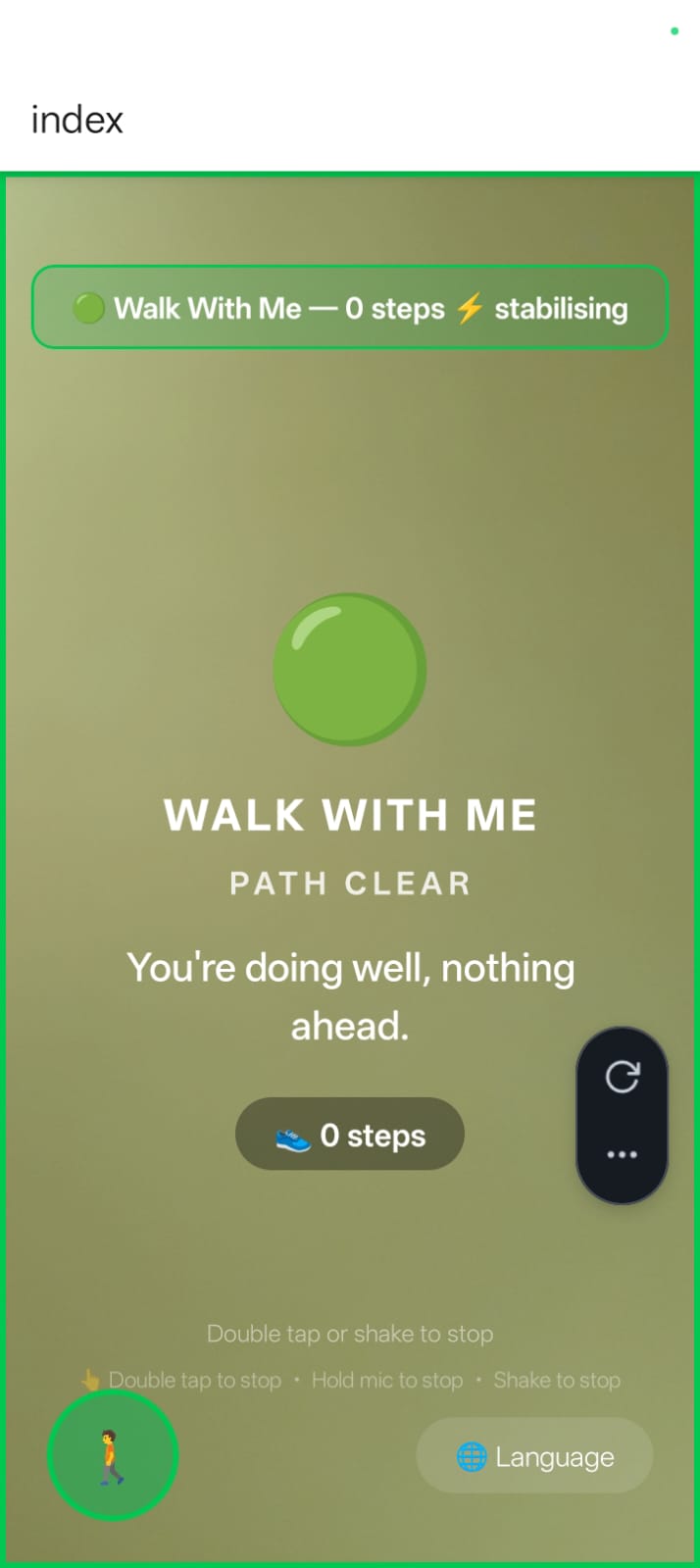
The WALKWITHME feature
Inspiration:
Imagine navigating every street, staircase, and crowded space without the ability to see. For millions of visually impaired individuals, this is a daily reality. While technology has advanced rapidly, accessible navigation solutions still struggle to understand dynamic environments in real time. We saw an opportunity to bridge that gap by combining AI and computer vision to build a solution that doesn't just assist users—it empowers them with greater confidence, independence, and freedom. That vision became SENTIA.
What it does:
SENTIA is an AI-powered mobility assistant that helps visually impaired users navigate the world more safely. Using computer vision, intelligent scene understanding, and real-time voice guidance, it detects obstacles, analyzes free walking space, and recommends safer paths as the user moves. Instead of simply identifying objects, SENTIA interprets the surrounding environment and provides actionable guidance, making everyday navigation more intuitive, reliable, and accessible.
How we built it:
We developed SENTIA by combining computer vision, AI-powered environmental analysis, obstacle detection, intelligent path planning, and voice-based interaction into a unified navigation system. The application was built using TypeScript with a modular architecture to keep individual components scalable and maintainable. Throughout development, we leveraged Claude to accelerate feature implementation and ChatGPT for architecture design, debugging, planning, and documentation. Rapid prototyping, continuous testing, and iterative refinement allowed us to transform an ambitious idea into a functional prototype within the limited hackathon timeline.
Challenges we ran into:
Building a reliable navigation assistant in a hackathon timeframe came with significant technical challenges. Integrating obstacle detection, free-space analysis, and intelligent path planning into a seamless real-time experience required constant iteration. We also had to balance performance, responsiveness, and decision accuracy while ensuring that different AI modules worked together effectively. Through debugging, modular development, and repeated testing, we improved both the stability and reliability of the system.
Accomplishments that we're proud of:
Our team SENTIA secured an Honorable Mentioned at SAAVISHKAR 2026 – National Level Software Project Competition, organized by MPSTME's Department of Computer Engineering and IEEE CS. 🏅
Our biggest accomplishment is turning an ambitious accessibility vision into a working prototype capable of addressing a real-world problem. We're proud of successfully integrating multiple AI components into a single intelligent mobility assistant and creating an experience that goes beyond object detection to provide meaningful navigation support. More than the technology itself, we're proud that SENTIA has the potential to improve independence and quality of life for visually impaired individuals. Along with SOS.
What we learned:
This project reinforced that impactful innovation starts with understanding real human problems. We deepened our knowledge of computer vision, AI-assisted development, modular software design, and rapid prototyping under time constraints. Most importantly, we learned that building accessibility technology requires balancing technical excellence with empathy, reliability, and user-centered design.
What's next for SENTIA:
SENTIA is just getting started. Our roadmap includes improving navigation accuracy through advanced AI models, sign recognition, enabling offline functionality. We also plan to collaborate directly with visually impaired users to validate the system in real-world environments and evolve SENTIA into a production-ready accessibility platform capable of creating meaningful social impact.


Log in or sign up for Devpost to join the conversation.