Inspiration
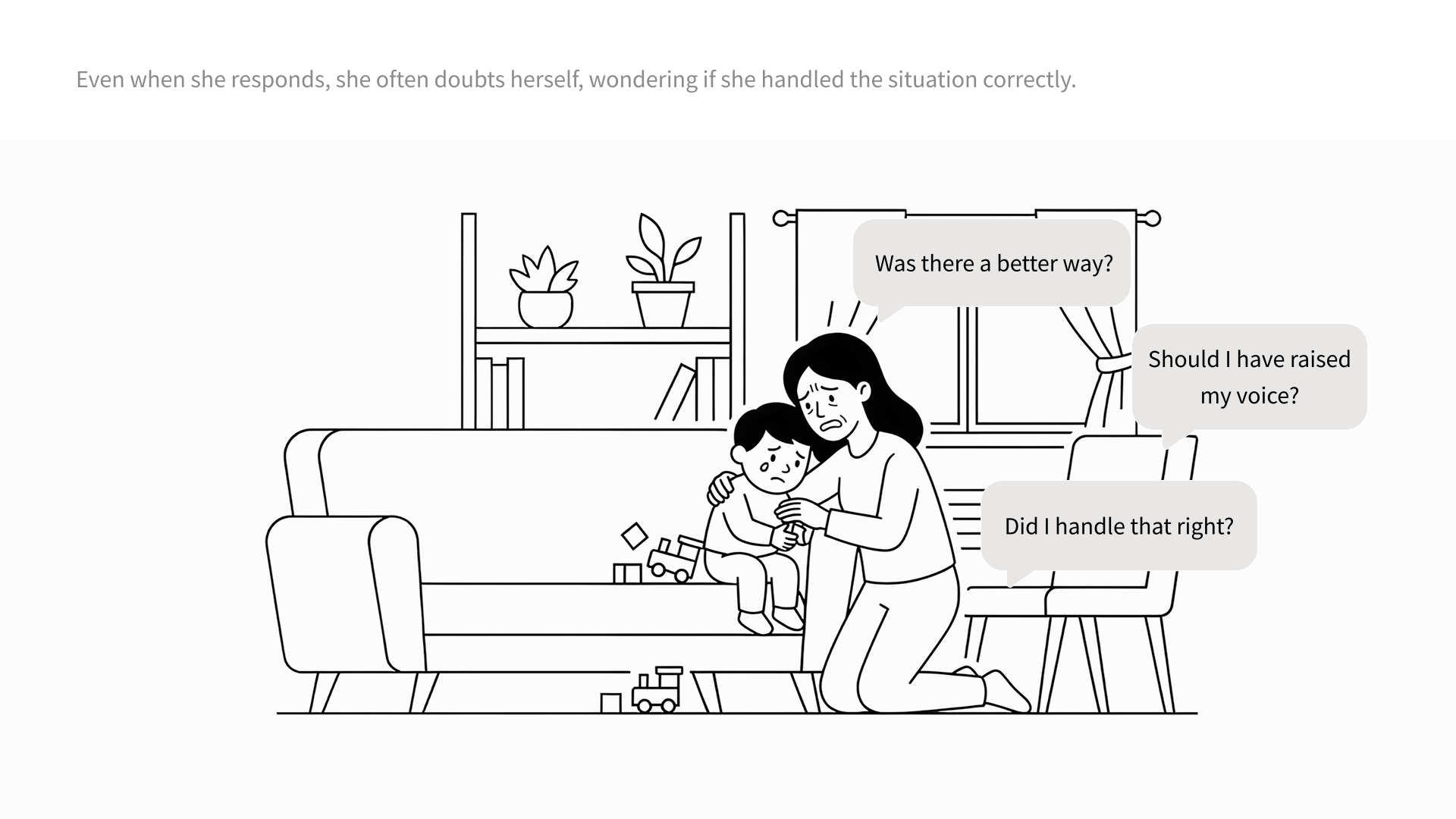
Many parents of neurodivergent kids describe the same moment.
Everything seems fine. Then suddenly something shifts. A meltdown happens, emotions escalate, and everyone is overwhelmed. Later, when things calm down, the question quietly lingers:
What did I miss?
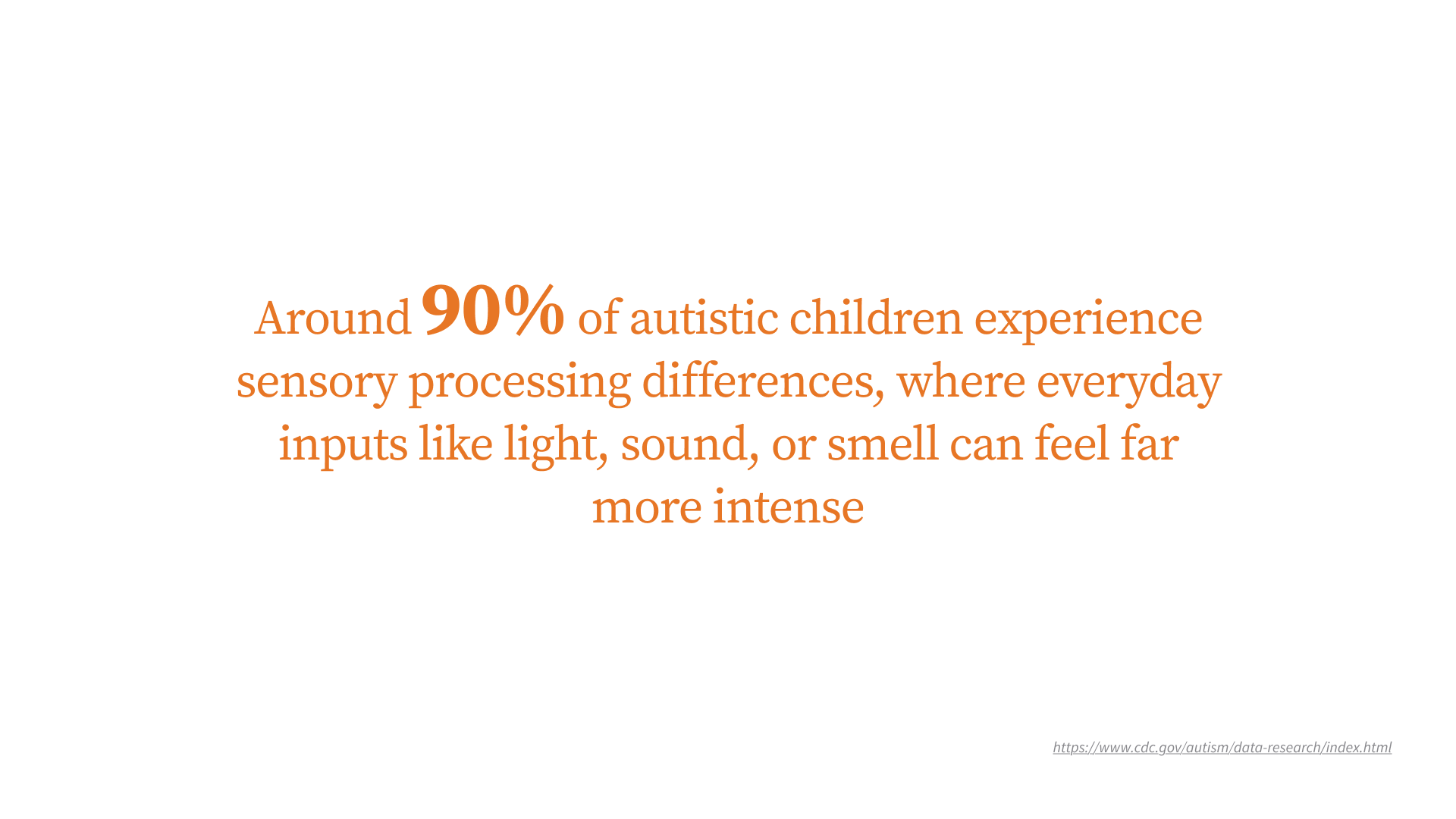
But the truth is, these moments rarely appear out of nowhere. Emotional overload usually builds slowly — through noise, bright lights, fatigue, confusion, or sensory input that a parent simply cannot see.
For many neurodivergent children, their nervous system is already registering these signals long before they can explain what they are feeling.
The challenge isn’t that parents don’t care. It’s that they’re trying to read signals that are invisible.
We started asking ourselves a simple question:
What if parents could sense emotional distress before it becomes visible?
That question became SenSync.
What it does
SenSync helps parents better understand the emotional regulation patterns of neurodivergent kids.
Instead of reacting after a meltdown begins, the app helps caregivers recognize emotional signals earlier and respond with more clarity and calm.
SenSync focuses on three things:
- helping parents interpret behaviors that might signal emotional stress
- identifying patterns that may lead to emotional overload
- offering simple guidance on what might help in the moment
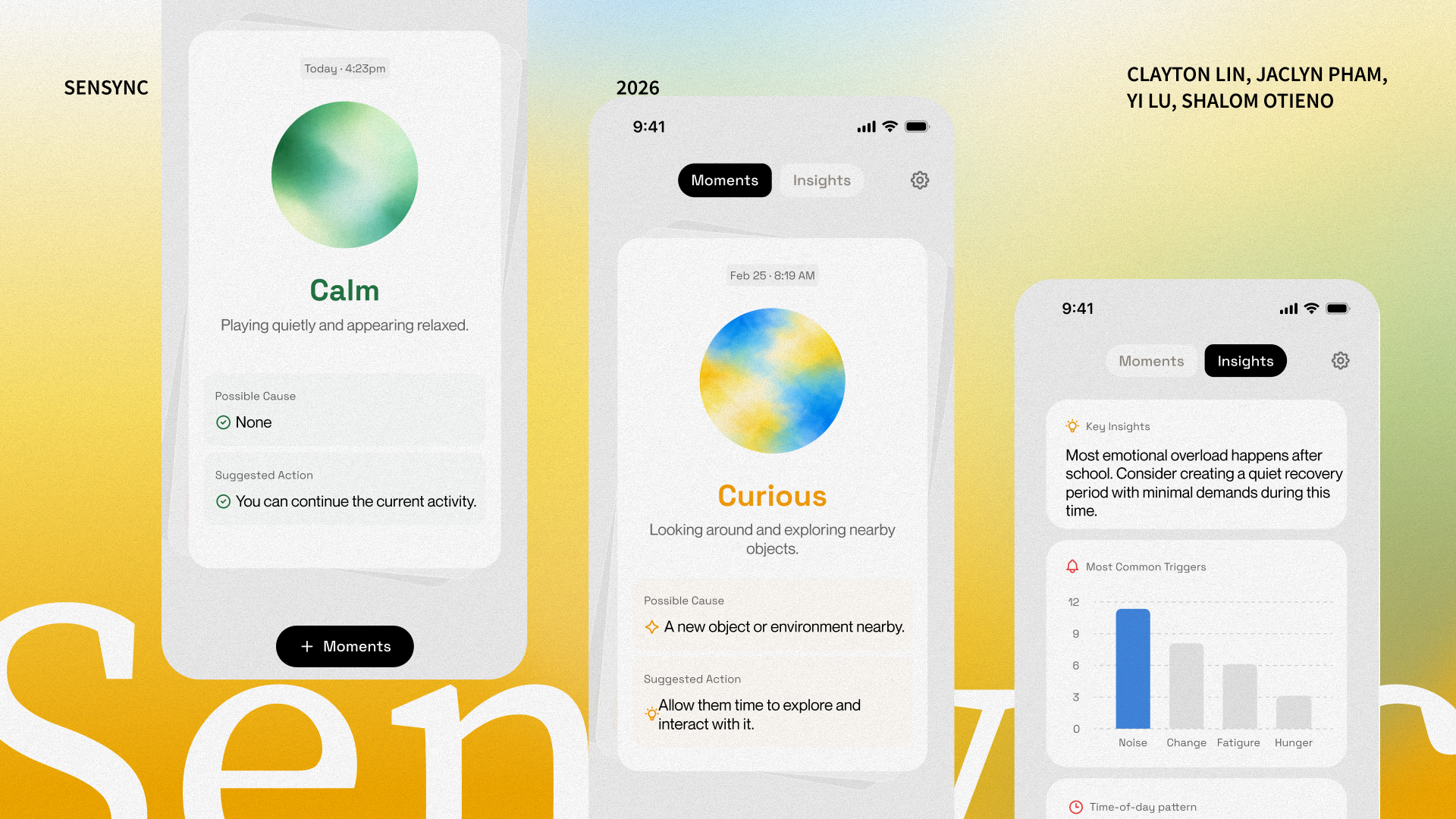
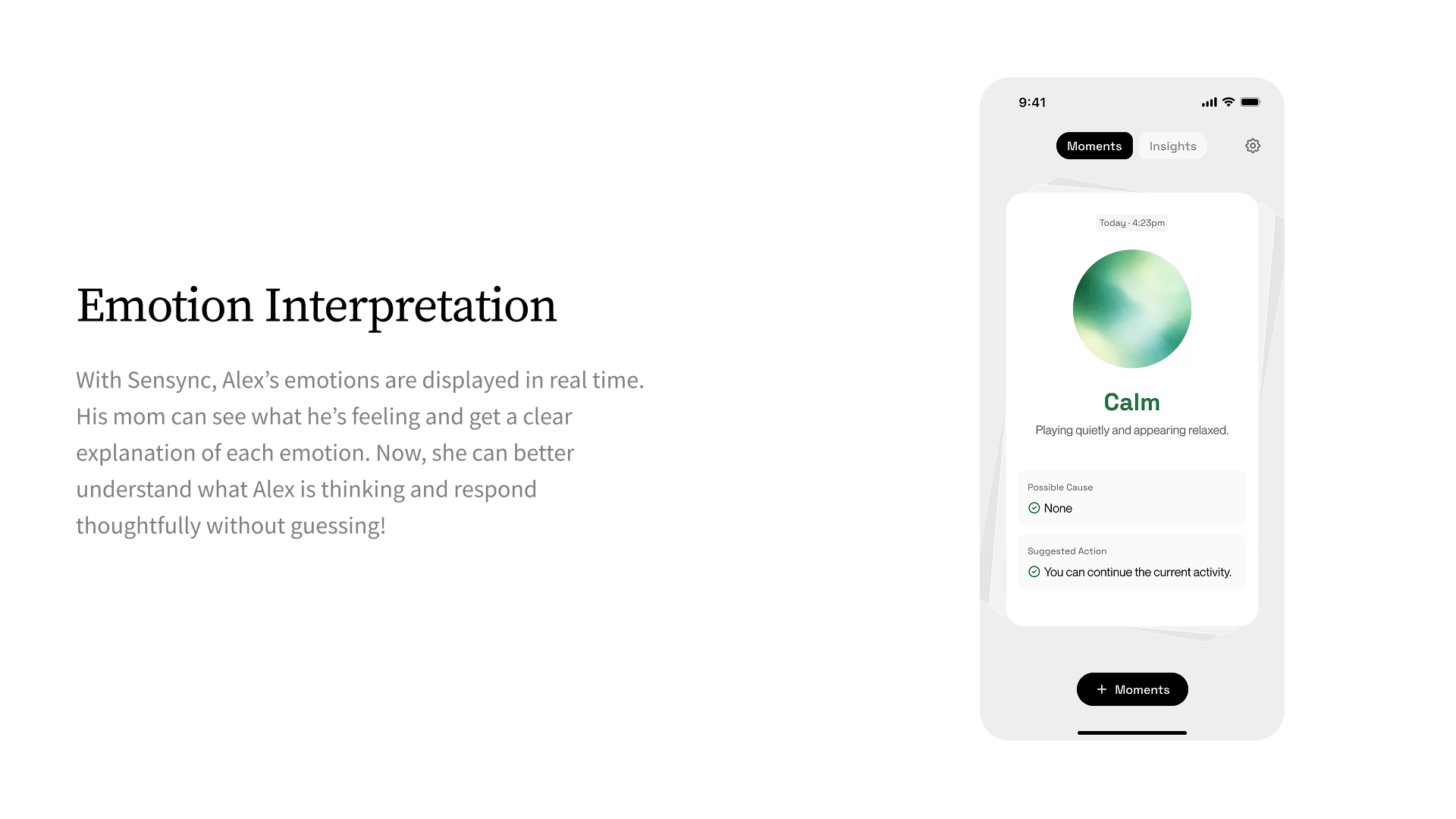
At the center of the interface is a visual element we call the Emotional Weather Orb.
Just like weather systems, emotions build gradually. Pressure rises, clouds form, and storms develop.
SenSync helps parents see those emotional weather patterns earlier — giving them the chance to support their child before the storm arrives.
How we built it
We designed SenSync as a calm emotional awareness interface rather than a traditional data dashboard.
Parents navigating stressful situations don’t want complex charts or overwhelming information. They want something that helps them understand what’s happening quickly and intuitively.
So we focused on translating emotional signals into a visual language that feels simple and supportive.
The prototype allows parents to:
- log behaviors and environmental context
- interpret possible emotional states
- receive gentle suggestions for support
- reflect on emotional patterns over time
We built the prototype in Figma, focusing on the interaction design, visual system, and user flow.
Challenges we ran into
Designing for neurodivergent care requires a lot of care and responsibility.
One challenge was making sure the app didn’t feel like a monitoring or surveillance tool. The goal is not to analyze or judge a child’s behavior, but to help caregivers understand what might be happening internally.
Another challenge was representing emotional information without turning it into numbers, alerts, or rigid charts.
Emotional regulation is complex and human. We wanted the interface to feel calm, intuitive, and respectful of that complexity.
Accomplishments that we're proud of
One of the things we’re most proud of is the emotional visualization system.
The Emotional Weather Orb represents emotional signals using soft gradients and atmospheric color shifts instead of numbers or warnings.
Parents can quickly understand what emotional state their child might be moving toward without feeling overwhelmed by data.
We’re also proud that SenSync focuses on co-regulation — the idea that emotional regulation is something caregivers and children navigate together.
The goal isn’t just understanding the child. It’s helping the entire interaction stay calmer.
What we learned
Working on this project reminded us that technology can either add stress to people’s lives or help reduce it.
For parents navigating emotional moments with their kids, clarity and calmness matter more than complexity.
We also learned that sometimes the most meaningful design solutions come from helping people see something that was already there — just hidden.
In this case, emotional signals that usually go unnoticed until it’s too late.
What's next for SenSync
The next step is learning directly from the people this idea is meant to support.
We’d want to work with parents, caregivers, and neurodivergent communities to understand how emotional signals appear in different situations and how the system could adapt to individual children.
Future versions of SenSync could explore:
- learning personalized emotional patterns over time
- identifying environmental triggers more accurately
- helping families create calmer sensory environments
The vision behind SenSync is simple.
Helping parents move from reacting to emotional crises toward understanding emotional signals earlier.
Because every parent deserves something that’s often missing in those difficult moments:
a signal before the storm.
Built With
- figma


Log in or sign up for Devpost to join the conversation.