Inspiration
Most tools only notice when a neurodivergent student is already overwhelmed. By then, the meltdown or shutdown has already started. We kept hearing the same quiet frustration from neurodivergent students and the people who support them: “I could feel it coming, but I didn’t know how to say it in time” and “I didn’t want to make a scene.”
We wanted to build something that treats sensory state the way weather is treated — something you can check early, prepare for, and communicate about without having to find the perfect words in the middle of the storm.
What it does
Sensory Weather is a calm AI tool that helps neurodivergent students notice rising sensory load early and communicate it clearly.
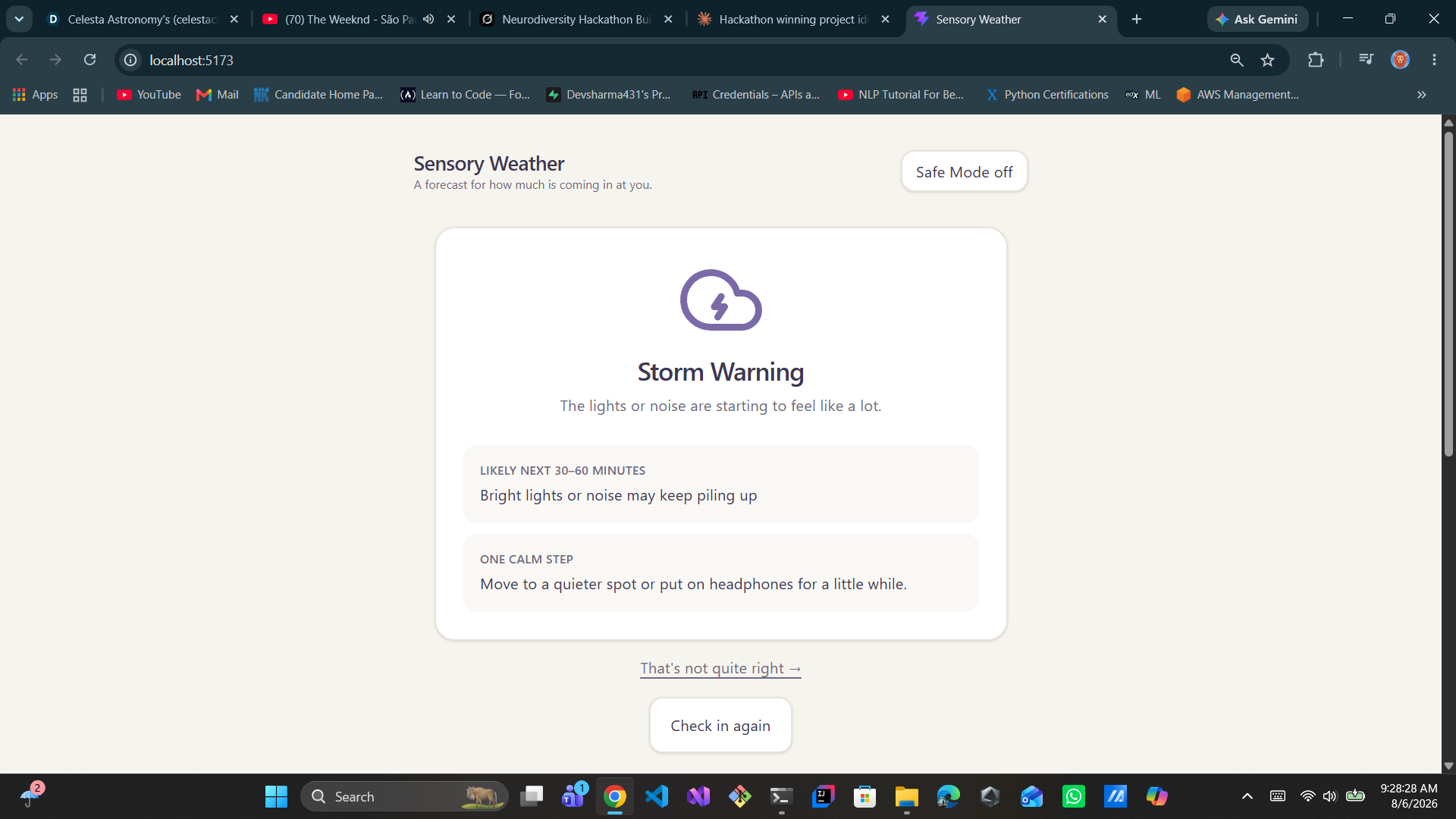
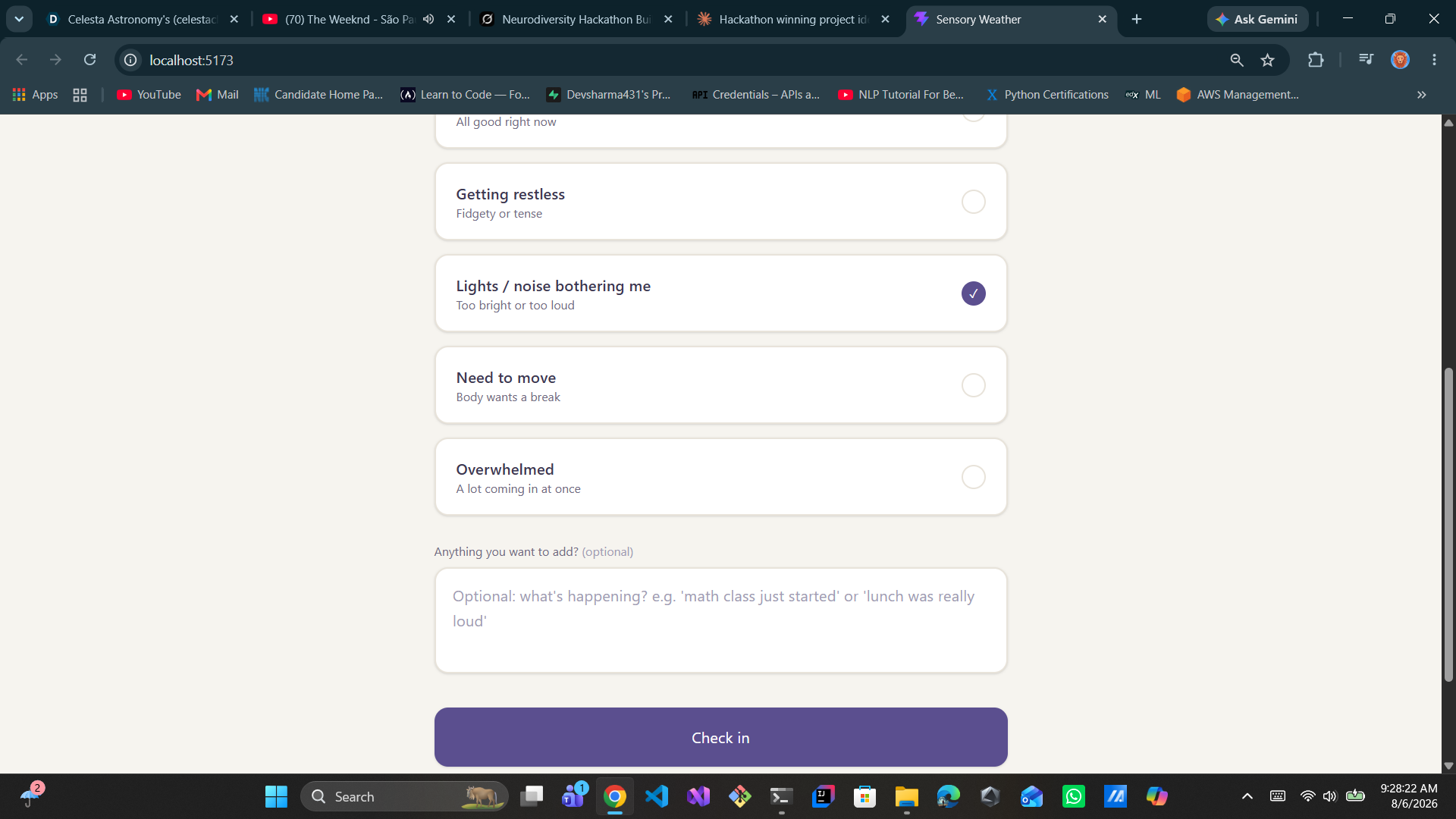
Students do a quick check-in. The AI returns a simple forecast (Sunny, Cloudy, or Storm Warning), a short explanation of what’s likely next, and one concrete calm step they can take. After a few check-ins, the app starts noticing personal patterns and can warn the student before they even report feeling overloaded.
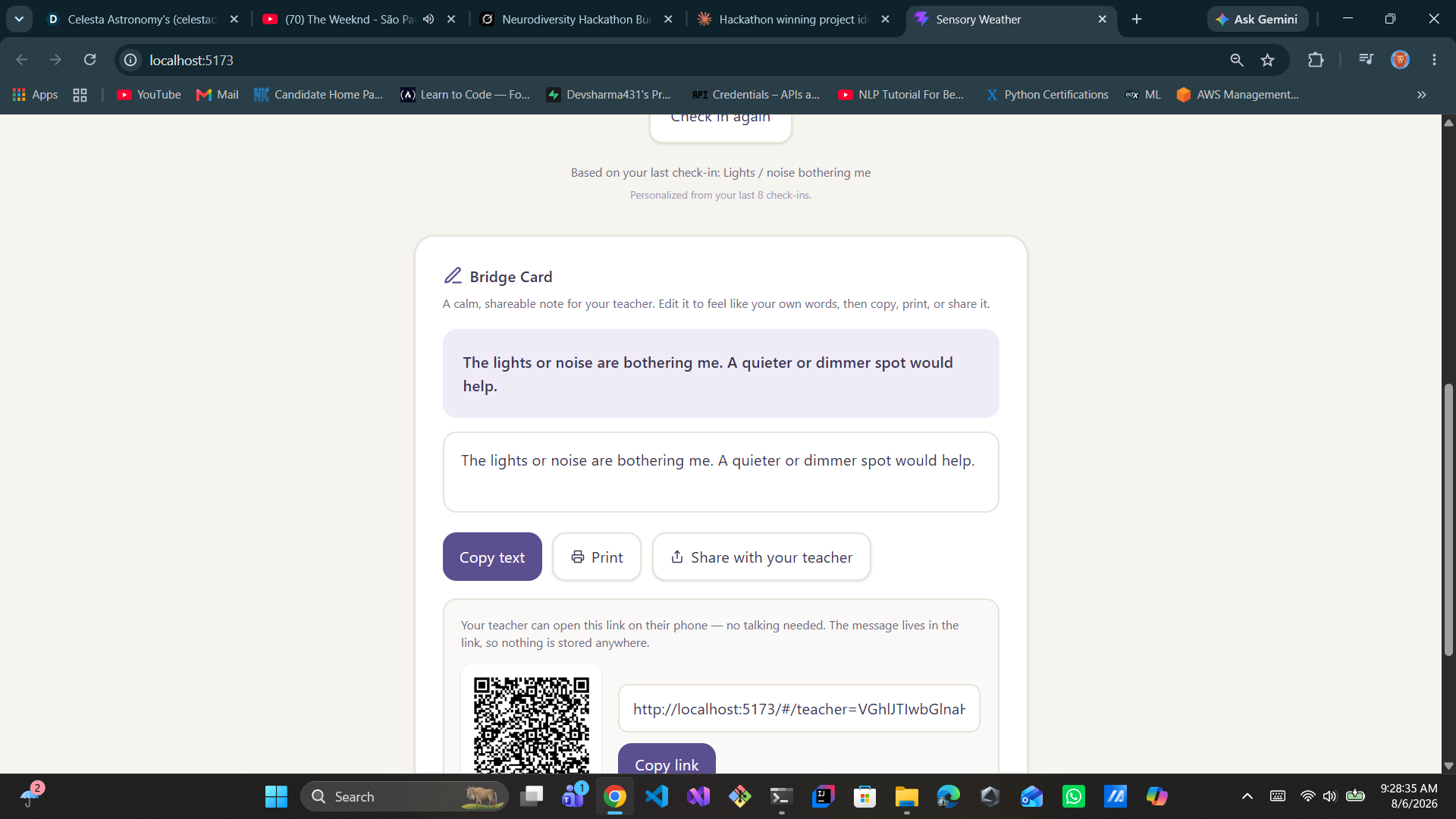
When they need support, they can open a Bridge Card — a short, editable message they can share with a teacher or parent. One tap creates a link and QR code. The teacher opens a clean, read-only page. No talking required. Nothing is stored anywhere; the message lives only in the link.
How we built it
We built a lightweight web app focused on calm interaction and real usefulness.
- Frontend with a soft, low-stimulation interface and a Safe Mode that further reduces visual intensity
- AI forecasting powered by Groq (with rule-based fallbacks) that turns recent check-ins into a structured weather prediction, next-step suggestion, and bridge message
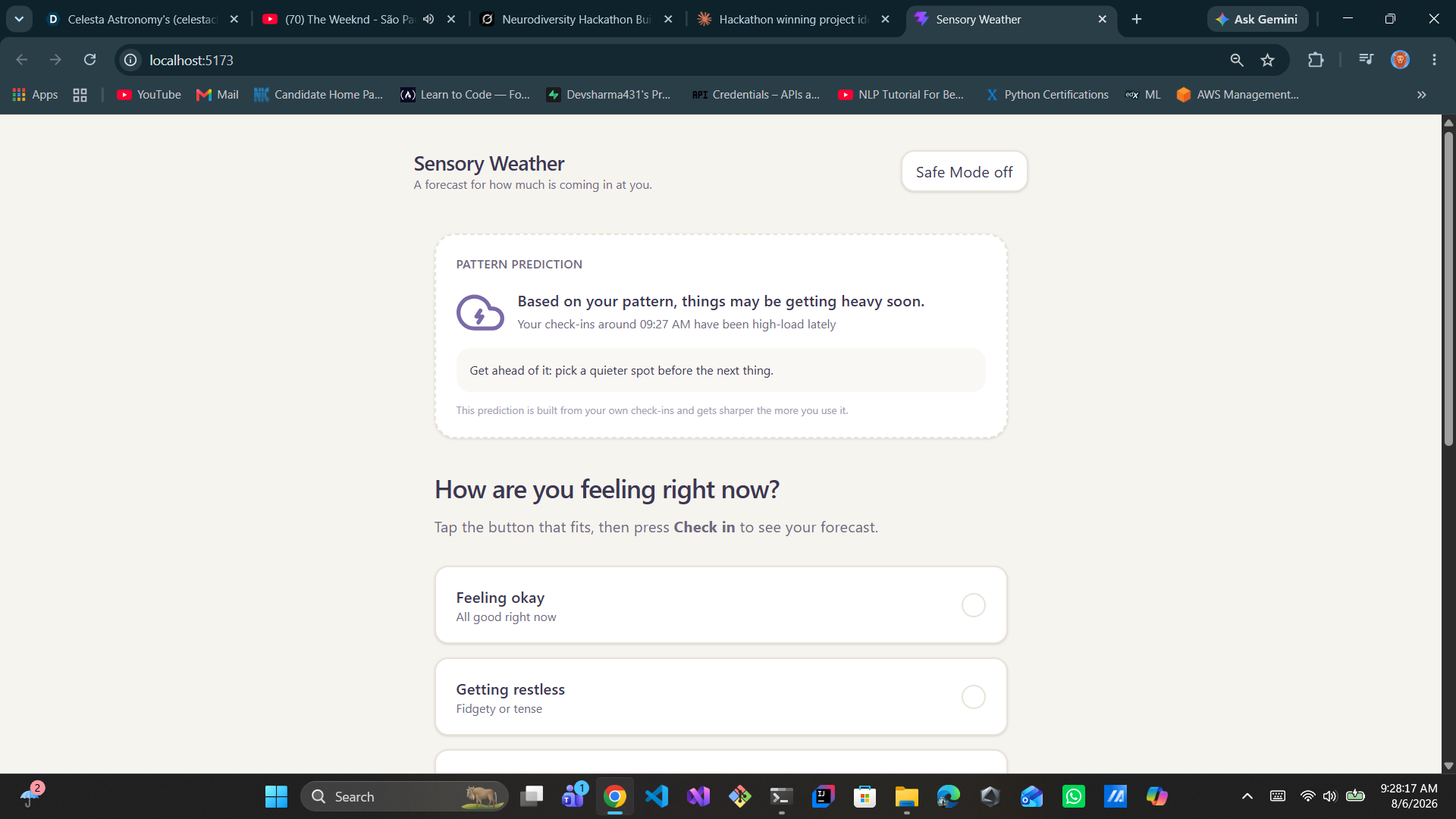
- A proactive Pattern Prediction card that appears once the student has enough history
- A shareable Bridge Card system that encodes the message into a URL and generates a QR code for instant teacher access
- Local history so the experience becomes more personal over time without requiring accounts
Everything was designed to work quickly on both desktop and mobile, with large tap targets and minimal cognitive load.
Challenges we ran into
The biggest challenge was making the AI feel genuinely helpful instead of generic. Early versions gave advice that sounded polite but not personal. We had to carefully shape the prompts and keep a strong fallback system so the experience never broke when the model was rate-limited.
Another challenge was designing the teacher Bridge. We wanted something that felt respectful and useful in a real classroom, not just a tech demo. Encoding the message in the URL (so nothing is stored) while keeping the teacher view clean and calm took several iterations.
Finally, keeping the entire interface calm under pressure — even when showing a “Storm Warning” — required constant restraint. It was easy to make it dramatic. It was harder to keep it quiet and supportive.
Accomplishments that we're proud of
- Building a proactive pattern forecast that actually anticipates overload from the student’s own history
- Creating a teacher Bridge that requires zero talking and stores nothing
- Designing an interface that stays soft and usable even when the student is already under sensory stress
- Shipping a complete, working tool that a real student can use today
What we learned
We learned that the most valuable features are often the quietest ones. The Pattern Prediction and the one-tap teacher link matter more than adding more AI complexity. We also learned how important language is — small wording changes (“Storm Warning” vs softer alternatives) can make the difference between a tool that feels supportive and one that feels alarming.
Most importantly, we learned that designing with neurodivergent users, not just for them, changes what you choose to build.
What's next for Sensory-Weather
- Deeper personal learning so the pattern forecasts become more accurate over days and weeks
- Optional gentle sensory externalization (a short calming visual or sound when overload is rising)
- Better support for non-speaking or low-verbal students
- Classroom and parent modes that respect privacy while still enabling timely support
- Continued co-design with more neurodivergent students so the tool keeps evolving with real needs Inspiration
What it does
How we built it
Challenges we ran into
Accomplishments that we're proud of
What we learned
What's next for Sensory-Weather
Built With
- ai
- groq
- javascript
- typescript
- vitejs


Log in or sign up for Devpost to join the conversation.