-
-
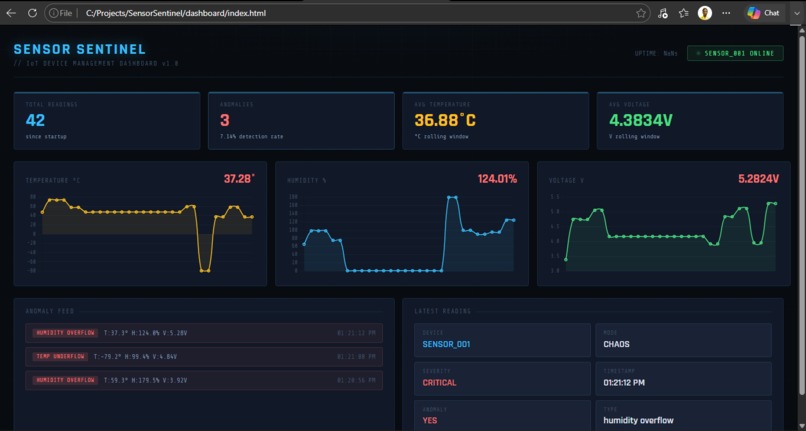
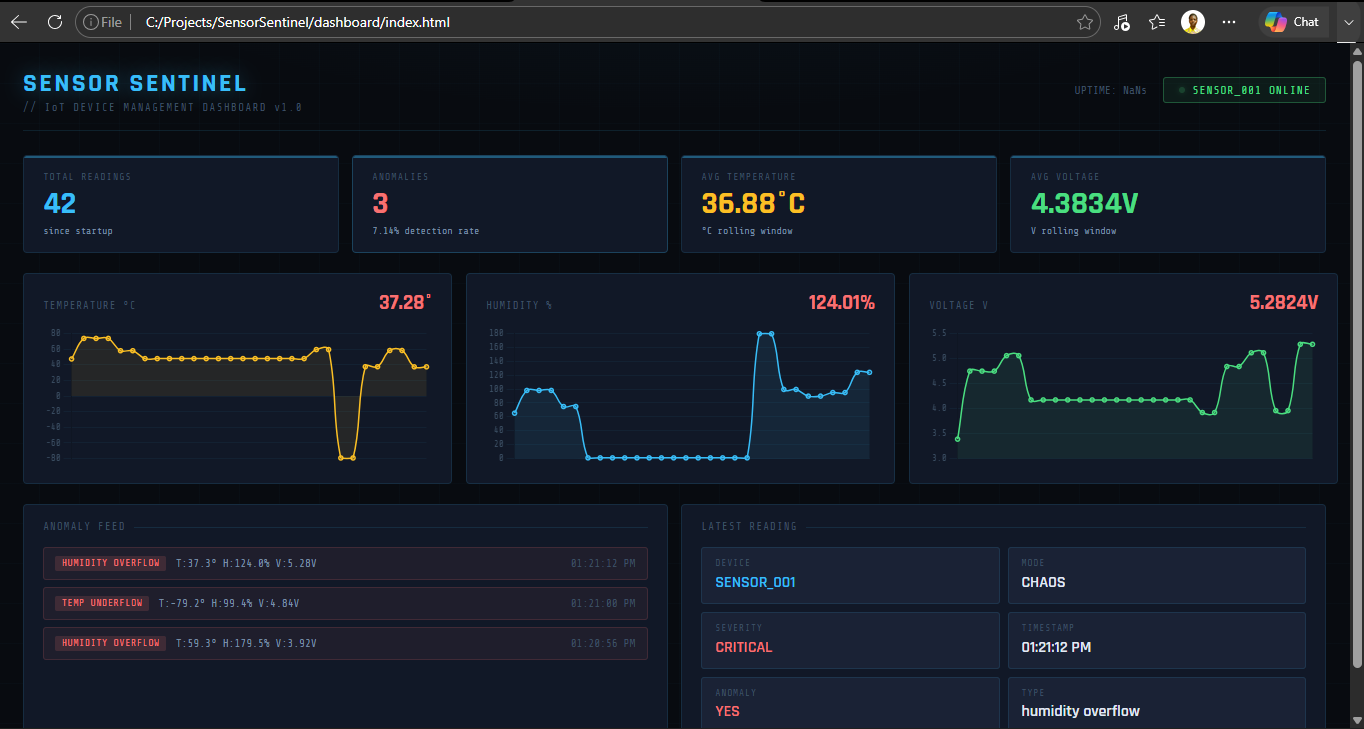
Chaos Mode: C simulator injecting all 5 anomaly types — 999°C spikes, 0V dropouts & humidity overflow detected by agentic testing agents.
-
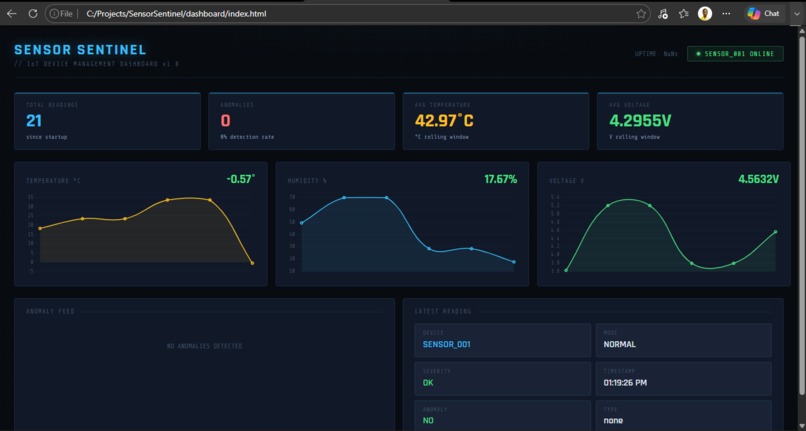
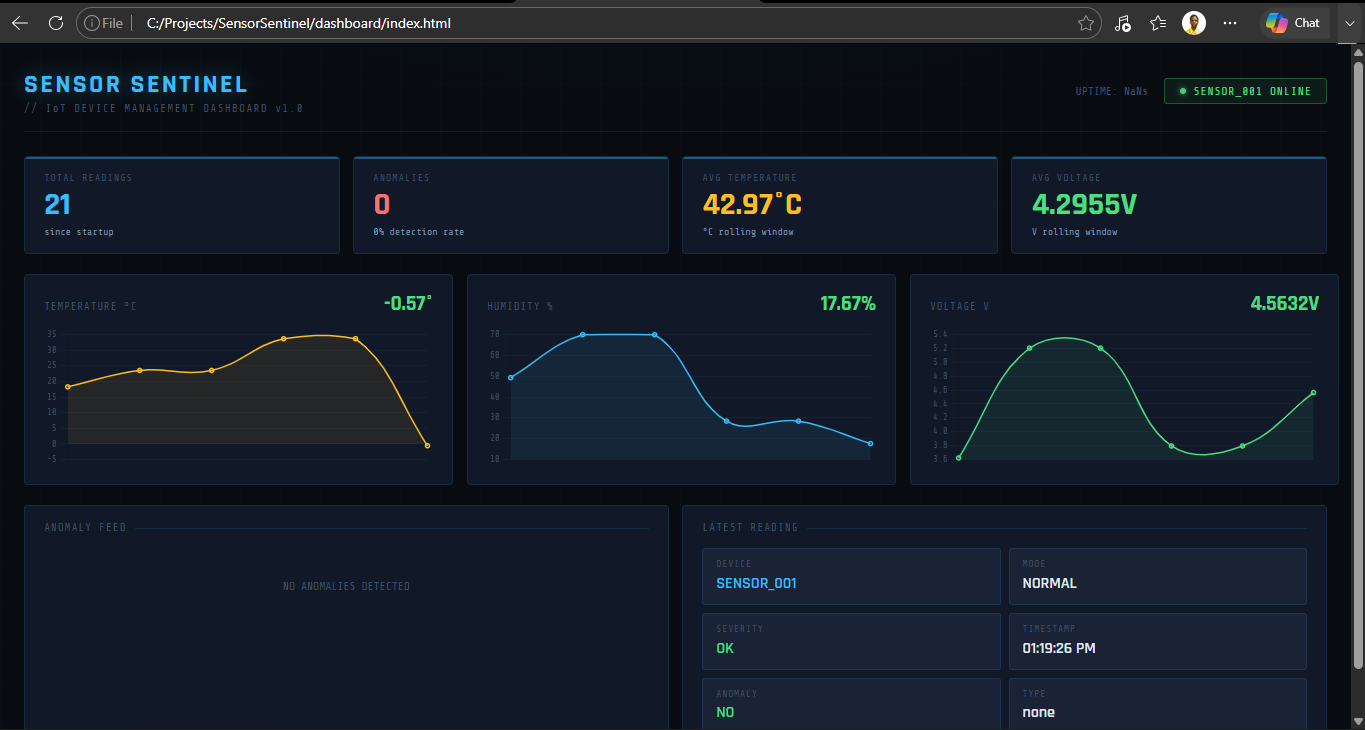
Normal Mode: C IoT simulator sending realistic sensor readings, temperature, humidity & voltage data flowing into the Flask API in realtime.
Inspiration
My background is in embedded systems and C development. I've always worked close to the hardware, writing firmware, reading sensor datasheets, and debugging low-level communication protocols. When I discovered this hackathon, I saw a unique opportunity to bridge two worlds that rarely meet: the embedded/IoT space and enterprise agentic AI testing.
The inspiration came from a real problem I've observed. IoT systems are notoriously difficult to test. Sensors produce unpredictable data, edge cases are extreme (999°C spikes, voltage dropouts to 0V, negative humidity), and traditional testing approaches simply can't simulate the chaotic nature of real embedded device behavior. I wanted to build something that solves this.
What I Learned
- How to integrate embedded C code with modern cloud platforms
- How to design and build agentic test agents using Python and pytest
- How UiPath Automation Cloud orchestrates workflows and governs agents
- How to build real-time dashboards with live data pipelines
- How AI-assisted development with Claude Code accelerates complex builds
How I Built It
SensorSentinel has four core components:
1. C IoT Device Simulator Built in C using WinHTTP and an XOR-shift RNG for optimal performance. The simulator runs in two modes. Normal mode generates realistic sensor readings, while chaos mode deliberately injects all 5 anomaly types: temperature spikes (999°C), temperature underflow (-166°C), humidity overflow (>100%), negative humidity (-1%), and voltage dropout (0V).
2. Python Flask REST API A thread-safe API using a bounded deque store for O(1) operations. Receives sensor data, validates it, tags severity levels (ok, warning, critical), and exposes 5 endpoints for ingestion, readings, anomalies, stats, and health.
3. Real-Time Web Dashboard Built with vanilla JS and Chart.js. Polls the API every 2 seconds and displays live temperature, humidity, and voltage charts alongside an anomaly feed that updates in real time.
4. Three Agentic Test Agents
- API Test Agent - 36 test cases validating all endpoints
- UI Test Agent - 27 test cases using Selenium WebDriver
- Anomaly Detection Agent - 32 test cases validating all 5 anomaly types
All orchestrated through UiPath Automation Cloud as the governance layer.
Challenges I Faced
- Python PATH corruption on Windows - resolved by fresh install to a user-local path
- CORS errors - resolved by adding flask-cors explicitly
- Git push rejection - resolved using --allow-unrelated-histories
- UiPath Cloud to local API connectivity - UiPath Cloud cannot reach localhost directly, documented and worked around for the demo
- Bridging embedded and enterprise worlds - required careful architecture design to make C simulator data flow cleanly into the UiPath-governed testing pipeline
Results
✅ 95/95 tests passing across all 3 agents
✅ All 5 IoT anomaly types detected and classified
✅ Real-time dashboard with live sensor visualization
✅ Deployed on UiPath Automation Cloud
✅ Built with Claude Code (AI-assisted development)


Log in or sign up for Devpost to join the conversation.