-
-
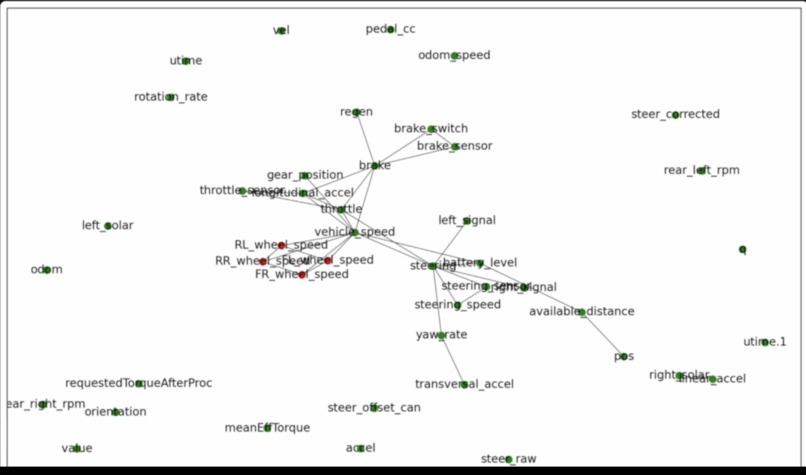
Sensor Graph Genrated
-
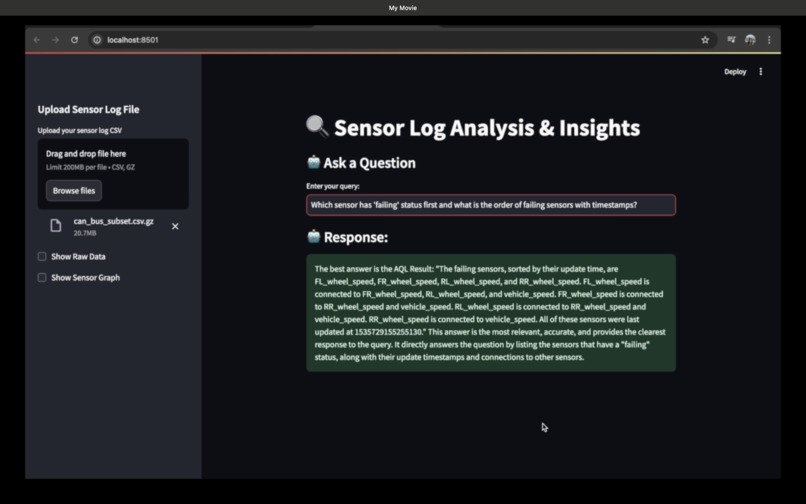
UI
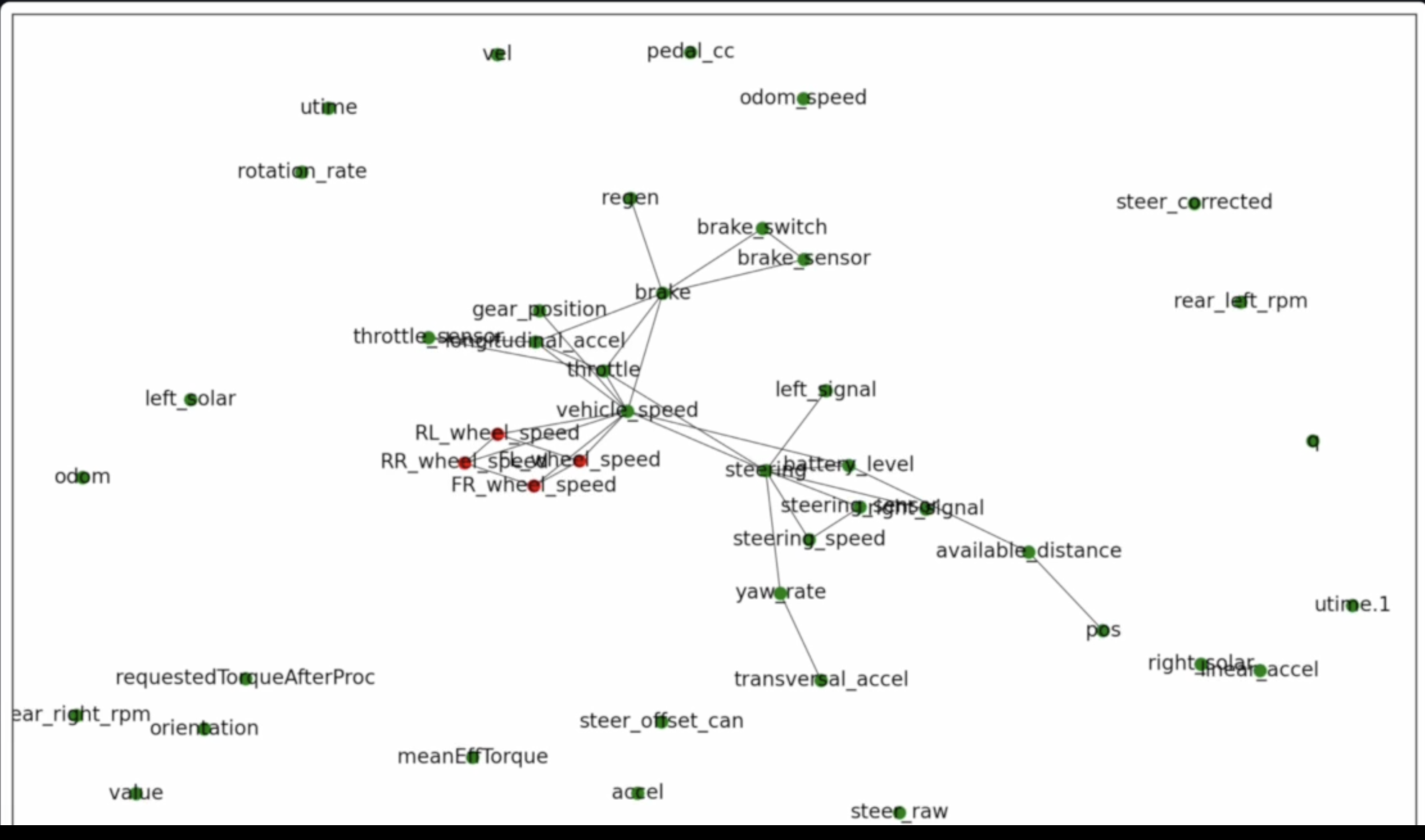
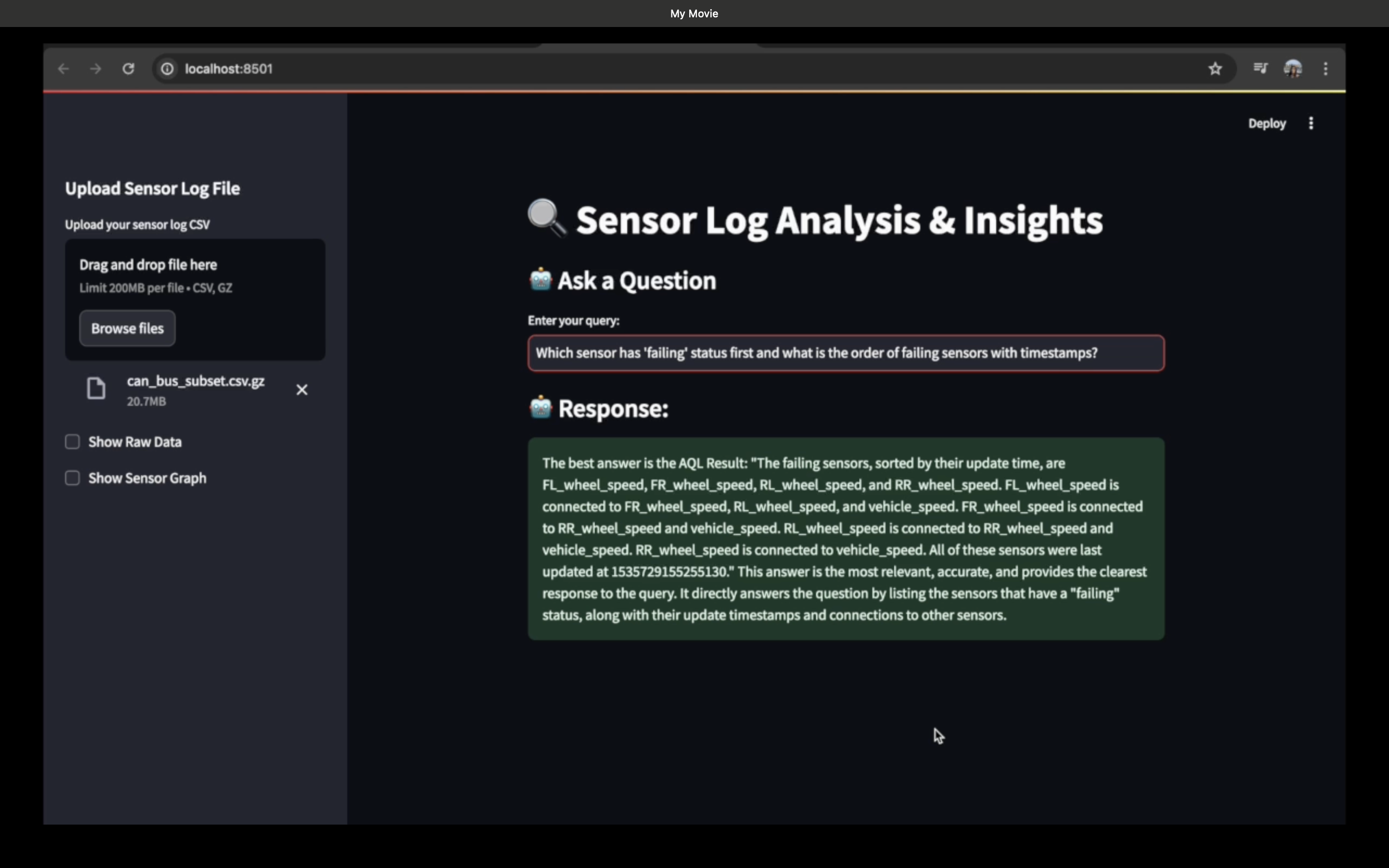
Inspiration
Autonomous systems rely on hundreds of sensors, ensuring safety and efficiency. However, when failures occur, identifying the root cause is time consuming and complex, often requiring manual log analysis. I wanted to build a solution that automates failure detection, analyzes dependencies, and enables real-time insights using graph analytics and natural language querying using gen AI.
What it does
- Detects sensor failures in real-time from autonomous vehicle logs.
- Analyzes dependencies between sensors using graph analytics.
- Enables natural language querying for insights using LLMs (Gemini & Groq).
- Visualizes sensor networks, highlighting failing vs. operational sensors.
- Routes queries to cuGraph, NetworkX, or ArangoDB for the best results.
How we built it
- Data Ingestion: Processed raw CSV logs to extract sensor readings.
- Graph Construction: Converted sensor relationships into a graph structure.
- Database Integration: Stored graph data in ArangoDB for efficient querying.
- Querying: Used LLMs to process natural language queries to AQL, Networkx queries and cuGraph. Used LLM to select best answer out of three.
- Graph Analytics: Applied cuGraph & NetworkX for failure detection & shortest path analysis. Interactive UI: Built a Streamlit UI for uploading logs, visualizing failures, and querying insights.
Challenges we ran into
- Handling large sensor datasets → Optimized queries & used caching for performance.
- Ensuring LLM query accuracy → Built a query routing system to select cuGraph, NetworkX, or AQL (Best answer from AQL, cuGraph, NetworkX) dynamically also used LLM to select best answer out of three.
- LLM API limit →We used Gemni to create Queries for networkX and AQL. We used Grok for deciding best response for the output answer.
- Real time failure detection → Managed sensor timestamps to track failures effectively.
Accomplishments that we're proud of
- Developed a real time failure detection system using graphs.
- Integrated multi agent AI capabilities for natural language query processing.
- Optimized graph analytics with cuGraph, enabling fast dependency analysis.
- Built an intuitive UI, making failure insights accessible to non-technical users.
What we learned
- Graph analytics is powerful for failure detection – uncovering sensor dependencies beyond simple threshold checks.
- LLMs can enhance real-time analytics – when properly structured with query routing.
- ArangoDB is a great choice for scalable graph-based storage & querying.
- Performance optimization is key – caching, indexing, and query selection improve real time insights.
What's next for Sensor Log Analysis for Autonomous Vehicles
- Enhanced predictive maintenance using ML models for failure forecasting.
- Multi modal AI integration – adding voice & image based diagnostics for richer insights.
- Deploying on edge devices for real-time in-vehicle diagnostics & alerts.
Built With
- arangodb
- cugraph
- langchain
- networkx
- python
- streamlit


Log in or sign up for Devpost to join the conversation.