-
-
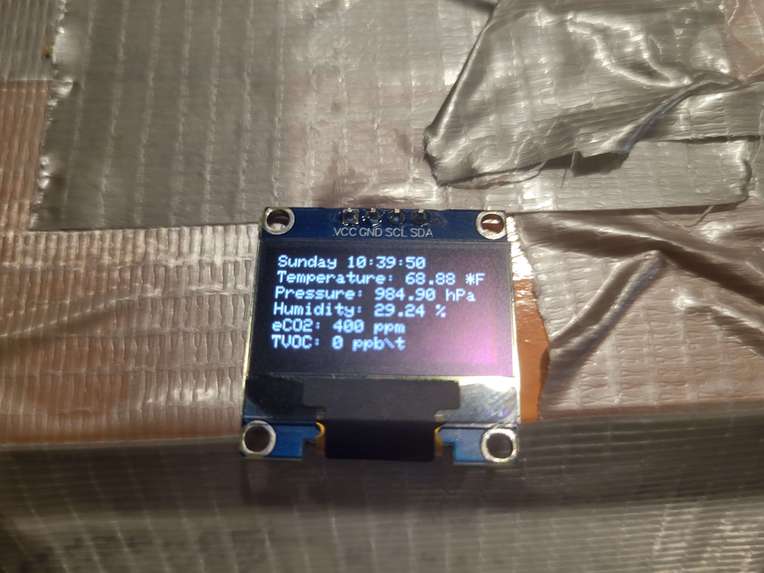
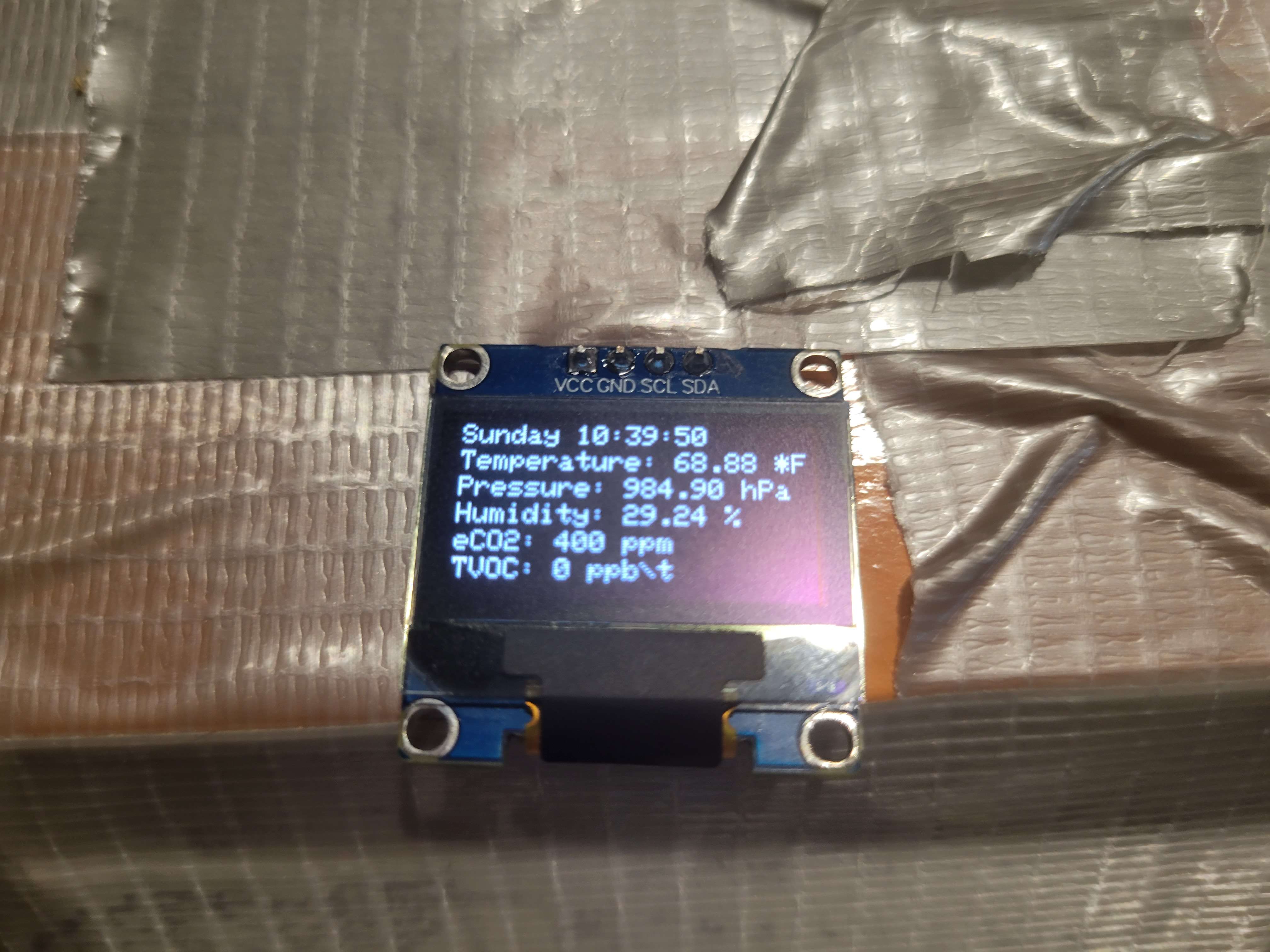
Display
-
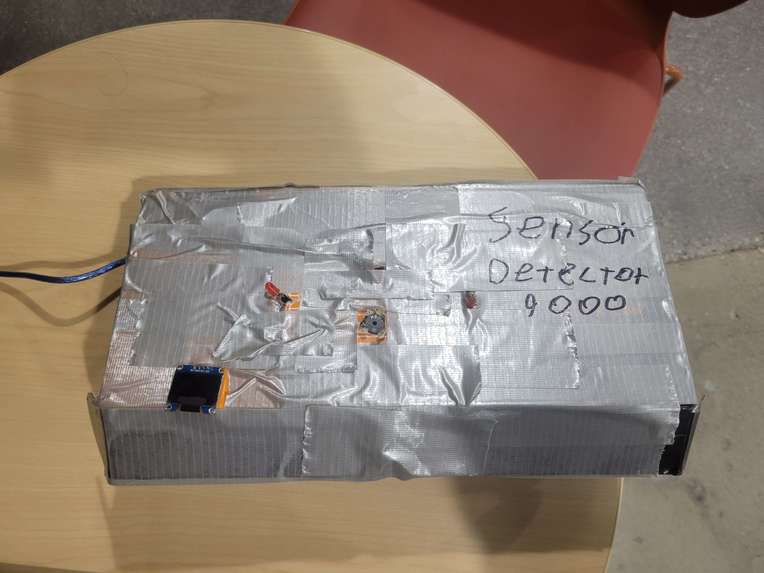
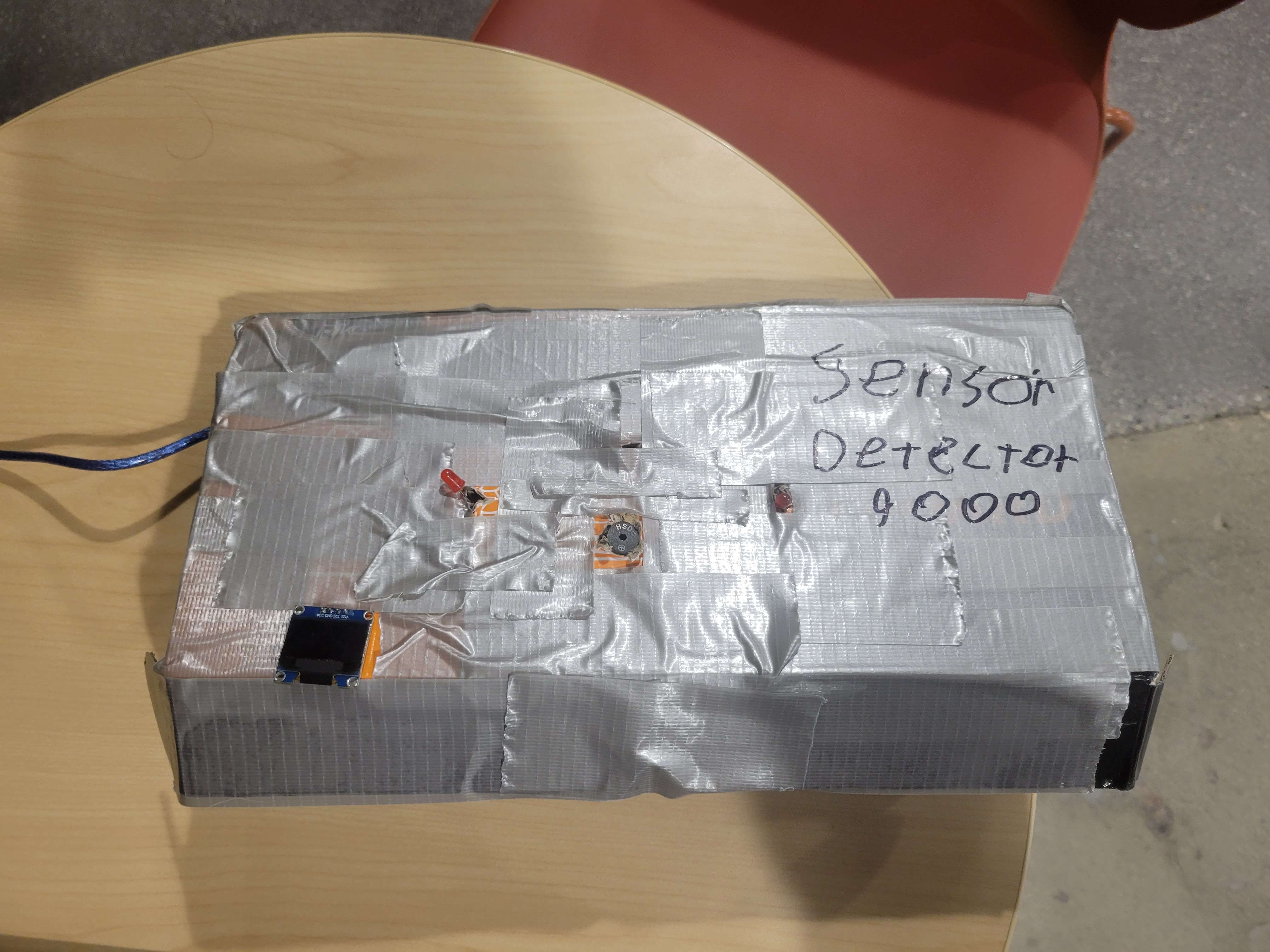
Whole box
Inspiration
The inspiration for Sensor Detector 9000 came from a concerning statistic: annually, at least 420 people die from carbon dioxide poisoning, a silent and often undetected danger in homes. Symptoms like sleepiness can mask this lethal threat, leaving individuals unaware of the rising danger levels. This realization highlighted the urgent need for a comprehensive home monitoring system that goes beyond traditional carbon monoxide detectors. Sensor Detector 9000 is designed to fill this gap, offering an advanced solution to monitor a variety of gases and environmental factors, thereby significantly enhancing home safety and health awareness.
What it does
The Sensor Detector 9000 is an advanced, multifunctional device designed to enhance home safety by detecting a variety of gases and environmental factors. Here’s a detailed look at its functionality:
Multi-Gas Detection: Carbon Dioxide (CO2): Monitors CO2 levels, alerting users to potential air quality issues and the risk of CO2 poisoning.
Ethanol (C2H5OH): Senses the presence of ethanol vapors, which can indicate alcohol spills or industrial solvent leaks.
Hydrogen (H2): Detects hydrogen gas, often released from batteries or chemical reactions, which can be explosive in high concentrations.
Volatile Organic Compounds (VOCs): Identifies a range of VOCs, common in household products, which can affect air quality and health.
Environmental Monitoring: Temperature: Tracks ambient temperature, ensuring the environment stays within a comfortable and safe range.
Humidity: Monitors moisture levels in the air, which can impact health, comfort, and even building structures.
Atmospheric Pressure: Measures barometric pressure, useful for predicting weather changes and ensuring well-sealed environments.
Overall, Sensor Detector 9000 is designed to provide a holistic approach to home safety, alerting users to immediate dangers while also helping them understand and manage their living environment more effectively.
How we built it
I used an Arduino Mega 2560 as the main computer and a GY-SGP30 (Environment Composition and BME280 (Temperature, Pressure Humidity) as well as a DS3231 RTC for timekeeping. All of it is connected with a buzzer and two LEDs to alert the user if something is wrong.
Challenges we ran into
One challenge I had was that different components have different i2c addresses. Even clones of the same component might have different addresses. I learned this while troubleshooting the atmospheric composition sensor when I had to go into the library and manually change the default i2c address. That solved my problem.
There was also an issue where I kept running out of RAM on the Arduino nano I was using, so I switched to the (Mega 2560 which has 256kb instead of 32kb) and all of those issues went away. This issue was particularly difficult to troubleshoot as it was presenting itself in many different ways and was inconsistent.
Accomplishments that we're proud of
Integrating the RTC (Real-Time-Clock) was very helpful for the overall usability. It was quite difficult at first but after troubleshooting I was able to get the time displaying on the screen formatted in a way that makes sense to the user.
What we learned
Throughout this project I learned about different i2c addresses, and I learned how to get data from sensors and display it to the user in a meaningful way. I also learned that when you're trying to take data from multiple components over i2c, some arduinos have more limited memory than others to handle all of that data. I had never come across this in previous projects; there weren't enough sensors for it to matter.
What's next for Sensor Detector 9000
Potential future enhancements could include integration with smart home systems and mobile devices, machine learning algorithms for predictive analytics, and expanded sensor capabilities for additional environmental factors. Also, we would like to make it smaller. The box is just a prototype, but with a custom PCB and surface mount components, the footprint could be the same size if not smaller than a regular smoke detector.
Built With
- adafruit-bme280
- adafruit-sensor
- adafruit-sgp30
- adafruit-ssd1306
- arduino
- bme280
- ds3231
- gy-sgp30
- i2c
- wire

Log in or sign up for Devpost to join the conversation.