-
-
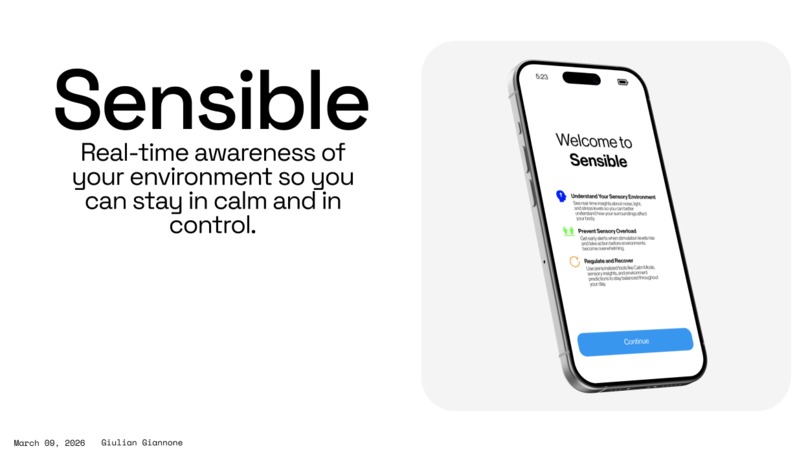
Sensible
Inspiration
Sensory overload is something that many people deal with on a daily basis, including our team. While tools exist to track vitals like heart rate and physical activity, there is currently no way to track how overwhelming our environment is to our senses. We were inspired to design a tool that makes this invisible experience measurable and quantifiable in order to help people better understand their emotions.
What it does
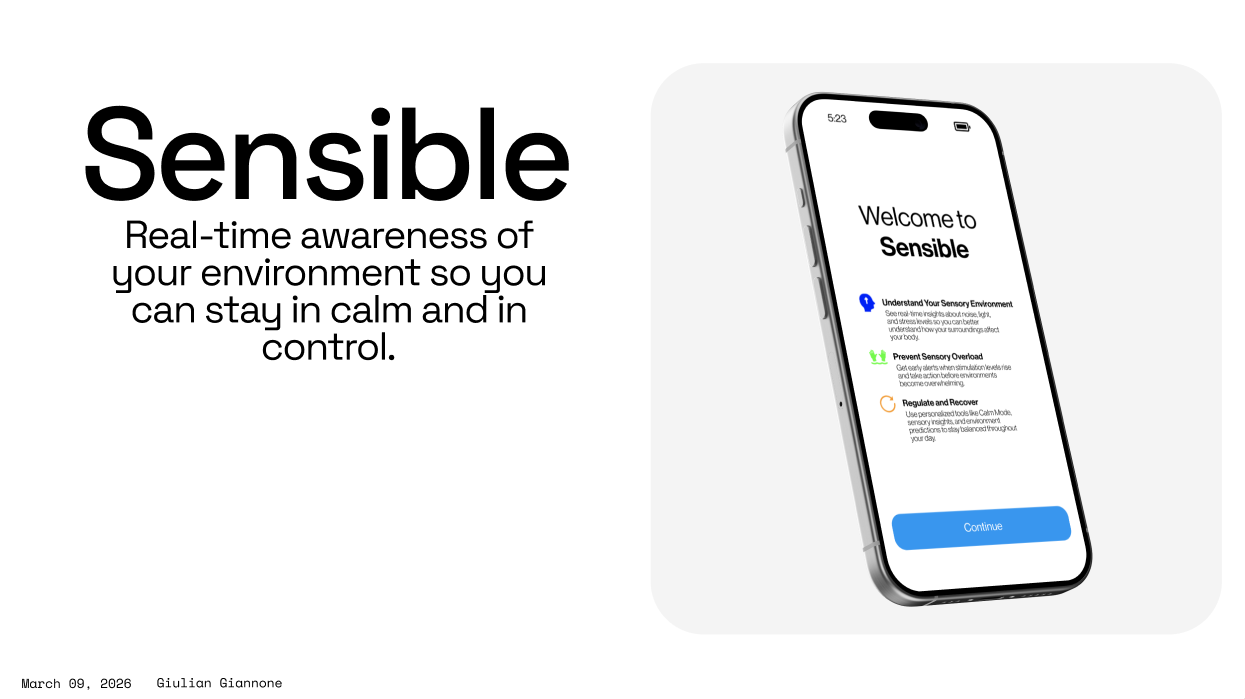
Sensible is a tool designed to track and visualize sensory stimulation in real time. It monitors environmental factors such as sound levels, light intensity, crowd density, and physiological signals like heart rate to estimate a user’s overall sensory load. The app then alerts users when stimulation levels become too high and offers tools like Calm Mode to help reduce sensory stress before it becomes overwhelming.
How we built it
We designed Sensible as a mobile interface that combines environmental sensing with simple data visualization. Using Figma, we prototyped the core user interface including the sensory load meter and sensory calendar. The design focuses on presenting complex sensory data in a simple, accessible way so users can quickly understand their environment and make adjustments when needed.
Challenges we ran into
One challenge that we ran into was trying to figure out how to display complex data such as a sensory load meter to users without overstimulating them. Sensory experiences are highly subjective, so designing a system that communicates overload clearly without overwhelming the user with too much data required careful consideration. We decided on creating widgets for each piece of data that we collected from the user.
Accomplishments that we're proud of
We’re proud of creating a concept that transforms an invisible human experience into something measurable and actionable. The sensory load meter simplifies multiple environmental inputs into a clear visual indicator, allowing users to quickly understand their surroundings.
What we learned
Through this project we learned how important it is to design technology that supports mental and sensory wellbeing, not just productivity or efficiency. We also gained experience in translating complex human experiences into intuitive visual interfaces. Designing for accessibility and low-stimulation environments taught us how thoughtful design choices can directly impact how comfortable users feel when interacting with technology.
What's next for Sensible
In the future, Sensible could expand beyond a mobile app into wearable devices that continuously monitor sensory environments throughout the day. Integration with smart environments could allow spaces like offices, classrooms, and public buildings to automatically adjust lighting and sound levels based on sensory data.
Built With
- figma

Log in or sign up for Devpost to join the conversation.