-
-
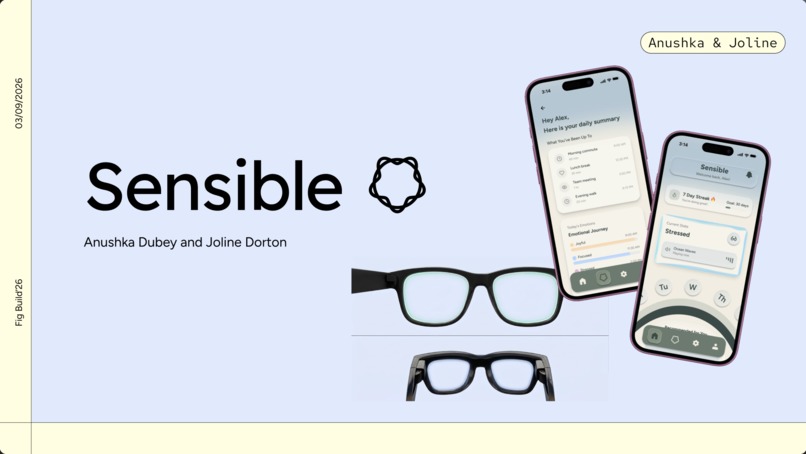
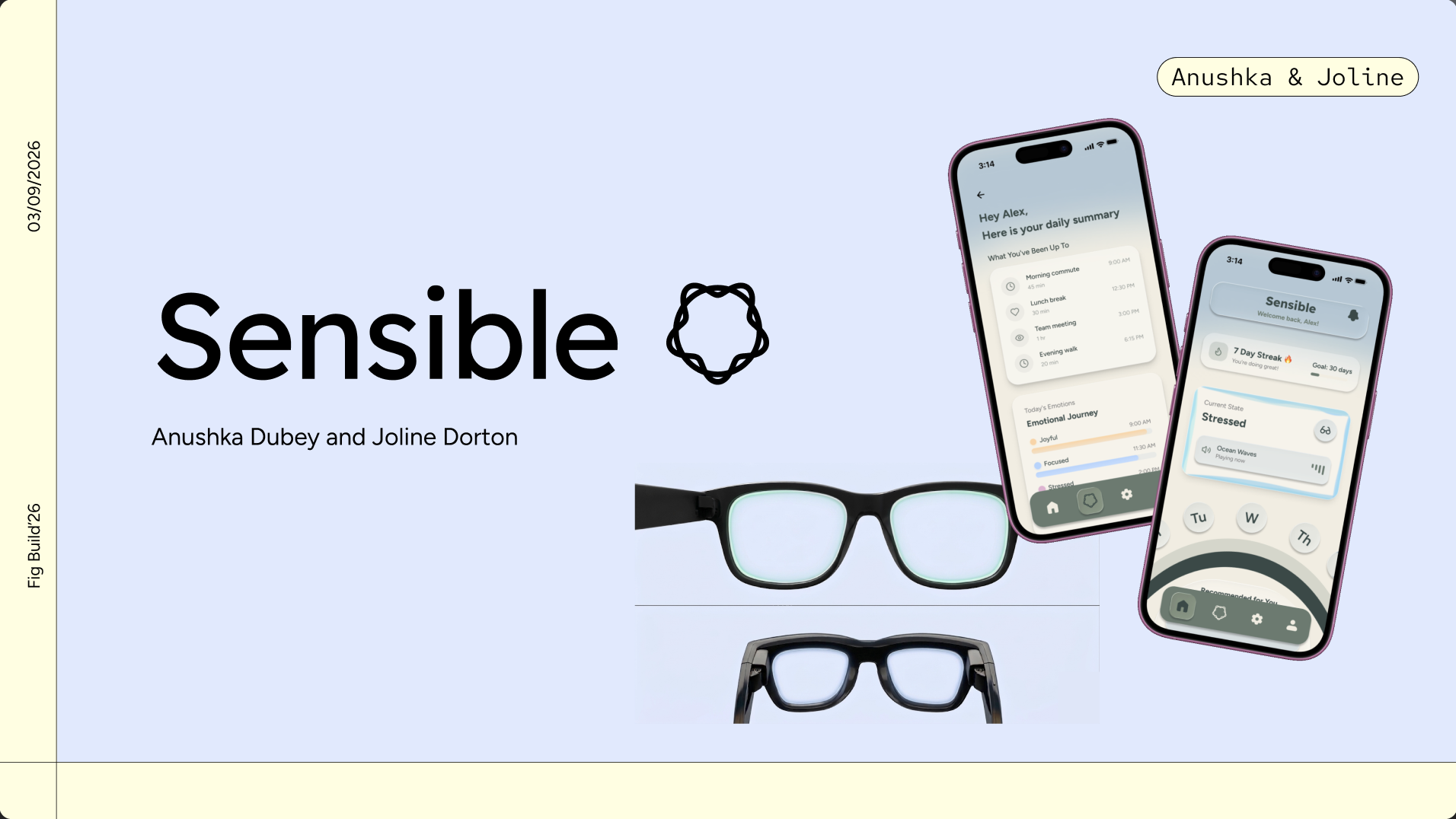
Sensible - Figma Slide Deck Presentation
Inspiration
The inspiration for Sensible stemmed from the concept of Synesthesia, a condition where the brain routes sensory information through multiple unrelated senses. Specifically, we were inspired by Chromesthesia, where emotions spark colors. We recognized a widespread problem: although emotional intelligence is essential to psychological health, many people lack the skills or language to accurately identify and process their emotions. This gap in emotional literacy often leads to miscommunication, poor stress management, and diminished well-being. Our user research validated this, revealing that 92% of surveyed individuals wished a tool existed to help them identify and navigate complex emotional situations.
What it does
Sensible is a mobile application integrated with smart glasses that helps people identify and navigate their emotions without feeling intrusive.
Sensory Translation: It translates abstract feelings into tangible, sensory experiences like colors and sounds to help users process what they are experiencing.
Biometric Tracking: Using heart rate monitoring, pupil dilation tracking, and spatial awareness of physical surroundings, the glasses work with the software to provide a visual and audio representation of the user's current emotional state.
Daily Summaries & Alerts: The app acts as a tracker for daily events, provides alerts for high stress or prolonged screen time, and delivers a daily summary outlining the user's "Emotional Journey".
Deep Customization: Instead of dictating emotions, the app asks users what specific colors make them feel during setup and uses those specific colors to help the individual destress.
How we built it
Research & Planning: We started with user surveys and a competitive analysis comparing Sensible against existing apps like Calm and Daylio Journal based on features like stress measurement, emotion logging, and visual/audio cues.
Ideation: We mapped out user flows, synthesized concepts like Grapheme-Color Synesthesia, and utilized a feature organization table to structure the app.
Design & Prototyping: The user interface and brand style guide were built in Figma. We established a calming aesthetic using the Figtree and Lexend typography alongside a color palette of secondary greens and accent blues.
Challenges we ran into
Novelty of the Concept: Ideation was particularly difficult because we wanted to create a unique tool that doesn't currently exist in the market, meaning there was very limited existing research available to guide our process.
Tooling Friction: Working with Figma Make was frustrating at times, as it constantly failed to accurately replicate our design visions.
Accomplishments that we're proud of
Cross-Platform Interface: We successfully designed a cohesive ecosystem that bridges a traditional mobile app dashboard with an immersive "Synesthetic Compass" for smart glasses. Personalized Approach: We're proud to have built a framework that prioritizes deep customization—allowing the user to choose their own emotional color palette rather than forcing a universal standard on them.
What we learned
Building Sensible taught us a great deal about the widespread need for tools that bridge the gap in emotional literacy. We learned how to approach the complex task of mapping abstract human feelings into tangible, sensory outputs like color and sound. Additionally, we gained hands-on experience navigating the complexities of integrating physical biometrics (like pupil dilation and heart rate) with digital UI elements.
What's next for Sensible
Exploring and learning more about the functionality of meta glasses
How to measure emotions through physical depictions that aren’t prevalent to others
We wanted to do this by measuring an individual's heart rate, pupil dilation, and their physical surroundings; however, we believe that more factors should be taken into account over time
Built With
- capcut
- figma


Log in or sign up for Devpost to join the conversation.