Inspiration
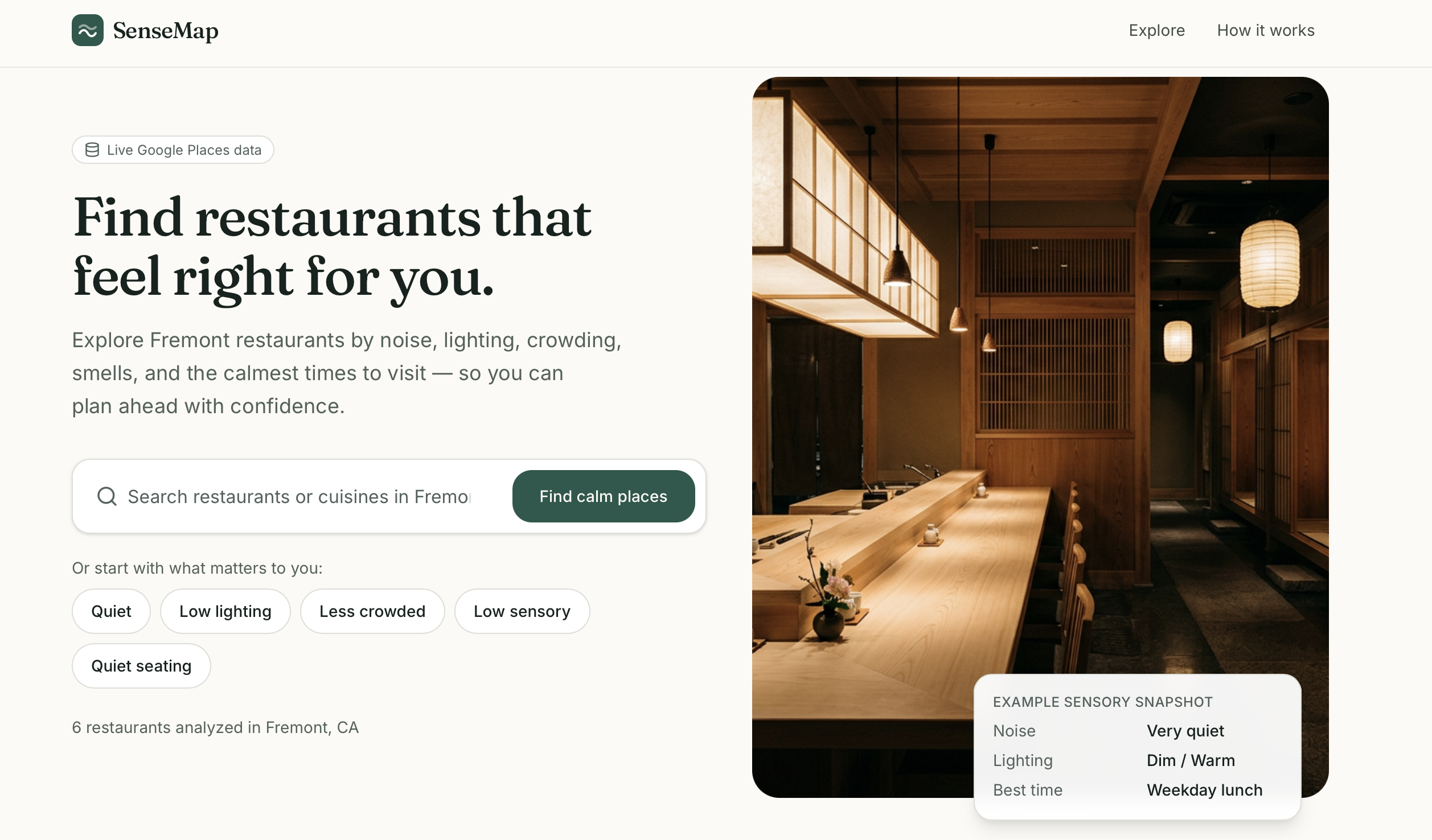
When we were going into a restaurant, one of our friends with autism began to struggle with his senses overloading with high volume, bright lights and a strong smell. It inspired us to create SenseMap to help others who struggle with it as well.
What it does
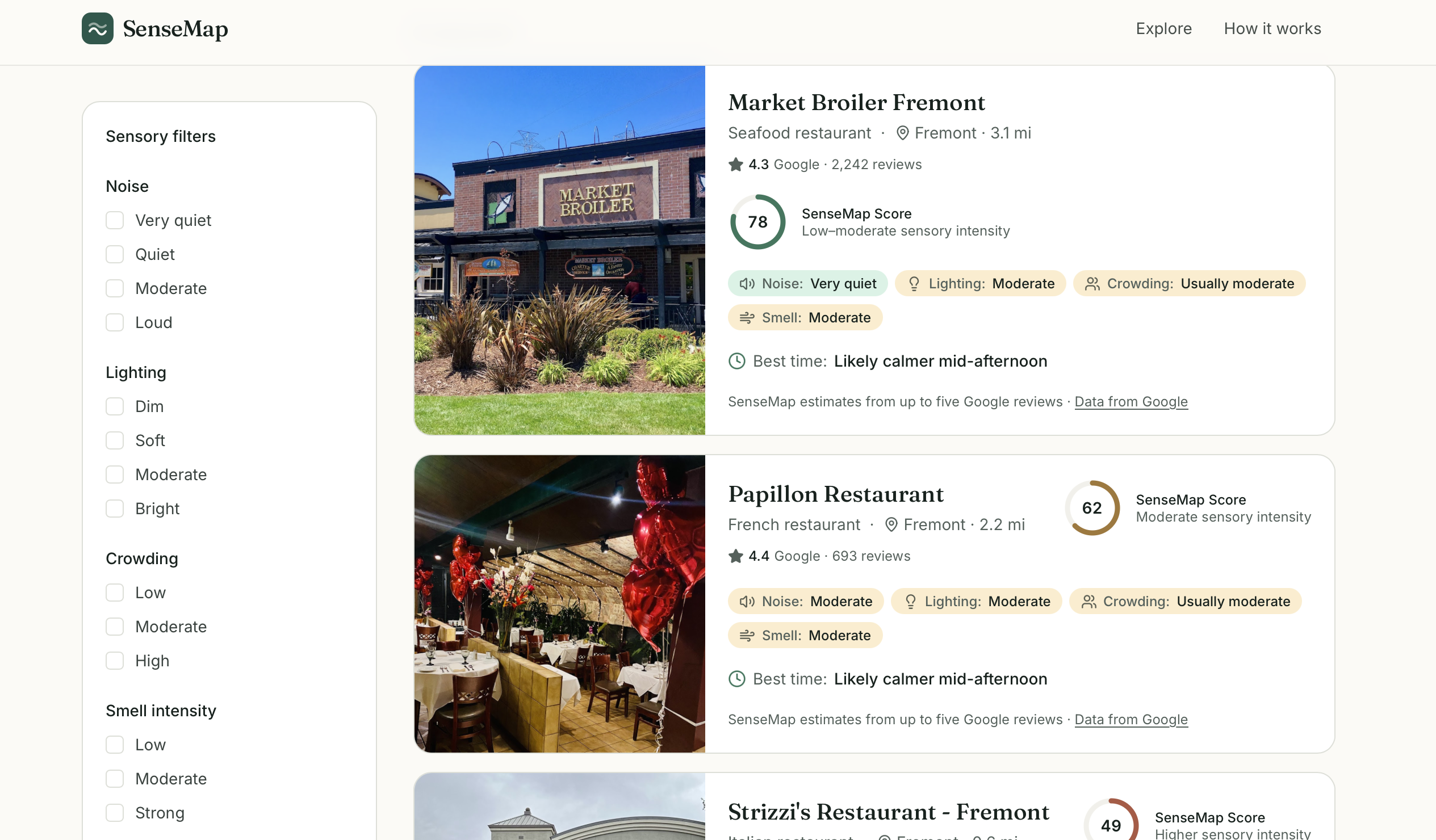
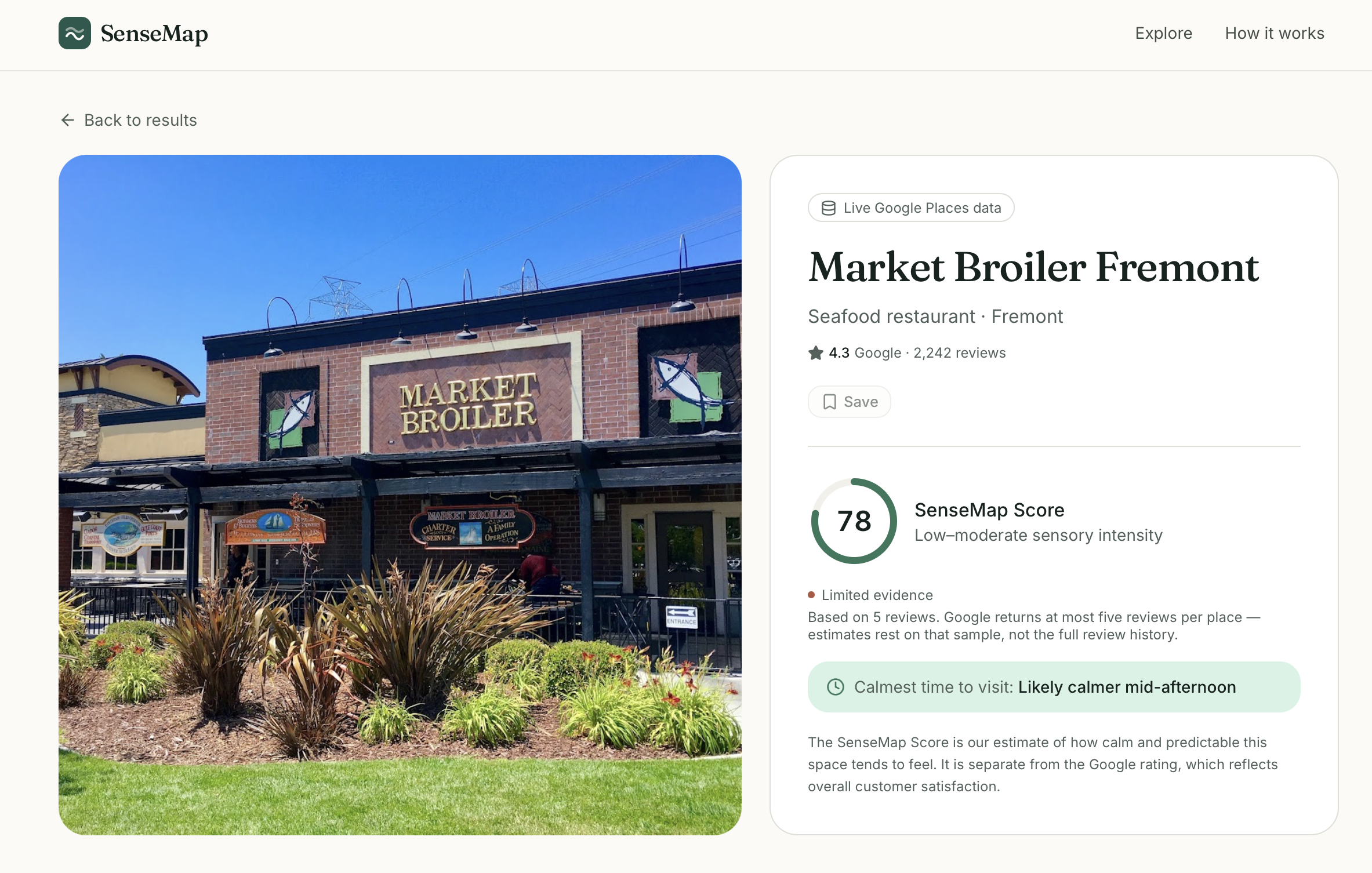
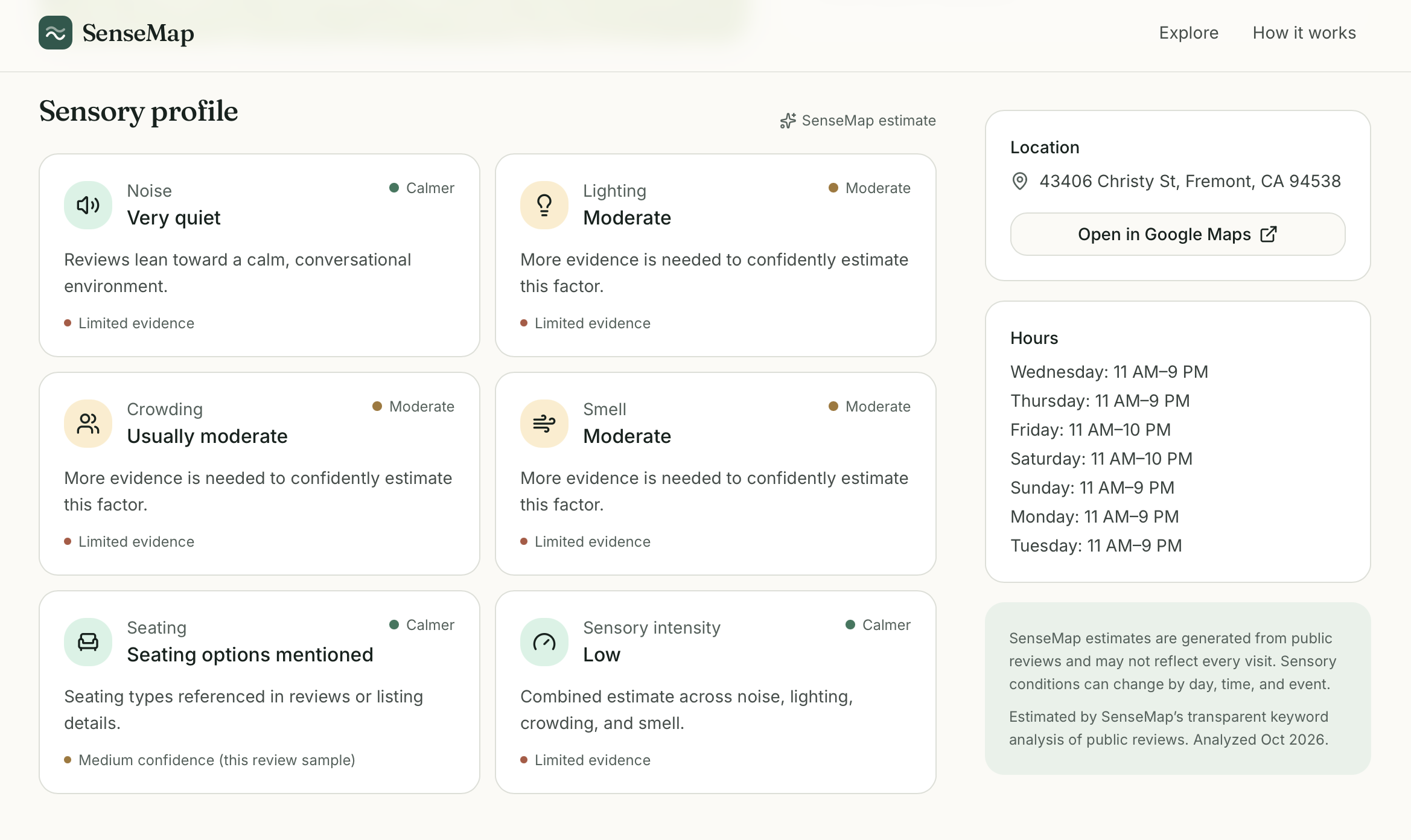
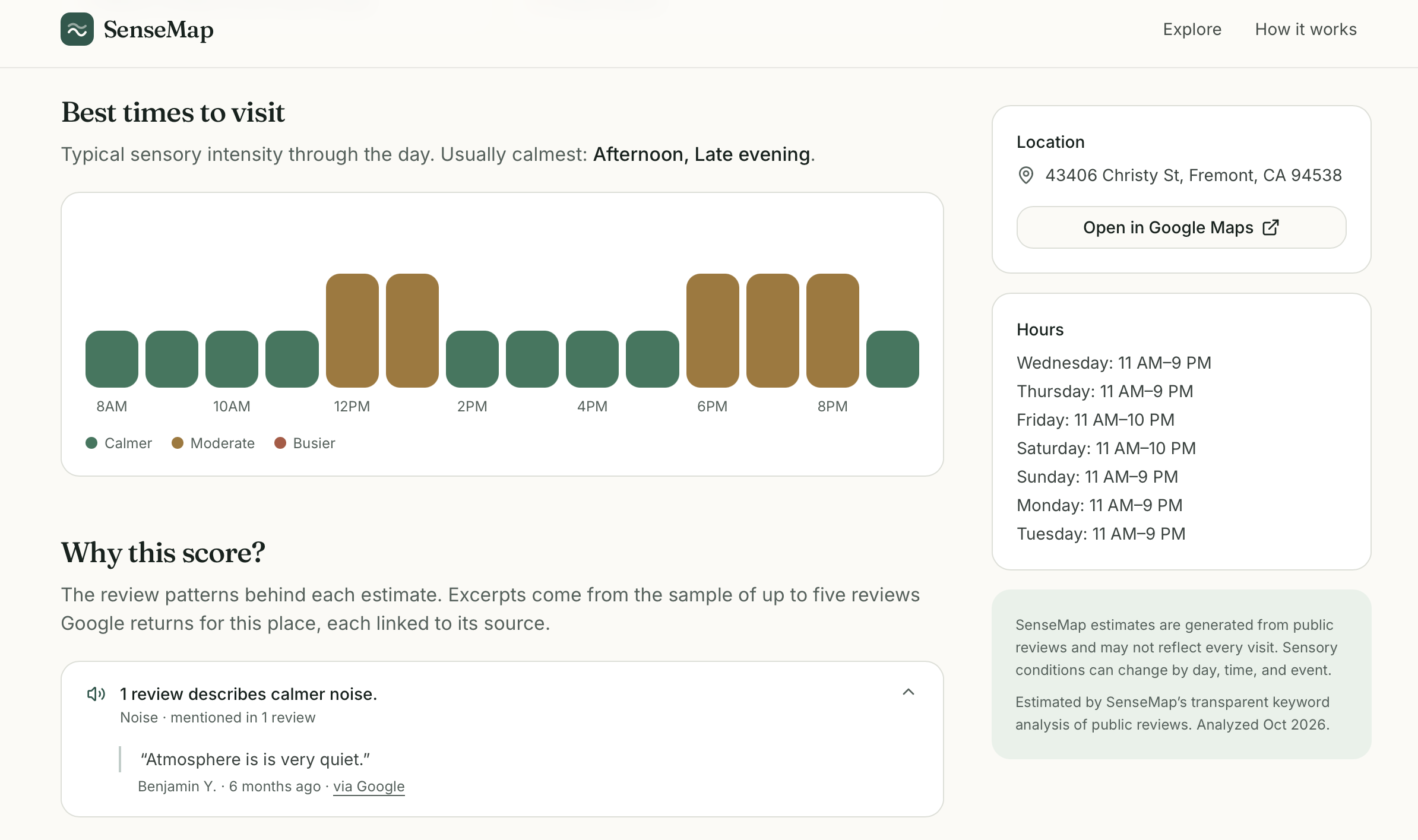
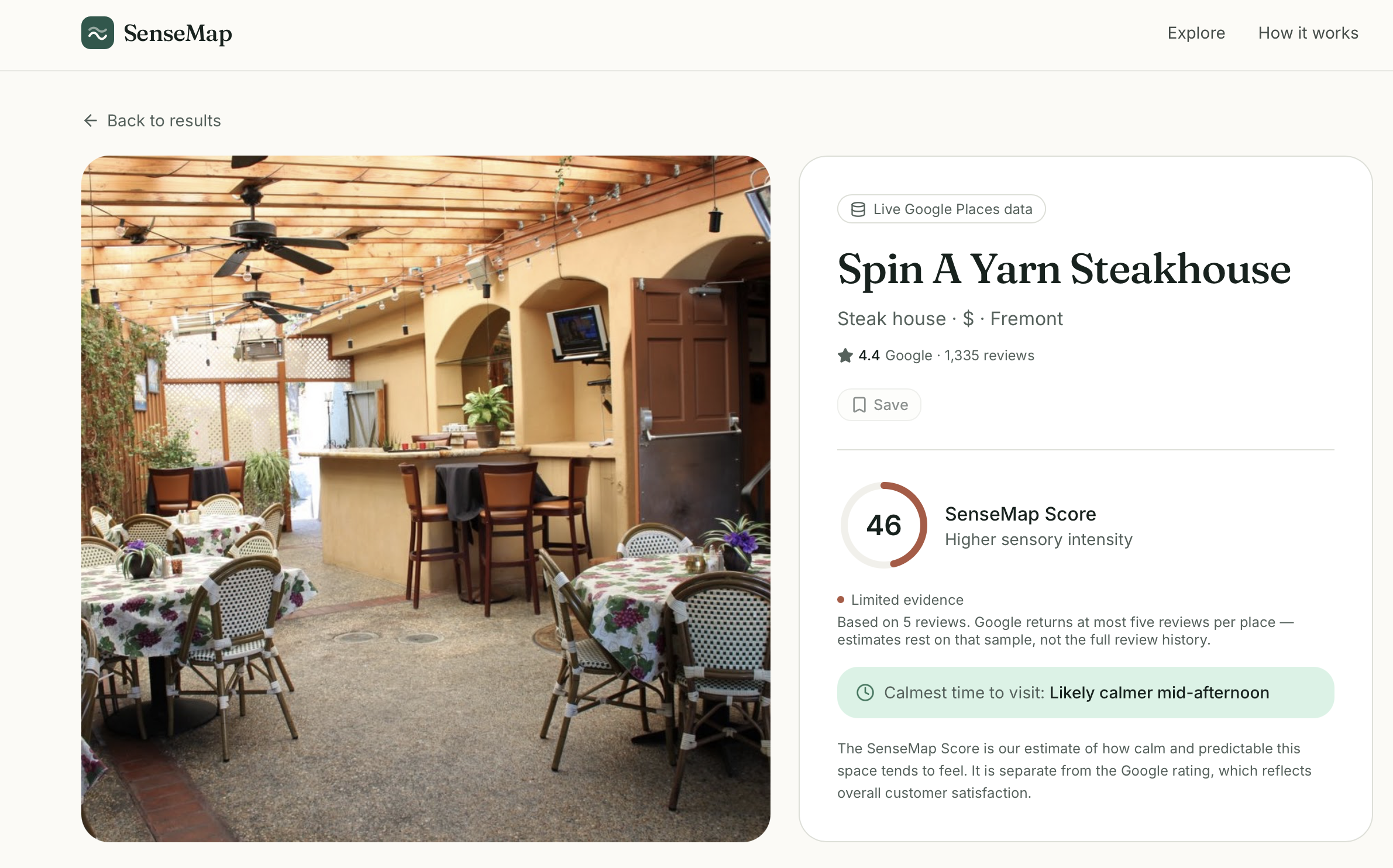
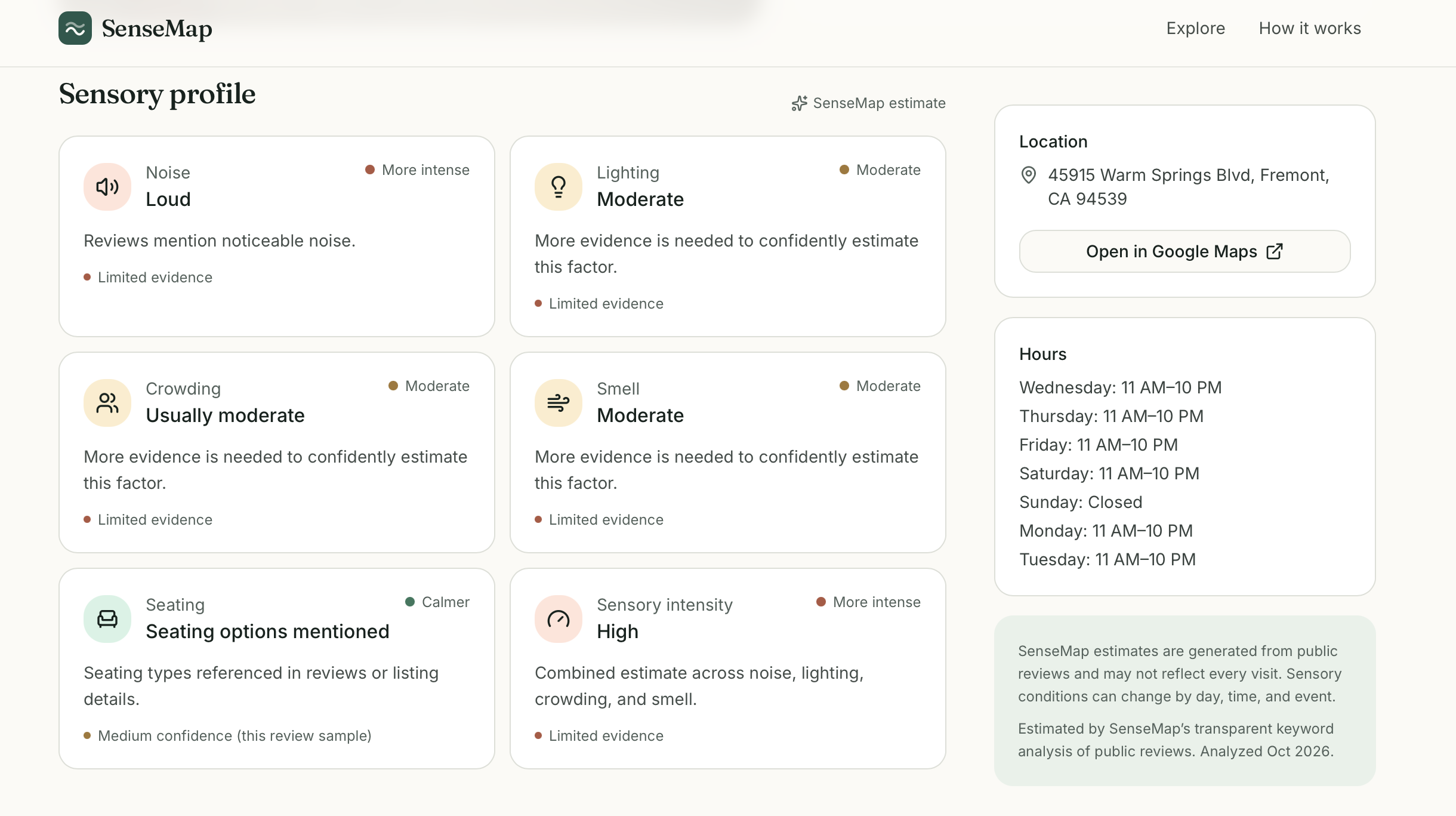
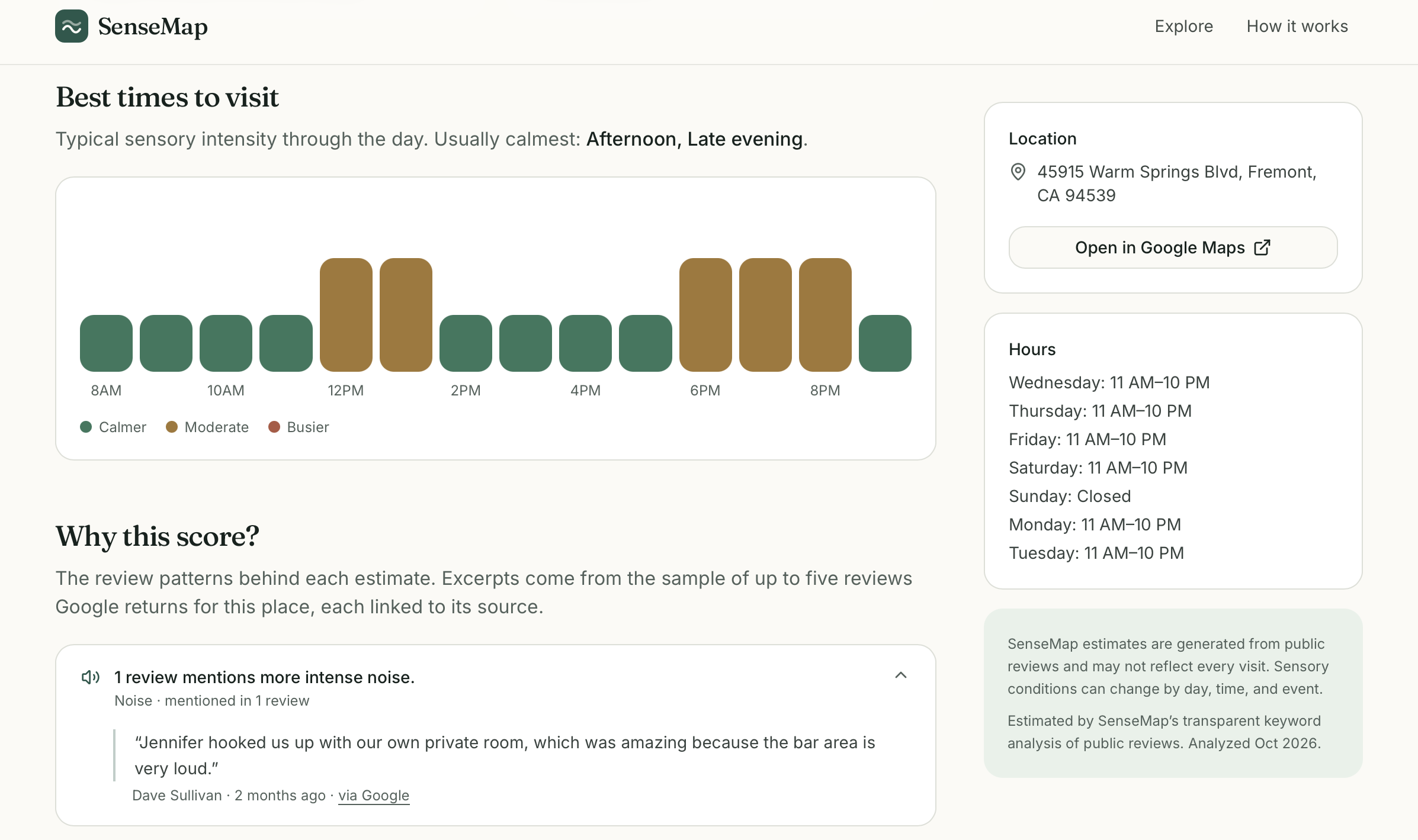
SenseMap creates a sensory profile of the restaurant the user searches. It rates it from 0-100 with 100 meaning low sensory overload and 0 being high sensory overload. The profile includes multiple elements such as the brightness of lights, volume of noise, how crowded it is at parts of the day, and how strong the smells are.
How we built it
We built SenseMap using SerpAPI to access Google Places data and public reviews. Then, we integrated AI to analyze the reviews and to create a sensory profile of the restaurant or cafe searched based on common factors that were researched. Finally, we designed and created an accessible user interface to present the results clearly.
Challenges we ran into
A challenge we ran into while creating SenseMap was implementing the API key. It took multiple attempts and countless hours to finally implement it into our project.
Accomplishments that we're proud of
Solving a problem many in California don't have, but making a difference for the ones who do.
What we learned
We learned that AI can turn messy Google reviews into useful sensory data about restaurants. We also learned that AI needs to be validated because it can invent or misunderstand information, so we used real review evidence and confidence levels to accurate explain the data. Finally, we learned how to combine APIs, AI, a backend, and a front end to turn raw data into a useful web application which can help people find places that suits themselves based on sensory needs.
What's next for SenseMap
As of now, SenseMap is only releasing in Fremont, California. However, in the future, we hope to expand it across many cities in the Bay Area, which is especially helped by how scalable it is, like with its cache system. We also plan on integrating vision models to analyze photos of inside and outside the restaurant to help determine sensory profiles, too!
Built With
- css
- fraunces
- freebuff
- gemini-api
- google-places
- grok-api
- inter
- lucide-react
- next.js
- openai-compatible-endpoint
- pnpn
- react
- serp-api
- shadcn-style-ui
- supabase
- supabase-api
- tailwind-css
- typescript
- vercel


Log in or sign up for Devpost to join the conversation.