-
-
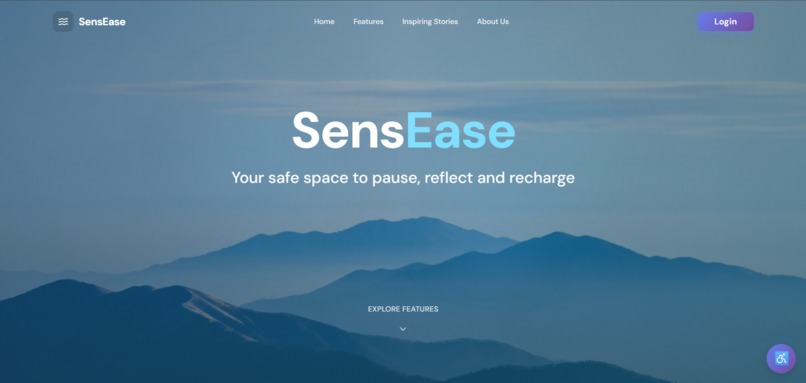
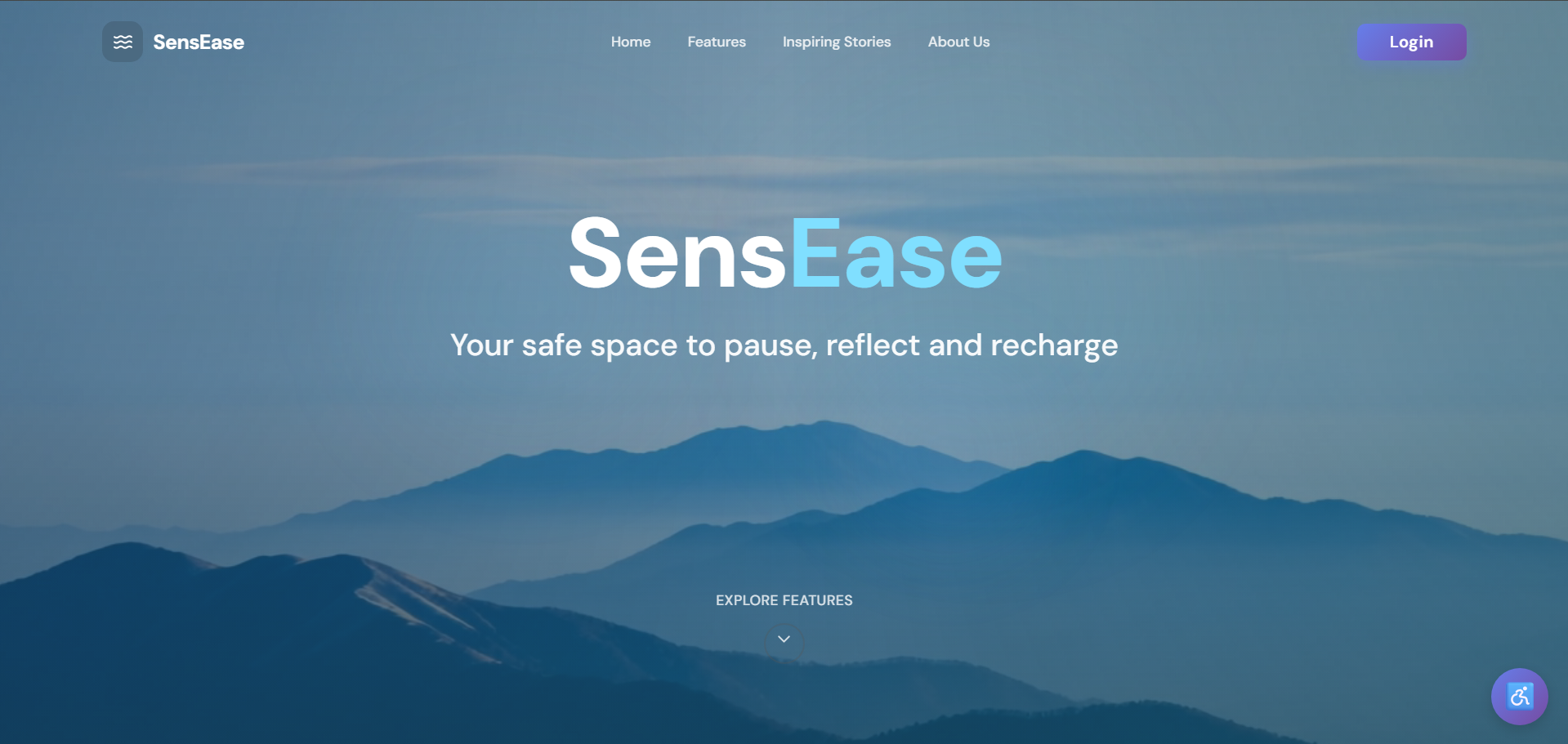
Landing Page
-
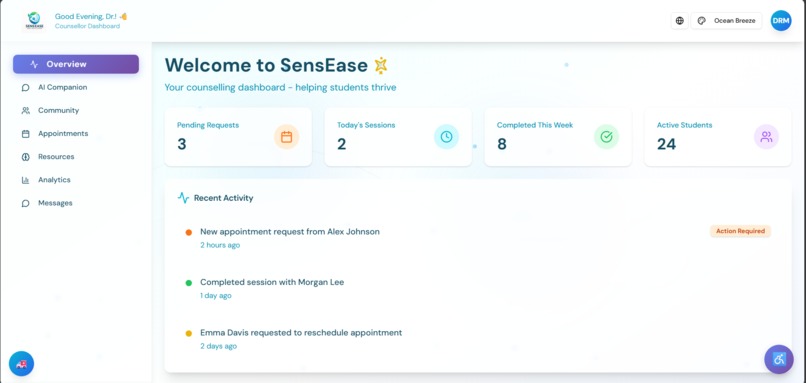
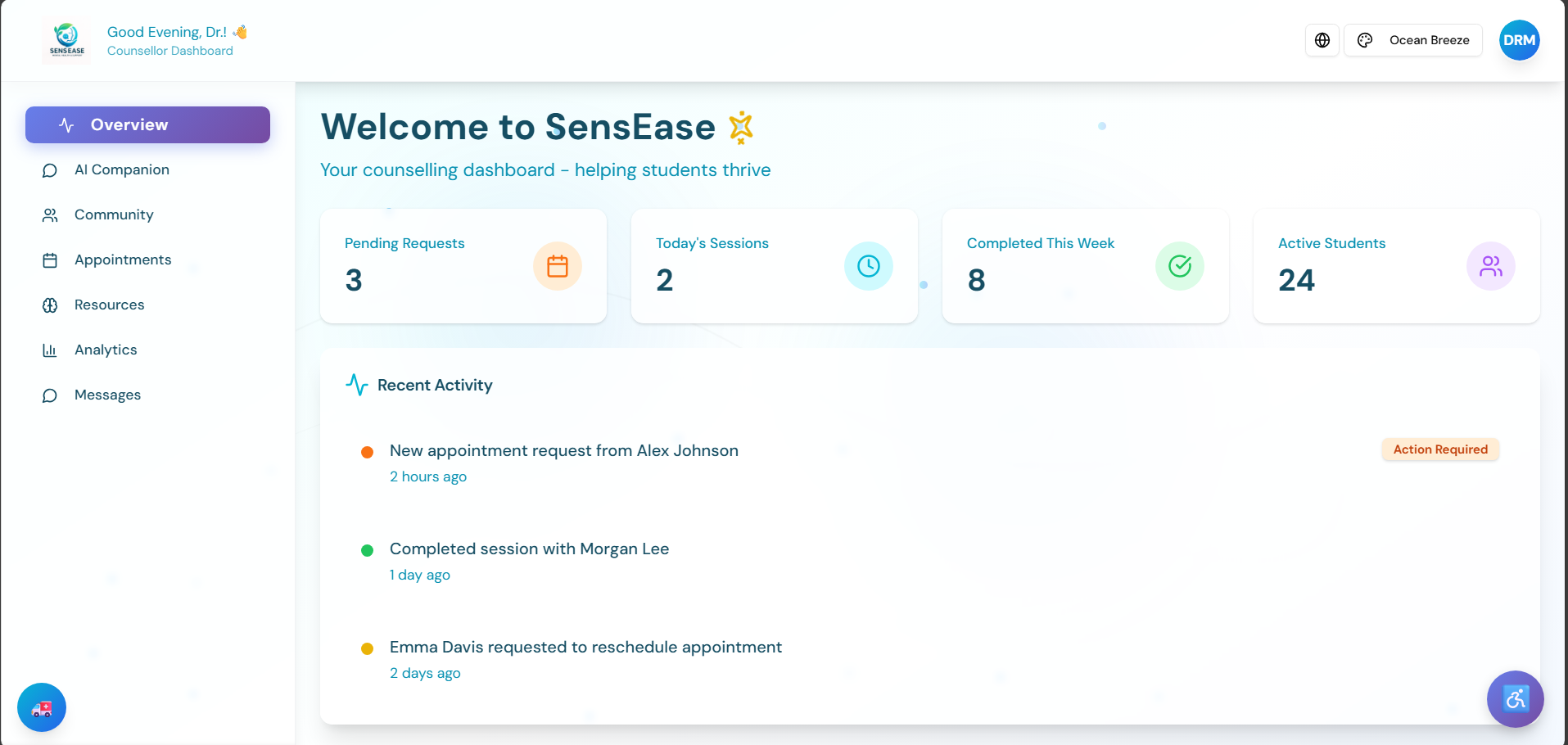
Main Dashboard Interface
Inspiration
In the high-pressure environment of higher education, mental well-being often takes a backseat. We realized that while many "wellness apps" exist, there was no unified ecosystem connecting students directly with their campus support systems in a secure, private way. We wanted to build more than just a diary app; we were inspired to create a digital sanctuary—an enterprise-grade platform where institutions can actively foster mental health, and where students can seek help without fear or stigma.
What it does
SensEase is a multi-tenant mental health platform designed specifically for educational institutions. It bridges the gap between students, counselors, and administrators:
- For Students: Provides a private space for AI-assisted journaling, standardized mental health assessments (PHQ-9, GAD-7), and anonymous community support.
- For Counselors: Empowered with a dedicated dashboard to manage appointments, view patient analytics, and conduct secure, encrypted video sessions.
- For Admins: Offers high-level insights into campus-wide mental health trends to better allocate resources.
How we built it
We architected SensEase as a scalable, full-stack application:
- Frontend: Built with React 18 and Vite for lightning-fast performance, utilizing shadcn/ui and Tailwind CSS to ensure the interface is calming and accessible.
- Backend: A robust Node.js and Express layer that handles complex business logic and validation.
- Database: We leveraged Supabase (PostgreSQL) to manage our multi-tenant data architecture, ensuring strict data isolation between different colleges.
- Real-time: Implemented Socket.io to power instant messaging and live notifications.
- Security: Integrated HTTP-only cookie-based authentication and JWT to ensure student data remains strictly confidential.
Challenges we ran into
- Multi-Tenancy Isolation: Designing the database schema to ensure that "College A" data never leaks to "College B" was complex. We had to implement strict middleware and Row Level Security (RLS) principles.
- Real-Time Synchronization: Debugging the Socket.io connections for the live chat features was tricky, especially ensuring messages persisted correctly in the Supabase backend while updating the UI instantly.
- Integration Pains: We faced specific issues connecting our frontend to the backend services, requiring us to refactor our API endpoints and CORS configurations multiple times to get a stable connection.
Accomplishments that we're proud of
- Enterprise-Grade Security: We didn't cut corners on security. Implementing secure, cookie-based JWT authentication is a standard rarely seen in hackathon prototypes.
- Comprehensive Analytics: Building a dashboard that transforms raw assessment data into actionable visual insights for counselors.
- The "Human" Touch: Successfully integrating AI that feels empathetic rather than robotic in the journaling companion feature.
What we learned
- System Design: We gained a deep appreciation for the complexity of designing multi-tenant architectures and the importance of planning database schemas before writing code.
- Data Privacy: We learned that handling health data requires a "security-first" mindset, influencing every decision from API design to frontend state management.
- Full-Stack Synergy: We mastered the flow of data from a Supabase backend through an Express middleware all the way to a React frontend.
What's next for SensEase
- Advanced AI Models: Fine-tuning a specific LLM on psychological first-aid datasets to provide even better immediate support in the chatbot.
- Blockchain Integration: Exploring decentralized storage for student records to guarantee absolute immutability and privacy of sensitive health data.
Built With
- css
- express.js
- javascript
- jwt
- node.js
- postgresql
- react
- shadcn/ui
- socket.io
- supabase
- tailwind
- vite
- webrtc


Log in or sign up for Devpost to join the conversation.