SenseAI — AI-Powered Rural Healthcare Assistant
Bringing intelligent, real-time clinical guidance to community health workers — even without internet.
Inspiration
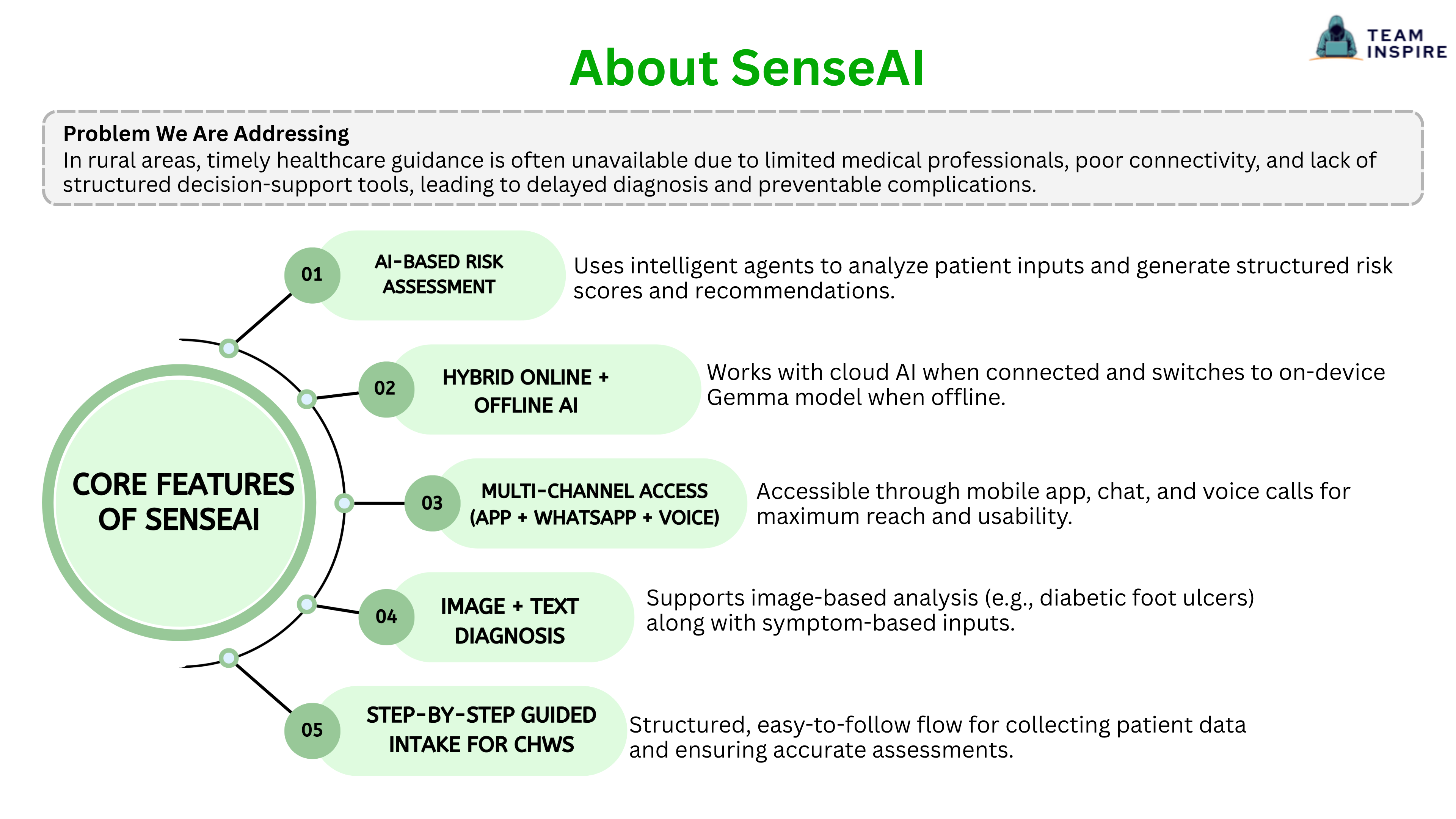
Access to timely healthcare guidance remains a major challenge in rural and low-resource areas. Community Health Workers (CHWs) often have to make critical decisions with limited tools, delayed diagnostics, and poor connectivity.
We were inspired to build a solution that could assist them with real-time risk assessment and actionable guidance — even without internet access.
What It Does
SenseAI is an AI-powered rural healthcare assistant that helps assess patient conditions and provide structured medical guidance. It supports multiple conditions including:
- Maternal Hemorrhage
- Tuberculosis Adherence
- Pesticide Exposure
- Diabetic Foot Ulcers (DFU)
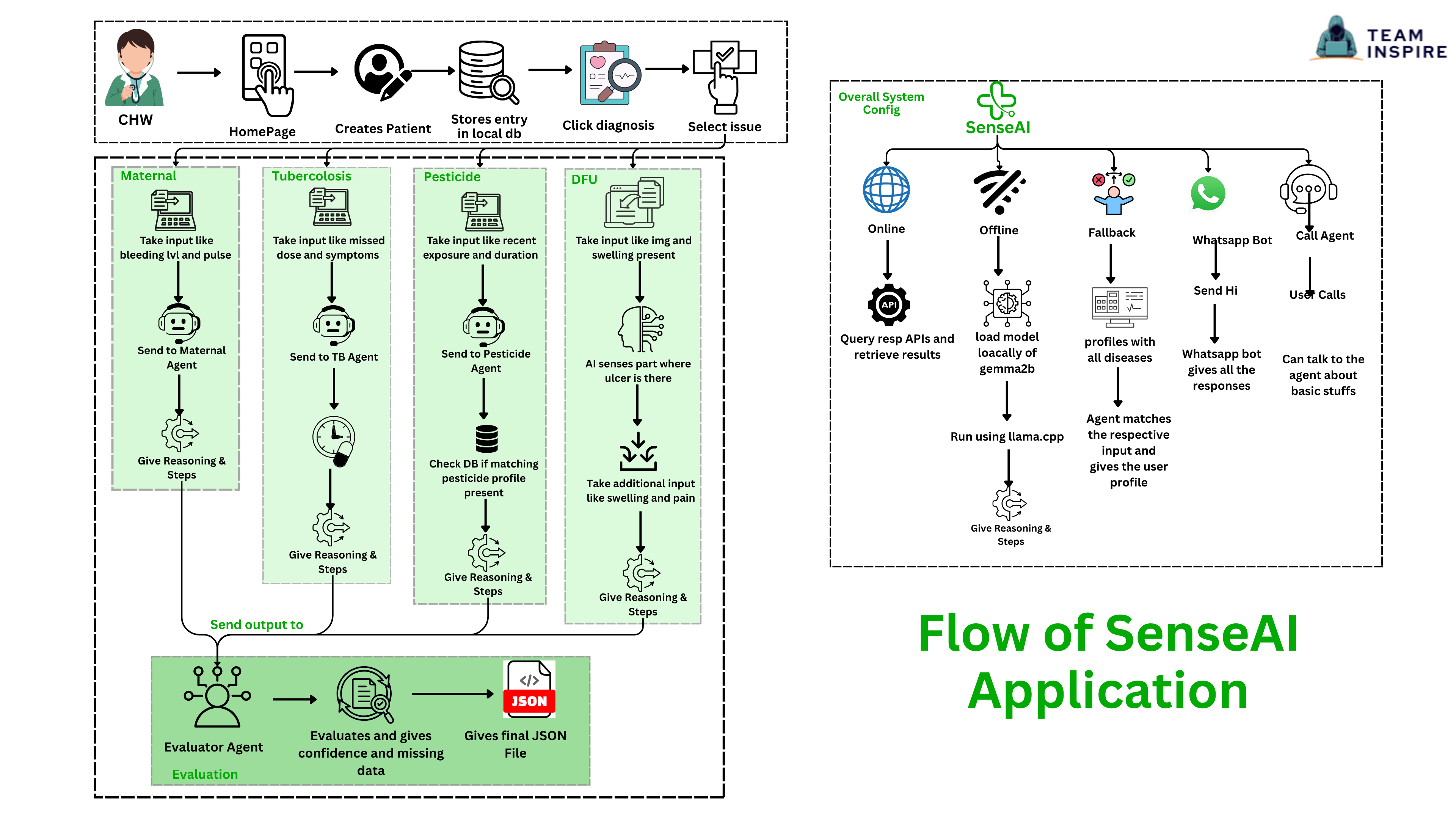
The system collects patient inputs, processes them through specialized AI agents, and outputs:
| Output | Description |
|---|---|
| 📊 Risk Score & Level | Quantified severity assessment |
| 📝 Clear Explanation | Human-readable reasoning |
| ✅ Actionable Checklist | Step-by-step guidance for CHWs |
| ⚠️ Missing Data Indicators | Flags incomplete assessments |
It works across multiple platforms:
- 📱 Mobile App
- 💬 WhatsApp Chatbot
- 📞 Voice Call Agent
How We Built It
SenseAI uses a hybrid AI architecture designed for real-world, low-resource environments.
Frontend
- Flutter mobile application for Community Health Workers
Backend
- Flask APIs handling different diagnosis agents
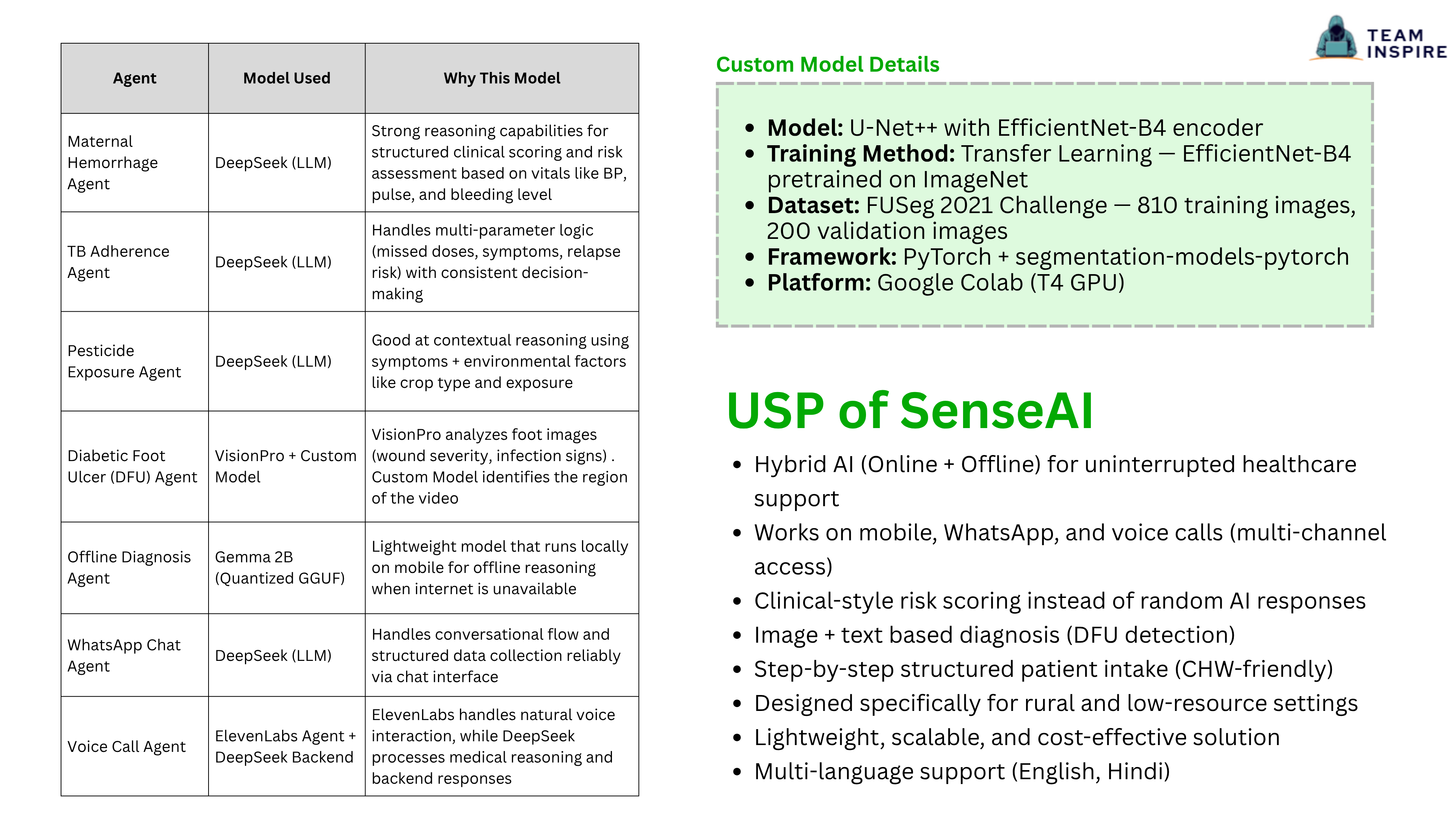
AI Models
| Model | Role |
|---|---|
| DeepSeek | Reasoning and structured decision-making |
| VisionPro + Custom Segmentation | DFU image analysis |
| Gemma 2B (quantized) | Offline inference via llama.cpp |
Integrations
- 💬 WhatsApp Cloud API — Chat-based interaction
- 🎙️ ElevenLabs — Voice-based AI agent
Each condition is handled by a dedicated agent with structured scoring logic to ensure reliable and consistent outputs.
Challenges We Ran Into
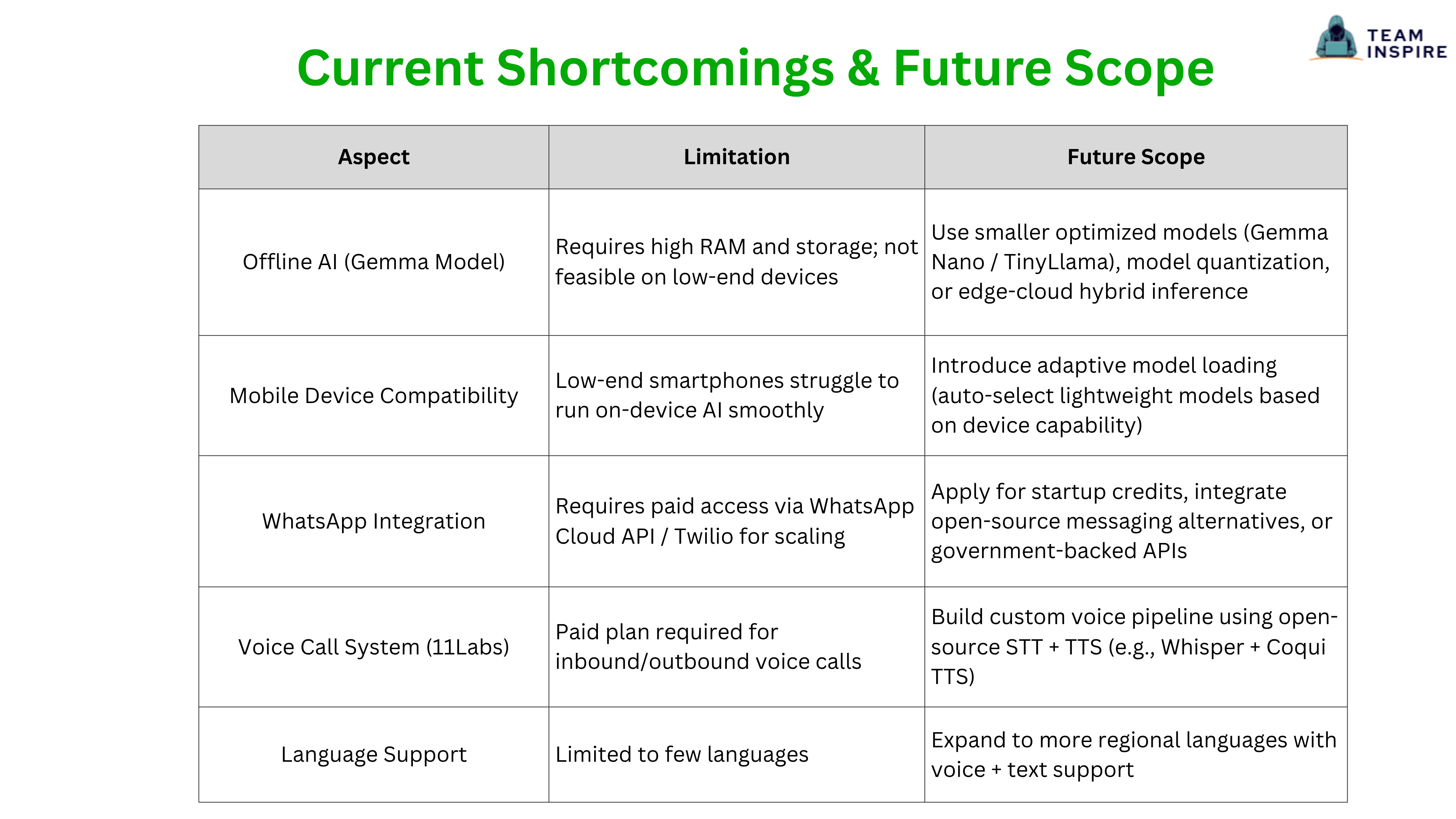
- Running AI models offline on low-end devices due to RAM and storage limitations
- Managing real-time switching between online and offline modes
- Ensuring AI outputs were not random by enforcing structured scoring logic
- Integrating multiple platforms (Flutter, WhatsApp, Voice) into a single workflow
- Handling image-based diagnosis reliably with limited datasets
🏆 Accomplishments We're Proud Of
- ✅ Built a fully functional hybrid AI system (online + offline fallback)
- ✅ Developed multi-channel access (mobile app, WhatsApp, voice calls)
- ✅ Implemented clinical-style scoring instead of generic AI responses
- ✅ Successfully integrated image-based DFU analysis
- ✅ Created a scalable solution tailored for rural healthcare challenges
📚 What We Learned
"Prompt engineering alone is not enough — structured reasoning is critical."
- Offline AI deployment requires strong optimization and trade-offs
- Simplicity in UI/UX is essential for real-world adoption
- Multi-platform systems need strong coordination and data consistency
- Building for real-world constraints is very different from building demos
What's Next for SenseAI
- [ ] Optimize offline models to run on low-end devices
- [ ] Expand support to more diseases — malaria, anemia, child health
- [ ] Add real-time doctor consultation and telemedicine integration
- [ ] Improve image analysis with better datasets and model training
- [ ] Support more regional languages and voice interactions
- [ ] Reduce dependency on paid APIs using open-source alternatives
Tech Stack
Frontend       → Flutter (Mobile App)
Backend        → Flask (Python)
AI (Online)    → DeepSeek, VisionPro
AI (Offline)   → Gemma 2B via llama.cpp
Messaging      → WhatsApp Cloud API
Voice          → ElevenLabs
Image Analysis → Custom Segmentation Model
Built with ❤️ for the communities that need it most.


Log in or sign up for Devpost to join the conversation.