-
-
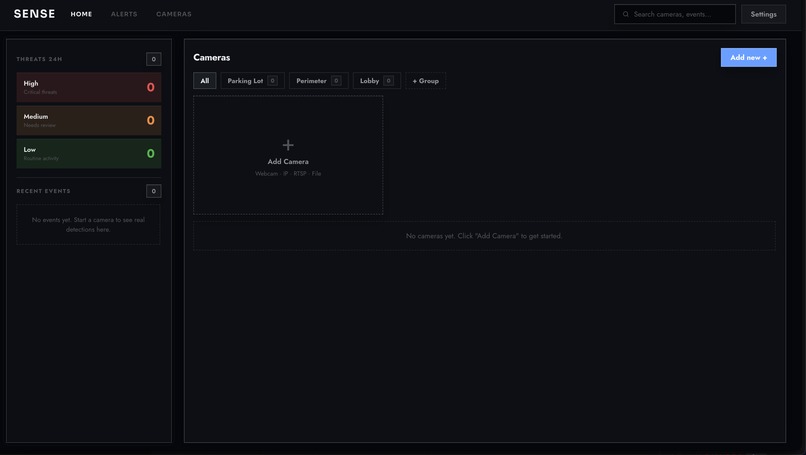
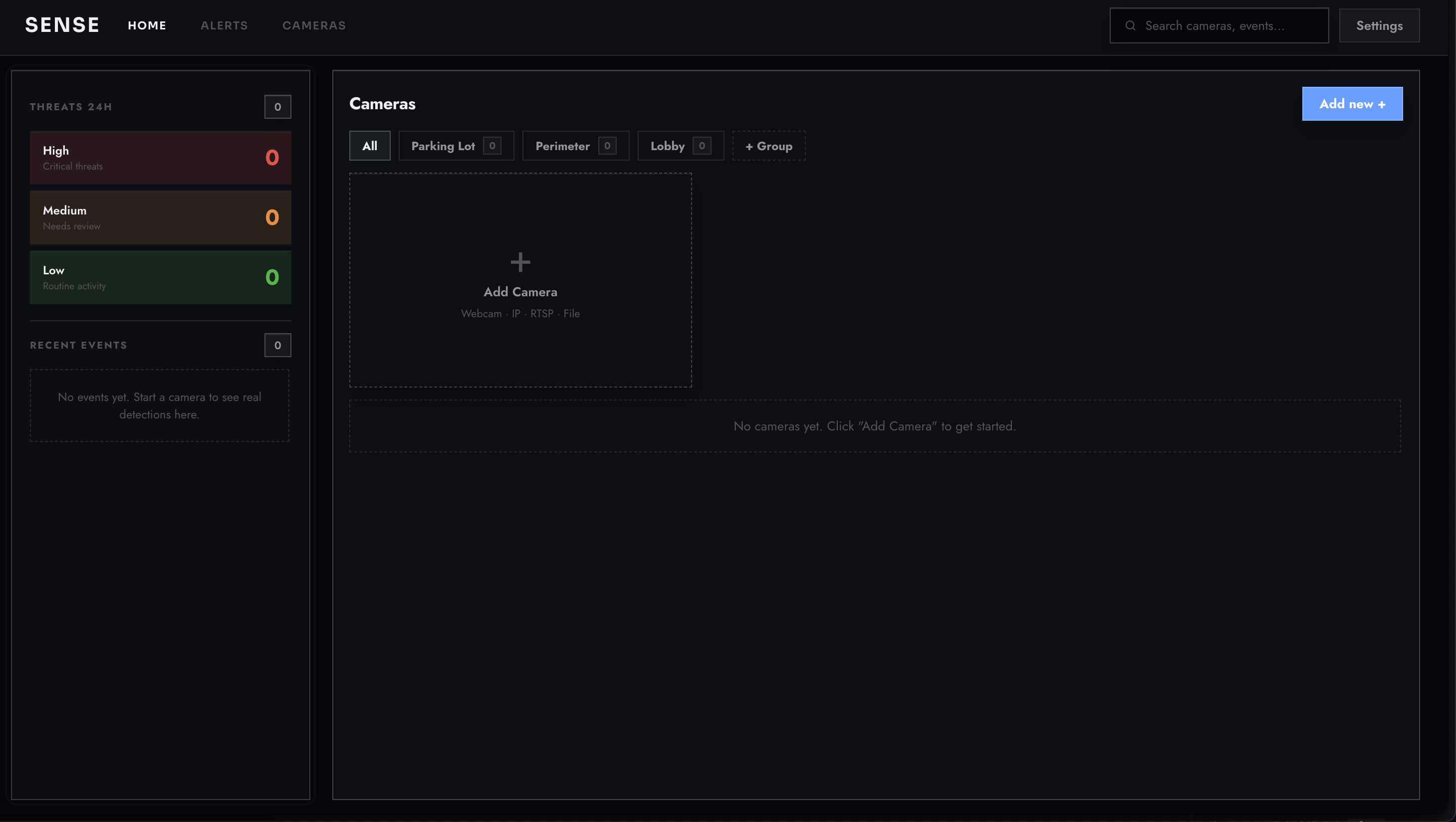
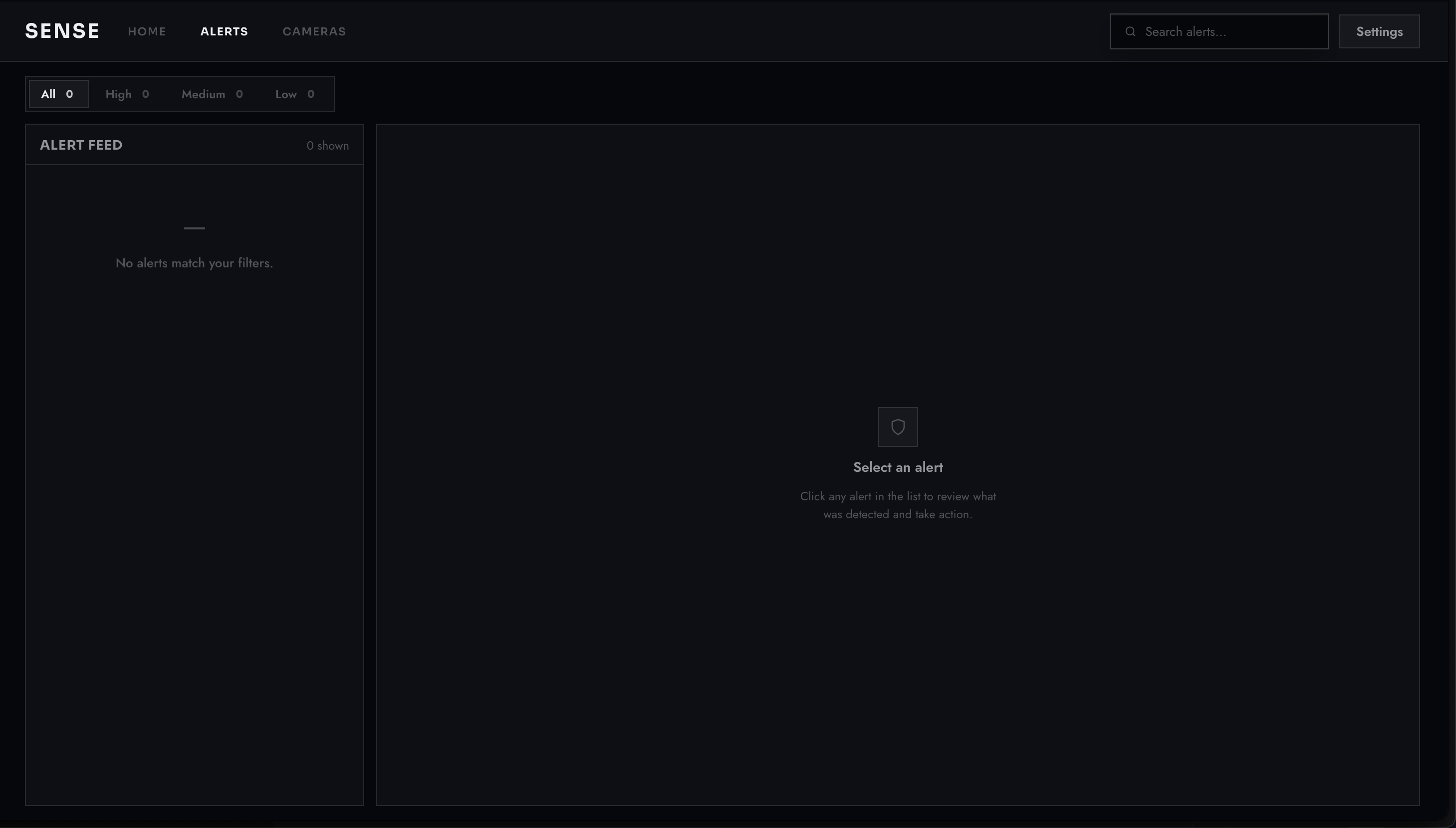
Dashboard
-
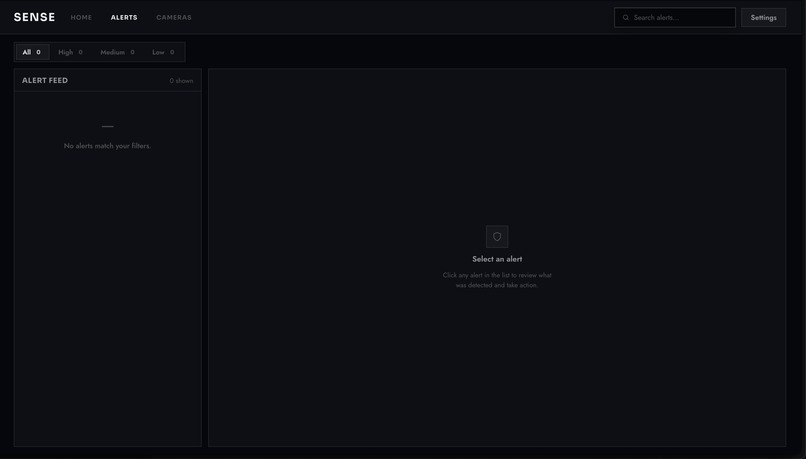
base alert page
-
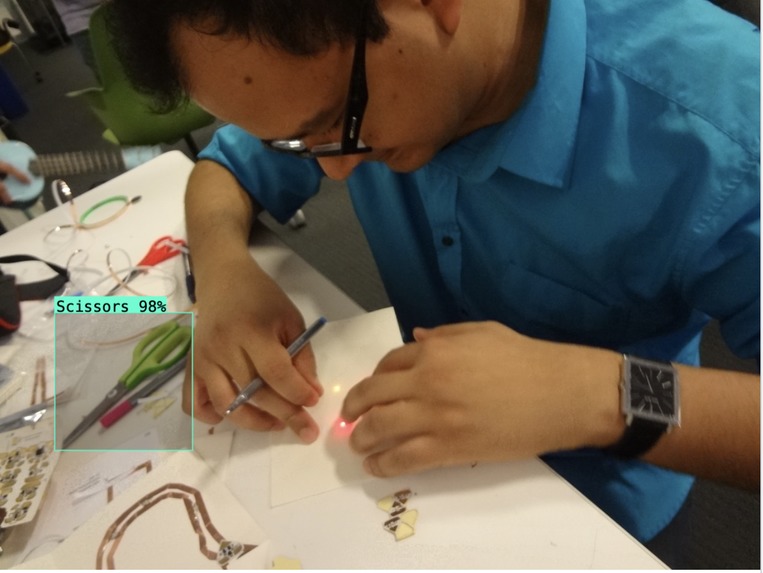
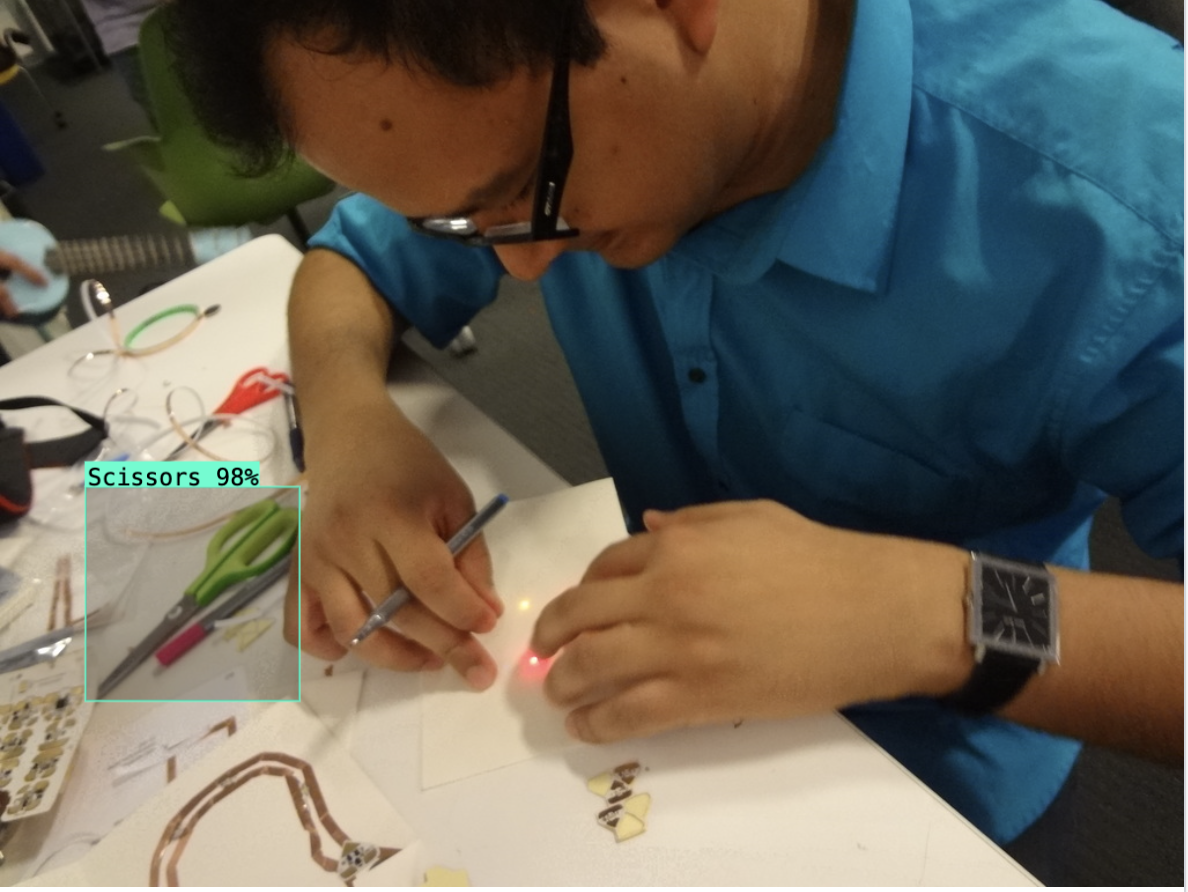
Model Detection on Scissors
Inspiration
We decided to make Sense because we wanted to correlate social good into our project. Systems that work similar to ours are locked behind big government contracts or a massive paywall.
Our idea was that if could build an open-source smart AI detection system, we can offer more protection to those wanting to protect their houses, businesses, cars, and family.
What it does
Sense uses a YOLOv11 model trained on threat detection, once a high confidence is reached, the risk event is flagged and our backend confirms a risk report and sends everything to a live and interactive dashboard for the admin to observe and review.
How we built it
6 members were split into 3 teams. Frontend, Backend, and Vision ML. Frontend : React.js, Vite Backend : FastAPI, Postgres SQL, sqlalchemy, OpenCV Vision ML : YOLOv11
Weekly checkups and meetings with the team kept us focused and clear on our respective tasks.
Challenges we ran into
A lot of the challenges we encountered was based around integration and the vision model. Integration : It was difficult to connect the output from the model and get a working pipeline to a ping on the frontend. We realized the error lied in formatting the output from the YOLO model and our backend wasn't designed for it. After debugging and ensuring we kept the same format throughout each feature, we got integration working flawlessly.
Vision Model : It was difficult to get a great model aligned with our goals. Multiple trials of training led to a model to get one we were happy with but even with that, in the future we want to further improve the model to have greater mAP and Precison-Recall score.
Accomplishments that we're proud of
Overall, were proud that we got a finished working project. This was most of our teams first long-term project and we spent much of our time learning the code and ensuring we understood what each lines purpose was.
The frontend team is proud of designing a full and interactive dashboard. The backend team is proud of their work, as connecting each call and route was a difficult job. Specifically, we had a problem of detection latency which the backend was able to solve. The VisionML team is proud of the work done for training a model and ensuring it aligned with project goals.
What we learned
Once again, this was most of the teams first long-term project, so much of what we learned over the course of the project was not just coding but working as a team. We used many methods to ensure that we kept consistent communication and progress throughout the semester. As for code, each team was made from those who wanted to learn the subject. Much of our time was spent researching and studying what makes each branch works and features we wanted to add.
What's next for Sense Security
In the future, we want to add greater confidence in our detection system whilst also learning ROS2 to be able to connect multiple cameras to the same system so that users that have more complex setups are centralized on one dashboard.
Built With
- fastapi
- opencv
- python
- react.js
- sqlalchemy
- vite
- yolov11


Log in or sign up for Devpost to join the conversation.