-
-
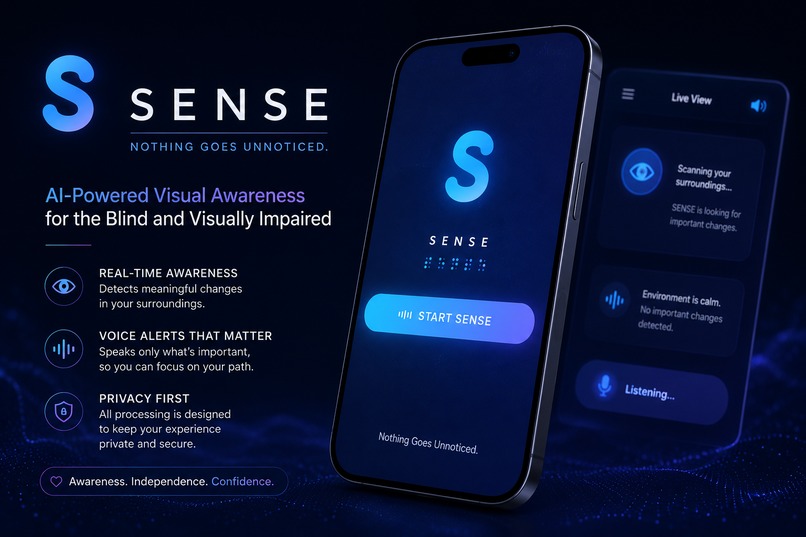
Sense, nothing goes unoticed
Inspiration
Imagine having a world constantly changing around you, but not being able to see those changes.
A person walks into your path. An obstacle appears. A door is suddenly closed. Stairs begin where you didn't expect them.
For someone who is blind or visually impaired, these aren't just details. They can affect safety, confidence, and independence.
We wanted to build something that doesn't simply tell a user everything a camera can see. We wanted to build something that understands what actually matters.
That idea became SENSE.
What It Does
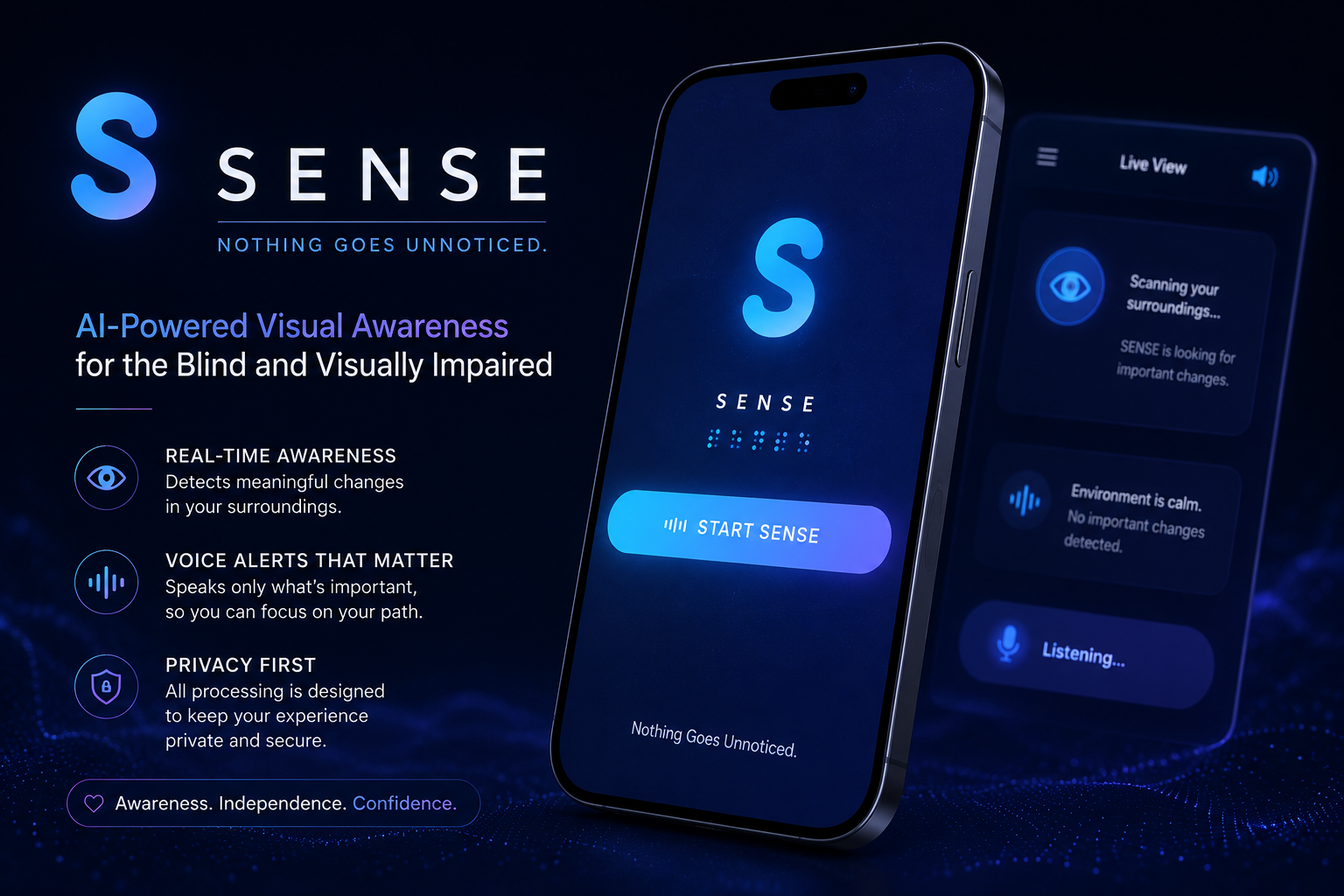
SENSE is an AI-powered visual awareness assistant designed for people who are blind or visually impaired.
Using a smartphone camera, SENSE observes the user's surroundings, analyzes meaningful visual changes with AI, and communicates important information through speech.
The goal is simple:
Don't describe everything. Tell the user what matters.
If something important is detected, SENSE can alert the user through voice. If nothing meaningful changes, SENSE can remain quiet instead of constantly overwhelming the user with descriptions.
How We Built It
SENSE combines a mobile-friendly interface, smartphone camera input, AI-powered visual analysis, and voice interaction.
The camera provides visual information about the user's surroundings. Frames can be analyzed for meaningful changes, and when something requires attention, our AI layer interprets the scene and determines what information is useful to communicate.
The result is a simple interaction:
Observe → Understand → Alert.
We focused heavily on making the experience accessible and immediate. The interface is intentionally simple, the main action is clear, and the system communicates through speech so the user doesn't need to constantly look at the screen.
Challenges We Ran Into
One of our biggest challenges was balancing intelligence with usefulness.
A vision model can describe almost everything in an image—but that doesn't mean the user needs to hear all of it.
We therefore had to think beyond basic image captioning and focus on relevance: what information could actually help someone understand or respond to their surroundings?
We also had to work within hackathon constraints, including limited time and limited access to AI resources, while building something that could work through a real smartphone experience rather than remaining only a concept.
Another challenge was accessibility itself. We had to think about interaction from the perspective of someone who may not be able to see the interface at all, which influenced our voice feedback, interaction flow, and visual design.
Accomplishments We're Proud Of
We're proud that SENSE became more than an idea.
We turned the concept into a working prototype with a real user experience, camera-based awareness, AI integration, and voice feedback.
We're especially proud of the simplicity of the experience.
The user doesn't need to navigate through complicated menus or understand how the AI works.
They start SENSE.
SENSE observes.
And when something matters, SENSE speaks.
What We Learned
We learned that building an AI product isn't only about choosing the most powerful model.
It's about designing the entire experience around the person using it.
We learned how important it is to control AI output, reduce unnecessary information, design for accessibility from the beginning, and turn complex AI capabilities into something that feels simple.
We also learned how quickly a multidisciplinary team can turn an idea into a working product when product design, engineering, and AI development work together.
What's Next
SENSE is only the beginning.
We want to make its understanding of the environment more precise and contextual, improve detection of obstacles and navigation-related situations, and expand its ability to recognize things such as stairs, doors, signs, people, and other important environmental cues.
Ultimately, we want SENSE to become an intelligent layer of awareness that helps people move through the world with greater confidence and independence.
Because accessibility shouldn't mean experiencing less of the world.
It should mean having better ways to understand it.
SENSE — Nothing Goes Unnoticed.


Log in or sign up for Devpost to join the conversation.