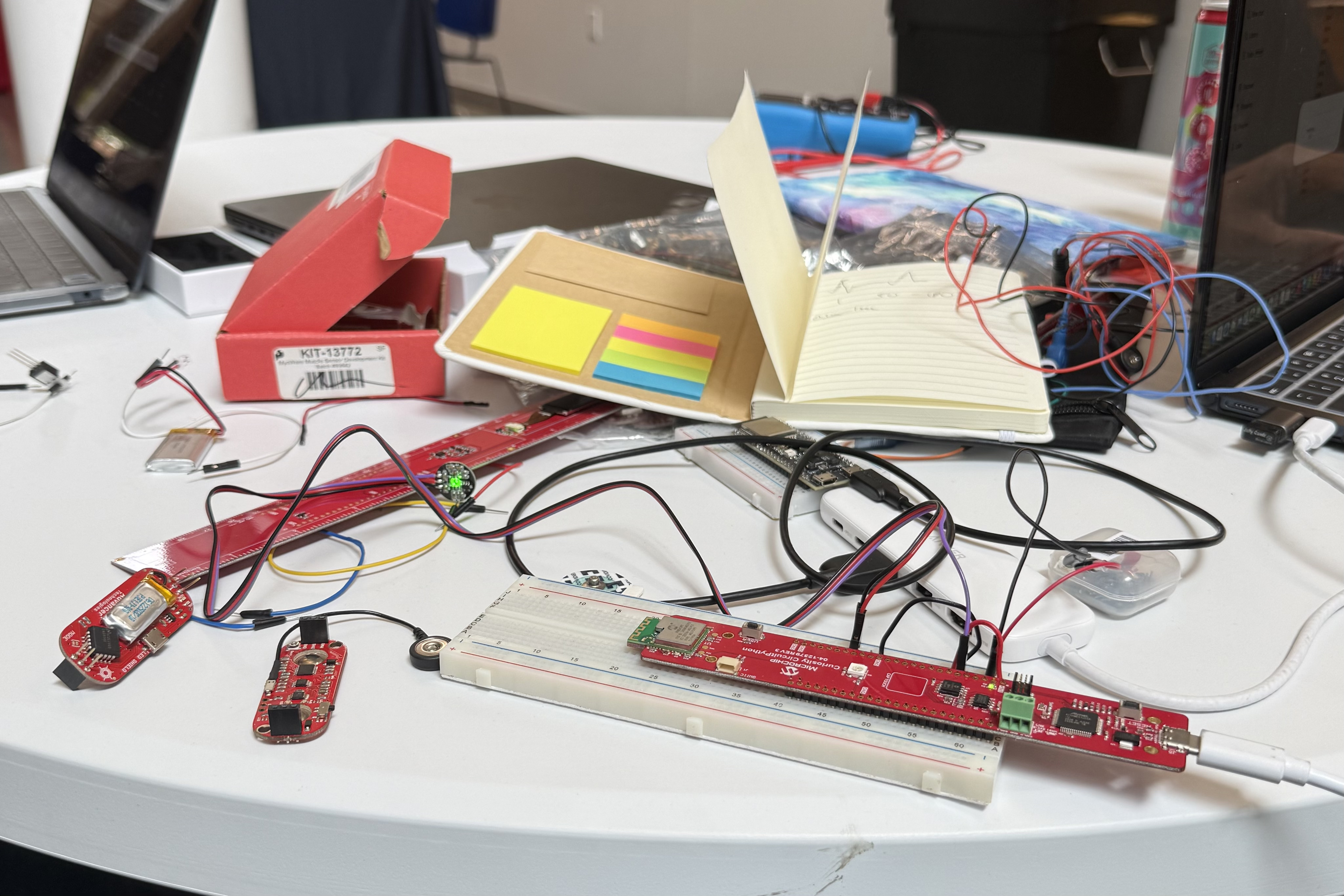
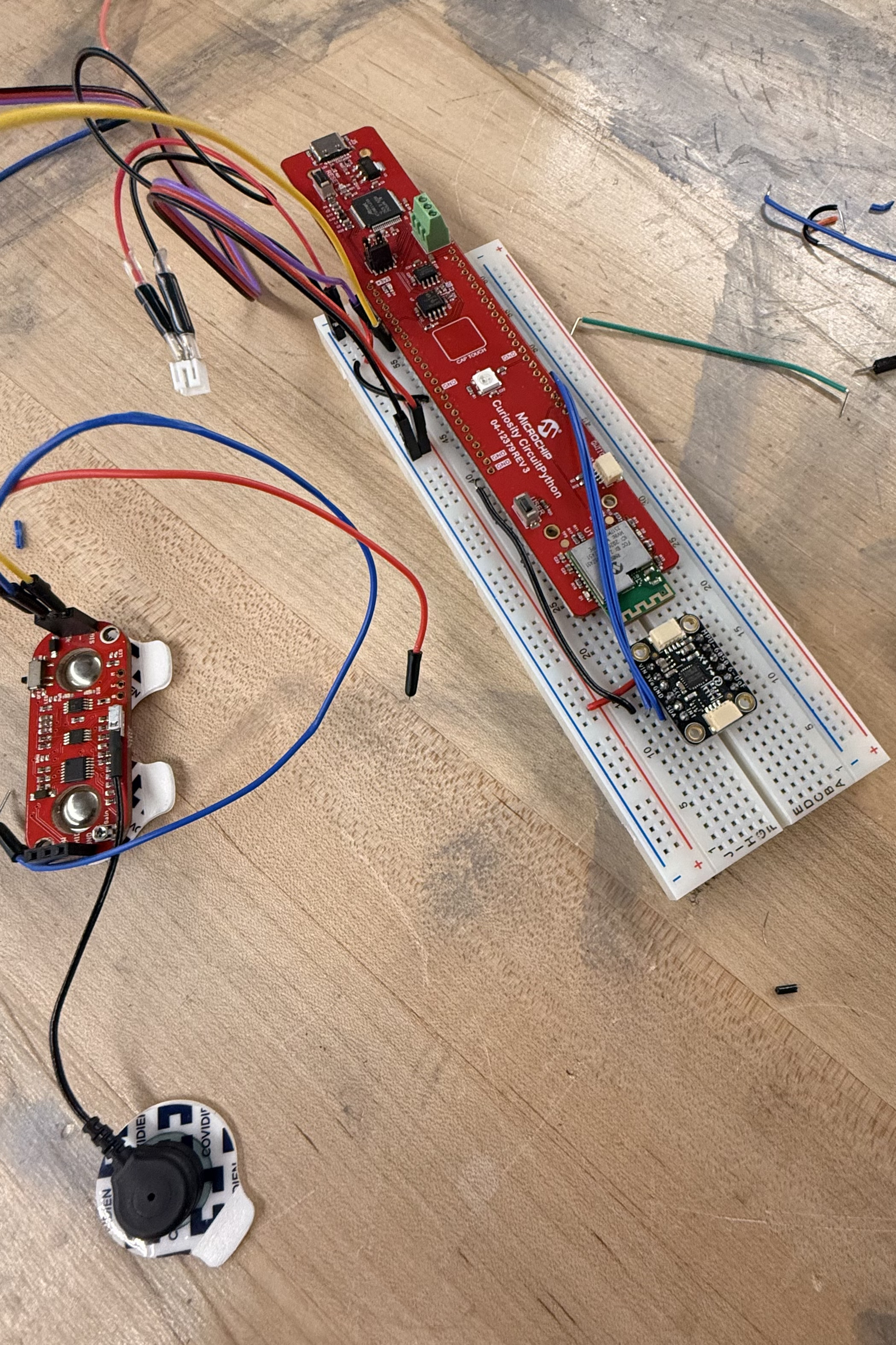
developed the embedded software responsible for real-time data acquisition, signal processing, and event detection. The system continuously reads input from multiple sensors (heart rate, EMG, and accelerometer) and processes these signals using techniques from Digital Signal Processing.
The program maintains a rolling buffer of recent heart rate (BPM) values to establish a dynamic baseline. At the same time, accelerometer data is analyzed to detect sudden changes in motion indicative of a fall, such as a sharp acceleration spike followed by a period of low movement. EMG data is filtered and smoothed to estimate muscle tension and identify abnormal activity patterns.
When a potential fall or seizure-like event is detected, the software captures the current BPM and compares it to the average BPM immediately prior to the event. This comparison helps determine whether there is a significant physiological change associated with the incident.
The detection logic is implemented as a rule-based system that combines multiple conditions (motion, muscle activity, and heart rate deviation) to reduce false positives. All processing is performed in real time on a microcontroller platform, ensuring low latency and continuous monitoring.
The code is structured to efficiently handle concurrent sensor streams, maintain historical data buffers, and trigger alerts when predefined thresholds are exceeded.

Log in or sign up for Devpost to join the conversation.