-
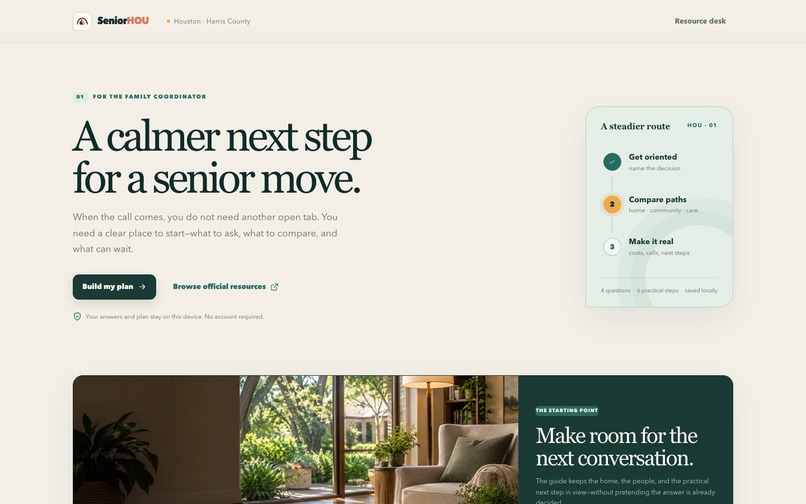
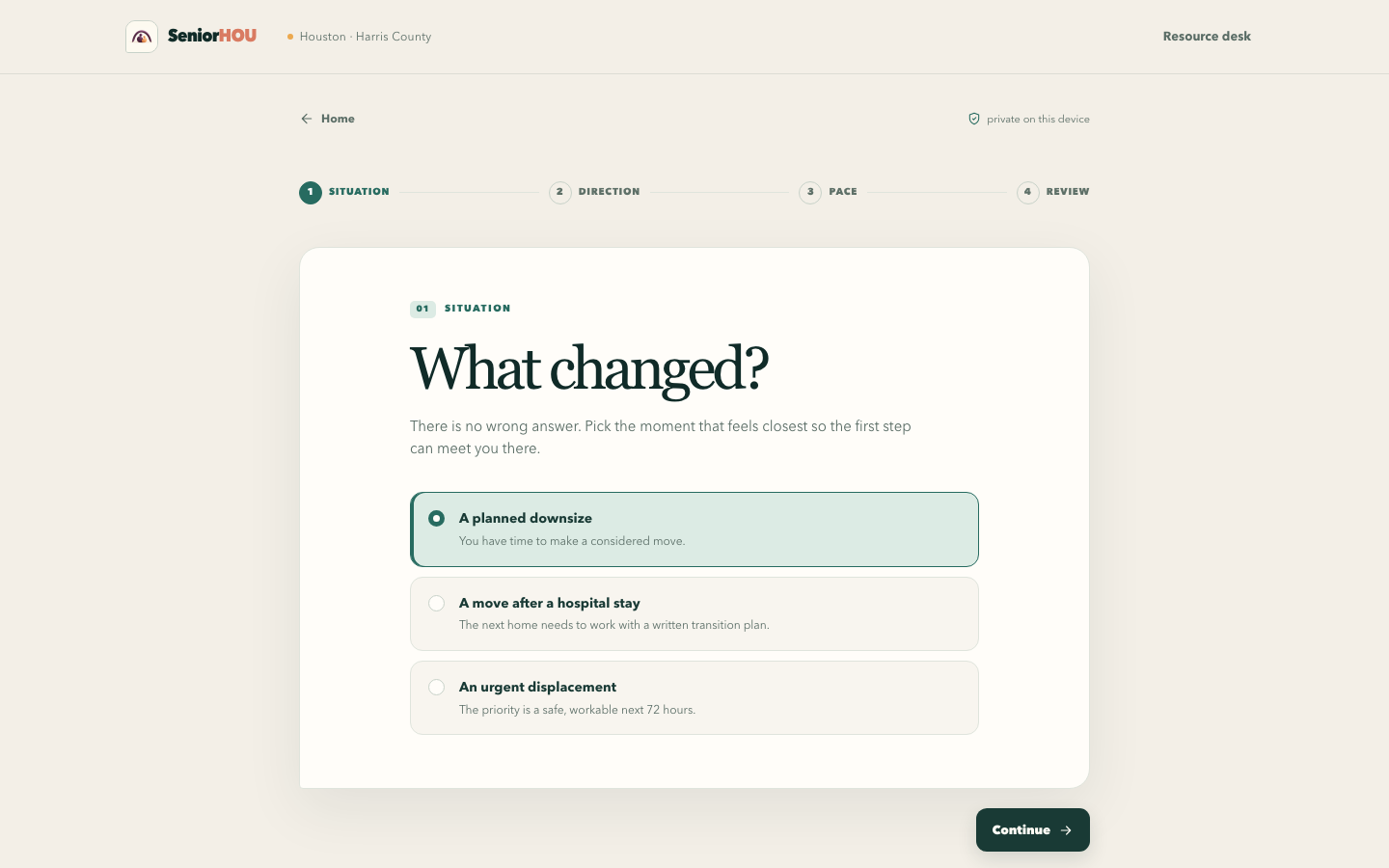
SeniorHOU: prototype interface and core workflow.
-
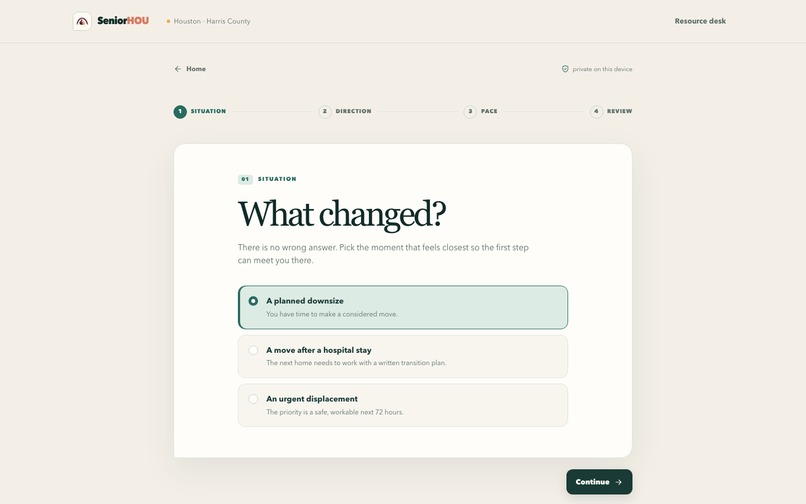
SeniorHOU: prototype interface and core workflow.
-
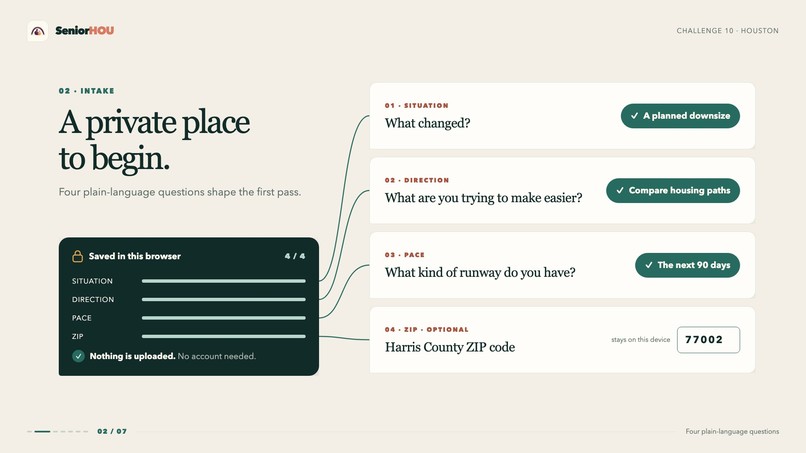
SeniorHOU: product demo cover.
Inspiration
The challenge story described Whitney and her sister trying to navigate bills, home safety, wheelchair changes, and hospital questions after their mother's stroke. SeniorHOU turns that kind of uncertainty into a plain-language starting point without pretending that every family follows one path.
What it does
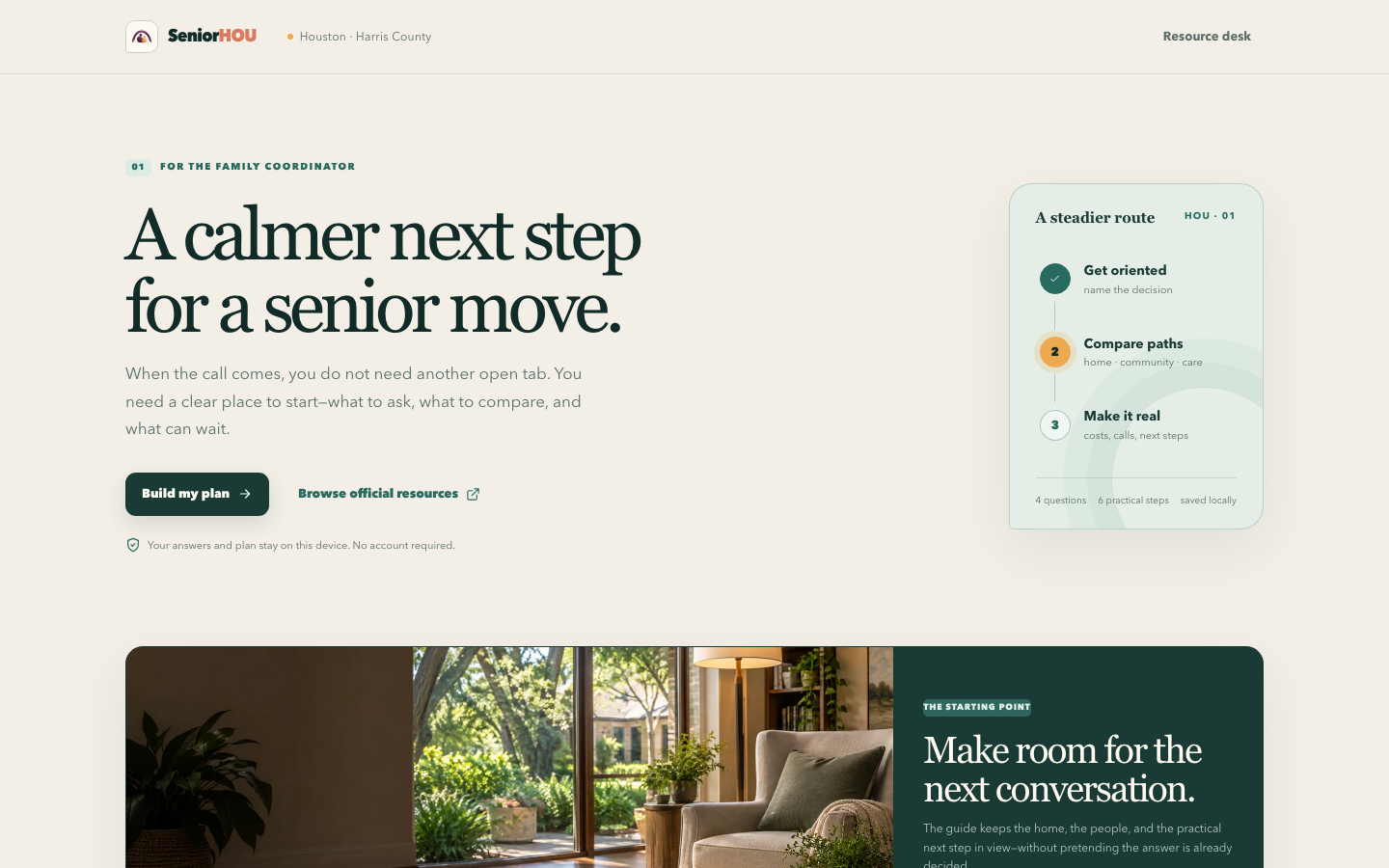
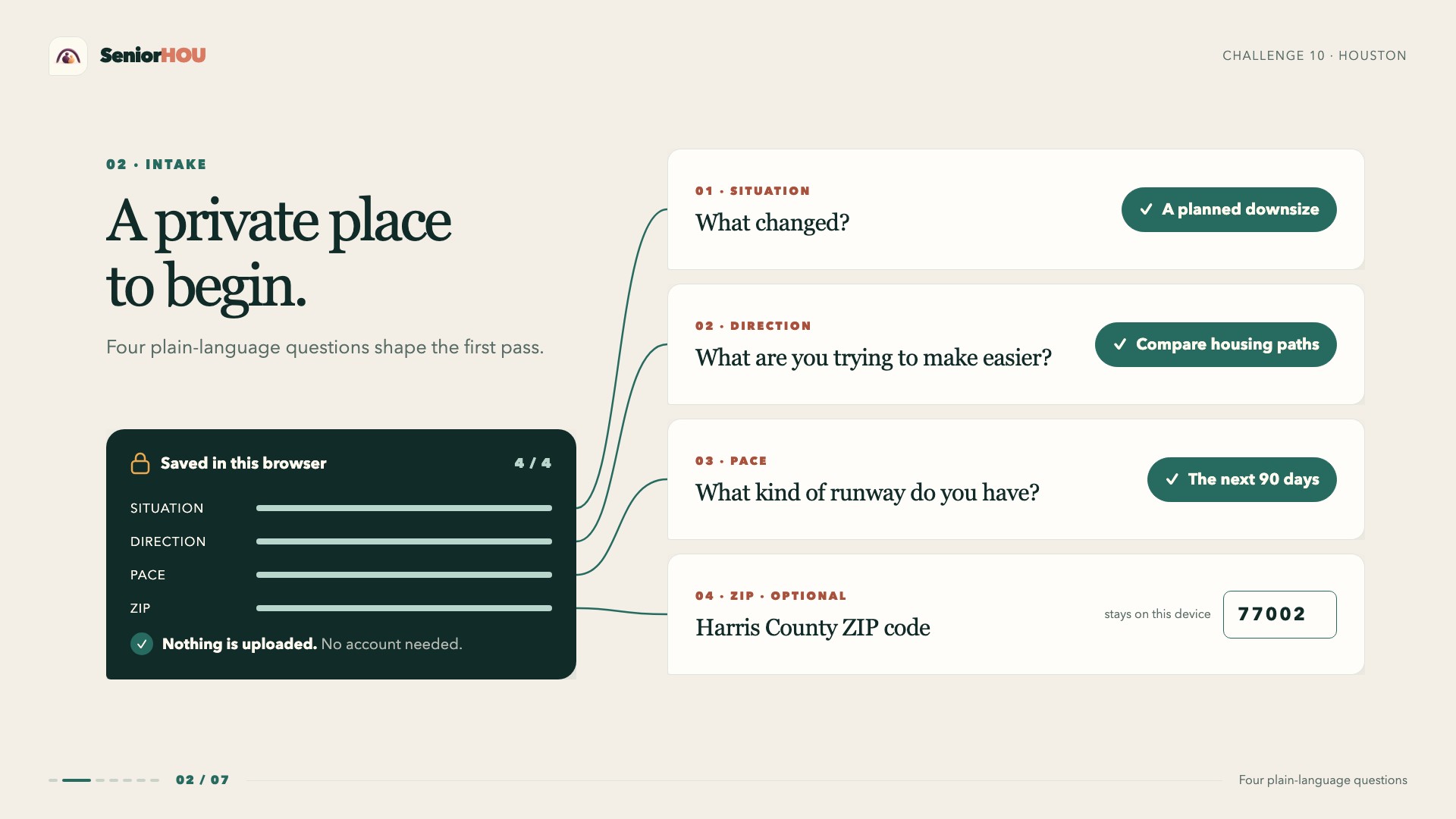
A four-question intake leads to an editable transition route with six practical steps. Families can compare age-in-place, independent-living, and assisted-living questions, see planning cost bands labeled as non-quotes, consult Harris County and Texas public resources, and print or copy a plan.
How I built it
The prototype uses Vite and vanilla browser modules with an Express and TypeScript backend, PostgreSQL and Drizzle ORM, source-backed public resource data, and a local-first plan workspace. Optional identity and save flows are separate from the initial planning path.
Challenges
The workflow sits close to health, housing, finances, and family relationships. The prompts stay useful without making medical or suitability claims, personal drafts remain private by default, and commercial providers are not presented as vetted.
Accomplishments
The working prototype ships the four-question intake, editable checklist, phase comparison, source-backed resource desk, planning cost bands, and print or copy outputs. The demo uses real product captures and keeps the source problem distinct from a user testimonial.
What I learned
Sequencing can reduce cognitive load even when the underlying situation stays complex. A plan should be editable because family facts and decisions change quickly.
What's next
The next step is to research the route with families and care teams, test which questions belong in each phase, and establish a careful process for reviewing resource and provider information.
Explore
Built With
- browser-local-storage
- drizzle-orm
- express.js
- google-identity-services
- node.js-22
- postgresql
- typescript
- vanilla-javascript-and-es-modules
- vite


Log in or sign up for Devpost to join the conversation.