Inspiration
Watching family struggle to navigate fragmented senior care resources sparked this project. Many aging loved ones and their caregivers face overwhelming choices—from in-home care to facility comparisons—with no centralized, easy-to-use platform. I wanted to create something compassionate, accessible, and tailored to the daily realities of those supporting older adults.
What it does
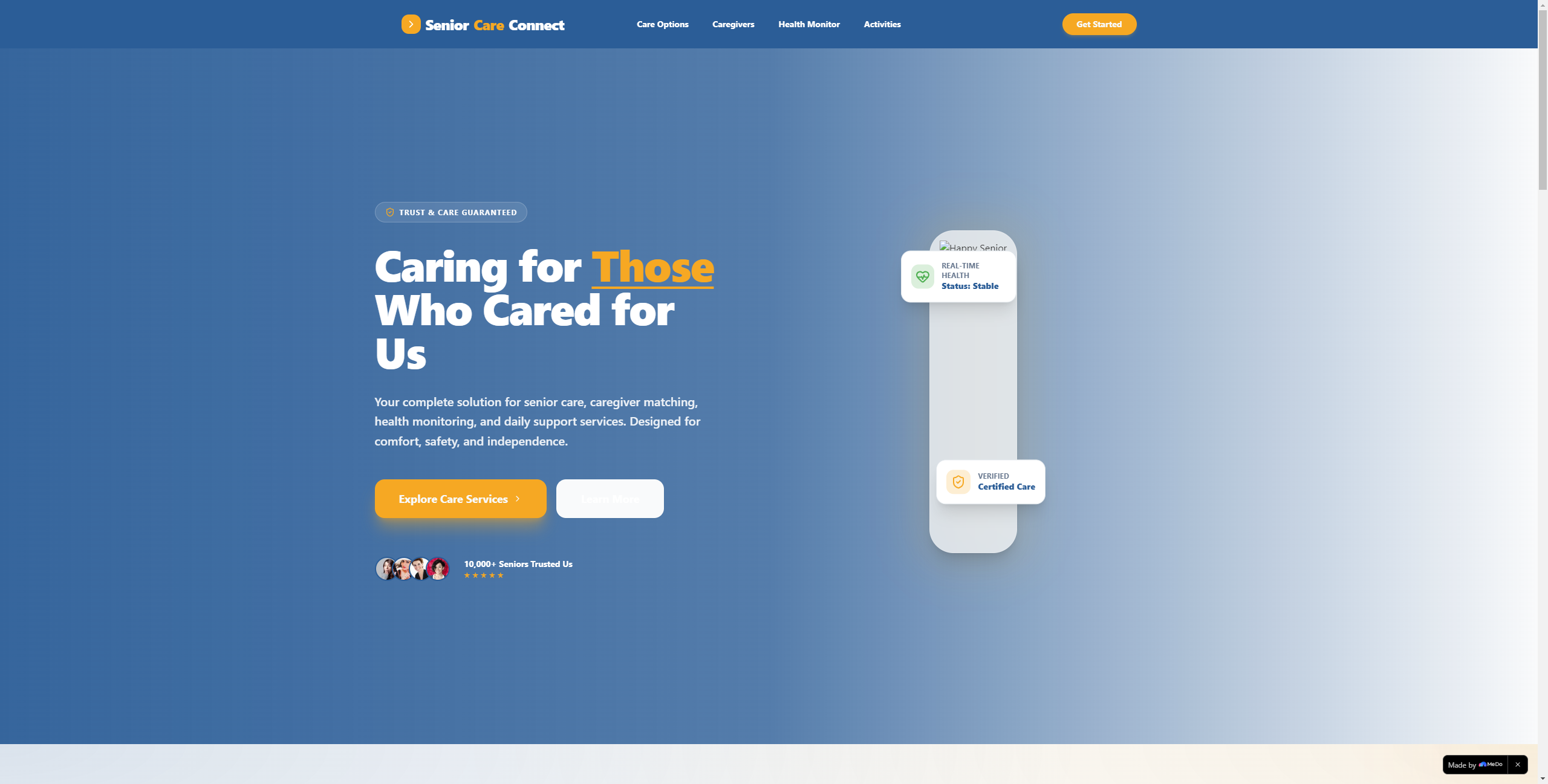
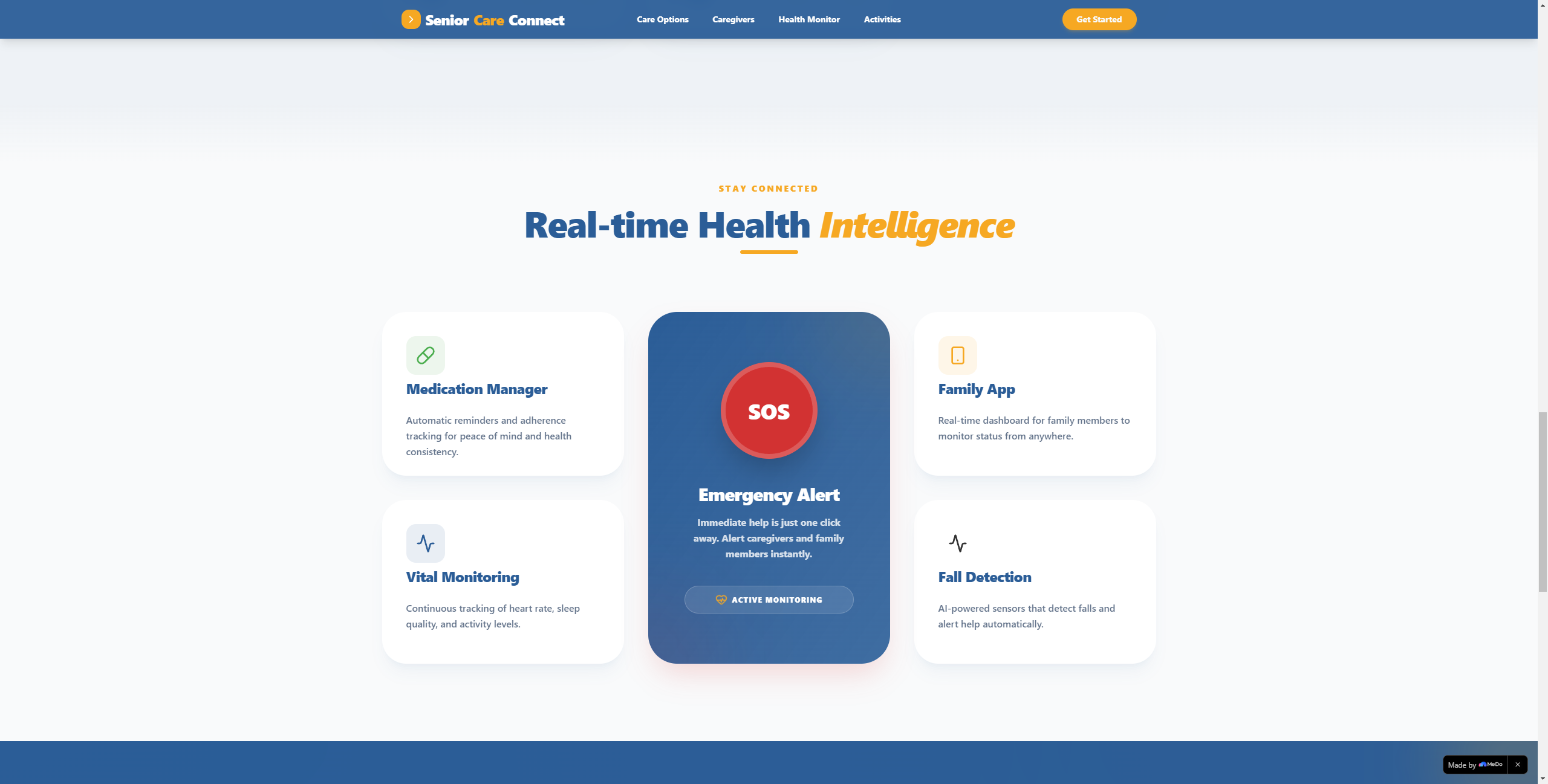
Senior Care Connect centralizes senior care solutions: browse care options (in-home, assisted living, hospice), connect with verified caregivers, monitor health (medication reminders, emergency alerts), and access local support like meal delivery or social activities—all in a simple, accessible interface designed for aging users and their families.
How we built it
We built the platform with core web technologies (HTML, CSS, JavaScript) prioritizing accessibility and responsiveness. We implemented CSS Grid/Flexbox for adaptive layouts, Intersection Observer for scroll-triggered animations, and custom CSS animations (Ken Burns effect, pulse animations) for engagement—all while adhering to WCAG 2.1 standards for elderly usability.
Challenges we ran into
Balancing visual appeal with accessibility was key: ensuring animations enhanced (not distracted from) usability, and scaling complex card layouts for mobile without losing clarity. We also fine-tuned hover/state effects to be intuitive for users with limited motor function, and adjusted typography to meet minimum size requirements for low vision.
Accomplishments that we're proud of
Creating a platform that’s both aesthetically warm and functionally inclusive—every animation respects reduced motion preferences, all interactive elements have clear focus states, and the design prioritizes readability and simplicity. We’re proud to have built something that addresses real pain points for caregivers and seniors alike.
What we learned
We deepened our understanding of age-inclusive design: small choices (font size, color contrast, animation speed) make a huge difference for elderly users. We also learned to balance creative motion design with accessibility guidelines, and how to structure content to reduce decision fatigue for overwhelmed caregivers.
What's next for this project
We plan to integrate real-time caregiver matching tools, add personalized care plan generators, and connect with local care facility APIs to provide live pricing/availability. We also aim to expand language support and add telehealth integration for remote health check-ins—keeping care connected, no matter where families are.
Built With
- css
- cssgrid
- flexbox
- fontawesome
- html
- javascript
- unsplash

Log in or sign up for Devpost to join the conversation.