-
-
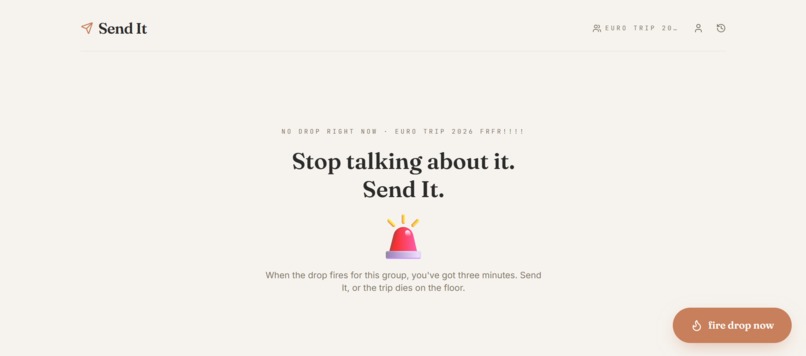
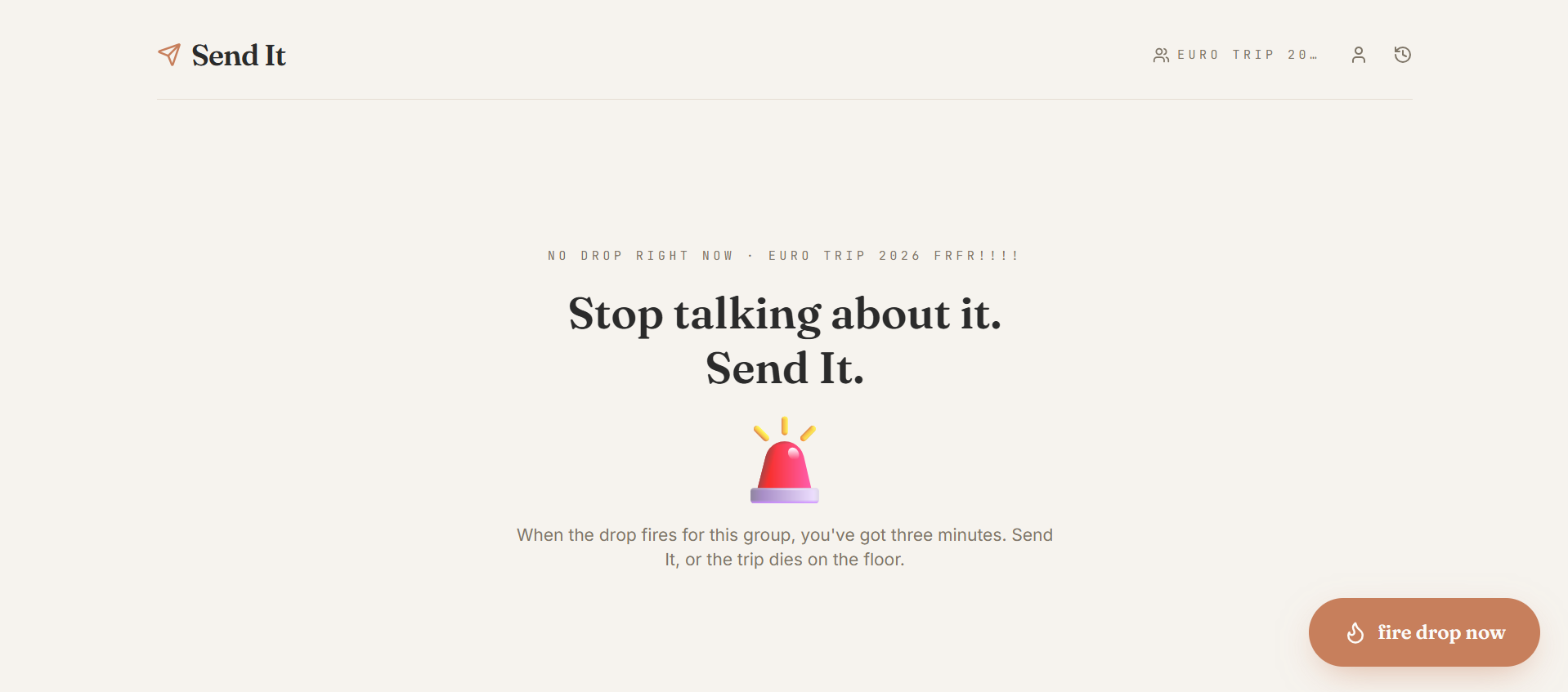
Send It - Landing Page
-
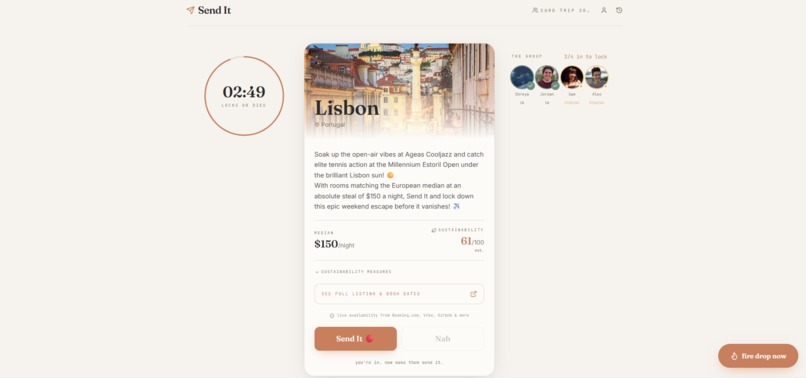
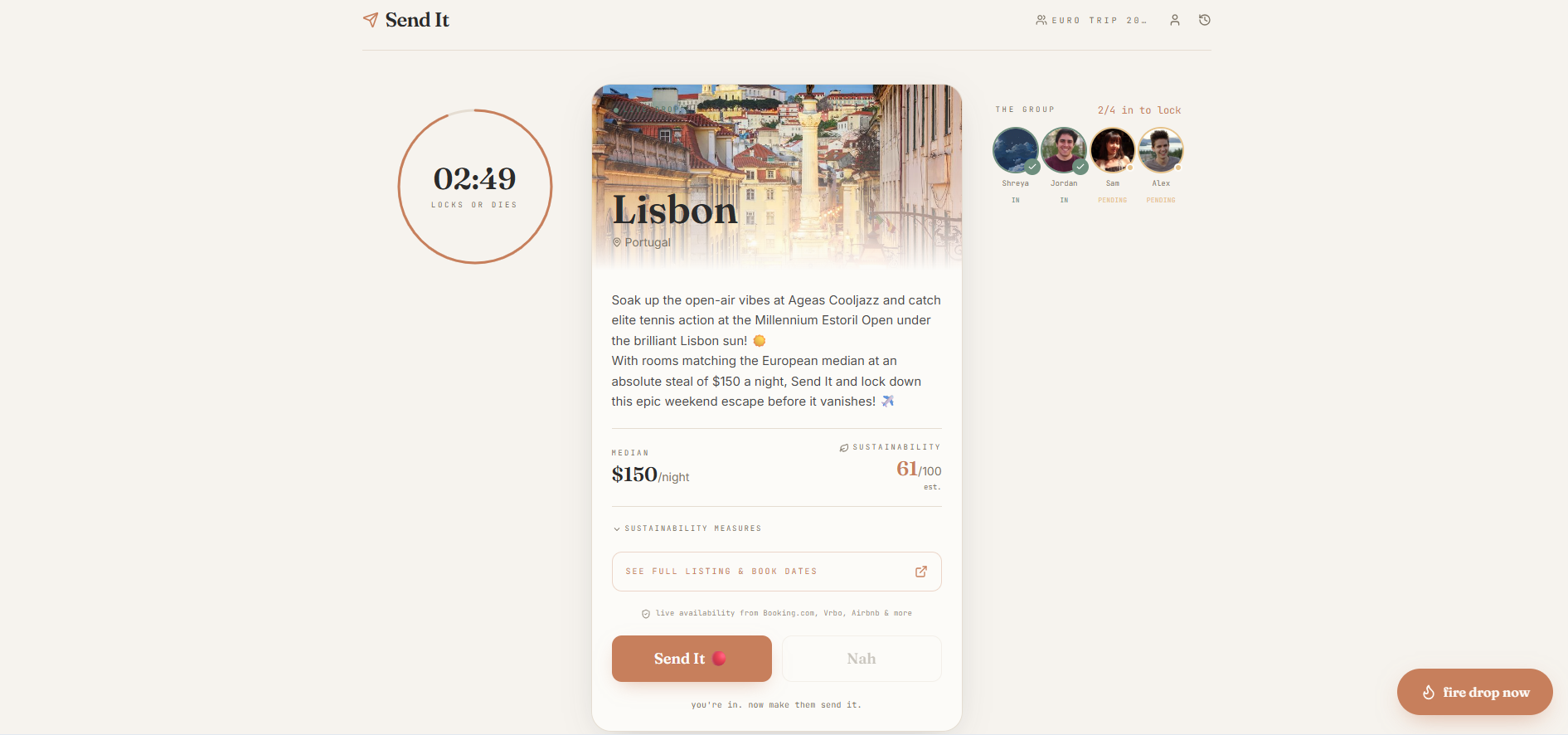
Send It - The Drop
-
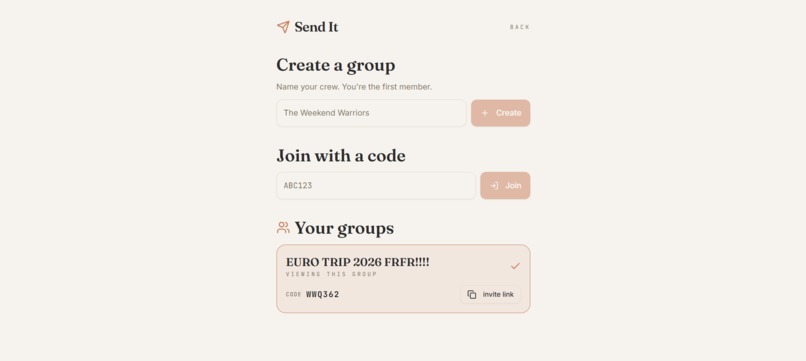
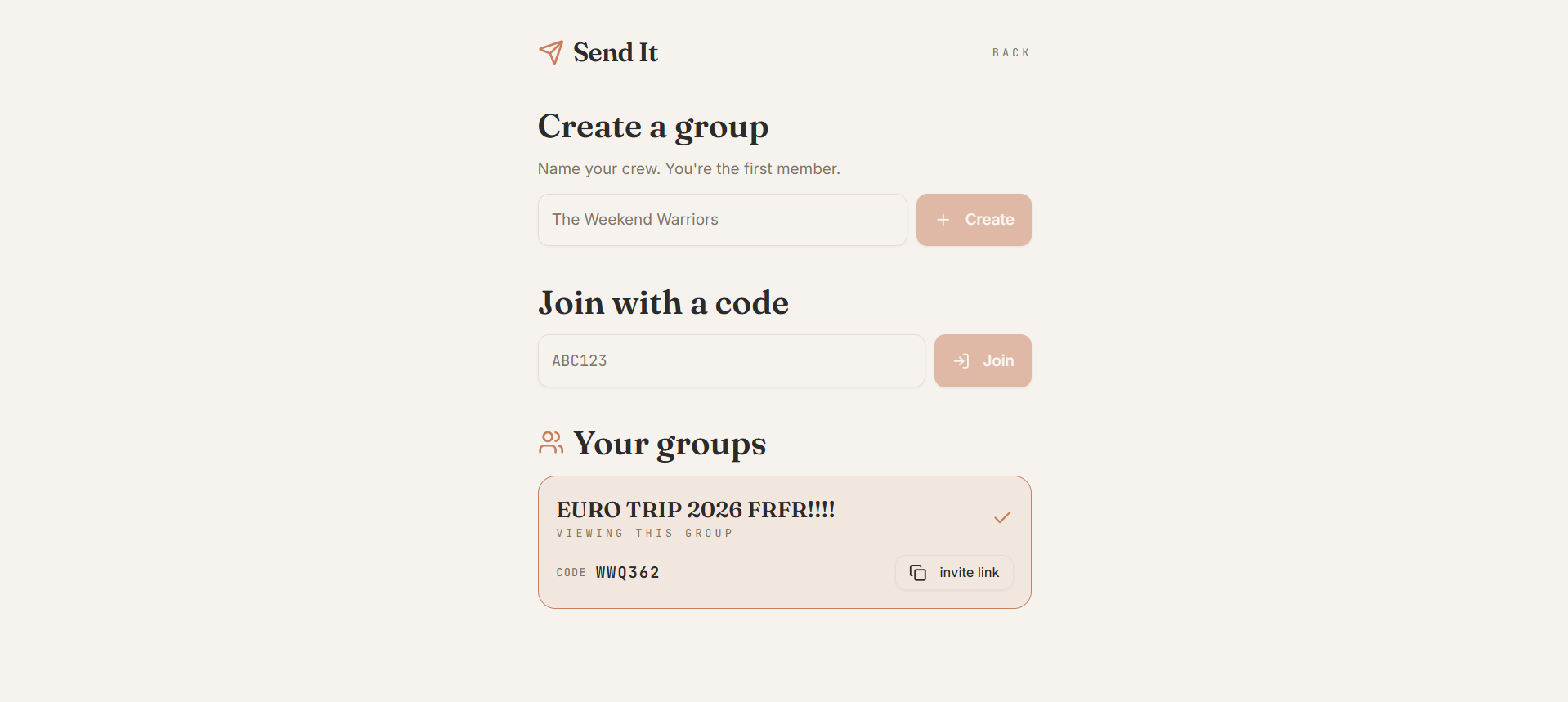
Send It - Groups
-
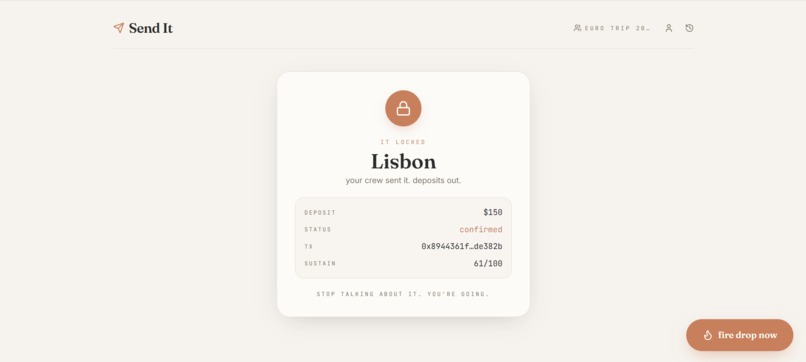
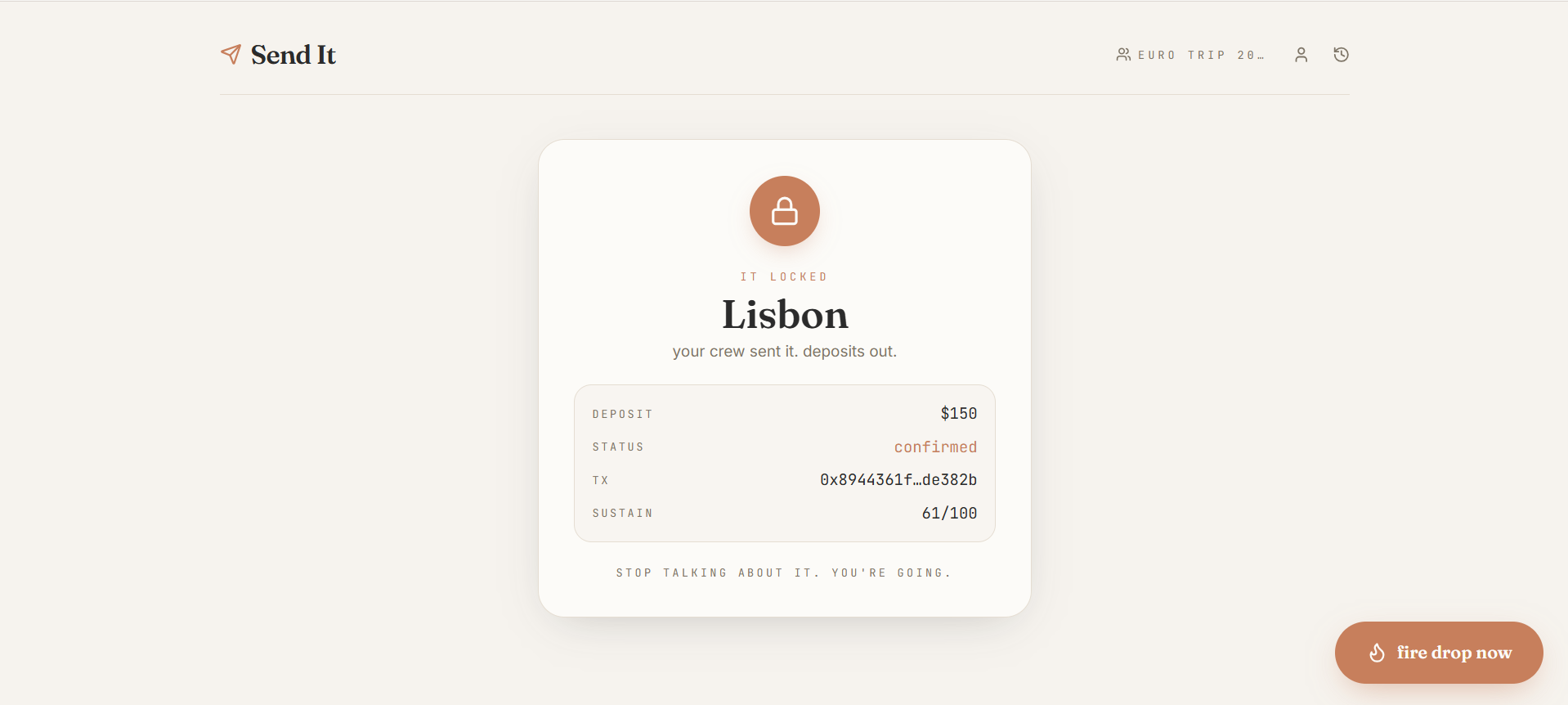
Send It - Locked Confirmation
Inspiration
Every group trip dies the same way: someone drops an idea in the chat, everyone reacts with enthusiasm, and then it sits there for months while people "check their calendars." I wanted to build the opposite of that — a commitment device, not another planning tool. Instead of giving groups more time to deliberate, Send It gives them less: a real, price-outlier destination and a three-minute window to say yes or watch it disappear.
What it does
Send It is a FOMO-driven group travel app built around a single mechanic: The Drop.
- Users create or join a Group with an invite code.
- Once a week, at a random time, a Drop is sent out, and the app scans real accommodation pricing across destinations to surface a genuine price outlier — a city that's actually cheaper than its usual median right now.
- The app generates a destination image, a high-energy AI-written pitch, and a sustainability score (0–100) with a weighted breakdown (travel footprint, grid cleanliness, transit access, local character).
- Everyone in the group sees the same live card at once, with a 3-minute countdown ring that turns urgent red under 30 seconds.
- The group votes Send It 🔴 or Nah.
- Hit the vote threshold and the trip locks — a deposit and transaction record are created. Let the timer run out and it's a miss.
- Every drop, lock, and miss is saved to a History view, and a shareable landing page (
/drop/:id) lets a specific drop be sent directly to a friend.
How its built
- Frontend: React + Tailwind, styled with a warm, editorial, anti-corporate aesthetic
- Backend/platform: Base44 for entities, backend functions, and integrations.
- Real data: Stay22 for live accommodation listings, pricing, and booking links, so the price-outlier detection is based on real median pricing rather than mock data.
- AI layer: Gemini-grounded LLM calls generate the destination pitch copy and the sustainability score/breakdown.
Challenges
- Getting a genuinely live-feeling countdown and vote mechanic working reliably across simulated and real participants at once.
- Making the sustainability score feel trustworthy rather than decorative — grounding it in real signals and flagging it as an estimate when data was thin, instead of just guessing a number.
- Balancing "FOMO and urgency" in the copy without the app feeling gimmicky or untrustworthy — a lot of iteration went into the tone of the pitch copy and the vote screens.
Accomplishments
- Pairing a fun, urgency-driven mechanic with real underlying data (real pricing, a real sustainability score) instead of building pure vaporware FOMO.
- A distinct, considered design voice — most travel/booking demos look like generic SaaS; Send It has actual personality in its copy and visual identity.
What I learned
- How to design a real-time, multi-user interaction (the vote-and-lock mechanic) on a tight timeline.
- How to combine a grounded LLM call with real third-party pricing data to produce something that reads as trustworthy.
What's next for Send It
- Real payments/deposits instead of simulated ones, with an actual booking flow through Stay22.
- Expanding price-outlier detection beyond Europe.
- Real push/SMS notifications to group members when a drop fires (the SMS integration is already wired, just stubbed).
- A "streaks" or group history leaderboard to reward crews that actually lock trips.
Built With
- base44
- gemini
- javascript
- react
- stay22
- tailwindcss
- typescript
- vite


Log in or sign up for Devpost to join the conversation.