-
-

funcionamiento de senda en whatsapp
-
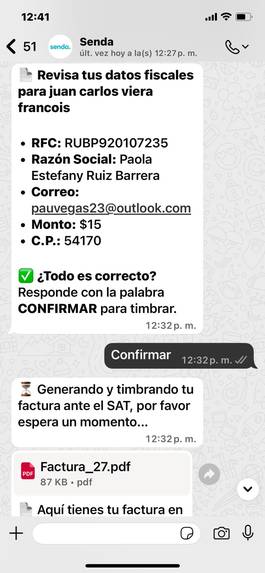
funcionamiento de senda en whatsapp
-
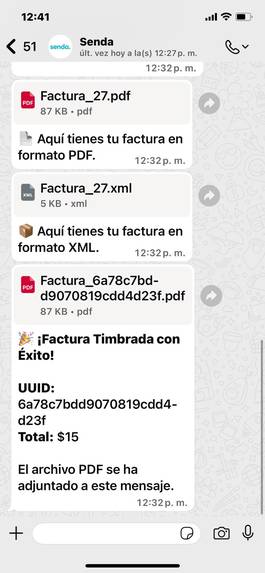
funcionamiento de senda en whatsapp
-
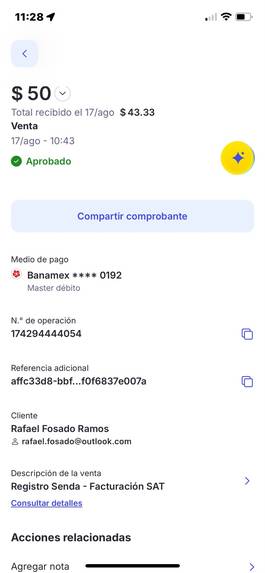
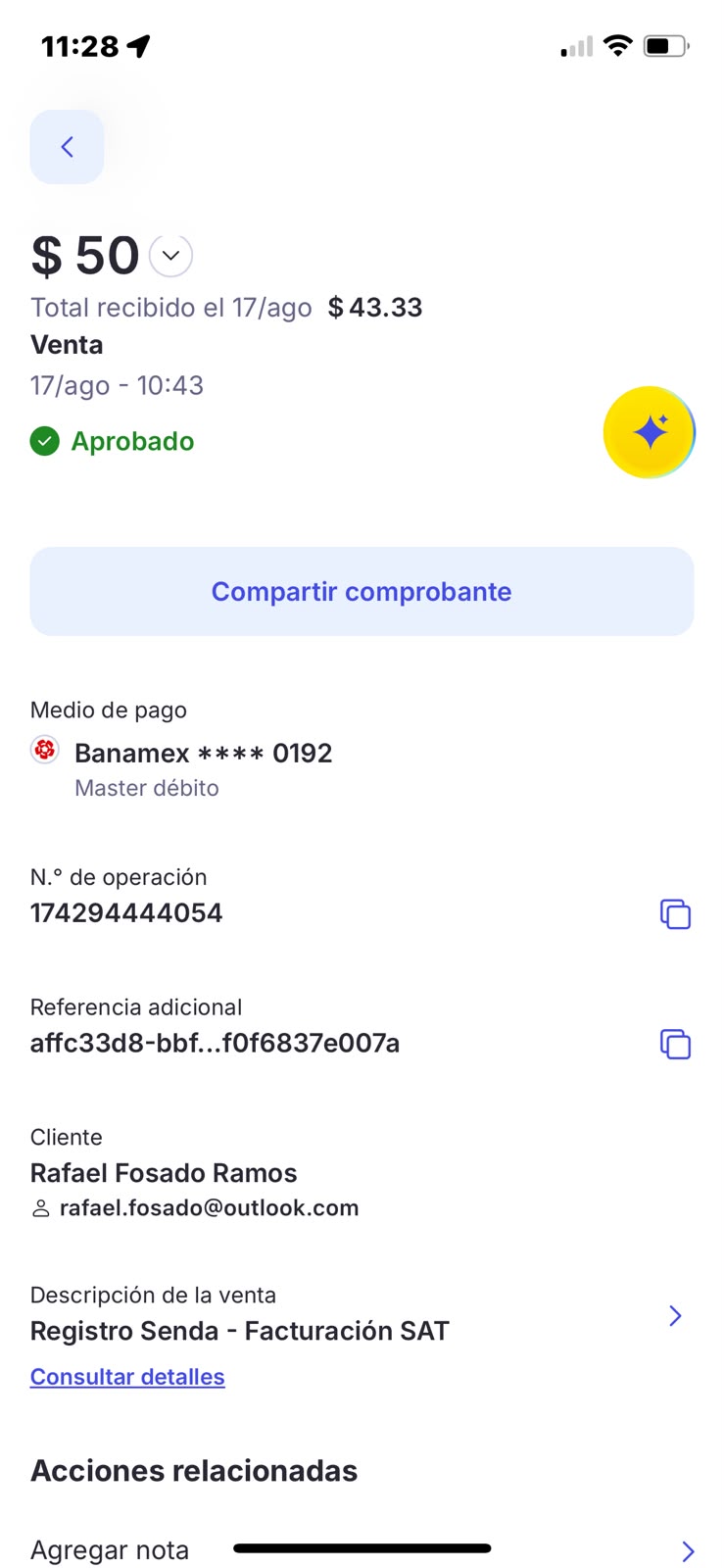
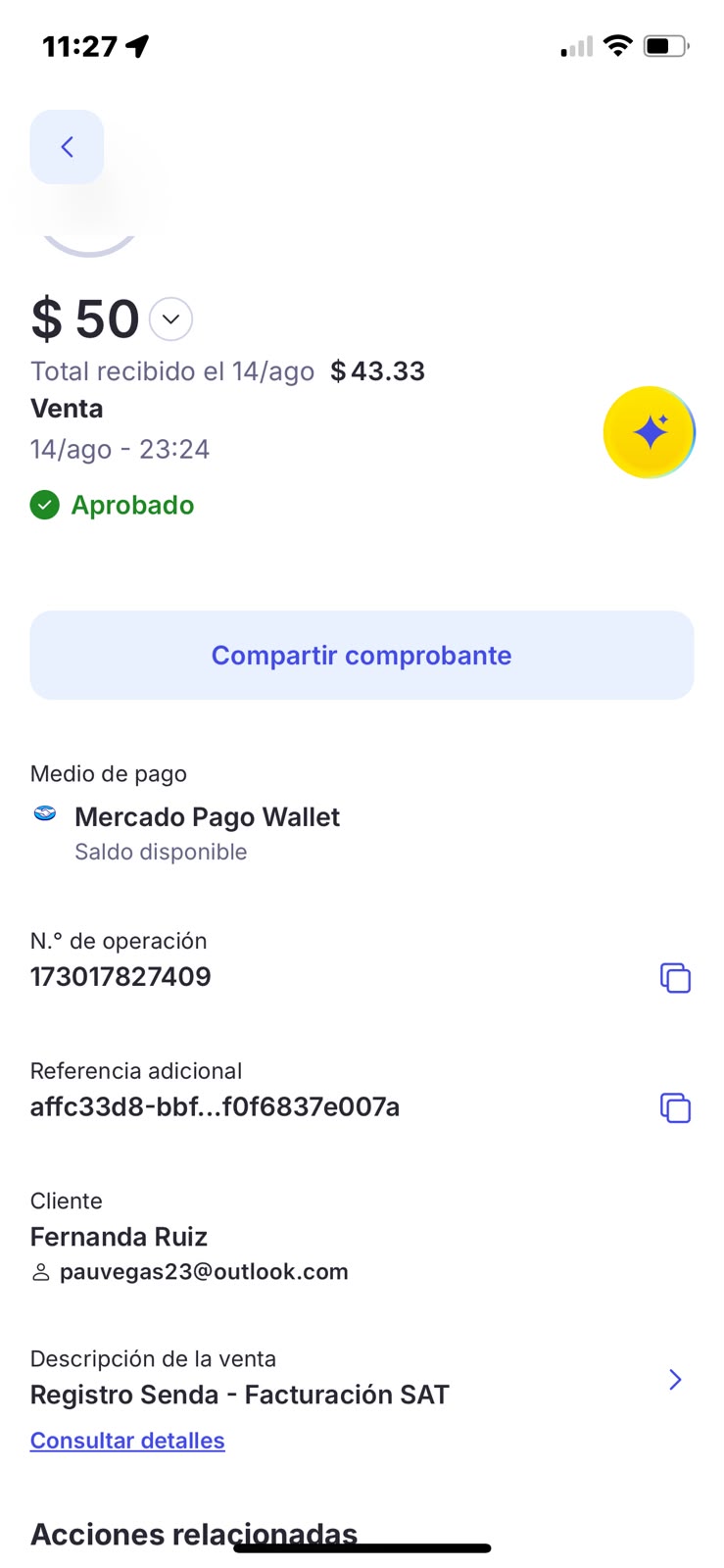
pago
-

pago
Inspiration Senda was born from the direct observation of daily friction in the commercial management of small businesses. As a designer and artist, I value clean and straightforward workflows, but I identified that tax and commercial administration remains a complex bureaucratic barrier for many entrepreneurs. The inspiration came from seeing that 80% of customer communication in emerging markets happens on WhatsApp, while billing tools remain isolated in traditional desktop systems that are slow and detached from daily agility.
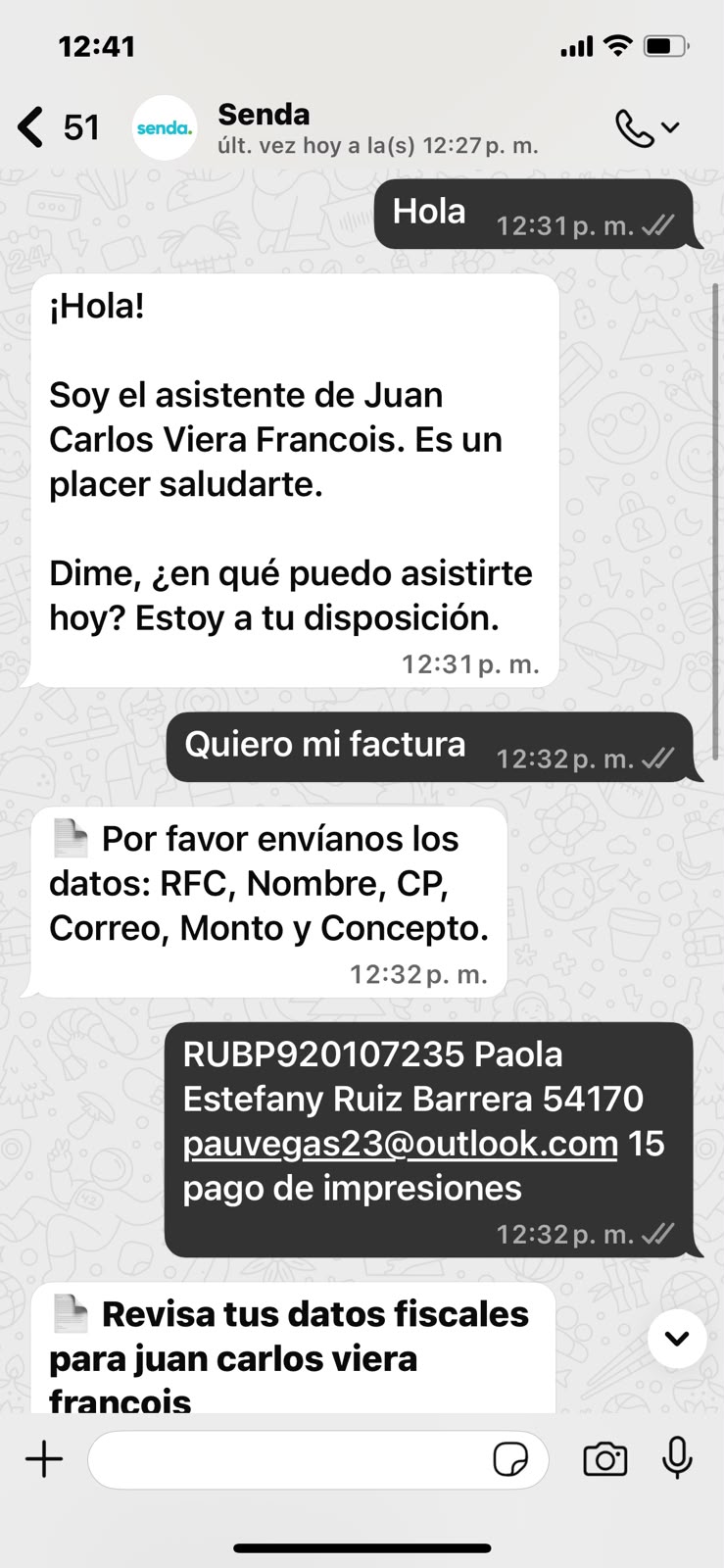
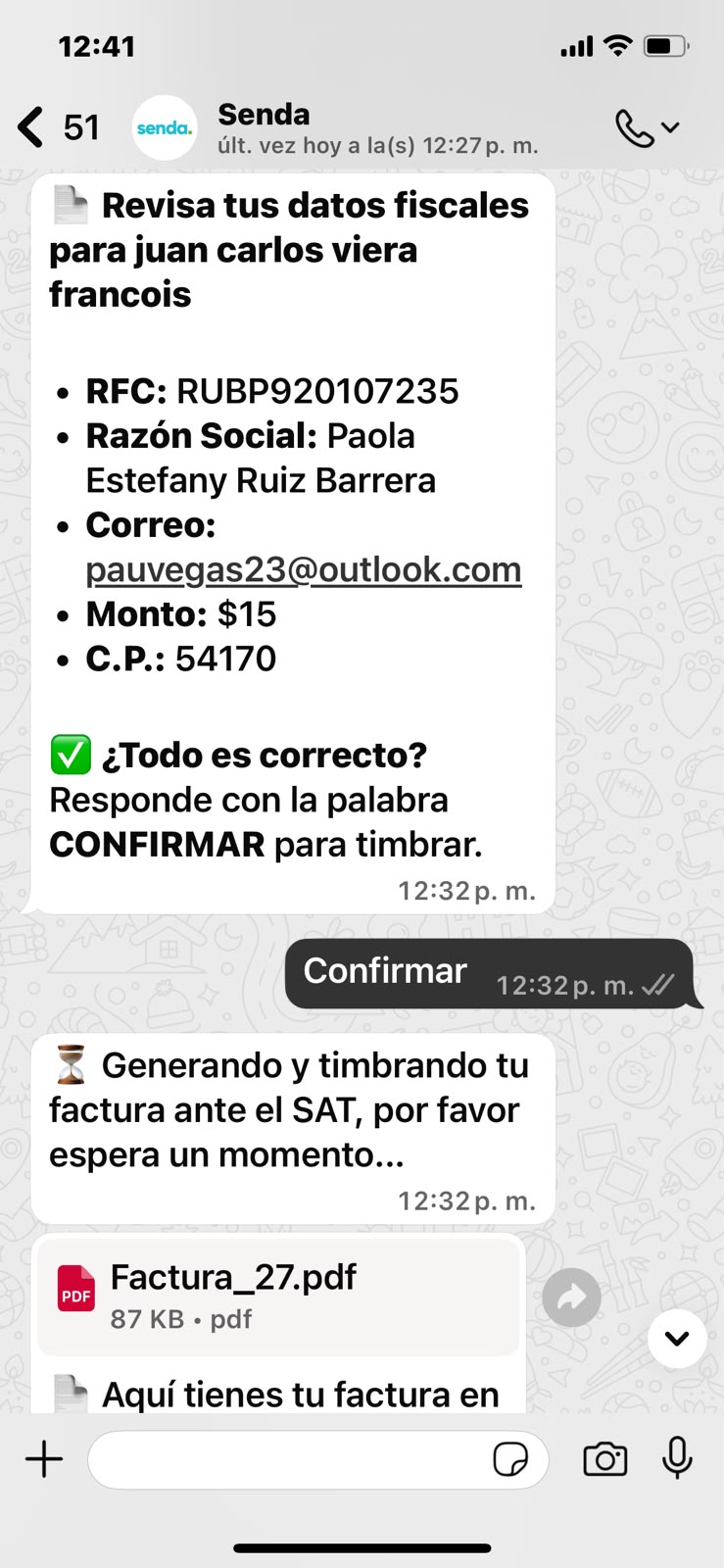
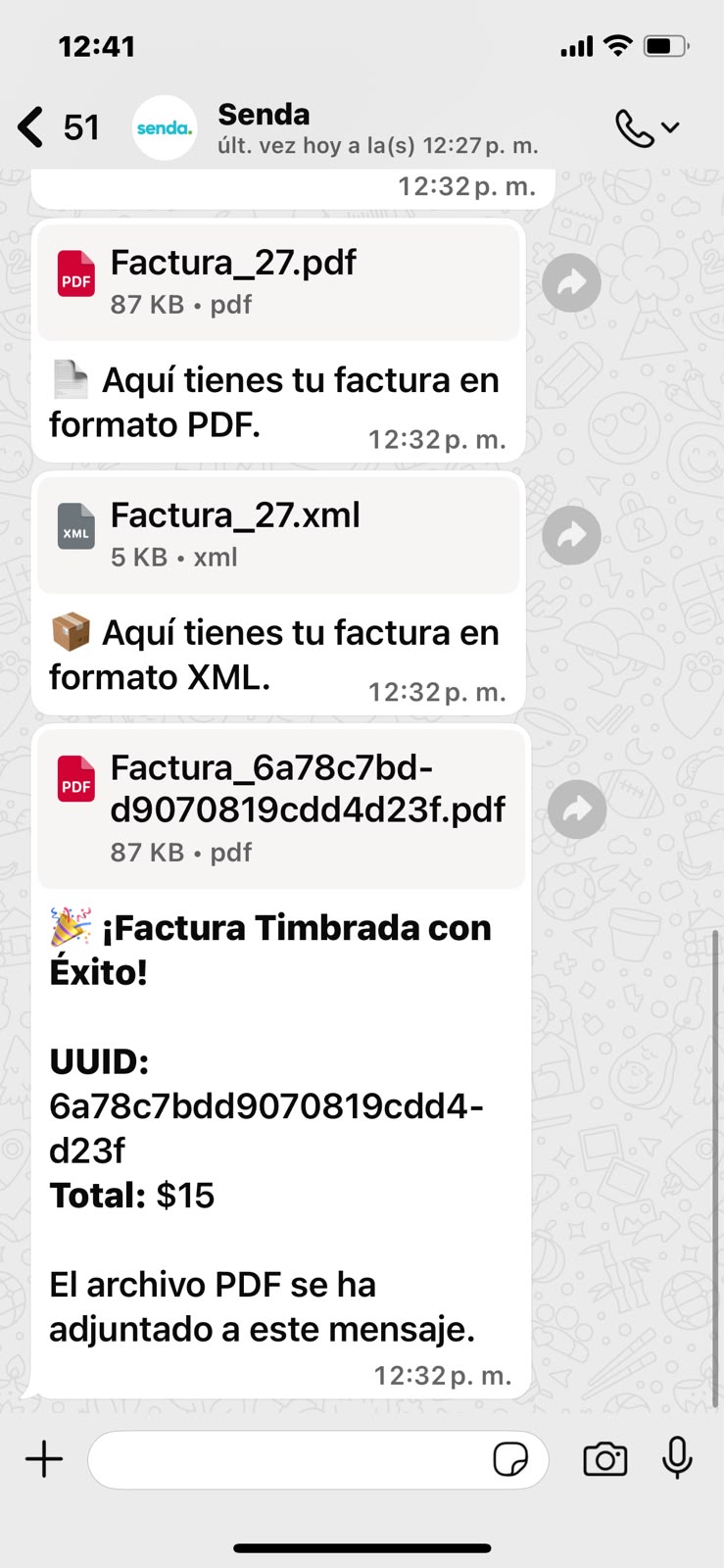
What it does Senda is a platform designed to turn conversations into validated commercial transactions. It automates the electronic invoicing lifecycle by integrating directly into WhatsApp. It allows businesses to manage their tax operations without leaving their messaging app, letting artificial intelligence handle the validation, generation, and sending of tax documents, reducing administrative friction to a simple exchange of messages.
How we built it This project is a testament to how AI democratizes software creation. I am not a developer by trade; Senda has been built entirely through advanced prompt engineering, using Gemini as my architect and programming copilot. We used a robust stack:
Backend: Node.js with TypeScript, configured and debugged through prompt iterations.
Data: Supabase as a backend-as-a-service, using Prisma as an ORM.
Gemini AI: The Gemini API is the brain that manages the operational logic and decision-making of the agent.
Storage: Implementation of Supabase Storage for the secure safekeeping of digital certificates (.cer).
Communication: Twilio integration for the WhatsApp messaging layer.
Challenges we ran into The biggest challenge has been the real-time synchronization between the WhatsApp infrastructure and tax validity. Getting an AI agent to process, validate, and issue a legal invoice requires absolute mathematical precision. Digital signature validation involves cryptographic operations where reliability must be total, which we can represent as the need for a verification function $V$ such that: $$V(cert, key, password) \rightarrow {0, 1}$$
Where $1$ represents a successful validation. Overcoming this challenge without a traditional engineering background was possible thanks to constant and refined communication with Gemini, which allowed me to understand and solve every technical bottleneck.
Accomplishments that we're proud of I am deeply proud of having gone from a conceptual idea to a functional platform in record time, proving that the barrier to entry for building high-impact technology has disappeared. Successfully implementing a system that handles digital certificates and complex billing logic, as an artist and designer, is my greatest personal achievement in this call.
What we learned I have learned that AI is not just an automation tool, but a translation layer between bureaucratic complexity and everyday human language. Technology should be invisible to the end user; our job is to simplify the complex without losing legal rigor. Modern programming, mediated by AI, allows creative vision to take absolute control over technical execution.
What's next for Senda The next step is the deployment phase with real pilot businesses to scale our processing capacity. We are working on refining the agent so it can handle complex tax incidents autonomously, allowing Senda to be not just a billing tool, but the intelligent commercial advisor that every small business needs in its pocket.
Built With
- gemini
- geminiapi
- node.js
- postgresql
- prisma
- supabase
- twiilo
- typescript

Log in or sign up for Devpost to join the conversation.